Skip to Content Facebook Feature Image

Heatwaves slash South Korean milk, poultry yields

China

China

China

Heatwaves slash South Korean milk, poultry yields

2025-08-17 14:54 Last Updated At:08-18 01:17

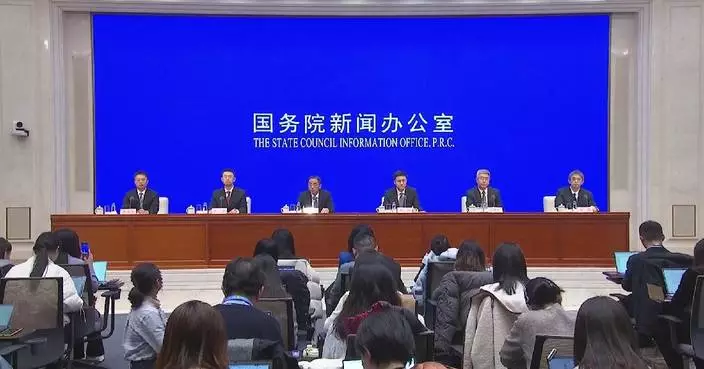
⁠⁠⁠⁠⁠⁠⁠Continuous heatwaves in South Korea this summer have caused a significant drop in dairy cow milk production and widespread deaths of poultry and livestock, leading to a surge in prices of dairy products, eggs and chicken.   A cattle farm in Gochang County, Jeonbuk Special Self-Governing Province, which houses 78 dairy cows, has reported a 20 percent year-on-year decline in milk production due to persistent heatwaves this summer.   According to Yuk Seok-won, head of the Gochang County Livestock Association, the locally raised dairy cows are sensitive to high temperatures. If the temperature remains above 32 degrees Celsius for an extended period, the milk production of the cows will decrease.   Due to efforts to help the cows cool down, the breeding costs for livestock farmers have significantly increased, he noted.   "This year, the early onset of hot weather in June has resulted in a notable rise in farm operating costs, including investments in floor bedding materials, misting systems, and shade nets. In fact, many dairy cows have fainted due to their struggle to endure the scorching heat," Yuk said.   The impact of the decreasing fresh milk production is already evident in the market. Recent prices of various dairy products in South Korea, such as fresh cream, have seen significant hikes, with some even facing temporary shortages.   Seoul Milk Product, a leading company in the South Korean milk market, foresees that the shortage in fresh milk supply will persist until early September.   The scarcity of dairy products has also affected the operations of numerous coffee shops.   Kim Jin-il, a coffee shop owner in Gyeonggi Province, relies on milk to make both lattes and bread. The recent tight supply of dairy products has put considerable pressure on her business.

"In most large supermarkets, fresh cream is completely sold out. Even when purchasing online, there is a limit of two per person, and prices have increased. People running nearby coffee shops have mentioned that milk prices have gone up by around 20 percent, causing significant business pressure," Kim said.

Moreover, the prolonged high temperatures have resulted in a significant number of poultry and livestock deaths in South Korea.   The latest data from the Ministry of Security and Public Administration of South Korea reveals that from May 20 to August 10 this year, over 1.59 million poultry and livestock have died nationwide, with poultry accounting for as much as 94.7 percent of the total.   Consequently, the prices of eggs and chicken in South Korea have significantly risen. Data shows that on August 7, the average retail price for a tray of 30 eggs stood at 7,356 Korean won (around 5 U.S. dollars), setting a record high since July 2021.

Heatwaves slash South Korean milk, poultry yields

Heatwaves slash South Korean milk, poultry yields
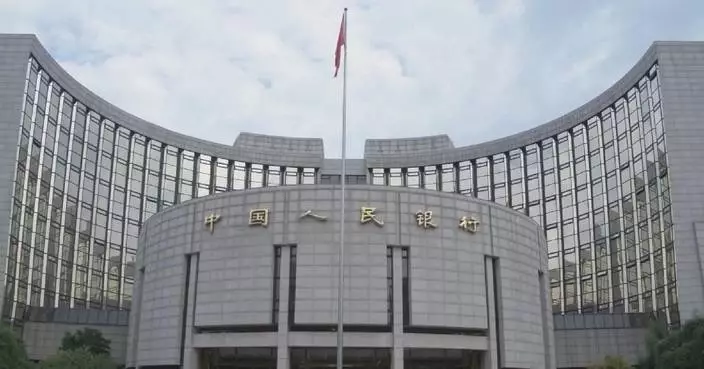
A former television host from Taiwan, Zhai Xuan, has made a pivotal decision to leave mainstream broadcasting in order to create content that provides a better understanding of the Chinese mainland and cross-strait relations.

Zhai, a seasoned television host with over a decade of experience in Taiwan's media landscape, recently addressed an audience at an event in Beijing, where she revealed her complete transition into independent online media.

In her remarks, she articulated her aspiration to bridge what she perceives as a significant information gap between audiences on both sides of the Strait, highlighting her commitment to fostering a deeper understanding and connection through her new endeavors.

"I was really surprised by all the fake news. There were stories saying people on the mainland can't afford tea eggs or that they live in mud houses and in Taiwan, this was the main information many people received," said Zhai.

Zhai said she initially began producing online videos to challenge such perceptions while continuing her work as a television host.

In April 2025, she travelled to the mainland with her father to fulfill her late grandfather's wish to return to his hometown. The trip, which reunited family members separated since 1949, was recorded in a video series titled "Journey to Find Our Roots", drawing attention from viewers in both Taiwan and the mainland.

"Many people in Taiwan told me that after watching, they wanted to apply for a mainland travel permit immediately and go looking for their relatives. Some had long forgotten these things, but after seeing my story, they began thinking about their hometowns and family members they had never met and decided to search for their roots," Zhai shared her story at the event.

By mid-2025, Zhai said she began to feel increasing pressure amid rising political tensions and a tightening atmosphere around cross-Strait exchanges in Taiwan.

After more than 12 years in the industry, Zhai resigned from her position, believing it was the right thing to do.

"At that moment, I felt this was a major issue,not just for me, but for Chinese people on both sides of the Strait. If I backed down then, I wouldn’t be standing on the right side," said Zhai.

Since leaving television, Zhai has broadened her online programming to encompass a range of daily-life topics, including practical guidance on applying for a mainland travel permit and using commonly employed mobile applications, in addition to content that delves into historical memory and cultural connections across the Strait.

As the debate over cross-Strait relations continues in Taiwan, Zhai said she remains committed to her current path.

Former Taiwan TV host bridges cross-Strait divide via online media

Former Taiwan TV host bridges cross-Strait divide via online media

Recommended Articles