Skip to Content Facebook Feature Image

Twin Iranian brothers build successful businesses and cultural bridge in Beijing

China

China

China

Twin Iranian brothers build successful businesses and cultural bridge in Beijing

2025-08-17 15:10 Last Updated At:08-18 01:27

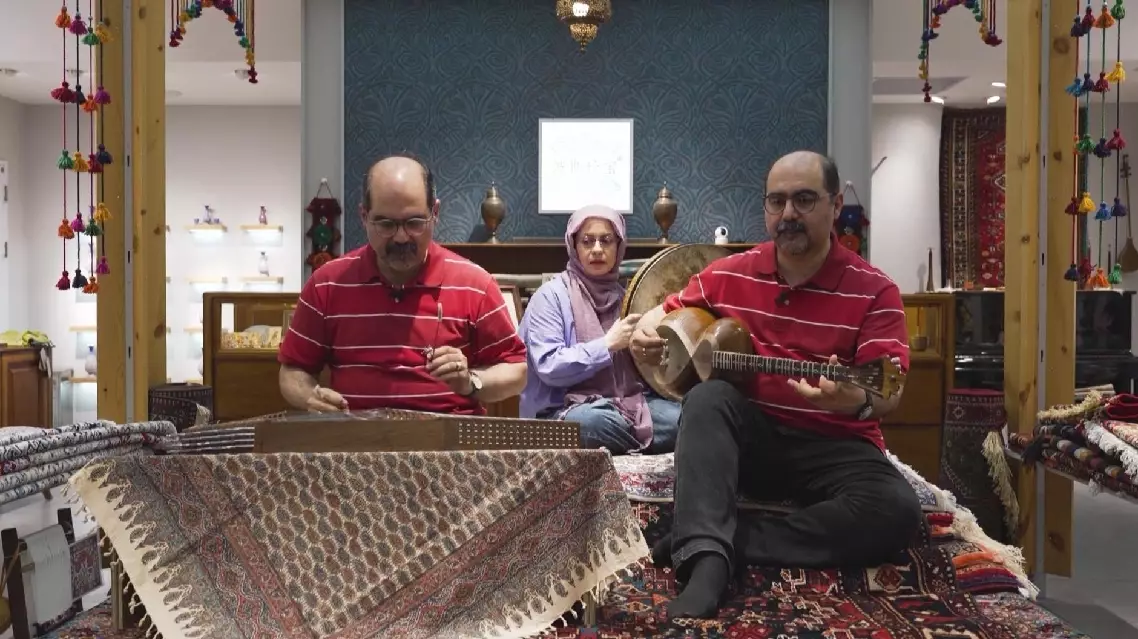
Seventeen years ago, two Iranian twin brothers made a bold decision to come to Beijing to study and pursue a new career. Since then, they have successfully built trading businesses and actively engaged in Iranian music activities, fostering cultural connections between China and Iran. 

When twin Iranian brothers Majid Shamaeizadeh and Massoud Shamaeizadeh came to China in 2008, they also convinced their wives to bring their babies, who were less than a year old. 

"When we make a decision to come here, we talked. I talked with my wife and he talked with his wife and both of them accepted immediately, I think. But sometimes people ask us how long did it take to get customs here and feel easy and we say just about half an hour or less," said Majid Shamaeizadeh. 

While in China, inside the twins' families, they have preserved their cultural heritage. Their children who grew up in China can still speak, read, and write Persian fluently.

"It was part of our lifestyle to keep Iranian style and keep Iranian culture inside the family and all around us," said Majid. 

The brothers opened their trading company in 2009, just one year after they arrived in Beijing. Their business focused on exporting Chinese raw materials to Iran, while importing Persian carpets and handicrafts to China. What began as ordinary commerce soon took on deeper meaning. 

"We are designers, we have an artistic mind and favorites. So just exporting, especially industrial and raw material is not uh, satisfying now. So this one, importing Iranian handicrafts, Iranian cultural products is somehow to satisfy ourselves and to maybe promote our culture and find a way to connect with Chinese cultural people and Chinese artists and so the other type of Chinese friends is the way to make a new type of friends, not just companies and dalaoban (big bosses) and like this," said Massoud.

The brothers are not only enthusiastic about making friends with Chinese people, but they also share their knowledge about Iran's culture and art. 

"I believe that everything we do about Iranian culture and Iranian art here will help the Iranian image in China, and it works," said Majid. 

Their efforts have resonated. Through posting short videos on Chinese social media like WeChat and RedNote, the brothers have introduced many Chinese audiences to the richness of Persian art. 

Some visitors who have watched their cultural content online would come to meet them in person, curious to learn more. 

Now, in their fifties, the brothers' ambition remains undimmed, as they plan to expand their business into Arab countries and Europe. 

"Two businesses we're working hard on it. One is this food product, and the other is solar power products. So, we are planning to extend this to different places, not just here," said Massoud.
Twin Iranian brothers build successful businesses and cultural bridge in Beijing

Twin Iranian brothers build successful businesses and cultural bridge in Beijing
A former television host from Taiwan, Zhai Xuan, has made a pivotal decision to leave mainstream broadcasting in order to create content that provides a better understanding of the Chinese mainland and cross-strait relations.

Zhai, a seasoned television host with over a decade of experience in Taiwan's media landscape, recently addressed an audience at an event in Beijing, where she revealed her complete transition into independent online media.

In her remarks, she articulated her aspiration to bridge what she perceives as a significant information gap between audiences on both sides of the Strait, highlighting her commitment to fostering a deeper understanding and connection through her new endeavors.

"I was really surprised by all the fake news. There were stories saying people on the mainland can't afford tea eggs or that they live in mud houses and in Taiwan, this was the main information many people received," said Zhai.

Zhai said she initially began producing online videos to challenge such perceptions while continuing her work as a television host.

In April 2025, she travelled to the mainland with her father to fulfill her late grandfather's wish to return to his hometown. The trip, which reunited family members separated since 1949, was recorded in a video series titled "Journey to Find Our Roots", drawing attention from viewers in both Taiwan and the mainland.

"Many people in Taiwan told me that after watching, they wanted to apply for a mainland travel permit immediately and go looking for their relatives. Some had long forgotten these things, but after seeing my story, they began thinking about their hometowns and family members they had never met and decided to search for their roots," Zhai shared her story at the event.

By mid-2025, Zhai said she began to feel increasing pressure amid rising political tensions and a tightening atmosphere around cross-Strait exchanges in Taiwan.

After more than 12 years in the industry, Zhai resigned from her position, believing it was the right thing to do.

"At that moment, I felt this was a major issue,not just for me, but for Chinese people on both sides of the Strait. If I backed down then, I wouldn’t be standing on the right side," said Zhai.

Since leaving television, Zhai has broadened her online programming to encompass a range of daily-life topics, including practical guidance on applying for a mainland travel permit and using commonly employed mobile applications, in addition to content that delves into historical memory and cultural connections across the Strait.

As the debate over cross-Strait relations continues in Taiwan, Zhai said she remains committed to her current path.

Former Taiwan TV host bridges cross-Strait divide via online media

Former Taiwan TV host bridges cross-Strait divide via online media

Recommended Articles