SEOUL, South Korea (AP) — South Korea and the United States began their annual large-scale joint military exercise on Monday to better cope with threats by nuclear-armed North Korea, which has warned the drills would deepen regional tensions and vowed to respond to “any provocation” against its territory.
The 11-day Ulchi Freedom Shield, the second of two large-scale exercises held annually in South Korea, after another set in March, will involve 21,000 soldiers, including 18,000 South Koreans, in computer-simulated command post operations and field training.
The drills, which the allies describe as defensive, could trigger a response from North Korea, which has long portrayed the allies’ exercises as invasion rehearsals and has often used them as a pretext for military demonstrations and weapons tests aimed at advancing its nuclear program.
In a statement last week, North Korean Defense Minister No Kwang Chol said the drills show the allies’ stance of “military confrontation” with the North and declared that its forces would be ready to counteract “any provocation going beyond the boundary line.”
Ulchi Freedom Shield comes at a pivotal moment for South Korea’s new liberal President Lee Jae Myung, who is preparing for an Aug. 25 summit with U.S. President Donald Trump in Washington. Trump has raised concerns in Seoul that he may shake up the decades-old alliance by demanding higher payments for the American troop presence in South Korea and possibly reducing it as Washington shifts its focus more toward China.
Tensions on the Korean Peninsula remain high as North Korea has brushed aside Lee’s calls to resume diplomacy with its war-divided rival, with relations having soured in recent years as North Korean leader Kim Jong Un accelerated his weapons program and deepened alignment with Moscow following Russia’s invasion of Ukraine.
“What's needed now is the courage to steadily take steps toward easing tensions, grounded in a firmly maintained state of ironclad security readiness,” Lee said during a Cabinet meeting on Monday. South Korea also on Monday began a four-day civil defense drill involving thousands of public workers, often scheduled alongside the allies’ summertime military exercises.
Seoul’s previous conservative government responded to North Korean threats by expanding military exercises with the United States and seeking stronger U.S. assurances for nuclear deterrence, drawing an angry reaction from Kim, who last year renounced long-term reconciliation goals and rewrote the North’s constitution to label the South a permanent enemy.
In his latest message to Pyongyang on Friday, Lee, who took office in June, said he would seek to restore a 2018-inter-Korean military agreement designed to reduce border tensions and called for North Korea to respond to the South’s efforts to rebuild trust and revive talks.
The 2018 military agreement, reached during a brief period of diplomacy between the Koreas, created buffer zones on land and sea and no-fly zones above the border to prevent clashes.
But South Korea suspended the deal in 2024, citing tensions over North Korea’s launches of trash-laden balloons toward the South, and moved to resume frontline military activities and propaganda campaigns. The step came after North Korea had already declared it would no longer abide by the agreement.
When asked whether the Lee government’s steps to restore the agreement would affect the allies’ drills, the South’s Defense Ministry said Monday that there are no immediate plans to suspend live-fire training near the Koreas’ disputed western maritime border.
While the allies have postponed half of Ulchi Freedom Shield’s originally planned 44 field training programs to September, U.S. military officials denied South Korean media speculation that the scaled-back drills were meant to make room for diplomacy with the North, citing heat concerns and flood damage to some training fields.
Dating back to his first term, Trump has regularly called for South Korea to pay more for the 28,500 American troops stationed on its soil. Public comments by senior Trump administration officials, including Undersecretary of Defense Elbridge Colby, have suggested a push to restructure the alliance, which some experts say could potentially affect the size and role of U.S. forces in South Korea.
Under this approach, South Korea would take a greater role in countering North Korean threats while U.S. forces focus more on China, possibly leaving Seoul to face reduced benefits but increased costs and risks, experts say.
In a recent meeting with reporters, Gen. Xavier Brunson, commander of U.S. Forces Korea, stressed the need to “modernize” the alliance to address the evolving security environment, including North Korea’s nuclear ambitions, its deepening alignment with Russia, and what he called Chinese threats to a “free and open Indo-Pacific.”
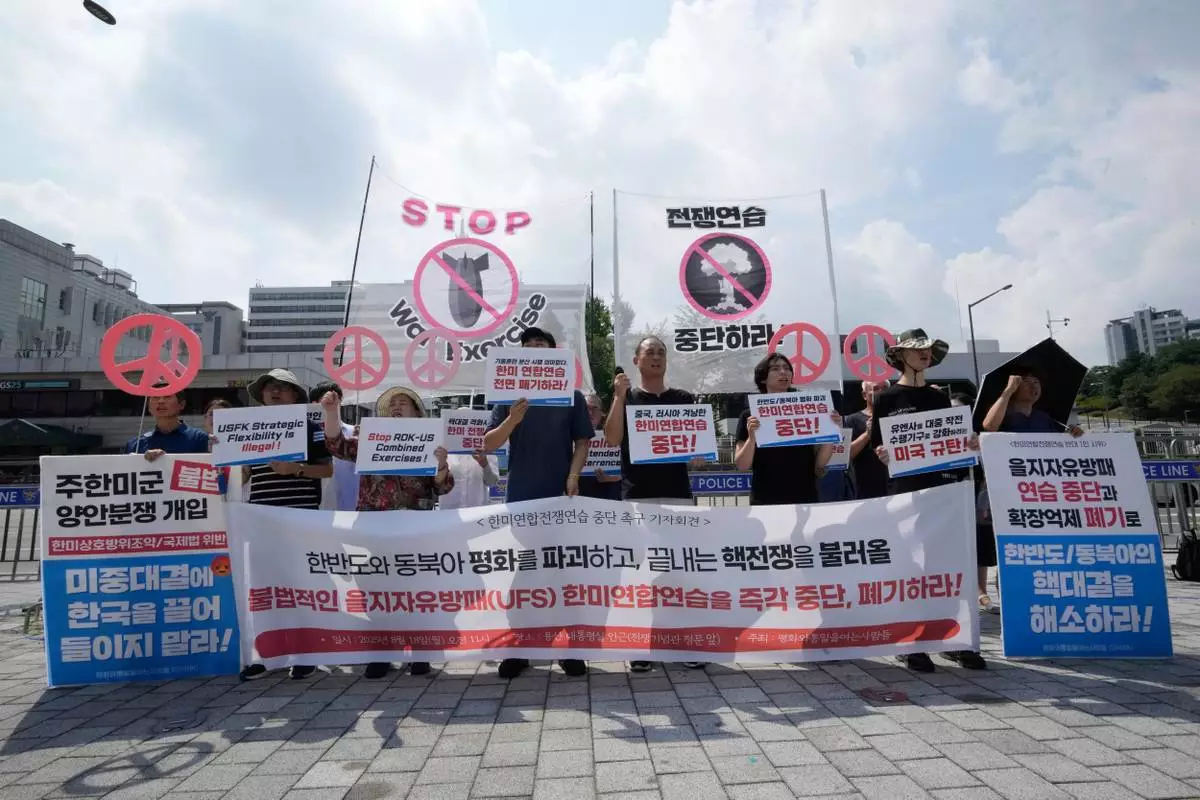
South Korean protesters stage a rally to oppose the joint military exercises, Ulchi Freedom Shield or UFS, between the U.S. and South Korea in front of the presidential office in Seoul, South Korea, Monday, Aug. 18, 2025. The banners read "Stop the military exercise between the U.S. and South Korea." (AP Photo/Ahn Young-joon)
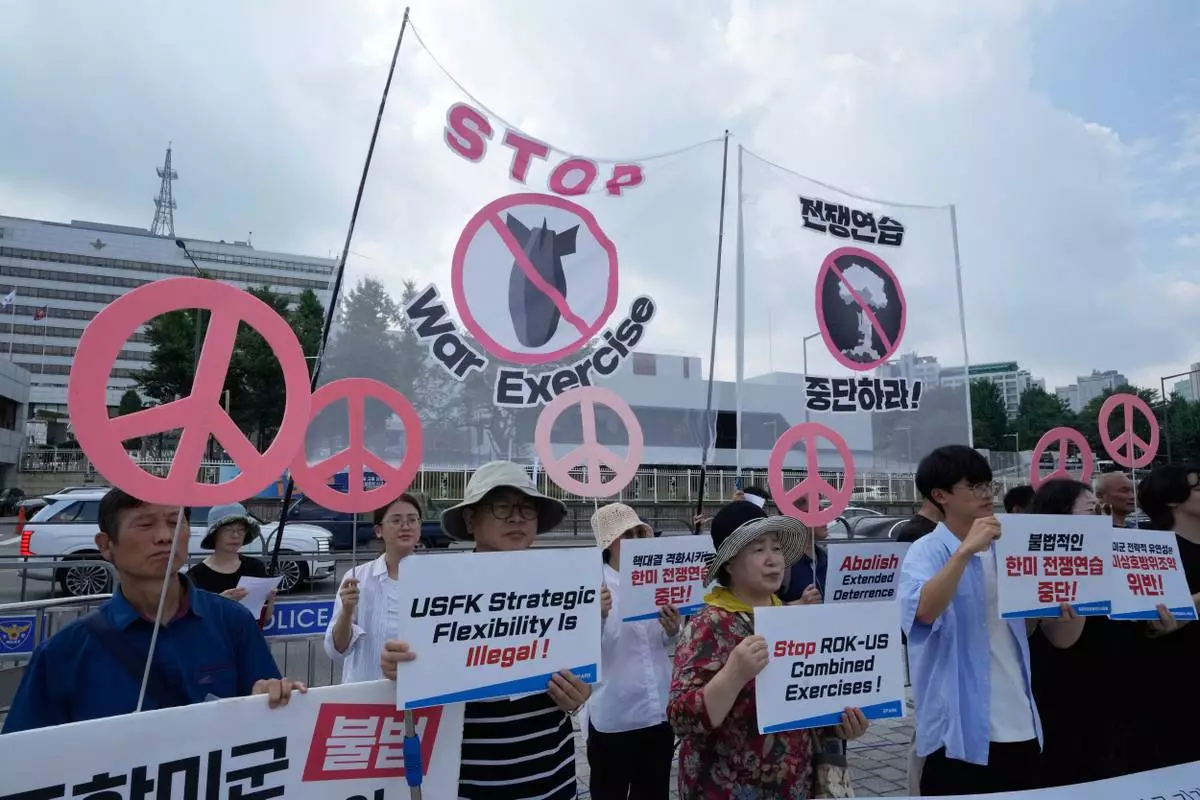
South Korean protesters stage a rally to oppose the joint military exercises, Ulchi Freedom Shield or UFS, between the U.S. and South Korea in front of the presidential office in Seoul, South Korea, Monday, Aug. 18, 2025. The banners read "Stop the military exercise between the U.S. and South Korea." (AP Photo/Ahn Young-joon)

South Korean protesters stage a rally to oppose the joint military exercises, Ulchi Freedom Shield or UFS, between the U.S. and South Korea in front of the presidential office in Seoul, South Korea, Monday, Aug. 18, 2025. The banners read "Stop the military exercise between the U.S. and South Korea." (AP Photo/Ahn Young-joon)
HAVANA (AP) — Cuban soldiers wearing white gloves marched out of a plane on Thursday carrying urns with the remains of the 32 Cuban officers killed during a stunning U.S. attack on Venezuela as trumpets and drums played solemnly at Havana's airport.
Nearby, thousands of Cubans lined one of Havana’s most iconic streets to await the bodies of colonels, lieutenants, majors and captains as the island remained under threat by the administration of U.S. President Donald Trump.
The soldiers' shoes clacked as they marched stiff-legged into the headquarters of the Ministry of the Armed Forces, next to Revolution Square, with the urns and placed them on a long table next to the pictures of those killed so people could pay their respects.
Thursday’s mass funeral was only one of a handful that the Cuban government has organized in almost half a century.
Hours earlier, state television showed images of more than a dozen wounded people described as “combatants” accompanied by Cuban Foreign Minister Bruno Rodríguez arriving Wednesday night from Venezuela. Some were in wheelchairs.
Those injured and the remains of those killed arrived as tensions grow between Cuba and the U.S., with Trump recently demanding that the Caribbean country make a deal with him before it is “too late.” He did not explain what kind of deal.
Trump also has said that Cuba will no longer live off Venezuela's money and oil. Experts warn that the abrupt end of oil shipments could be catastrophic for Cuba, which is already struggling with serious blackouts and a crumbling power grid.
Officials unfurled a massive flag at Havana's airport as President Miguel Díaz-Canel, clad in military garb as commander of Cuba's Armed Forces, stood silent next to former President Raúl Castro, with what appeared to be the relatives of those killed looking on nearby.
Cuban Interior Minister Lázaro Alberto Álvarez Casa said Venezuela was not a distant land for those killed, but a “natural extension of their homeland.”
“The enemy speaks to an audience of high-precision operations, of troops, of elites, of supremacy,” Álvarez said in apparent reference to the U.S. “We, on the other hand, speak of faces, of families who have lost a father, a son, a husband, a brother.”
Álvarez called those slain “heroes,” saying that they were an example of honor and “a lesson for those who waver.”
“We reaffirm that if this painful chapter of history has demonstrated anything, it is that imperialism may possess more sophisticated weapons; it may have immense material wealth; it may buy the minds of the wavering; but there is one thing it will never be able to buy: the dignity of the Cuban people,” he said.
Thousands of Cubans lined a street where motorcycles and military vehicles thundered by with the remains of those killed.
“They are people willing to defend their principles and values, and we must pay tribute to them,” said Carmen Gómez, a 58-year-old industrial designer, adding that she hopes no one invades given the ongoing threats.
When asked why she showed up despite the difficulties Cubans face, Gómez replied, “It’s because of the sense of patriotism that Cubans have, and that will always unite us.”
Cuba recently released the names and ranks of 32 military personnel — ranging in age from 26 to 60 — who were part of the security detail of Venezuelan President Nicolás Maduro during the raid on his residence on January 3. They included members of the Revolutionary Armed Forces and the Ministry of the Interior, the island’s two security agencies.
Cuban and Venezuelan authorities have said that the uniformed personnel were part of protection agreements between the two countries.
A demonstration was planned for Friday across from the U.S. Embassy in an open-air forum known as the Anti-Imperialist Tribune. Officials have said they expect the demonstration to be massive.
“People are upset and hurt. There’s a lot of talk on social media; but many do believe that the dead are martyrs” of a historic struggle against the United States, analyst and former diplomat Carlos Alzugaray told The Associated Press.
In October 1976, then-President Fidel Castro led a massive demonstration to bid farewell to the 73 people killed in the bombing of a Cubana de Aviación civilian flight financed by anti-revolutionary leaders in the U.S. Most of the victims were Cuban athletes.
In December 1989, officials organized “Operation Tribute” to honor the more than 2,000 Cuban combatants who died in Angola during Cuba’s participation in the war that defeated the South African army and ended the apartheid system. In October 1997, memorial services were held following the arrival of the remains of guerrilla commander Ernesto “Che” Guevara and six of his comrades, who died in 1967.
The latest mass burial is critical to honor those slain, said José Luis Piñeiro, a 60-year-old doctor who lived four years in Venezuela.
“I don’t think Trump is crazy enough to come and enter a country like this, ours, and if he does, he’s going to have to take an aspirin or some painkiller to avoid the headache he’s going to get,” Piñeiro said. “These were 32 heroes who fought him. Can you imagine an entire nation? He’s going to lose.”
A day before the remains of those killed arrived in Cuba, the U.S. announced $3 million in additional aid to help the island recover from the catastrophic Hurricane Melissa.
The first flight took off on Wednesday, and a second flight was scheduled for Friday. A commercial vessel also will deliver food and other supplies.
Jeremy Lewin, the State Department official in charge of foreign assistance, said the U.S. was working with Cuba’s Catholic Church to distribute aid.
“There’s nothing political about cans of tuna and rice and beans and pasta,” he said Thursday, warning that the Cuban government should not intervene or divert supplies. “We will be watching, and we will hold them accountable.”
Lewin said he saw no contradiction between cutting off Venezuelan oil and offering aid, saying that “the Cuban regime was taking illegitimate profits from the narco-terrorists.”
He said the U.S. hopes that delivering aid via the Catholic Church will be part of a new and broader push to deliver assistance directly to the Cuban people.
“Ultimately, the regime has to make a choice," Lewin said. “Step down or better provide towards people.”
Lewin added that “if there was no regime,” the U.S. would provide “billions and billions of dollars” in assistance, as well as investment and development: “That’s what lies on the other side of the regime for the Cuban people.”
The announcement riled Cuban Foreign Minister Bruno Rodríguez.
“The U.S. government is exploiting what appears to be a humanitarian gesture for opportunistic and politically manipulative purposes,” he said in a statement. “As a matter of principle, Cuba does not oppose assistance from governments or organizations, provided it benefits the people and the needs of those affected are not used for political gain under the guise of humanitarian aid.”
Coto contributed from San Juan, Puerto Rico.
Follow AP’s coverage of Latin America and the Caribbean at https://apnews.com/hub/latin-america
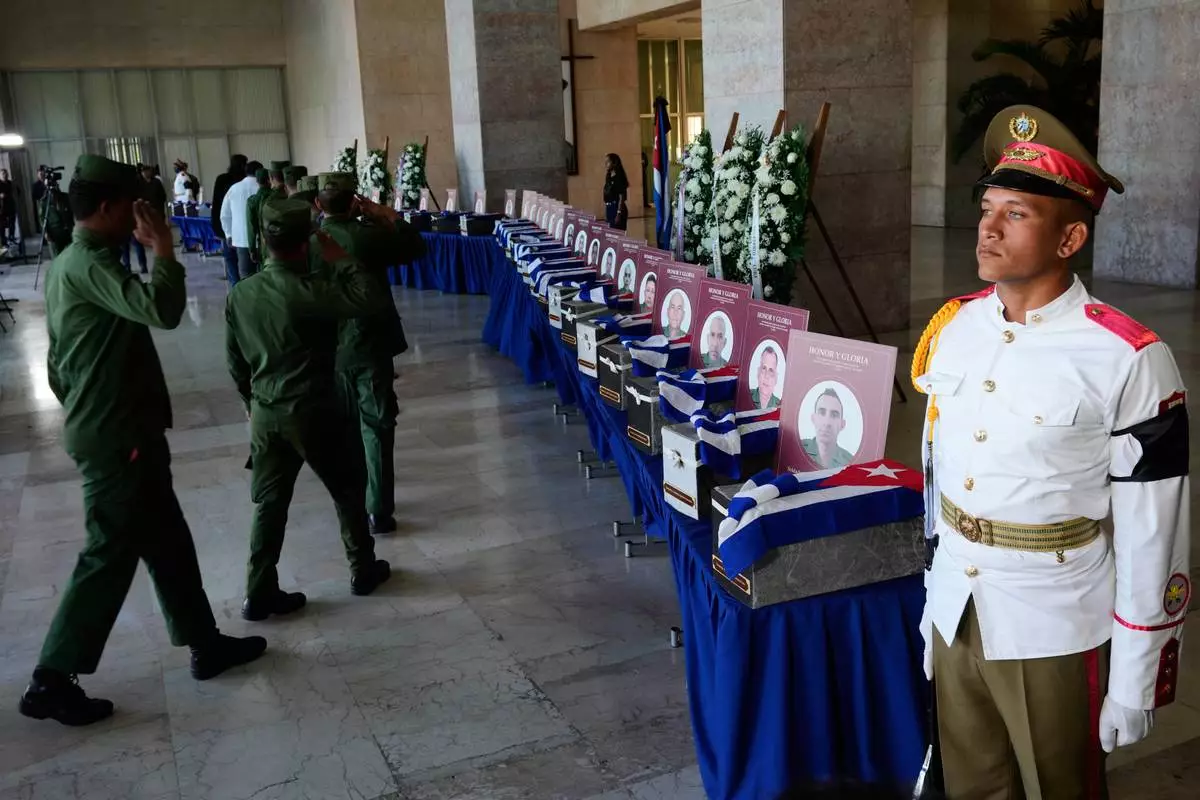
Military members pay their last respects to Cuban officers who were killed during the U.S. operation in Venezuela that captured Venezuelan President Nicolas Maduro, at the Ministry of the Revolutionary Armed Forces where the urns containing the remains are displayed during a ceremony in Havana, Cuba, Thursday, Jan. 15, 2026. (AP Photo/Ramon Espinosa)
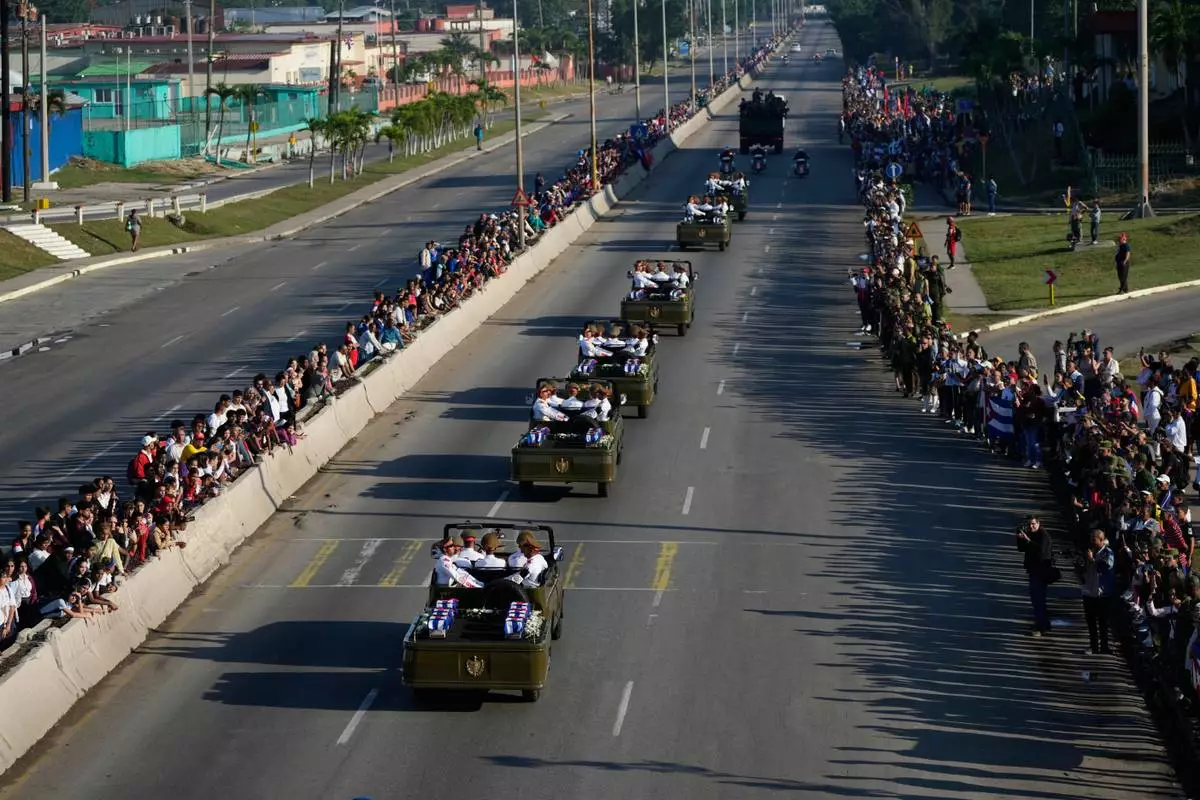
A motorcade transports urns containing the remains of Cuban officers, who were killed during the U.S. operation in Venezuela that captured Venezuelan President Nicolas Maduro, through Havana, Cuba, Thursday, Jan. 15, 2026. (AP Photo/Ramon Espinosa)
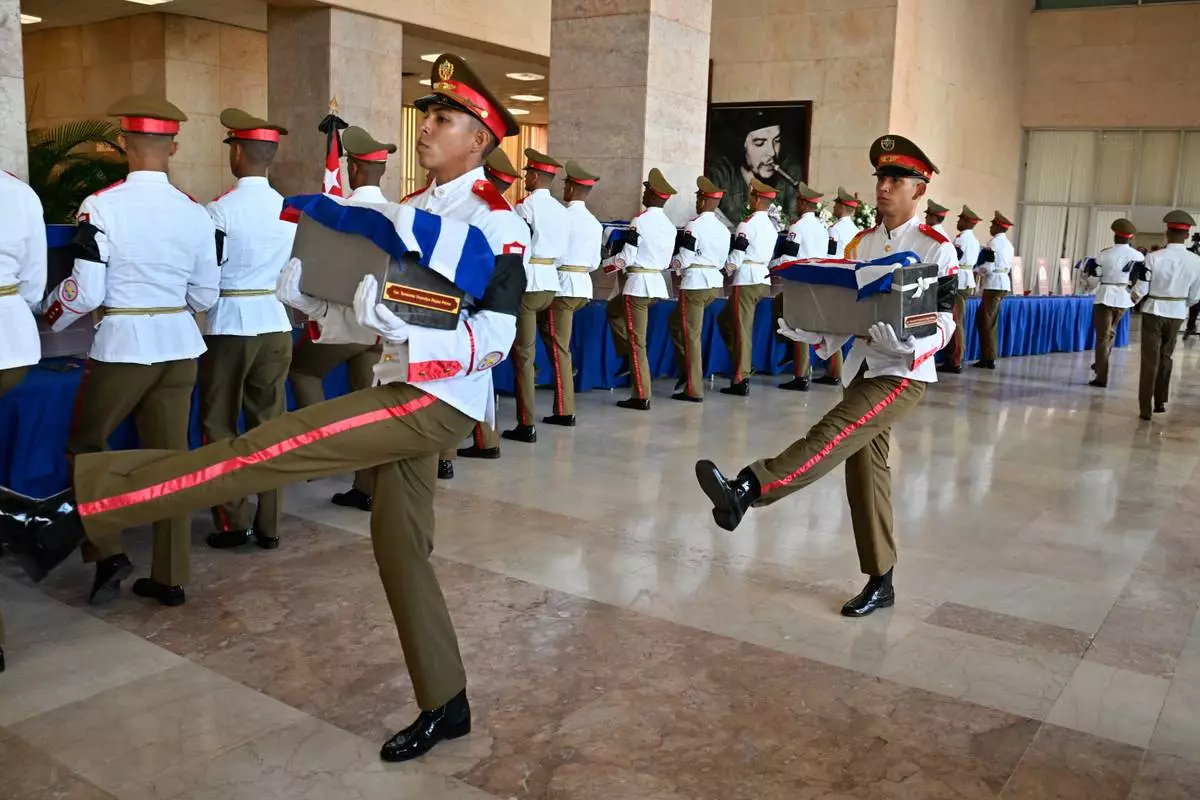
Soldiers carry urns containing the remains of Cuban officers, who were killed during the U.S. operation in Venezuela that captured Venezuelan President Nicolas Maduro, at the Ministry of the Revolutionary Armed Forces in Havana, Cuba, Thursday, Jan. 15, 2026. (Adalberto Roque /Pool Photo via AP)
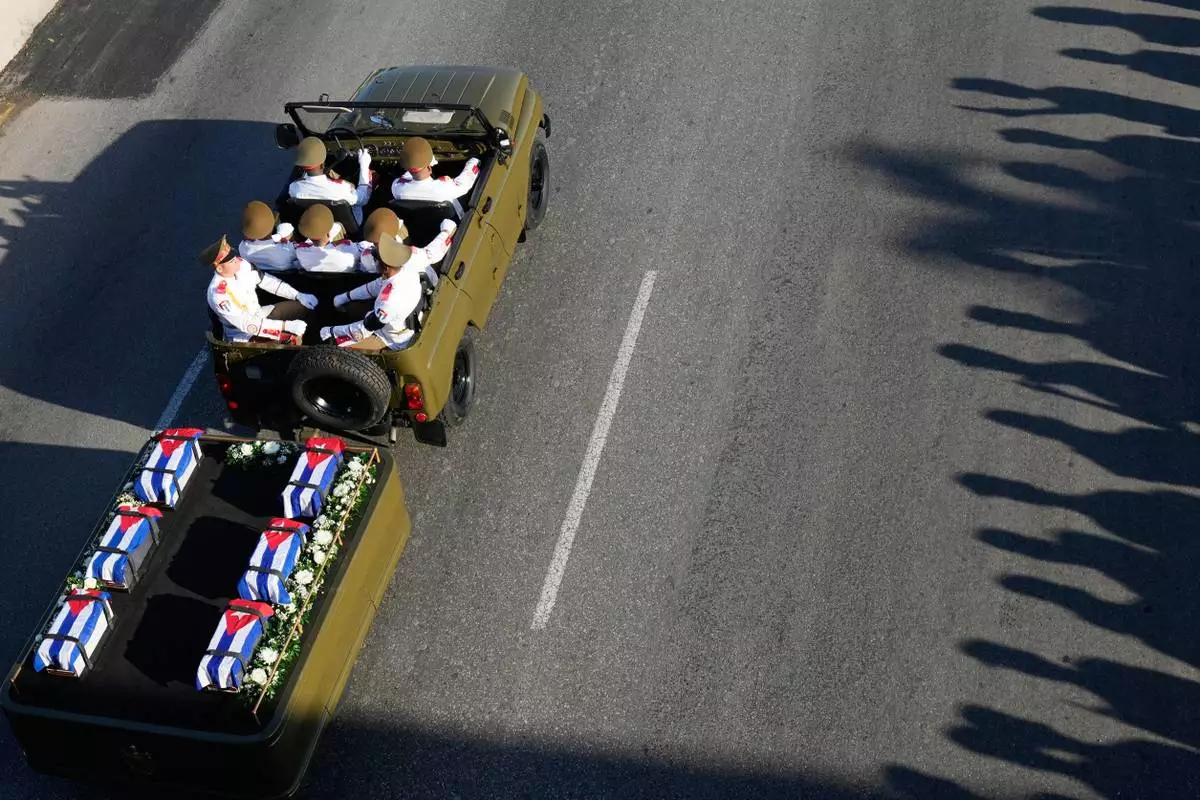
A motorcade transports urns containing the remains of Cuban officers, who were killed during the U.S. operation in Venezuela that captured Venezuelan President Nicolas Maduro, through Havana, Cuba, Thursday, Jan. 15, 2026. (AP Photo/Ramon Espinosa)
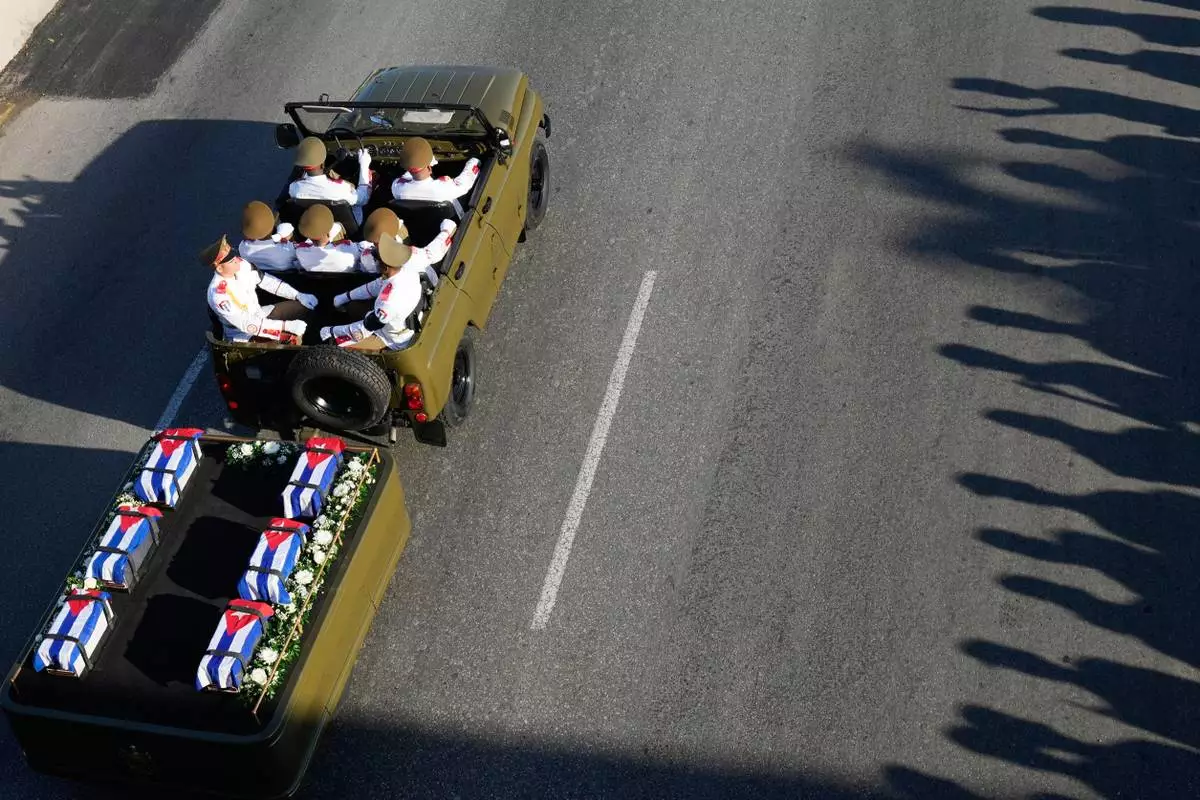
A motorcade transports urns containing the remains of Cuban officers, who were killed during the U.S. operation in Venezuela that captured Venezuelan President Nicolas Maduro, through Havana, Cuba, Thursday, Jan. 15, 2026. (AP Photo/Ramon Espinosa)
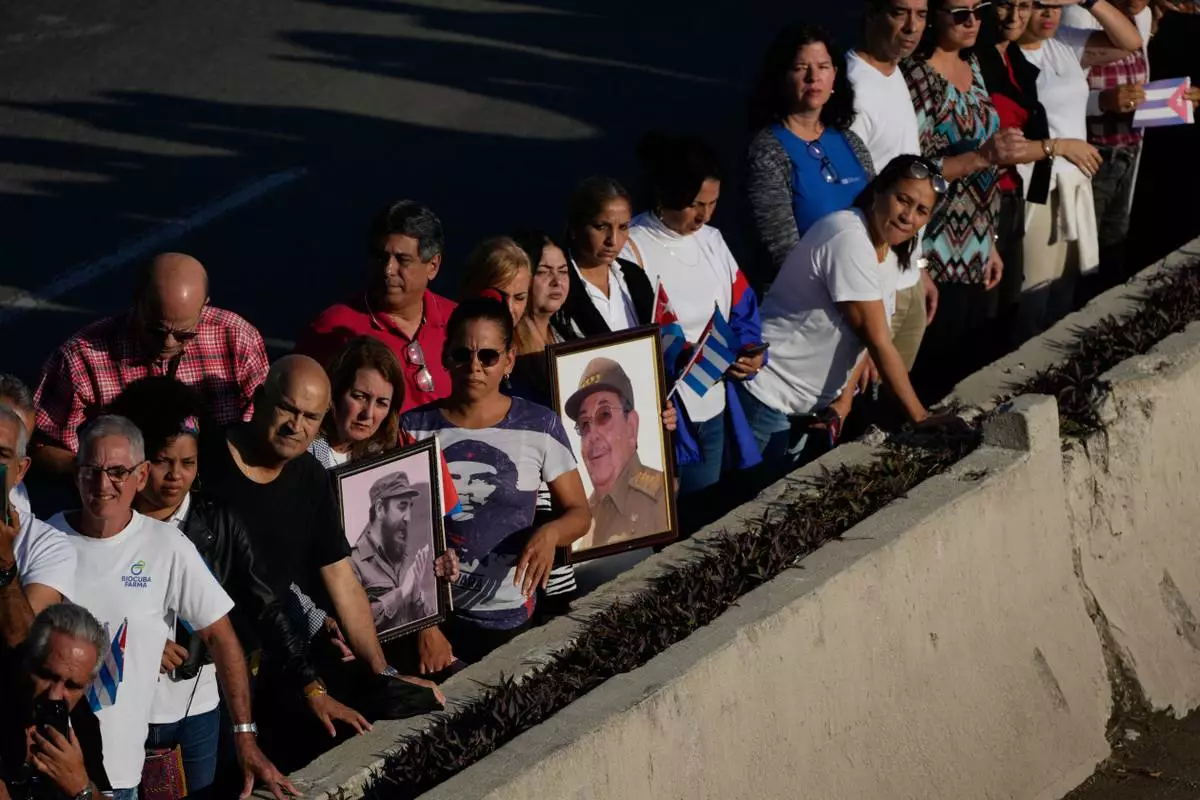
People line the streets of Havana, Cuba, Thursday, Jan. 15, 2026, to watch the motorcade carrying urns containing the remains of Cuban officers killed during the U.S. operation in Venezuela that captured Venezuelan President Nicolas Maduro. (AP Photo/Ramon Espinosa)
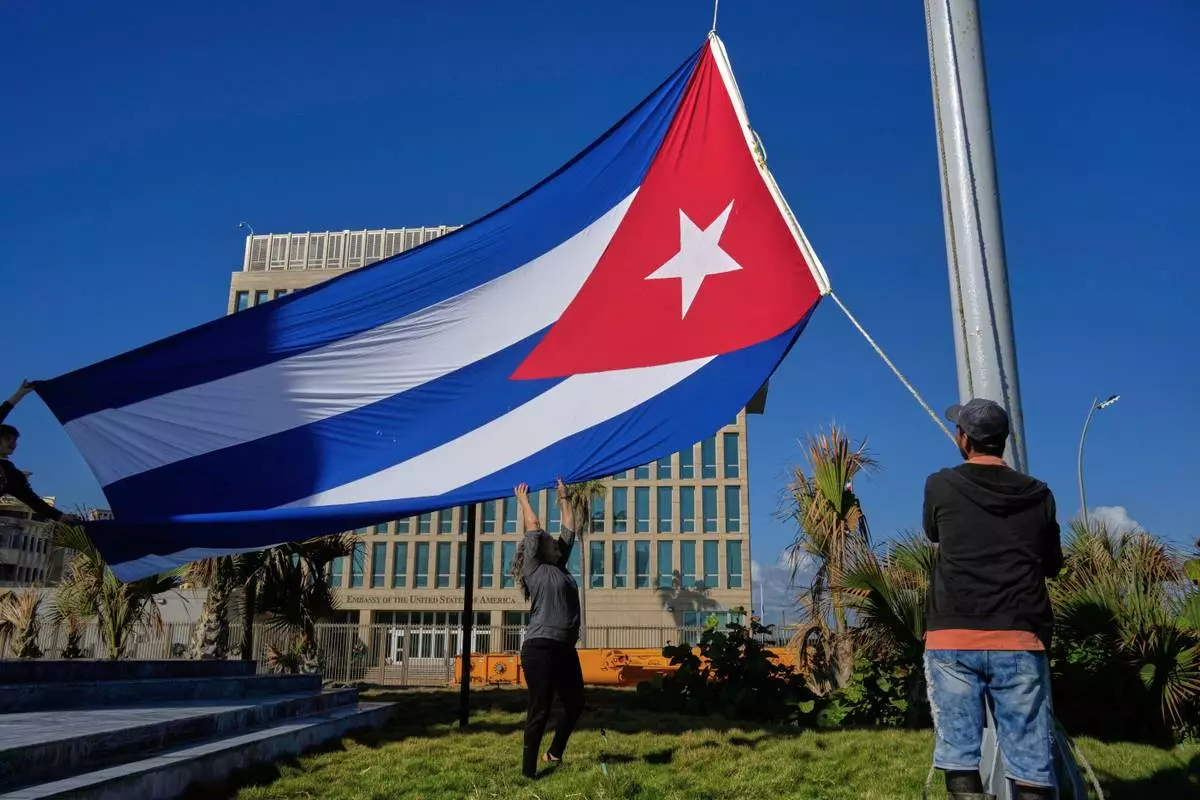
Workers fly the Cuban flag at half-staff at the Anti-Imperialist Tribune near the U.S. Embassy in Havana, Cuba, Monday, Jan. 5, 2026, in memory of Cubans who died two days before in Caracas, Venezuela during the capture of Venezuelan President Nicolas Maduro by U.S. forces. (AP Photo/Ramon Espinosa)