ADDIS ABABA, Ethiopia (AP) — When 19-year-old Nigus Yosef told his parents he was going to leave home in Ethiopia’s Tigray region and try to get to Saudi Arabia, they begged him not to go.
Two of their children had already made the crossing, via the Gulf of Aden and then war-torn Yemen. Yosef’s brother is now in jail in Yemen for entering that country illegally. His sister made it to Saudi Arabia, also illegally, which means it will be difficult for her to leave.
On August 3, 2025, Yosef and five friends from his town of Adi Qeyih boarded a boat bound for Yemen. That night, it capsized. Only 56 people of the nearly 200 people on board survived. Yosef was not one of them.
“His parents are in deep shock and grief,” his uncle, Redae Barhe, said in a telephone interview. “They can’t even voice their sorrow.”
Nigus Yosef is one of 132 missing from the boat that capsized this month; one of countless people from African countries gone missing on a journey in search of a new life.
The families they leave behind know that there are high odds of misfortune. Boats are often overcrowded, unable to withstand rough seas. Once on dry land, there are other dangers. Migrants are vulnerable, with few resources or protection, making them easy prey for human traffickers and kidnappers.
Senait Tadesse says that her 27-year-old daughter made it to Yemen, only to be held captive by kidnappers who communicated with Tadesse through Facebook, demanding a US$ 6,000 ransom to release her only child.
Tadesse said in an interview with The Associated Press in the capital, Addis Ababa, that she sold her car and all her jewelry to raise the cash and deposited the money in an Ethiopian bank account.
But the kidnappers demanded more. She sold all her belongings; they still wanted more. Not knowing what else to do, she went to the police, armed with the local bank account number that the kidnappers had been using.
Meanwhile, she was on Facebook, trying to get news of her daughter. Eventually, a post from a survivor confirmed that Tadesse’s daughter had been killed. To date, no arrests have been made.
Although Ethiopia has been relatively stable since the war in the country’s Tigray region ended in 2022, youth unemployment is high and there are still pockets of unrest.
“Many young people no longer see a future for themselves within a nation that does not prioritize their needs,” explained Yared Hailemariam, an Ethiopian human rights advocate based in Addis Ababa. “The cause of this migration is lack of economic opportunities and growing conflicts. Young people are faced with a choice of either taking up arms to fight in endless conflicts, or providing for their families.”
The war in Tigray was the reason why Nigus Yosef never finished school. When the conflict started in 2020, he was in 7th Grade, and he dropped out to join the Tigray armed forces. When the ceasefire was signed in 2022, he came back home, but couldn’t find a job. After three years, he was desperate.
Residents in the region say that traffickers seize on that desperation, and that their networks extend even into remote areas and rural villages.
Eden Shumiye was just 13 when she left Adi Qeyih with Yosef and his friends. Her parents say that she was preyed on by people smugglers during the town’s public market day, and that they convinced her to leave with the group. Her parents heard nothing from her until one of the other migrants called them when they reached Wuha Limat, near the Ethiopia-Djibouti border. The news left them sick with worry.
After the boat capsized, a relative of one of the survivors managed to send a voice message to them from Saudi Arabia via the messaging app Imo, confirming that Eden’s dead body had been recovered. Of the six young people who left Adi Qeyih, only two survived.
“Her mother is heartbroken,” Eden’s father, Shumiye Hadush, told The Associated Press. “The pain is truly overwhelming.”
In response to the recent tragedy, the Ethiopian government issued a statement warning citizens “not to take the illegal route,” and to “avoid the services of traffickers at all cost,” while urging people to ”pursue legal avenues for securing opportunities.”
But Girmachew Adugna, a migration scholar specializing in Ethiopia and the Horn of Africa, points out that legal migration channels are slow and time-consuming. “Passports are hard to obtain due to rising costs,” he says. “Young people often have little or no access to legal migration pathways, which leads them to migrate through irregular means.”
More than 1.1 million Ethiopians were classified as migrants who left their home country and were living abroad in 2024, up from about 200,000 recorded in 2010, according to United Nations figures.
In spite of Yemen’s civil war, the number of migrants arriving there has tripled from 27,000 in 2021 to 90,000 last year, the U.N. International Organization for Migration, or IOM, said last month.
To reach Yemen, migrants are taken by smugglers on often dangerous, overcrowded boats across the Red Sea or Gulf of Aden. The IOM said at least 1,860 people have died or disappeared along the route, including 480 who drowned.
“Our youth are dying because of this dangerous migration,” says Eden Shumiye’s father Hadush. “They fall victim to the cruelty of traffickers. When will this tragedy come to an end?”
Associated Press writer Khaled Kazziha in Nairobi, Kenya contributed to this report.
For more on Africa and development: https://apnews.com/hub/africa-pulse
The Associated Press receives financial support for global health and development coverage in Africa from the Gates Foundation. The AP is solely responsible for all content. Find AP’s standards for working with philanthropies, a list of supporters and funded coverage areas at AP.org.
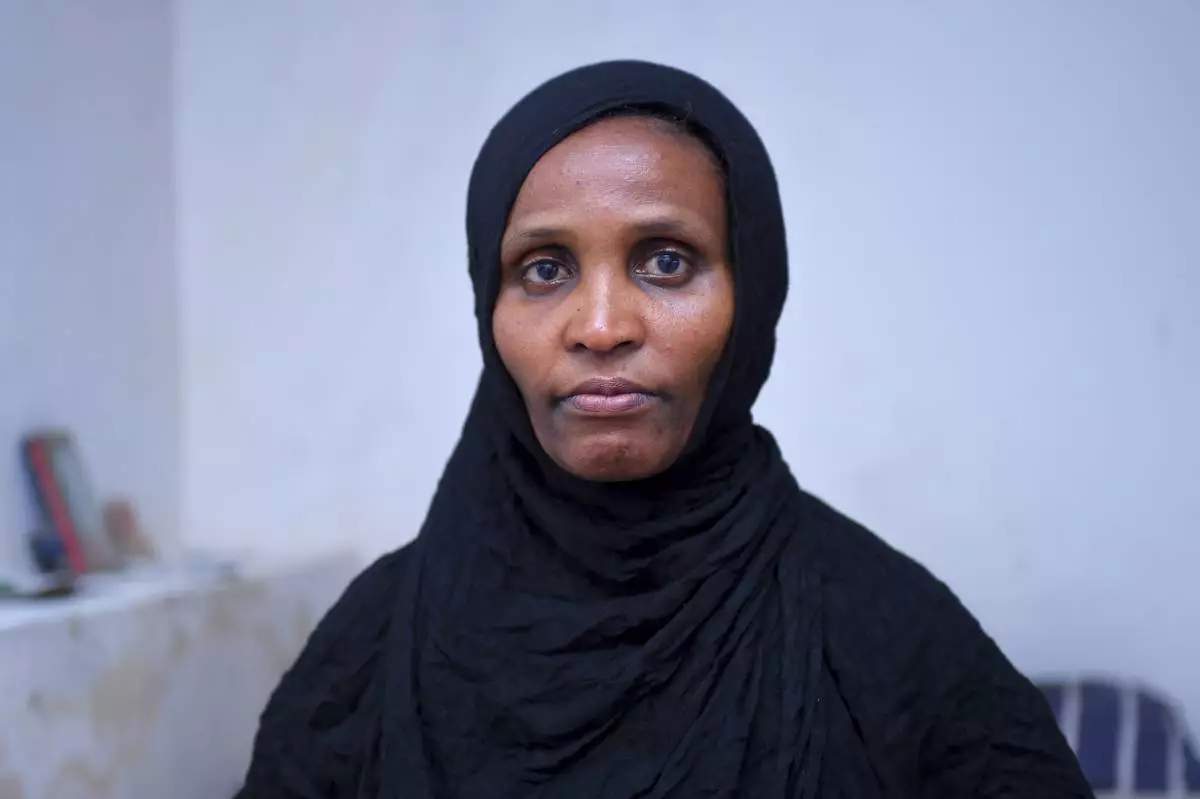
Senait Tadesse, who her 27-year-old daughter made it to Yemen, only to be held captive by kidnappers, poses for a photo at her home in Addis Ababa, Ethiopia Sunday, Aug. 17, 2025. (AP Photo)
CAPE CANAVERAL, Fla. (AP) — An ailing astronaut returned to Earth with three others on Thursday, ending their space station mission more than a month early in NASA’s first medical evacuation.
SpaceX guided the capsule to a middle-of-the-night splashdown in the Pacific near San Diego, less than 11 hours after the astronauts exited the International Space Station.
“It’s so good to be home,” said NASA astronaut Zena Cardman, the capsule commander.
It was an unexpected finish to a mission that began in August and left the orbiting lab with only one American and two Russians on board. NASA and SpaceX said they would try to move up the launch of a fresh crew of four; liftoff is currently targeted for mid-February.
Cardman and NASA’s Mike Fincke were joined on the return by Japan’s Kimiya Yui and Russia’s Oleg Platonov. Officials have refused to identify the astronaut who had the health problem or explain what happened, citing medical privacy.
While the astronaut was stable in orbit, NASA wanted them back on Earth as soon as possible to receive proper care and diagnostic testing. The entry and splashdown required no special changes or accommodations, officials said, and the recovery ship had its usual allotment of medical experts on board. It was not immediately known when the astronauts would fly from California to their home base in Houston. Platonov’s return to Moscow was also unclear.
NASA stressed repeatedly over the past week that this was not an emergency. The astronaut fell sick or was injured on Jan. 7, prompting NASA to call off the next day’s spacewalk by Cardman and Fincke, and ultimately resulting in the early return. It was the first time NASA cut short a spaceflight for medical reasons. The Russians had done so decades ago.
The space station has gotten by with three astronauts before, sometimes even with just two. NASA said it will be unable to perform a spacewalk, even for an emergency, until the arrival of the next crew, which has two Americans, one French and one Russian astronaut.
The Associated Press Health and Science Department receives support from the Howard Hughes Medical Institute’s Department of Science Education and the Robert Wood Johnson Foundation. The AP is solely responsible for all content.

Roscosmos cosmonaut Oleg Platonov is helped out of the SpaceX Dragon Endeavour spacecraft onboard the SpaceX recovery ship SHANNON after they re-entered the earth in a middle-of-the-night splashdown near San Diego, Calif., Thursday, Jan. 15, 2026. (NASA via AP)
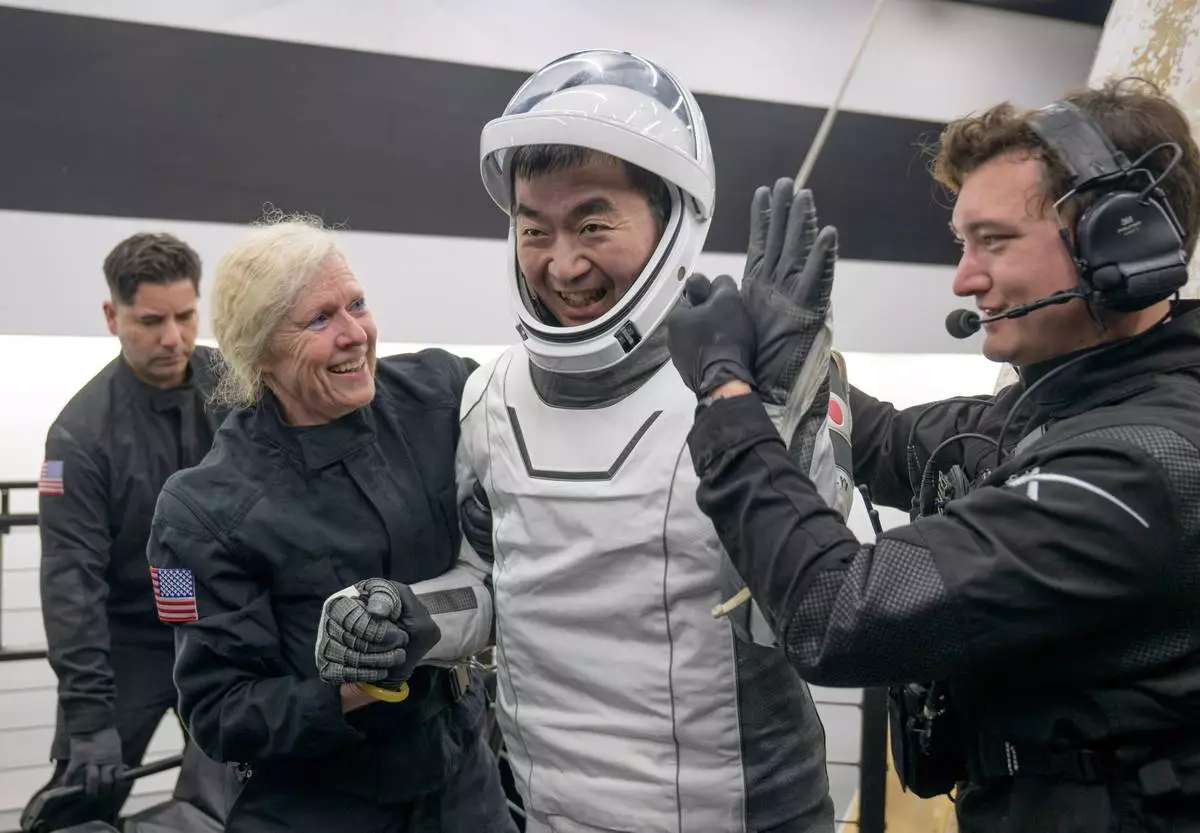
JAXA (Japan Aerospace Exploration Agency) astronaut Kimiya Yui is helped out of the SpaceX Crew-11 capsule after they re-entered the earth in a middle-of-the-night splashdown near San Diego, Calif., Thursday, Jan. 15, 2026. (NASA via AP)
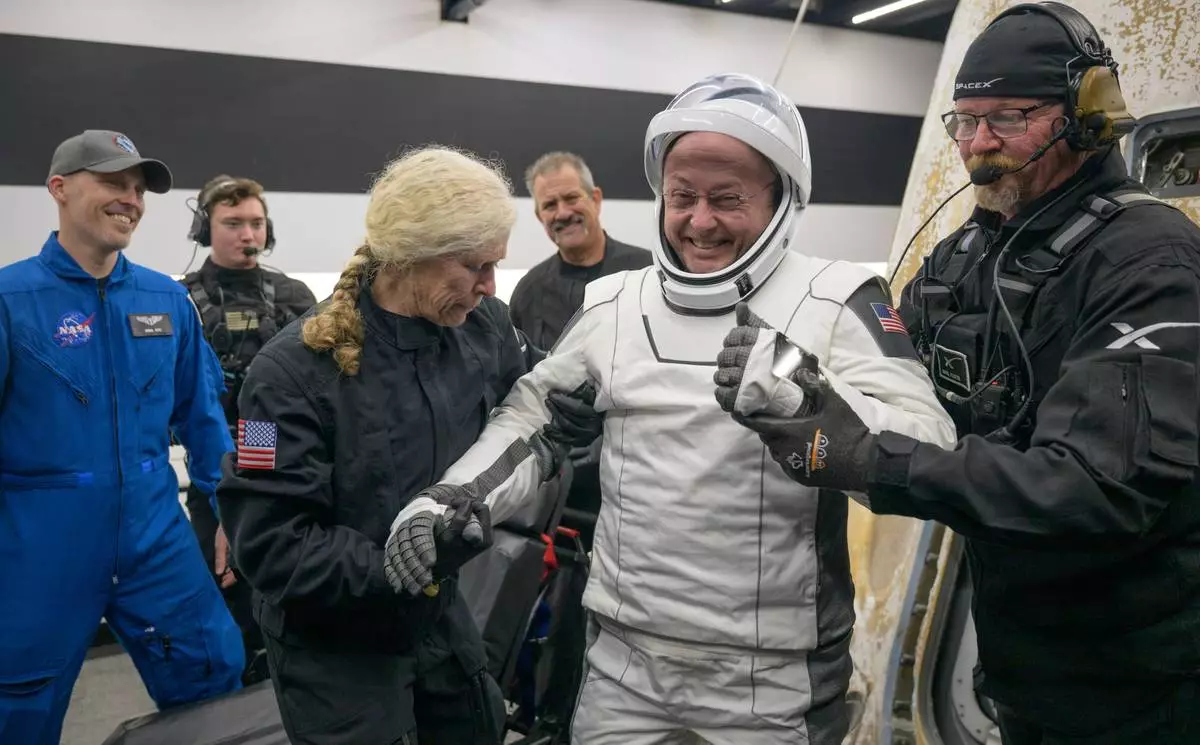
NASA astronaut Mike Fincke is helped out of the SpaceX Crew-11 capsule after they re-entered the earth in a middle-of-the-night splashdown near San Diego, Calif., Thursday, Jan. 15, 2026. (NASA via AP)

NASA astronaut Zena Cardman is helped out of the SpaceX Crew-11 capsule after they re-entered the earth in a middle-of-the-night splashdown near San Diego, Calif., Thursday, Jan. 15, 2026. (NASA via AP)

This screengrab from video provided by NASA shows the NASA's SpaceX Crew-11 capsule being taken into the recovery vessel after crew members re entered the earth in a middle-of-the-night splashdown near San Diego, Calif., Thursday, Jan. 15, 2026. (NASA via AP)

This screengrab from video provided by NASA shows NASA astronaut Mike Fincke getting helped out of the SpaceX Crew-11 capsule after they re-entered the earth in a middle-of-the-night splashdown near San Diego, Calif., Thursday, Jan. 15, 2026. (NASA via AP)

This screengrab from video provided by NASA shows NASA Japanese astronaut Kimiya Yui being helped out of the SpaceX Crew-11 capsule after they re-entered the earth in a middle-of-the-night splashdown near San Diego, Calif., Thursday, Jan. 15, 2026. (NASA via AP)

This screengrab from video provided by NASA shows Russian astronaut Oleg Platonov being helped out of the SpaceX Crew-11 capsule after they re-entered the earth in a middle-of-the-night splashdown near San Diego, Calif., Thursday, Jan. 15, 2026. (NASA via AP)

Roscosmos cosmonaut Oleg Platonov, left, NASA astronauts Mike Fincke, Zena Cardman, and JAXA (Japan Aerospace Exploration Agency) astronaut Kimiya Yui are seen inside the SpaceX Dragon Endeavour spacecraft onboard the SpaceX recovery ship SHANNON shortly after having landed in the Pacific Ocean off the coast of Long Beach, Calif., Thursday, Jan. 15, 2026. (NASA via AP)

This screengrab from video provided by NASA shows NASA astronaut Zena Cardman being helped out of the SpaceX Crew-11 capsule after they re-entered the earth in a middle-of-the-night splashdown near San Diego, Calif., Thursday, Jan. 15, 2026. (NASA via AP)
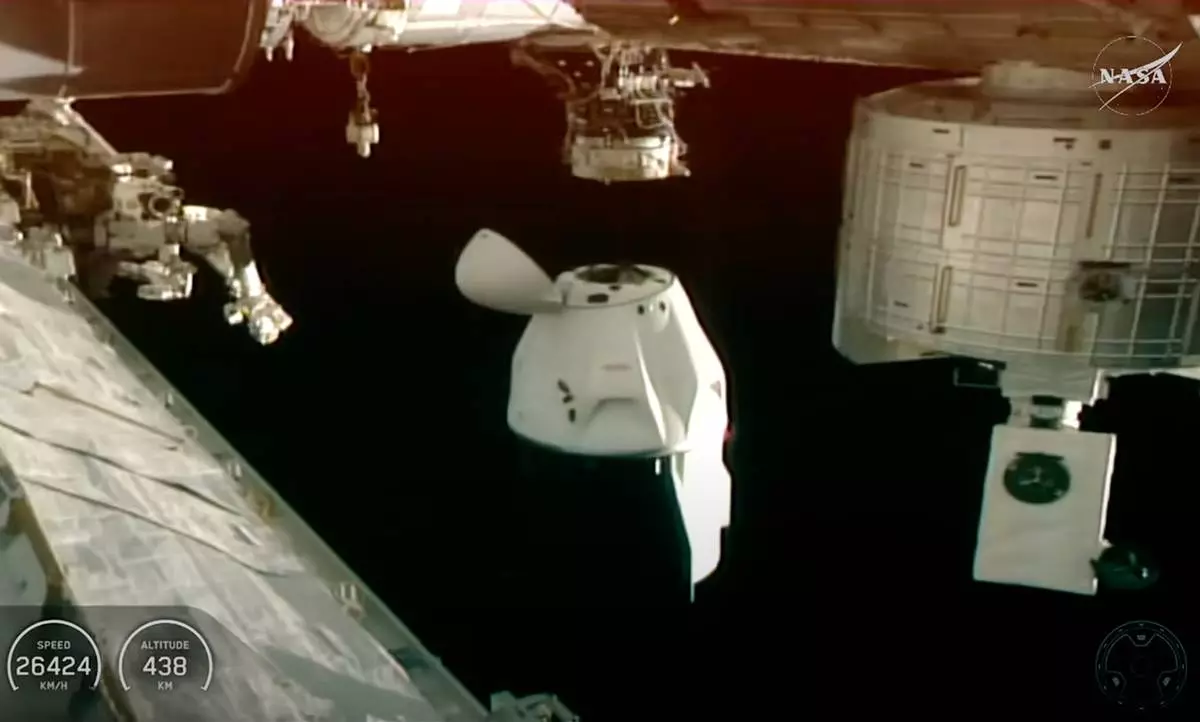
This screengrab from video provided by NASA TV shows the SpaceX Dragon departing from the International Space Station shortly after undocking with four NASA Crew-11 members inside on Wednesday, Jan. 14, 2026. (NASA via AP)
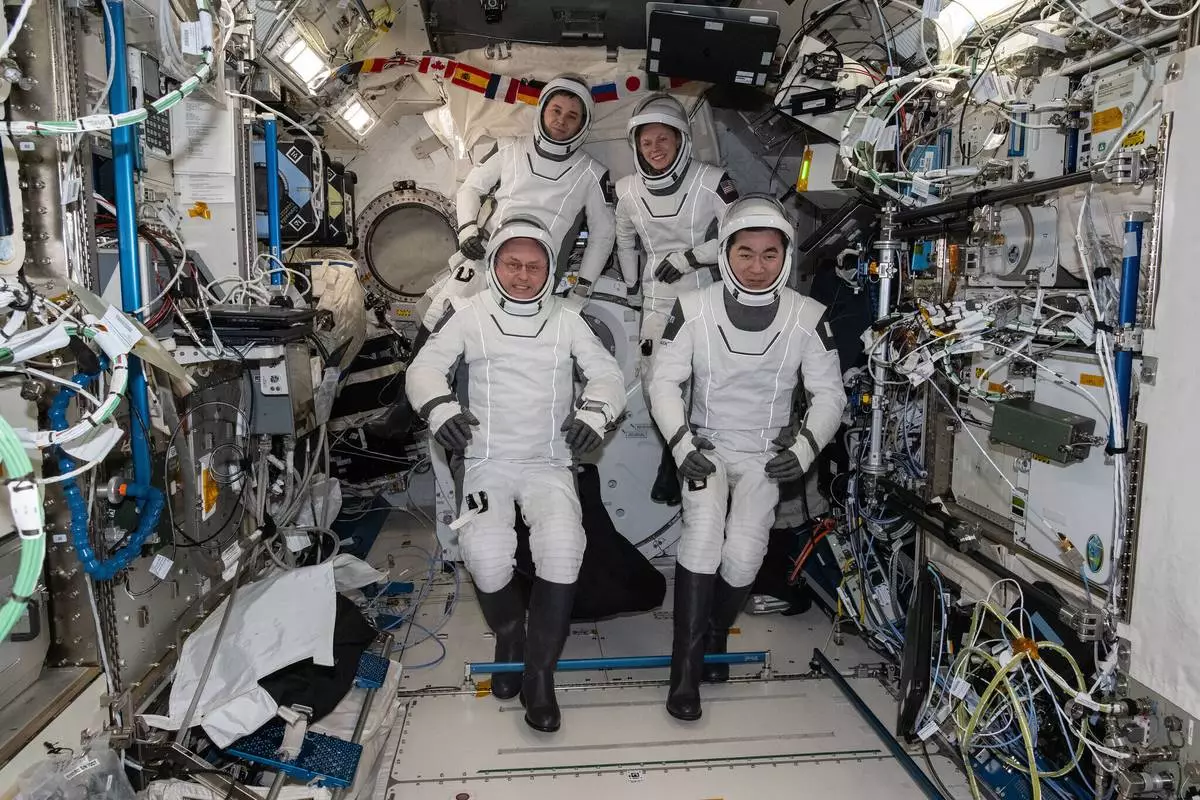
This photo provided by NASA shows clockwise from bottom left are, NASA astronaut Mike Fincke, Roscosmos cosmonaut Oleg Platonov, NASA astronaut Zena Cardman, and JAXA (Japan Aerospace Exploration Agency) astronaut Kimiya Yui gathering for a crew portrait wearing their Dragon pressure suits during a suit verification check inside the International Space Station’s Kibo laboratory module, Wednesday, Jan. 14, 2026. (NASA via AP)

This screengrab from video provided by NASA shows recovery vessels approaching the NASA's SpaceX Crew-11 capsule to evacuate one of the crew members after they re-entered the earth in a middle-of-the-night splashdown near San Diego, Calif., Thursday, Jan. 15, 2026. (NASA via AP)
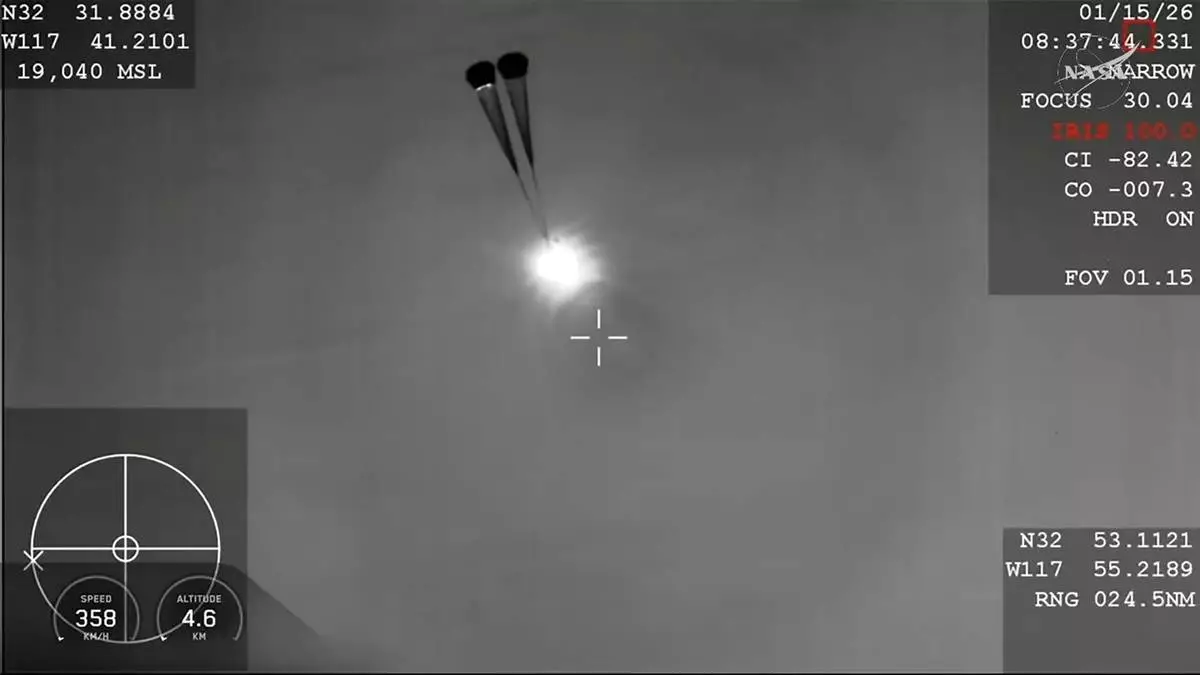
This screengrab from video provided by NASA shows the NASA's SpaceX Crew-11 members re entering the earth in a middle-of-the-night splashdown near San Diego, Calif., Thursday, Jan. 15, 2026. (NASA via AP)
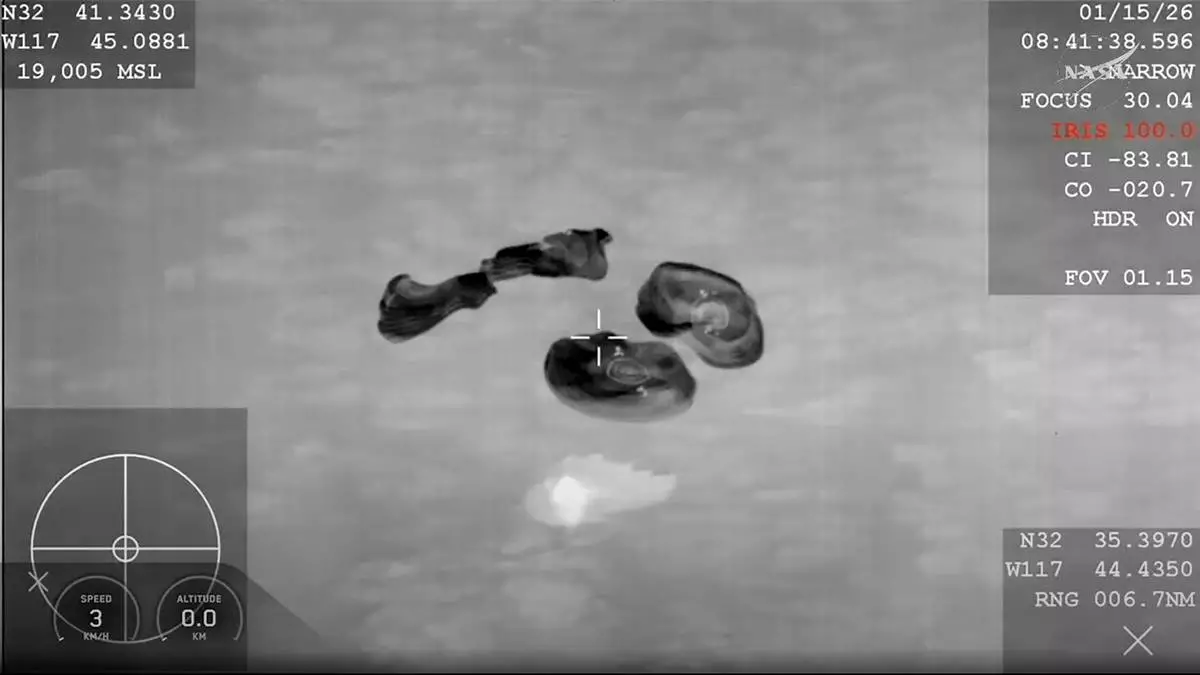
This screengrab from video provided by NASA shows the NASA's SpaceX Crew-11 members re entering the earth in a middle-of-the-night splashdown near San Diego, Calif., Thursday, Jan. 15, 2026. (NASA via AP)