NEW YORK--(BUSINESS WIRE)--Aug 18, 2025--
As a proud partner of the US Open Tennis Championships for 33 years, American Express will once again serve up enhanced perks for Card Members and fans at this year’s tournament, taking place August 18 through September 7. From access to Card Member lounges, to fan experience spaces and additional perks across the tournament grounds, American Express is continuing to enhance the US Open experience.
This press release features multimedia. View the full release here: https://www.businesswire.com/news/home/20250818013197/en/
American Express Card Member Lounge
The American Express® Card Member Lounge, located on the second level of the American Express Fan Experience, will be open once again exclusively to American Express Card Members and up to two of their guests.
Recognizing the rising demand for personalization, the lounge will feature:
Card Members can also enjoy “ Open Tasting Flights, ” which will include the signature cocktail of the US Open, the Grey Goose® Honey Deuce™, alongside a Dobel® Tequila Ace Paloma, Aperol® Spritz, and glass of Moët & Chandon Impérial Brut*.
The Centurion® Lounge at US Open
Located in Louis Armstrong Stadium, The Centurion® Lounge at US Open offers an elevated space where Platinum® Card Members can relax and enjoy a fresh selection of globally inspired dishes curated by Chefs Kwame Onwuachi and Mike Solomonov, alongside specialty cocktails by Bar Director Harrison Ginsberg* – all partners of the new Culinary Collective by The Centurion® Lounge™.
Same-day one-hour reservations are required and will become available exclusively through Resy at 9:30am ET each day of the tournament, beginning August 24 through September 7. Platinum Card Members are eligible to make a reservation for themselves plus one guest, once per day, subject to availability.
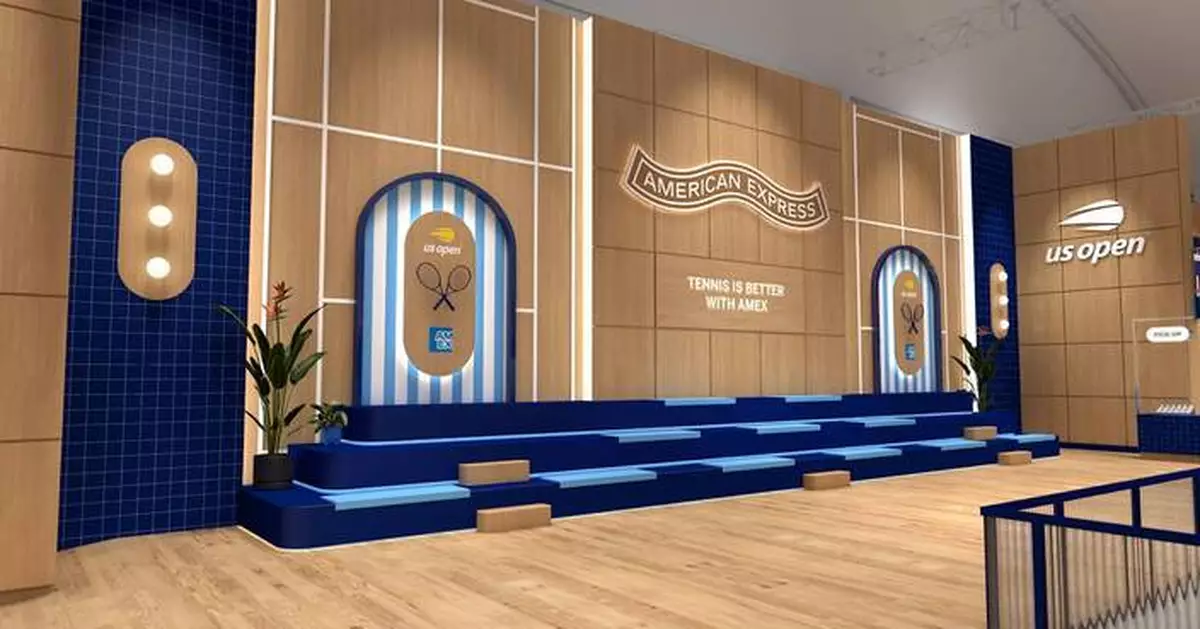
US Open American Express Fan Experience
Open to all fans and located near the East Gate across from Louis Armstrong Stadium, the American Express Fan Experience will return with a refreshed design and new interactive moments, including:
Fan-favorite activities like Glow Tennis - a competitive, mixed-reality game - and a station to customize tennis balls will return to the Fan Experience again this year.
Extra Perks On and Off the Court
Perks available while supplies last. Capacity limitations and terms apply. For more information about American Express perks at the 2025 US Open, head to the website.
*Must be 21 or older to consume alcohol. Drink responsibly.
ABOUT AMERICAN EXPRESS
American Express (NYSE: AXP) is a global payments and premium lifestyle brand powered by technology. Our colleagues around the world back our customers with differentiated products, services and experiences that enrich lives and build business success.
Founded in 1850 and headquartered in New York, American Express’ brand is built on trust, security, and service, and a rich history of delivering innovation and Membership value for our customers. With over a hundred million merchant locations across our global network, we seek to provide the world’s best customer experience every day to a broad range of consumers, small and medium-sized businesses, and large corporations.
For more information about American Express, visit americanexpress.com, americanexpress.com/en-us/newsroom/, and ir.americanexpress.com.
Location: U.S.
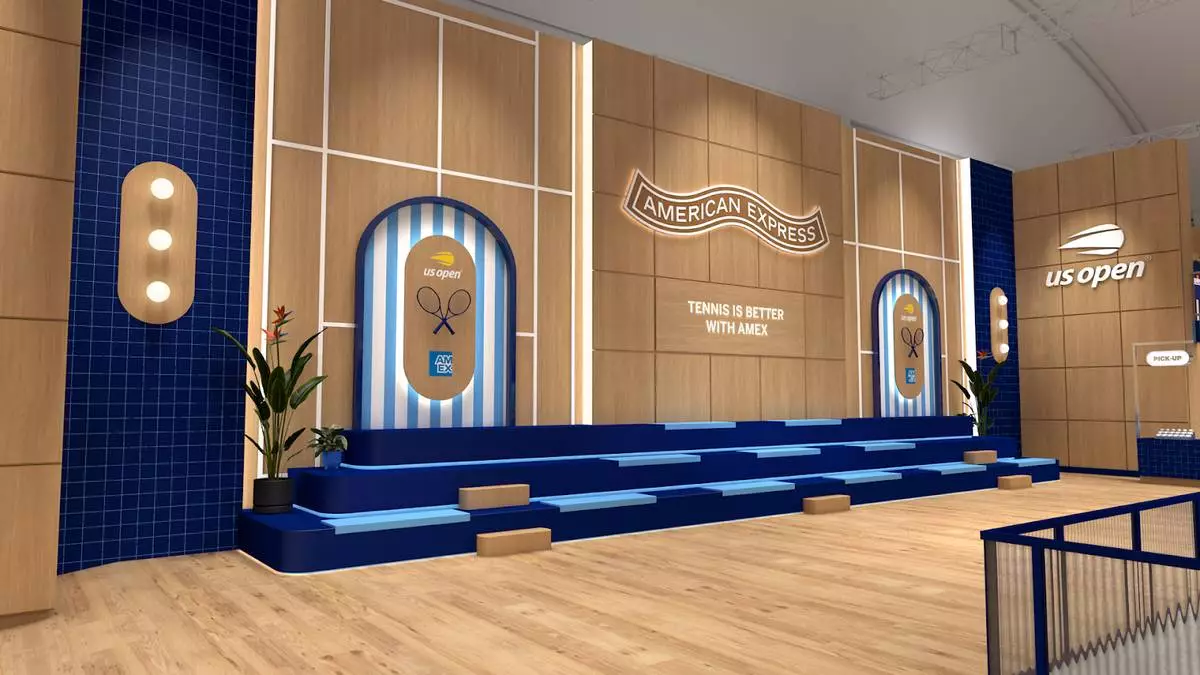
American Express Provides Card Members and Tennis Fans with a Premium Experience at the 2025 US Open Tennis Championships
BUENOS AIRES, Argentina (AP) — Pope Francis reappeared in Argentina's capital a year after his death, but it wasn’t a miracle: It was through the hands of a DJ-priest.
Guilherme Peixoto is a Portuguese Catholic priest who, in his 50s, has become a celebrity in the world of electronic music. He hosted a rave Saturday in Buenos Aires in homage to the Argentine-born leader of the Catholic church who died in April 2025.
As young and old, Catholics and agnostics alike, danced to the music Peixoto controlled from his DJ booth, three enormous screens projected images of the late Popes Francis and John Paul II as well as white doves.
“God bless you, and let’s dance,” a voice-over said before Peixoto appeared in priestly attire and headphones at the historic Plaza de Mayo. He then placed his hands on the console and for the next two hours mixed techno and religious melodies.
“This is a unique opportunity to see him, and it’s free,” said Jesús Martín, a 54-year-old Spaniard and electronic music fan. “In Ibiza, you have to pay 150 euros, and up to 2,000 euros for VIP.”
Peixoto — better known as Padre Guilherme — has become a global sensation, performing around the world to large audiences and amassing a following of 2.8 million people on Instagram and over 220,000 monthly streams on Spotify. He was ordained a priest in 1999, partly out of religious vocation and partly to fulfill a promise his mother made to God when he suffered a life-threatening illness as a child.
Electronic music became a hobby alongside his priestly career. In the 2000s, he began playing at universities and organizing parties to raise funds for his parish, but he asked that no one take his picture for fear of reprisals from his superiors.
Those fears dissipated when Monsignor Jorge Bergoglio assumed leadership of the Catholic Church as Pope Francis in 2013.
“He often said, ‘Don’t be afraid,’ that we had to go out to the peripheries and that ‘We shouldn’t be afraid to use our hands.’ These messages were an inspiration,” Peixoto recalled in an interview with The Associated Press ahead of his performance in Buenos Aires.
So, he enrolled in a DJ school, contacted electronic music producers and began composing his own tracks. Eventually, invitations to participate in festivals and play in clubs across Portugal began to arrive.
The priest burst onto the world stage after his performances at World Youth Day in 2023, before the open-air Mass celebrated by Pope Francis.
“I will never lose this connection with Pope Francis," Peixoto said. "He was the one who touched my heart with this facet of music."
Many attending his Saturday rave knew little about the priest-DJ.
“I learned about him when the tribute to Francis was first announced. I came to remember the Pope, but I think what he does is very original, as long as it’s done respectfully,” Silvia Garaggiola, 60, said.
Saturday’s set list included Peixoto’s hit “El Grano de Mostaza” and remixes of Bad Bunny and Queen.
From the Medusa Festival in Cullera, Spain, to Dreamfields in Mexico, or the Hï Ibiza club — in that Spanish resort town often dubbed the “Vatican” of electronic music — Peixoto broadcasts a message of peace and coexistence to thousands of young people, the vast majority of whom are not practicing Catholics.
Amid the smoke of tobacco and marijuana cigarettes, several groups of teenagers danced and imitated the DJ priest’s hand movements, while laser lights gave Plaza de Mayo the appearance of a nightclub.
“It sounds really good,” commented 17-year-old Ileana González. “I have zero religion, but I’m having fun.”
The Curia’s resistance to modernization, its rejection of sexual diversity and the scandals involving the abuse of minors have erected a wall between the Catholic Church and younger generations —a barrier that Pope Francis sought to dismantle through his revolutionary papacy.
An admirer of English musician Carl Cox and the Italian American artist Anyma, Peixoto seeks to carry forward that mission from behind his DJ decks.
“I believe it is incredibly important to make young people smile, to help them feel happy with themselves, rather than associating happiness with merely possessing this or that material thing,” he said.
Follow AP’s coverage of Latin America and the Caribbean at https://apnews.com/hub/latin-america
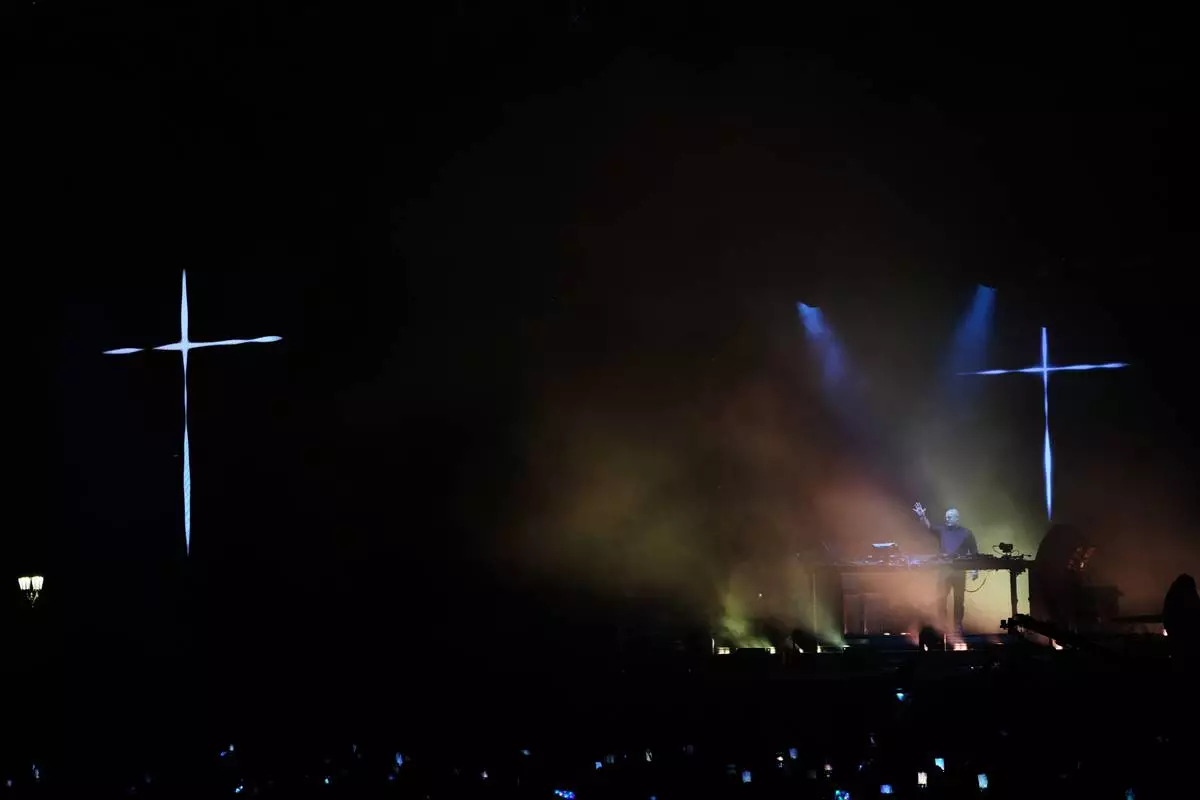
Portuguese Catholic priest, Padre Guilherme performs an open-air DJ set at the Plaza de Mayo, honoring the first year anniversary of Pope Francis' passing in Buenos Aires, Argentina, Saturday, April 18, 2026. (AP Photo/Rodrigo Abd)
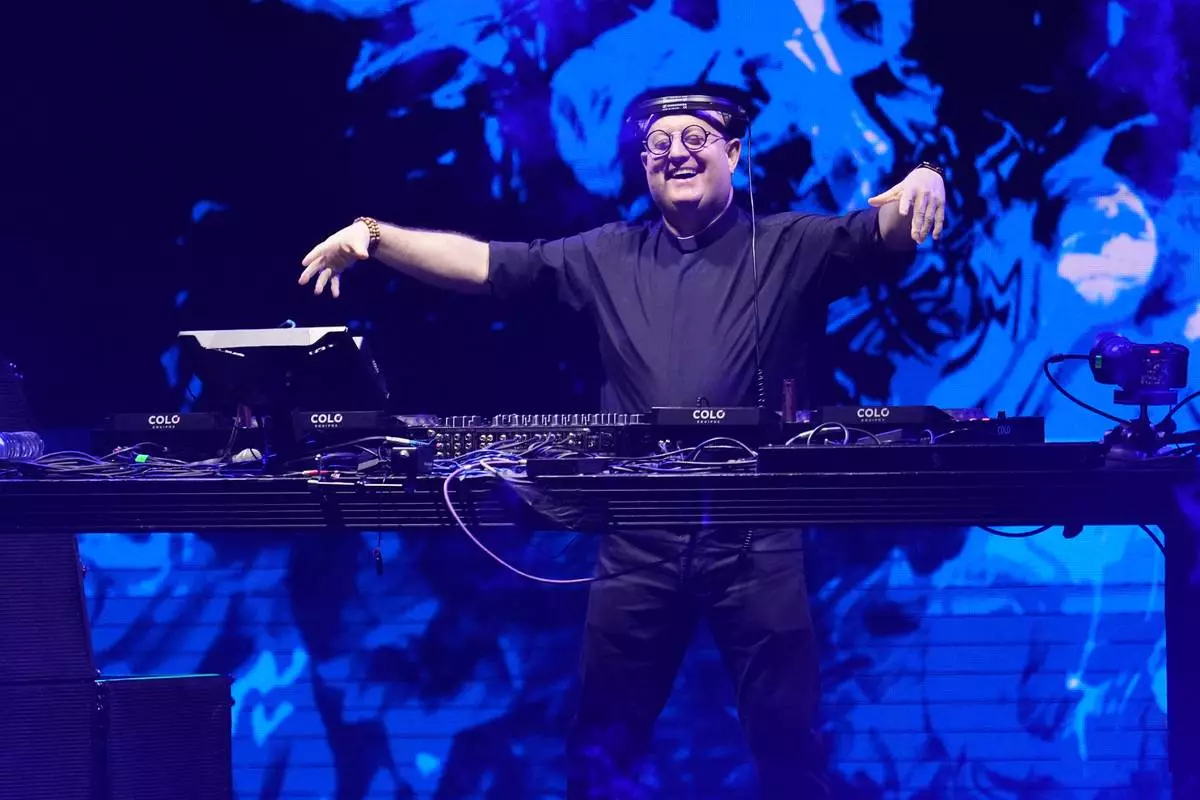
Portuguese Catholic priest, Padre Guilherme performs an open-air DJ set at the Plaza de Mayo, honoring the first year anniversary of Pope Francis' passing in Buenos Aires, Argentina, Saturday, April 18, 2026. (AP Photo/Rodrigo Abd)