SACRAMENTO, Calif.--(BUSINESS WIRE)--Aug 18, 2025--
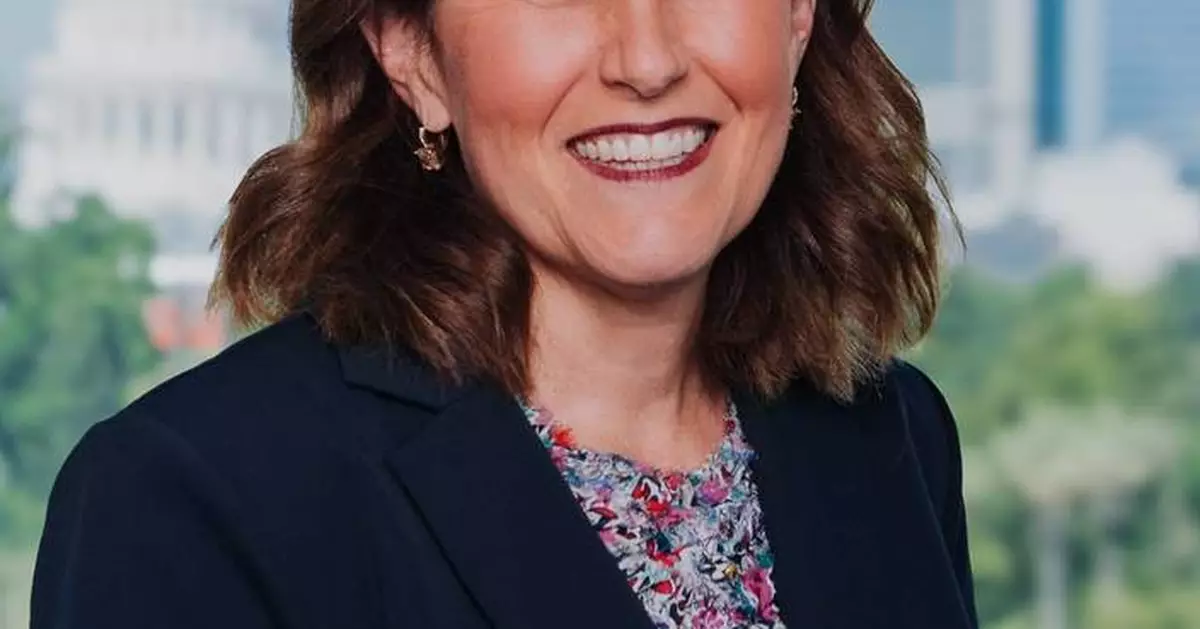
The Western States Petroleum Association (WSPA) Board of Directors today announced the appointment of Jodie Muller as its new President and Chief Executive Officer, effective September 1. Muller currently serves as WSPA’s Chief Operating Officer and Senior Vice President, a position she has held since 2019. She joined the organization -- the nation’s oldest oil and gas trade association -- in 1999.
This press release features multimedia. View the full release here: https://www.businesswire.com/news/home/20250818533927/en/
Muller succeeds Catherine Reheis-Boyd, whose planned departure after 35 years was announced earlier this year. Reheis-Boyd will remain with WSPA in an advisory role for the remainder of 2025 to facilitate a smooth leadership transition. She will move on to her next endeavor in early 2026.
“Jodie Muller has an incredible track record of strategic leadership at WSPA,” said WSPA Board Chair Mike Vomund, Vice President, Chevron Products, Fuels. “We are thrilled she is now stepping into the role of President and CEO, leading the organization at a critical time for our industry and consumers in California, Nevada, Arizona, Washington and Oregon. Jodie is a tireless champion for commonsense policies that support the ability of our industry to provide affordable, reliable and essential fuels that power daily life for millions.”
“I am honored to represent the oil and gas industry and particularly the companies and workers who make our way of life possible,” said Muller. “Our industry faces a tremendous set of challenges that are unfolding in real time. There is a significant amount of hard work ahead as we advocate for policies that will protect fuel supply and affordability while also advancing new technologies for ever-cleaner energy. I look forward to the road ahead and am committed to fighting for commonsense solutions that truly work for all.”
“Jodie Muller is a tremendous leader who has been building trust across the region for years,” said Reheis-Boyd. “I am so proud of her and what we have achieved together in recent years and know, moving forward, Jodie will be effective at helping more leaders “ change their tune ” on how best to deliver low-cost energy solutions and support the best problem solvers our industry has to offer. There is no better person to take WSPA into the future.”
Muller has decades of experience in public administration having served for the Long Beach City Council, various trade associations in Washington, D.C., and in the White House Communications Office under President George H.W. Bush. She serves as the Executive Director of the Shared Energy Future Foundation promoting sustainable energy practices and innovation. Muller earned bachelor’s and master’s degrees from the University of Southern California.
About WSPA
Founded in 1907, the Western States Petroleum Association (WSPA) is the oldest petroleum trade association in the United States and a leader in shaping an ever-evolving energy sector. WSPA represents a dynamic membership of companies that are at the forefront of petroleum exploration, production, refining, and transportation, as well as renewable energy, carbon management solutions, and other technological innovations shaping our energy future. Serving Arizona, California, Nevada, Oregon, and Washington, WSPA aims to ensure that Americans have reliable and affordable access to petroleum and other energy sources by supporting policies that consider social, economic, and environmental factors. Website: www.wspa.org
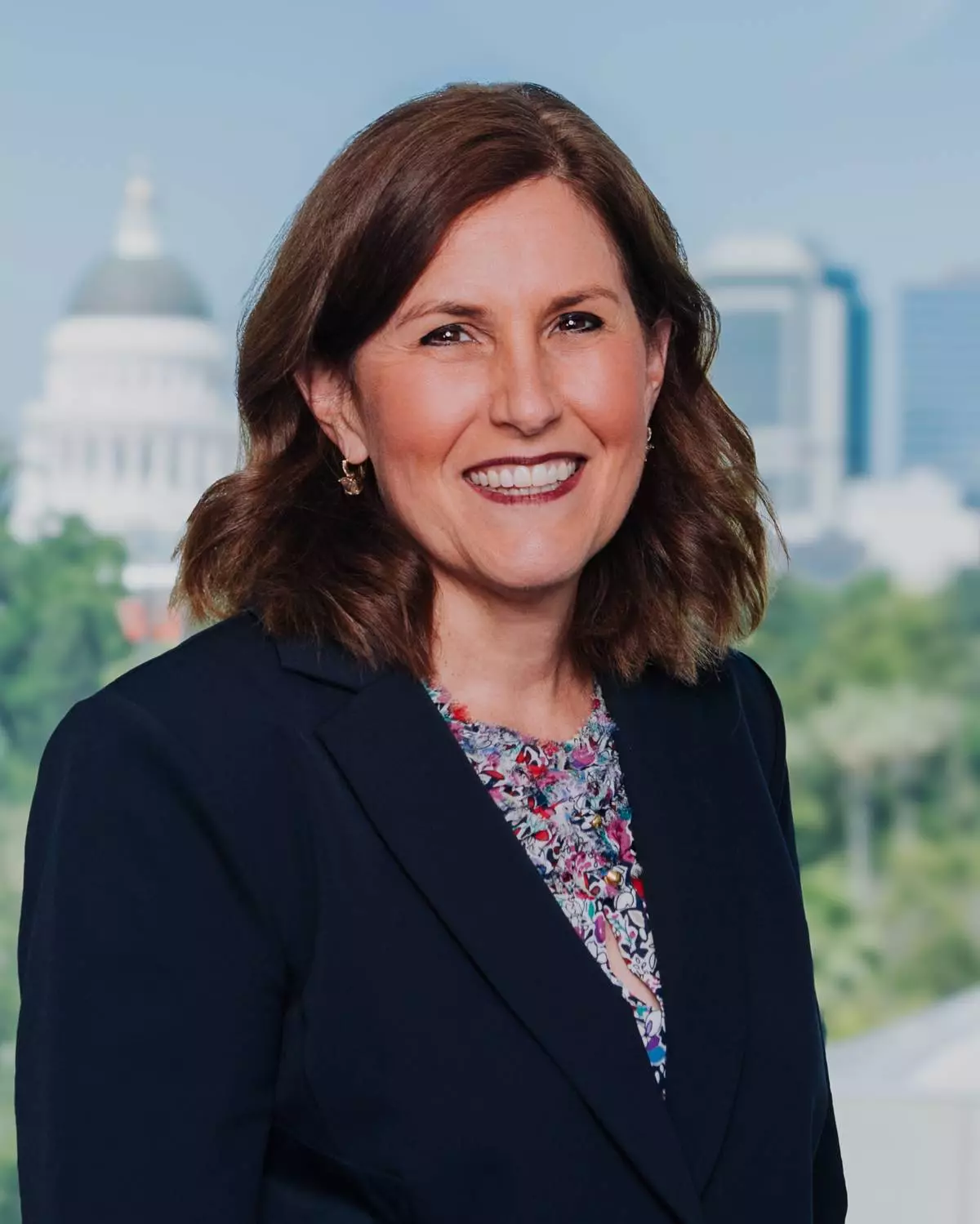
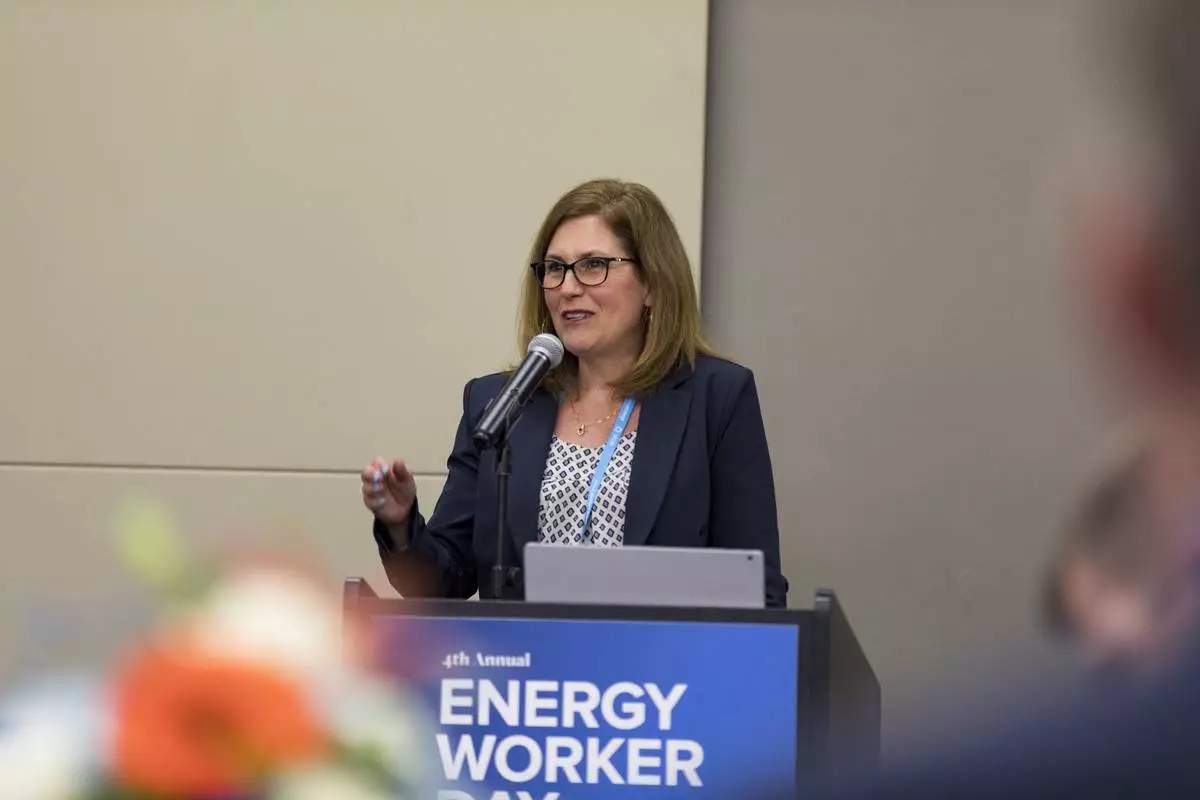
Credit: Western States Petroleum Association - Jodie Muller at the annual Energy Worker Day in Sacramento
Credit: WSPA - Jodie Muller, President and Chief Executive Officer of the Western States Petroleum Association (WSPA).
OMAHA, Neb. (AP) — Union Pacific hopes regulators will be convinced this time that its $85 billion acquisition of Norfolk Southern that it detailed for the second time Thursday will be good for the country.
The U.S. Surface Transportation Board rejected Union Pacific's initial application because regulators wanted more details about how the deal would affect the competitive balance between the five remaining major freight railroads and the impact on customers.
Union Pacific CEO Jim Vena said the new application makes an even stronger case for the benefits of the merger that he believes would shave a day or two off the delivery time for many shipments because they would no longer have to be handed off between two railroads in the middle of the country. The Omaha, Nebraska-based railroad projects that the merger could lead to shifting 2.1 million truckloads off the highway onto trains.
Vena said CSX and BNSF are already improving their operations to ensure they can compete ,and shippers will benefit from that if the deal is approved. Plus, he pointed out that since BNSF is owned by Warren Buffett's Berkshire Hathaway it has the financial resources to do whatever is needed because Berkshire is sitting on nearly $400 billion cash.
“The first few years after this, it’s gonna be like one of those old 15-round boxing fights. Prices are gonna be used, the service is going to be used, everything. And I think the customer’s going to be the winner in all this while we knock down, drag it out, to see who can win and grow their market share,” Vena said.
But the STB established a high bar for major railroad mergers like this one around the turn of the century after past rail mergers snarled freight and led to prolonged disruptions while two railroads worked to integrate their networks. Now Union Pacific has to demonstrate that this deal will enhance competition.
Vena said he's confident the railroads can avoid the integration problems of past mergers because they will take it slow while listening to a new board of customers about the impact. Plus this would be a combination of two successful railroads instead of many deals of the past where one thriving railroad took over another nearly bankrupt one in disrepair.
The deal includes a provision that if the STB requires more than $750 million in concessions Union Pacific can consider walking away, but it won't automatically doom the deal, the railroads disclosed Thursday as they submitted a copy of their merger agreement. Norfolk Southern would be entitled to a $2.5 billion breakup fee if the deal falls apart.
Currently, Norfolk Southern and CSX serve the eastern U.S. while Union Pacific and BNSF serve the west, and the two major Canadian rails compete where they can with their tracks crossing Canada and extending into the United States and Mexico.
A merged Union Pacific would likely control nearly 40% of the nation’s freight, but the railroad said that currently BNSF delivers that much of the nation's freight. So the railroads said the deal would shift which railroad dominates the market but wouldn't dramatically change the competitive balance.
But competitors BNSF and CPKC railroads joined a new coalition Wednesday to highlight concerns that the deal could hurt shippers and eventually consumers if it leads to higher rates for companies that have few options besides rail to get their raw materials and deliver their products. The coalition also includes trade groups for chemical and agricultural shippers and the unions that represent engineers and track maintenance workers.
“This did not begin with a customer asking for a UP-NS merger to happen,” BNSF CEO Katie Farmer said. “It’s driven by Wall Street on the promise of a big shareholder payout. It will eliminate competition, raise costs for consumers, and destabilize the supply chain that powers the American economy.”
But the biggest rail union and hundreds of shippers have backed the deal that would cut the number of major freight railroads across America down to five.
Union Pacific has promised that every union employee who has a job with either railroad at the time of the merger will have a job for life although the workforce could still shrink through attrition if the number of shipments slows down. But UP sounded an optimistic note Thursday and predicted that more than 1,200 new jobs will be created by the third year after the deal to handle the increased freight.
Previously, the railroads predicted 900 new jobs. But the new traffic data the railroads analyzed from all the major freight railroads convinced executives that more job growth is likely.
If the STB accepts this new application, regulators will likely spend more than a year analyzing every aspect of the deal.
.
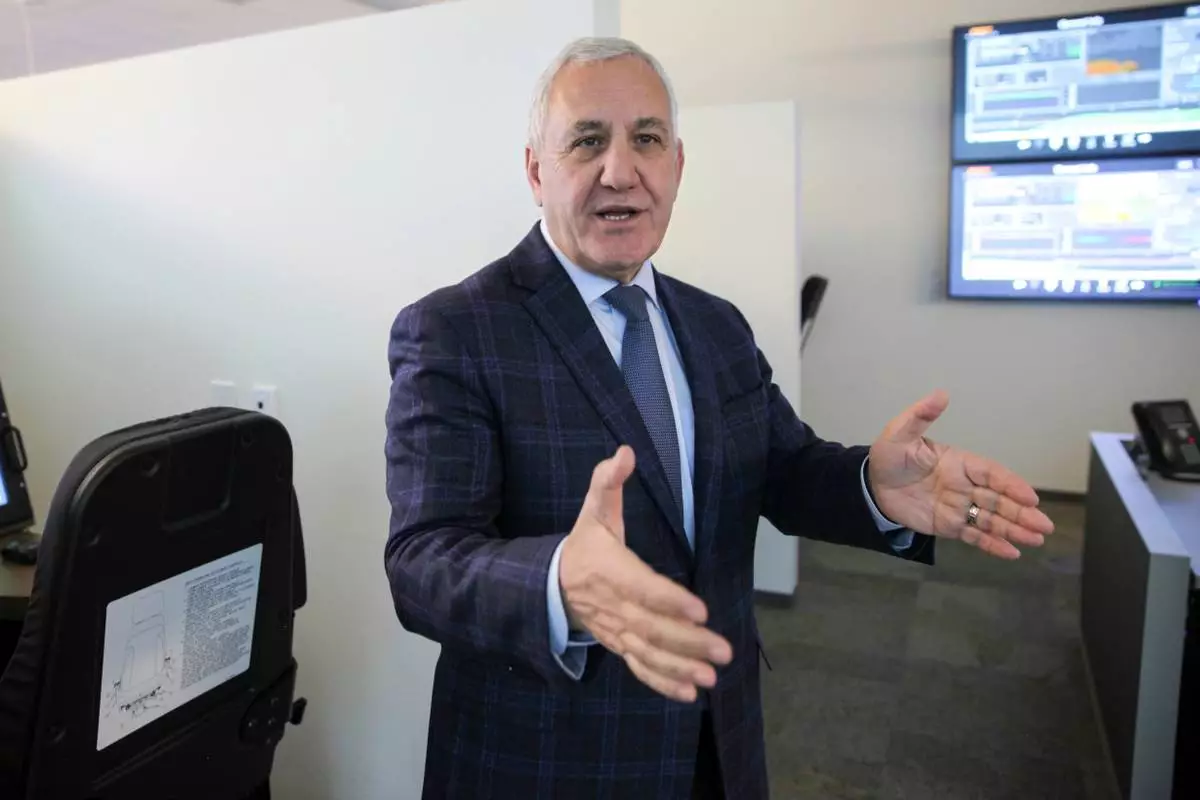
FILE - Union Pacific CEO Jim Vena talks in front of a locomotive simulator used to train engineers at the company's headquarters in Omaha, Neb., Dec. 15, 2023. (AP Photo/Josh Funk, File)
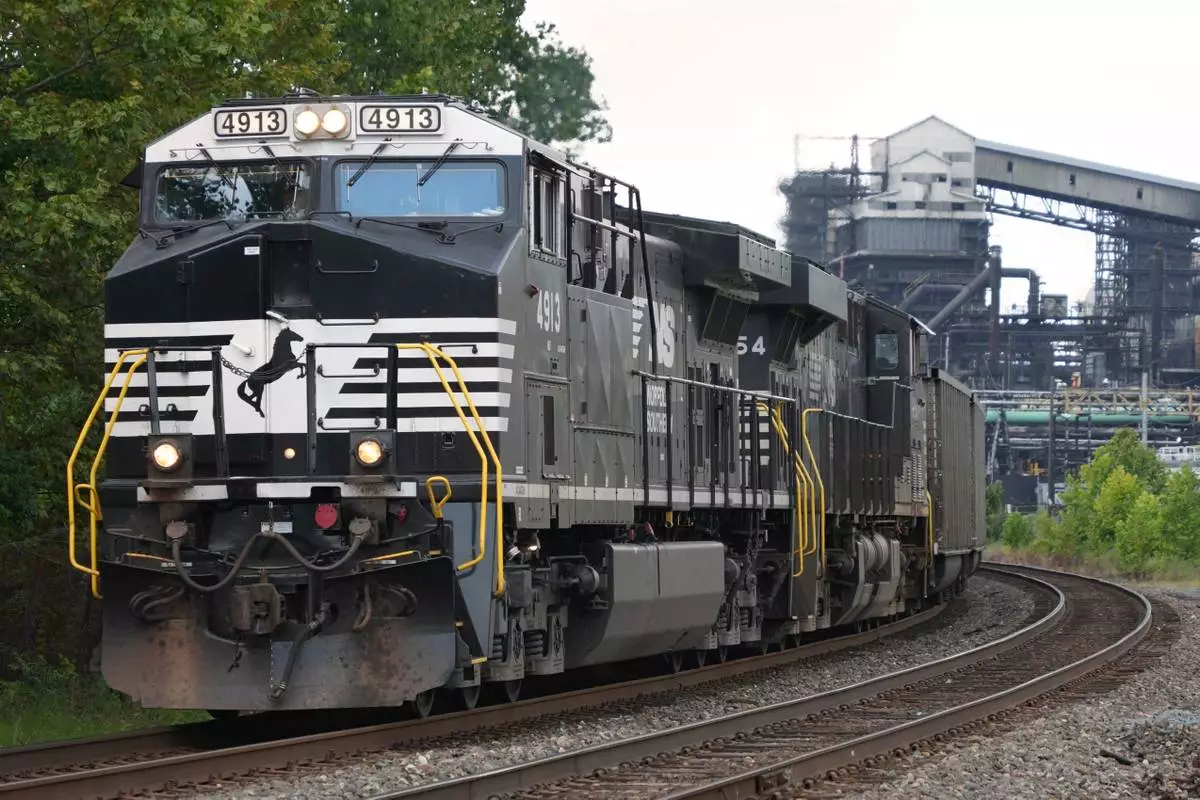
FILE - A Norfolk Southern freight train rolls past the U.S. Steel's Clairton Coke Works, in Clairton, Pa., Tuesday, Aug. 12, 2025. (AP Photo/Gene J. Puskar, File)
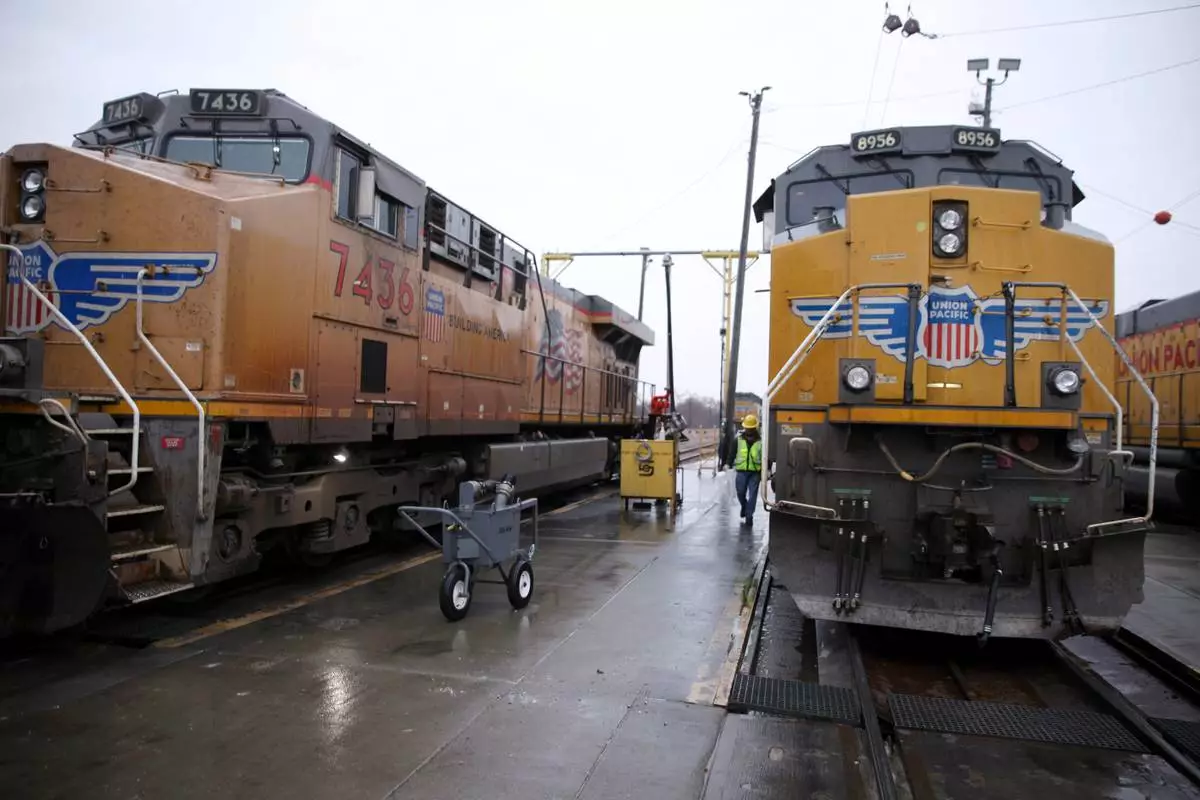
FILE - A Union Pacific worker walks between two locomotives that are being serviced in a railyard in Council Bluffs, Iowa, on Dec. 15, 2023. (AP Photo/Josh Funk, File)