Skip to Content Facebook Feature Image

KI Launches Fourth Annual Classroom Furniture Giveaway, Awarding $50K Each to Four Educators for Learning Space Redesigns

News

KI Launches Fourth Annual Classroom Furniture Giveaway, Awarding $50K Each to Four Educators for Learning Space Redesigns
News

News

KI Launches Fourth Annual Classroom Furniture Giveaway, Awarding $50K Each to Four Educators for Learning Space Redesigns

2025-08-19 06:24 Last Updated At:06:51

GREEN BAY, Wis.--(BUSINESS WIRE)--Aug 18, 2025--

As schools across the country prepare to welcome students back this fall, one critical factor might be overlooked: the physical classroom itself, and the impact it will have on both students and teachers. That’s why KI, a Wisconsin-based contract furniture company, is proud to announce the launch of its fourth annual Classroom Furniture Giveaway, awarding four K-12 educators across the nation with $50,000 each to reimagine and transform their learning spaces.

This press release features multimedia. View the full release here: https://www.businesswire.com/news/home/20250818486319/en/

This initiative is more than a giveaway. It’s a movement aimed to address the pressing challenges in today’s education system: increasing teacher burnout, declining student engagement, and classrooms that haven’t been updated in nearly 50 years.

“Classrooms are the engine rooms of learning, yet many don’t reflect how students learn today,” said Bryan Ballegeer, KI’s vice president of education markets. “Rows of rigid desks and a lack of flexibility don’t support modern teaching modalities or today’s students. This giveaway provides educators with the power to redesign spaces that support creativity, collaboration, well-being, and meaningful learning.”

The program is open to all K–12 learning environments, including classrooms, libraries, makerspaces, esports labs, and more. Three of the four winning entries will focus on individual classrooms, while the fourth will fund a library or media center makeover.

Real Impact, Real Transformation

Each year, hundreds of teachers across the country submit their vision for a dream classroom, one that fosters collaboration, inclusivity, adaptability, and sensory engagement. The four selected winners receive a complete transformation of their classroom, made possible through KI’s innovative portfolio of flexible, durable, and beautifully designed classroom furniture pieces.

From Cogni™ Seating, which promotes movement, mobility, and sensory engagement, to Clamber™ Tiered Seating, which reclaims underutilized space with modular, multi-level elements that invite students to sit, connect, and create, educators can select solutions that align with how their students learn best.

The results of previous giveaways speak volumes, demonstrating how the right furniture can transform learning environments and student outcomes:

“The impact goes far beyond furniture,” said Ballegeer. “These new environments empower both students and teachers to engage more deeply, reconnect and rediscover the joy of teaching and learning. When educators can shape spaces around their students’ needs, the results are both powerful and lasting.”

Why the Physical Classroom Still Matters

At a time when staffing shortages, curriculum debates, and student disengagement dominate the headlines, KI encourages education leaders, designers, and communities to focus on one solution hiding in plain sight: the learning environment itself.

“When designed with intention, classroom spaces can support diverse learning styles, improve mental health, encourage movement, and foster a sense of belonging,” said Ballegeer. “This program puts the power back in educators’ hands, giving them and their students the ability to co-create a space that’s truly theirs.”

Simple Entry, Transformational Results

Educators interested in KI’s fourth annual Classroom Furniture Giveaway are invited to create their dream learning space using KI’s Classroom Planner tool and submit their designs at ki.com/giveaway. The entry period opens Monday, Sept. 19, and closes Friday, Oct. 17.

Submissions will be reviewed by KI’s education team and a panel of architects and designers. Finalists will be announced in November 2025, after which the public will be invited to vote for their favorite classrooms designs and educators. The four winners will be revealed on Nov. 19, with classroom installations completed in 2026.

ABOUT KI

KI manufactures innovative furniture for education, healthcare, government, and corporate markets. The employee-owned company is headquartered in Green Bay, Wisconsin, with sales and manufacturing facilities worldwide. KI tailors products and service solutions to the specific needs of each customer through its unique design and manufacturing philosophy. For more information, visit ki.com.
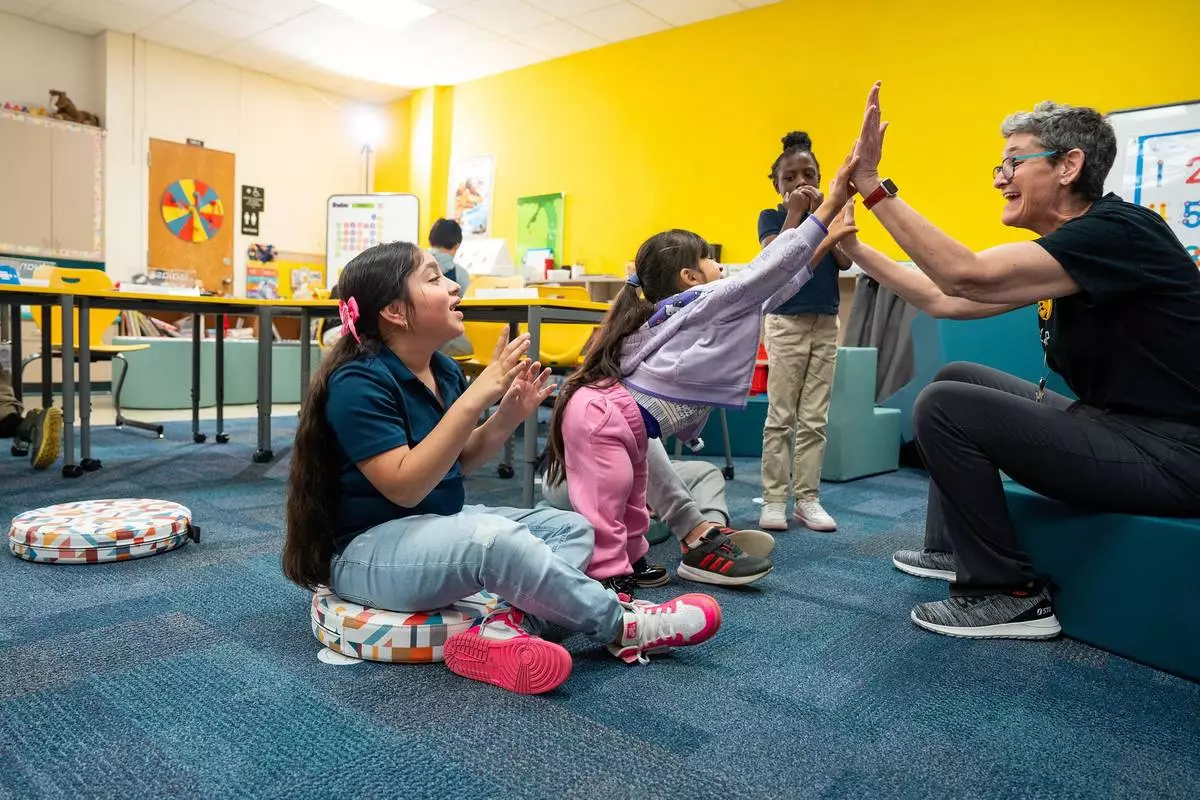
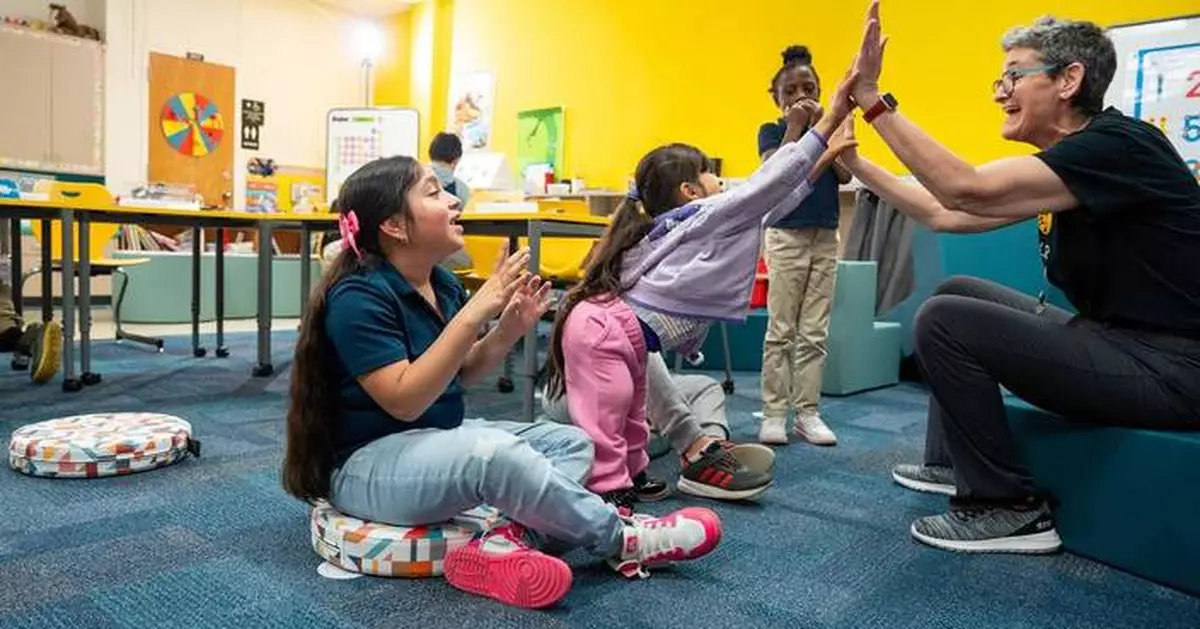
Ms. Weiner, winner of KI’s third annual classroom furniture giveaway, celebrates her new learning space at Woodway Elementary in Fort Worth, TX.


Ms. Weiner, winner of KI’s third annual classroom furniture giveaway, celebrates her new learning space at Woodway Elementary in Fort Worth, TX.

THE HAGUE, Netherlands (AP) — Myanmar insisted Friday that its deadly military campaign against the Rohingya ethnic minority was a legitimate counter-terrorism operation and did not amount to genocide, as it defended itself at the top United Nations court against an allegation of breaching the genocide convention.

Myanmar launched the campaign in Rakhine state in 2017 after an attack by a Rohingya insurgent group. Security forces were accused of mass rapes, killings and torching thousands of homes as more than 700,000 Rohingya fled into neighboring Bangladesh.

“Myanmar was not obliged to remain idle and allow terrorists to have free reign of northern Rakhine state,” the country’s representative Ko Ko Hlaing told black-robed judges at the International Court of Justice.

African nation Gambia brought a case at the court in 2019 alleging that Myanmar's military actions amount to a breach of the Genocide Convention that was drawn up in the aftermath of World War II and the Holocaust.

Some 1.2 million members of the Rohingya minority are still languishing in chaotic, overcrowded camps in Bangladesh, where armed groups recruit children and girls as young as 12 are forced into prostitution. The sudden and severe foreign aid cuts imposed last year by U.S. President Donald Trump shuttered thousands of the camps’ schools and have caused children to starve to death.

Buddhist-majority Myanmar has long considered the Rohingya Muslim minority to be “Bengalis” from Bangladesh even though their families have lived in the country for generations. Nearly all have been denied citizenship since 1982.

As hearings opened Monday, Gambian Justice Minister Dawda Jallow said his nation filed the case after the Rohingya “endured decades of appalling persecution, and years of dehumanizing propaganda. This culminated in the savage, genocidal ‘clearance operations’ of 2016 and 2017, which were followed by continued genocidal policies meant to erase their existence in Myanmar.”

Hlaing disputed the evidence Gambia cited in its case, including the findings of an international fact-finding mission set up by the U.N.'s Human Rights Council.

“Myanmar’s position is that the Gambia has failed to meet its burden of proof," he said. "This case will be decided on the basis of proven facts, not unsubstantiated allegations. Emotional anguish and blurry factual pictures are not a substitute for rigorous presentation of facts.”

Nobel Peace Prize winner Aung San Suu Kyi represented her country at jurisdiction hearings in the case in 2019, denying that Myanmar armed forces committed genocide and instead casting the mass exodus of Rohingya people from the country she led as an unfortunate result of a battle with insurgents.

The pro-democracy icon is now in prison after being convicted of what her supporters call trumped-up charges after a military takeover of power.

Myanmar contested the court’s jurisdiction, saying Gambia was not directly involved in the conflict and therefore could not initiate a case. Both countries are signatories to the genocide convention, and in 2022, judges rejected the argument, allowing the case to move forward.

Gambia rejects Myanmar's claims that it was combating terrorism, with Jallow telling judges on Monday that “genocidal intent is the only reasonable inference that can be drawn from Myanmar’s pattern of conduct.”

In late 2024, prosecutors at another Hague-based tribunal, the International Criminal Court, requested an arrest warrant for the head of Myanmar’s military regime for crimes committed against the country’s Rohingya Muslim minority. Senior Gen. Min Aung Hlaing, who seized power from Suu Kyi in 2021, is accused of crimes against humanity for the persecution of the Rohingya. The request is still pending.

FILE - In this Sept. 7, 2017, file photo, smoke rises from a burned house in Gawdu Zara village, northern Rakhine state, where the vast majority of the country's 1.1 million Rohingya lived, Myanmar. (AP Photo, File)

FILE - In this Sept. 7, 2017, file photo, smoke rises from a burned house in Gawdu Zara village, northern Rakhine state, where the vast majority of the country's 1.1 million Rohingya lived, Myanmar. (AP Photo, File)

Recommended Articles