STARKE, Fla. (AP) — A man convicted of abducting a woman from a Florida Panhandle insurance office and killing her received a lethal injection Tuesday evening in the state's record 10th execution this year.
Kayle Bates, 67, was pronounced dead at 6:17 p.m. following a three-drug injection at Florida State Prison near Starke under a death warrant signed by Republican Gov. Ron DeSantis. The execution extended Florida's record for total executions in a single year, and two more are planned in the state within the next month.
Bates was convicted of first-degree murder, kidnapping, armed robbery and attempted sexual battery in the June 14, 1982, killing of Janet Renee White in Bay County in the Florida Panhandle. The woman's husband, Randy White, was one of the witnesses to Tuesday's execution.
At the scheduled 6 p.m. execution time, the curtain to the death chamber promptly went up. Bates was already strapped to a gurney with his left arm extended and the IV line for the drugs already in place. When asked if he wished to make a last statement, Bates replied ‘no.’
The execution then began at 6:01 pm. Bates began breathing more rapidly about a minute after the drugs began flowing, and then he stopped after about another minute. At 6:05 p.m., the warden touched Bates' face, shook his shoulders and shouted his name with no response. Several minutes later, he was declared dead.
At a briefing following the execution, Randy White thanked DeSantis for signing the death warrant and also thanked members of law enforcement and prosecutors for working on his wife’s case.
″I am truly humbled by the outpouring of love and support from so many who didn’t know either one of us. I thank you from my heart. It means more than you will ever know," he said.
Since the U.S. Supreme Court restored the death penalty in 1976, the highest previous annual total of Florida executions was eight in 2014. Florida has executed more people than any other state this year, while Texas and South Carolina are tied for second place with four each.
With Tuesday’s execution, a total of 29 men have died by court-ordered execution so far this year in the U.S., and at least nine other people were scheduled to be put to death in seven states during the remainder of 2025.
According to court documents, Bates abducted his victim from the insurance office where she worked, took her into some woods behind the building, attempted to rape her, fatally stabbed her and tore a diamond ring from one of her fingers.
Attorneys for Bates had filed appeals with the Florida Supreme Court and the U.S. Supreme Court, as well as a federal lawsuit claiming DeSantis’ process for signing death warrants was discriminatory. The lawsuit was recently dismissed by a judge who found problems with its statistical analysis.
The Florida Supreme Court recently denied Bates' pending claims, including arguments that evidence of organic brain damage had been inadequately considered during his second penalty phase. The court ruled Bates already had three decades to raise these claims. The U.S. Supreme Court rejected Bates' last appeal Tuesday.
Two more executions are planned in Florida in coming weeks.
Curtis Windom, 59, is scheduled to become the 11th person executed in Florida on Aug. 28. He was convicted of killing three people in the Orlando area in 1992.
David Pittman, 63, would be the 12th person executed in Florida if his death sentence is carried out as scheduled Sept. 17. He was found guilty of fatally stabbing his estranged wife’s sister and parents at their Polk County home before setting it on fire in 1990.
Florida executions are carried out using a three-drug lethal injection: a sedative, a paralytic and a drug that stops the heart, according to the state Department of Corrections.

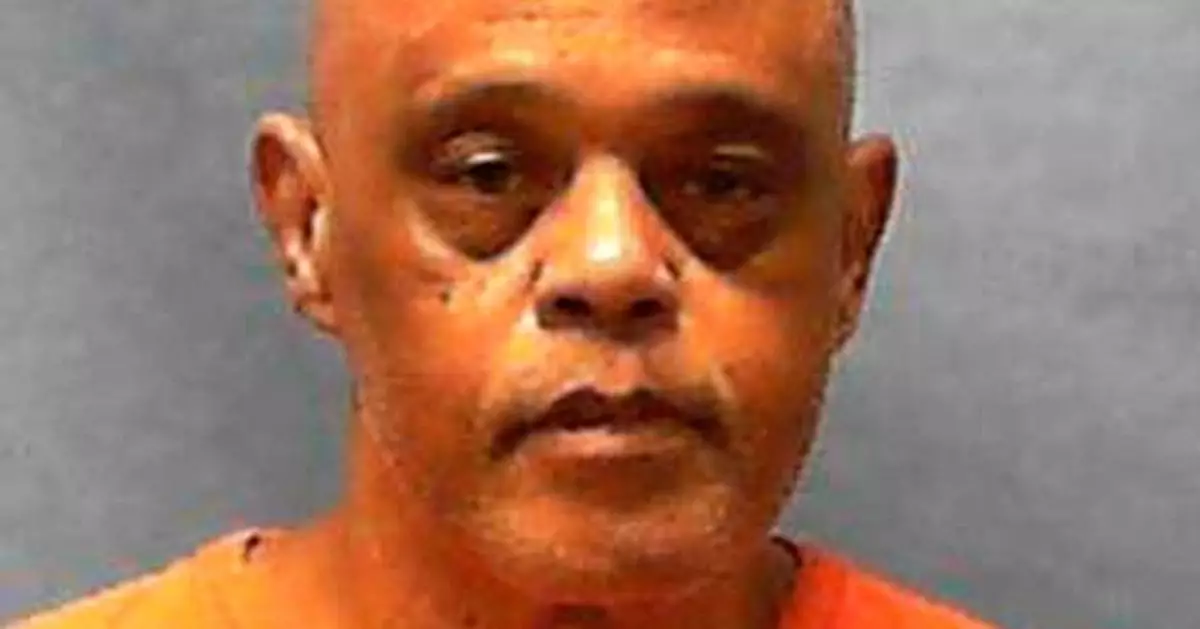
This undated photo provided by Florida Department of Corrections shows Kayle Bates. (Florida Department of Corrections via AP)