Skip to Content Facebook Feature Image

9/11 victims' fund architect slams changes to New Hampshire abuse settlement program

News

9/11 victims' fund architect slams changes to New Hampshire abuse settlement program
News

News

9/11 victims' fund architect slams changes to New Hampshire abuse settlement program

2025-08-21 06:47 Last Updated At:07:01

CONCORD, N.H. (AP) — An attorney who helped design and implement the 9/11 victims’ compensation fund says New Hampshire lawmakers have eroded the fairness of a settlement program for those who were abused at the state’s youth detention center.

Deborah Greenspan, who served as deputy special master of the fund created after the Sept. 11, 2001, attacks, recently submitted an affidavit in a class-action lawsuit seeking to block changes to New Hampshire’s out-of-court settlement fund for abuse victims. She was among those expected to testify Wednesday at a hearing on the state's request to dismiss the case and other matters, but the judge declined to allow her appearance, ruling it was not relevant at this stage of the proceedings.

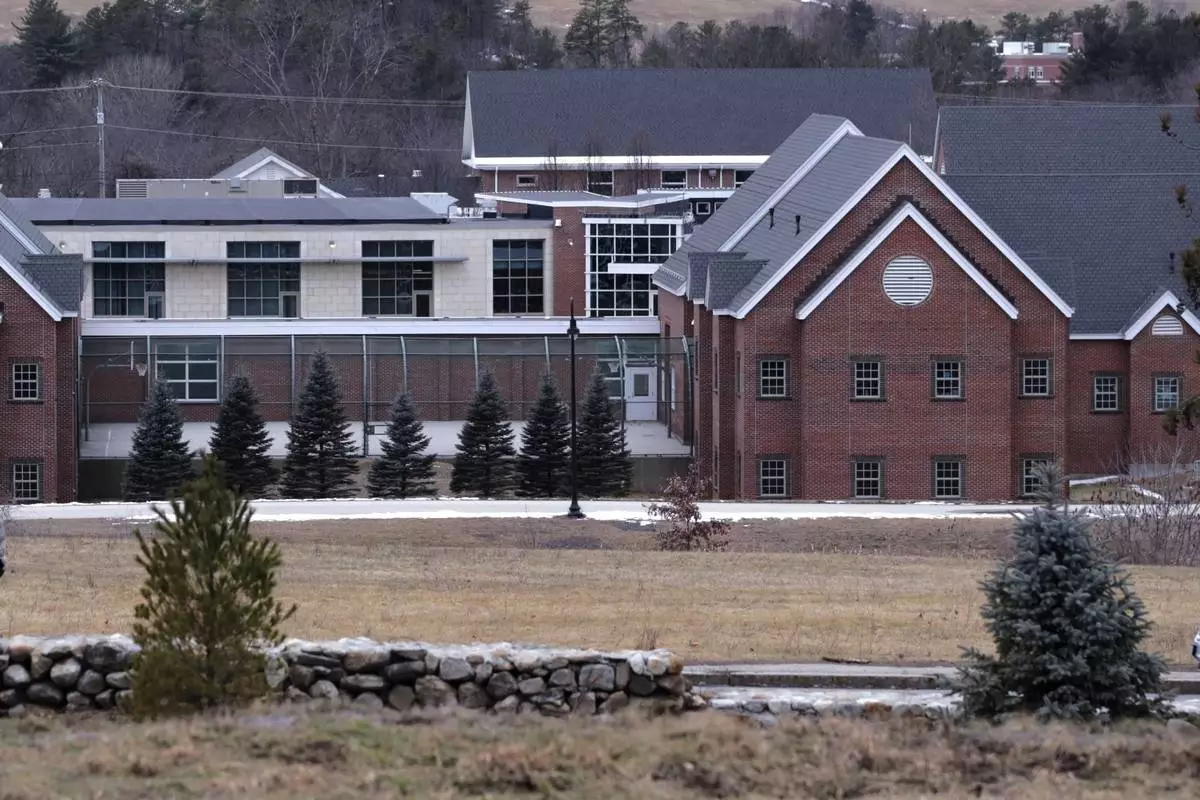
More than 1,300 people have sued the state since 2020 alleging that they were physically or sexually abused as children while in state custody, mostly at the Sununu Youth Services Center in Manchester. Most put their lawsuits on hold after lawmakers created a settlement fund in 2022 that was pitched as a “victim-centered” and “trauma-informed” alternative to litigation run by a neutral administrator appointed by the state Supreme Court. But the Republican-led Legislature changed that process through last-minute additions to the state budget Gov. Kelly Ayotte signed in June.

The amended law gives the governor authority to hire and fire the fund's administrator and gives the attorney general — also a political appointee — veto power over settlement awards. That stands in stark contrast to other victim compensation funds, said Greenspan, who currently serves as a court-appointed special master for lawsuits related to lead-tainted water in Flint, Michigan.

She said it “strains credulity” to believe that anyone would file a claim knowing that “the persons ultimately deciding the claim were those responsible for the claimant’s injuries.”

“Such a construct would go beyond the appearance of impropriety and create a clear conflict of interest, undermining the fairness and legitimacy of the settlement process," she wrote.

Ayotte and Attorney General John Formella responded by asking a judge to bar Greenspan's testimony, saying she offered “policy preferences masquerading as expert opinions” without explaining the principles beyond her conclusions.

“Her affidavit is instead a series of non sequiturs that move from her experience to her conclusions without any of the necessary connective tissue,” they wrote.

The defendants argue that the law still requires the administrator to be “an independent, neutral attorney” and point out that the same appointment process is used for the state's judges. They said giving the attorney general the authority to accept or reject settlements is necessary to give the public a voice and ensure that the responsibility for spending millions of dollars in public funds rests with the executive branch.

But John Broderick, a former state Supreme Court chief justice who served as the administrator for nearly three years, said the new system “is not remotely the same thing” and instead is “contrary to every promise they made” to victims. He resigned earlier this month.

“I did not want to be part of a trauma-inducing experience for people,” he testified at Wednesday’s hearing.

“My concern, and my only concern, as the administrator of that fund was to figure out as best I could … what happened to a particular abuse victim,” he said. “That was my job, I took it seriously, and I think I did it well.”

As of June 30, nearly 2,000 people had filed claims with the settlement fund, which caps payouts at $2.5 million. A total of 386 had been settled, with an average award of $545,000.

One of the claimants says he was awarded $1.5 million in late July, but the state hasn't finalized it yet, leaving him worried that Formella will veto it.

“I feel like the state has tricked us,” he said in an interview this week. “We've had the rug pulled right out from underneath us.”

The Associated Press does not name those who say they were sexually assaulted unless they come forward publicly. The claimant, now 39, said the two years he spent at the facility as a teenager were the hardest times of his life.

“I lost my childhood. I lost things that I can't get back,” he said. “I was broken.”

Though the settlement process was overwhelming and scary at times, the assistant administrator who heard his case was kind and understanding, he said. That meeting alone was enough to lift a huge burden, he said.

“I was treated with a lot of love,” he said. “I felt really appreciated as a victim and like I was speaking to somebody who would listen and believe my story.”

Separate from the fund, the state has settled two lawsuits by agreeing to pay victims $10 million and $4.5 million. Only one lawsuit has gone to trial, resulting in a $38 million verdict, though the state is trying to slash it to $475,000. The state has also brought criminal charges against former workers, with two convictions and two mistrials so far.

The 39-year-old claimant who fears his award offer will be retracted said he doesn't know if he could face testifying at a public trial.

“It’s basically allowing the same people who hurt us to hurt us all over again,” he said.
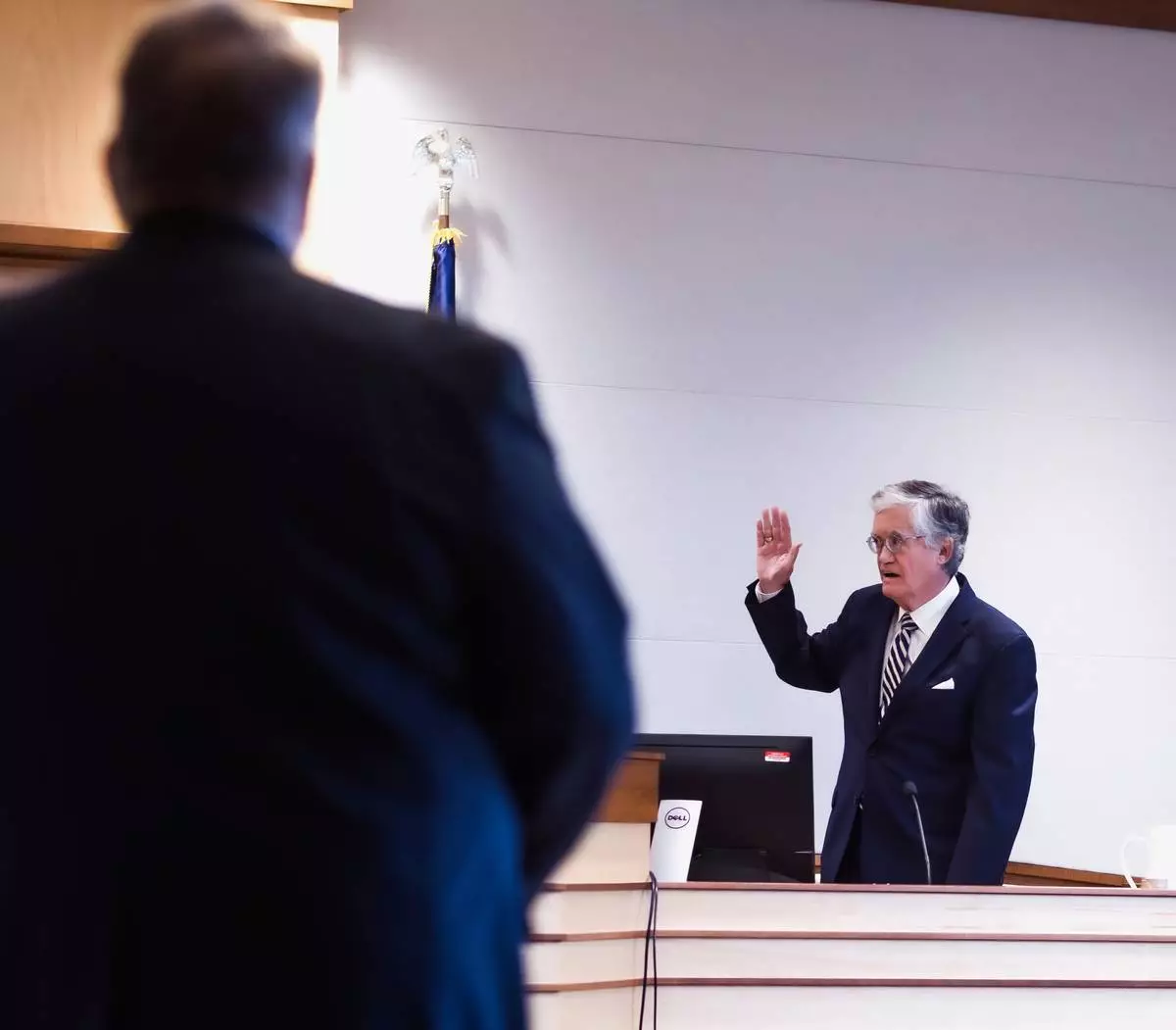
John Broderick, former New Hampshire Supreme Court chief justice and former administrator of the YDC Settlement Fund, is sworn in to testify Wednesday, Aug. 20, 2025, in Concord, N.H., in a lawsuit seeking to block changes to the state’s process for compensating those who were abused as children in state custody. (Geoff Forester/The Concord Monitor via AP, Pool)
John Broderick, former New Hampshire Supreme Court chief justice and former administrator of the YDC Settlement Fund, is sworn in to testify Wednesday, Aug. 20, 2025, in Concord, N.H., in a lawsuit seeking to block changes to the state’s process for compensating those who were abused as children in state custody. (Geoff Forester/The Concord Monitor via AP, Pool)

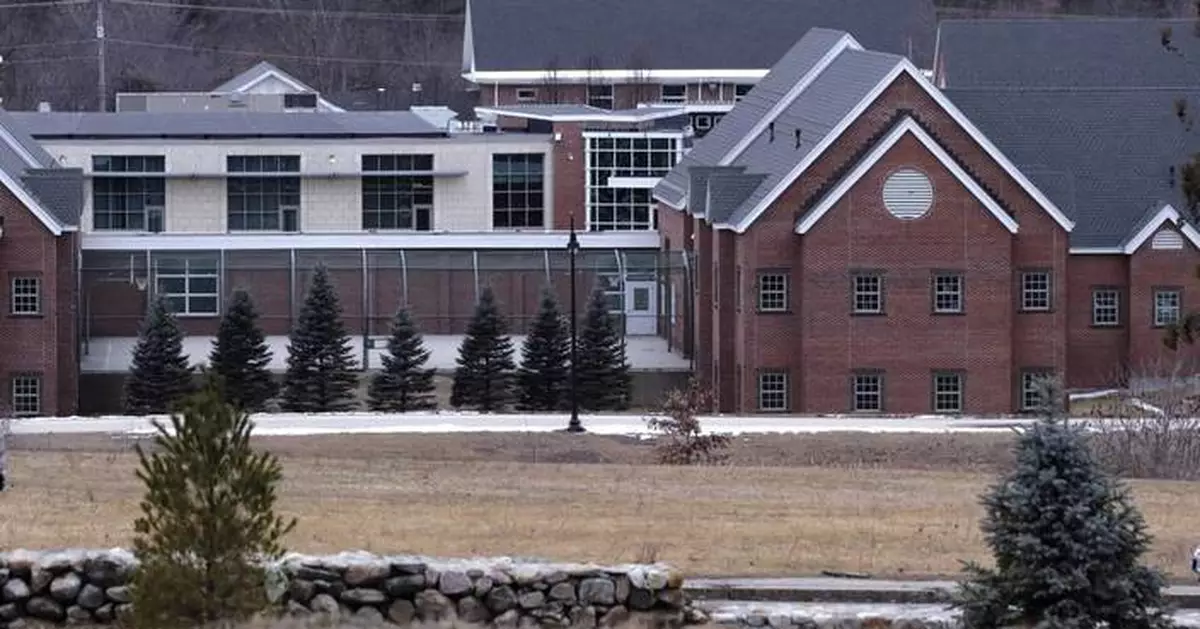
FILE - A view of the Sununu Youth Services Center on Jan. 28, 2020, in Manchester, N.H. (AP Photo/Charles Krupa, File)
FILE - A view of the Sununu Youth Services Center on Jan. 28, 2020, in Manchester, N.H. (AP Photo/Charles Krupa, File)
A federal appeals panel on Thursday reversed a lower court decision that released former Columbia University graduate student Mahmoud Khalil from an immigration jail, bringing the government one step closer to detaining and ultimately deporting the Palestinian activist.

The three-judge panel of the 3rd U.S. Circuit Court of Appeals didn’t decide the key issue in Khalil’s case: whether the Trump administration’s effort to throw Khalil out of the U.S. over his campus activism and criticism of Israel is unconstitutional.

But in its 2-1 decision, the panel ruled a federal judge in New Jersey didn’t have jurisdiction to decide the matter at this time. Federal law requires the case to fully move through the immigration courts first, before Khalil can challenge the decision, they wrote.

“That scheme ensures that petitioners get just one bite at the apple — not zero or two,” the panel wrote. “But it also means that some petitioners, like Khalil, will have to wait to seek relief for allegedly unlawful government conduct.”

The law bars Khalil “from attacking his detention and removal in a habeas petition,” the panel added.

It was not clear whether the government would seek to detain Khalil, a legal permanent resident, again while his legal challenges continue.

Thursday’s decision marked a major win for the Trump administration’s sweeping campaign to detain and deport noncitizens who joined protests against Israel.

In a statement distributed by the American Civil Liberties Union, Khalil said the appeals ruling was “deeply disappointing, but it does not break our resolve.”

He added: “The door may have been opened for potential re-detainment down the line, but it has not closed our commitment to Palestine and to justice and accountability. I will continue to fight, through every legal avenue and with every ounce of determination, until my rights, and the rights of others like me, are fully protected.”

Baher Azmy, one of Khalil's lawyers, said the ruling was “contrary to rulings of other federal courts.” He noted the panel’s finding concerned a “hypertechnical jurisdictional matter,” rather than the legality of the Trump administration’s policy.

“Our legal options are by no means concluded, and we will fight with every available avenue,” he added, saying Khalil would remain free pending the full resolution of all appeals, which could take months or longer.

The ACLU said the Trump administration cannot lawfully re-detain Khalil until the order takes formal effect, which won't happen while he can still immediately appeal.

Khalil's lawyers can request the active judges on the 3rd Circuit hear an appeal, or they can go to the U.S. Supreme Court.

An outspoken leader of the pro-Palestinian movement at Columbia, Khalil was arrested on March 8, 2025. He then spent three months detained in a Louisiana immigration jail, missing the birth of his firstborn.

Federal officials have accused Khalil of leading activities “aligned to Hamas,” though they have not presented evidence to support the claim and have not accused him of criminal conduct. They have also accused Khalil, 30, of failing to disclose information on his green card application.

The government has justified the arrest under a seldom-used statute that allows for the expulsion of noncitizens whose beliefs are deemed to pose a threat to U.S. foreign policy interests.

In June, a federal judge in New Jersey ruled that justification would likely be declared unconstitutional and ordered Khalil released.

President Donald Trump's administration appealed that ruling, arguing the deportation decision should fall to an immigration judge, rather than a federal court.

Khalil has dismissed the allegations as “baseless and ridiculous,” framing his arrest and detention as a “direct consequence of exercising my right to free speech as I advocated for a free Palestine and an end to the genocide in Gaza.”

Judge Arianna Freeman dissented Thursday, writing that her colleagues were holding Khalil to the wrong legal standard. Khalil, she wrote, is raising “now-or-never claims” that can be handled at the district court level. He does not have a final order of removal, which would permit a challenge in an appellate court, she wrote.

Both judges who ruled against Khalil, Thomas Hardiman and Stephanos Bibas, were Republican appointees. President George W. Bush appointed Hardiman to the 3rd Circuit, while Trump appointed Bibas. President Joe Biden, a Democrat, appointed Freeman.

The majority opinion noted Freeman worried the ruling would leave Khalil with no remedy for unconstitutional immigration detention, even if he later can appeal.

“But our legal system routinely forces petitioners — even those with meritorious claims — to wait to raise their arguments, the judges wrote. “To be sure, the immigration judge’s order of removal is not yet final; the Board has not affirmed her ruling and has held the parties’ briefing deadlines in abeyance pending this opinion. But if the Board ultimately affirms, Khalil can get meaningful review.”

The decision comes as an appeals board in the immigration court system weighs a previous order that found Khalil could be deported. His attorneys have argued that the federal order should take precedence.

That judge has suggested Khalil could be deported to Algeria, where he maintains citizenship through a distant relative, or Syria, where he was born in a refugee camp to a Palestinian family.

His attorneys have said he faces mortal danger if forced to return to either country.

Associated Press Writer Larry Neumeister contributed to this story.

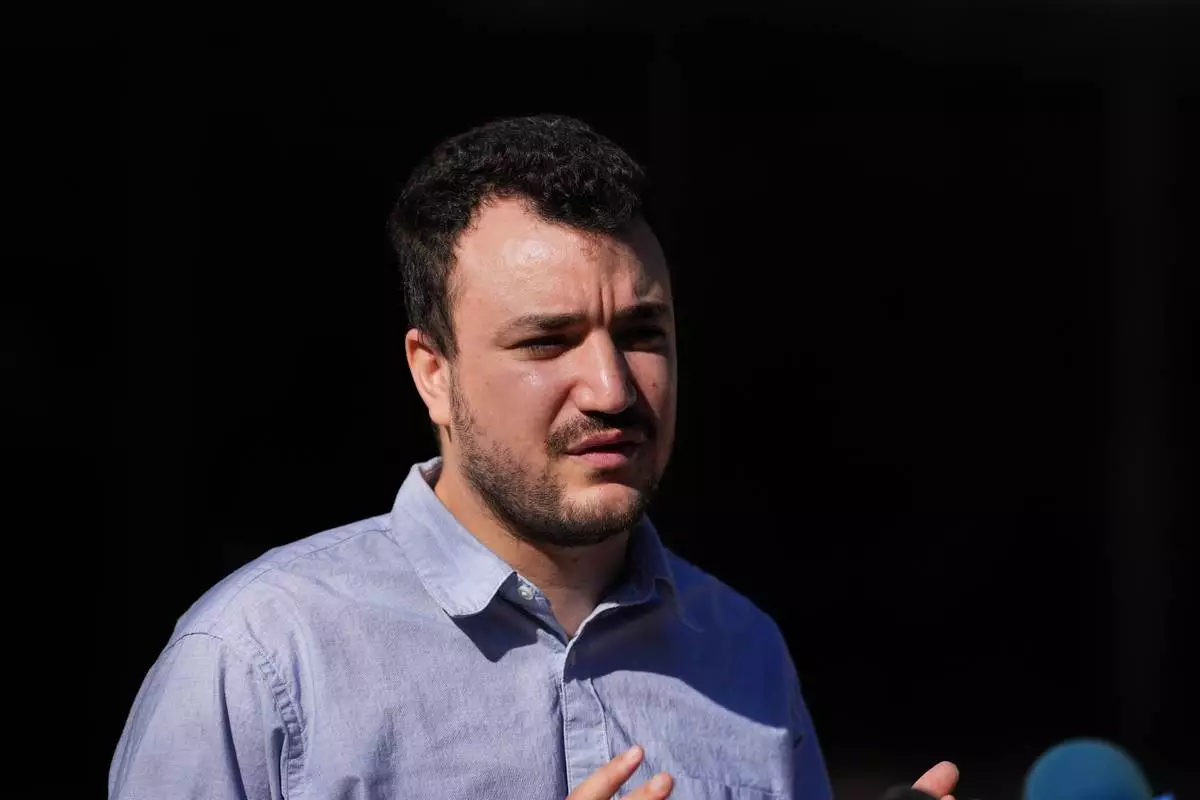
FILE - Palestinian activist Mahmoud Khalil holds a news conference outside Federal Court on Tuesday, Oct. 21, 2025 in Philadelphia (AP Photo/Matt Rourke, File)

FILE - Palestinian activist Mahmoud Khalil holds a news conference outside Federal Court on Tuesday, Oct. 21, 2025 in Philadelphia (AP Photo/Matt Rourke, File)

Recommended Articles