The medical system in southwest China's Xizang Autonomous Region has seen a remarkable improvement over the past decade, thanks to the technologies and experience brought by medical professionals from across the country.
In August 2015, the Organization Department of the CPC Central Committee launched an initiative of “grouped” medical assistance to Xizang. Over the past decade, 203 hospitals in provinces nationwide have sent over 2,000 specialists to support medical and healthcare services in Xizang.
Interviews and investigations by the China Media Group (CMG) show that the "grouped" medical aid has fundamentally improved the clinical departments in Xizang's medical institutions that were originally weak or even nonexistent, maximizing the training function of the medical specialists from across the country.
Jieji, a young woman in Xizang, suffered from dystonia. In early days, the neurology department at local medical institutions was underdeveloped. Jieji had to travel to Beijing Tiantan Hospital, where she underwent surgery and received a brain pacemaker.
In recent years, Beijing Tiantan Hospital has sent multiple groups of medical experts to support the neurology department at Lhasa People's Hospital. With their help, Jieji no longer needs to go to Beijing for her disease. Through the 5G remote consultation platform, her surgeon can remotely debug her brain pacemaker.
"Due to the special climate and ecological environment of the Tibetan Plateau, we're exploring diagnosis and treatment based on the characteristics of local neurosurgical diseases, to provide a solid basis for the diagnosis and treatment of such diseases in the future," said Hao Qiang, a doctor aiding Xizang from the Beijing Tiantan Hospital.
Lhasa People's Hospital is a designated medical institution receiving "grouped support" from Beijing municipal hospitals. Over the past decade, the hospital has built a high-caliber medical team. In the pediatric intensive care unit, which opened just a year ago, 13-year-old Yagawa received treatment for Henoch-Schonlein purpura and nephritis.
"There's a lack of information and treatment on kidney-related diseases here. Our goal is to establish a dedicated kidney team covering urinary tract infections, nephritis, and other kidney diseases, so that children with those disease can stay here and receive more comprehensive and optimized treatment," said Wan Ling, a doctor aiding Xizang from the Capital Children's Medical Center under Capital Medical University.
The medical specialists aiding Xizang not only bring sophisticated medical technology and advanced equipment to the plateau, but also combine the essence of Xizang's local medicine techniques with traditional Chinese medicine (TCM) to maximize their clinical value.
"Both TCM and traditional Tibetan medicine belong to the traditional medicine system of the Chinese nation and share similarities in essence. Next, we will establish standards and a consensus on clinical efficacy to provide local people with a medical service system with its own characteristics," said Li Xiang, a doctor aiding Xizang from the Beijing Hospital of Traditional Chinese Medicine.
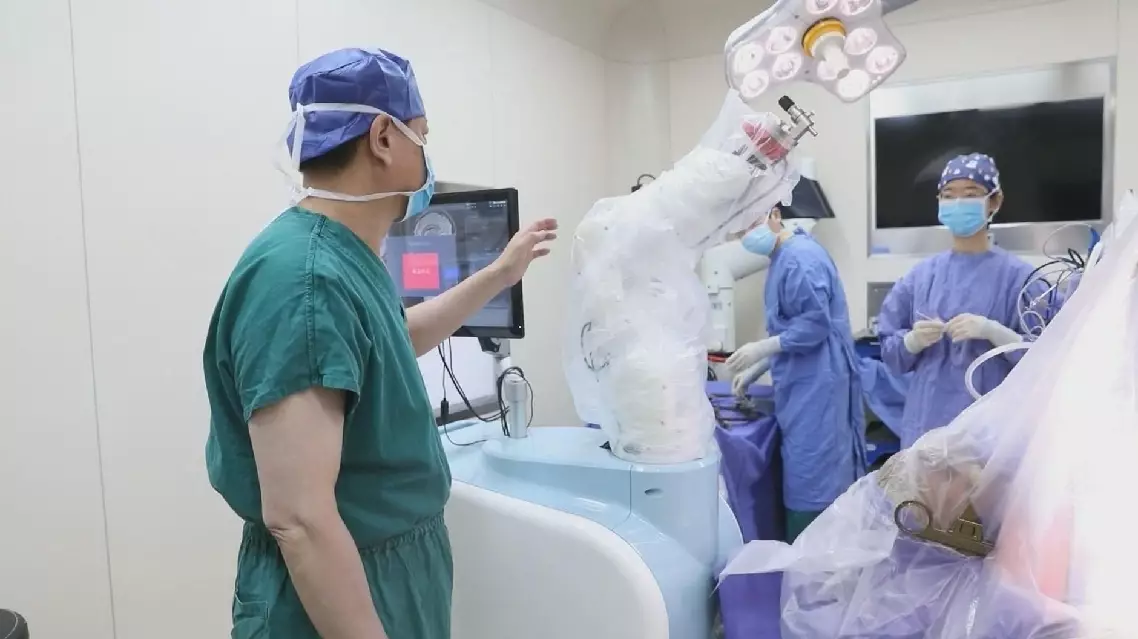
Xizang sees marked improvement of medical system