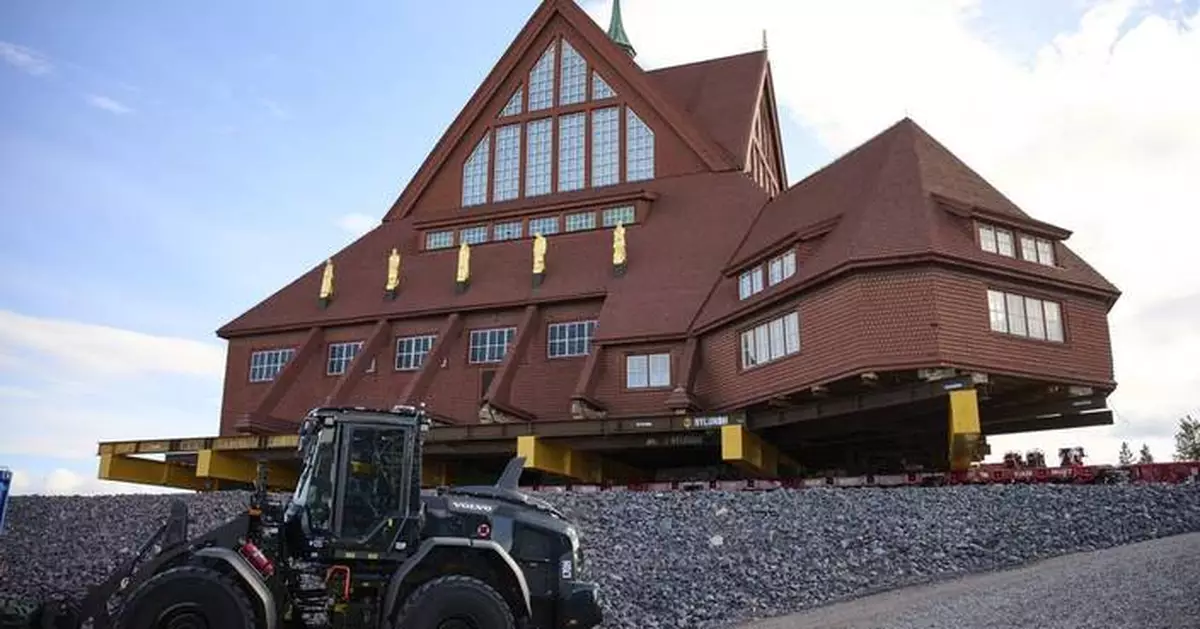
KIRUNA, Sweden (AP) — The members of Kiruna Church primarily worship in Swedish, their country’s main language.
But this Lutheran church some 200 kilometers (120 miles) above the Arctic Circle seeks to incorporate the region's minority languages — Northern Sami, Finnish and Meänkieli – into worship services, carrying on an inclusive ethos that has been a cornerstone of the historic wooden church since its founding in 1912.
Click to Gallery
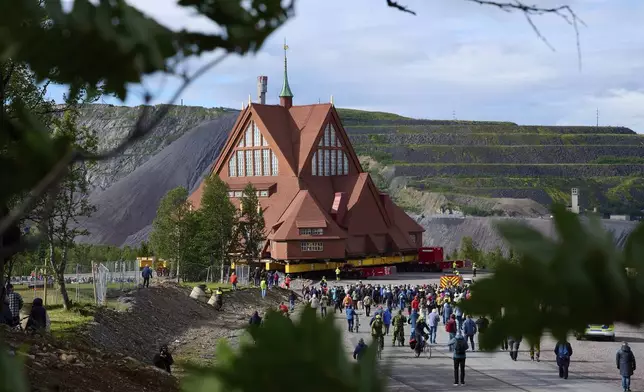
FILE - People gather outside the Kiruna Church, a Sami style wooden Swedish Lutheran church, called Kiruna Kyrka in Swedish, in Kiruna, Sweden, Tuesday, Aug. 19, 2025, during its move along a 5-kilometer (3-mile) route east to a new city center as part of the town's relocation. (AP Photo/Malin Haarala, File)
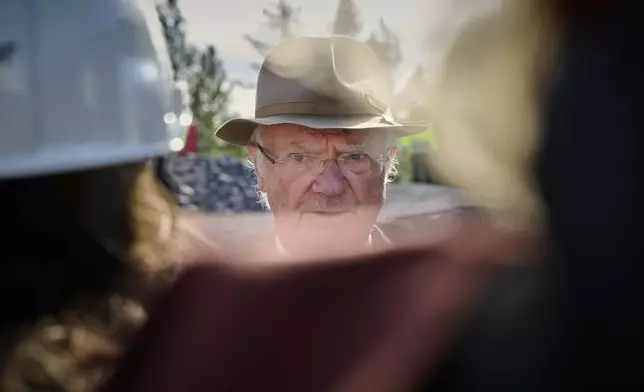
Sweden's King Carl XVI Gustaf speaks to media next to the Kiruna Church, a Sami style wooden Swedish Lutheran church, called Kiruna Kyrka in Swedish, in Kiruna, Sweden, Wednesday, Aug. 20, 2025, after the completion of its move along a 5-km. (3-mile) route east to a new city center as part of the town's relocation.(AP Photo/Malin Haarala)
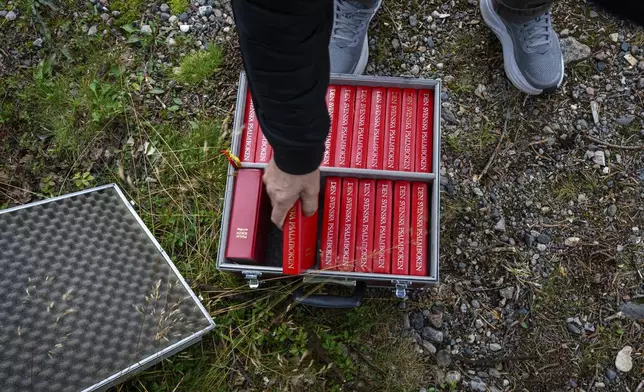
A person handles a hymnal during an outdoor prayer for the move of the Kiruna Church, a Sami style wooden Swedish Lutheran church, called Kiruna Kyrka in Swedish, in Kiruna, Sweden, Sunday, Aug. 17, 2025, two days before its move along a 5-kilometer (3-mile) route east to a new city center as part of the town's relocation. (AP Photo/Malin Haarala)
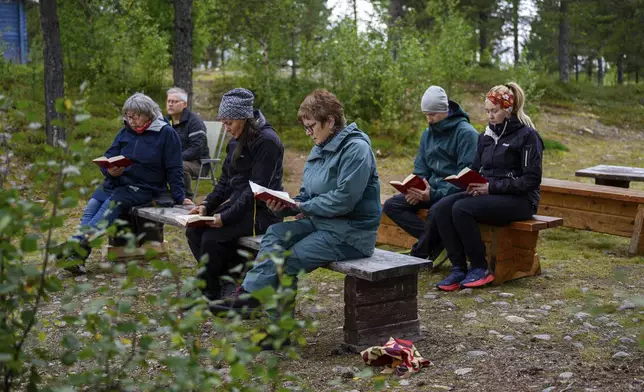
People hold an outdoor prayer for the move of the Kiruna Church, a Sami style wooden Swedish Lutheran church, called Kiruna Kyrka in Swedish, in Kiruna, Sweden, Sunday, Aug. 17, 2025, two days before its move along a 5-kilometer (3-mile) route east to a new city center as part of the town's relocation. (AP Photo/Malin Haarala)
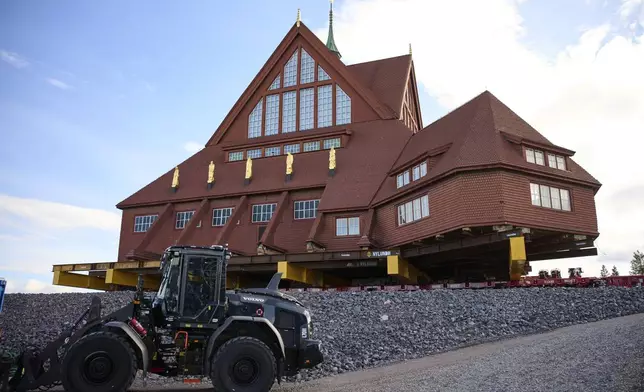
Construction machinery is parked next to the Kiruna Church, a Sami style wooden Swedish Lutheran church, called Kiruna Kyrka in Swedish, in Kiruna, Sweden, Wednesday, Aug. 20, 2025, after the completion of its move along a 5-km. (3-mile) route east to a new city center as part of the town's relocation.(AP Photo/Malin Haarala)
“We are talking about the language of the heart,” vicar Lena Tjärnberg said. “That’s very important, that you can hear some of the words in your language.”
The church, called Kiruna Kyrka in Swedish, moved 5 kilometers (3.1 miles) east on Tuesday and Wednesday as part of Kiruna's relocation because the world’s largest underground iron-ore mine is threatening to swallow the town. The church closed its doors a year ago in preparation for the move.
The inclusion of the minority languages — particularly the Northern Sami language with Kiruna's population of Indigenous people, including reindeer herders — reflects the church's history. The building itself was a gift to Kiruna from state-owned mining company LKAB, whose manager in the early 1900s decided that the entire community should feel welcome there even if they are not Lutheran.
Its exterior was designed to emulate the Sami style, and there is only one cross in the entire structure to avoid an overemphasis on Christianity. And a 1912 altarpiece painted by Prince Eugen, a member of the Swedish royal family and a renowned landscape artist, features a sunlit forest grove to represent nature as spiritual instead of the traditional religious scenes.
On Wednesday, the church settled into its new, safer home in Kiruna's revamped downtown. Worshippers are expected to be back inside by the end of next year, in a return to the pews that have carried the smell of tar to preserve the historic wood for generations.
While the Kiruna Church currently has a good relationship with the Sami people, historically the Church of Sweden was complicit in Sweden's racist campaign against Europe's only recognized Indigenous people.
The Sami culture, traditions and languages were suppressed for decades. Beginning in 1913, the church and state ran so-called “nomad schools,” mandatory segregated boarding schools where Sami children experienced racism, bullying and abuse until the 1960s.
In 2021, the archbishop delivered the first of two formal apologies to the Sami people for the Church of Sweden's role in oppressing them.
“Within the Church of Sweden, Sami spirituality was despised. Instead of recognizing the image of God in our Sami sisters and brothers, we tried to remake them in the image of the majority culture,” Archbishop Antje Jackelén said at the time. “We did not see your obvious relationship with the Creator and with the lands. We did not understand that Sami spirituality expresses itself in everyday actions.”
A truth commission, set up by the Swedish government in 2021, is expected to address the nomad schools’ lasting trauma on the Sami people and conclude its work by Dec. 1.
On a typical Sunday, 40 to 50 people sat in the pews — though more always crowd inside for weddings and funerals.
Anna-Kristina Simma, a worshipper who is a member of the Sami people and grew up going to the Kiruna Church, said it is a mainstay in everyone's life in this part of Swedish Lapland, even if they aren't going to weekly services.
“You start from when you were a child, a baby, all your life until you get old," she said.
Monica Nutti Blind, a deacon in the church who also is a member of the Sami people, said the church's architecture reminds her of the area's seasons. The dark wood inside is like the long, dark northern Swedish winters, she said, but the windows allow the summer's Midnight Sun to brighten everything.
“If you look up in the church, you see the light that reminds of spring and the light and the vegetation,” she said.
On Sunday, two days before the move began, the church held a lakeside service 87 kilometers (54 miles) northeast of its historic location.
With a fire burning to keep the bugs away, six worshippers bundled up in hiking boots, long coats and hats to keep warm amid temperatures hovering around 10 degrees Celsius (50 degrees Fahrenheit).
The small summer congregation, seated on wooden benches or camping chairs, sang from hymnals and listened to Nutti Blind as she read a passage from the Book of Proverbs in the Northern Sami language. The verse reminded the community of its responsibility to be good neighbors.
But before the 35-minute service concluded — with an early fika, the traditional Swedish coffee break — the worshippers paused to reflect upon the upcoming move. Nutti Blind offered a prayer, this time in Swedish, for their spiritual home's safety.
“We pray for the move of the Kiruna Church, that the church will be preserved and that the move goes well,” she prayed. “And that we once again will use this beautiful church.”
Pietro De Cristofaro in Kiruna, Sweden, contributed to this report.
Associated Press religion coverage receives support through the AP’s collaboration with The Conversation US, with funding from Lilly Endowment Inc. The AP is solely responsible for this content.
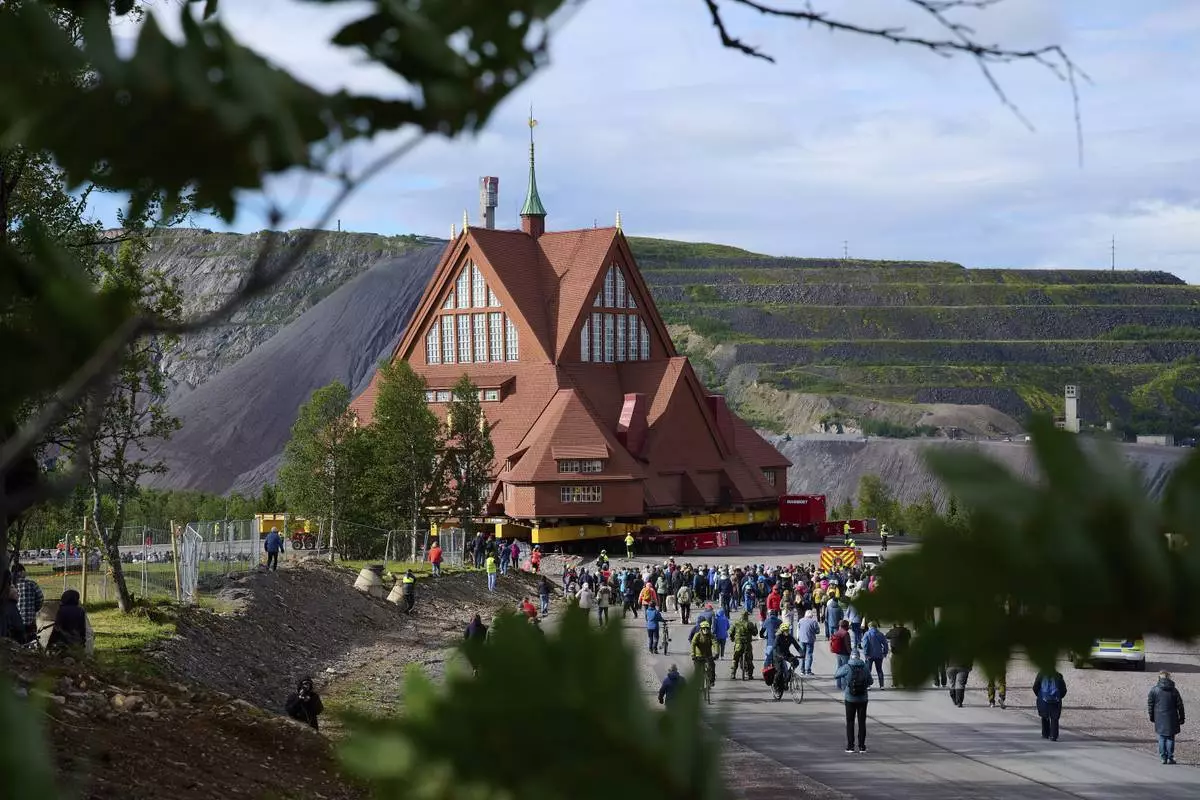
FILE - People gather outside the Kiruna Church, a Sami style wooden Swedish Lutheran church, called Kiruna Kyrka in Swedish, in Kiruna, Sweden, Tuesday, Aug. 19, 2025, during its move along a 5-kilometer (3-mile) route east to a new city center as part of the town's relocation. (AP Photo/Malin Haarala, File)
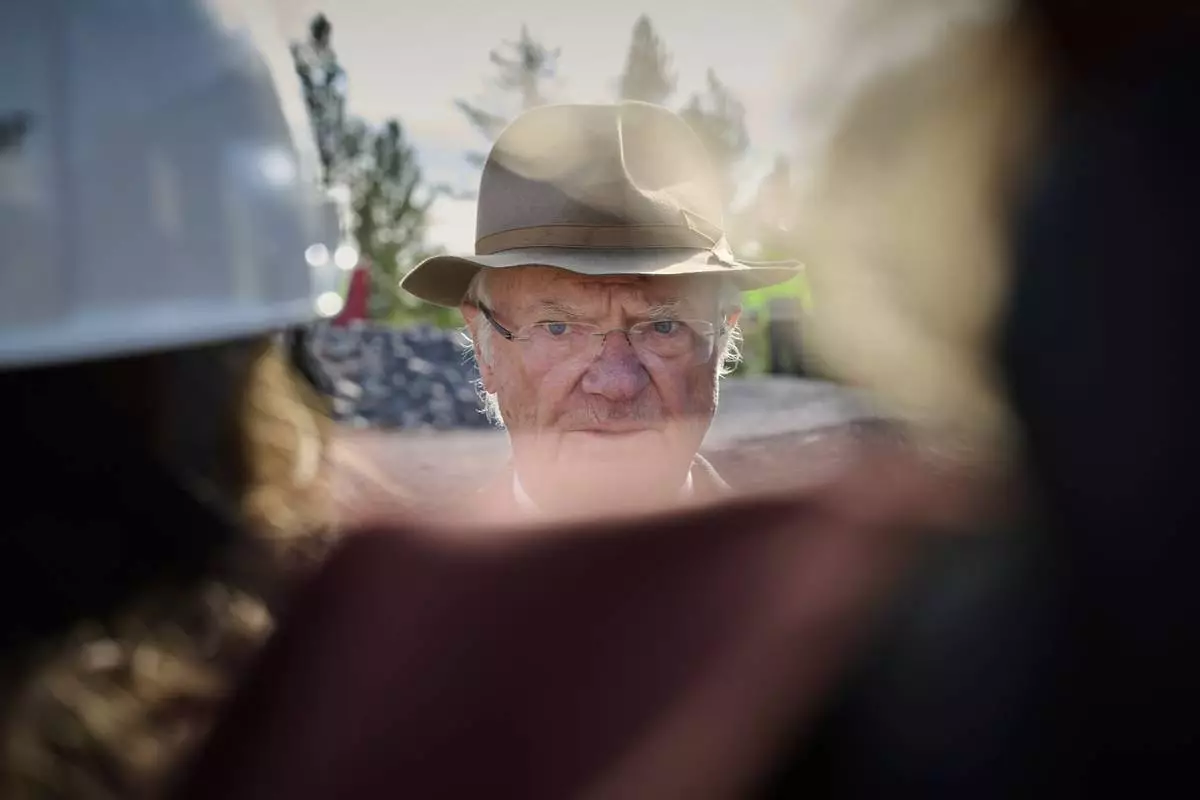
Sweden's King Carl XVI Gustaf speaks to media next to the Kiruna Church, a Sami style wooden Swedish Lutheran church, called Kiruna Kyrka in Swedish, in Kiruna, Sweden, Wednesday, Aug. 20, 2025, after the completion of its move along a 5-km. (3-mile) route east to a new city center as part of the town's relocation.(AP Photo/Malin Haarala)
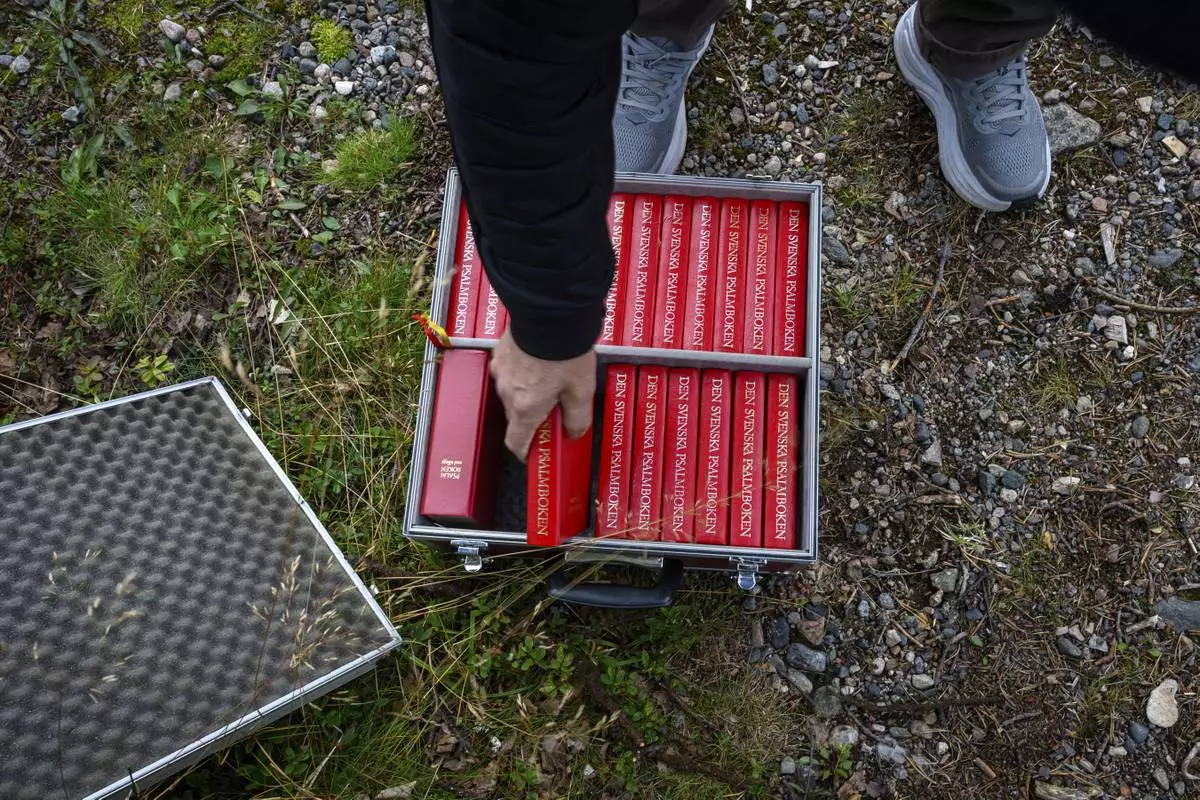
A person handles a hymnal during an outdoor prayer for the move of the Kiruna Church, a Sami style wooden Swedish Lutheran church, called Kiruna Kyrka in Swedish, in Kiruna, Sweden, Sunday, Aug. 17, 2025, two days before its move along a 5-kilometer (3-mile) route east to a new city center as part of the town's relocation. (AP Photo/Malin Haarala)
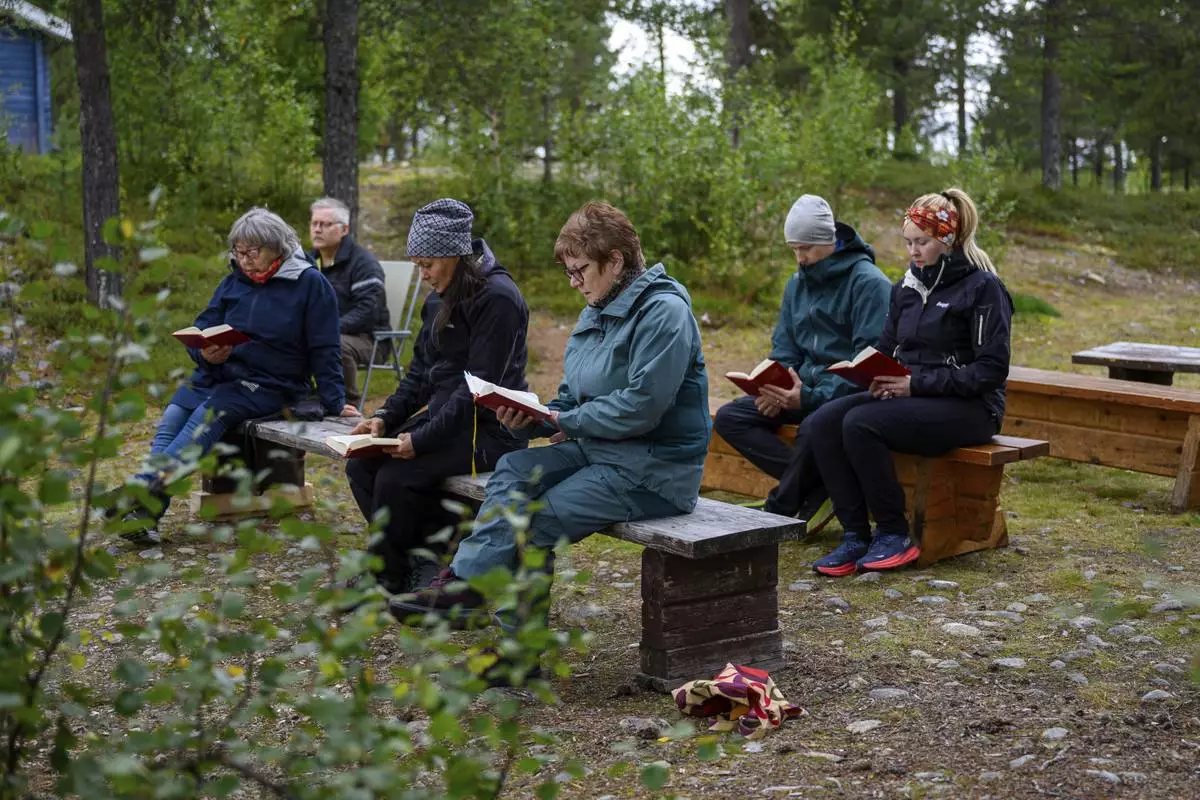
People hold an outdoor prayer for the move of the Kiruna Church, a Sami style wooden Swedish Lutheran church, called Kiruna Kyrka in Swedish, in Kiruna, Sweden, Sunday, Aug. 17, 2025, two days before its move along a 5-kilometer (3-mile) route east to a new city center as part of the town's relocation. (AP Photo/Malin Haarala)
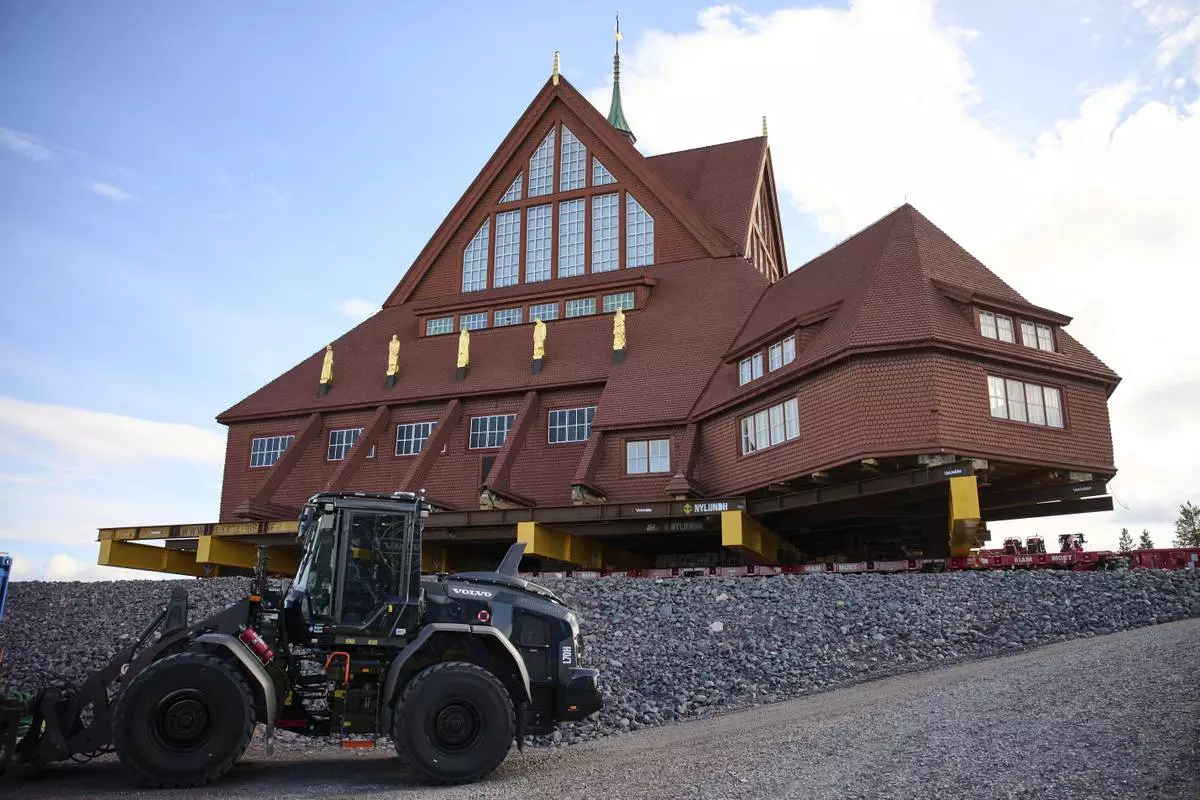
Construction machinery is parked next to the Kiruna Church, a Sami style wooden Swedish Lutheran church, called Kiruna Kyrka in Swedish, in Kiruna, Sweden, Wednesday, Aug. 20, 2025, after the completion of its move along a 5-km. (3-mile) route east to a new city center as part of the town's relocation.(AP Photo/Malin Haarala)