SPRINGFIELD, Mo. (AP) — The paint is finally dry on Plaster Stadium. The new turf has been laid, with its maroon end zones, the Missouri State logo across midfield and “C-USA” emblazoned at the 25-yard lines. All the technological upgrades are completed, ready for the Bears to play their home opener against SMU in less than a month.
These are the tangible signposts ushering in a new era for the school's football program.
There are more, less obvious ones that are accompanying Missouri State's move from the Football Championship Subdivision to the top-tier Football Bowl Subdivision, one that comes during perhaps the most tumultuous time ever in college sports.
There's the money flowing into players' pockets, a byproduct of NIL legislation and the recent House settlement, which allows schools to share up to $20.5 million with its athletes over the next year alone. There is increased pressure on coaching staffs to land higher-caliber athletes from both high school and the transfer portal. There are more demanding travel schedules and, yes, tougher opposition than the Bears have faced at any point in their 116-year history.
“Ultimately, us and Delaware are making this transition at one of the most unique times in the history of athletics,” said Missouri State athletic director Patrick Ransdell, referring to the Blue Hens, who are likewise moving up to the FBS level this season.
Delaware opens Aug. 28 against Delaware State. Missouri State begins Aug. 30 with a trip to mighty USC.
“You make all these plans: This is how we're going to make the move. Travel is going to go up. Our recruiting goes up. Salaries, nutrition, scholarships — everything is increased," Ransdell continued. “Then you throw on top of it some version of revenue-sharing, which we'll all kind of learn how we go through that. And we have to look at our football program, and what do we need to do to the facilities? There's only so much money to go around. You have to be strategic with it.”
So why make the jump, when there is such intense internal and external pressure? Why are the Bears and Blue Hens, two programs with rich histories at the lower levels of the game, making the risky decision to join the likes of Alabama, Ohio State and Michigan in playing at the highest and most expensive level?
“I think it's a number of factors,” Ransdell said. “Conference distribution is a factor, and what we're going to get from Conference USA. But even more so is raising the national profile of the institution. You can look through history and see applications and just brand recognition goes up significant moving from the FCS to FBS. That's important to us.”
Shortly before Missouri State and Delaware announced their jumps to Conference USA, the NCAA Division I Council in October 2023 increased what had been a nominal $5,000 fee to join the FBS to an eyebrow-raising $5 million.
The schools decided it was worth it anyway.
Jordan Skolnick, the interim athletic director at Delaware, had seen how 10 programs that made the jump since 2014 benefited from an increased national profile and more revenue, and the cascading effect it had on the athletic departments and schools at places as large as James Madison, Sam Houston State and Jacksonville State.
“I remember we were at a meeting of the Board of Trustees,” Skolnick said, “and one of our lacrosse players — McKenzie Didio, one of our student-athlete advisory committee members — I think she so eloquently said: ‘This is our chance to show everyone all the great things about our school. It’s going to help all our programs. All boats rise.'”
It's not just the FBS entrance fee that has proven costly, though. It's the day-to-day price of doing business.
The median athletic revenue at the FCS level last year was about $20.1 million with expenses of $35 million, according to the Knight-Newhouse College Athletics Database. The median revenue at the FBS level jumped to $96.7 million and expenses of $124 million, while behemoths such as Alabama reported operating expenses of more than $265 million.
Missouri State and Delaware are bridging some of the budgetary chasm by funneling additional money from their institutions to the athletic department. Conference USA, which has multimedia rights deals with ESPN and CBS Sports, will provide more revenue distribution than their former leagues — the Missouri Valley for Missouri State and Colonial Athletic for Delaware — and increases in ticket sales, merchandising, sponsorships and donations also promise to help lift the bottom line.
The schools might not bridge the monetary divide right away. But they understand the urgency to do it quickly.
“I think we'll be within earshot of being competitive in Conference USA,” Ransdell said. “We're not going to be the top, but we're also not going to be the bottom. If you look at averages, we'll be pretty competitive from the jump.”
Ryan Beard is ready for competition to shift from recruiting pitches and revenue generation to the field on fall Saturdays.
Missouri State's coach has known for two years that the jump to the FBS was coming, and he fastidiously has laid the groundwork for it. Beard's built out his coaching staff, made recruiting inroads in talent-rich states like Texas and Florida, and spent more time glad-handing sponsors and donors than he probably cares to count, all while trying to build support for his program.
“Back in the day it was football, football, football,” Beard explained. “Now you're in the realm of fundraising, contract negotiation, dealing with agencies and family members with financial interests. You have to be a master of multiple tasks. Everybody talks about the huge amount of money, and yes, that's a big deal. But where do we fit in the landscape of things?"
Being realistic about that is important, too.
“We're kind of the kings of doing more with less,” acknowledged Beard, who in just his second season as the head coach led the Bears to an 8-4 record last year, matching the most wins at Missouri State since the 1990 season.
“We have things that we don't think are good enough and everyone knows that. But we believe in the people in this building,” he said. “We have a beautiful campus, but if you're a recruit and you come to visit, I might not show you all the facilities. Instead, I'll bring you to practice, and you'll see a bunch of juiced up cats and coaches doing things the right way.”
That's not to slight what the Bears have at their disposal.
“It's just understanding where we are with our needs and basic resources of what it takes to look like an FBS team," Beard said. “What's encouraging is we have a president and athletic director who have a vision. They understand we are behind.”
Delaware may not be quite as far behind, thanks to its more recent FCS success. The program that produced NFL quarterbacks Rich Gannon, Joe Flacco and Matt Nagy along with Kansas City Chiefs general manager Brett Veach won the FCS national title in 2003, and it has made the playoffs four of the past six seasons.
Yet change is coming. Last year, the Blue Hens went 9-2 playing games against the likes of Bryant, Penn and Sacred Heart. This year, they have trips scheduled to Power Four programs Colorado and Wake Forest.
“I think what excites me the most about this move is really off the football side and more the alumni side, as someone who cares about the university,” said Blue Hens coach Ryan Carty, who also played quarterback for them from 2002-06.
“We get a chance to showcase our brand, showcase what we have here, how special we are,” he said. “Sometimes it is a little more hidden than it should be. The national games, the platform, the possibility of playoff games and bowl games — all of those things that give you a little boost in your visibility, it does it better for the teams that have something awesome to view.”
Get poll alerts and updates on the AP Top 25 all season. Sign up here. AP college football: https://apnews.com/hub/ap-top-25-college-football-poll and https://apnews.com/hub/college-football
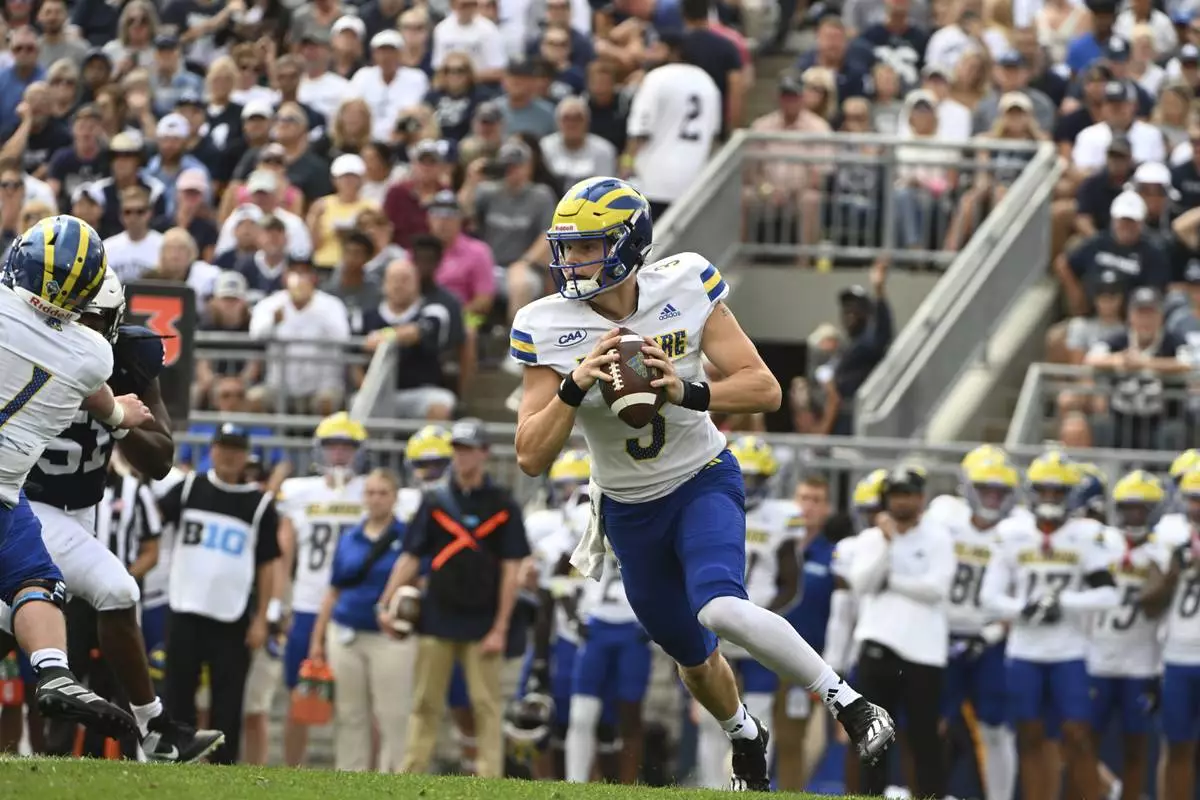
FILE - Delaware quarterback Zach Marker (3) looks to pass during the first half of an NCAA college football game against Penn State, Sept. 9, 2023, in State College, Pa. (AP Photo/Barry Reeger, File)
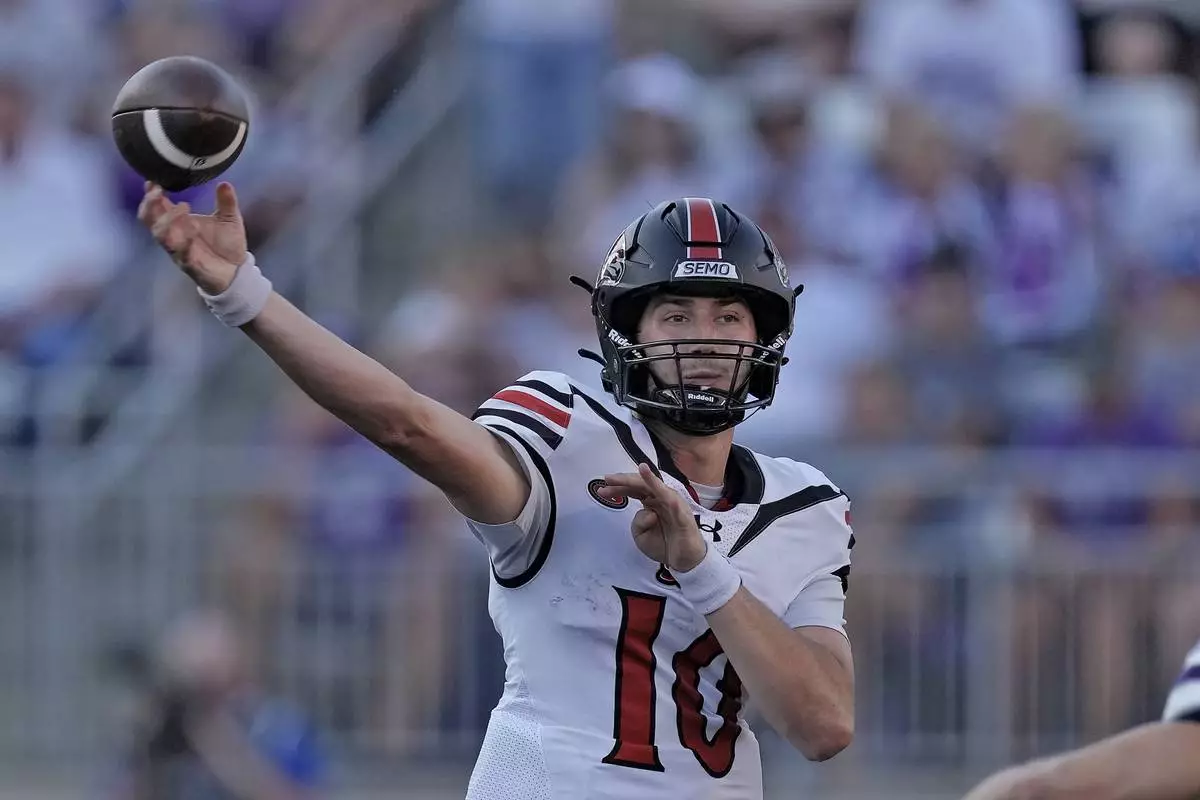
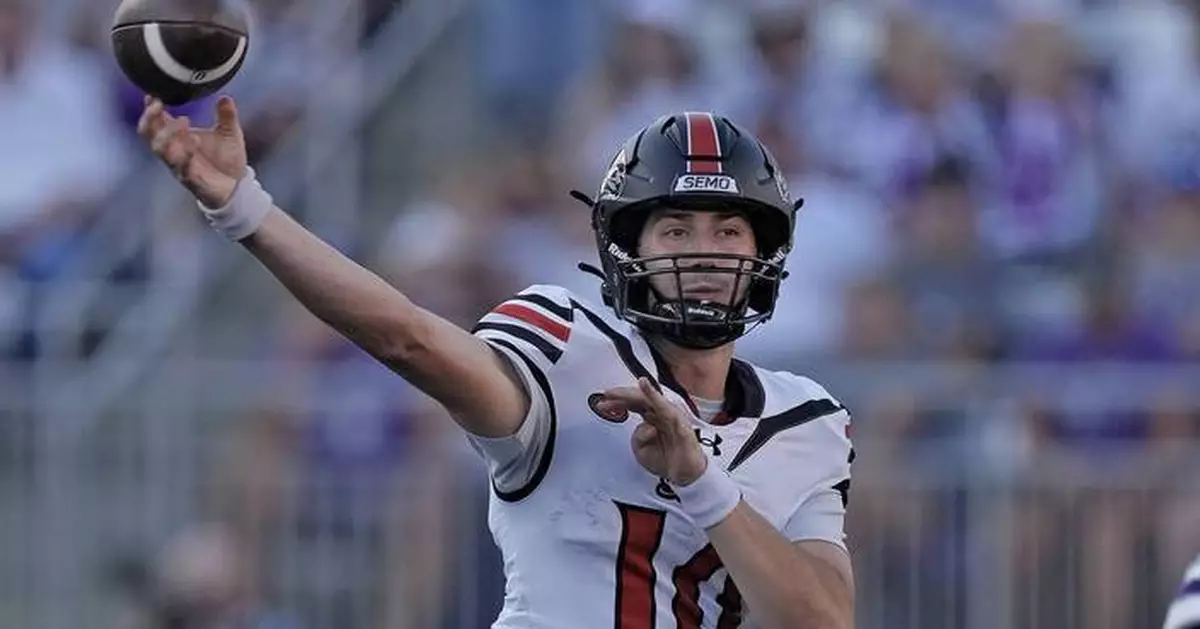
FILE - Southeast Missouri State quarterback Paxton DeLaurent throws during the first half of an NCAA college football game against Kansas State, Sept. 2, 2023, in Manhattan, Kan. (AP Photo/Charlie Riedel, File)