Traditional ethnic dresses have long been the representatives of the rich Tibetan culture and history in southwest China's Xizang Autonomous Region, which marks its 60th founding anniversary this year.
Traditional clothing has enjoyed a boom in popularity across China in recent years, and tourists visiting the region often make a point of having their pictures taken in traditional Tibetan costumes featuring distinctive designs and styles.
"Each region of Xizang has its own distinctive traditional dress, like the Khampa dress in Chamdo, the Kongpo dress in Nyingchi, and the Bola dress in Lhasa. The Khampa dress is a dress with sloping shoulders, which originates from Chamdo's unique climate, where temperature differences between day and night are significant. Local pastoralists often tie one sleeve around their waist while working and put on both sleeves when it gets cold. In everyday life, the Khampa dress is generally worn in only one color. But for weddings or festivals, we would wear dresses with motifs that symbolize good wishes," explained Zhaxiwengzong, an employee at a traditional Tibetan clothing photography studio.
"This year marks the 60th founding anniversary of the Xizang Autonomous Region. I assume that Princess Wencheng costumes will be a fixture at the celebrations, because they are very classic and exquisitely crafted, and they perfectly match with the festive atmosphere and collective joy as well," she said.
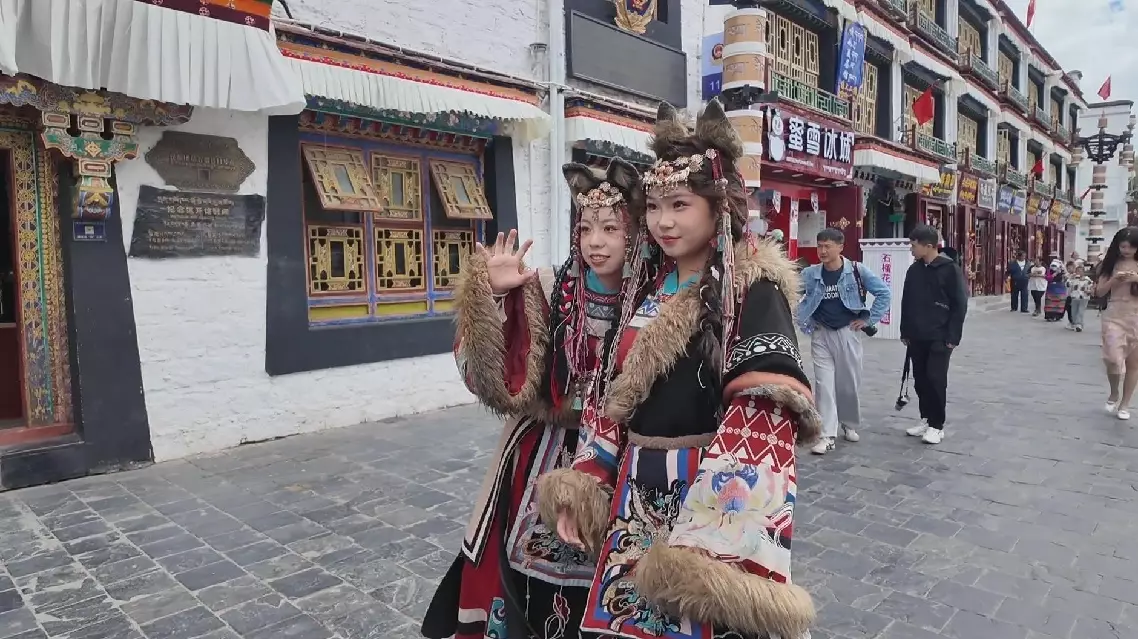
Traditional Tibetan costumes showcase rich diversity of regional styles
A Greek scholar has shed light on the multi-layered value of classical studies, asserting that modern civilizations can deepen their understandings of themselves, each other, and the challenges they face through the lens of ancient wisdom.
On the sidelines of the just-concluded World Conference of Classics held in Athens, Greece, Professor Myrto Garani of the National and Kapodistrian University of Athens said that Greek and Chinese intellectual traditions, despite giving different answers to life's fundamental questions, offer complementary paths to wisdom that remain urgently relevant today.
"The two civilizations clearly faced many of the same fundamental questions. That is what interests us, and that is why it is so valuable to gather here in Athens and discuss the concerns shared by both peoples since antiquity. We may have arrived at different answers. However, by examining the different ways in which we approached these questions, we can also reconsider the answers that our own civilization produced. In doing so, we gain a deeper understanding of one another. That is the real value of this dialogue and the reason we continue to explore these questions in greater depth," said Garani.
The professor said that she urges young people who view the classics as outdated or irrelevant to consider that ancient wisdom equips modern minds with essential tools for navigating today's crises.
"Classical studies will obviously not provide direct answers to the climate crisis or the energy crisis, for example. But they can help us cultivate our thinking and our judgment. The way people confronted fundamental questions in the past can help us respond to the challenges of the present. I believe this is one of the greatest things we can gain from classical studies. They encourage comprehensive thinking and critical judgment. They also allow us to examine the values of antiquity and understand how those values can be adapted and applied today," said Garani.
Held from June 9 to 10 under the theme "Dialogue Between Ancient and Modern Civilizations: Contemporary Inspiration from Classical Wisdom," the Second World Conference of Classics brought together more than 200 scholars, researchers and cultural representatives from Asia, Europe, Africa and North America.
This year's gathering highlighted the contemporary relevance of classical civilizations, exploring how ideas drawn from ancient traditions can offer insights into governance, ethics, social development and international relations amid evolving global challenges.
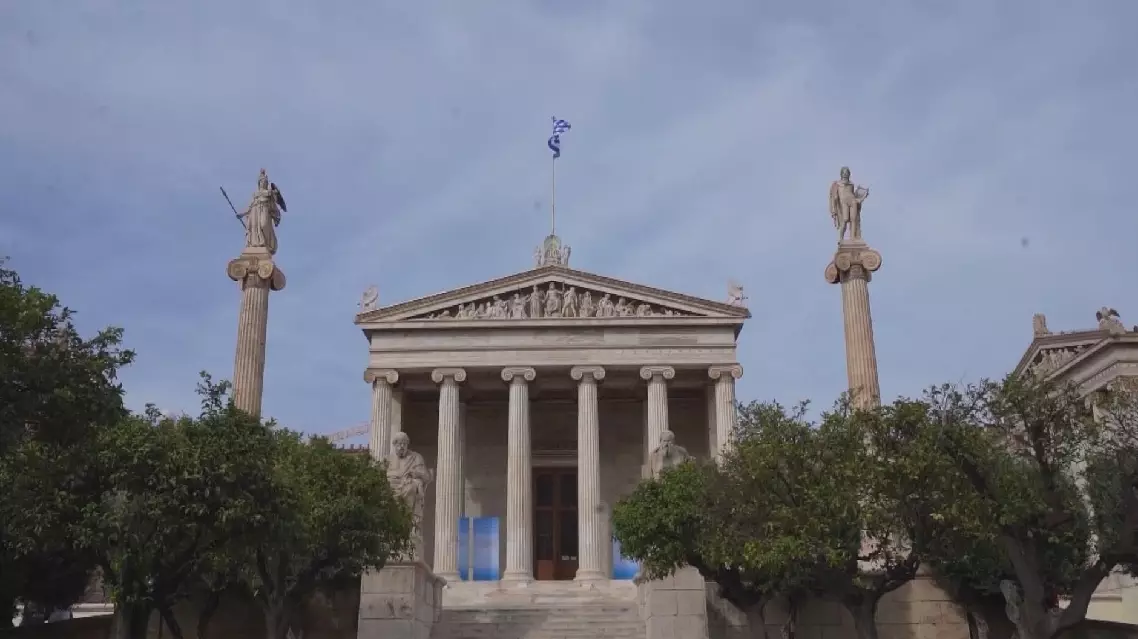
Greek scholar hails classical studies as East-West bridge