FLORHAM PARK, N.J. (AP) — The New York Jets made a few more big additions to bolster their defensive line with a pair of trades Wednesday.
They agreed to terms on a deal to acquire veteran nose tackle Harrison Phillips from the Minnesota Vikings, a person familiar with the trade told The Associated Press.
The Jets are sending sixth-round draft picks in 2026 and 2027 to the Vikings, who are trading a 2027 seventh-rounder along with Phillips — pending the 29-year-old D-lineman's physical — according to the person who spoke to the AP on condition of anonymity because the teams didn't announce the deal.
ESPN and NFL Network first reported the trade, which came a few hours after New York made another addition to its defensive line when it acquired defensive tackle Jowon Briggs and a seventh-rounder next year from Cleveland for a sixth-rounder.
According to multiple reports, the Vikings also agreed to pay $3.7 million of Phillips’ $7.4 million salary due this season.
Phillips played the past three seasons for the Vikings after spending his first four with Buffalo. He was a third-round pick out of Stanford in 2018. Phillips has eight career sacks, five fumble recoveries and is regarded as a top run stuffer.
The 6-foot-3, 307-pound Phillips started every game during his tenure with Minnesota, with 6 1/2 of his sacks and 17 quarterback hits during that time. He signed a three-year, $19.5 million contract with the Vikings in 2022 and then was signed to a two-year extension in September.
Briggs had 13 tackles with two quarterback hits in six games for Cleveland last season after being a seventh-round selection.
The 6-1, 313-pound D-lineman had 12 career sacks and 170 tackles during a college career that began at Virginia (2019-20) and finished with three years at Cincinnati (2021-23) — where he was teammates with current Jets cornerback Sauce Gardner for one season.
Phillips and Briggs join a D-line that’s led by three-time Pro Bowl pick Quinnen Williams and includes Micheal Clemons, Jay Tufele, Will McDonald and Rashad Weaver.
Defensive tackle Byron Cowart has missed time in training camp with an ankle injury, so the additions of Phillips and Briggs could help fill that void for the Jets if Cowart is sidelined for an extended time.
Before the trades Wednesday, defensive coordinator Steve Wilks praised his line and was excited about its potential.
“I preach all the time to the defense, everything that we do starts up front,” Wilks said. “Those guys are going to be the cowbells of this defense and really try to spark and get us going.”
AP NFL: https://apnews.com/hub/NFL

FILE - Minnesota Vikings defensive tackle Harrison Phillips (97) lines up against the Las Vegas Raiders during the first half of an NFL football game, Dec. 10, 2023, in Las Vegas. (AP Photo/Rick Scuteri, File)

FILE - Jowon Briggs answers a question during a Cleveland Browns NFL football rookie minicamp, on May 10, 2024, in Berea, Ohio. (AP Photo/Sue Ogrocki, File)
GENEVA--(BUSINESS WIRE)--Jan 15, 2026--
Cargill today announced the maiden voyage of Brave Pioneer, the first of five green methanol dual-fuel dry bulk vessels chartered by the company. The deployment of the Brave Pioneer marks another important milestone in Cargill’s broader decarbonization efforts – one focused on innovation, testing and learning as the company works with customers and partners to refine future-ready solutions for Cargill and the industry.
This press release features multimedia. View the full release here: https://www.businesswire.com/news/home/20260114083757/en/
Built by Tsuneishi Shipbuilding Co., Ltd. and owned by Mitsui & Co. Ltd., Brave Pioneer is equipped to operate on both conventional marine fuels and green methanol, a lower-carbon alternative. The estimated CO2 saving of using green methanol compared to conventional fuel is up to 70%.
The ship departs the Philippines today, will bunker green methanol in Singapore, then proceed to Western Australia before sailing onward to Europe. Through Brave Pioneer ’s maiden voyage, Cargill will conduct a series of operational trials designed evaluate methanol bunkering readiness, understand how environmental attributes can be traced and verified through carbon accounting systems, and assess market appetite for low-carbon freight services.
“Decarbonising global shipping requires a mix of technologies and the willingness to take bold steps before the entire ecosystem is ready,” said Jan Dieleman, President of Cargill’s Ocean Transportation business. “Technologies like green methanol or wind-assisted propulsion come with uncertainty. But as an industry leader, we have a responsibility to test these innovations on the water, share what we learn, and help shape the systems and standards that will enable wider adoption.”
Setting the Stage for a New Low-Carbon Fleet
The launch of Brave Pioneer paves the way for the four additional vessels that will join Cargill’s fleet over the coming years. The addition of these vessels strengthens Cargill’s multi-solution decarbonization approach, which includes wind-assisted propulsion, voyage optimization technologies, energy-efficiency retrofits and exploration of alternative fuels such as biofuels and ethanol.
Each represents another step in the company’s broader efforts to embed sustainability into global ocean supply chains and support customers looking for practical, lower-carbon freight options.
“We know the road to low carbon shipping will require a mix of solutions and green methanol is one part of that portfolio,” Dieleman continued. “Our new fleet is about optionality and adaptability. These vessels are engineered to perform at a best-in-class level on conventional fuel today, while allowing us to switch to greener fuels as availability improves. It’s a practical way to future-proof ocean transport.”
As one of the world’s largest charterers of dry bulk freight, Cargill’s actions send a strong demand signal to the market and serve as an open invitation for others in the maritime sector to join in advancing the transition to sustainable shipping.
The initiative supports Cargill’s broader effort to reduce supply chain emissions and invest and test practical innovations that advance progress toward a more sustainable global food system. Green methanol-enabled vessels—paired with the eventual expansion of renewable fuel supply—are expected to play a meaningful role in reducing maritime emissions over the coming decade.
About Cargill
Cargill is committed to providing food, ingredients, agricultural solutions, and industrial products to nourish the world in a safe, responsible, and sustainable way. Sitting at the heart of the supply chain, we partner with farmers and customers to source, make and deliver products that are vital for living.
Our 160,000 team members innovate with purpose, providing customers with life’s essentials so businesses can grow, communities prosper, and consumers live well. With 159 years of experience as a family company, we look ahead while remaining true to our values. We put people first. We reach higher. We do the right thing—today and for generations to come. For more information, visit Cargill.com and our News Center.
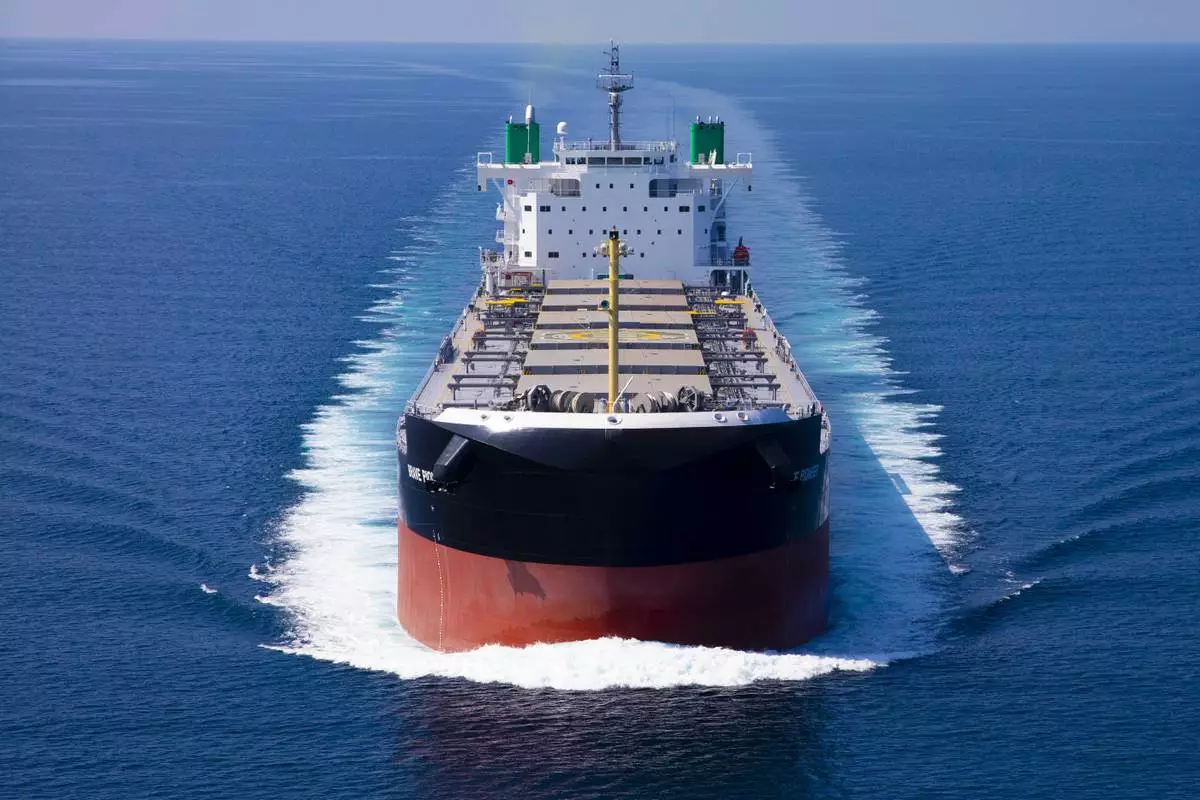
Through Brave Pioneer’s maiden voyage, Cargill will conduct a series of operational trials designed evaluate methanol bunkering readiness, understand how environmental attributes can be traced and verified through carbon accounting systems, and assess market appetite for low-carbon freight services.
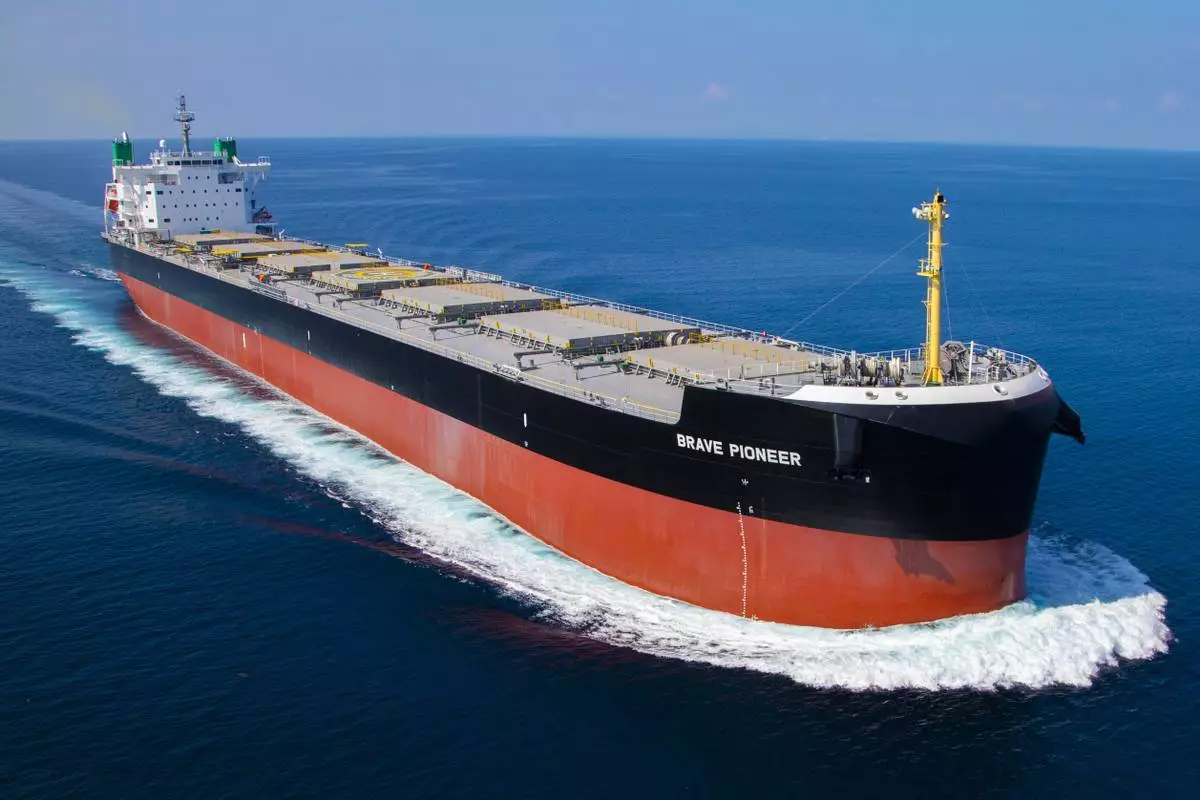
The ship departs the Philippines today, will bunker green methanol in Singapore, then proceed to Western Australia before sailing onward to Europe.
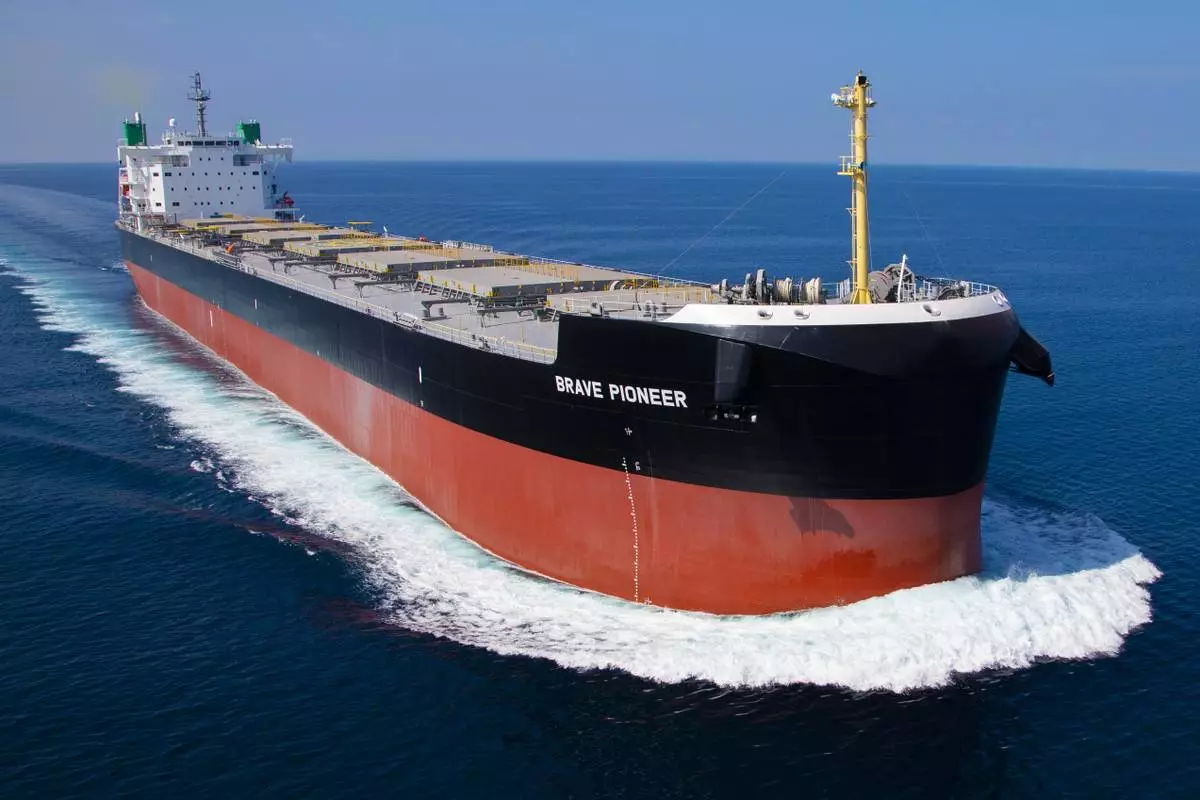
Built by Tsuneishi Shipbuilding Co., Ltd. and owned by Mitsui & Co. Ltd., Brave Pioneer is equipped to operate on both conventional marine fuels and green methanol, a lower-carbon alternative.