NEW YORK (AP) — Walmart Inc. powered through an uncertain economic environment and tariff concerns to deliver solid second-quarter financial results Thursday, showing it keeps pulling in shoppers and outpacing peers like Target.
The nation's largest retailer reported a 4.6% quarterly increase in comparable sales — those coming from established stores and online channels. Company executives said Walmart was attracting customers, particularly higher-income shoppers who may have avoided its stores in the past, with fast deliveries, grocery discounts and trendier clothes.
The company, based in Bentonville, Arkansas, also raised its annual profit and sales outlook.
Walmart's results differed notably from those of rival Target, which on Wednesday reported another quarter of comparable sales declines. The Minneapolis-based company has struggled to find its footing as customers defect to Walmart and other stores where they think they will find greater bargains and increasingly, the same or better merchandise.
Target's board of directors named a 20-year company veteran on Wednesday to succeed CEO Brian Cornell when he steps down after 11 years in early 2026.
Walmart said its profitable e-commerce operations, advertising revenue and selection of products with high profit margins have given it flexibility to absorb extra costs from the range of tariffs President Donald Trump has put on foreign products.
Walmart CEO Doug McMillon told investors Thursday that the impact of tariffs also has been gradual enough to mute changes in consumer spending behavior. When the discounter raised prices on certain items, it's observed lower- and middle-income customers trading down to lower-priced options or foregoing purchases, he said.
The company will continue to see its costs increase as it replenishes inventory at post-tariff price levels, McMillion said.
“We're doing what we said we would do,” he said. “We’re keeping our prices as low as we can for as long as we can. Our merchants have been creative and acted with urgency to avoid what would have been additional pressure for our customers and members.”
A growing list of companies, including Procter & Gamble, E.lf. Cosmetics, Black & Decker and Ralph Lauren, told investors in recent weeks that they planned to or already had raised prices because of tariffs, though modestly.
None of that has derailed consumer spending. Shoppers spent at a healthy pace in July, particularly at the nation’s auto dealerships, as signs emerged that President Donald Trump’s trade policies were taking a toll on jobs.
Some of that spending may have been shoppers buying furniture and other imported items to get ahead of expected price increases, analysts said.
On Tuesday, Home Depot, the nation’s largest home improvement retailer, reported improved sales during its latest quarter as consumers remained focused on smaller projects. Like Walmart, Home Depot's performance missed Wall Street’s expectations.
The Atlanta-based company also said shoppers should expect modest price increases in some categories as a result of additional costs from tariffs, which are taxes on imports. Home Depot reported comparable sales increase of 1.4% in line with what home improvement rival Lowe's reported on Wednesday.
But it’s Walmart that serves as a barometer of spending given its outsized power in American retailing. The company maintains that 90% of U.S. households rely on Walmart for a range of products, and more than 150 million customers shop on its website or in its stores every week.
Walmart said in May that prices had started to increase in late April and got higher in May. But it said Thursday that it had introduced 7,400 price rollbacks, or temporary discounts, across the aisles in the latest quarter.
The company said it earned $7.03 billion, or 88 cents per share, for the three-month period that ended July 31. That compares with $4.50 billion, or 56 cents per share, a year ago.
Sales rose nearly 5% to $177.4 billion. Walmart’s 4.6% growth in U.S. comparable sales during the second quarter was slightly higher than its first-quarter gain of 4.5%. Groceries and health and wellness items fueled the growth, the company said.
Global e-commerce sales rose 25%, above the 22% growth in the first quarter.
The retailer said roughly one-third of deliveries from its U.S. stores in recent weeks were orders requesting delivery in three hours or less, and 20% of those orders made it to customers in a half-hour or under.
Despite Walmart’s solid quarter, its stock price was down 5% in early afternoon trading as its earnings per share came in below what analysts had expected. Analysts were expecting 73 cents per share on sales of $175.93 billion for the quarter, according to FactSet.
Per share results, excluding effects of charges related to certain legal matters and from business restructuring, was 68 cents, Walmart said.
One $450 million expense was tied to settlements over worker and shopper injury claims, Walmart said. A company spokesperson said the cost per claim was increasing but not the total number.
For the year, Walmart raised its per-share estimates to a range of $2.52 to $2.62, up from a previous estimate of $2.50 to $2.60. It said 2025 sales are anticipated to increase 3.75% to 4.75%, more than it projected in May.
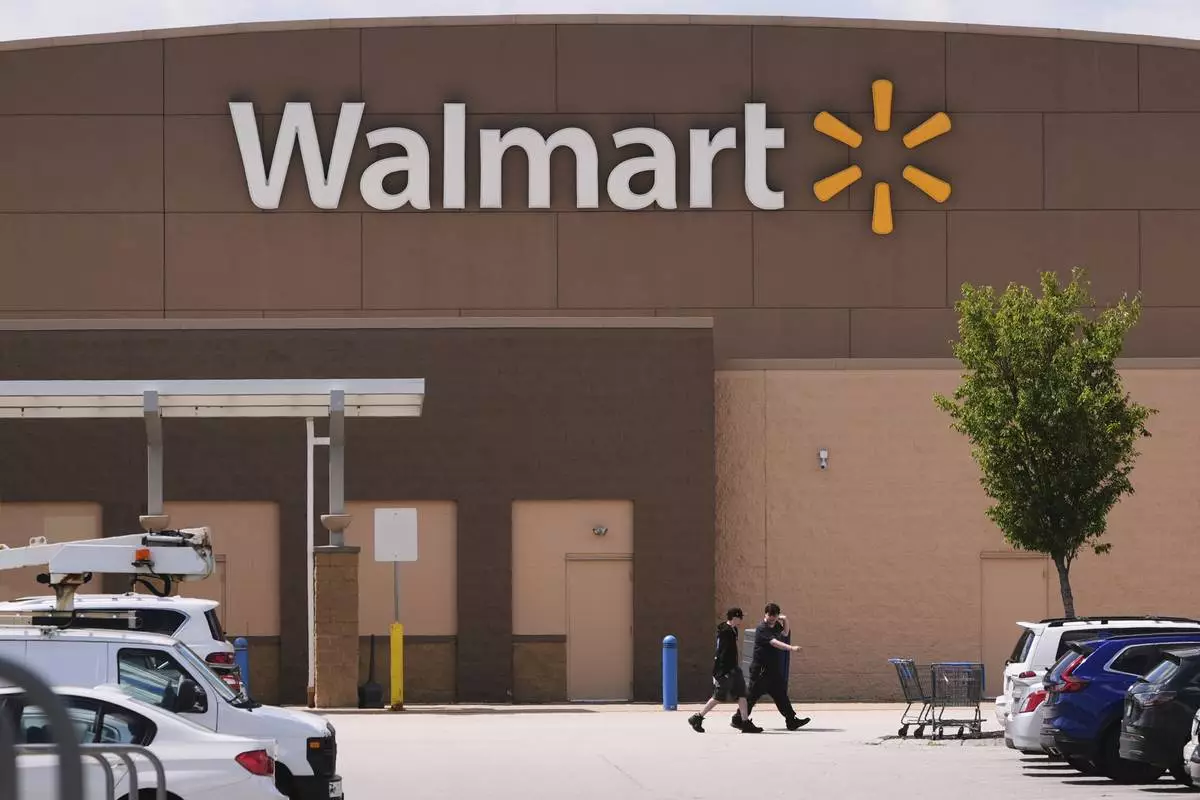
FILE - Shoppers walk from the Walmart store, Aug. 14, 2025, in Manchester, N.H. (AP Photo/Charles Krupa, file)
LONDON (AP) — Britain’s government is expected to approve a “mega” Chinese Embassy close to London’s financial district after years of controversy and political wrangling over the potential security risks it poses to the U.K.
Lawmakers from across the spectrum have urged planning officials to reject China’s application for the new embassy. Critics fear the proposed new building, on a huge site close to London’s financial district and crucial data cables, will be used as a base for espionage. Others say the supersized embassy — set to be the biggest Chinese Embassy in Europe — will pose a heightened threat of surveillance and intimidation to Chinese dissidents in exile.
The decision was initially slated for October, but it was repeatedly postponed after multiple allegations of Chinese spying and political interference piled pressure on the British government.
British media have reported that the decision to approve the embassy will come this week, ahead of Prime Minister Keir Starmer's expected trip to China. The closely watched visit would be the first made by a British prime minister since 2018.
A final decision on the embassy is expected by Jan. 20, the deadline set by the government.
Here's a look at why the embassy has been the focus of protests and Sino-British tensions for years:
The proposed embassy at Royal Mint Court — the former site of the U.K.’s coin maker, near the Tower of London — will cover about 20,000 square meters (215,278 square feet) and replace several Chinese official buildings across London.
Critics say the new site sits too close to underground fiber optic cables carrying sensitive financial information between London’s two main financial districts.
Conservative Party lawmaker Alicia Kearns said that risks handing over access to data that would give China’s government “a launchpad for economic warfare against our nation.” She cited news reports that the building complex would include 208 secret basement rooms close to the data cables.
Dissidents have also been among hundreds of people who have protested the plans, saying a mega-embassy housing large numbers of officials would further China’s repression of activists abroad.
Lawmakers from the governing Labour Party who oppose the plan say concerns include “the recent track record of Chinese espionage cases, interference activities and issuing of bounties against U.K.-based Hong Kongers.”
The site was bought by China’s government for 225 million pounds ($301 million) in 2018, but plans for the embassy have been delayed since.
Local officials rejected the initial application over concerns that the embassy would attract many large protests, affecting the safety of residents and tourists. China resubmitted its proposals after the Labour government took power last year.
Bronwen Maddox, director of the London think tank Chatham House, said she believed Britain's government should approve the proposed mega-embassy “given that MI5 and MI6 (U.K. intelligence agencies) have said they are not worried about the city cables underneath it."
“I guess that you could see why there is cause for concern, but what I think the government should be much tougher on is what exactly is China going to do with that embassy, never mind the building; what about the people in it? Why does it need so many? What are they going to do?"
China has complained about the seven-year delay in approving the project, saying the U.K. was “constantly complicating and politicizing the matter.”
“The development scheme of the new Chinese Embassy is of high quality and has been highly recognized by local professional bodies,” the Chinese embassy said in a statement in October. “The application complies with diplomatic practice and local regulations and procedures.”
Chinese Foreign Ministry spokesman Lin Jian has warned that if the embassy isn’t approved, “the consequences arising therefrom shall be borne by the U.K. side.”
Recent high-profile cases involving alleged Chinese espionage have raised alarms about the embassy.
In November, the domestic intelligence agency, MI5, issued an alert to lawmakers warning that Chinese agents were making “targeted and widespread” efforts to recruit and cultivate them using LinkedIn or cover companies.
Authorities believe the alleged “headhunters” were trying to gain access to sensitive information about Parliament and Britain’s government.
Beijing has strongly denied the claims, calling them “pure fabrication and malicious slander.”
Earlier, Britain’s government faced questions on whether it had interfered in the trial of two alleged Chinese spies in order to preserve good ties with China.
Former parliamentary researcher Christopher Cash and academic Christopher Berry were charged last year with spying for Beijing. But their trial collapsed at the last minute because the U.K. government refused to brand China a threat to national security, the country’s chief prosecutor said.
Facing criticism that he is not taking a tough enough stance on the security risks, Starmer has stressed that while protecting national security is non-negotiable, Britain needs to keep up diplomatic dialogue and cooperation with the Asian superpower.
“This is not a question of balancing economic and security considerations. We don’t trade off security in one area, for a bit more economic access somewhere else,” he has said.
Last year, Starmer said Chinese President Xi Jinping personally raised the matter during a phone call.
Opposition lawmaker Priti Patel derided Starmer as “Beijing’s useful idiot in Britain.”
“Starmer’s ‘reset’ with Beijing is a naive one-way street, which puts Britain at risk while Beijing gets everything it wants,” she said.
Associated Press writer Danica Kirka contributed to this report.
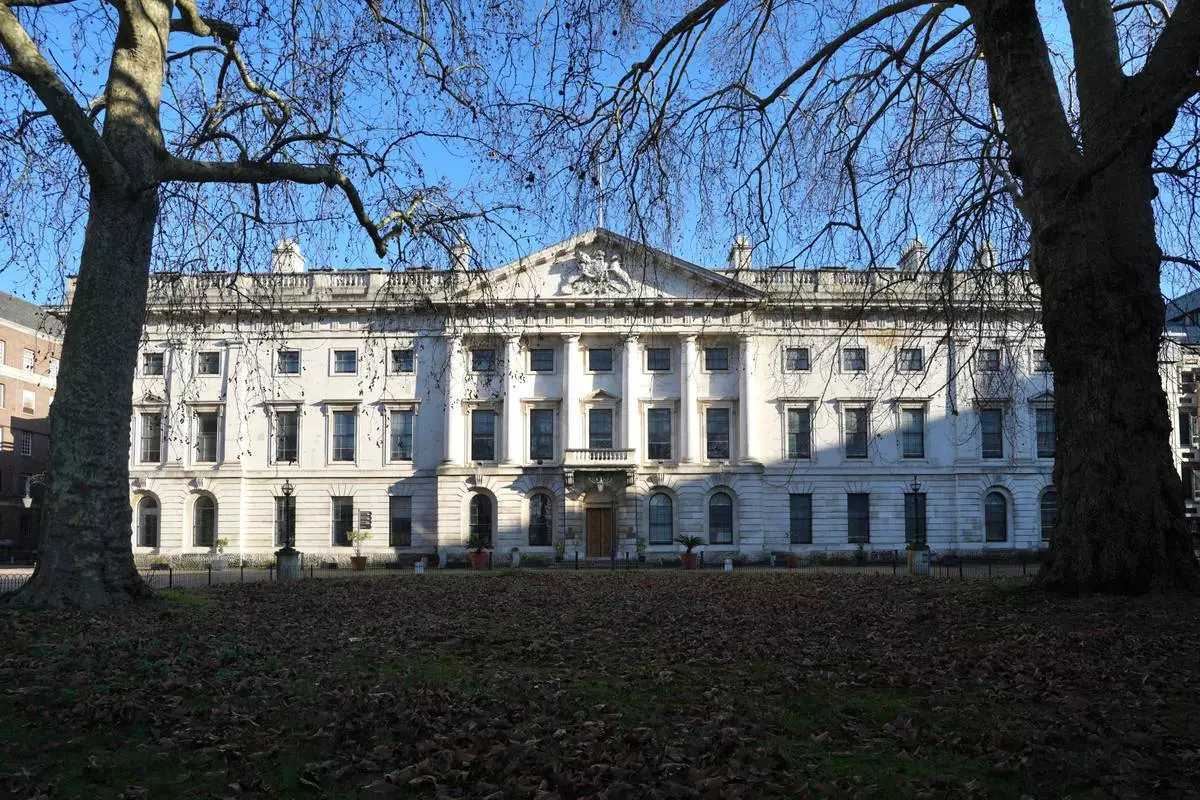
A general view of Royal Mint Court where is planning site for the new London Chinese embassy, near London's financial district, Wednesday, Jan. 14, 2026. (AP Photo/Kin Cheung)
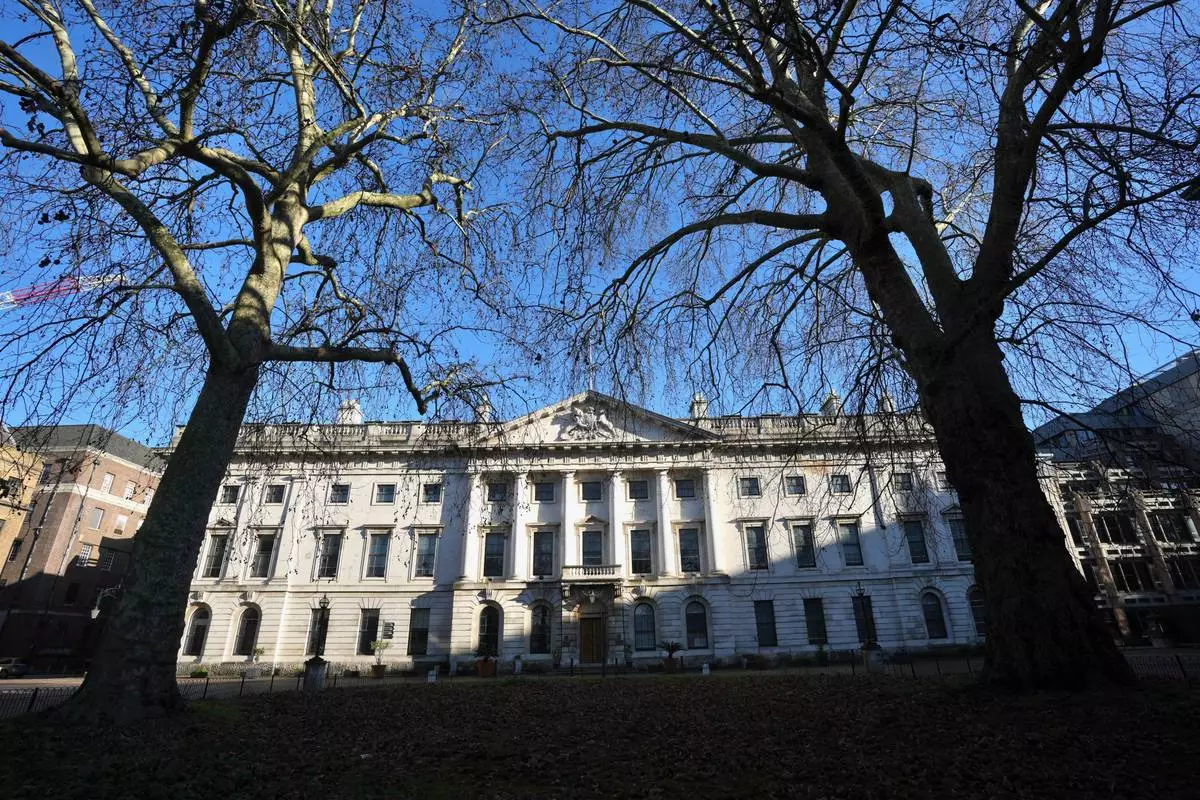
A general view of Royal Mint Court where is planning site for the new London Chinese embassy, near London's financial district, Wednesday, Jan. 14, 2026. (AP Photo/Kin Cheung)
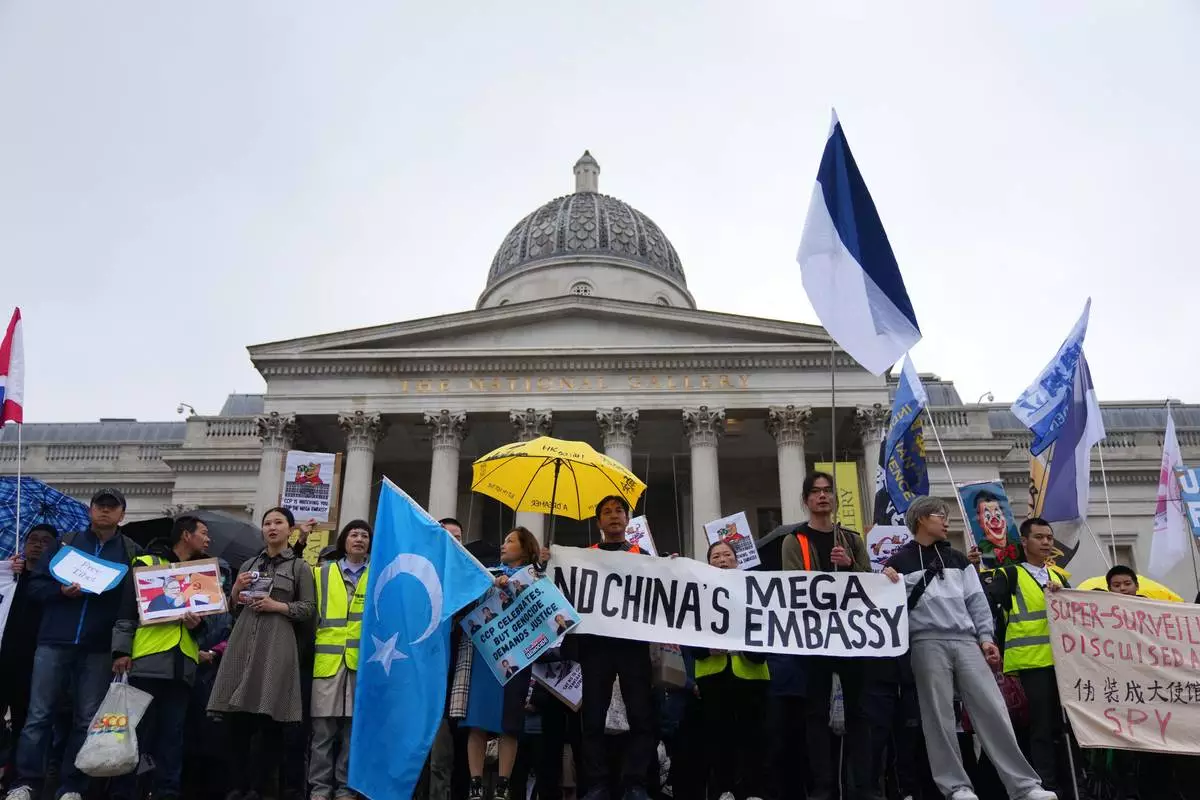
FILE - Protesters hold umbrellas, placards, and flags as they demonstrate against the proposed building of a new Chinese embassy, and to mark the 11th year of the Umbrella Revolution in Hong Kong, in London, Sunday, Sept. 28, 2025. (AP Photo/Joanna Chan, file)
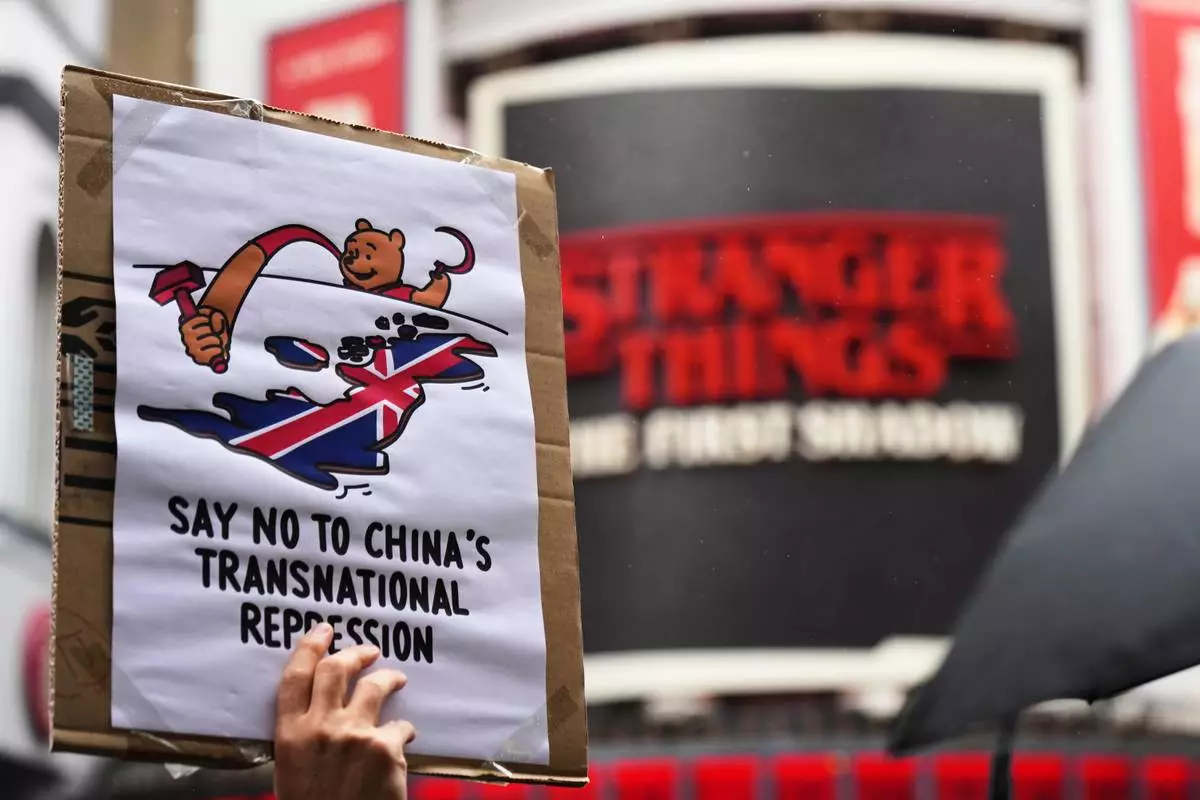
FILE - Protesters hold umbrellas, placards, and flags as they demonstrate against the proposed building of a new Chinese embassy, and to mark the 11th year of the Umbrella Revolution in Hong Kong, in London, Sunday, Sept. 28, 2025. (AP Photo/Joanna Chan, file)