WASHINGTON (AP) —
President Donald Trump says he is firing Federal Reserve Governor Lisa Cook late Monday, in a move viewed as a sharp escalation in his battle to exert greater control over the independent institution.
Trump said in a letter posted on his Truth Social platform Monday that he is firing Cook because of allegations that she committed mortgage fraud. The allegation was made last week by Bill Pulte, a Trump appointee to the Federal Housing Administration, an agency that regulates mortgage giants Fannie Mae and Freddie Mac.
Cook previously said she would not leave her post.
Trump has repeatedly attacked the Fed’s chair, Jerome Powell, for not cutting its short-term interest rate, and even threatened to fire him. Powell, who will speak Friday at an economic symposium in Jackson Hole, Wyoming, says the Fed wants to see how the economy responds to Trump’s sweeping tariffs on imports, which Powell says could push up inflation.
Powell's caution has infuriated Trump, who has demanded the Fed cut borrowing costs to spur the economy and reduce the interest rates the federal government pays on its debt. Trump has also accused Powell of mismanaging the U.S. central bank’s $2.5 billion building renovation project.
Firing the Fed chair or forcing out a governor threatens the Fed’s venerated independence, which has long been supported by most economists and Wall Street investors. Here's what to know about the Fed:
The Fed wields extensive power over the U.S. economy. By cutting the short-term interest rate it controls — which it typically does when the economy falters — the Fed can make borrowing cheaper and encourage more spending, accelerating growth and hiring. When it raises the rate — which it does to cool the economy and combat inflation — it can weaken the economy and cause job losses.
Economists have long preferred independent central banks because they can more easily take unpopular steps to fight inflation, such as raise interest rates, which makes borrowing to buy a home, car, or appliance more expensive.
The importance of an independent Fed was cemented for most economists after the extended inflation spike of the 1970s and early 1980s. Former Fed Chair Arthur Burns has been widely blamed for allowing the painful inflation of that era to accelerate by succumbing to pressure from President Richard Nixon to keep rates low heading into the 1972 election. Nixon feared higher rates would cost him the election, which he won in a landslide.
Paul Volcker was eventually appointed chair of the Fed in 1979 by President Jimmy Carter, and he pushed the Fed's short-term rate to the stunningly high level of nearly 20%. (It is currently 4.3%). The eye-popping rates triggered a sharp recession, pushed unemployment to nearly 11%, and spurred widespread protests.
Yet Volcker didn't flinch. By the mid-1980s, inflation had fallen back into the low single digits. Volcker's willingness to inflict pain on the economy to throttle inflation is seen by most economists as a key example of the value of an independent Fed.
An effort to fire Powell would almost certainly cause stock prices to fall and bond yields to spike higher, pushing up interest rates on government debt and raising borrowing costs for mortgages, auto loans, and credit card debt. The interest rate on the 10-year Treasury is a benchmark for mortgage rates.
Most investors prefer an independent Fed, partly because it typically manages inflation better without being influenced by politics but also because its decisions are more predictable. Fed officials often publicly discuss how they would alter interest rate policies if economic conditions changed.
If the Fed was more swayed by politics, it would be harder for financial markets to anticipate — or understand — its decisions.
Fed chairs like Powell are appointed by the president to serve four-year terms, and have to be confirmed by the Senate. The president also appoints the six other members of the Fed's governing board, who can serve staggered terms of up to 14 years.
Those appointments can allow a president over time to significantly alter the Fed's policies. Former president Joe Biden appointed four of the current seven members: Powell, Cook, Philip Jefferson, and Michael Barr. A fifth Biden appointee, Adriana Kugler, stepped down unexpectedly on Aug. 1, about five months before the end of her term. Trump has already nominated his top economist, Stephen Miran, as a potential replacement, though he will require Senate approval. Cook's term ends in 2038, so forcing her out would allow Trump to appoint a loyalist sooner.
Trump will be able to replace Powell as Fed chair in May 2026, when Powell’s term expires. Yet 12 members of the Fed’s interest-rate setting committee have a vote on whether to raise or lower interest rates, so even replacing the Chair doesn’t guarantee that Fed policy will shift the way Trump wants.
Congress, meanwhile, can set the Fed's goals through legislation. In 1977, for example, Congress gave the Fed a “dual mandate” to keep prices stable and seek maximum employment. The Fed defines stable prices as inflation at 2%.
The 1977 law also requires the Fed chair to testify before the House and Senate twice every year about the economy and interest rate policy.
The Supreme Court earlier this year suggested in a ruling on other independent agencies that a president can't fire the chair of the Fed just because he doesn't like the chair's policy choices. But he may be able to remove him “for cause,” typically interpreted to mean some kind of wrongdoing or negligence.
It's a likely reason the Trump administration has zeroed in on the building renovation, in hopes it could provide a “for cause” pretext. Still, Powell would likely fight any attempt to remove him, and the case could wind up at the Supreme Court.
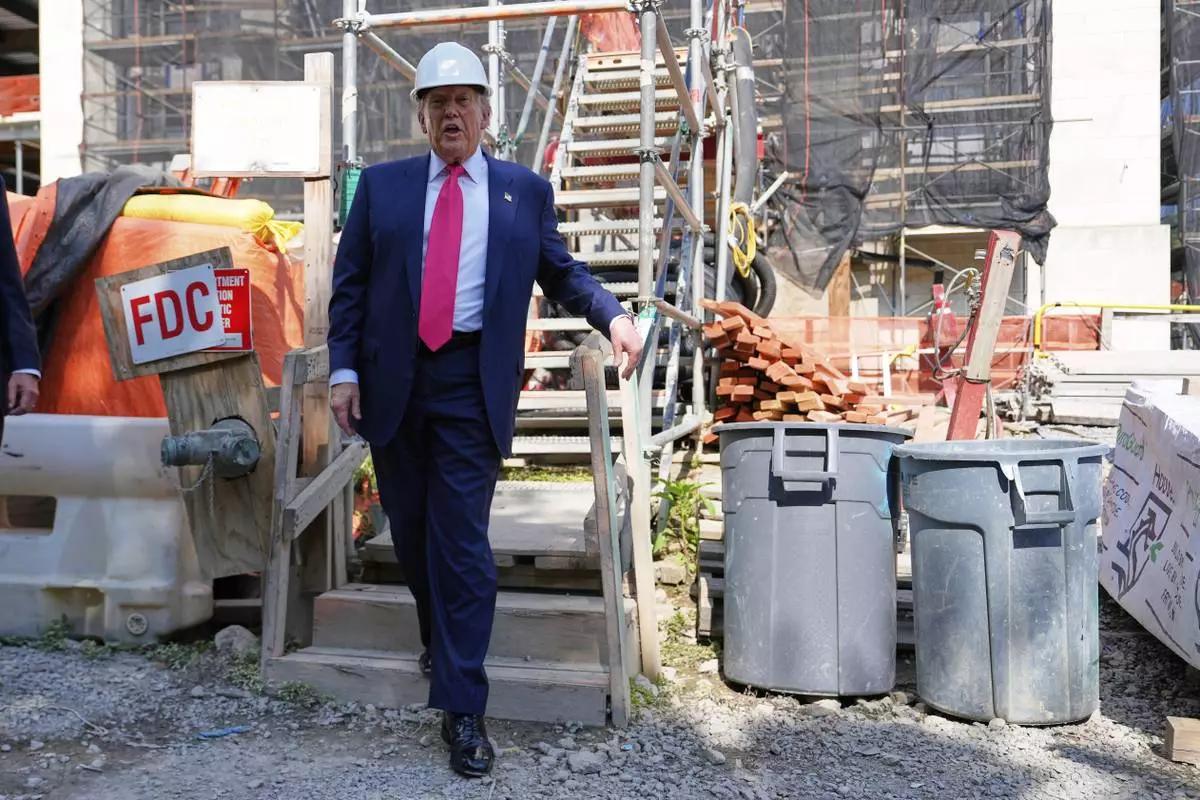
FILE - President Donald Trump visits the Federal Reserve during renovations, July 24, 2025, in Washington. (AP Photo/Julia Demaree Nikhinson)
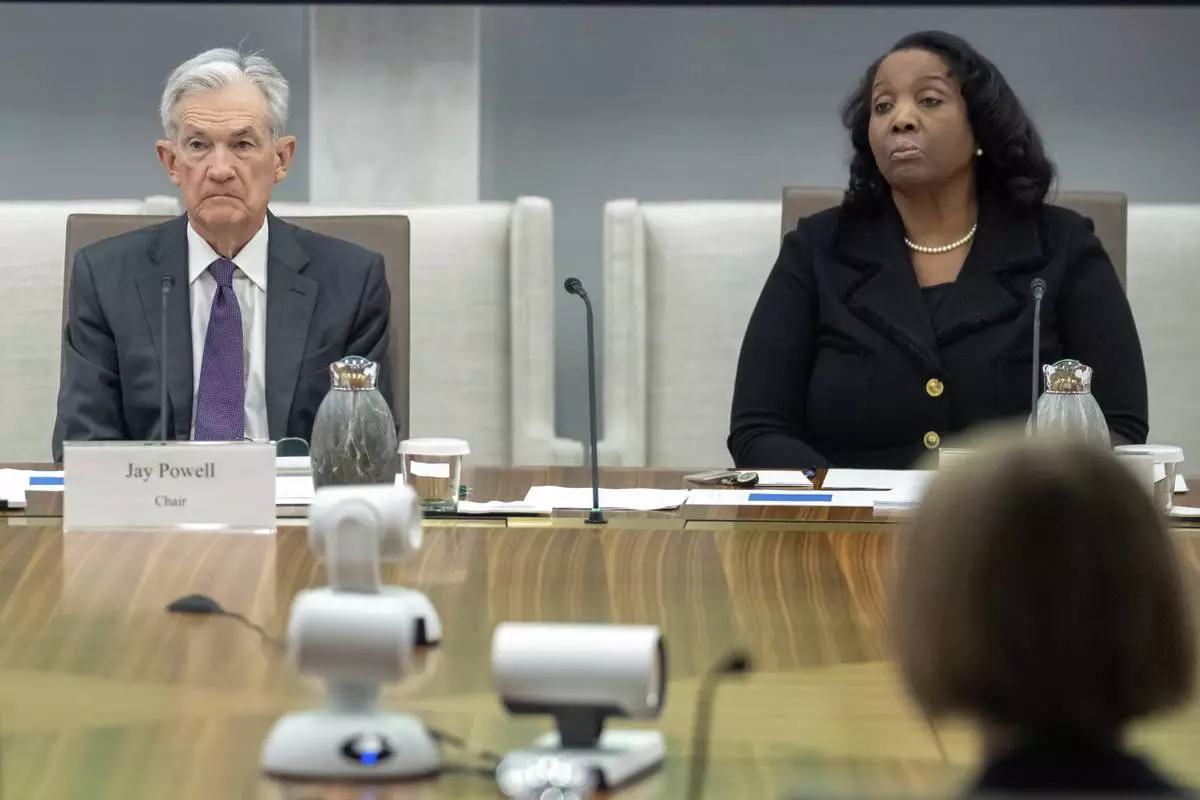
FILE - Federal Reserve Chairman Jerome Powell, and Board of Governors member Lisa Cook, right, listen during an open meeting of the Board of Governors at the Federal Reserve, June 25, 2025, in Washington. (AP Photo/Mark Schiefelbein, File)
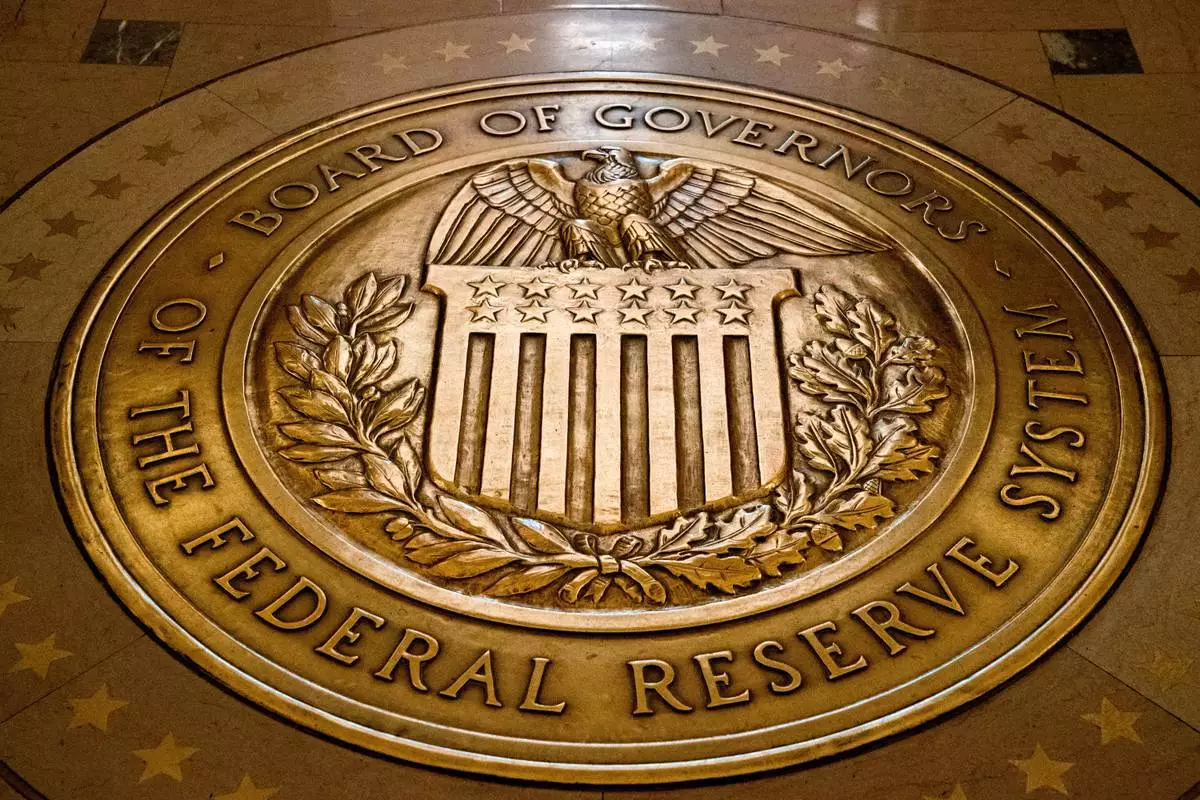
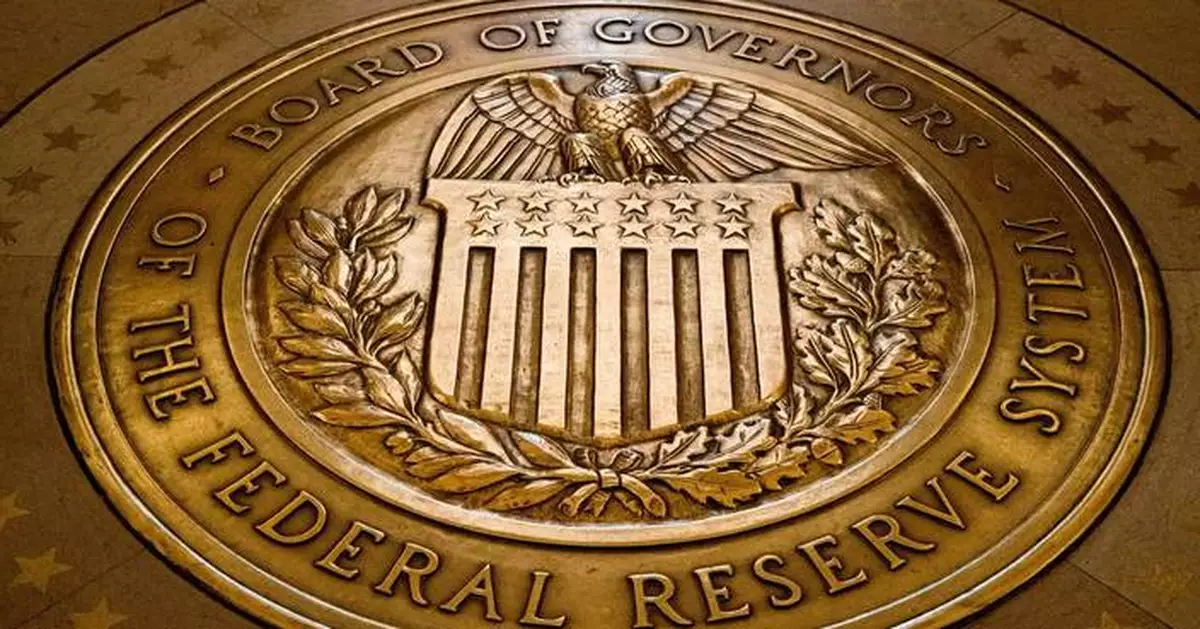
FILE- In this Feb. 5, 2018, file photo, the seal of the Board of Governors of the United States Federal Reserve System is displayed in the ground at the Marriner S. Eccles Federal Reserve Board Building in Washington. (AP Photo/Andrew Harnik, File)
HAVANA (AP) — Trumpets and drums played solemnly at Havana's airport Thursday as white-gloved Cuban soldiers marched out of a plane carrying urns with remains of the 32 Cuban officers killed during a stunning U.S. attack on Venezuela.
Nearby, thousands of Cubans lined one of Havana’s most iconic streets to await the bodies as the island remained under threat by the administration of U.S. President Donald Trump.
The soldiers' shoes clacked as they marched stiff-legged into the headquarters of the Ministry of the Armed Forces and placed the urns on a long table next to the pictures of those killed. Tens of thousands of people paid their respects, saluting the urns or holding their hand over their heart, many of them drenched from standing outside in a heavy downpour.
Thursday’s mass funeral was only one of a handful that the Cuban government has organized over the past half-century.
The soldiers were part of the security detail of Venezuelan President Nicolás Maduro during the Jan. 3 raid on his residence to seize the former leader and bring him to the U.S. to face drug trafficking charges.
State television also showed images of more than a dozen people it said were wounded combatants from the raid, accompanied by Cuban Foreign Minister Bruno Rodríguez after arriving Wednesday night from Venezuela. Some were in wheelchairs.
Tensions between Cuba and the U.S. have spiked, with Trump recently demanding that the Caribbean country make a deal with him before it is “too late.” He did not explain what kind of deal.
Trump also has said that Cuba will no longer live off Venezuela's money and oil. Experts warn that the abrupt end of oil shipments could be catastrophic for Cuba, which is already struggling with serious blackouts and a crumbling power grid.
Officials unfurled a massive flag at Havana's airport as President Miguel Díaz-Canel, clad in military garb, stood silent next to former President Raúl Castro, with what appeared to be the relatives of those killed looking on nearby.
Cuban Interior Minister Lázaro Alberto Álvarez Casas called the slain soldiers “heroes” of an anti-imperialist struggle spanning both Cuba and Venezuela. In an apparent reference to the U.S., he said the “enemy” speaks of “high-precision operations, of troops, of elites, of supremacy.
“We, on the other hand, speak of faces, of families who have lost a father, a son, a husband, a brother,” Álvarez said.
The events demonstrate that “imperialism may possess more sophisticated weapons; it may have immense material wealth; it may buy the minds of the wavering; but there is one thing it will never be able to buy: the dignity of the Cuban people,” he said.
Carmen Gómez, a 58-year-old industrial designer, was among the thousands of Cubans who lined a street where motorcycles and military vehicles thundered by with the remains of those killed.
“They are people willing to defend their principles and values, and we must pay tribute to them,” Gómez said, adding that she hopes no one invades her country. “It’s because of the sense of patriotism that Cubans have, and that will always unite us.”
The 32 military personnel ranged in age from 26 to 60 and were part of protection agreements between the two countries.
Officials in Cuba have said they expect a massive demonstration Friday across from the U.S. Embassy to protest the deaths.
“People are upset and hurt ... many do believe that the dead are martyrs” of a historic struggle against the United States, analyst and former diplomat Carlos Alzugaray told The Associated Press.
In October 1976, then-President Fidel Castro led a massive demonstration to bid farewell to the 73 people killed in the bombing of a civilian flight financed by anti-revolutionary leaders in the U.S. Most of the victims were Cuban athletes.
In December 1989, officials organized a ceremony to honor the more than 2,000 Cuban combatants who died in Angola during Cuba’s participation in a war that defeated the South African army.
In October 1997, memorial services were held following the arrival of the remains of guerrilla commander Ernesto “Che” Guevara and six of his comrades, who died in 1967.
The latest mass burial is critical to honor those slain, said José Luis Piñeiro, a 60-year-old doctor who lived for four years in Venezuela.
“I don’t think Trump is crazy enough to come and enter a country like this, ours, and if he does, he’s going to have to take an aspirin or some painkiller to avoid the headache he’s going to get,” Piñeiro said. “These were 32 heroes who fought him. Can you imagine an entire nation? He’s going to lose.”
The remains arrived a day after the U.S. announced $3 million in additional aid to help the island recover from the catastrophic Hurricane Melissa. The first flight took off on Wednesday, and a second flight was scheduled for Friday. A commercial vessel also will deliver food and other supplies.
Cuba had said on Wednesday that any contributions will be channeled through the government.
But U.S. State Department foreign assistance official Jeremy Lewin said Thursday that the U.S. was working with Cuba’s Catholic Church to distribute aid, as part of Washington's efforts to give assistance directly to the Cuban people.
“There’s nothing political about cans of tuna and rice and beans and pasta,” he said Thursday, warning that the Cuban government should not intervene or divert supplies. “We will be watching, and we will hold them accountable.”
Lewin said the Cuban government has a choice to: “Step down or better provide towards people.” Lewin added that “if there was no regime,” the U.S. would provide “billions and billions of dollars” in assistance, as well as investment and development: “That’s what lies on the other side of the regime for the Cuban people.”
Cuban Foreign Minister Bruno Rodríguez said the U.S. government was “exploiting what appears to be a humanitarian gesture for opportunistic and politically manipulative purposes.”
Coto contributed from San Juan, Puerto Rico.
Follow AP’s coverage of Latin America and the Caribbean at https://apnews.com/hub/latin-america
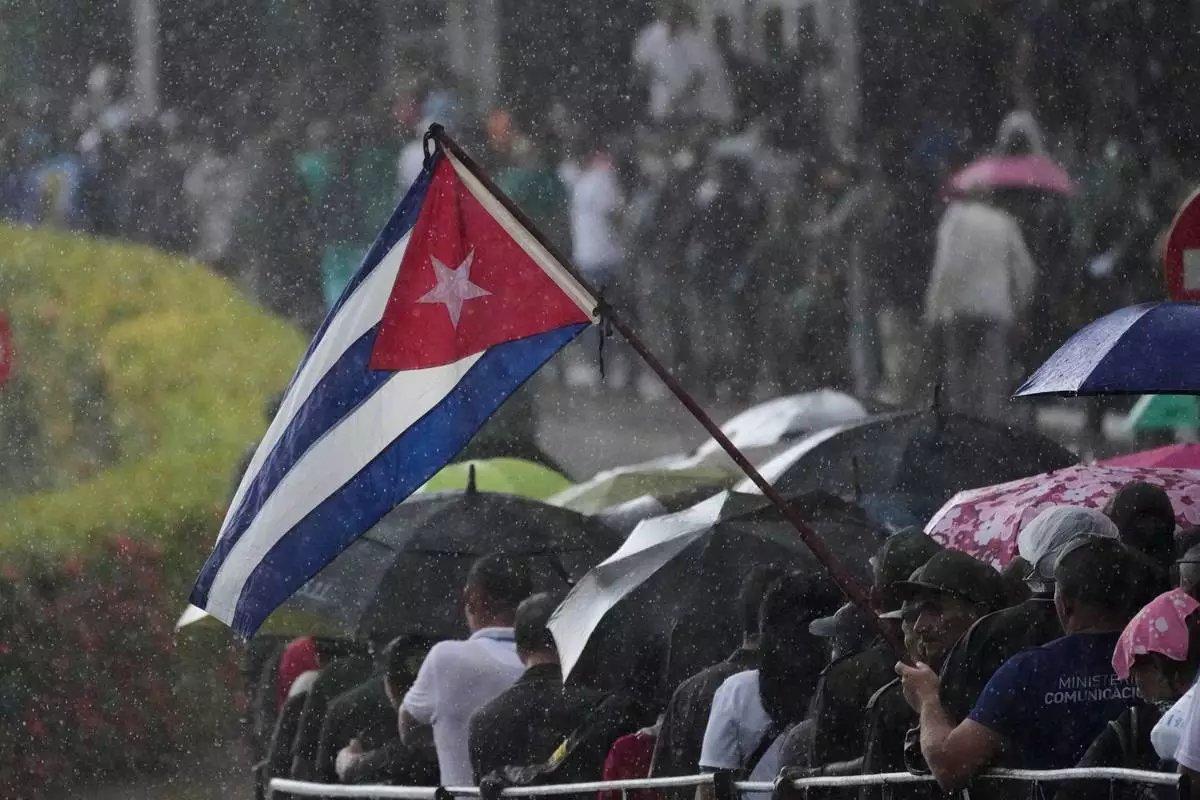
People line up outside the Ministry of the Revolutionary Armed Forces where the remains are on display of the Cuban officers who were killed during the U.S. operation in Venezuela that captured President Nicolas Maduro, as it sprinkles rain in Havana, Cuba, Thursday, Jan. 15, 2026. (AP Photo/Ramon Espinosa)
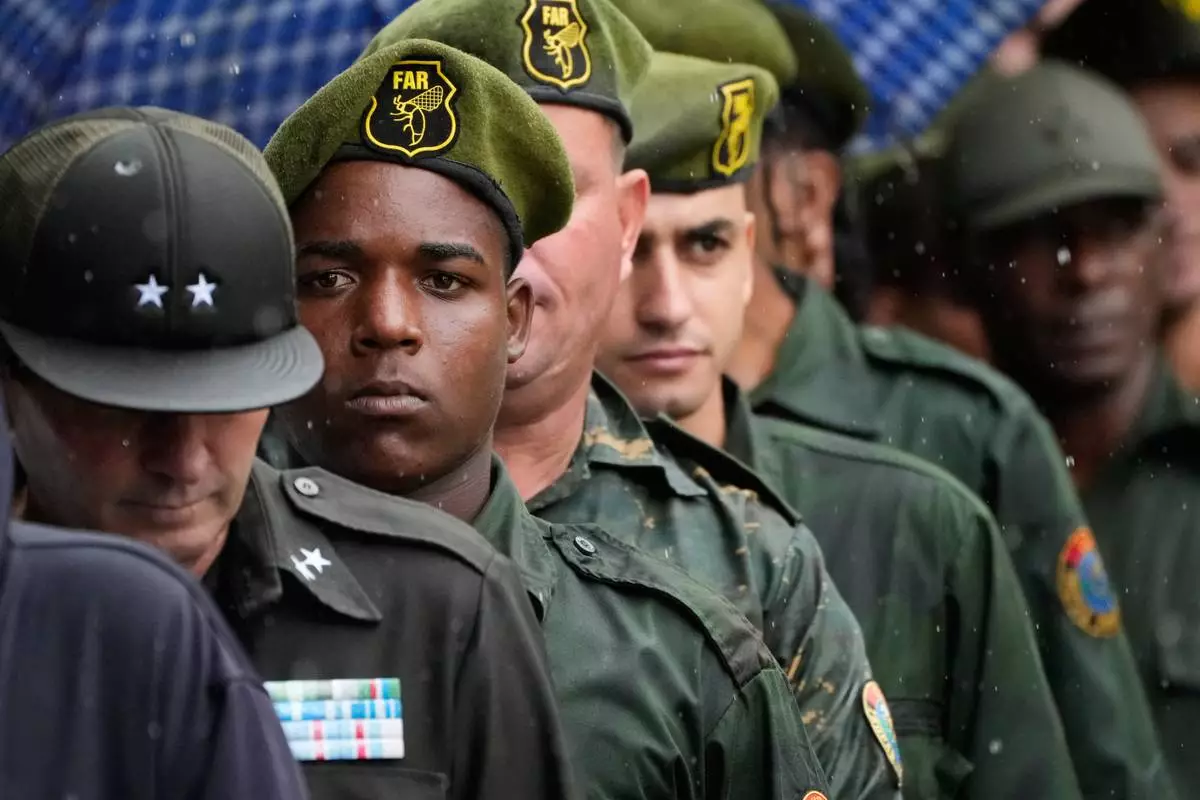
Military members line up outside the Ministry of the Revolutionary Armed Forces where the urns containing the remains of Cuban officers, killed during the U.S. operation in Venezuela that captured President Nicolas Maduro, are on display in Havana, Cuba, Thursday, Jan. 15, 2026. (AP Photo/Ramon Espinosa)
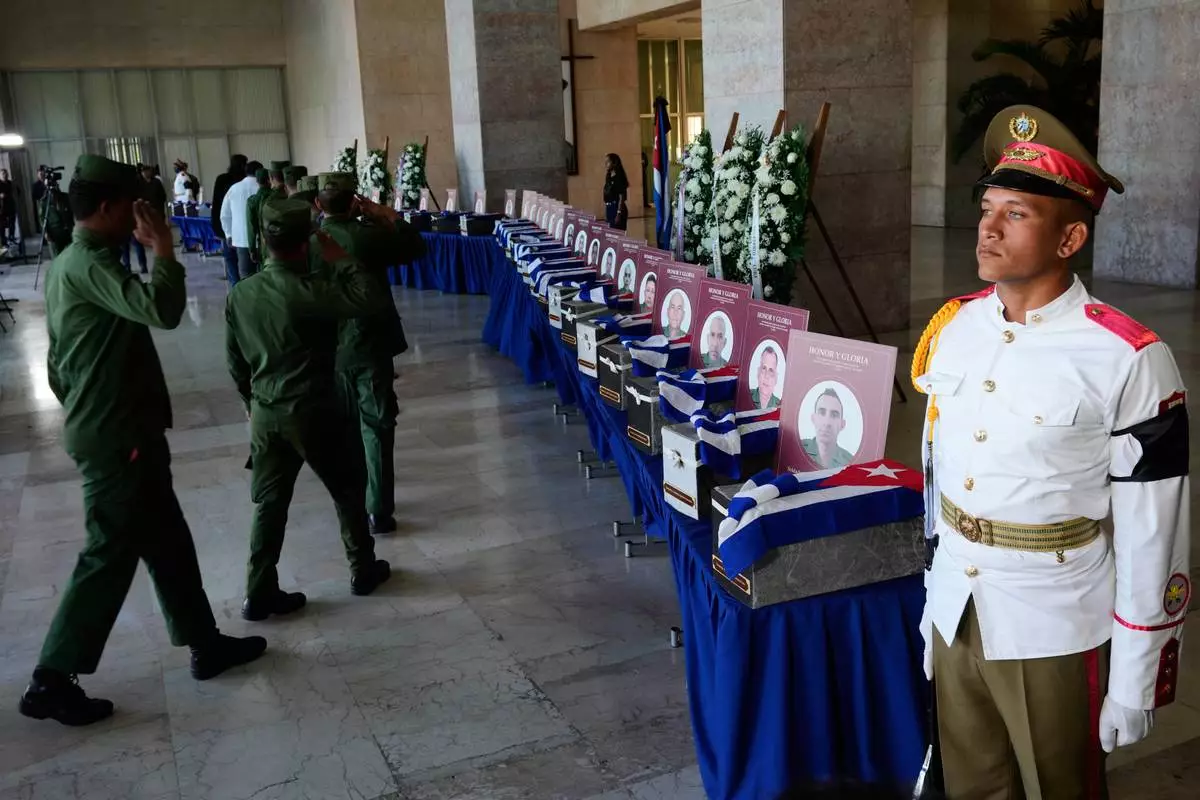
Military members pay their last respects to Cuban officers who were killed during the U.S. operation in Venezuela that captured Venezuelan President Nicolas Maduro, at the Ministry of the Revolutionary Armed Forces where the urns containing the remains are displayed during a ceremony in Havana, Cuba, Thursday, Jan. 15, 2026. (AP Photo/Ramon Espinosa)
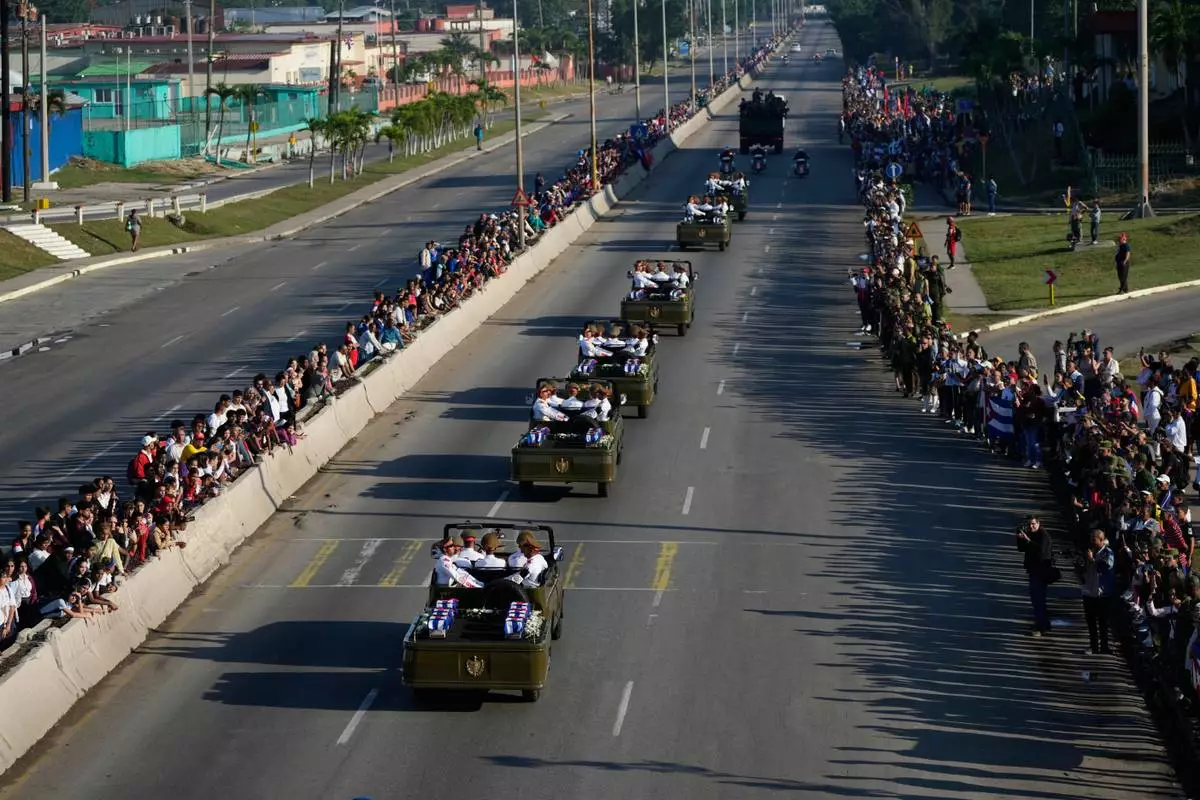
A motorcade transports urns containing the remains of Cuban officers, who were killed during the U.S. operation in Venezuela that captured Venezuelan President Nicolas Maduro, through Havana, Cuba, Thursday, Jan. 15, 2026. (AP Photo/Ramon Espinosa)
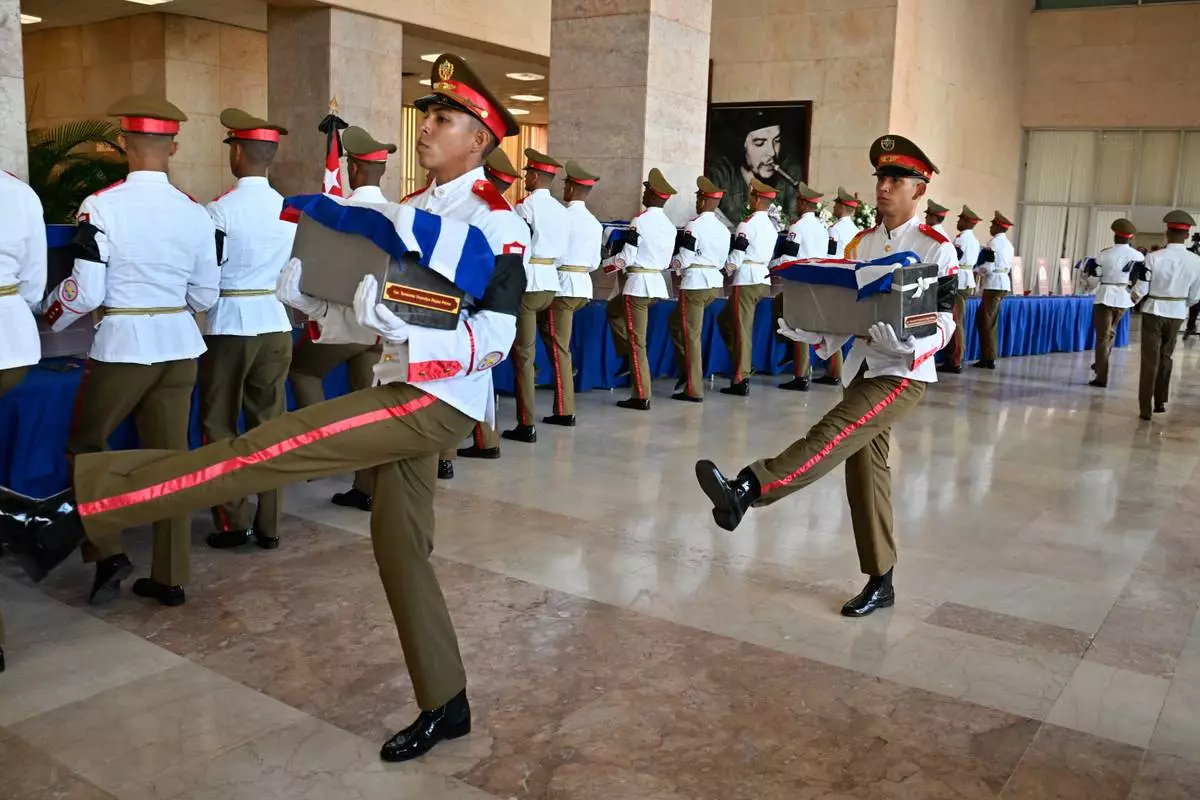
Soldiers carry urns containing the remains of Cuban officers, who were killed during the U.S. operation in Venezuela that captured Venezuelan President Nicolas Maduro, at the Ministry of the Revolutionary Armed Forces in Havana, Cuba, Thursday, Jan. 15, 2026. (Adalberto Roque /Pool Photo via AP)
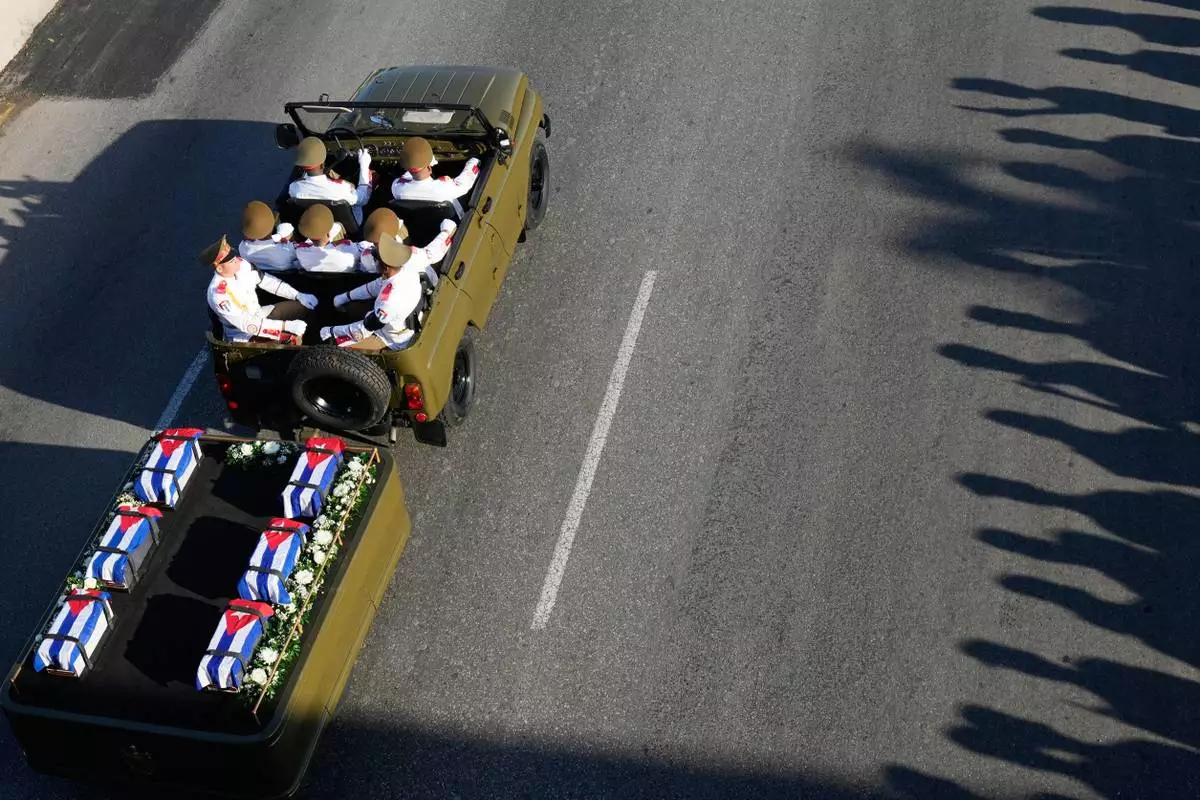
A motorcade transports urns containing the remains of Cuban officers, who were killed during the U.S. operation in Venezuela that captured Venezuelan President Nicolas Maduro, through Havana, Cuba, Thursday, Jan. 15, 2026. (AP Photo/Ramon Espinosa)
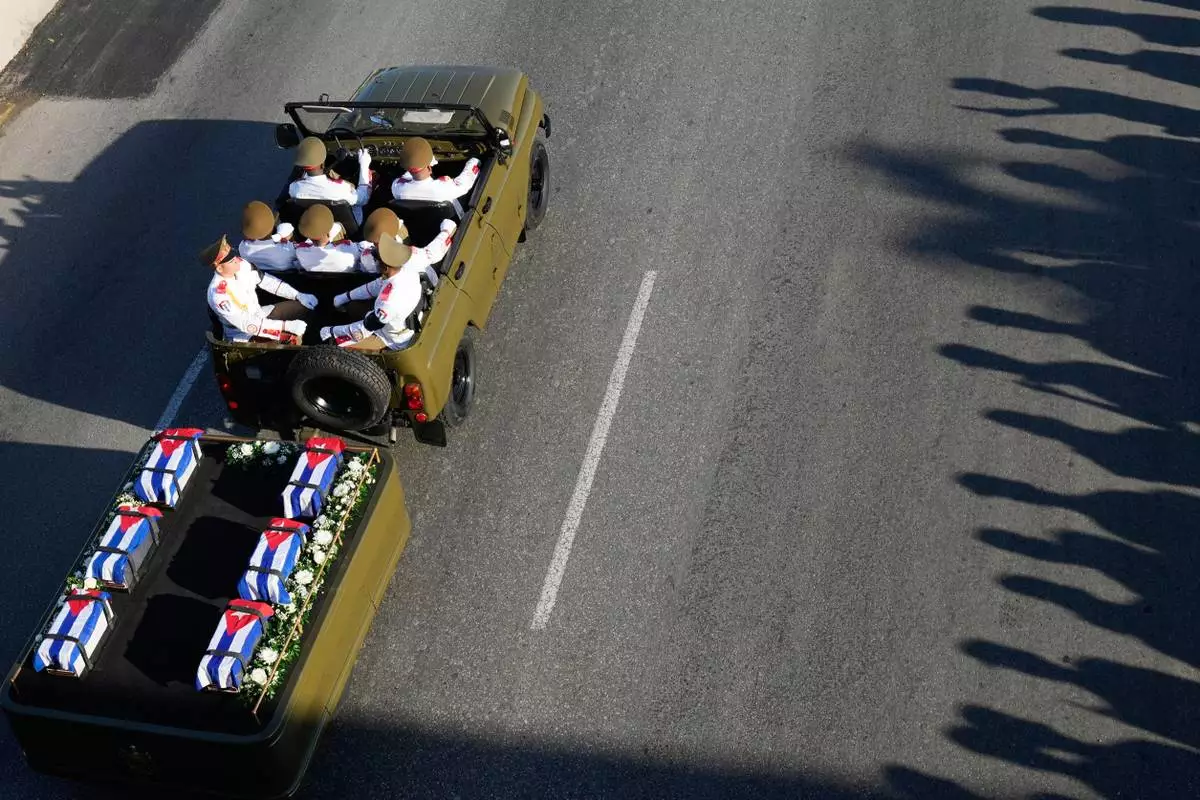
A motorcade transports urns containing the remains of Cuban officers, who were killed during the U.S. operation in Venezuela that captured Venezuelan President Nicolas Maduro, through Havana, Cuba, Thursday, Jan. 15, 2026. (AP Photo/Ramon Espinosa)
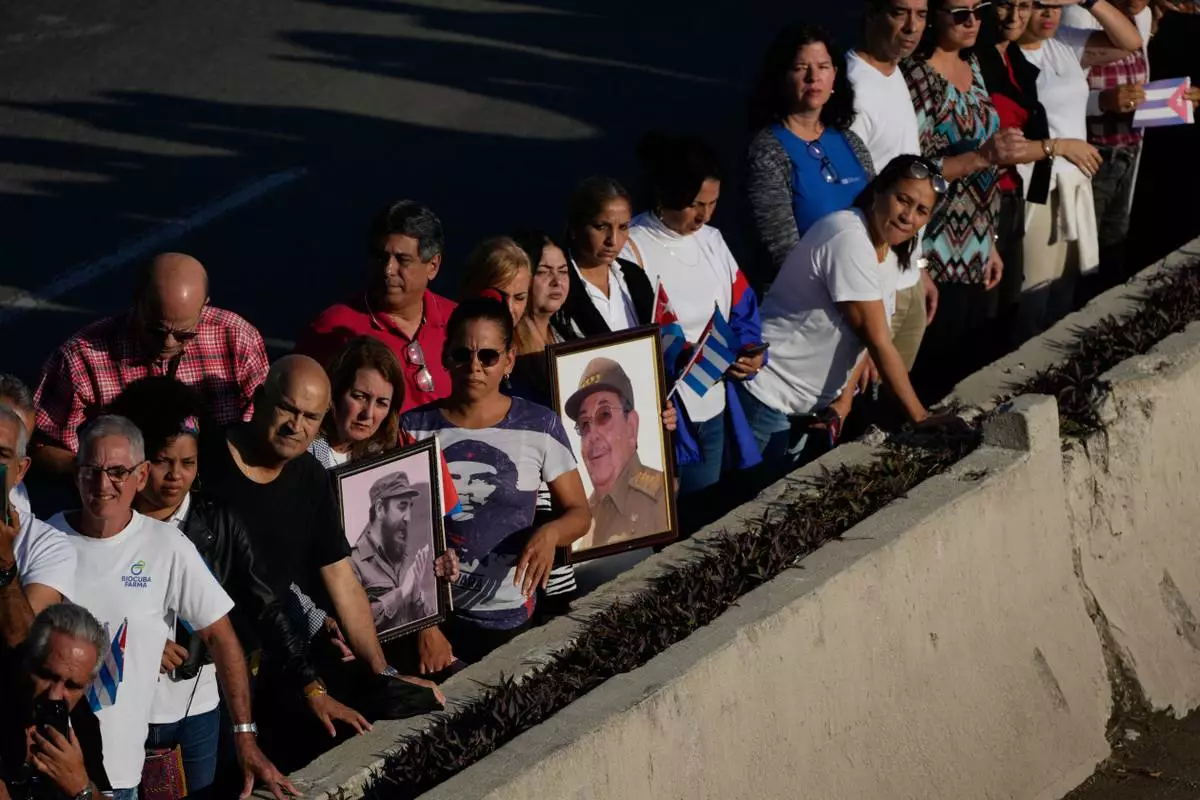
People line the streets of Havana, Cuba, Thursday, Jan. 15, 2026, to watch the motorcade carrying urns containing the remains of Cuban officers killed during the U.S. operation in Venezuela that captured Venezuelan President Nicolas Maduro. (AP Photo/Ramon Espinosa)
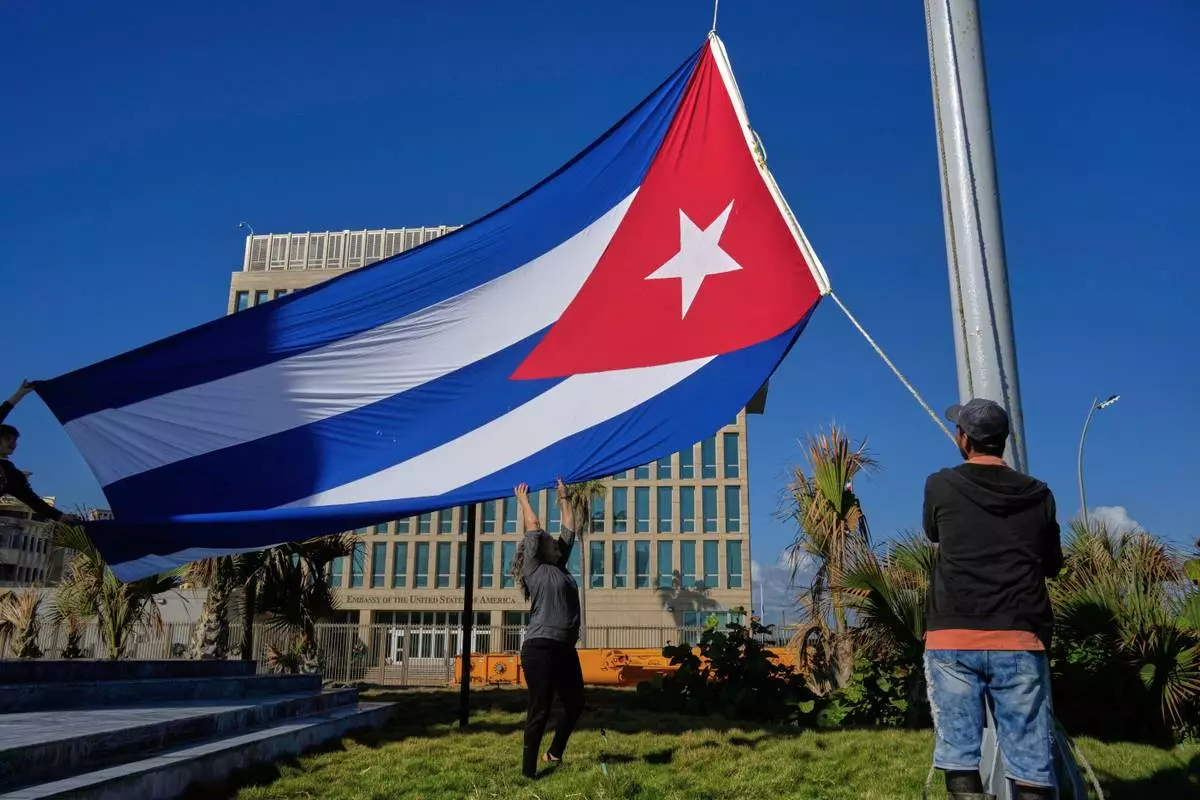
Workers fly the Cuban flag at half-staff at the Anti-Imperialist Tribune near the U.S. Embassy in Havana, Cuba, Monday, Jan. 5, 2026, in memory of Cubans who died two days before in Caracas, Venezuela during the capture of Venezuelan President Nicolas Maduro by U.S. forces. (AP Photo/Ramon Espinosa)