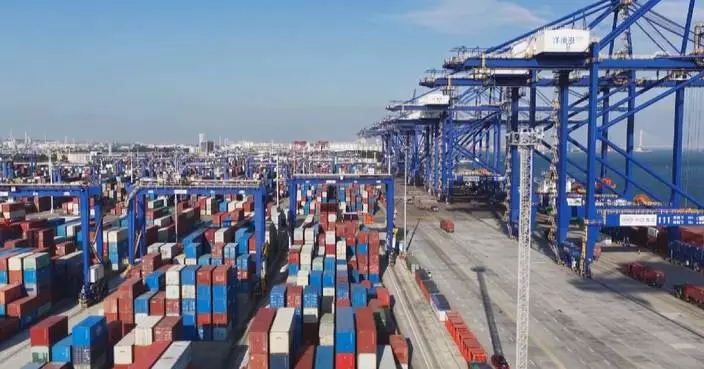
The retail sales of consumer goods in China rose 3.7 percent year on year in July to 3.88 trillion yuan (about 540 billion U.S. dollars), according to the country's National Bureau of Statistics on Friday.
The consumer goods trade-in program continued to drive growth. Among major retailers, sales of household appliances surged 28.7 percent year on year, while furniture and office stationeries rose 20.6 percent and 13.8 percent respectively, the data showed.
Meanwhile, the sales volume of passenger cars increased by 6.3 percent in the same month, among which that of new energy vehicles rose by 12.0 percent, based on the statistics from China Automobile Dealers Association.
Retail sales of travel consulting and rental services, transportation services, and cultural, sports and leisure services all posted double-digit growth.
People not only search more on travel destinations where they can escape the heat, but also make more reservations in visiting museums -- twice as much as the previous year, to be exact.
China's movie industry is also booming, with the summer box office exceeding 10 billion yuan.
Online retail sales remained a bright spot, climbing 9.2 percent year on year in the first seven months. Sales of physical goods online increased 6.3 percent, making up nearly a quarter of total retail sales.
Meanwhile, the bricks-and-mortar retailers have been adapting to the new consumption trends by improving their commodity and service supplies, creating diversified scenarios and enhancing shopping experience. From January to July, their sales volume has reached a 4.2 year-on-year growth.

China's retail sales of consumer goods grow 3.7 pct in July
The Republic of Korea (ROK)'s former impeached President Yoon Suk-yeol on Friday was sentenced to five years in prison on arrest obstruction charges.
The criminal division of the Seoul Central District Court in charge of Yoon's obstruction of justice case handed down the prison sentence to Yoon for abusing the presidential security service to hinder the anti-corruption agency from executing its arrest warrant in January 2025.
The Corruption Investigation Office for High-ranking Officials (CIO) was once thwarted in its attempt to arrest Yoon as the presidential security service formed human shields and bus blockades to prevent investigators from entering the presidential residence.
The team of Cho Eun-suk, an independent counsel who led investigations into Yoon's insurrection and other charges, demanded a 10-year prison term for Yoon.
The court said Yoon privatized the presidential security service for personal safety and private interests by blocking the law enforcement agencies' lawful execution of an arrest warrant and attempting to destroy evidence, pointing out that despite the very bad nature of his crime, he consistently offered unconvincing excuses and showed no remorse.
The court stressed that severe punishment was necessary, considering the need to restore the rule of law damaged by Yoon's crime, but it noted that the fact that he was a first-time offender with no criminal record was considered a favorable factor.
The sentencing, which was broadcast live, was Yoon's first verdict coming from his botched martial law bid.
The first-instance sentencing for Yoon's insurrection charges was scheduled for Feb 19. The special counsel sought a death penalty for Yoon on the charges.
Yoon declared emergency martial law on the night of Dec 3 in 2024, but it was revoked hours later by the National Assembly.
The constitutional court upheld a motion to impeach Yoon in April 2025, officially removing him from office.
The ousted leader was indicted while in detention in January 2025 on charges of leading an insurrection, becoming the first sitting ROK president facing such prosecution.
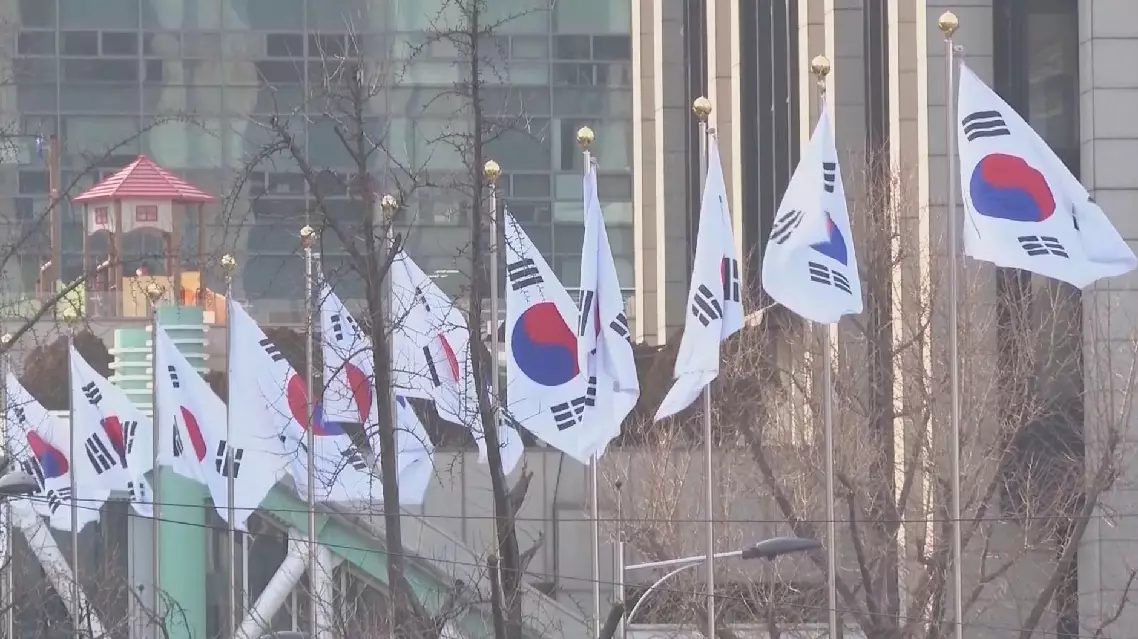
ROK ex-president Yoon sentenced to 5 years in prison on arrest obstruction charges
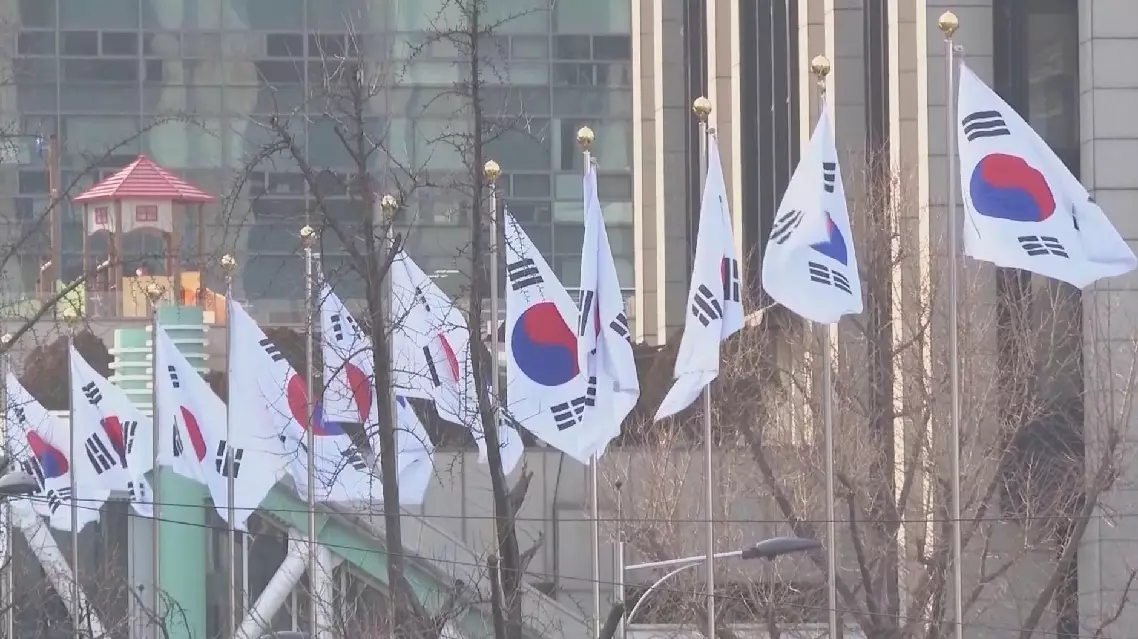
ROK ex-president Yoon sentenced to 5 years in prison on arrest obstruction charges