Colorado Gov. Jared Polis on Friday called for a county coroner to resign after state inspectors found at least 20 decomposing bodies behind a hidden door in a funeral home he owns.
Pueblo County Coroner Brian Cotter told inspectors from the state Department of Regulatory Agencies that some of the bodies had been awaiting cremation for about 15 years, according to a document from state regulators. Cotter also told them he may have given fake ashes to families who wanted their loved ones cremated.
Inspectors found a “strong odor of decomposition” during a Wednesday inspection of Davis Mortuary in Pueblo, about 110 miles (177 kilometers) south of Denver, and discovered the bodies in a room hidden behind a cardboard display. Cotter asked the inspectors not to enter the room, according to the documents.
Polis said Cotter undermined public trust with how he handled the bodies and should resign immediately. Pueblo County Sheriff David Lucero also called for Cotter's resignation at a news conference Friday.
“No one should ever have to wonder if their loved one is being taken care of with dignity and respect after they’ve passed, and Mr. Cotter must be held to account for his actions,” Polis said.
The governor does not have the authority to remove Cotter, an elected official, from office. If Cotter does not resign, voters could petition for a recall election to remove him.
Cotter did not immediately respond Friday to email and phone messages seeking comment on the calls for his resignation.
Cotter has not been arrested. Pueblo County District Attorney Kala Beauvais said no charges will be filed until a “slow and thorough” investigation is complete.
Investigators are still searching the property in hazmat gear and collecting evidence to build a criminal case and start identifying the victims, said Armando Saldate III, director of the Colorado Bureau of Investigation. He said the bureau has received more than 500 calls from people who believe their loved ones may be among the deceased.
“We know that families are desperately seeking information,” Saldate said. “This is going to be a long and complex case. We have a lot of forensic evidence to process and a great deal of information to sort through from the public.”
Colorado long had minimal oversight of funeral homes, which allowed for numerous abuses. In one case, nearly 200 decomposing bodies were found stored at room temperature in a building in Penrose, about 30 miles (48 kilometers) from Pueblo.
The discovery in Pueblo occurred during the first inspection of Davis Mortuary, conducted under state laws adopted last year to tighten oversight of Colorado’s funeral industry. Before the change, funeral homes could only be inspected if a complaint was filed against them. State regulators said Davis Mortuary did not have any prior complaints.
Cotter was elected as county coroner in 2014, and his current term is set to end in 2027. He and his brother, Chris, bought Davis Mortuary in 1989 after learning from their father, who owned and operated funeral homes in Colorado, Kansas and Nebraska, according to the mortuary’s website.
An attorney with the National Funeral Directors Association, Chris Farmer, said the discovery at the Pueblo funeral home suggests Colorado’s increased oversight of the industry is working.
“These inspectors should be lauded for finding remains behind ‘hidden doors,’” said Farmer, the industry group’s chief counsel. “There are over 250 funeral homes and crematories in Colorado...It will take some time to inspect them all."
Associated Press writer Matthew Brown contributed reporting from Billings, Montana.
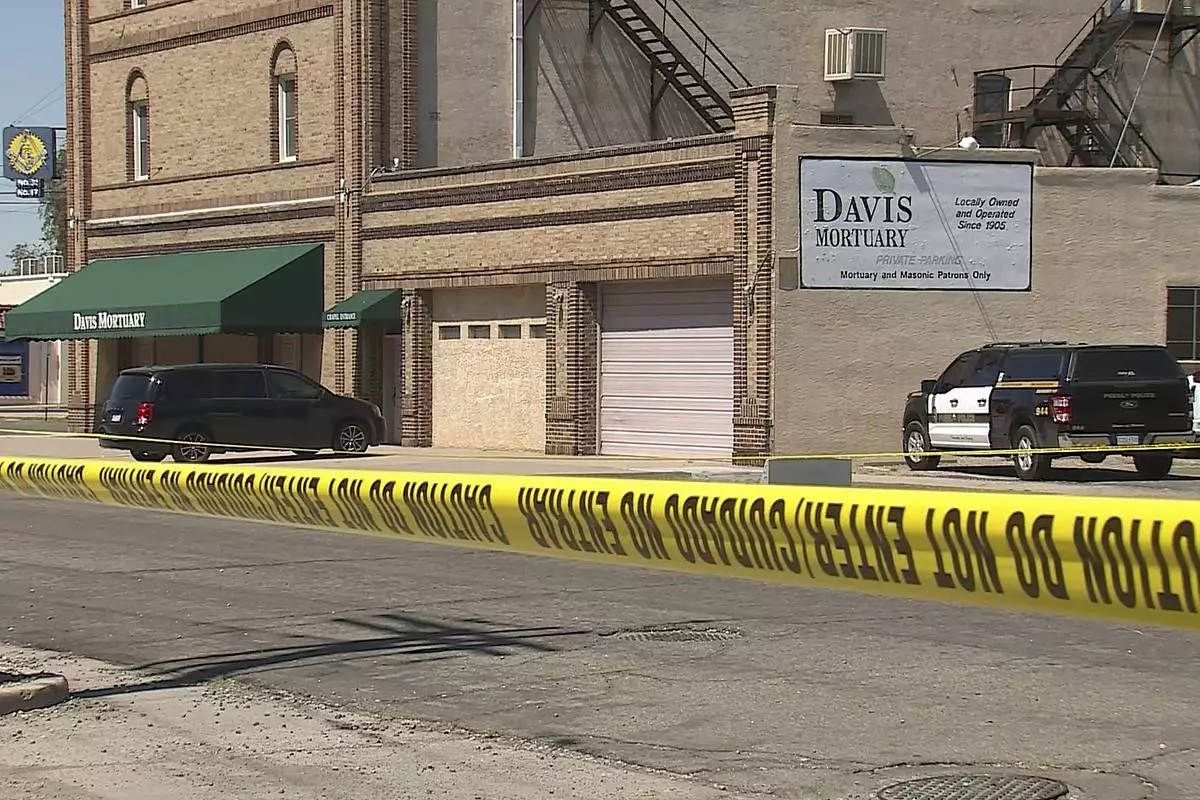
This image from video provided by KRDO13 shows Davis Mortuary in Pueblo, Colo., on Thursday, Aug. 21, 2025, where state inspectors found decomposing bodies behind a hidden door. (KRDO13 via AP)
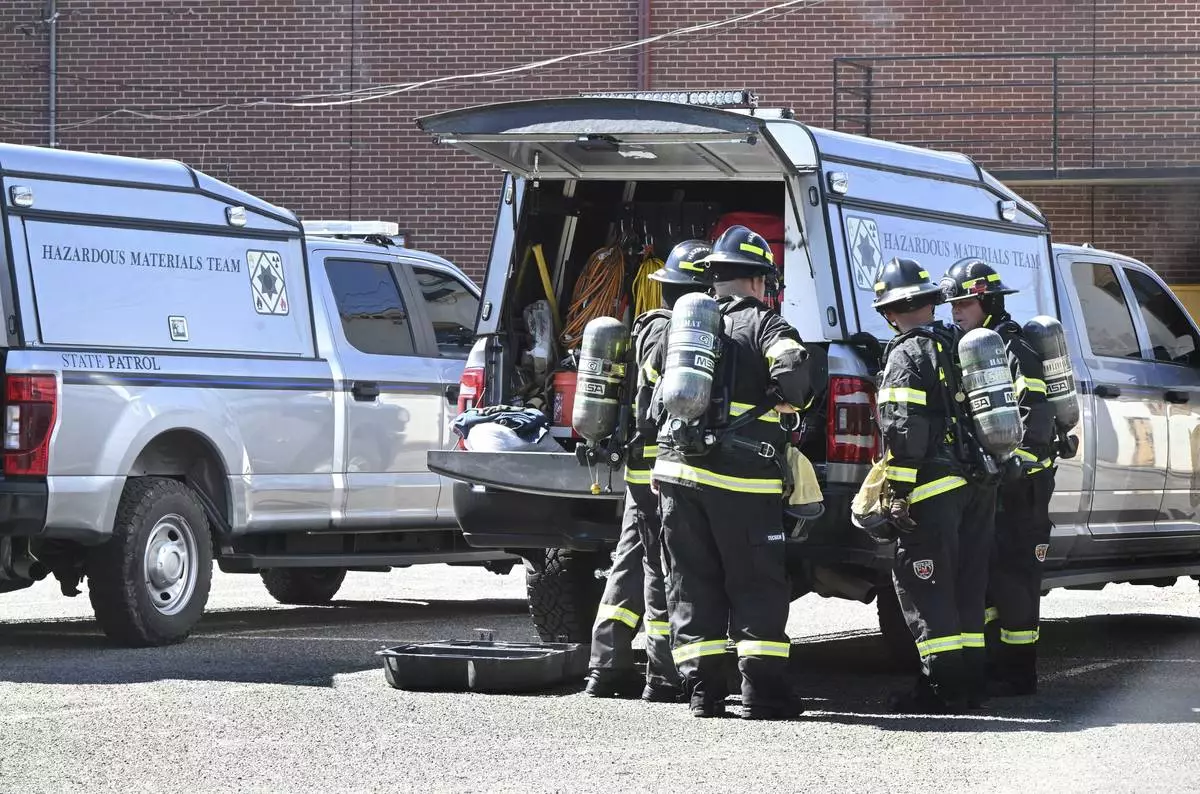
Members of the Colorado State Highway Patrol hazmat team get ready to enter the Davis Mortuary, Thursday, Aug. 21, 2025, in Pueblo, Colo. (Jerilee Bennett/The Gazette via AP)
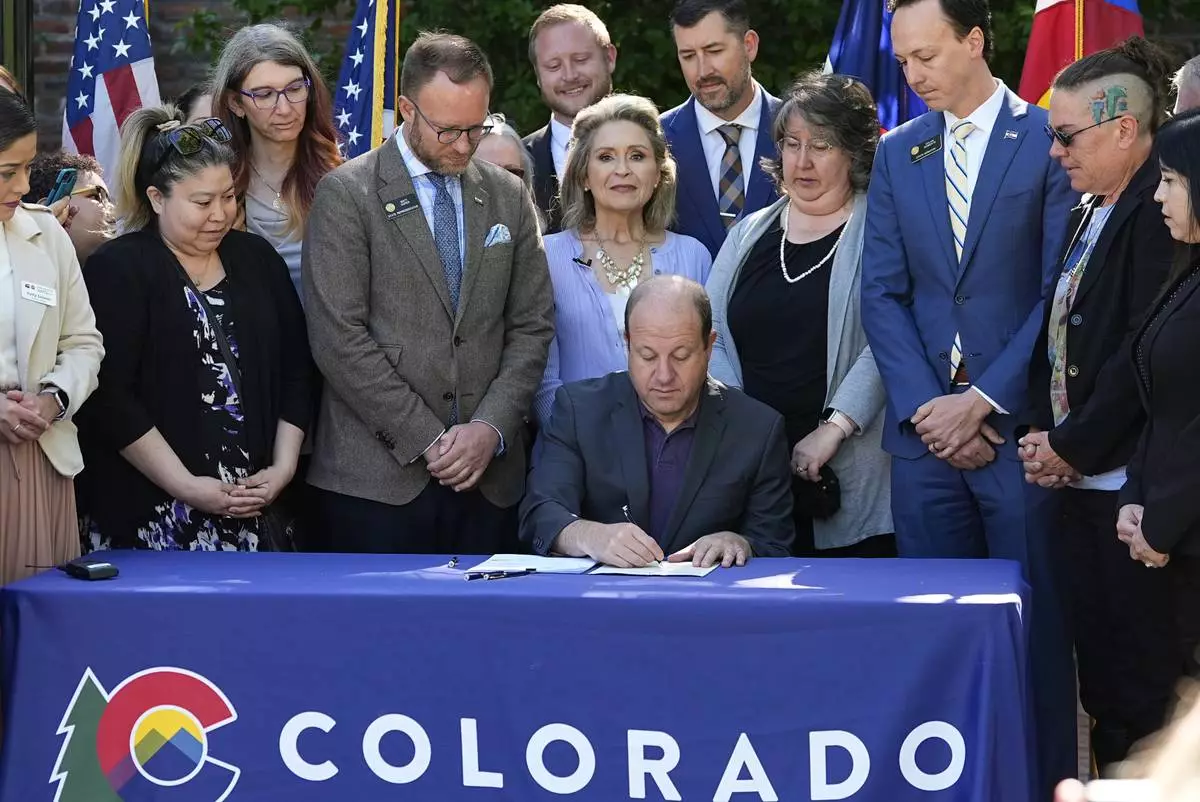
FILE - Colorado Gov. Jared Polis, front center, signs bills into law to bring more comprehensive guidelines into place for funeral facilities on May 24, 2024, during a ceremony outside the Governor's mansion in downtown Denver. (AP Photo/David Zalubowski, File)
KAMPALA, Uganda (AP) — Uganda’s presidential election was plagued by widespread delays Thursday in addition to a days-long internet shutdown that has been criticized as an anti-democratic tactic in a country where the president has held office since 1986.
Some polling stations remained closed for up to four hours after the scheduled 7 a.m. start time due to “technical challenges," according to the nation's electoral commission, which asked polling officers to use paper registration records to ensure the difficulties did not “disenfranchise any voter.”
President Yoweri Museveni, 81, faces seven other candidates, including Robert Kyagulanyi, a musician-turned-politician best known as Bobi Wine, who is calling for political change.
The East African country of roughly 45 million people has 21.6 million registered voters. Polls were expected to close at 4 p.m., but voting was extended one hour until 5 p.m. local time. Results are constitutionally required to be announced in 48 hours.
In the morning, impatient crowds gathered outside polling stations expressing concerns over the delays. Umaru Mutyaba, a polling agent for a parliamentary candidate, said it was “frustrating” to be waiting outside a station in the capital Kampala.
“We can’t be standing here waiting to vote as if we have nothing else to do," he said.
Wine, the candidate, alleged electoral fraud, noting that biometric voter identification machines were not working at polling places and claiming that there was “ballot stuffing.”
Wine wrote in a post on X that his party's leaders had been arrested. “Many of our polling agents and supervisors abducted, and others chased off polling stations,” the post said.
Museveni told journalists he was notified that biometric machines weren't working at some stations and that he supported the electoral body's decision to revert to paper registration records. He did not comment on allegations of fraud.
Ssemujju Nganda, a prominent opposition figure and lawmaker seeking reelection in Kira municipality, told The Associated Press he had been waiting in line to vote for three hours.
Nganda said the delays likely would lead to apathy and low turnout in urban areas where the opposition has substantial support. "It’s going to be chaos,” he said.
Nicholas Sengoba, an independent analyst and newspaper columnist, said delays to the start of voting in urban, opposition areas favored the ruling party.
Emmanuel Tusiime, a young man who was among dozens prevented from entering a polling station in Kampala past closing time said the officials had prevented him from participating.
“My vote has not been counted, and, as you can see, I am not alone," he said he was left feeling “very disappointed.”
Uganda has not witnessed a peaceful transfer of presidential power since independence from British colonial rule six decades ago.
Museveni has served the third-longest term of any African leader and is seeking to extend his rule into a fifth decade. The aging president’s authority has become increasingly dependent on the military led by his son, Muhoozi Kainerugaba.
Museveni and Wine are reprising their rivalry from the previous election in 2021, when Wine appealed to mostly young people in urban areas. With voter turnout of 59%, Wine secured 35% of the ballots against Museveni’s 58%, the president’s smallest vote share since his first electoral campaign three decades ago.
The lead-up to Thursday's election produced concerns about transparency, the possibility of hereditary rule, military interference and possible vote tampering.
Uganda's internet was shut down Tuesday by the government communications agency, which cited misinformation, electoral fraud and incitement of violence. The shutdown has affected the public and disrupted critical sectors such as banking.
There has been heavy security leading up to voting, including military units deployed on the streets this week.
Amnesty International said security forces are engaging in a “brutal campaign of repression,” citing a Nov. 28 opposition rally in eastern Uganda where the military blocked exits and opened fire on supporters, killing one person.
Museveni urged voters to come out in large numbers during his final rally Tuesday.
“You go and vote, anybody who tries to interfere with your freedom will be crushed. I am telling you this. We are ready to put an end to this indiscipline,” he said.
The national electoral commission chairperson, Simon Byabakama, urged tolerance among Ugandans as they vote.
“Let us keep the peace that we have,” Byabakama said late Wednesday. “Let us be civil. Let us be courteous. Let’s be tolerant. Even if you know that this person does not support (your) candidate, please give him or her room or opportunity to go and exercise his or her constitutional right."
Authorities also suspended the activities of several civic groups during the campaign season. That Group, a prominent media watchdog, closed its office Wednesday after the interior ministry alleged in a letter that the group was involved in activities “prejudicial to the security and laws of Uganda.”
Veteran opposition figure Kizza Besigye, a four-time presidential candidate, remains in prison after he was charged with treason in February 2025.
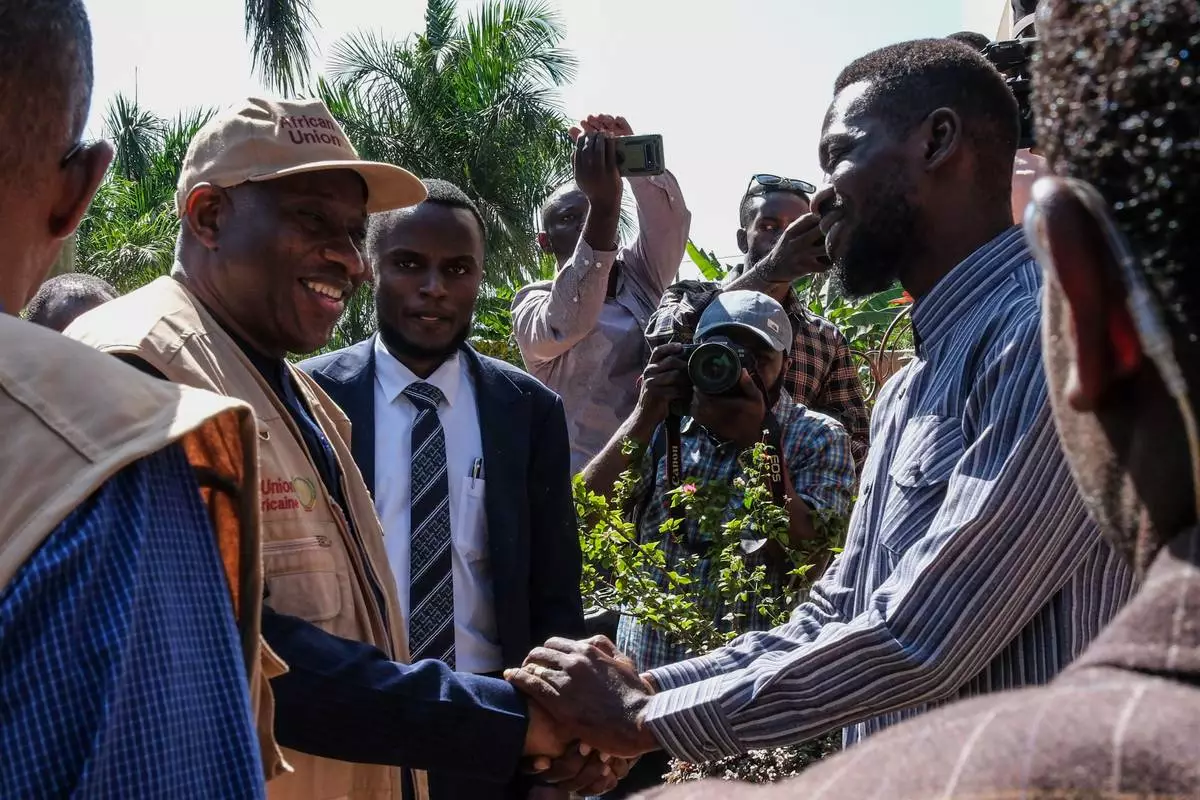
Uganda opposition presidential candidate Robert Kyagulanyi Ssentamu, known as Bobi Wine, right, greets election observers, including former Nigerian President Goodluck Jonathan, at his home in Magere village on the outskirts of Kampala, Uganda, Wednesday, Jan. 14, 2026. (AP Photo/Hajarah Nalwadda)
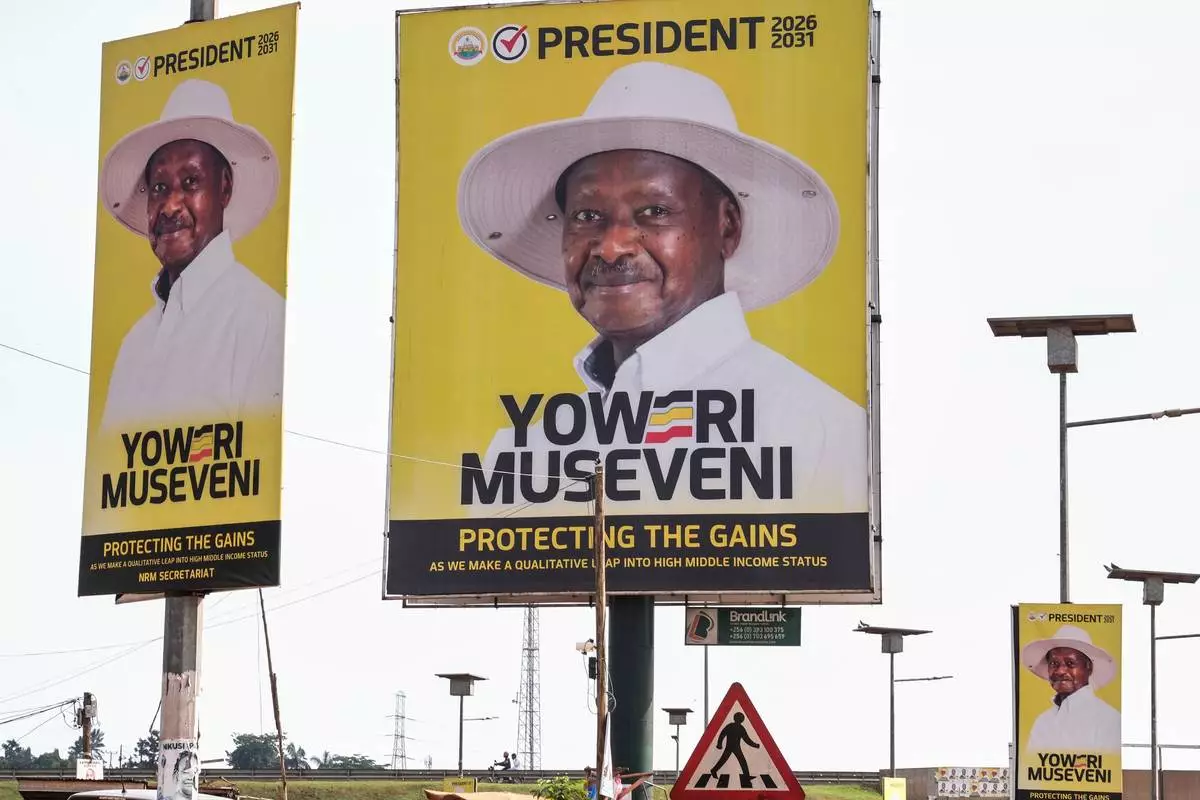
Billboards of Uganda President and National Resistance Movement (NRM) presidential candidate Yoweri Museveni are seen in Kampala, Uganda, Tuesday, Jan. 13, 2026. (AP Photo/Samson Otieno)
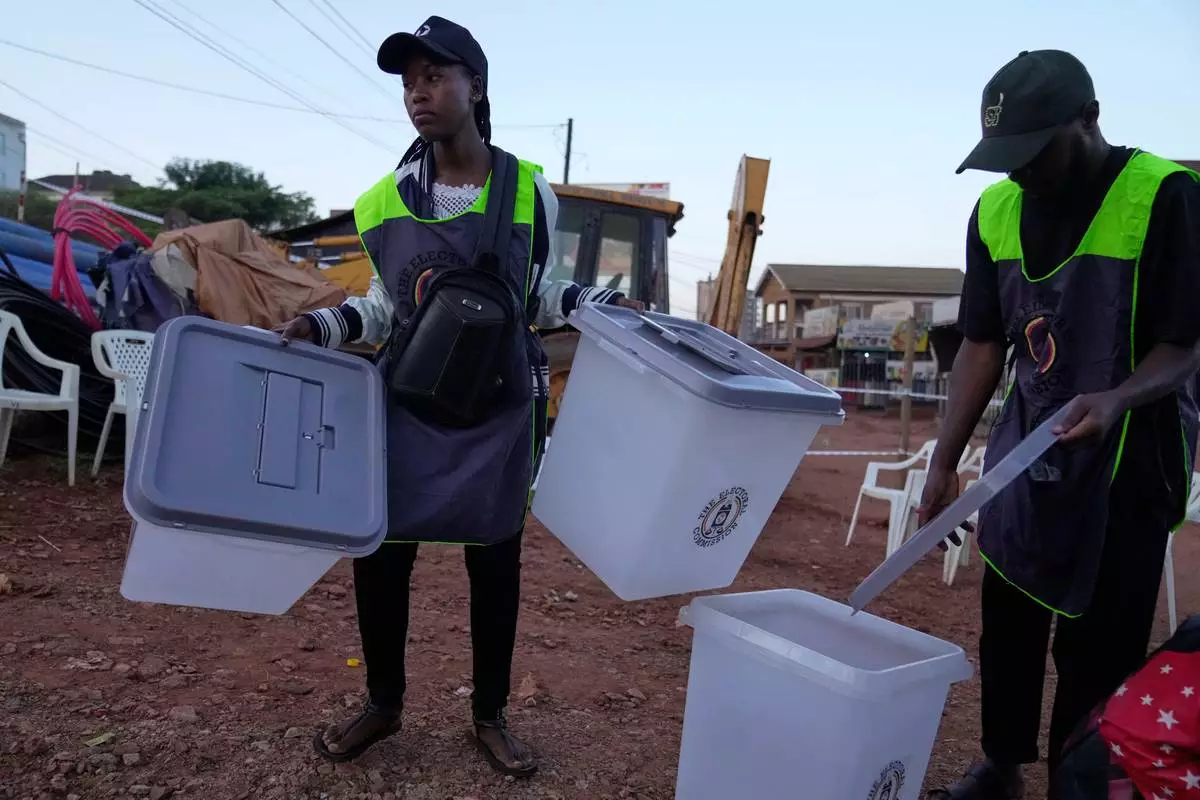
Electoral workers deliver ballot boxes to a polling station during presidential election in Kampala, Uganda, Thursday, Jan. 15, 2026. (AP Photo/Brian Inganga)
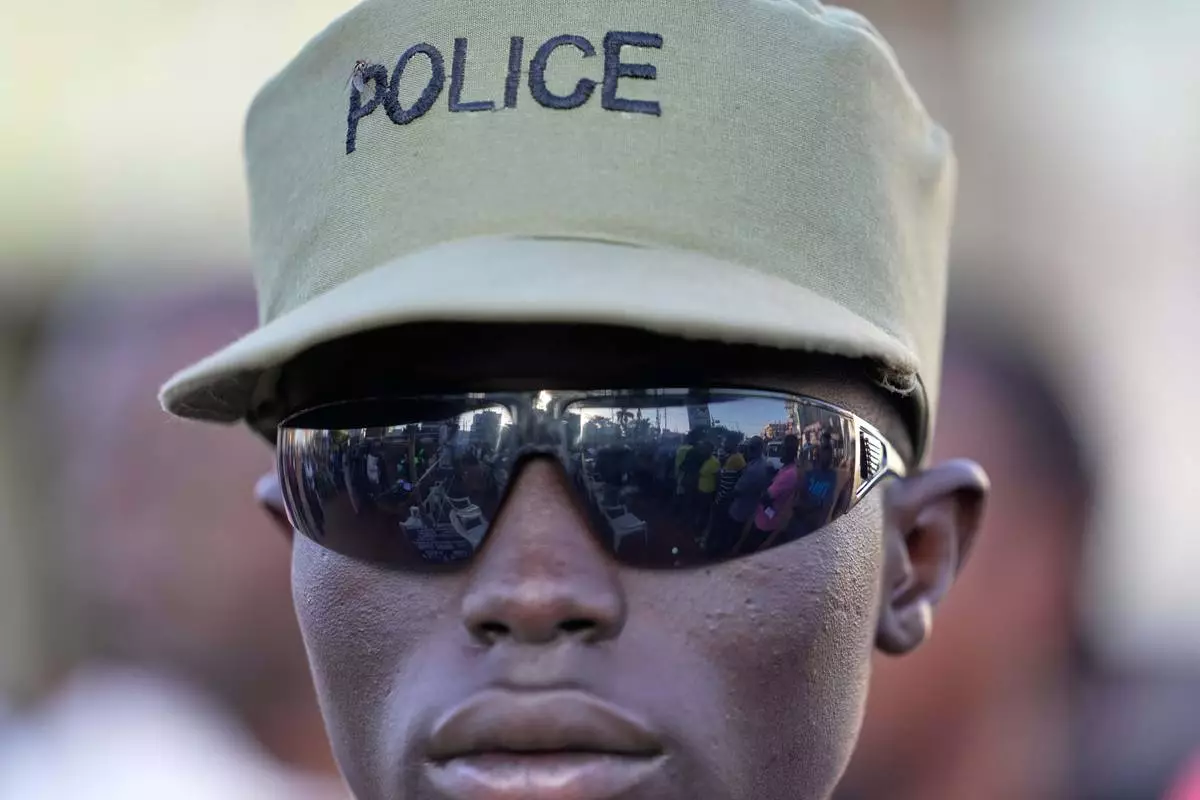
Voters are reflected in a police officer's sunglasses as they wait in line after voting failed to start on time due to system failures during presidential election in Kampala, Uganda, Thursday, Jan. 15, 2026. (AP Photo/Brian Inganga)
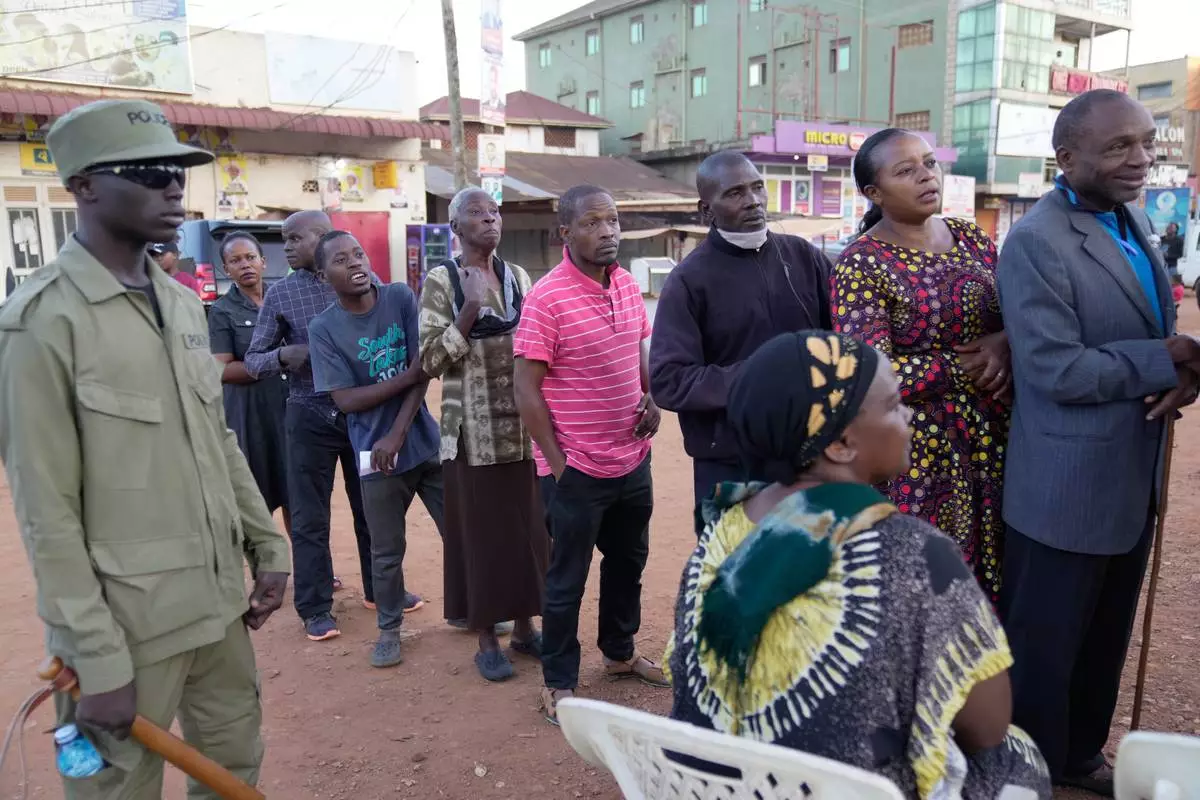
Voters wait to cast their ballots during the presidential election in Kampala, Uganda, Thursday, Jan. 15, 2026. (AP Photo/Brian Inganga)