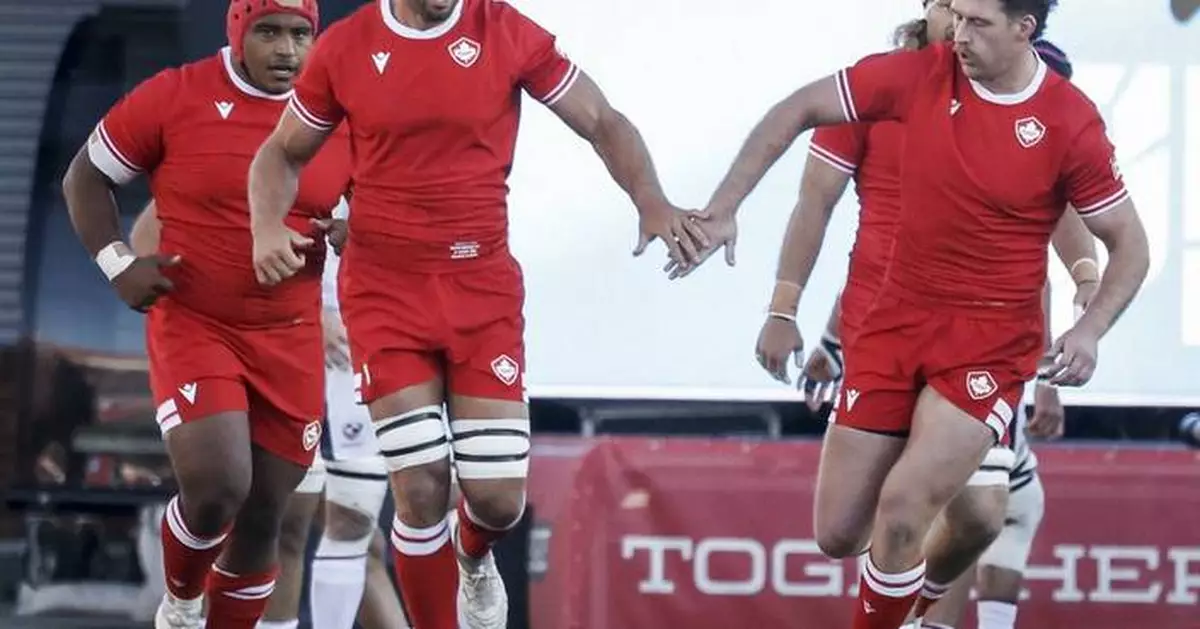
Backrower Tyler Ardron scored four tries to mark his return to test rugby from a four-year absence to lead Canada to a surprising 34-20 win over the United States in the opening match of the Pacific Nations Cup at Calgary, Alberta.
Ardron led Canada to the 2015 and 2019 World Cups but has been absent from his national side since 2021, during which Canada missed out on the 2023 World Cup and dropped out of the top 20 world rankings for the first time.
Click to Gallery
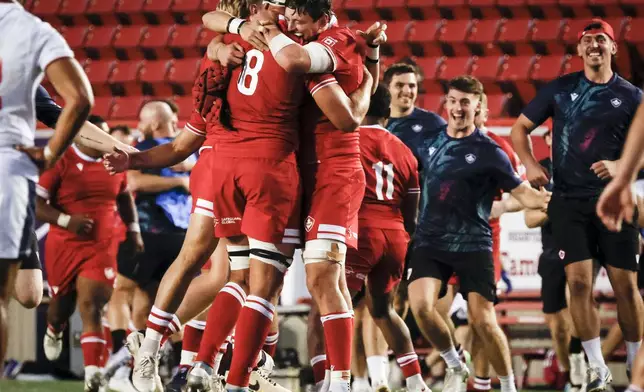
Canada's Tyler Ardron, center left, and Piers Von Dadelszen, center right, celebrate after defeating the United States in Pacific Nations Cup rugby match action in Calgary, Alberta, Friday, Aug. 22, 2025. (Jeff McIntosh/The Canadian Press via AP)
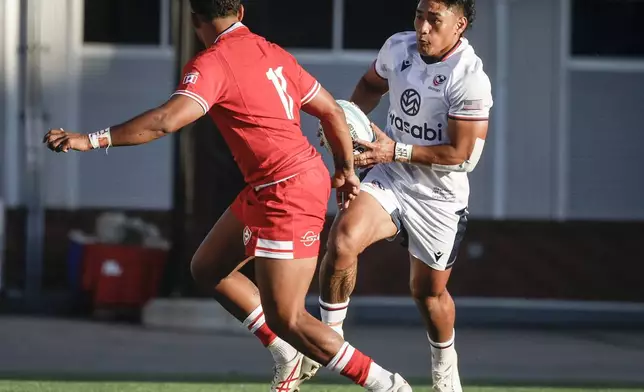
United States' Lauina Futi, right, looks to get past Canada's Josiah Morra, left, during first-half Pacific Nations Cup rugby match action in Calgary, Alberta, Friday, Aug. 22, 2025. (Jeff McIntosh/The Canadian Press via AP)
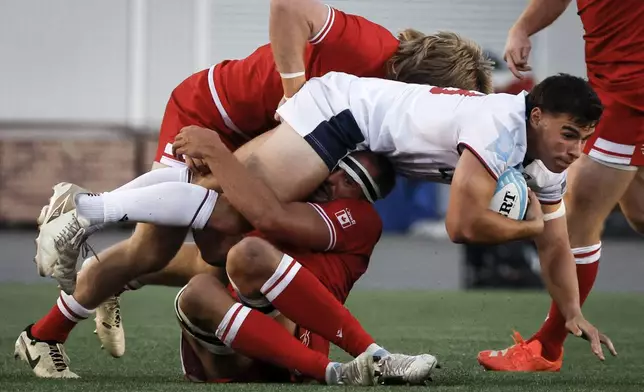
United States' Dominic Besag, front right, is tackled by Canada's Nic Benn and Tyler Ardron during second-half Pacific Nations Cup rugby match action in Calgary, Alberta, Friday, Aug. 22, 2025. (Jeff McIntosh/The Canadian Press via AP)

Canada's Tyler Ardron, left, and Piers Von Dadelszen, right, celebrate after defeating the United States in Pacific Nations Cup rugby match action in Calgary, Alberta, Friday, Aug. 22, 2025. (Jeff McIntosh/The Canadian Press via AP)
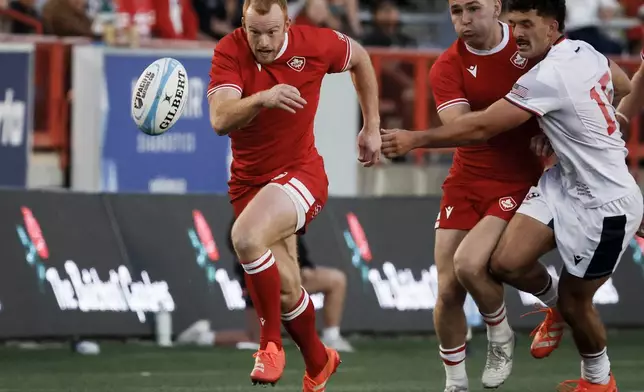
United States' Erich Storti, right, tries to get to Canada's Noah Flesch, left, before Flesch scores a try during second-half Pacific Nations Cup rugby match action in Calgary, Alberta, Friday, Aug. 22, 2025. (Jeff McIntosh/The Canadian Press via AP)
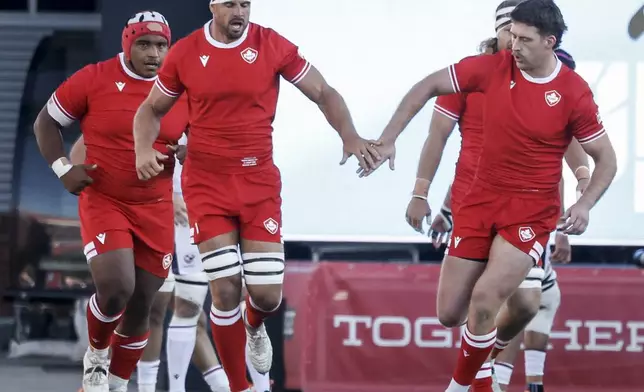
Canada's Tyler Ardron, center, celebrates after his try with teammates during first-half Pacific Nations Cup rugby match action against the United States in Calgary, Alberta, Friday, Aug. 22, 2025. (Jeff McIntosh/The Canadian Press via AP)
With a new head coach in place — Australian-born Steve Meehan — the 34-year-old Ardron answered a call to return and on Friday secured his 39th cap as Canada began its campaign to qualify for the 2027 World Cup in Australia.
Prior to Friday's win, Canada had lost 14 of its last 15 tests against the United States. Now, it has taken a major step towards World Cup qualification.
Later, Tonga led 20-6 at halftime and went on to beat Samoa 30-16 in the Tonga capital Nuku'alofa.
The top three teams from the Pacific Nations Cup apart from Fiji and Japan who already have qualified will advance to the next World Cup. The last-place team will go to a qualifying playoff.
The Pacific Nations Cup involves Fiji, Japan, Canada, the United States, Samoa and Tonga.
Ardron had a hat-trick by halftime Friday as Canada surprised the United States with its new fast-paced heads-up style based around an excellent lineout and tight-knit forward pack. Canada's phase play from quickly recycled ball and strong pick and go running was hard to counter.
“We talked a lot in sport about finding things that matter," Canada captain Lucas Rumball said. "It really mattered to us today.
“That was the focus of the game, just making it matter: every minute, every tackle, every pass, everything and I think we really showed it out there today.”
Ardron's first try came after three minutes, another from a brilliant cross-kick by fullback Peter Nelson from a quick penalty and a third in the 37th minute as the teams went to halftime locked at 17-17.
Canada outscored the United States 17-3 in the second half with Ardon's fourth try and another to Peter Nelson. The United States scored first-half tries through center Dominic Besag and Rufus McLean but was unable in the second to find a way, around or through Canada's tough defense.
Tonga's forward pack was outstanding at both ends of the field in its win over Samoa. The home team had surpluses of both territory and possession and finished scoring chances with precision.
Siosiula Moala and Sonatane Takulua scored first half tries for Tonga while Patrick Pellegrini kicked two conversions and two penalties. AJ Alitimu kicked two penalties for Samoa.
Tuni Tuitama scored a 60th-minute try for Samoa which cut the lead to 20-11 but Tonga pulled away again with a try to Samiuela Moli. Samoa finished with a superb try to Melani Nanai.
Next weekend in the second round of the tournament, Fiji hosts Tonga and Canada travels to Sendai, Japan. In the third and final preliminary round on Sept. 6, Fiji and Samoa play at Roturua, New Zealand and the United States hosts Japan at Sacramento, California.
The top four teams will advance to the semifinals, and the playoff rounds are set to be played in the United States. Denver is hosting the semifinals and fifth-place playoff on Sept. 14 and Salt Lake City the third-place playoff and final on Sept. 20.
AP rugby: https://apnews.com/hub/rugby
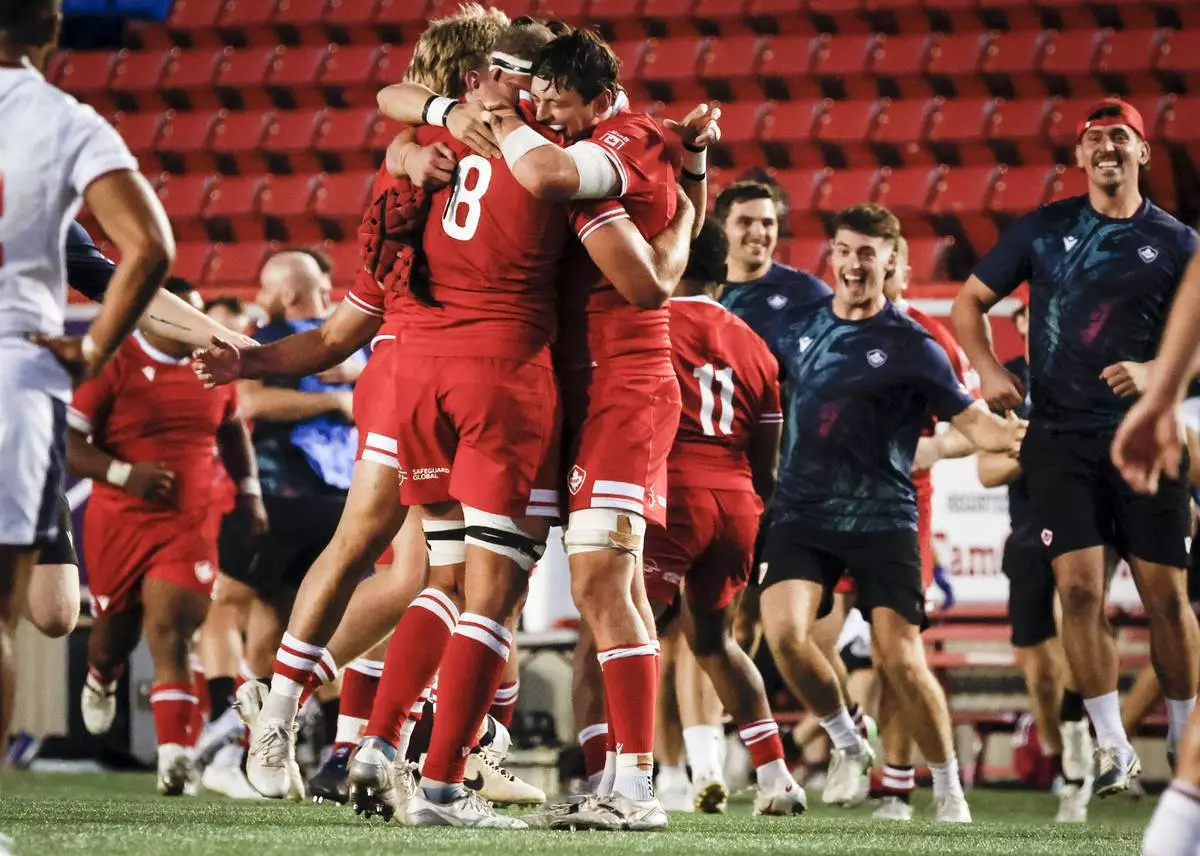
Canada's Tyler Ardron, center left, and Piers Von Dadelszen, center right, celebrate after defeating the United States in Pacific Nations Cup rugby match action in Calgary, Alberta, Friday, Aug. 22, 2025. (Jeff McIntosh/The Canadian Press via AP)
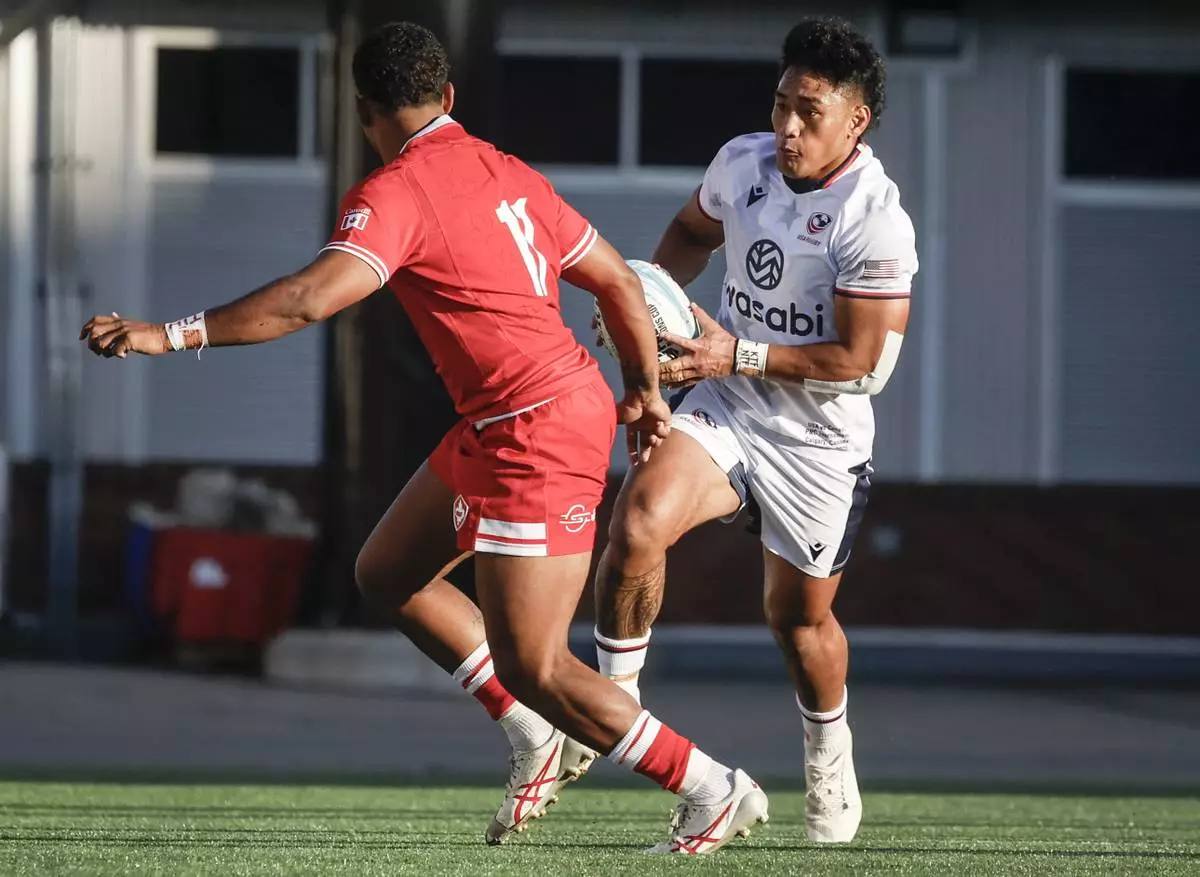
United States' Lauina Futi, right, looks to get past Canada's Josiah Morra, left, during first-half Pacific Nations Cup rugby match action in Calgary, Alberta, Friday, Aug. 22, 2025. (Jeff McIntosh/The Canadian Press via AP)
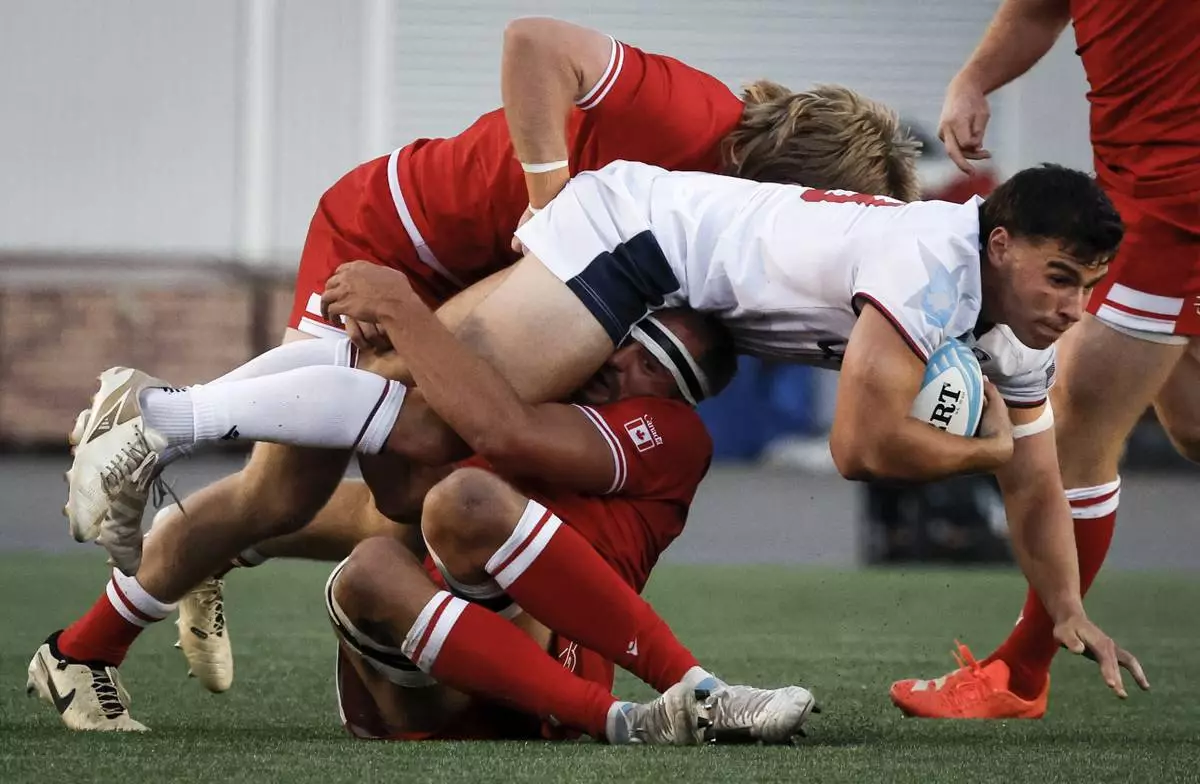
United States' Dominic Besag, front right, is tackled by Canada's Nic Benn and Tyler Ardron during second-half Pacific Nations Cup rugby match action in Calgary, Alberta, Friday, Aug. 22, 2025. (Jeff McIntosh/The Canadian Press via AP)
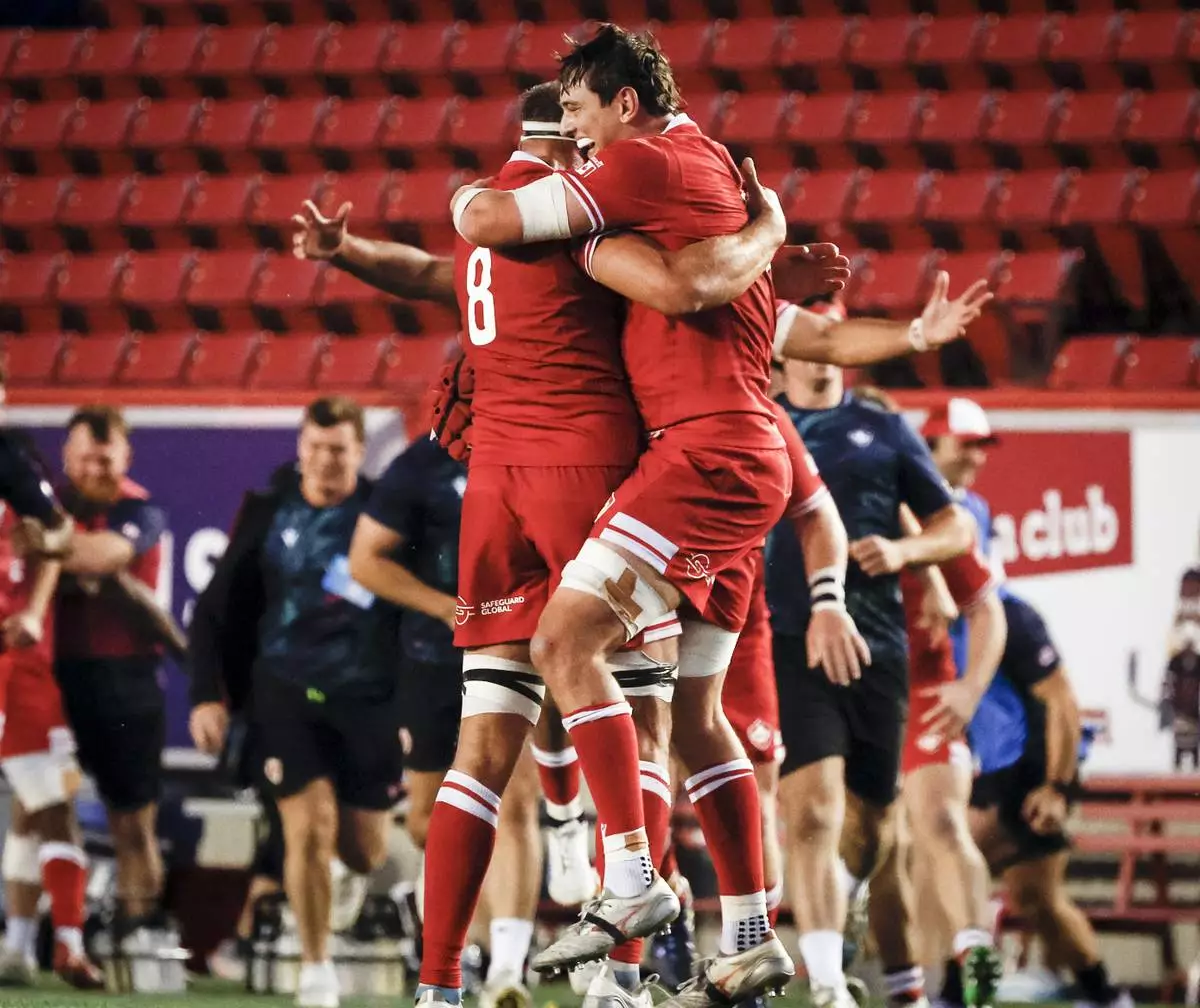
Canada's Tyler Ardron, left, and Piers Von Dadelszen, right, celebrate after defeating the United States in Pacific Nations Cup rugby match action in Calgary, Alberta, Friday, Aug. 22, 2025. (Jeff McIntosh/The Canadian Press via AP)
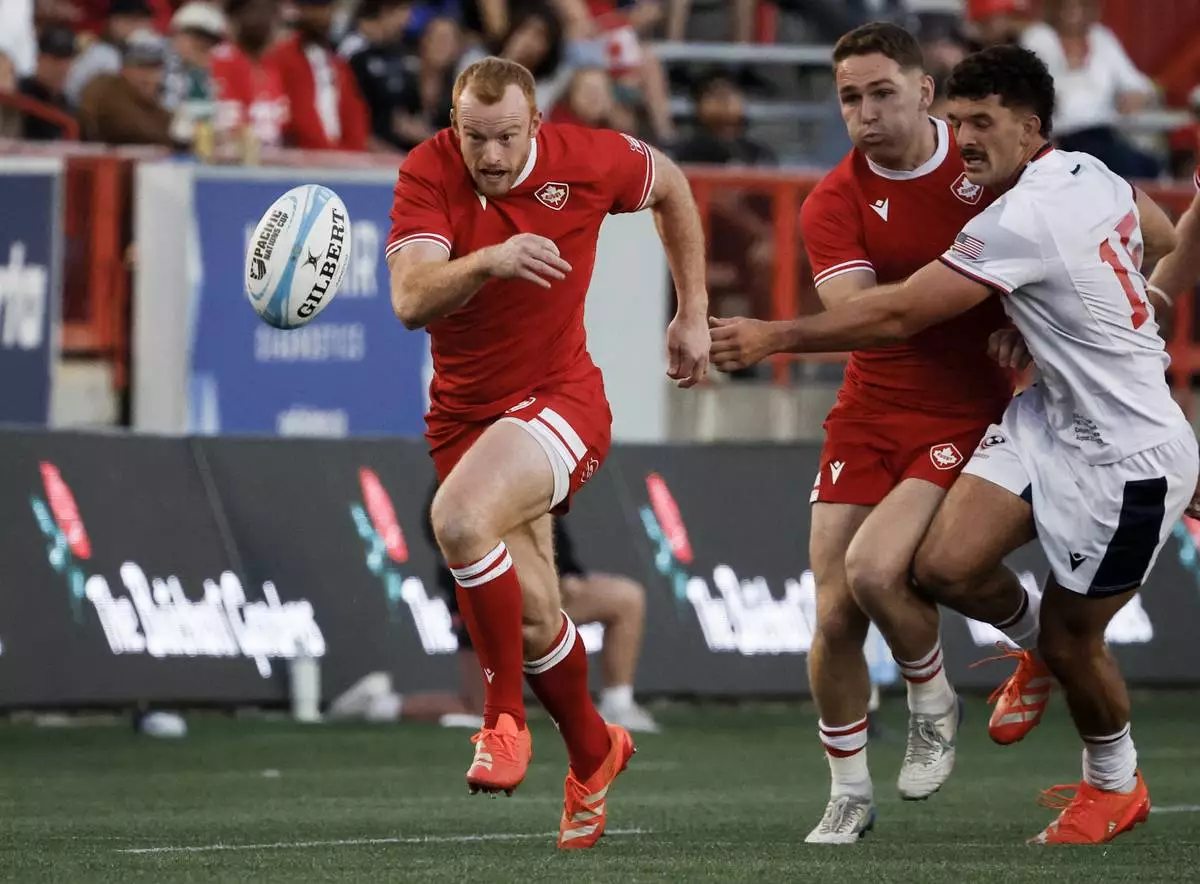
United States' Erich Storti, right, tries to get to Canada's Noah Flesch, left, before Flesch scores a try during second-half Pacific Nations Cup rugby match action in Calgary, Alberta, Friday, Aug. 22, 2025. (Jeff McIntosh/The Canadian Press via AP)
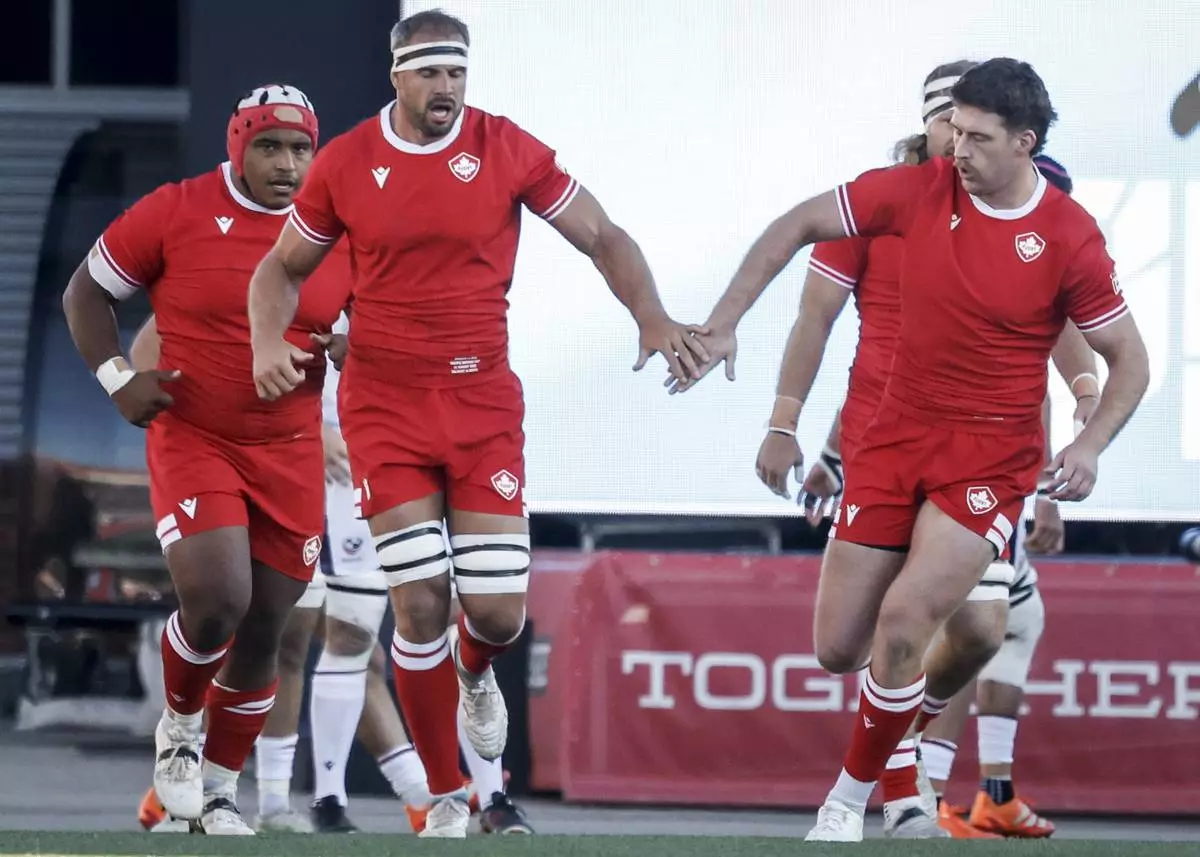
Canada's Tyler Ardron, center, celebrates after his try with teammates during first-half Pacific Nations Cup rugby match action against the United States in Calgary, Alberta, Friday, Aug. 22, 2025. (Jeff McIntosh/The Canadian Press via AP)