Skip to Content Facebook Feature Image

Xinjiang tourism boom fuels job creation, boosts small businesses

China

China

China

Xinjiang tourism boom fuels job creation, boosts small businesses

2025-08-23 15:56 Last Updated At:22:37

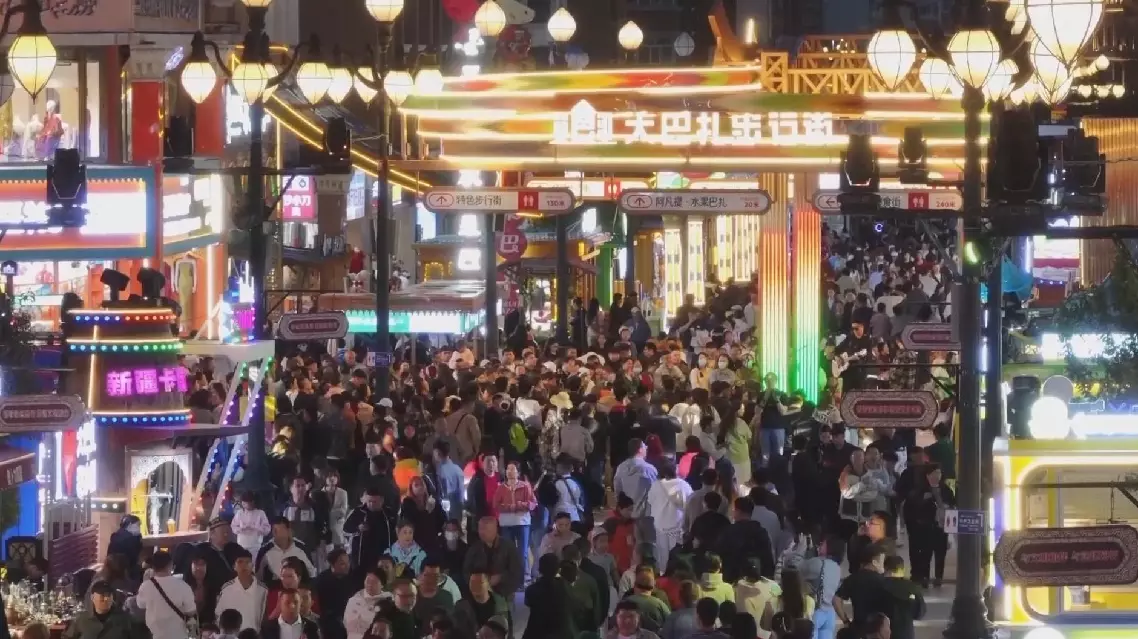
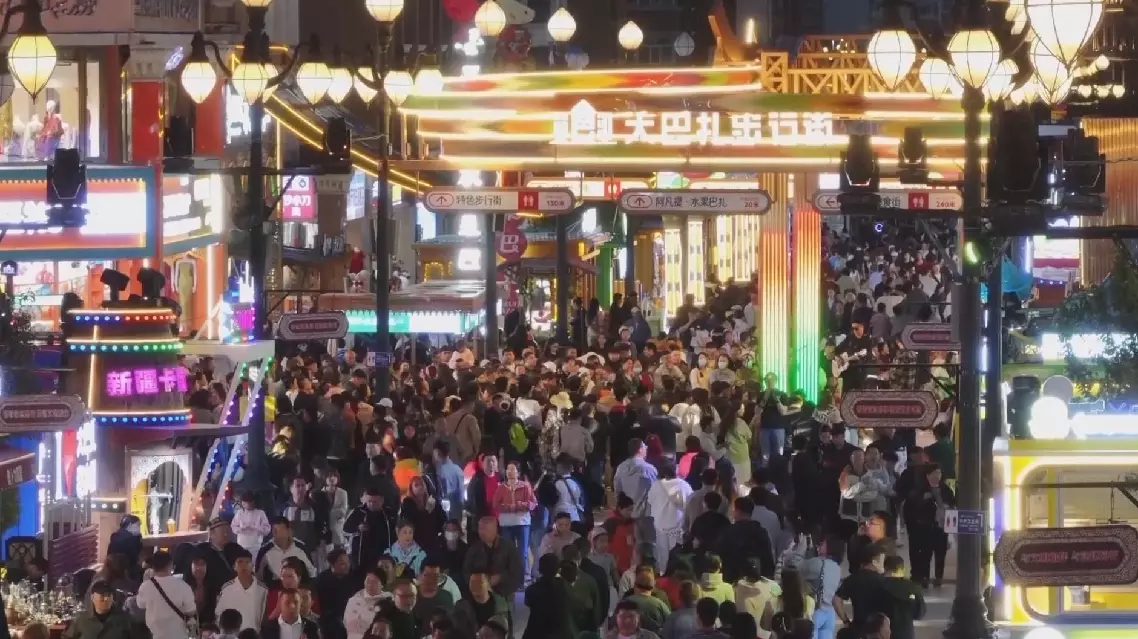
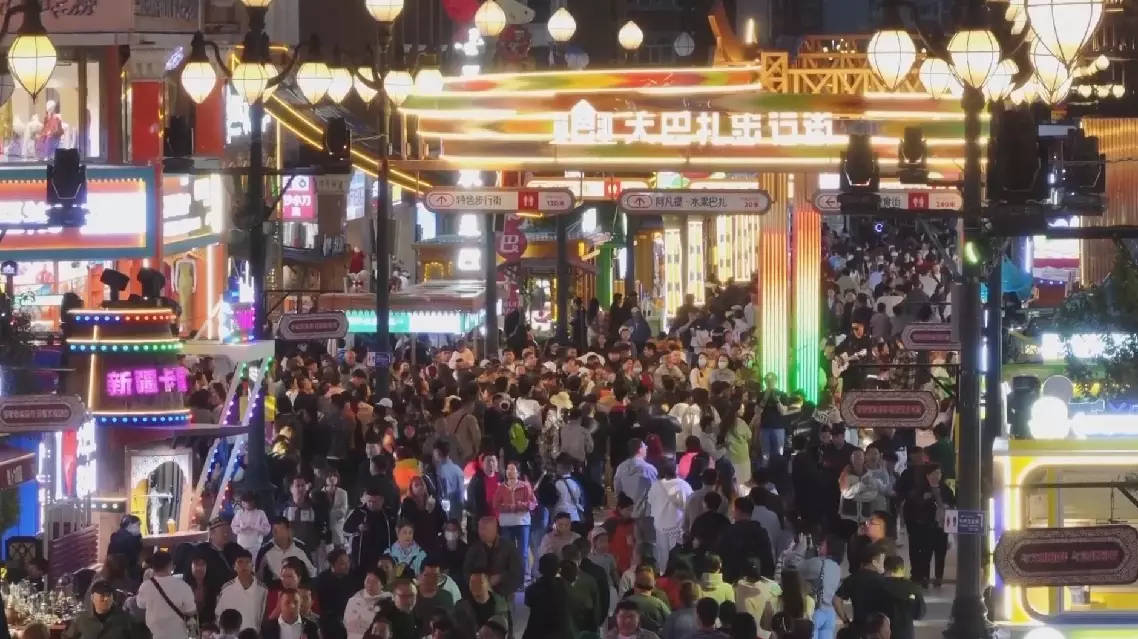
Booming tourism in northwest China's Xinjiang Uygur Autonomous Region has boosted the local economy and employment, with a major site in Urumqi bustling with visitors eager to spend on experiences.

The number of visitor trips to Xinjiang topped 132 million in the first half of this year, while the total tourism spending hit over 142 billion yuan, or around 20 billion U.S. dollars. Both figures represented year-on-year increases surging past 11 percent, according to the regional government.

In Urumqi, the region's capital, visitors can start the day with local-style coffee, served in an edible cup made of naan bread.

Once caffeinated, many choose to explore the International Grand Bazaar, where Xinjiang's vibrant culture shines through in every stall.

Urumqi recorded 50.57 million tourist visits in the first half of 2025, making it China's third most popular summer travel destination. A series of cultural and tourism events, including traditional folk performances and performing arts festivals, have drawn tourists from around the world, according to the local government.

The influx has been a boon for small businesses.

"Business is pretty good. We earn 2,000 to 3,000 yuan (around 280 to 420 U.S. dollars) a day. There are many tourists in July and August, especially during evenings," said a vendor at the Bazaar.

Tourism has boosted spending, created jobs, and helped hotels and restaurants grow, and local officials are eager to encourage more people to visit the region.

"[The Bazaar is] a very direct and clear example of cultural tourism-driven employment growth. Here alone, cultural tourism has created jobs for more than 10,000 people," said Wang Juan, deputy director of Urumqi Department of Culture and Tourism.

Urumqi's cross-civilizational fusion of cuisines is a key draw. Perched atop the geographic center of Asia, the city offers flavors that bend the taste buds from East to West.

"I've spent 14 days in Xinjiang. It's so beautiful. The food is great. It was a lot of fun. And the scenery is amazing. I'll definitely come back to explore more," said a visitor in Urumqi.

"I'm from Wuxi in Jiangsu Province. Prices here are pretty affordable -- not too expensive. I've had a great time in Xinjiang," said another visitor at the Bazaar.

The city's tourism boom has been supported by an increasingly convenient transport network. Urumqi Tianshan International Airport, a national gateway hub, boasts annual passenger trips of 48 million and a cargo throughput of 550,000 tonnes. It operates more than 250 flight routes connecting over 100 cities at home and abroad.
Xinjiang tourism boom fuels job creation, boosts small businesses
Xinjiang tourism boom fuels job creation, boosts small businesses
Xinjiang tourism boom fuels job creation, boosts small businesses
Xinjiang tourism boom fuels job creation, boosts small businesses
Xinjiang tourism boom fuels job creation, boosts small businesses
Xinjiang tourism boom fuels job creation, boosts small businesses
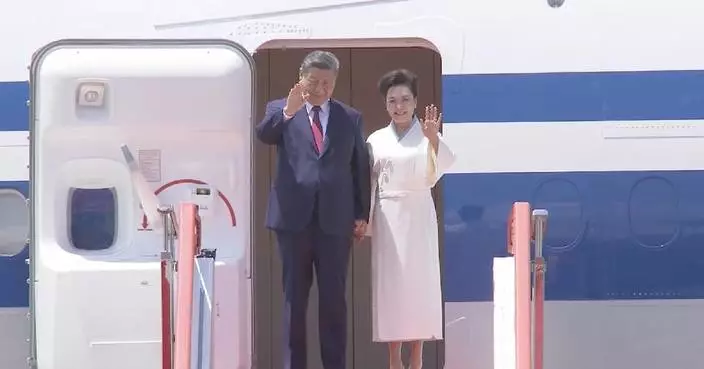
A former television host from Taiwan, Zhai Xuan, has made a pivotal decision to leave mainstream broadcasting in order to create content that provides a better understanding of the Chinese mainland and cross-strait relations.

Zhai, a seasoned television host with over a decade of experience in Taiwan's media landscape, recently addressed an audience at an event in Beijing, where she revealed her complete transition into independent online media.

In her remarks, she articulated her aspiration to bridge what she perceives as a significant information gap between audiences on both sides of the Strait, highlighting her commitment to fostering a deeper understanding and connection through her new endeavors.

"I was really surprised by all the fake news. There were stories saying people on the mainland can't afford tea eggs or that they live in mud houses and in Taiwan, this was the main information many people received," said Zhai.

Zhai said she initially began producing online videos to challenge such perceptions while continuing her work as a television host.

In April 2025, she travelled to the mainland with her father to fulfill her late grandfather's wish to return to his hometown. The trip, which reunited family members separated since 1949, was recorded in a video series titled "Journey to Find Our Roots", drawing attention from viewers in both Taiwan and the mainland.

"Many people in Taiwan told me that after watching, they wanted to apply for a mainland travel permit immediately and go looking for their relatives. Some had long forgotten these things, but after seeing my story, they began thinking about their hometowns and family members they had never met and decided to search for their roots," Zhai shared her story at the event.

By mid-2025, Zhai said she began to feel increasing pressure amid rising political tensions and a tightening atmosphere around cross-Strait exchanges in Taiwan.

After more than 12 years in the industry, Zhai resigned from her position, believing it was the right thing to do.

"At that moment, I felt this was a major issue,not just for me, but for Chinese people on both sides of the Strait. If I backed down then, I wouldn’t be standing on the right side," said Zhai.

Since leaving television, Zhai has broadened her online programming to encompass a range of daily-life topics, including practical guidance on applying for a mainland travel permit and using commonly employed mobile applications, in addition to content that delves into historical memory and cultural connections across the Strait.

As the debate over cross-Strait relations continues in Taiwan, Zhai said she remains committed to her current path.

Former Taiwan TV host bridges cross-Strait divide via online media

Former Taiwan TV host bridges cross-Strait divide via online media

Recommended Articles