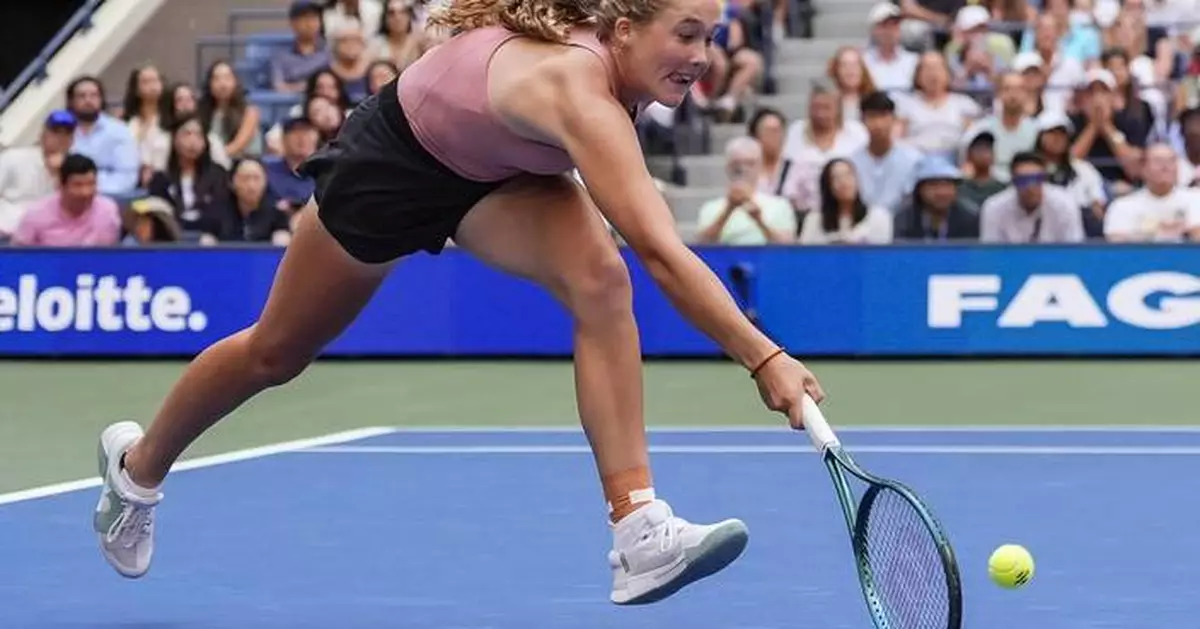
NEW YORK (AP) — There is a fascination in all sports — all walks of life, maybe — with young stars, those such as tennis player Mirra Andreeva, a Russian who is still only 18 yet already has been a Grand Slam semifinalist and is seeded No. 5 at the U.S. Open as it begins Sunday.
Or João Fonseca, a Brazilian who turned 19 on Thursday and just last month became the youngest man since 2011 to reach Wimbledon's third round. Or Learner Tien, a Californian who is 19, already owns four victories over top-10 opponents and takes on Novak Djokovic at Flushing Meadows on Sunday night.
Or Vicky Mboko, a Canadian who is 18 and won the Montreal hard-court title this month while becoming the second-youngest woman to beat four Grand Slam champions at one tournament, eliminating Naomi Osaka, Coco Gauff, Elena Rybakina and Sofia Kenin.
Andreeva, Fonseca, Tien and Mboko are part of a precocious group of teenagers making a mark in tennis this season, perhaps ready to follow in the footsteps of someone like Gauff, who won the 2023 U.S. Open at 19 and this year’s French Open at 21, or Emma Raducanu, who won the 2021 U.S. Open at 18.
Just listen to what's being said already.
“A lot of people inside tennis believe Fonseca will be one of the guys contending for Slams within a year or two,” said former top-five player James Blake, “if he can avoid all that noise and avoid all the outside pressure.”
Gauff's take on Mboko: “I do see someone who is going to have a really bright future.”
When terrific results arrive early, expectations rise. Which means, in turn, that when not-quite-as-good results follow, the burden can feel heavy.
As talented and precocious as Andreeva is, as savvy as she is on the court and off, if she goes from making it to the final four at the French Open in 2024 to bowing out a round earlier against someone ranked 361st in 2025, or goes from reaching the fourth round at the All England Club two years ago to exiting in the first round there a year ago, people ask: What happened?
Perhaps that’s why Andreeva used the word “learn” in her responses to four of the first six questions at Roland-Garros after her loss there in June. As in: “I will learn from this."
Then she went out and reached the quarterfinals at Wimbledon for the first time.
Which makes sense, because if there is one thing that seems to strike everyone — from opponents to her coach to her doubles partner, Diana Shnaider — about Andreeva, it’s not just that she is always trying to get better but also that she manages to.
The same could be said for Mboko, whose run in front of raucous home crowds to her first WTA trophy propelled her from No. 85 to No. 24 and a seeding at Flushing Meadows, where she takes on two-time major champion Barbora Krejcikova on Monday.
“Now it’s not like: ‘Oh, let’s see. Let’s watch out for this kid.’ Now it's like, ’OK, you have to be there and we have to be able to maintain your level,’ said Andreeva's coach, 1994 Wimbledon champion Conchita Martinez. “The hardest thing is also the pressure of some media: ‘She’s going to be the next No. 1. She’s going to win Grand Slams’ and blah, blah, blah."
Andreeva won Masters titles at Dubai and Indian Wells this year and is the youngest woman since Maria Sharapova in 2004 to be ranked in the top five. Mboko ended last year ranked 350th and never had entered a major until the French Open but won matches there and at Wimbledon.
“She believes in herself,” said Mboko's coach, former player Nathalie Tauziat.
Maya Joint, a 19-year-old who represents Australia, won a grass-court title by saving four championship points and earned her debut in the top 50. Jakub Mensik, who is from the Czech Republic and turns 20 on Sept. 6, won the Miami Open by beating Djokovic in the final and is seeded 16th in New York. Iva Jović is a Californian who is 17 and has won a match in three of four Slam appearances.
“It can bridge from inspiration to reality when you see young, talented teens making big waves on the professional level,” Jović said. “It’s pretty much: Why not me?”
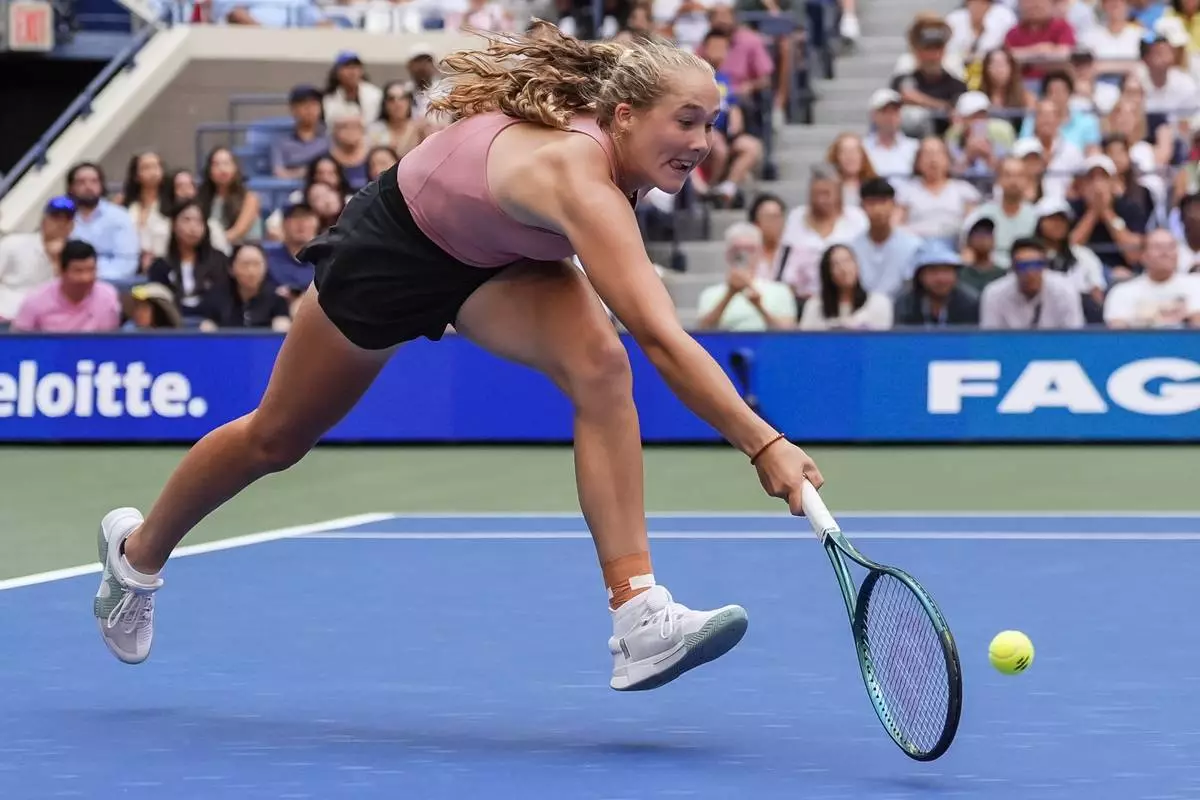
Mirra Andreeva returns a shot during a mixed doubles match at the U.S. Open tennis championships, Tuesday, Aug. 19, 2025, in New York. (AP Photo/Yuki Iwamura)
IRBIL, Iraq (AP) — An Iranian Kurdish separatist group in Iraq said it has launched attacks on Iran’s paramilitary Revolutionary Guard in recent days in retaliation for Tehran’s violent crackdown on protests.
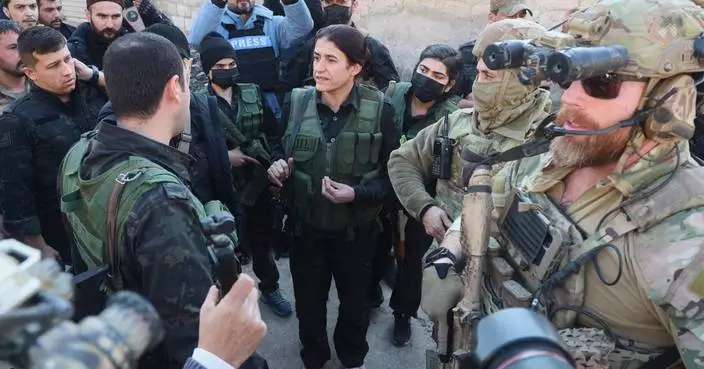
Members of the National Army of Kurdistan, the armed wing of the Kurdistan Freedom Party, or PAK, have “played a role in the protests through both financial support and armed operations to defend protesters when needed,” Jwansher Rafati, a PAK representative, told The Associated Press on Thursday.
Iranian media has previously accused the group and other Kurdish factions of attacking security forces.
Iranian activists say more than 2,797 people were killed in the government’s crackdown on a recent wave of nationwide protests.
A handful of Iranian Kurdish dissident or separatist groups — some with armed wings — have long found a safe haven in northern Iraq’s semiautonomous Kurdish region, where their presence has been a point of friction between the central government in Baghdad and Tehran.
Iran has occasionally launched strikes on the groups’ sites in Iraq but has not done so since the outbreak of the recent protests.
The PAK is the first of the groups to claim armed operations since the protests and crackdown began.
“When we found out that the IRGC was shooting protesters directly, our fighters in Ilam, Kermanshah, and Firuzkuh responded with armed operations and inflicted significant damage on the regime’s forces,” Rafati said in an interview in Irbil, the capital of northern Iraq’s semiautonomous Kurdish region.
The PAK has also claimed a number of attacks online and posted video of what it said were operations against IRGC targets, sometimes accompanied by grainy videos showing gunshots or explosions and buildings ablaze. The AP was not able to confirm the extent of the damages or the impact of the attacks.
Rafati said the attacks were launched by members of the group’s National Army of Kurdistan military wing based inside Iran. The group had not sent any forces from Iraq, but it anticipates that Iran may strike PAK bases in Iraq in retaliation for its operations, he added.
He said the PAK has been providing support to dozens of Iranians who fled to the Kurdish area in Iraq since the crackdown on protests began.
The PAK claims may put Iraqi authorities in a sensitive situation with Tehran — which wields significant influence over its neighbor — concerning the group's ongoing presence in northern Iraq.
Iraq in 2023 reached an agreement with Iran to disarm Kurdish Iranian dissident groups and move them from their bases near the border areas into camps designated by Baghdad. The bases were shut down and movement within Iraq was restricted, but the groups have remained active.
During the Israel-Iran war last year, the PAK and other Kurdish dissident groups began organizing politically in case the authorities in Tehran should lose their hold on power but did not launch armed operations.
A PAK spokesperson told the AP at the time that premature armed mobilization could endanger the Kurdish groups and the fragile security of Kurdish areas, both in Iraq and across the border in Iran.
A decade ago, PAK forces received training from the U.S. military when they were taking part in the fight against the Islamic State militant group after it swept across Iraq and Syria, seizing large swathes of territory.
Ironically, the PAK at the time found itself allied with Iran-backed Shiite Iraqi militias that were also fighting against IS.
At that time, the PAK received funding from Iraq's Kurdish regional government, but says now that most of its funding comes from its supporters in Iran and the diaspora.
During the recent protests, Iranian state media has repeatedly referred to the demonstrators as “terrorists” and alleged they received support from America and Israel, without offering evidence to support the claim.
Iranian state television aired what appeared to be surveillance video of a group of men wearing the baggy pants common among the Kurds, firing pistols, in Iran’s western Kurdish region. It has also published images of seized weapons in the area.
The semiofficial Tasnim news agency, which is close to Iran's Revolutionary Guard, said Kurdish groups including the PAK “have played an active role in inciting these movements by issuing coordinated statements and messages.” It said that “groups based in northern Iraq have passed the stage of psychological warfare and media operations and have entered the field phase.”
The semiofficial Fars news agency, which is also close to the Revolutionary Guard, reported on Jan. 10 that another group — the Kurdistan Free Life Party, or PJAK — had killed eight Guard members in Kermanshah and that a PJAK sniper killed a police officer in Ilam province. PJAK has not claimed any armed operations during the protests.
———
Associated Press writer Jon Gambrell in Dubai, United Arab Emirates, contributed to this report. Sewell reported from Beirut.
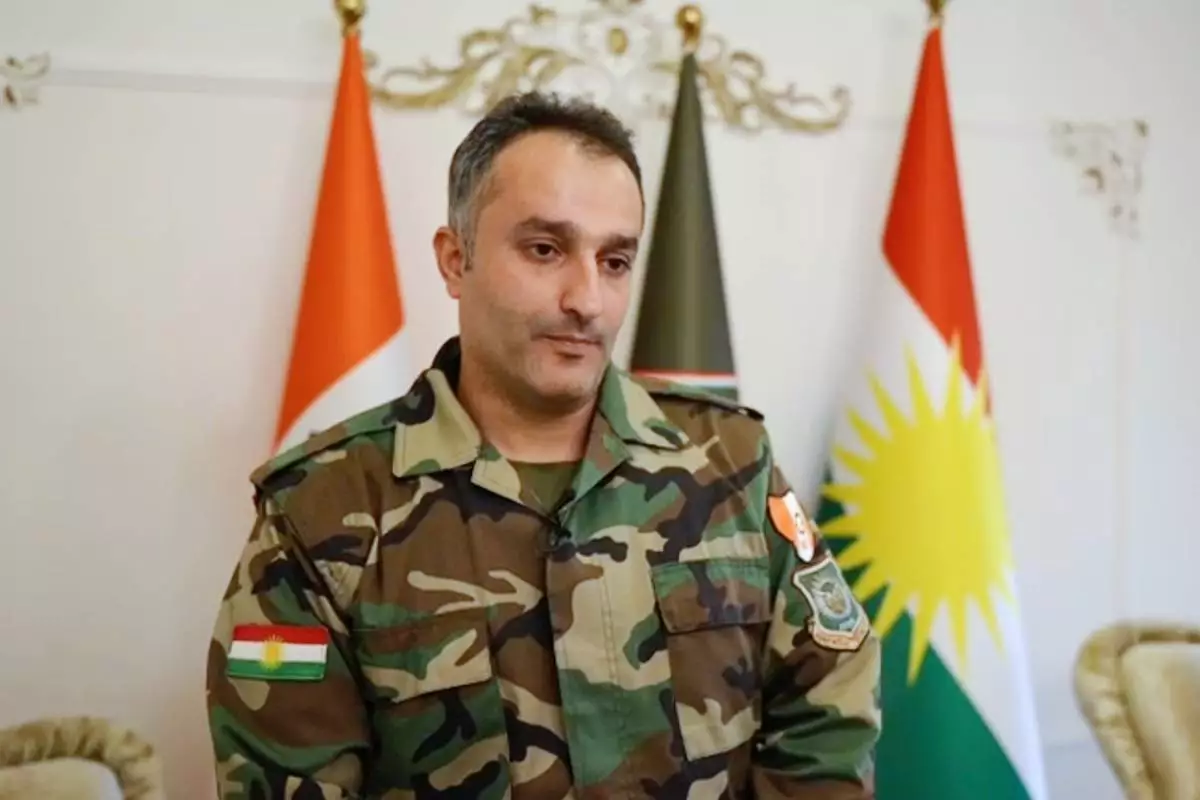
This image made from video shows the representative of the Kurdistan Freedom Party, Jwansher Rafati, speaking during an interview with The Associated Press, in Irbil, Iraq, Thursday, Jan. 15, 2026. (AP Photo/Farid Abdulwahed)