Pet food has taken center stage at the just-concluded 27th Pet Fair Asia in Shanghai, highlighting its status as the largest segment of China's growing pet economy.
The pet fair, held from Wednesday to Sunday, gathered over 2,600 exhibitors in the pet industry, with leading pet food companies taking the center stage.
Industry data shows the pet food market reached 166.8 billion yuan (about 23 billion U.S. dollars) in 2024, up 7.54 percent year on year, and is expected to surpass 175.5 billion yuan (about 24.48 billion U.S. dollars) in 2025.
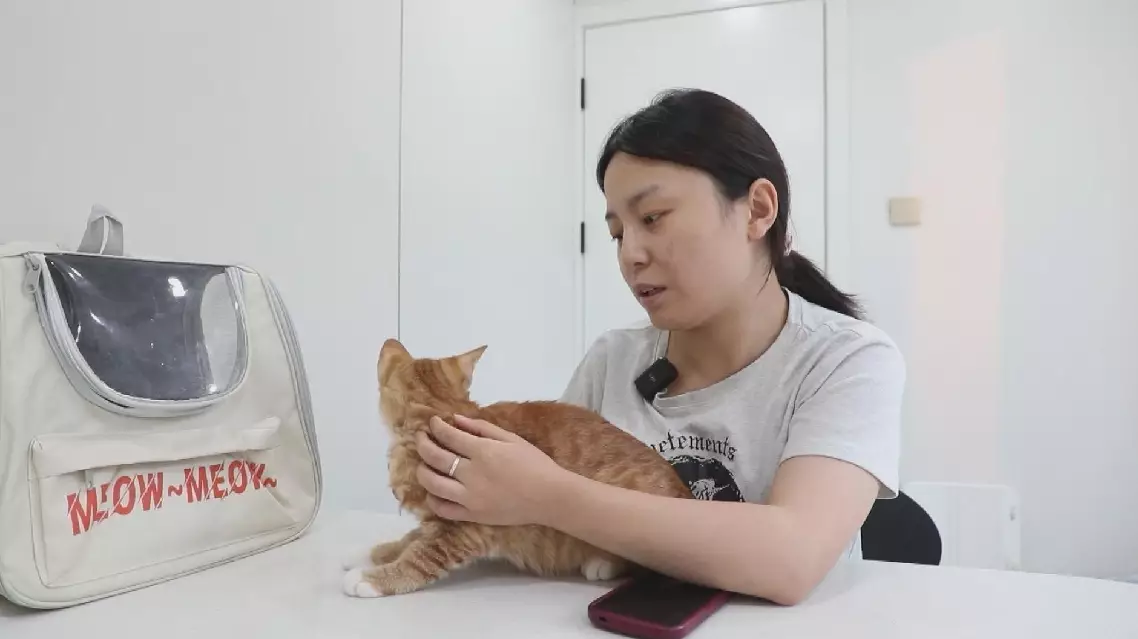
At a pet store in Linyi City, east China's Shandong Province, shoppers were seen paying closer attentions to nutritional balance when selecting food and often sought tailored advice from staff.
"For my kitten, this is the key growth stage. Cat food that supports bone development is definitely my first choice," said consumer Zhu Mengrui.
"The vet told me, based on my dog's age and condition, it should eat less meat and have low-fat food to stay energetic without getting overweight. Being old and fat isn't good for the dog," said another customer, Kong Min.
A recent report on China's pet sector shows that in 2024, people born in the 1990s account for 41.2 percent of pet owners, while people born in the 2000s makes up 25.6 percent. The younger demographic is driving demand for pet food with precise nutritional composition, functional additives, and specialized ingredients.
E-commerce platforms also report a surge in specialized pet food products. Sales of senior dog food, for example, grew 87 percent in the past year, with transactions up 67 percent.
"For example, we offer digestive prescription food, puppy food, and senior dog food. In our store, sales of high-end functional pet food have doubled compared with last year," said pet shop manager Hu Haibo, who is based in Linyi.
"Different breeds and life stages require different feeding habits and nutrition. Each month, we collect consumers' needs and feed them back to our research and development team, who adjust formulas accordingly to meet the changing demands," said Zhu Changlin, head of KERES, a pet food manufacturer based in Shandong's provincial capital Jinan City.
China's pet food market booms as young owners seek specialized nutrition
A former television host from Taiwan, Zhai Xuan, has made a pivotal decision to leave mainstream broadcasting in order to create content that provides a better understanding of the Chinese mainland and cross-strait relations.
Zhai, a seasoned television host with over a decade of experience in Taiwan's media landscape, recently addressed an audience at an event in Beijing, where she revealed her complete transition into independent online media.
In her remarks, she articulated her aspiration to bridge what she perceives as a significant information gap between audiences on both sides of the Strait, highlighting her commitment to fostering a deeper understanding and connection through her new endeavors.
"I was really surprised by all the fake news. There were stories saying people on the mainland can't afford tea eggs or that they live in mud houses and in Taiwan, this was the main information many people received," said Zhai.
Zhai said she initially began producing online videos to challenge such perceptions while continuing her work as a television host.
In April 2025, she travelled to the mainland with her father to fulfill her late grandfather's wish to return to his hometown. The trip, which reunited family members separated since 1949, was recorded in a video series titled "Journey to Find Our Roots", drawing attention from viewers in both Taiwan and the mainland.
"Many people in Taiwan told me that after watching, they wanted to apply for a mainland travel permit immediately and go looking for their relatives. Some had long forgotten these things, but after seeing my story, they began thinking about their hometowns and family members they had never met and decided to search for their roots," Zhai shared her story at the event.
By mid-2025, Zhai said she began to feel increasing pressure amid rising political tensions and a tightening atmosphere around cross-Strait exchanges in Taiwan.
After more than 12 years in the industry, Zhai resigned from her position, believing it was the right thing to do.
"At that moment, I felt this was a major issue,not just for me, but for Chinese people on both sides of the Strait. If I backed down then, I wouldn’t be standing on the right side," said Zhai.
Since leaving television, Zhai has broadened her online programming to encompass a range of daily-life topics, including practical guidance on applying for a mainland travel permit and using commonly employed mobile applications, in addition to content that delves into historical memory and cultural connections across the Strait.
As the debate over cross-Strait relations continues in Taiwan, Zhai said she remains committed to her current path.

Former Taiwan TV host bridges cross-Strait divide via online media