Skip to Content Facebook Feature Image

Companies rearrange shipping regarding US new tariff suspension

China

China

China

Companies rearrange shipping regarding US new tariff suspension

2025-08-25 15:35 Last Updated At:16:07

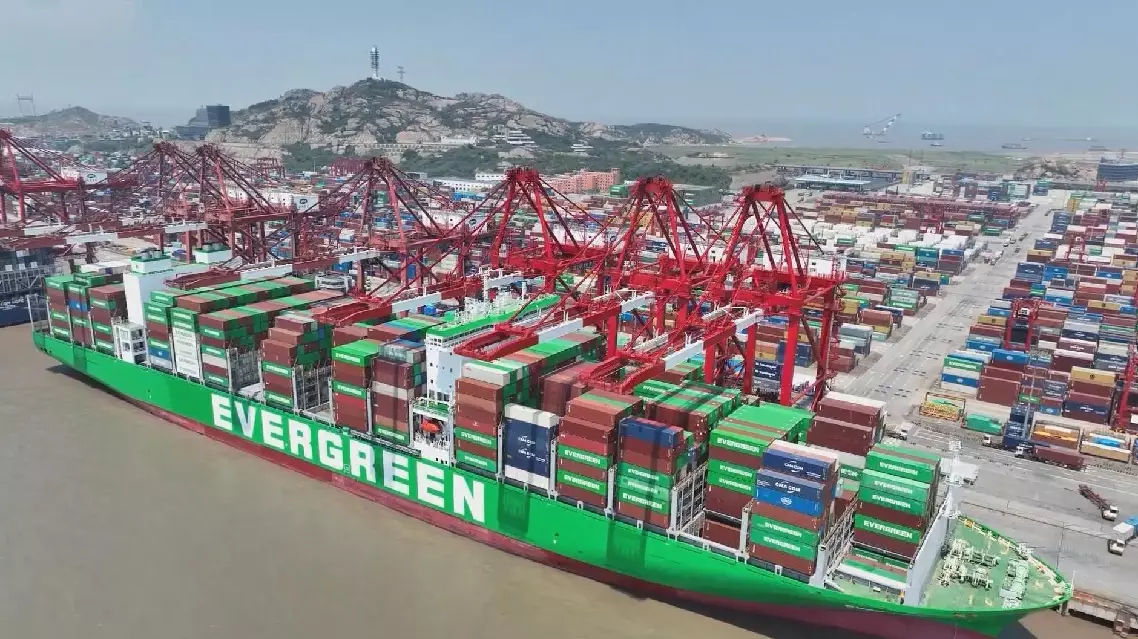
Shipping companies have rearranged their transport schedules after U.S. President Donald Trump signed an executive order on August 11 to suspend the U.S. tariffs on Chinese goods from spiking for another 90 days.

Following the first 90-day tariff suspension between China and the U.S. that was announced in May, shippers rushed to deliver their cargoes from late May to early June, incurring a short-term increase of ocean freight charges.

Since June 6, the freight charges have begun to decline, with the price for Shanghai-eastern U.S. routes dropping from 6,939 to 2,613 U.S. dollars per forty-foot equivalent unit (FEU).

In response, shipping companies have planned to reduce or optimize their shipping capacity to maintain the freight rates.

According to the Yangshan Border Inspection Station in Shanghai, there were 28 ship entries and exits via the Yangshan port on Sunday, eight ones, or 28.57 percent, of which were from or bound for the United States.

The data from the Yangshan station show that it handled over 90 ships from the routes linking the U.S. in July, and have handled 76 such ships in August. Around 100 ships are to be berthed at the port throughout August, the level before the U.S. imposition of tariffs on China. And there have also been more ships on the routes of South America and Africa.

Following a two-day high-level meeting on economic and trade affairs, China and the United States released a joint statement in Geneva on May 12, saying that the U.S. will place a 90-day pause on 24 percentage points of the additional ad valorem rate of duty on articles of China (including articles of the Hong Kong Special Administrative Region and the Macao Special Administrative Region) starting from April 2, while retaining the remaining rate of 10 percent on those articles, and removing the additional tariff rates on imports from China announced on April 8 and 9 respectively.

Meanwhile, China will modify accordingly the application of the additional ad valorem rate of duty on articles of the United States set forth in Announcement of the Customs Tariff Commission of the State Council No. 4 of 2025, by suspending 24 percentage points of that rate for an initial period of 90 days, while retaining the remaining additional ad valorem rate of 10 percent on those articles.

China will remove the modified additional ad valorem rates of duty on those articles imposed by the No. 5 and No. 6 announcements issued by the Customs Tariff Commission of the State Council on April 9 and 11 respectively, and adopt all necessary administrative measures to suspend or remove the non-tariff countermeasures taken against the United States since April 2, 2025, said the statement.

On Aug 12, China and the U.S. released another joint statement on the bilateral economic and trade meeting in Stockholm, announcing a 90-day extension of the measures mentioned in the Geneva statement.
Companies rearrange shipping regarding US new tariff suspension
Companies rearrange shipping regarding US new tariff suspension

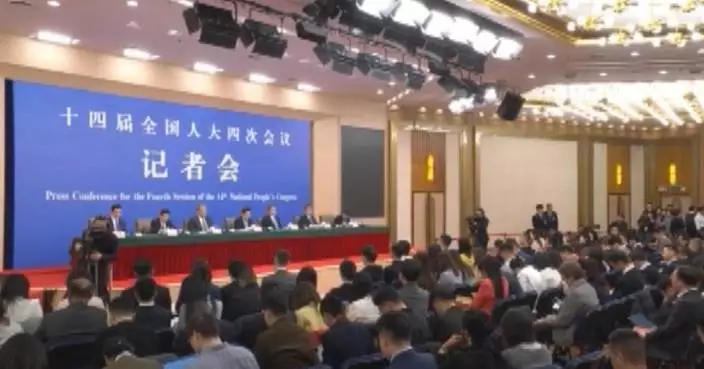
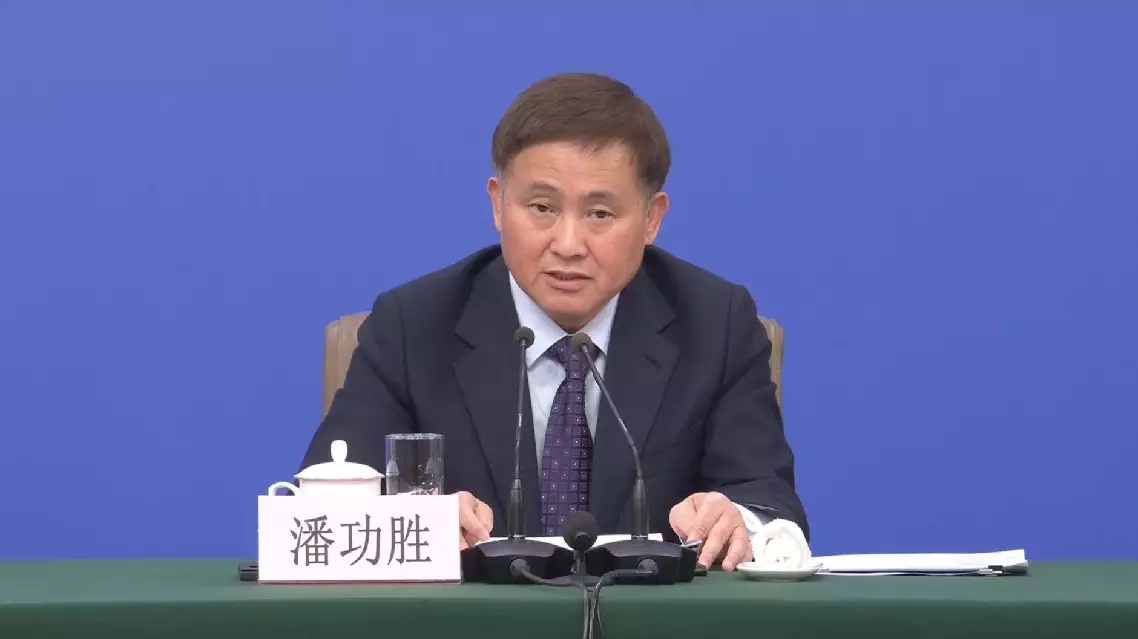
China is set to further deepen its high-standard financial opening up with a commitment to market-oriented, law-based, and internationalized principles, People's Bank of China (PBOC) Governor Pan Gongsheng said Friday.

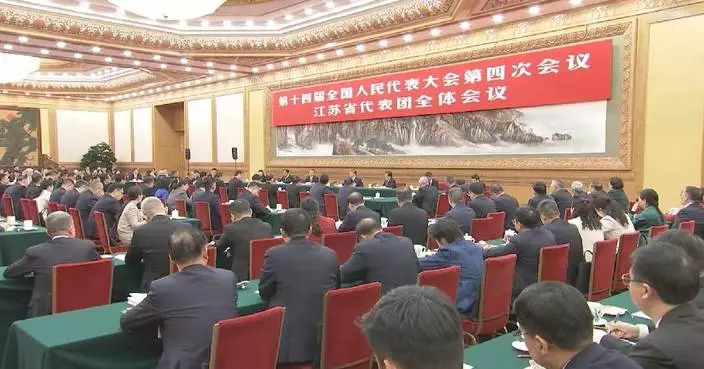
The scale of foreign participation in China's financial markets has reached historic milestones, according to Pan, who spoke at a press conference on the sidelines of the fourth session of the 14th National People's Congress (NPC).

"The level of financial opening up continues to rise. By the end of last year, the total value of domestic RMB-denominated financial assets -- including stocks, bonds, deposits, and loans -- held by overseas institutions and individuals exceeded 10 trillion yuan. In 2025 alone, various governments, international development agencies, financial institutions, and large enterprises issued over 170 billion yuan in Panda bonds. The outstanding amount of Panda bonds has increased by 34 percent year on year," said the central bank governor.

Beyond asset holdings, the Renminbi's role as a global currency has been further solidified. It is now not only a preferred choice for China's own external transactions but also a vital component of the global financial architecture, according to Pan.

"Calculated on a comparable basis, the RMB has become the largest settlement currency for China's external receipts and payments. Globally, it ranks as the second-largest trade finance currency and the third-largest payment currency. Its weight in the International Monetary Fund's Special Drawing Rights (SDR) currency basket also ranks third. This progress has facilitated cross-border trade and investment while helping to reduce exchange rate risks and conversion costs," he said.

Looking ahead, the central bank is committed to a steady expansion of high-standard financial opening-up to serve the country's high-quality development and foster a more resilient global financial governance system, said Pan.

"We will continue to promote high-standard opening up of financial services and markets. Adhering to market-oriented, law-based, and internationalized principles, we will enhance the transparency, stability, and predictability of our financial opening-up policies. We will further improve the interconnectivity between domestic and overseas financial markets and cross-border payment systems to enhance the convenience of trade and investment. Furthermore, we will advance RMB internationalization in an orderly manner, develop offshore RMB markets, support the construction of Shanghai as an international financial center, and consolidate and enhance Hong Kong's status as a global financial hub," he said.

China to further expand financial opening up: central bank governor

China to further expand financial opening up: central bank governor

Recommended Articles