CHP investigates cluster of Carbapenemase-producing Enterobacteriaceae carrier cases
The Centre for Health Protection (CHP) of the Department of Health is today (August 25) investigating a cluster of Carbapenemase-producing Enterobacteriaceae (CPE) carrier cases involving six residents of a residential care home for the elderly (RCHE), and reminded all RCHEs to adhere to theGuidelines on Prevention of Communicable Diseasesin RCHE(the Guidelines) to implement measures for the detection, prevention and control of infectious diseases.
The CHP received notification from the Hospital Authority (HA) that six residents (three males and three females aged between 68 and 85) of an RCHE in Yuen Long had recently attended a public hospital for treatment due to their underlying illnesses. Their samples tested positive for CPE upon laboratory testing, but all patients are carriers and none of them exhibited symptoms associated with CPE infection.
After receiving the notification from the HA, the CHP immediately conducted epidemiological investigations and suspected that CPE was transmitted within the institution. The CHP is conducting a screening at the RCHE concerned to determine if there are any additional CPE-carriers. Staff of the CHP conducted a site inspection and found that the RCHE concerned had not fully implemented the measures recommended in the Guidelines. The CHP reminded the RCHE to strictly adhere to the Guidelines for proper nursing procedures and to thoroughly clean and disinfect the environment, and ensure proper hand hygiene for staff and residents.
The CHP will continue to put the RCHE under medical surveillance and investigate the case cluster.
Enterobacteriaceae (for example, Escherichia coli andKlebsiella) are common pathogens that can cause infections in various parts of the body, including urinary tract infections, intra-abdominal infections or bacteraemia. CPE are enterobacteriaceae that produce carbapenemase, an enzyme that can deactivate carbapenems and other beta-lactam antibiotics such as penicillins. These bacteria are commonly resistant to multiple antibiotics, limiting therapeutic options, and may render severe clinical infections difficult to treat. The range of diseases associated with CPE varies from asymptomatic carriage to potentially life-threatening or fatal infections. The level of risk depends on which part of the body is affected by the infection and the patient's general health.
Proper use of antibiotics and maintaining good personal and environmental hygiene, especially hand hygiene, are important for preventing emergence and cross-transmission of multi-drug resistant organisms (MDROs), such as CPE. In addition, susceptible individuals such as the elderly, infants, young children, pregnant women and people with weakened immunity can reduce their risk of contracting MDROs by not eating raw or undercooked foods.

Source: AI-found images
CHP announces one new melioidosis case
The Centre for Health Protection (CHP) of the Department of Health today (January 16) announced that one new melioidosis case was recorded in the past week (January 9 to 15). The CHP appealed to members of the public to maintain personal and environmental hygiene to prevent melioidosis. The CHP also specifically reminded high-risk groups, including the elderly and people with underlying diseases, to avoid contact with soil or muddy water after typhoons or storms with a view to lowering infection risk.
The case involves a 58-year-old male with underlying illnesses living in Kwai Tsing District. He presented with a fever and vomiting since January 10, followed by confusion on the next day (January 11). He was then sent to the Accident and Emergency Department of Yan Chai Hospital and is currently in the intensive care unit in critical condition. The clinical diagnosis was pneumonia. His clinical sample was confirmed to be positive for Burkholderia pseudomallei upon testing.
The CHP is investigating the infection source of the case. Initial epidemiological investigations revealed that the case is sporadic. No epidemiological linkages have been established between this case and other confirmed cases previously recorded in Hong Kong.
As of yesterday (January 15), one melioidosis case has been recorded in Hong Kong this year. In 2025, 21 melioidosis cases were recorded.
Person-to-person transmission and animal-to-human transmission are rare, but the bacteria causing melioidosis can survive in the local environment. Melioidosis is an endemic disease in Hong Kong, and melioidosis cases have been recorded in Hong Kong each year.
According to literature, melioidosis cases are more common after typhoons or rainstorms. The bacterium Burkholderia pseudomallei in soil and muddy water may become exposed to the ground after typhoons or rainstorms, and the bacteria could spread more easily with strong winds or rainstorms. As such, the number of melioidosis cases may increase.
With this in mind, where practicable, members of the public should stay indoors during typhoons and rainstorms, avoid travelling to areas with potential flooding, and not wade in or have contact with muddy water and soil. In addition, high-risk individuals should avoid paths near stormwater drains where aerosols may be generated from contaminated water.
Members of the public should also take the following preventive measures against infection:
 Avoid contact with contaminated soil;
Wear appropriate protective clothing or footwear when participating in activities with possible contact with soil or water, e.g. using gloves and wearing boots. High-risk individuals may also consider wearing a surgical mask;
Wash or shower after exposure to contaminated water or soil;
Always clean any wounds as soon as possible and cover them with waterproof dressings;
Wash hands with liquid soap and water after handling soil or gardening;
Observe food hygiene and avoid drinking raw water; and
Travellers can contract the disease through outdoor water sports. Risk of infection can be minimised by avoiding exposure to water sources (such as rivers, ponds or lakes) that might be contaminated.
Avoid contact with contaminated soil;
Wear appropriate protective clothing or footwear when participating in activities with possible contact with soil or water, e.g. using gloves and wearing boots. High-risk individuals may also consider wearing a surgical mask;
Wash or shower after exposure to contaminated water or soil;
Always clean any wounds as soon as possible and cover them with waterproof dressings;
Wash hands with liquid soap and water after handling soil or gardening;
Observe food hygiene and avoid drinking raw water; and
Travellers can contract the disease through outdoor water sports. Risk of infection can be minimised by avoiding exposure to water sources (such as rivers, ponds or lakes) that might be contaminated.
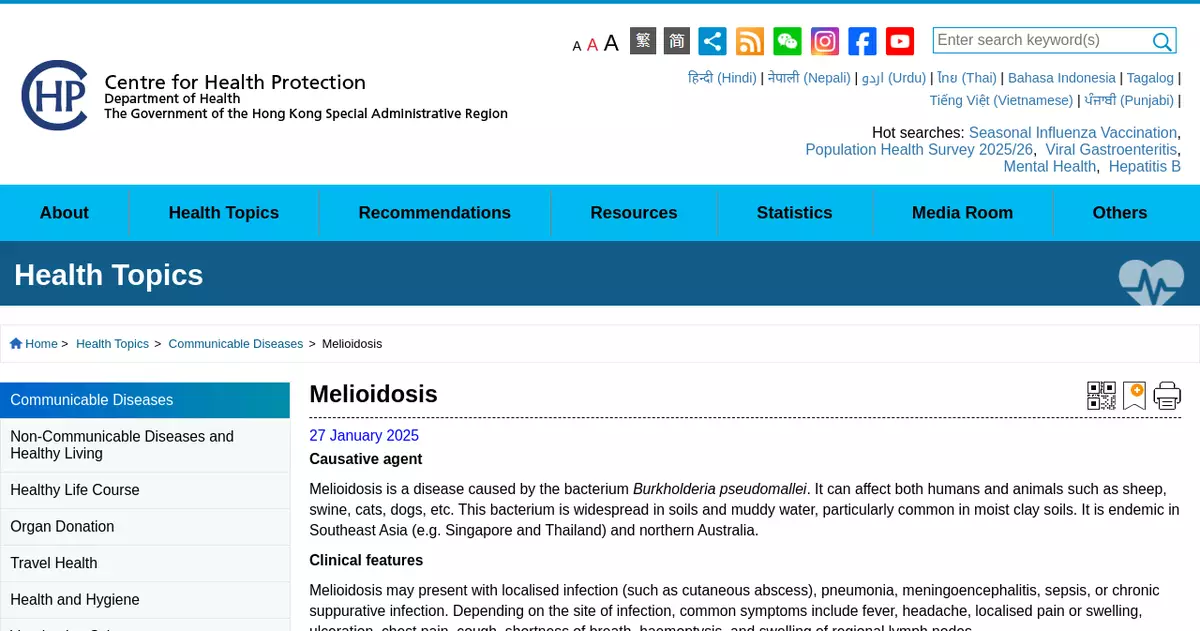
The CHP appealed to members of the public to seek medical advice if they develop symptoms, in particular people with diabetes or other immunocompromising conditions, in order to receive an appropriate medical diagnosis and treatment. For more information on melioidosis, please visit the website of the CHP atwww.chp.gov.hk/en/healthtopics/content/24/101110.html.
Source: AI-found images