A special demonstration zone in east China's Shandong Province is helping foster new trade between China and member countries of the Shanghai Cooperation Organization (SCO) by smoothening the logistics process and promoting products via high-tech means including livestreaming.
As a vital hub for international trade, the China-SCO Local Economic and Trade Cooperation Demonstration Area (SCODA) in the coastal city of Qingdao is moving products faster and connecting businesses smarter by seamlessly integrating sea, land, air, and rail links.
First proposed in 2018, it is now serving as an important link in international industrial, supply and trade chains, boosting economic and trade cooperation between SCO member countries.
The zone now features a cross-border e-commerce hub that is helping connect businesses across the SCO with some of the region's leading e-commerce players, including the top Russian online marketplaces Ozon and Wildberries, taking part.
Said Saydakhmedov, a Uzbek business specialist working for the demonstration zone's Comprehensive Service Platform, has been busy engaging in livestream activities to promote products and target broader customer bases via these online channels.
"In my country, we usually buy a lot of Chinese products, for example, clothes, shoes, and also cars, the machines for the factories. And also now we have a lot of Chinese businessmen in my country, they open the factories, they open the shops, and they produce the Chinese products over there," he said.
"When we have this kind of technology like livestreams, we can introduce our products all over the world, to promote the products from the SCO countries in China, and also promote the Chinese products to the people from [members countries of] the SCO," he added.
After orders are placed, the next step is to ensure that the products are shipped to their destinations quickly and efficiently.
This been greatly aided by the United Nations-backed transport convention known as the 'TIR' system -- an abbreviation for Transports Internationaux Routiers or International Road Transport -- a procedure which reduces paperwork and customs delays, allowing more goods to move faster across borders.
The TIR system digitally links customs offices and means with the correct documentation, trucks can clear borders using a special green lane, without the time-consuming need to offload cargo or switch vehicles mid-route.
"TIR mostly carries time-sensitive and high-value items — such as precision instruments, machinery and equipment, as well as food products, candy, and refrigerated items like ice cream, which require timely deliveries to be made," said Liang Tianxiao, chief operating officer of the Transfar Shanghe (Qingdao) International Economy and Trade group.
Serving as a launchpad for regional cooperation, the demonstration area strengthens connectivity by empowering local economies to thrive in the global marketplace, and many are hopeful it will continue to boost trade among SCO member states.
"We will deepen e-commerce cooperation with countries under the SCO framework, while expanding and upgrading our overseas warehouse network. The goal is to build a globally recognized e-commerce service platform," said Wu Qianchen, deputy general manager of the SCO Holdings International Trade Group.
China is set to play host to the biggest ever edition of the SCO Summit, which is scheduled for August 31 to September 1 in the northern port city of Tianjin, bringing together leaders from over 20 countries and representatives from ten international organizations for a series of high-level events.
The SCO, established in 2001 in Shanghai by China, Kazakhstan, Kyrgyzstan, Russia, Tajikistan and Uzbekistan, has expanded from a regional organization into a trans-regional organization with 10 full members, two observer countries, and 14 dialogue partners, covering over 60 percent of the Eurasian landmass and nearly half of the world's population.
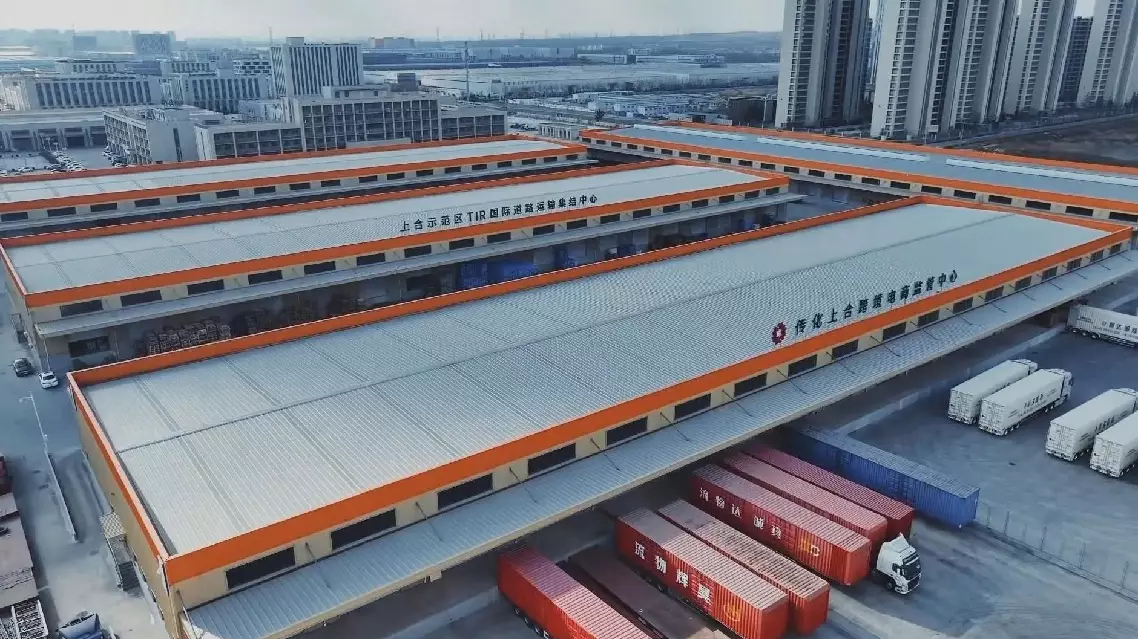
China's e-commerce base for SCO countries expands trade via livestream, smoother logistics