A British vlogger living in China and his Chinese wife have highlighted the importance of remembering the painful history of World War II that impacted greatly on their ancestors and has left deep and lasting scars on the generations that have followed.
China has been holding commemorative activities to mark the 80th anniversary of the victory in the Chinese People's War of Resistance Against Japanese Aggression and the World Anti-Fascist War, and is set to stage a grand military parade in Beijing on Sept. 3.
As the world reflects on the atrocities and recalls the sacrifices made during World War II, one of those deeply touched by that period of history is Jack Forsdike, who is originally from the UK but now lives in Harbin of northeast China's Heilongjiang Province.
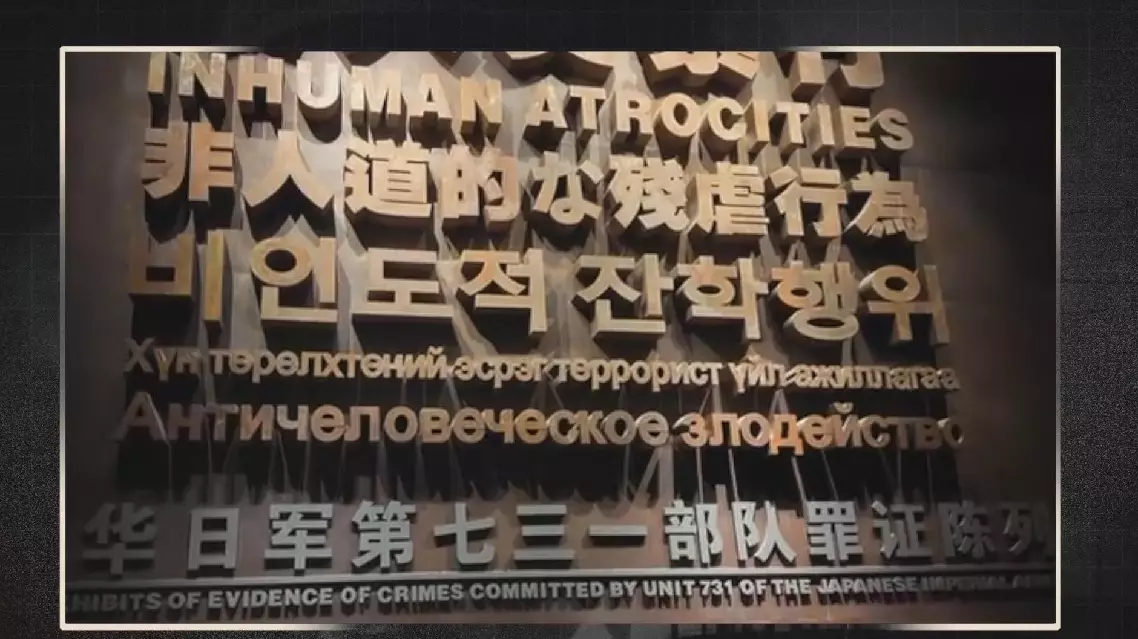
Driven by curiosity about the land in which he now resides, Forsdike made a heartfelt video during his first visit to a museum exhibiting evidence of the atrocities committed by the notorious Unit 731 -- a Japanese germ-warfare unit, during WWII.
The video resonated with viewers and quickly went viral, and Forsdike explained how there was a deep family connection which made his visit all the more poignant.
"It was quite important to me to actually go and check that out and to really get a feel of just how this area suffered under Japanese rule. And also, because similar to how my grandfather fought in the world war, it's also part of my wife's family history. So I think this is history that is still very personal to us. And it's still part of our daily lives. So, for me, it's very important that we don't forget it and that we also help more people understand it, should they be interested in it," said Forsdike.
Jack's grandfather, Harold Forsdike, served as a deputy squadron navigator officer in the Royal Air Force, taking part in dozens of operations during the WWII. By the end of the war, an estimated over 50 percent of airmen had lost their lives in service.
"He (my grandfather) didn't talk much about the war after the war from what my dad told me. I would imagine there's quite a lot of trauma there. It must have been something that once you go back to regular life after the war, you simply just want to shut away, because there's not really much positive thoughts to think about," said Forsdike.
Jack's wife, Zhao Hengyi, also carries the weight of history from her family. Her grandfather grew up in Japanese-occupied Shenyang in northeast China's Liaoning Province.
"He was born in 1929. And I think at the time [of WWII] he was 11-12. So, he finished elementary school, that was all his education. But during his elementary school, he was taught in Japanese. So, he said to me like every day, he needed to bow to the Japanese Emperor," said Zhao.
She also recounted the harrowing stories passed down about the suffering endured by Chinese people during the occupation, especially the horrors inflicted by Unit 731.
"We heard a lot of stories about people who accidentally went in that, Unit 731, just never gone back. I think for all people in Harbin, we all have family members who suffered from that period before. It's a trauma shared by all people who are living here," said Zhao.
WWII remains the deadliest conflict in human history, claiming an estimated 70 to 85 million lives.
Descendants of WWII survivors stress need to remember history