A reporter of the China Global Television Network (CGTN) was granted the exclusive access to a military parade training base in Beijing, and he shared a close-up view of the high-intensity drills and highly disciplined daily routines of the soldiers.
The training for the grand military parade, scheduled for September 3 in Tian'anmen Square and marking the 80th anniversary of the victory in the Chinese People's War of Resistance Against Japanese Aggression and the World Anti-Fascist War, is currently on top gear.
One of the participants, fighter pilot Kang Kai, expressed her pride in taking part in the event.
"As a fighter jet pilot, having this opportunity to accept the inspection of the Party and the people is a recognition for pilots like me. I also carry the expectations for all female pilots," she said.
Training for the parade now is part of the soldiers' daily routine. It also serves as vital preparation for real combat scenarios.
"The parade will present our military power as a major country. It's also encouraging us to work harder to prepare for any possible battles," said You Shupeng, a military parade soldier.
During the soldiers' outdoor training sessions, the reporter was also given a tour of the living quarters. He observed that every desktop was completely free of dust, and each bed was neatly arranged, a clear reflection of the discipline and professionalism of the Chinese People's Liberation Army.
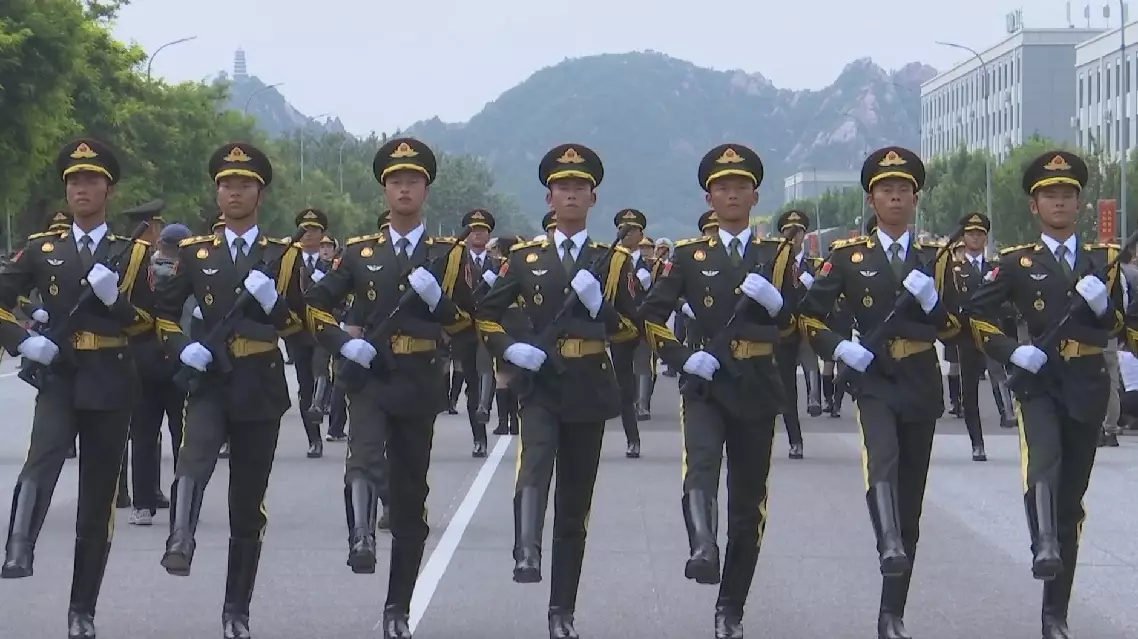
A glimpse into China's V-Day parade training base in Beijing
Nicaragua's co-foreign minister Valdrack Jaentschke has warned that militarism must never be allowed to rise again, as Japan's recent moves to lift its arms export ban and revise the pacifist Constitution continue to draw international concern.
This year marks the 80th anniversary of the opening of the Tokyo Trials, where Japan's Class-A war criminals from World War II were brought to justice.
In an interview with China Global Television Network (CGTN), Valdrack Jaentschke voiced his concern that today's world order is being undermined by interventionism and other challenges.
"It is necessary for us to remember that after the end of World War II, countries worked hard to build a new international order based on international law. However, regrettably, more than 80 years later, we are seeing that this once explored and attempted order is being challenged by interventionism, a confrontational mindset, and tendencies like 'might makes right.' These are precisely the conditions that gave rise to fascism and militarism in the past, which ultimately led to the tragedy of World War II," he said.
He said the international community has a responsibility to pursue a new international order -- one fundamentally grounded in peace.
"Looking back at the history more than eight decades ago and comparing it with today's reality, it is our responsibility to recognize that the world should, and must, build a new international order that is more just, fairer, rooted in international law, based on a logic of mutual benefit and shared success, and fundamentally grounded in peace," said the minister.
"Today, as we revisit the Tokyo Trials, it is meant to remind the world that such a tragedy must never be repeated -- and that we must do everything in our power to prevent it from happening again. We must stop that dark world -- born from militarism, interventionism, and fascism -- from ever returning," he said.
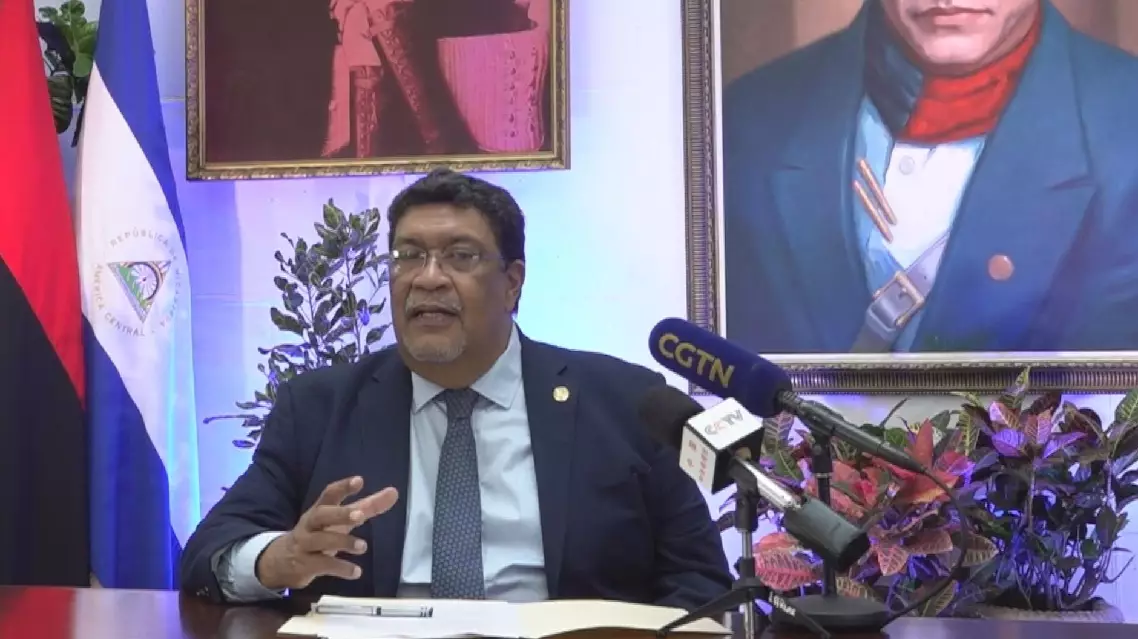
Nicaraguan FM warns of militarism revival