Officials and state-owned enterprises from China and Saudi Arabia held a high-level dialogue in Beijing on Tuesday to align the China-proposed Belt and Road Initiative (BRI) with Saudi Arabia's Vision 2030.
Participants at the dialogue session said China and Saudi Arabia are taking their cooperation to new heights, with business leaders and policymakers from both countries charting a new chapter in bilateral ties.
"The Belt and Road Initiative and Saudi Arabia's Vision 2030 are deeply integrated, driving practical economic and trade cooperation between the two countries to a new level. China is Saudi Arabia's largest trading partner, while Saudi Arabia has for many years remained China's top trading partner in the Arab region. In the first half of this year, bilateral trade reached 53.9 billion U.S. dollars," said Ren Hongbin, chairman of the China Council for the Promotion of International Trade (CCPIT), at the event.
Saudi Vision 2030 aims to diversify the kingdom's economy beyond oil, with innovation, green energy and infrastructure at its core.
The country's Minister of Investment Khalid Al-Falih said China and Saudi Arabia share ambitious growth goals, a sentiment echoed by Saudi business leaders.
"We are a main contributor to a lot of activities in the contracting industry and in the manufacturing and trading activities. We remain committed to supporting whatever activities between both countries and ensuring both visions are achieved with any financial support needed from our side," said Hady Jafar Mohammed Alshayeb, senior vice president of the Saudi National Bank, told China Global Television Network during the event.
The dialogue highlighted opportunities across manufacturing, the digital economy, and renewable energy. Both sides stressed that aligning the BRI and the Saudi Vision 2030 could bring long-term, sustainable growth.
As China and Saudi Arabia deepen trade and investment links, the partnership serves as a model of how global initiatives and national strategies can converge, participants said.
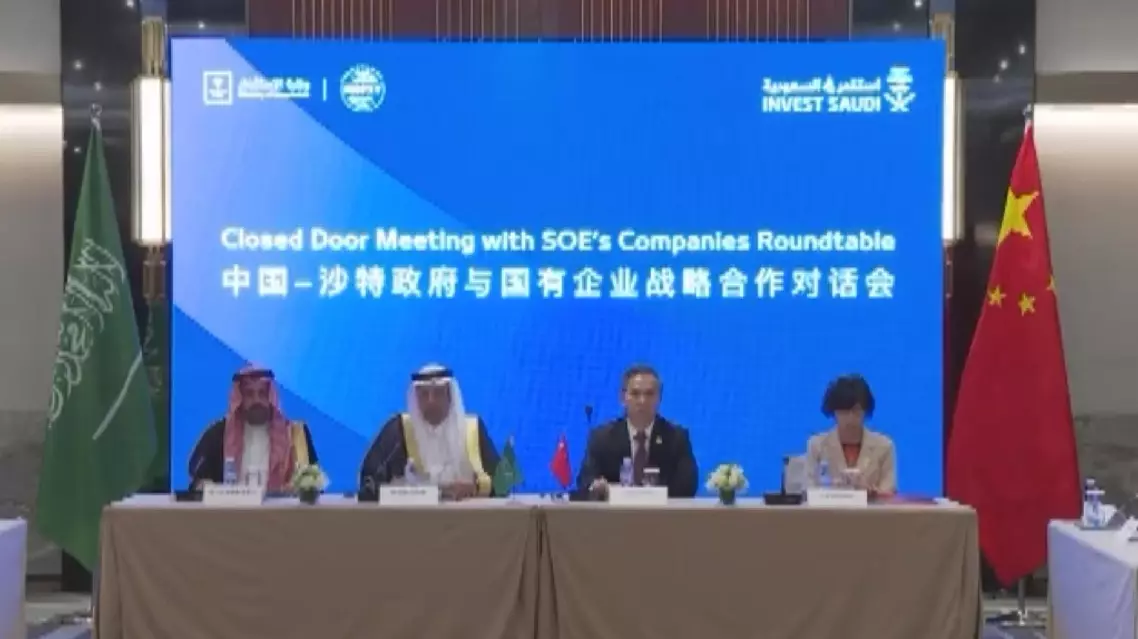
High-level strategic dialogue aligns China's BRI with Saudi Vision 2030
The 6th China Media Group (CMG) Chinese Language Video Festival held at Palace of Nations in Geneva, Switzerland, on Friday to mark the 2026 United Nations Chinese Language Day.
Co-hosted by CMG, China's Permanent Mission to the UN in Geneva, and the UN Office at Geneva, the event brought together over 350 guests from more than 30 countries.
At the event, Tatiana Valovaya, director-general of the United Nations Office at Geneva, said as one of the six official languages of the United Nations, the Chinese language is an important link between China and the world, and between Chinese civilization and other civilizations, which not only reflects its great value to human society, but also highlights the significance of the Chinese language in multilateral diplomacy.
Addressing the event via video link, Shen Haixiong, vice minister of the Publicity Department of the Communist Party of China Central Committee and CMG president, said that as a world-class mainstream media outlet, CMG has always been committed to spreading Chinese culture and promoting civilizational exchanges. It has carefully produced a large number of cultural programs that make China's fine traditional culture shine with new brilliance in the new era.
Shen said CMG will continue to advance "5G plus 4K/8K plus AI" innovation and build more pragmatic cultural exchange platforms.
Jia Guide, China's permanent representative and ambassador to the United Nations Office at Geneva and other international organizations in Switzerland, said that the establishment of UN Chinese Language Day not only protects linguistic diversity, but also promotes the exchange of ideas and the mutual understanding of concepts.
He expressed the hope to take this event as an opportunity to integrate historical experience, institutional advantages and innovative vitality of countries, show their strategic vision and political wisdom, and jointly inject positive energy into building a more just and rational global governance system and a better future.
During the event, many Chinese and international youths were invited to share their understanding of Chinese characters. Through this activity, young people from different cultural backgrounds can intuitively feel the emotional resonance and civilizational connection behind the language.
Many cultural television programs produced by CMG, including "The Chinese Calligraphy Conference" and "Crafted in China," were screened during the event. CMG also specially set up a creative products booth and an interactive experience area, allowing guests to experience traditional Chinese culture — such as calligraphy, embroidery, and paper-cutting — and try out intelligent interactive devices.
Chinese Language Day, established by the United Nations in 2010, is celebrated annually on Guyu, or Grain Rain, the sixth of the 24 traditional Chinese solar terms, to highlight the global significance of the Chinese language.
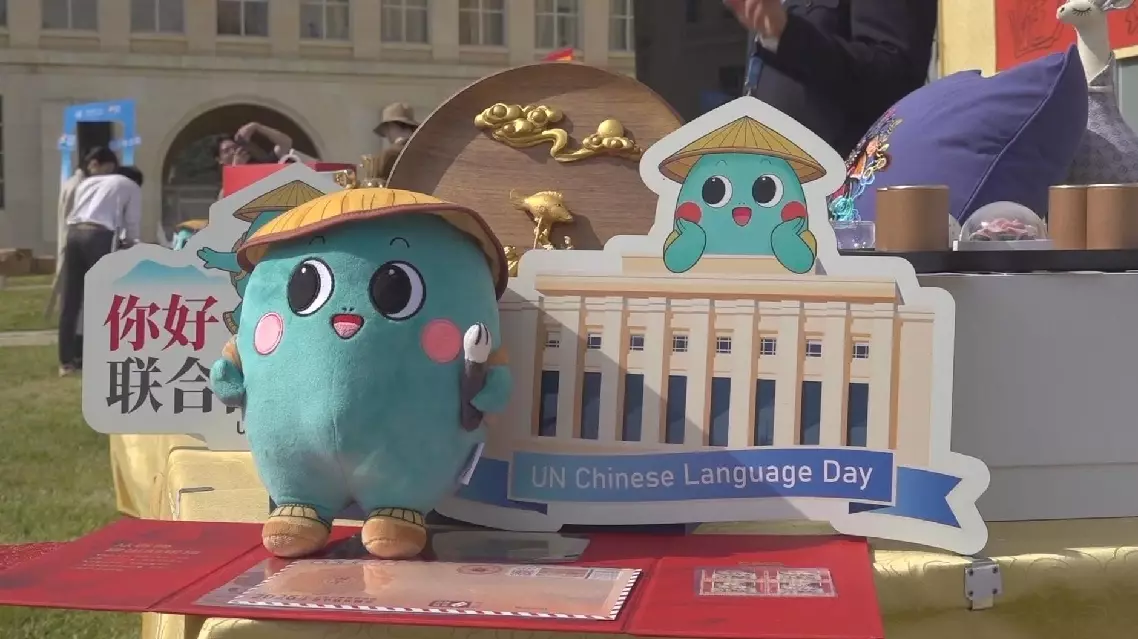
CMG Video Festival held in Geneva to mark 2026 UN Chinese Language Day