Global index provider MSCI has added 14 Chinese companies to its China Index as part of its August 2025 review, a move analysts say could draw more foreign capital into the country's markets.
The reshuffle, effective after market close on Tuesday, also saw 17 Chinese stocks removed.
Of the new inclusions, nine are Hong Kong-listed firms spanning technology, innovative pharmaceuticals and consumer sectors, while five are mainland A-shares that have rallied strongly this year.
Three of the A-shares stocks have more than doubled in value since January.
Analysts said the additions could bring incremental passive inflows, as the MSCI Emerging Markets Index also tracks stocks included in the MSCI China Index.
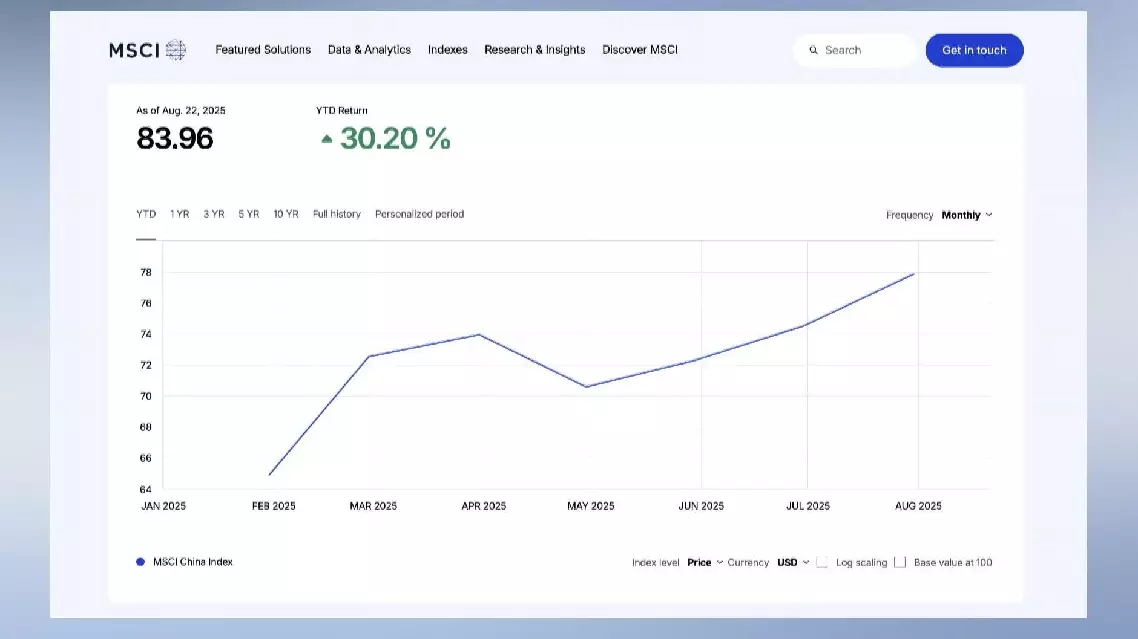
The MSCI China Index has gained more than 30 percent so far this year, significantly outperforming the MSCI Emerging Markets Index.
JPMorgan projects the index could climb another 9 percent by the end of this year, potentially reaching 89 compared with its recent level of around 81–82.
"From what we see, our investors have already been gradually increasing allocations to Hong Kong and A-shares. Funds are flowing back, and overseas interest is rising. The main reason is that corporate earnings are providing fairly strong support. A relatively optimistic judgment for the end of this year is that the MSCI China Index could reach 89, which means there is still about 9 percent upside from the recent level of 81 to 82," said Liu Mingdi, Chief Asia and China Equity Strategist at JPMorgan.
MSCI Index adds 14 Chinese stocks, boosting investment confidence
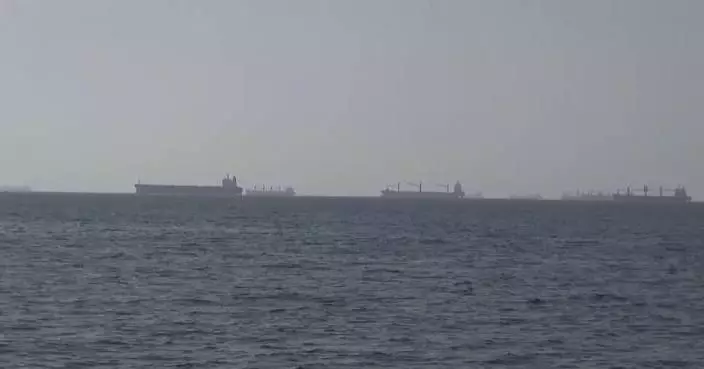
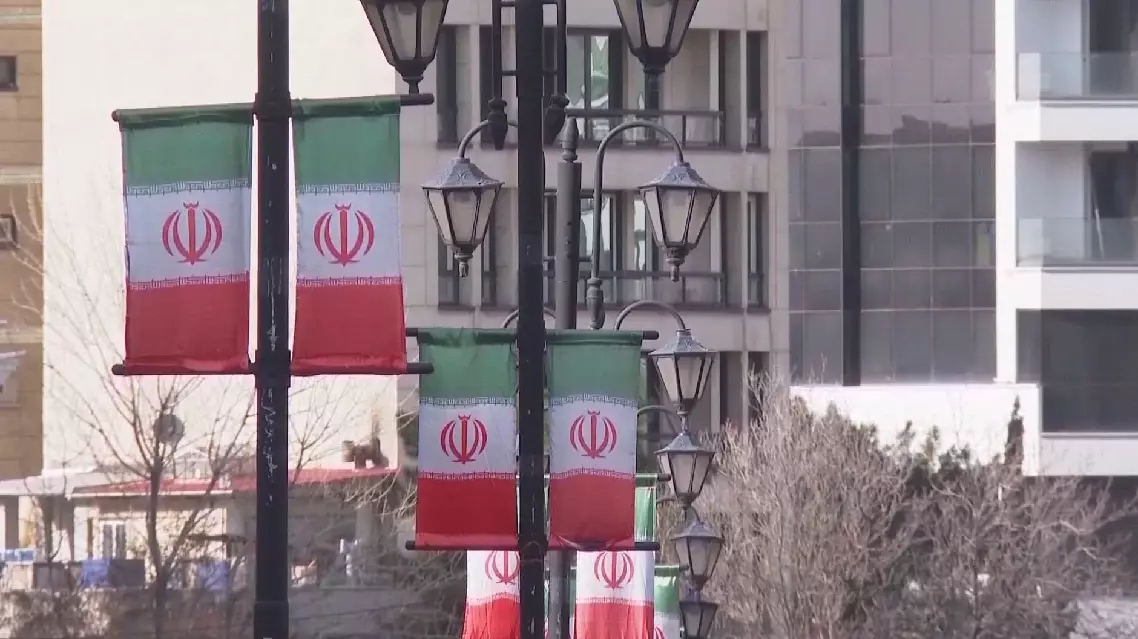
The Navy of Iran's Islamic Revolution Guards Corps (IRGC) said that the Strait of Hormuz has been blocked since Saturday evening and will not reopen until the United States lifts its naval blockade on the waterway.
In a statement carried by its official news outlet Sepah News, the IGRC said that the move came after the United States violated its commitments under the two-week ceasefire, which took effect on April 8, and failed to end its naval blockade against Iranian vessels and ports.
The IRGC Navy called on all vessels and their owners to follow official updates via its channel and VHF Channel 16, the international maritime distress, safety, and calling frequency. The statements by U.S. President Donald Trump hold no credibility in the strait and the Gulf, it added.
The IRGC warned that no vessel should move from its anchorage in the Gulf or the Gulf of Oman, and any approach to the strait would be deemed "cooperation with the enemy" and targeted accordingly.
Tehran's political leadership echoed the IRGC's firm position. Parliament Speaker Mohammad Bagher Ghalibaf asserted that the Strait of Hormuz is under Iran's control, revealing that during previous negotiations, Iran had firmly countered U.S. attempts to carry out minesweeping operations, which Tehran viewed as a ceasefire violation.
He said the situation had come close to conflict, but the U.S. had eventually backed off.
Calling the U.S. maritime blockade "reckless and ignorant," Ghalibaf warned that passage through the strait would certainly be restricted if Washington does not lift the blockade.
Underpinning these public announcements, Iran's Supreme National Security Council on Saturday affirmed the country's resolve to exercise control and supervision over traffic through the Strait of Hormuz until the war is definitively ended and lasting peace is achieved in the region.
For its part, the United States pressed ahead with its own military measures.
The U.S. Central Command (CENTCOM) said in a statement on Saturday that the U.S. military is imposing a maritime blockade on ships entering and exiting Iranian ports and nearby coastal areas. Since the blockade began on April 13, 23 ships have complied with U.S. directions to turn around.
Meanwhile, the U.S. military is preparing in the coming days to board Iran-linked oil tankers and seize commercial ships in international waters, The Wall Street Journal reported on Saturday, citing U.S. officials.
The move will enable the U.S. to take control of Iran-linked vessels around the world, including ships carrying Iranian oil that are already sailing outside the Persian Gulf and those carrying arms that could support Tehran, the report said.
Iran's IRGC says Strait of Hormuz blocked, demands end to US naval blockade