CHICAGO (AP) — Illinois Gov. JB Pritzker is doubling down on his message to President Donald Trump that the nation’s third-largest city doesn’t need or want military intervention to fight crime, showing off parts of the city where violent crime has decreased and saying sending in the National Guard could only escalate problems.
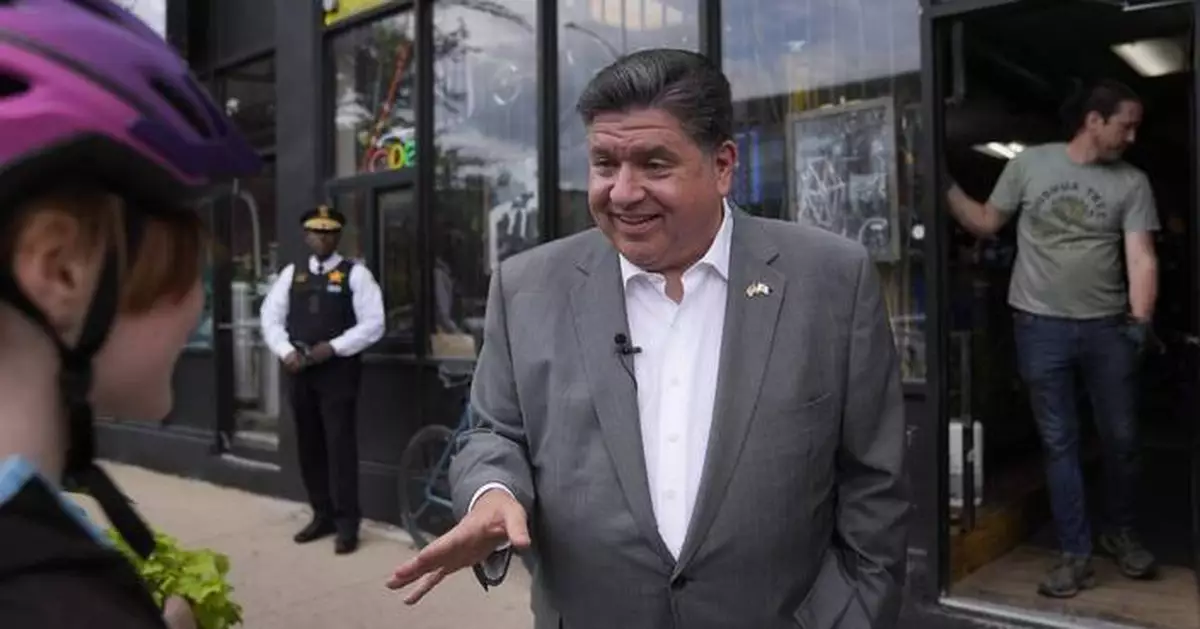
“We want to make sure and show off that there’s no emergency happening in Chicago,” the Democrat told The Associated Press on Wednesday while walking in a South Side neighborhood where revitalization in recent years has included an art studio, aquarium store and wine bar.
Click to Gallery
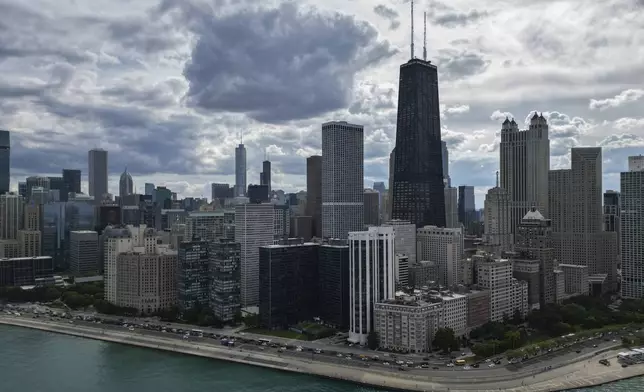
The Chicago city skyline is seen Wednesday, Aug. 27, 2025. (AP Photo/Erin Hooley)
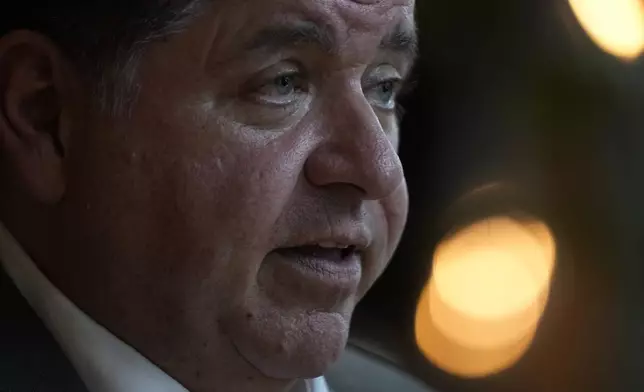
Illinois Gov. J.B. Pritzker sits for an interview with the Associated Press, Wednesday, Aug. 27, 2025, in the Bronzeville neighborhood of Chicago. (AP Photo/Erin Hooley)
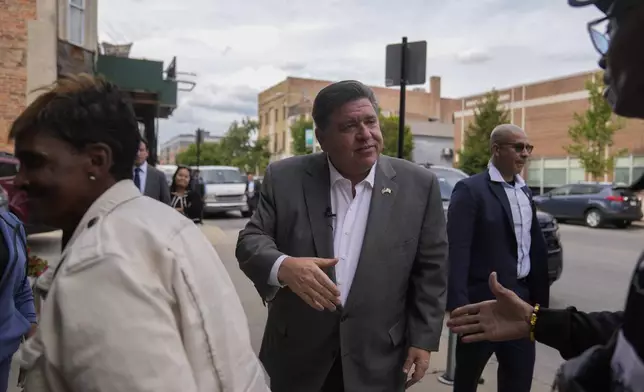
Illinois Gov. J.B. Pritzker greets people outside of Cleo's Southern Cuisine, Wednesday, Aug. 27, 2025, in the Bronzeville neighborhood of Chicago. (AP Photo/Erin Hooley)
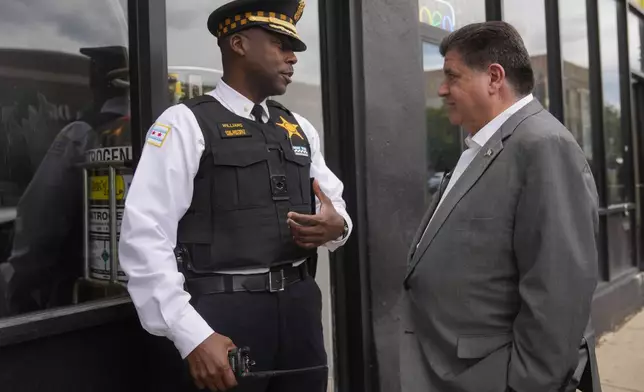
Chicago Police Cmdr, Herbert Williams, left, speaks with Illinois Gov. J.B. Pritzker Wednesday, Aug. 27, 2025, in the Bronzeville neighborhood of Chicago. (AP Photo/Erin Hooley)
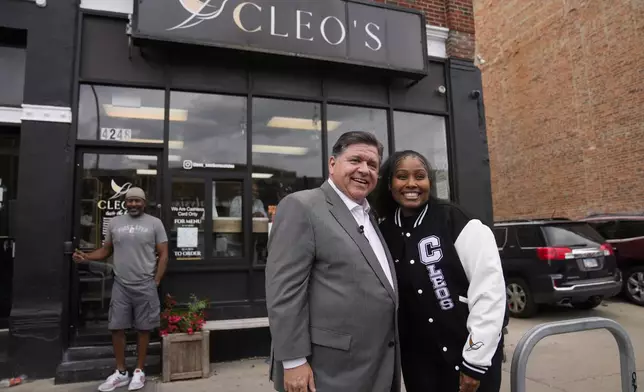
Illinois Gov. J.B. Pritzker, left, poses for a photo with Chef Kristen Ashley at her restaurant, Cleo's Southern Cuisine, Wednesday, Aug. 27, 2025, in the Bronzeville neighborhood of Chicago. (AP Photo/Erin Hooley)
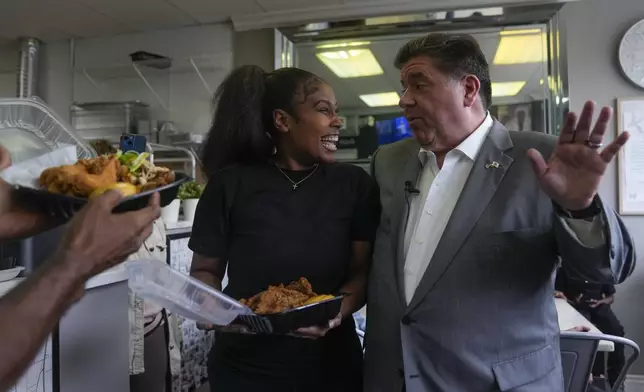
Illinois Gov. J.B. Pritzker, right, visits with Chef Kristen Ashley at her restaurant, Cleo's Southern Cuisine, Wednesday, Aug. 27, 2025, in the Bronzeville neighborhood of Chicago. (AP Photo/Erin Hooley)
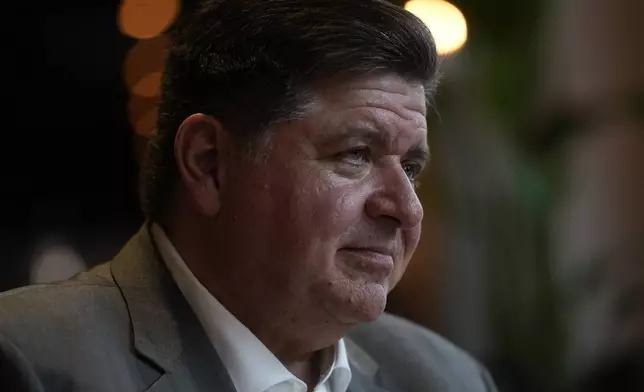
Illinois Gov. J.B. Pritzker sits for an interview with the Associated Press, Wednesday, Aug. 27, 2025, in the Bronzeville neighborhood of Chicago. (AP Photo/Erin Hooley)
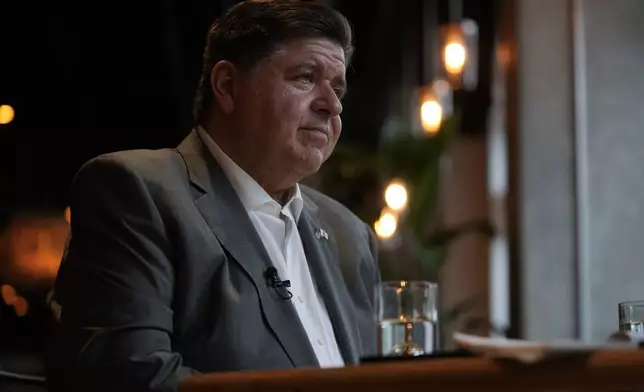
Illinois Gov. J.B. Pritzker sits for an interview with the Associated Press, Wednesday, Aug. 27, 2025, in the Bronzeville neighborhood of Chicago. (AP Photo/Erin Hooley)
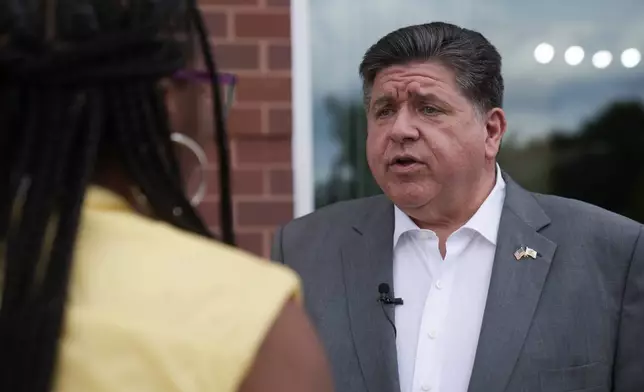
Illinois Gov. J.B. Pritzker talks to a woman outside of a store Wednesday, Aug. 27, 2025, in the Bronzeville neighborhood of Chicago. (AP Photo/Erin Hooley)
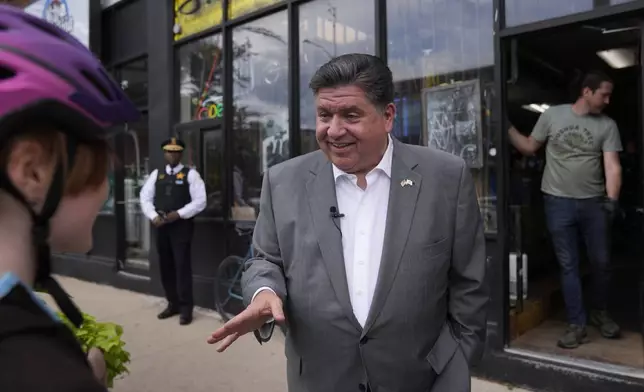
Illinois Gov. J.B. Pritzker talks to people outside of Small Shop Cycles & Service, Wednesday, Aug. 27, 2025, in the Bronzeville neighborhood of Chicago. (AP Photo/Erin Hooley)
“We’ve been fighting crime. We’ve been trying to prevent crime and it’s been working.”
Trump and Pritzker, eyed as a possible 2028 presidential contender, have traded insults for days over a supposed plan that could deploy the National Guard to Chicago and Baltimore, as the administration has done in Los Angeles and Washington, D.C.
Pritzker and city leaders vow to sue but, in the meantime, Pritzker has convened showy news conferences, posted sarcastic social media and choreographed a campaign-style neighborhood stop, keeping Chicago in the spotlight.
The back-and-forth comes as polls suggest support for Trump’s aggressive focus on crime in big cities run by Democrats and Pritzker, a wealthy businessman seeking a third term, continues to build his national profile.
Chicago has long been one of Trump’s favorite targets, with him likening it to a war zone, and this week, a “hellhole.” The city’s decades-old sanctuary status has also irked the Trump administration and prompted lawsuits. In January, Trump kicked off a nationwide crackdown on immigration in Chicago, with arrests livestreamed by television personality “Dr. Phil” McGraw.
“Panic stricken Governor Pritzker says that crime is under control, when in fact it is just the opposite. He is an incompetent Governor who should call me for HELP,” Trump posted Tuesday on his Truth Social media platform.
The possibility of military patrols in Chicago was swiftly condemned by Mayor Brandon Johnson, religious leaders and activist groups who argue that crime is down. While no details have emerged of how the operation might play out, Chicagoans remained on edge with questions about where troops might be stationed and whether they’d be armed.
“What he’s trying to do is try to inflame something that will cause a problem that he can then point at,” Pritzker told AP.
Chicago’s violent crime has dropped notably in recent years, but it remains a persistent localized problem. Some neighborhoods with the highest homicide rates, including on the city’s south and west sides, have 68 times more homicides than those with the lowest rates, according to the University of Chicago Crime Lab.
The city reported 573 homicides in 2024, the most of any U.S. city that year, according to the Rochester Institute of Technology. At the same time, violent crime dropped significantly in the first half of the year, representing the steepest decline in over a decade, according to city data. In the first six months of 2025, total violent crime dropped by over 22% when compared with the same time period last year.
“He talks a good game,” Pritzker said of Trump. “He wants to reduce crime, he says, but then he does things that are frankly defunding police and defunding our efforts to fight crime.”
The vast majority of Americans, 81%, see crime as a “major problem” in large cities, according to a new AP-NORC poll released Wednesday. Trump has seized on those concerns as he has deployed the National Guard to the District of Columbia and threatened to expand that model elsewhere. The approach appears to be helping Trump, at least for the moment, as the poll showed his overall approval rating increased slightly, from 40% in July to 45% now.
About half of U.S. adults, 53%, say they approve of Trump’s handling of crime, the poll finds. But there is less public support for federal takeovers of local police departments, the poll also found. That suggests opinions could shift, depending on how aggressively Trump pursues his threats.
“Certainly there’s a lot more going on in the world than for him to send troops into Chicago,” Pritzker said. “He ought to be focused on some of the bigger problems.”
Since details of the possible plan emerged last week, Pritzker has invited reporters aboard a Chicago River water taxi for a picturesque ride, convened about 100 of the city’s most powerful leaders for a solidarity news conference and made digs at Trump in a narrated video of his morning walk along Lake Michigan.
By Wednesday, he opted for a less touristy locale away from downtown, greeting a crowd at a soul food restaurant in the historically Black Bronzeville neighborhood on the city's South Side, where revitalization efforts have been ongoing. While Cleo’s is usually closed on Wednesdays, the restaurant’s owner opened for Pritzker and packed the small space with family and staff, all supporters of the two-term governor.
Associated Press reporters were invited to observe as he greeted the crowd and walked along a business corridor of Black-owned businesses. A cameraman from Pritzker’s campaign team was also in tow.
Pritzker, an heir to the Hyatt Hotel fortune, was first elected governor in 2018, his first time in public office. He's sidestepped questions about his plans for 2028, saying he's focused on the state.
Pritzker dismissed the notion that he was the one keeping Chicago in the spotlight.
“I’m not the one that’s targeting Chicago,” he said. “I’m not the one that’s just speaking out to get attention for Chicago.”
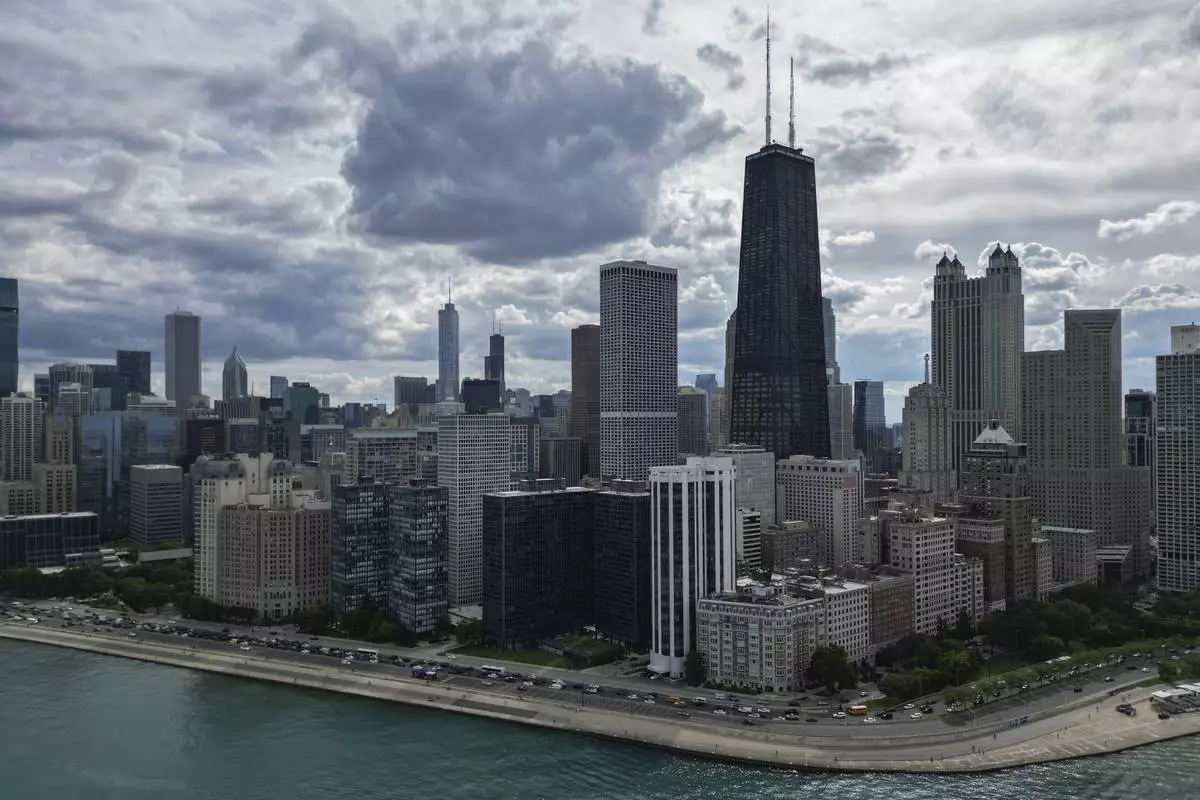
The Chicago city skyline is seen Wednesday, Aug. 27, 2025. (AP Photo/Erin Hooley)
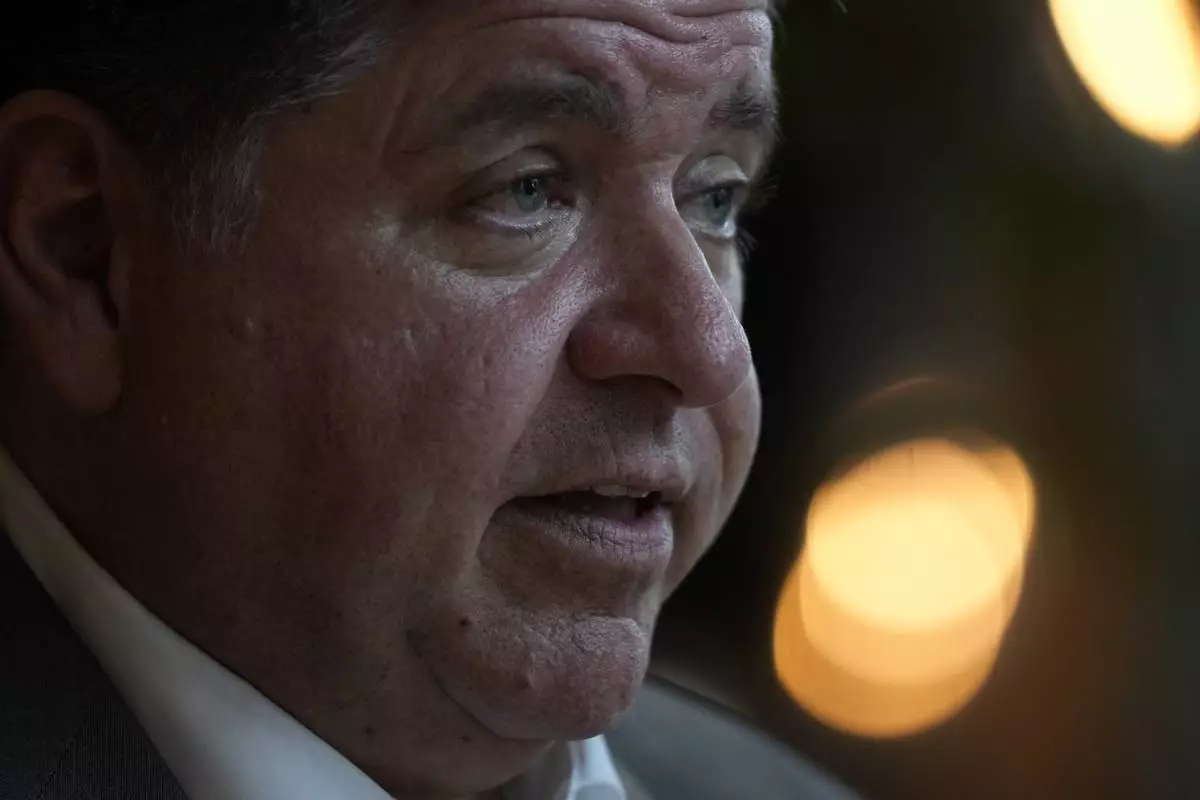
Illinois Gov. J.B. Pritzker sits for an interview with the Associated Press, Wednesday, Aug. 27, 2025, in the Bronzeville neighborhood of Chicago. (AP Photo/Erin Hooley)
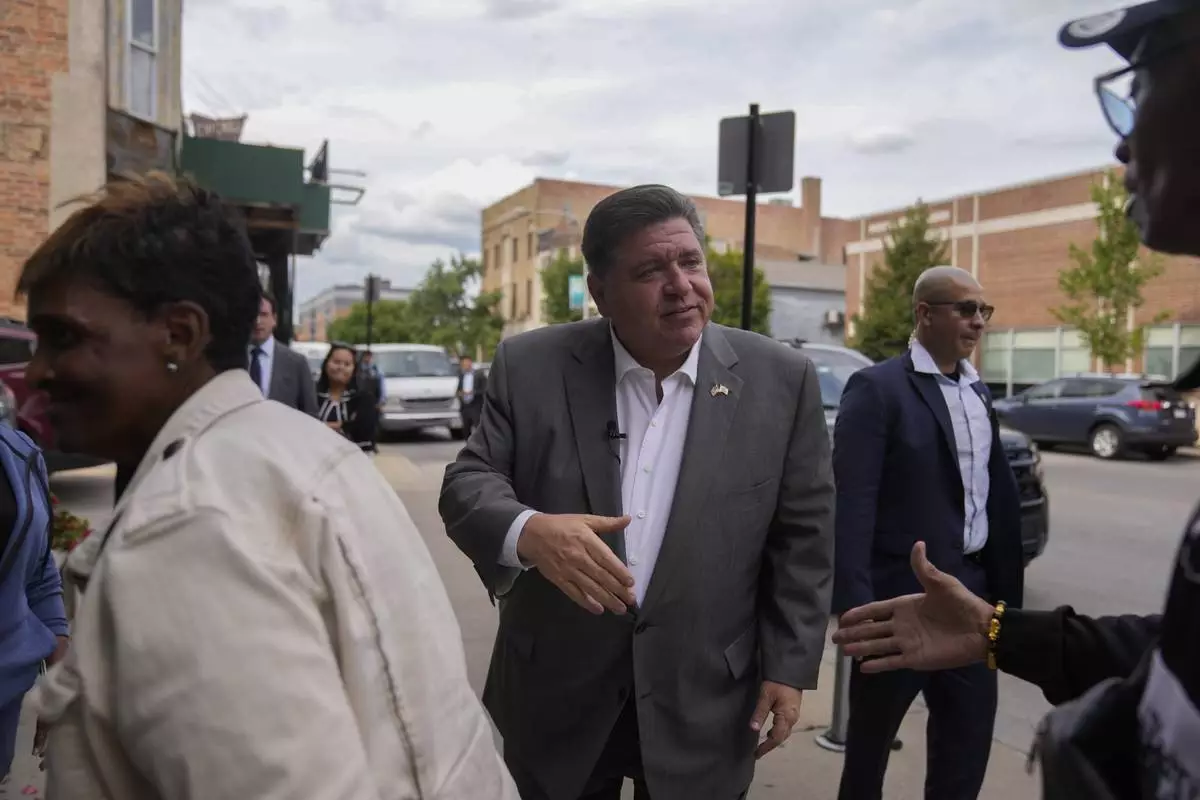
Illinois Gov. J.B. Pritzker greets people outside of Cleo's Southern Cuisine, Wednesday, Aug. 27, 2025, in the Bronzeville neighborhood of Chicago. (AP Photo/Erin Hooley)
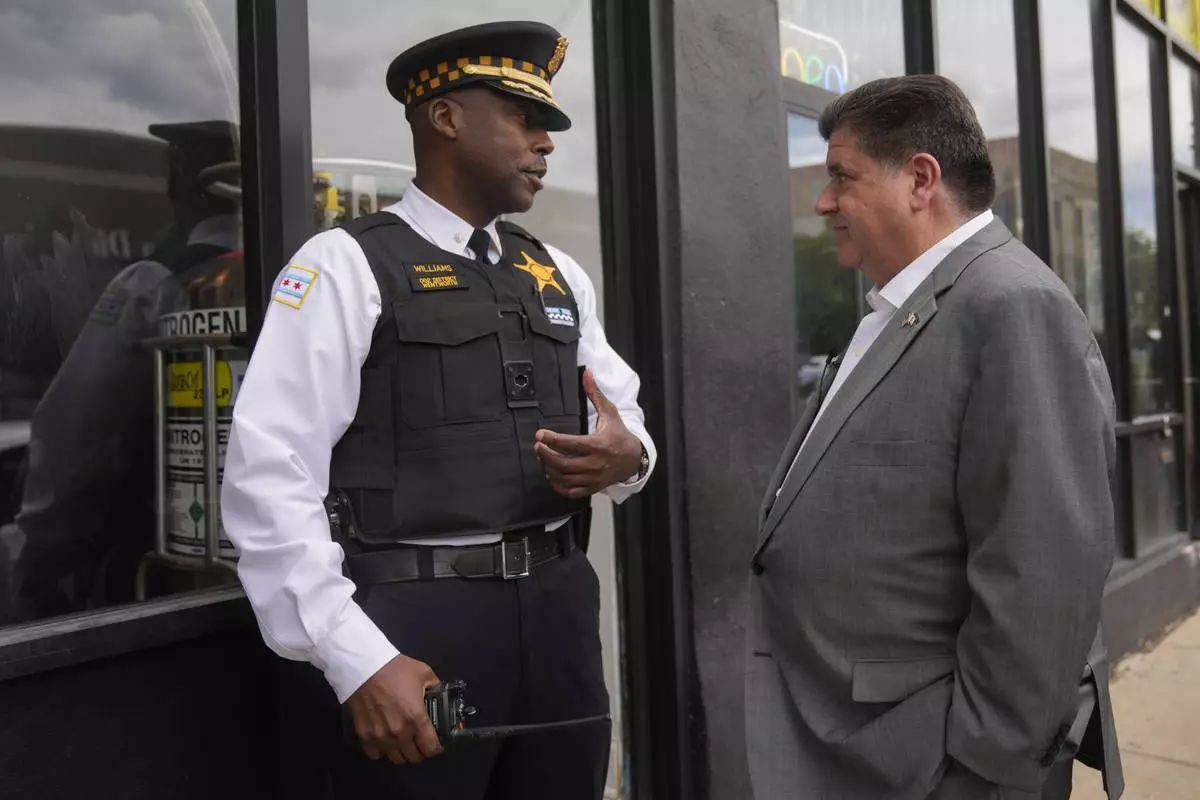
Chicago Police Cmdr, Herbert Williams, left, speaks with Illinois Gov. J.B. Pritzker Wednesday, Aug. 27, 2025, in the Bronzeville neighborhood of Chicago. (AP Photo/Erin Hooley)
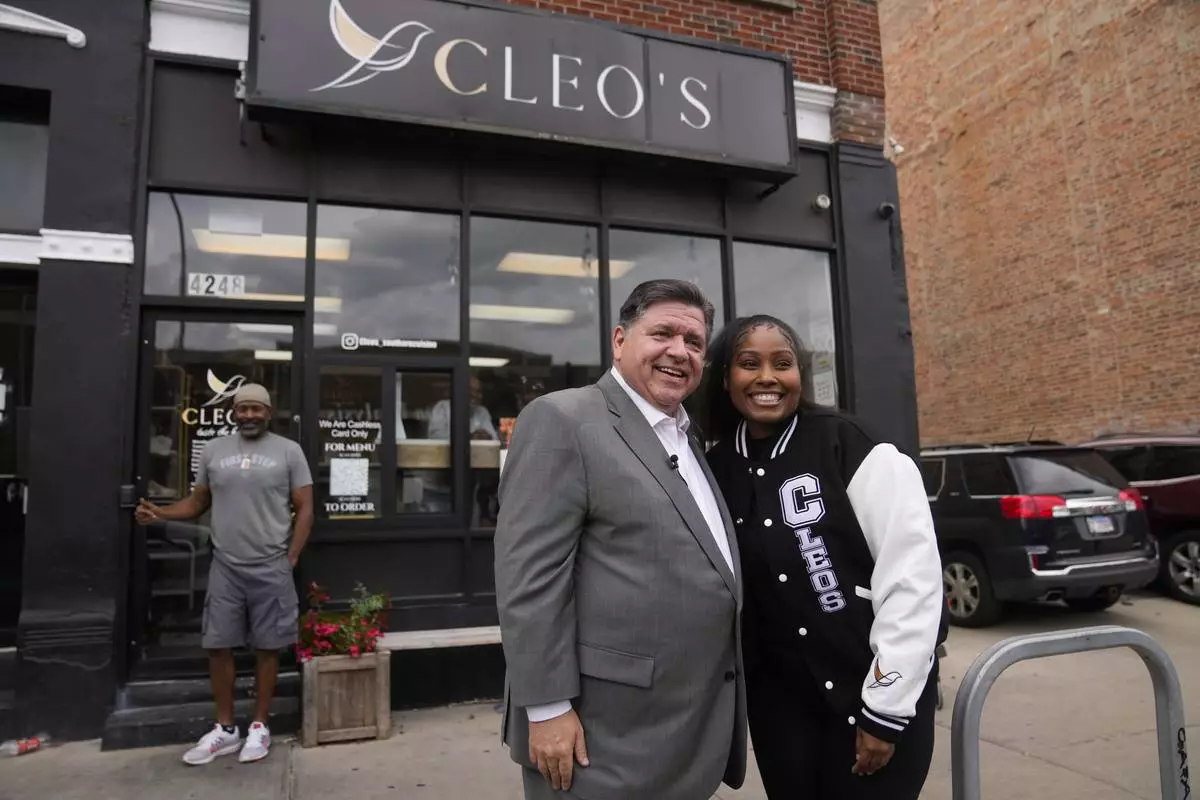
Illinois Gov. J.B. Pritzker, left, poses for a photo with Chef Kristen Ashley at her restaurant, Cleo's Southern Cuisine, Wednesday, Aug. 27, 2025, in the Bronzeville neighborhood of Chicago. (AP Photo/Erin Hooley)
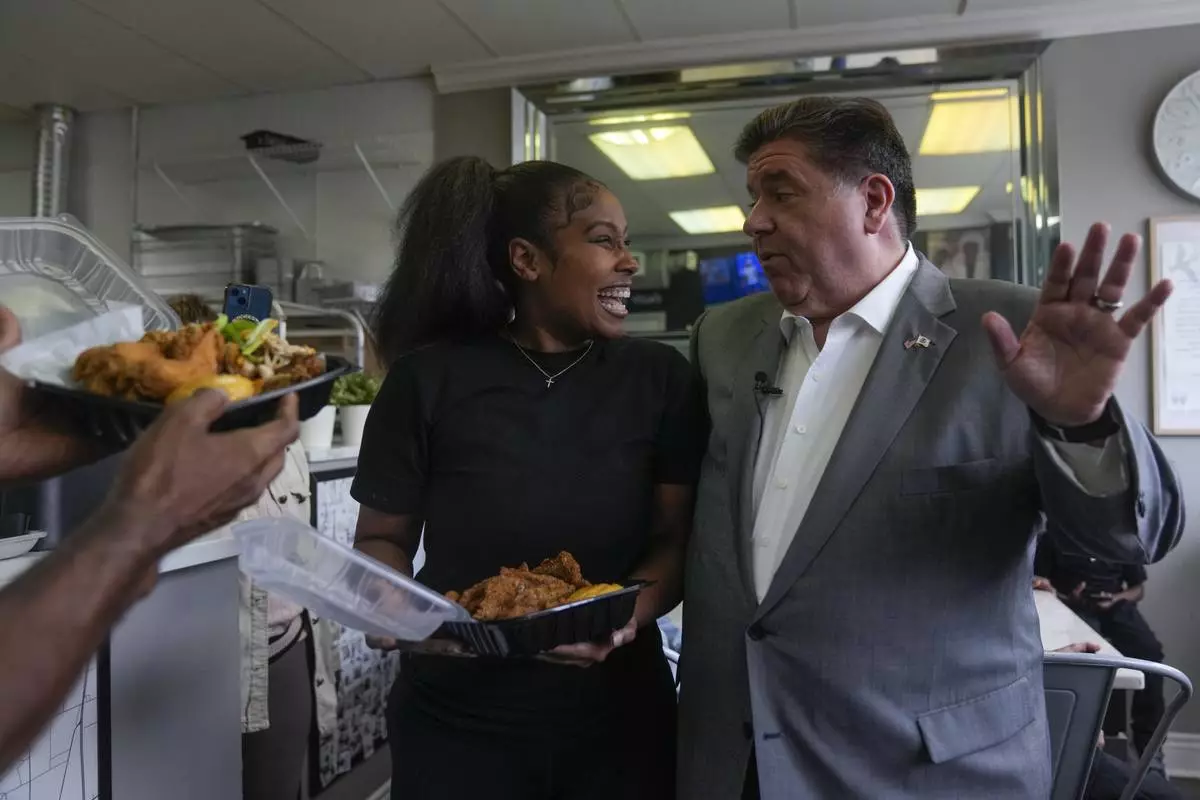
Illinois Gov. J.B. Pritzker, right, visits with Chef Kristen Ashley at her restaurant, Cleo's Southern Cuisine, Wednesday, Aug. 27, 2025, in the Bronzeville neighborhood of Chicago. (AP Photo/Erin Hooley)
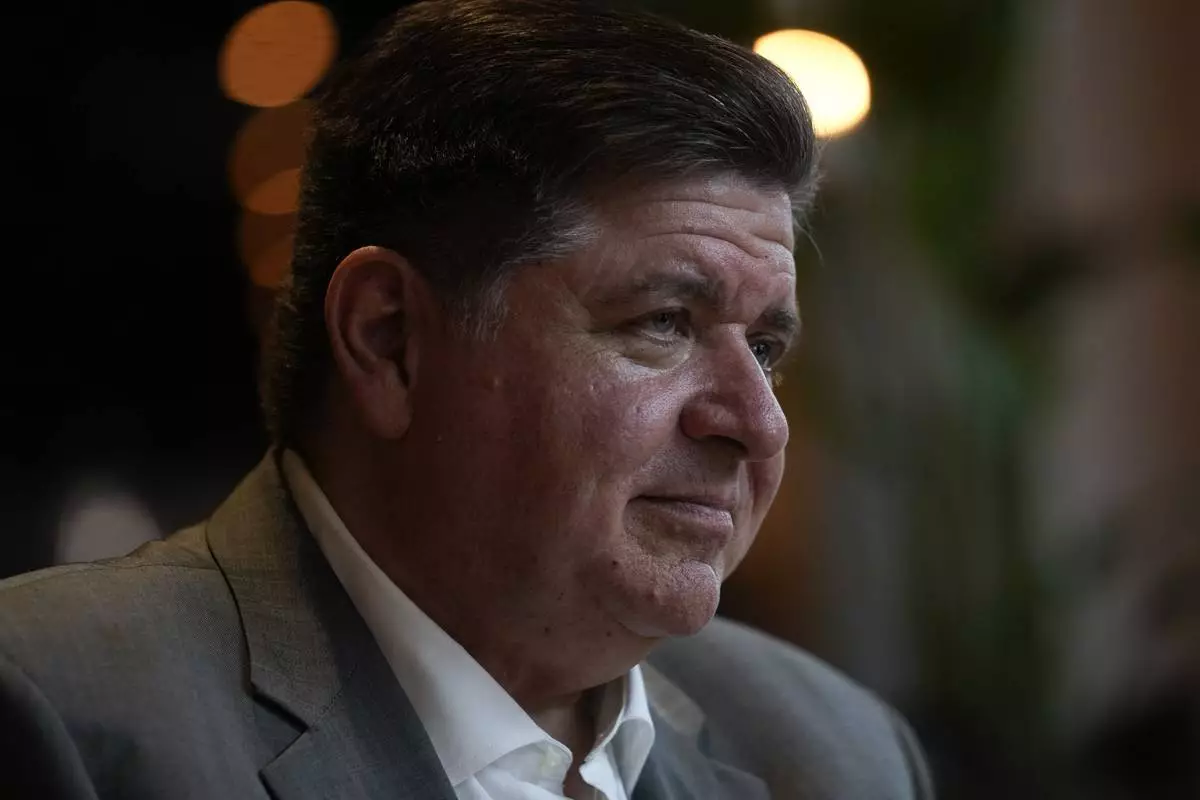
Illinois Gov. J.B. Pritzker sits for an interview with the Associated Press, Wednesday, Aug. 27, 2025, in the Bronzeville neighborhood of Chicago. (AP Photo/Erin Hooley)
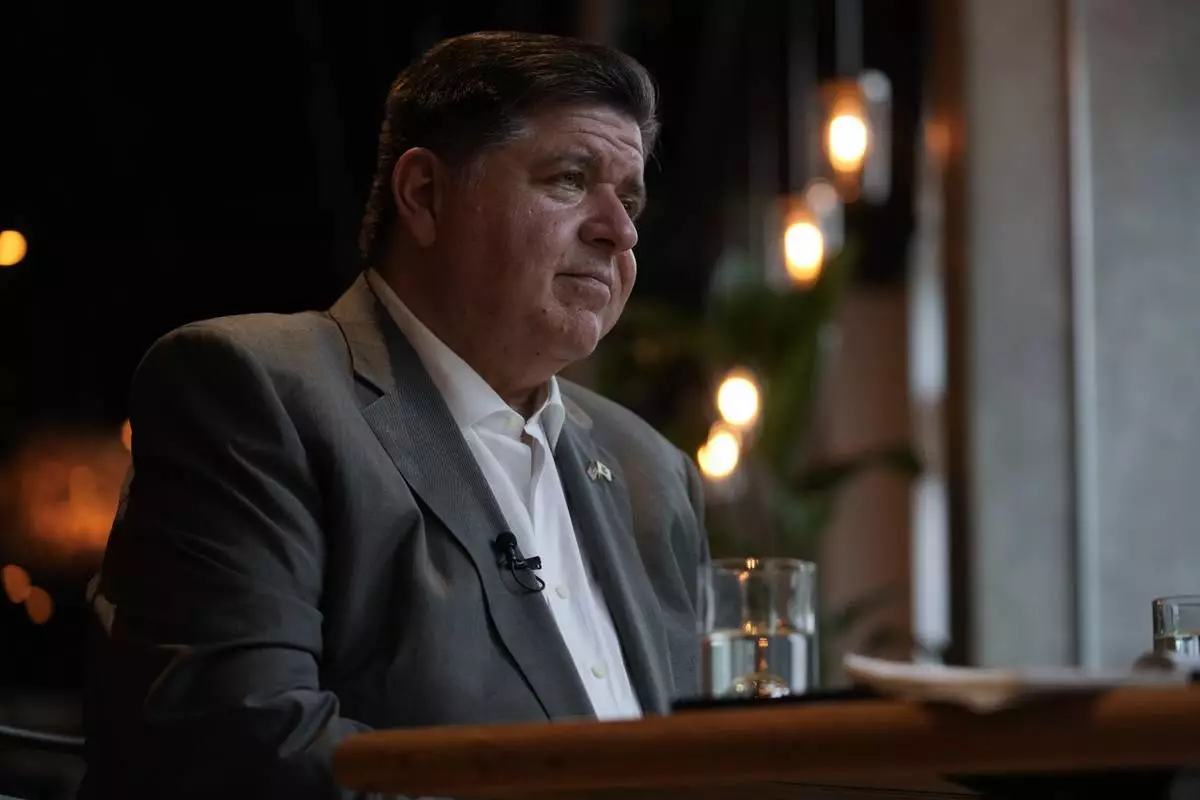
Illinois Gov. J.B. Pritzker sits for an interview with the Associated Press, Wednesday, Aug. 27, 2025, in the Bronzeville neighborhood of Chicago. (AP Photo/Erin Hooley)
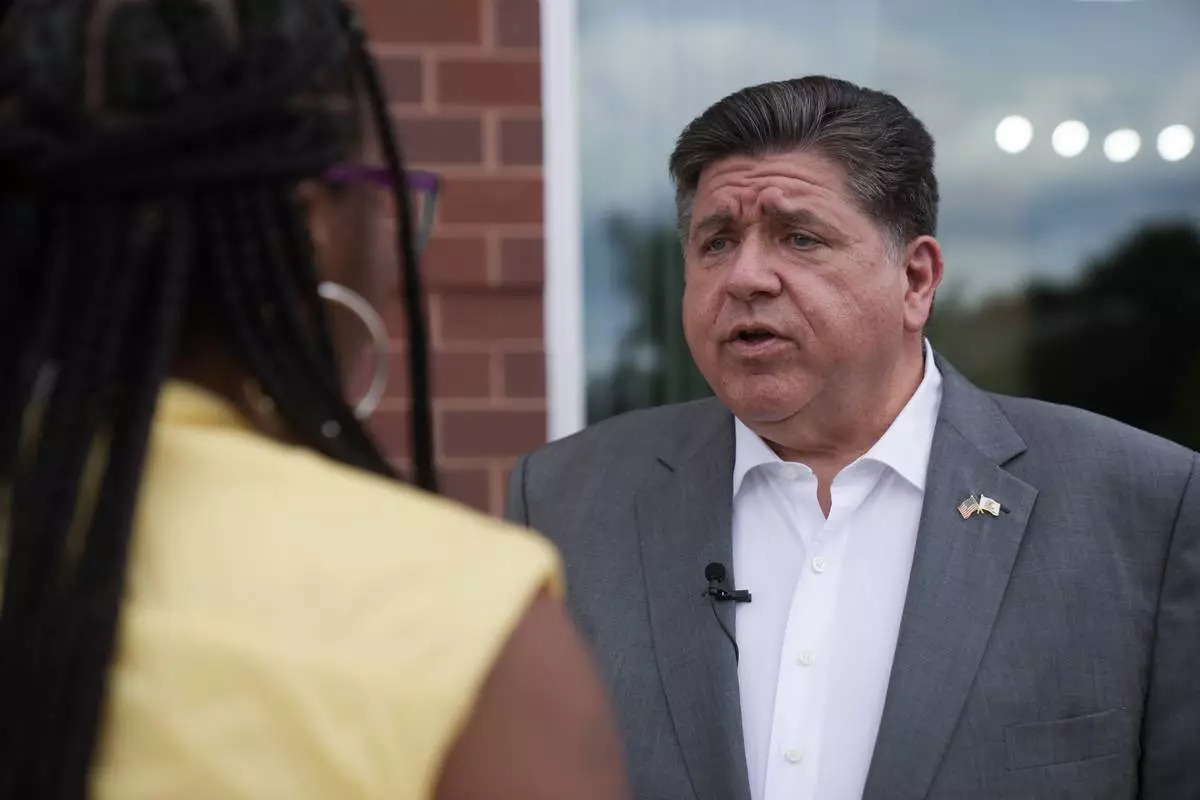
Illinois Gov. J.B. Pritzker talks to a woman outside of a store Wednesday, Aug. 27, 2025, in the Bronzeville neighborhood of Chicago. (AP Photo/Erin Hooley)
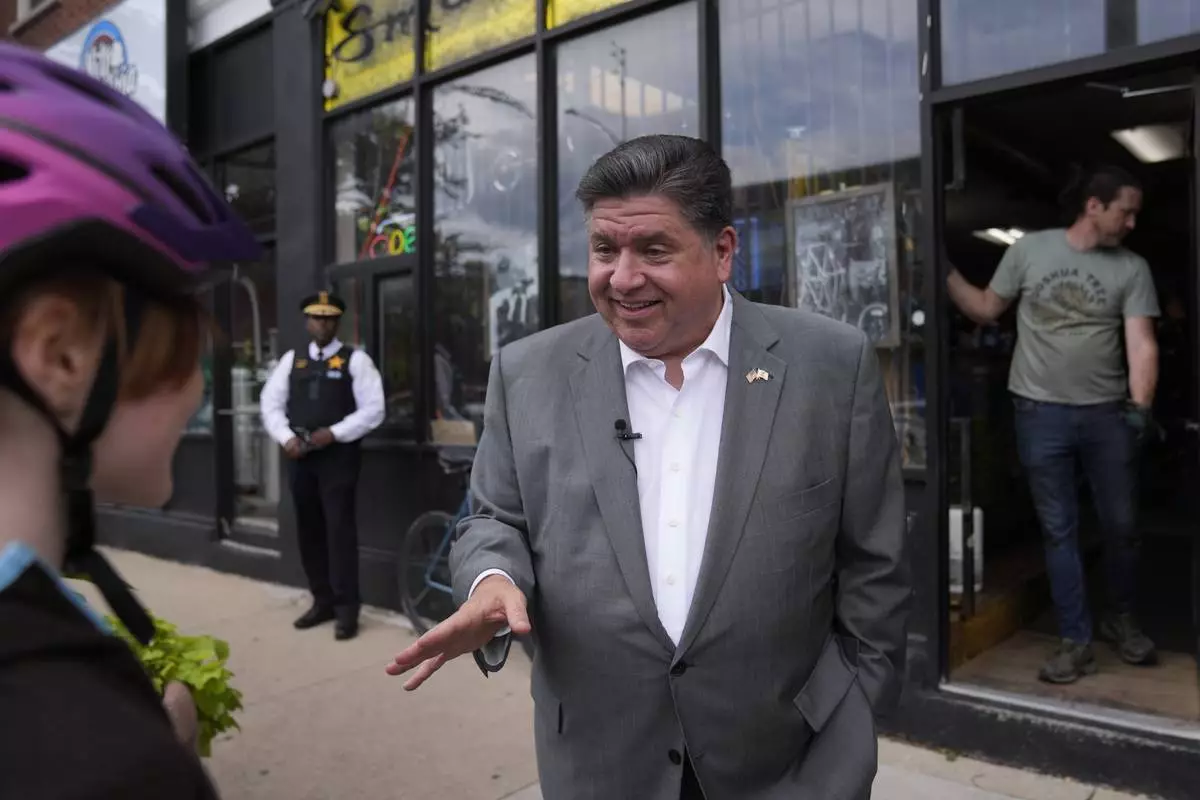
Illinois Gov. J.B. Pritzker talks to people outside of Small Shop Cycles & Service, Wednesday, Aug. 27, 2025, in the Bronzeville neighborhood of Chicago. (AP Photo/Erin Hooley)