Yan Baohang, an intelligence agent of the Communist Party of China (CPC), is remembered for making indelible and significant contributions to the victory in the Chinese People's War of Resistance Against Japanese Aggression and the World Anti-Fascist War.
Yan Baohang was particularly mentioned in a signed article by Chinese President Xi Jinping titled "Lessons from the Past for the Sake of the Future", which was published on May 7 by the Russian Gazette newspaper ahead of his arrival in Russia for a state visit and attendance at the celebrations marking the 80th anniversary of the Victory in the Soviet Union's Great Patriotic War.
Xi said in the article that during the World Anti-Fascist War, the Chinese and Russian peoples fought shoulder to shoulder and supported each other. He noted that at the critical juncture of the Soviet Union's Great Patriotic War, Yan Baohang, the legendary CPC intelligence agent who was hailed as the "Richard Sorge of the East," provided the Soviet Union with primary-source intelligence.
"I was deeply moved by this article. President Xi announced to the world that Yan Baohang, a legendary CPC intelligence agent, provided the Soviet Union with primary-source intelligence. This is the greatest affirmation of my father," said Yan Mingguang, daughter of Yan Baohang.
This year marks the 80th anniversary of the victory in the Chinese People's War of Resistance Against Japanese Aggression and the World Anti-Fascist War. On the main Eastern battlefield, China's resistance efforts were decisive in defeating Japanese fascism and supporting other fronts in Europe and Asia.
Yan was a key strategic CPC intelligence agent during the World War II. When Japan's full-scale invasion began in 1937, he secretly joined the CPC to gather vital intelligence.
On the "invisible frontlines," Yan, with his exceptional abilities, acquired two crucial strategic intelligence reports - "Germany's attack on the Soviet Union" and "deployment of the Japanese Kwantung Army," making invaluable contributions to the victory in the Chinese People's War of Resistance Against Japanese Aggression and the World Anti-Fascist War.
Born in 1895 in Haicheng City of northeast China's Liaoning Province, Yan participated in the establishment of Haicheng Tongze High School in 1928.
"For the teachers and students of Haicheng Tongze High School, the first lesson upon enrollment is to see an exhibition on the great deeds of Yan Baohang. He established the school with the aim of emphasizing education and striving for prosperity and strength of the country," said Zheng Jijun, secretary of Haicheng Tongze High School Communist Party Committee.
Facing the spreading of drugs like opium by many Japanese ronin poisoning the Chinese people, Yan founded the Liaoning Anti-Drug Association and served as its chairman. On March 10, 1930, Yan publicly burned the drugs sold by the Japanese in Shenyang, capital of Liaoning Province.
"My father gathered all the opium drugs along the small riverbank and destroyed them. My mother took us to the site. People were very happy, and everyone cheered, while the Japanese were extremely angry," said Yan Mingguang.
After the Mukden Incident in Shenyang in 1931, Yan secretly moved to Peiping (present-day Beijing) as he had been pursued by the Japanese authorities, and established the Northeast Anti-Japanese Salvation Association in the face of Chiang Kai-shek's non-resistance policy.
"This is Yan Mingfu, my younger brother, and this is me, Yan Mingguang. Why did my father call my younger brother Fu and me Guang? It is because 'guangfu' means 'recovering' our hometown. My father was opposing the tyranny of Japan. On many occasions, he would take his children along, carrying my younger brother on his shoulder, and my mother would hold my hand and tell me to receive education," said Yan Mingguang.
Throughout the 14 years of the War of Resistance Against Japanese Aggression, Yan Baohang displayed unwavering dedication, leading the Northeast Anti-Japanese Salvation Association, uniting compatriots from the northeast region of the country, and sacrificing everything to support and protect anti-Japanese activists.
"He wrote in his diary that 'my greatest sorrow lies in the grievous sacrifice of my fellow countrymen, and my greatest joy lies in their complete liberation,'" said Li Ying, an associate researcher of the Liaoning Provincial Archives.
In 1995, Russia posthumously awarded Yan Baohang the medal marking the 50th anniversary of the victory in the Great Patriotic War. In September 2015, to honor Yan Baohang's outstanding contributions, the CPC Central Committee, the State Council and the Central Military Commission posthumously awarded him the medal marking the 70th anniversary of victory in the Chinese People's War of Resistance Against Japanese Aggression.
"My father said: 'I'm always ready to sacrifice myself for the motherland and for recovering our hometown.' President Xi announced to the world the contributions of outstanding Chinese intelligence agents during World War II. Today, as we commemorate the victory in the Chinese People's War of Resistance Against Japanese Aggression, we must remember these unsung heroes," said Yan Mingguang.
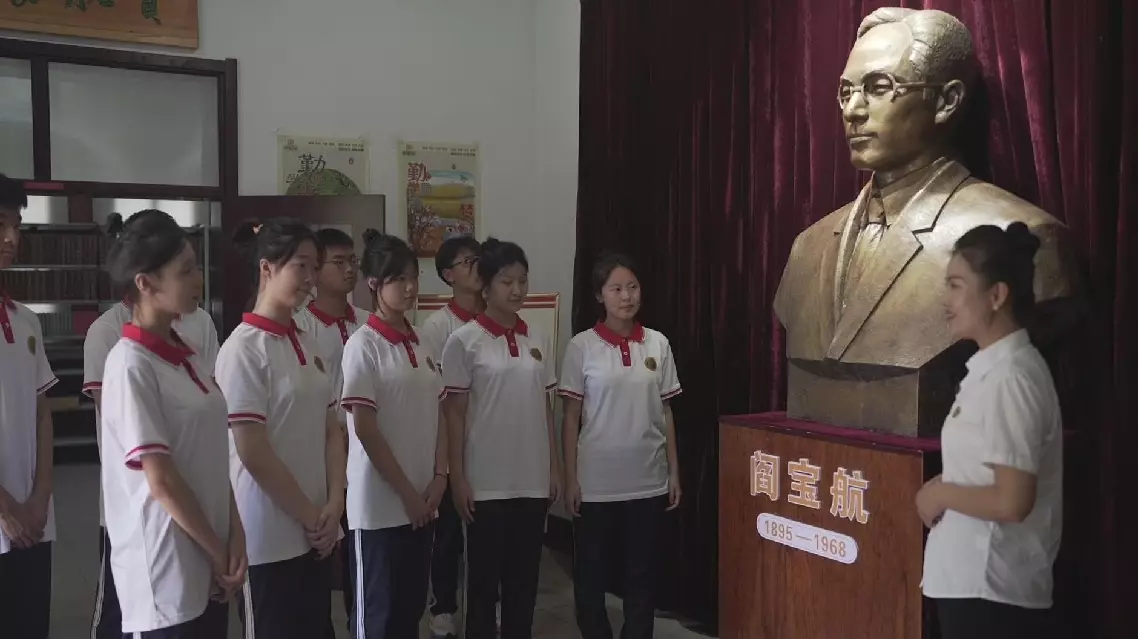
Legendary CPC intelligence agent remembered for great contributions in WWII