Central Asia's largest sports complex, the China-built Olympic City in Tashkent, has officially opened for athlete training, marking a major milestone in China-Uzbekistan cooperation.
Built by China CAMC Engineering, the Olympic City is the first major bilateral project realized since the 2022 Shanghai Cooperation Organization (SCO) Samarkand summit. Spanning 100 hectares with a construction footprint of 100,000 square meters, the complex houses a stadium, swimming hall, velodrome, multipurpose ball games hall, and a contact sports arena.
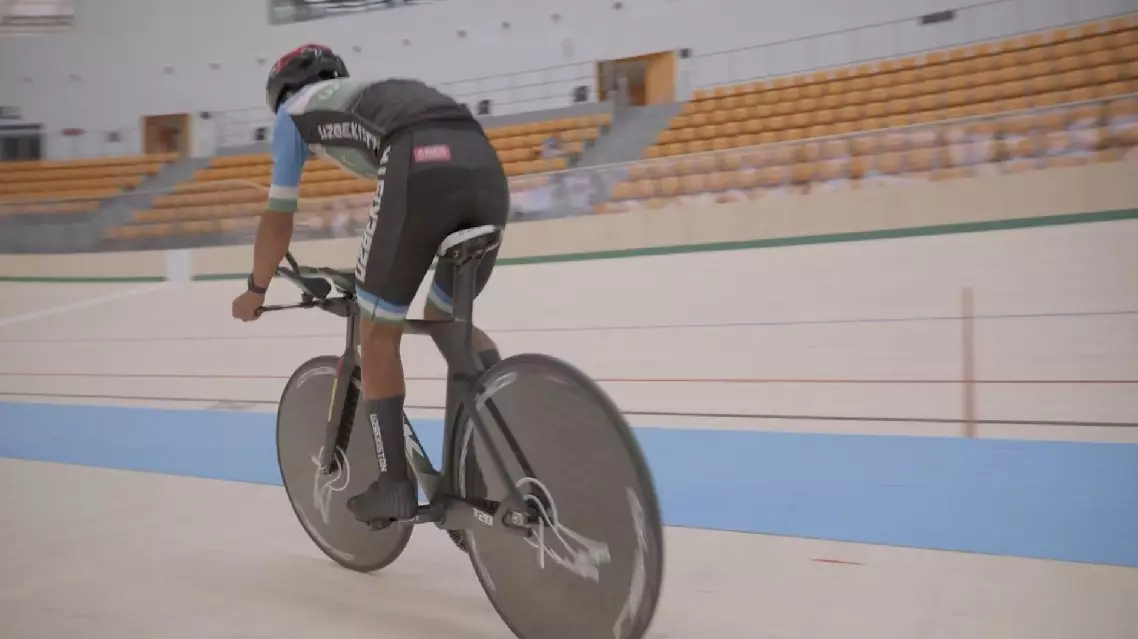
Daniil Fyodorov, a member of Uzbekistan's national track cycling team with seven years of professional experience, said training in a venue like the new velodrome has long been a personal dream.
"This is the first venue in Uzbekistan dedicated to professional cycling. We had two concrete tracks before, but training on them was not as fast as riding on this one," said Daniil Fyodorov.
Svetlana Osipova, member of the Uzbekistan national taekwondo team and silver medalist in the women's over 67-kilogram category at the Paris 2024 Olympic Games, will be training in the taekwondo hall to prepare for future Olympics. Now she is getting used to the professional mats installed in the hall.
"We train right here, soaking up the atmosphere in the grand setting, imagining ourselves standing on the official competition stage," she said.
The construction of the Olympic City took about two and a half years to complete and received strong support from the Chinese team.
"This project was designed and constructed according to Chinese standard," said Guo Zijie, project manager of the Olympic City.
A construction project of this scale usually takes four to five years to complete. However, in Uzbekistan, with the technical expertise of Chinese specialists, the project was delivered in a record time of less than three years.
"The Chinese team performed excellently -- they worked efficiently and delivered high-quality results. A high-standard project like this isn't something I get to be part of often. In the future, I can proudly tell my children that I contributed to this project," said a painter named Igor.
"Chinese projects are the most cost-effective with short construction time and high quality," said Shahrillo Mahmudov, deputy minister of sports of Uzbekistan.
As a national key construction project of Uzbekistan, the Olympic City will be open to all residents in the future. Many local residents have expressed their anticipation.
"This project is truly remarkable because so many of my close friends, relatives, and siblings are involved in sports," said a Tashkent resident.
They believe that building the Olympic City with Chinese team is of great significance to Uzbekistan.
"We sincerely thank China -- not only for building such a large facility with us, but also for sharing construction techniques with our engineers," said another resident.
"I can say I'm very proud that we can collaborate with China, and that China has chosen to work alongside us. This honor is truly meaningful," another local resident added.
Uzbek athletes begin training at China-built Olympic City in Tashkent