Skip to Content Facebook Feature Image

A Chinese student was questioned for hours in the US, then sent back even as Trump policies shift

News

A Chinese student was questioned for hours in the US, then sent back even as Trump policies shift
News

News

A Chinese student was questioned for hours in the US, then sent back even as Trump policies shift

2025-08-31 12:01 Last Updated At:12:10

WASHINGTON (AP) — The 22-year-old philosophy student from China did not expect any problems after his 29-hour flight arrived at a Texas airport this month as he was on his way to study at the University of Houston.

His paperwork was in order. He was going to study humanities — not a tech field that might raise suspicions. He had a full scholarship from the U.S. school and had previously spent a semester at Cornell University for an exchange program with no issues.

But the student, who asked to be identified only by his family name, Gu, because of the political sensitivities of the matter, was stopped, interrogated and 36 hours later, put on a plane back to China.

He also was banned from coming back for five years, abruptly halting his dream for an academic career in the United States.

“There is no opportunity for the life I had expected,” Gu said.

He is one of an unknown number of Chinese students with permission to enter the United States who have been sent back to China or faced intense questioning after their arrival, drawing strong protests from Beijing and showing the uncertainty from President Donald Trump's shifting policies.

His administration has quickly pivoted from a plan to revoke visas for Chinese students to Trump himself saying he would welcome hundreds of thousands of them, partly to help keep some American schools afloat.

Even so, some officials and lawmakers have expressed suspicions about Chinese students, especially those who study advanced technologies such as quantum computing and artificial intelligence, and their possible links to the Chinese government and military. Some lawmakers want to ban Chinese students altogether.

There's no immediate data available on how many Chinese students with valid visas have been interrogated and repatriated from U.S. airports in recent weeks. U.S. Customs and Border Protection did not respond to a request for that data or for comment on Chinese students being questioned or sent back.

In recent days, Trump said he told Chinese President Xi Jinping that “we’re honored to have their students here.” But he also added, “Now, with that, we check and we’re careful, we see who is there.”

The Chinese Embassy said it has received reports involving more than 10 Chinese students and scholars being interrogated, harassed and repatriated when entering the U.S.

“The U.S. side has frequently carried out discriminatory, politically driven and selective law enforcement against Chinese students and scholars, inflicting physical and mental harm, financial losses, and disruptions to their careers,” the Chinese Embassy said in a statement.

They were repatriated under the pretext of “so-called ‘visa issues’ or ‘might endanger U.S. national security,’” the embassy said.

The students and scholars were taken into small rooms for extended interrogation, repeatedly questioned on issues unrelated to their academic work, and forced to wait long hours in cold rooms without blankets or quilts, the embassy said. Some relied on aluminum foil to keep warm, and some were detained for more than 80 hours, it said.

Such acts by the U.S. side “run counter to the statements” made by Trump, the embassy said, accusing some U.S. departments and law enforcement personnel of not “faithfully acting on the president's commitment.” The White House didn't immediately respond to a request for comment.

Gu told AP that he liked his Cornell experience so much that he applied for a master's program to study philosophy in the U.S.

Despite reports of stricter policies by the Trump administration, Gu said he wasn't too worried, not even when he was first stopped and taken to a room for questioning by a customs officer after landing at George Bush Intercontinental Airport in Houston. His belongings were searched, and his electronics were taken away, he said.

After the officer went through the devices, he started interrogating Gu, focusing on his ties to the Chinese Communist Party, Gu said.

He said his parents are party members, but he has never joined, though he — like nearly all Chinese teens and young people — is a member of the party's youth arm, the Communist Youth League.

The customs officer also grilled him on his connections to the governmental China Scholarship Council, which popped up in his chat history. Gu said it came up in his chats with his schoolmates, but he did not receive money from the Chinese government.

Three rounds of interrogation lasted 10 hours, before Gu was told he was to be deported. No specific reason was given, he said, and the removal paperwork he provided to AP indicated inadequate documentation.

By then, he had hardly slept for 40 hours. The waiting room where he was kept was lit around the clock, its room temperature set low.

“I was so nervous I was shaking, due to both being freezing cold and also the nerves,” Gu said. “So many things were going through my head now that I was being deported. What should I do in the future?”

It would be another day before he was put on a flight. Now, Gu is considering appealing the decision, but that might take years and cost thousands of dollars.

FILE - President Donald Trump speaks during a cabinet meeting, Tuesday, Aug. 26, 2025, at the White House in Washington. (AP Photo/Mark Schiefelbein, File)

FILE - President Donald Trump speaks during a cabinet meeting, Tuesday, Aug. 26, 2025, at the White House in Washington. (AP Photo/Mark Schiefelbein, File)

President Donald Trump walks at the Trump National Golf Club in Sterling, Va., Saturday, Aug. 30, 2025. (AP Photo/Manuel Balce Ceneta)
President Donald Trump walks at the Trump National Golf Club in Sterling, Va., Saturday, Aug. 30, 2025. (AP Photo/Manuel Balce Ceneta)
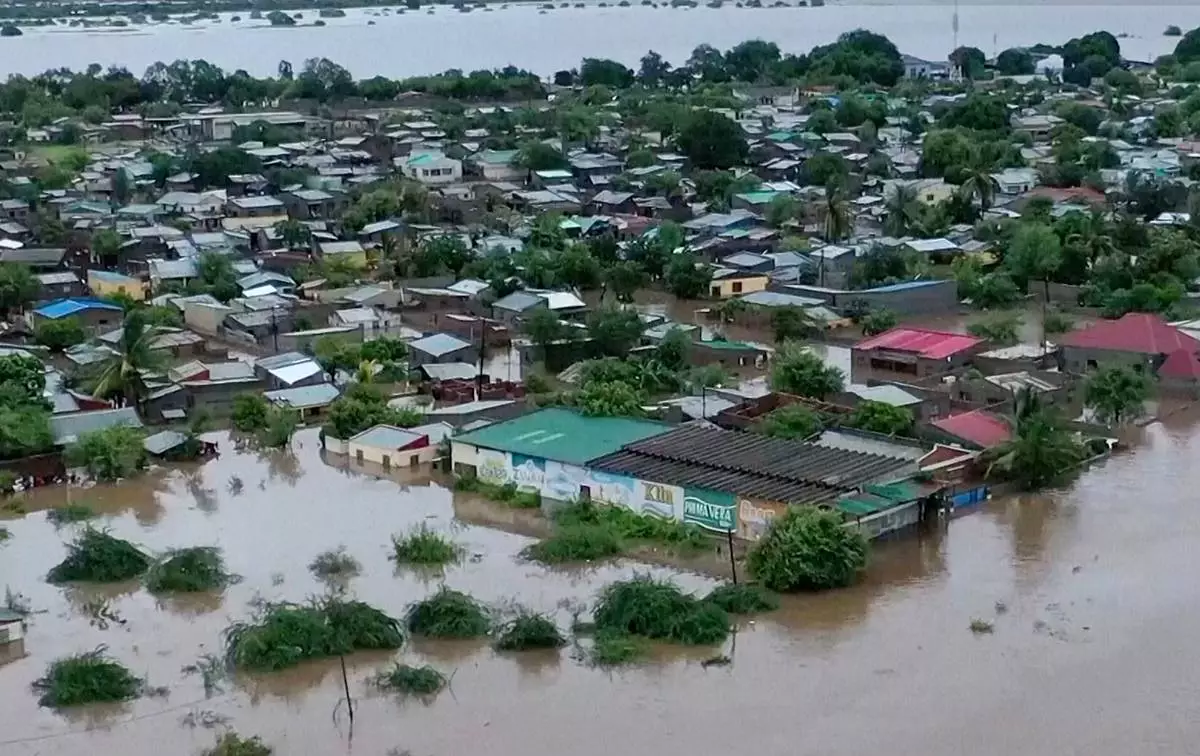
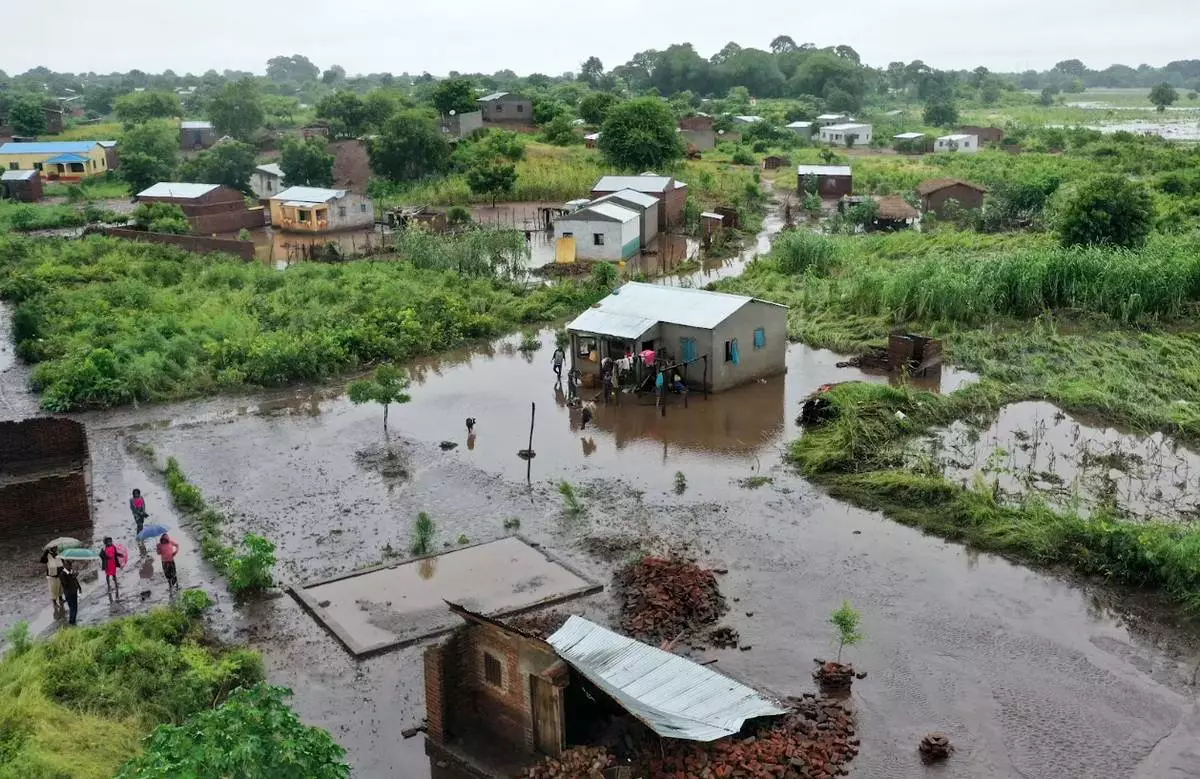
JOHANNESBURG (AP) — Torrential rains and flooding have killed more than 100 people in South Africa, Mozambique and Zimbabwe, and authorities warned Friday that more severe weather was expected across several countries in southern Africa.

South Africa has reported at least 19 deaths in two of its northern provinces following heavy rains that began last month and led to severe flooding.

Tourists and staff members were evacuated this week by helicopter from flooded camps to other areas in the renowned Kruger National Park, which is closed to visitors while parts of it are inaccessible because of washed out roads and bridges, South Africa's national parks agency said.

In neighboring Mozambique, the Institute for Disaster Management and Risk Reduction said 103 people had died in an unusually severe rainy season since late last year. Those deaths were from various causes including electrocution from lightning strikes, drowning in floods, infrastructure collapse caused by the severe weather and cholera, the institute said.

The worst flooding in Mozambique has been in the central and southern regions, where more than 200,000 people have been affected, thousands of homes have been damaged, while tens of thousands face evacuation, the World Food Program said.

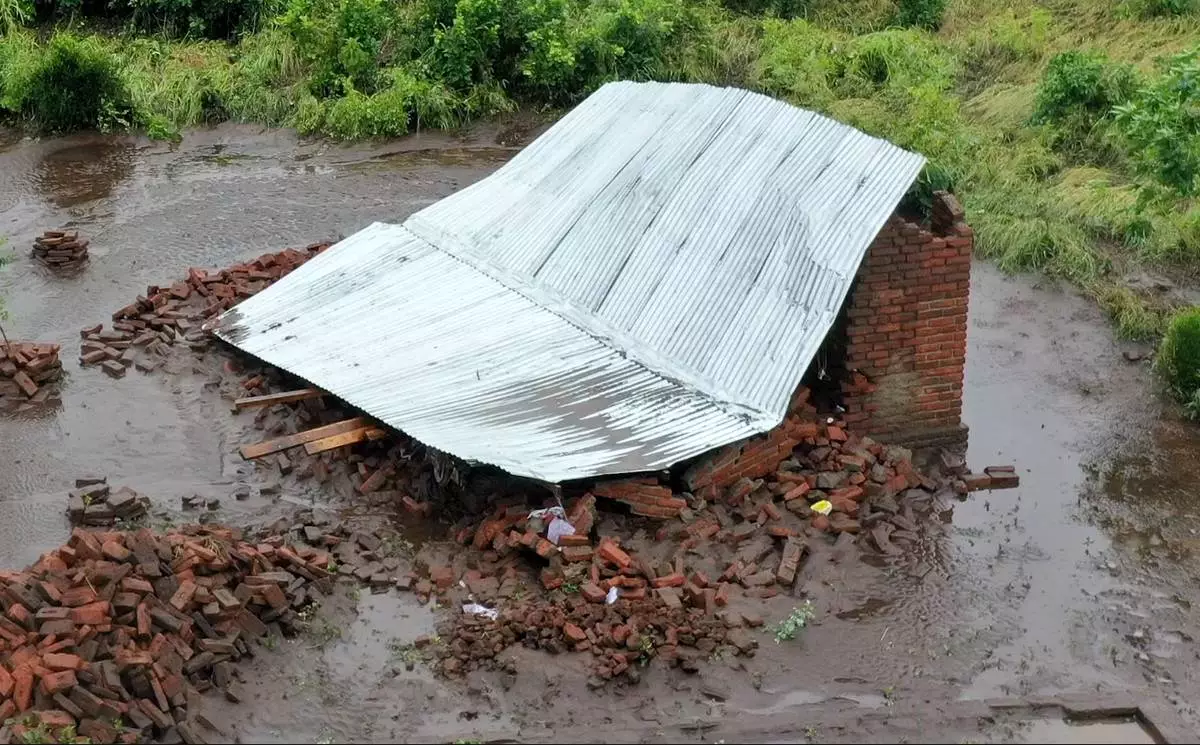
Zimbabwe’s disaster management agency said that 70 people have died and more than 1,000 homes have been destroyed in heavy rains since the beginning of the year, while infrastructure including schools, roads and bridges collapsed.

Flooding has also hit the island nation of Madagascar off the coast of Africa as well as Malawi and Zambia. Authorities in Madagascar said 11 people died in floods since late November.

The United States' Famine Early Warning System said flooding was reported or expected in at least seven southern African nations, possibly due to the presence of the La Nina weather phenomenon that can bring heavy rains to parts of southeastern Africa.

South African President Cyril Ramaphosa visited flood-stricken areas in the northern Limpopo province on Thursday and said that region had received around 400 millimeters (more than 15 inches) of rain in less than a week. He said that in one district he visited “there are 36 houses that have just been wiped away from the face of the Earth. Everything is gone ... the roofs, the walls, the fences, everything.”

The flooding occurred in the Limpopo and Mpumalanaga provinces in the north, and the South African Weather Service issued a red-level 10 alert for parts of the country for Friday, warning of more heavy rain and flooding that poses a threat to lives and could cause widespread infrastructure damage.

The huge Kruger wildlife park, which covers some 22,000 square kilometers (7,722 square miles) across the Limpopo and Mpumalanga provinces, has been impacted by severe flooding and around 600 tourists and staff members have been evacuated from camps to high-lying areas in the park, Kruger National Park spokesperson Reynold Thakhuli said.

He couldn't immediately say how many people there were in the park, which has been closed to visitors after several rivers burst their banks and flooded camps, restaurants and other areas. The parks agency said precautions were being taken and no deaths or injuries had been reported at Kruger.

The South African army sent helicopters to rescue other people trapped on the roofs of their houses or in trees in northern parts of the country, it said. An army helicopter also rescued border post officers and police officers stranded at a flooded checkpoint on the South Africa-Zimbabwe border.

Southern Africa has experienced a series of extreme weather events in recent years, including devastating cyclones and a scorching drought that caused a food crisis in parts of a region that often suffers food shortages.

The World Food Program said more than 70,000 hectares (about 173,000 acres) of crops in Mozambique, including staples such as rice and corn, have been waterlogged in the current flooding, worsening food insecurity for thousands of small-scale farmers who rely on their harvests for food.

Imray reported from Cape Town, South Africa. AP writers Charles Mangwiro in Maputo, Mozambique, and Farai Mutsaka in Harare, Zimbabwe, contributed to this report.

AP Africa news: https://apnews.com/hub/africa

This image made from video shows the scene after flooding in Tete Province, Mozambique, Thursday, Jan. 15, 2026. (AP Photo)

This image made from video shows the scene after flooding in Tete Province, Mozambique, Thursday, Jan. 15, 2026. (AP Photo)

This image made from video shows the scene after flooding in Tete Province, Mozambique, Thursday, Jan. 15, 2026. (AP Photo)

This image made from video shows the scene after flooding in Tete Province, Mozambique, Thursday, Jan. 15, 2026. (AP Photo)

This image made from video shows the scene after flooding in Tete Province, Mozambique, Thursday, Jan. 15, 2026. (AP Photo)

This image made from video shows the scene after flooding in Tete Province, Mozambique, Thursday, Jan. 15, 2026. (AP Photo)

Recommended Articles