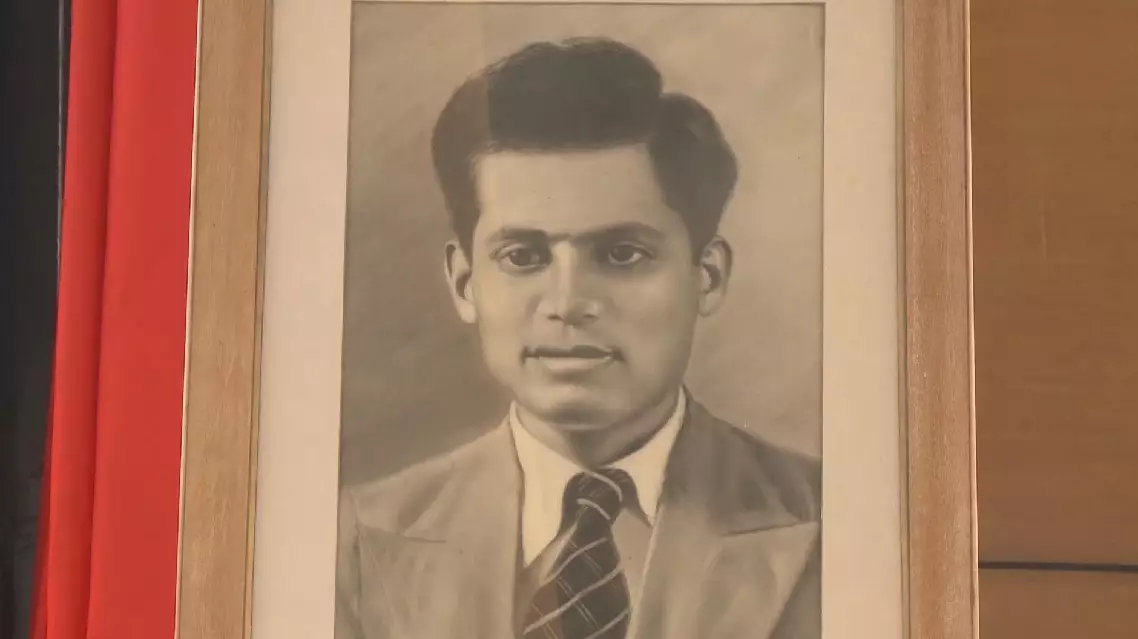
The family of Dr. Dwarkanath Kotnis, a young Indian physician who was devoted to aiding Chinese victims during World War II, have been invited to attend China's V-Day commemorations in Beijing and have vowed to carry forward the internationalist spirit he displayed.
A grand military parade is scheduled to be held in Beijing's Tian'anmen Square on September 3 to mark the 80th anniversary of the victory in the Chinese People's War of Resistance Against Japanese Aggression and the World Anti-Fascist War.
As the event reflects on the atrocities and recalls the sacrifices made during the war, the story of Dr. Kotnis stands as testament to the bravery and unity of those who came together during the darkest times.
In 1938, Dr. Kotnis arrived in China along with other four Indian doctors to provide medical assistance during China's of Resistance Against Japanese Aggression.
They gave themselves Chinese names upon arriving, each containing the character "Hua", meaning China, symbolizing their determination to fight alongside the Chinese people. Kotnis' Chinese name was Ke Dihua.
Over the course of four difficult years, he tirelessly treated wounded soldiers and civilians on the frontlines, and was seen risking his life to save others while working for consecutive days and nights.
Dr. Kotnis also authored medical textbooks and taught students in Chinese after being appointed director of an international hospital.
However, in 1942, he tragically died in the northern Hebei Province at the age of just 32. He was laid to rest in China, where his devotion to the cause of justice has always been remembered.
Dr. Kotnis's niece, Sumangala Borkar, who resides in New Delhi, said that members of her family are proud to be invited to attend the grand 80th anniversary commemoration in Beijing while they continue to cherish the memory of their late relative.
"We are honored that our son and his family got the opportunity to be a part of a delegation visiting China, to see various places in China where Dr. Kotnis had worked and laid down his life," said Borkar.
Borkar emphasized that the family remains committed to carrying forward Dr. Kotnis's internationalist spirit and dedication, and hope others can follow his example to build a better world.
"We should learn from Dr. Kotnis' international spirit and his selfless service for humanity. Nations should make efforts to embrace peace and harmony, have compassion and should resolve their conflicts in a friendly manner. Only then the world would be a better place," she said.
Family of doctor who came to China's aid in WWII set to attend V-Day parade
The three astronauts of China's recently-returned Shenzhou-20 mission on Friday shared the experiences of their dramatic 204-day space mission, including detailing the emergency procedures which were implemented to bring them safely home after their return capsule was struck by space debris.
The trio -- Chen Dong, Chen Zhongrui, and Wang Jie -- met with the press in Beijing on Friday afternoon, marking their first public appearance since returning to Earth in November.
When detailing the emergency response mechanisms which were enacted prior to their scheduled return, the astronauts explained that upon discovering a triangular crack on the spacecraft's viewport window, they immediately took photos for documentation and transmitted them to the ground team, who swiftly activated an emergency plan to get the trio home safely.
Experienced mission commander Chen Dong explained how the crew had complete faith in their colleagues on the ground to find a solution to these unforeseen circumstances which led to their return being delayed.
"First, we must trust the ground team, who would anticipate everything and develop the safest return plan for us. Second, we must believe in ourselves; as well-trained astronauts, we have the ability to manage various unexpected failures. I believe that with the collaboration of astronauts and researchers on the ground, our space home will surely go farther, more steadily, and for a longer time," he said.
Following their extended stay in space as a result of the debris incident, the Shenzhou-20 crew spent a total 204 days in orbit, setting a new record for the longest duration by a single group of Chinese astronauts.
During their mission, they completed multiple payload operations, conducted extensive scientific experiments, and carried out four extravehicular activities.
"Our crew worked together with the ground team in unity and coordination, completing four extravehicular activities, several payload entry and exit tasks, and a large number of scientific experiments. It was a fulfilling yet challenging mission. The path to exploring the heavens is long and arduous, but I firmly believe that China's space missions will succeed," said Chen Zhongrui, a former air force pilot who was making his first spaceflight during the mission.
"From the ground to space, from learning to application, I have deeply felt the solid progress of Chinese space endeavors and the quiet dedication of countless personnel behind the scenes. In the future, I will accomplish each mission with full commitment, living up to the trust of the motherland and the people," said fellow astronaut Wang Jie, who was also making his debut spaceflight.
After returning to Earth on Nov 14, the trio successfully completed their isolation recovery and rehabilitation and will now resume normal training following health assessments.
The crew's return, originally scheduled for Nov 5, was postponed due to safety concerns, with the astronauts later using the return capsule belonging to their successor crew of the Shenzhou-21 mission to get back to Earth. China later launched the unmanned Shenzhou-22 spacecraft which will serve the future return of the crew now aboard the Tiangong Space Station.
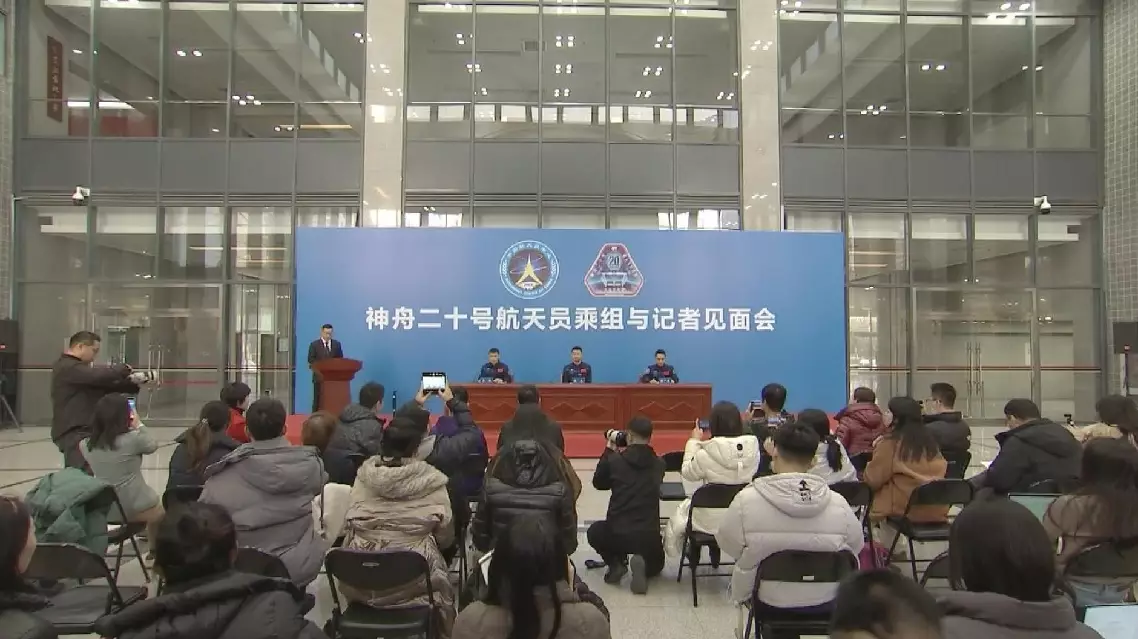
Shenzhou-20 astronauts share experiences after safely returning from debris incident