LUSAKA, Zambia (AP) — A Chinese-owned mining company has been accused of covering up the extent of a disastrous toxic spill in Zambia that polluted a major river that millions rely on with cyanide and arsenic.
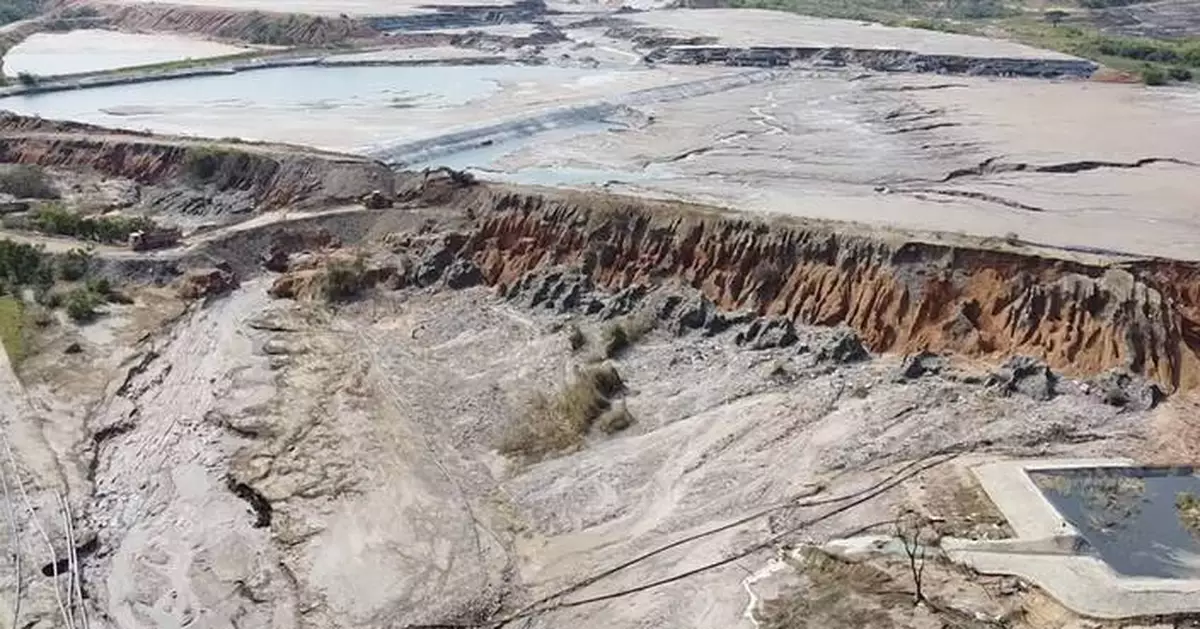
The spill happened in February when part of a dam that held waste from the Sino-Metals Leach Zambia copper mine collapsed, allowing it to flow into the Kafue River that runs through the heart of Zambia. Sino-Metals Leach Zambia is a subsidiary of the state-run China Nonferrous Metal Mining Group.
An environmental cleanup company says that it was contracted by Sino-Metals Leach Zambia to investigate the accident. It said its two-month investigation found that the disaster resulted in the release of 1.5 million tons of toxic material — at least 30 times more than Sino-Metals admitted at the time.
The South Africa-based environmental company Drizit said it submitted preliminary reports to Sino-Metals “indicating the severity of the pollution,” but Sino-Metals then terminated its contract one day before the final report was due.
Sino-Metals said in a statement to The Associated Press that it terminated the contract because of "contractual breaches" by Drizit and the Zambian government was looking for a new company to conduct a fresh investigation. Sino-Metals disputed the accuracy of Drizit's findings.
The accident happened on Feb. 18 at a mine near the northern city of Kitwe, the second biggest city in Zambia and home to around 700,000 people. The city's water supply was temporarily shut down because of the spill.
Toxic waste flowed into waterways that connect to the Kafue River, killing fish at least 100 kilometers (62 miles) downstream. More than half of Zambia's 21 million people rely on the Kafue for drinking water or to irrigate crops.
Zambian President Hakainde Hichilema called for help from experts and described the accident as a crisis. Authorities in the southern African country said the “devastating consequences” included the pollution of the river, the destruction of crops along its banks and the contamination of groundwater.
Sino-Metals Leach Zambia apologized and said they would help with the cleanup. The Zambian government deployed the air force and speedboats to drop hundreds of tons of lime into the river in an attempt to counteract the acid waste and roll back the damage.
The government later said the situation had been brought under control, the water quality was returning to normal, and there was no cause for alarm.
However, the U.S. Embassy in Zambia said last month it was ordering all U.S. government personnel out of the area near the mine because of new information that revealed “hazardous and carcinogenic substances” in the environment.
Drizit claims the toxic spill was much worse than Sino-Metals Leach Zambia and authorities conceded.
Drizit said in a statement that its investigators took more than 3,500 samples for analysis and they showed dangerous levels of cyanide, arsenic, copper, zinc, lead, chromium, cadmium and other pollutants “posing significant long-term health risks, including organ damage, birth defects, and cancer.”
It said 900,000 cubic metres of toxic substances were still present in the environment and a proper cleanup operation was required to ensure people aren't at risk for decades. Drizit's full report has not been released publicly.
China is the dominant player in copper mining in Zambia, which is among the world’s top 10 copper-producing countries. Chinese investment is key to Zambia's aim to increase its production to three million tons per year by 2031 to match the new demand for copper for use in electric vehicle technology and batteries.
Copper prices have hit record highs this year, while China is the biggest importer of the vital metal.
Imray reported from Cape Town, South Africa.
AP Africa news: https://apnews.com/hub/africa
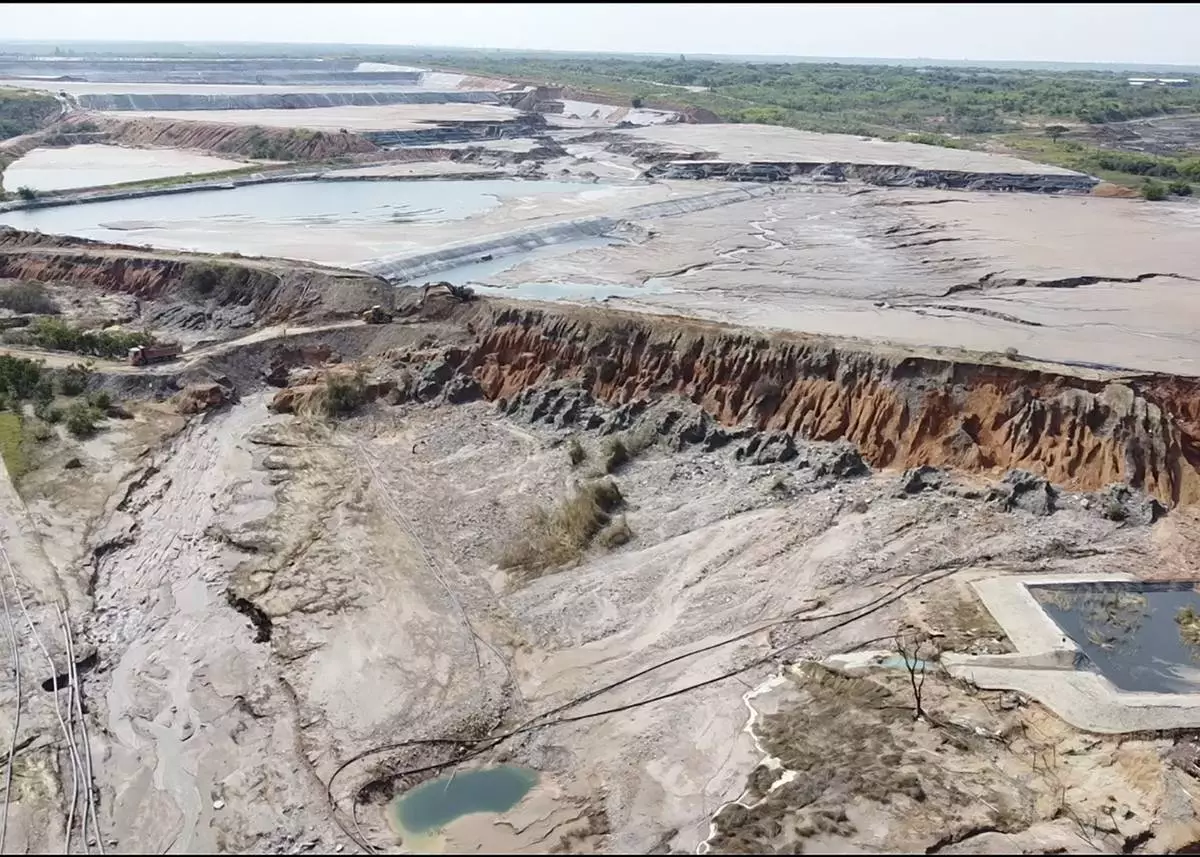
FILE - This image taken from video Wednesday, Feb. 19, 2025, shows a breach at a tailing dam at a Sino-Metals Leach Zambia mine near Kitwe. (AP Photo/Richard Kille, file)
KAMPALA, Uganda (AP) — Ugandan President Yoweri Museveni won his seventh term with 71.65% of votes, according to official results Saturday, in an election marred by internet shutdown and fraud claims by his youthful challenger, who rejected the outcome and called for peaceful protests.
The musician-turned-politician best known as Bobi Wine took 24.72% of the vote, the final results showed. Wine, whose real name is Kyagulanyi Ssentamu, has condemned what he described as an unfair electoral process and alleged abductions of his polling agents. He said he had rejected the “fake results” and urged Ugandans to peacefully protest until the “rightful results are announced.”
Wine said he had to escape to avoid arrest by security forces who stormed his house Friday night. His party said earlier he was forcefully taken away in an army helicopter but police denied it.
Police spokesperson Kituuma Rusoke said Wine was “not under arrest” and was free to leave his house, but there was “controlled access” for others trying to go into the property to prevent people from using the premises to incite violence.
Electoral officials face questions about the failure of biometric voter identification machines on Thursday, which caused delays in the start of voting in urban areas — including the capital, Kampala — that are opposition strongholds.
After the machines failed, in a blow to pro-democracy activists who have long demanded their use to curb rigging, polling officials used manual registers of voters. The failure of the machines is likely to be the basis for any legal challenges to the official result.
Museveni said he agreed with the electoral commission’s plan to revert to paper voter registration records after the biometric machines failed, but Wine alleged fraud, claiming that there was “massive ballot stuffing” and that his party’s polling agents were abducted to give an unfair advantage to the ruling party.
Museveni, 81, has stayed in power over the years by rewriting the rules. The last legal obstacle to his rule – term and age limits – have been removed from the constitution, and some of Museveni’s possible rivals jailed or sidelined. He has not said when he will retire.
Yusuf Serunkuma, an academic and columnist for the local Observer newspaper, told The Associated Press on Saturday that Wine “didn’t stand a chance” against the authoritarian Museveni. “He has quite successfully emasculated the opposition,” Serunkuma said of Museveni. “You would have to credit him for that.”
Even with Wine’s courageous challenge, Museveni faced “one of the weakest oppositions” in recent times, in part because opposition figures are not united while Museveni is the undisputed leader of his party and enjoys authority over the armed forces, Serunkuma said.
The security forces were a constant presence throughout the election campaign, and Wine said authorities followed him and harassed his supporters, using tear gas against them. He campaigned in a flak jacket and helmet due to his security fears.
Uganda has not witnessed a peaceful transfer of presidential power since independence from British colonial rule six decades ago.
Veteran opposition figure Kizza Besigye, a four-time presidential candidate, remains in prison after he was charged with treason in February 2025.
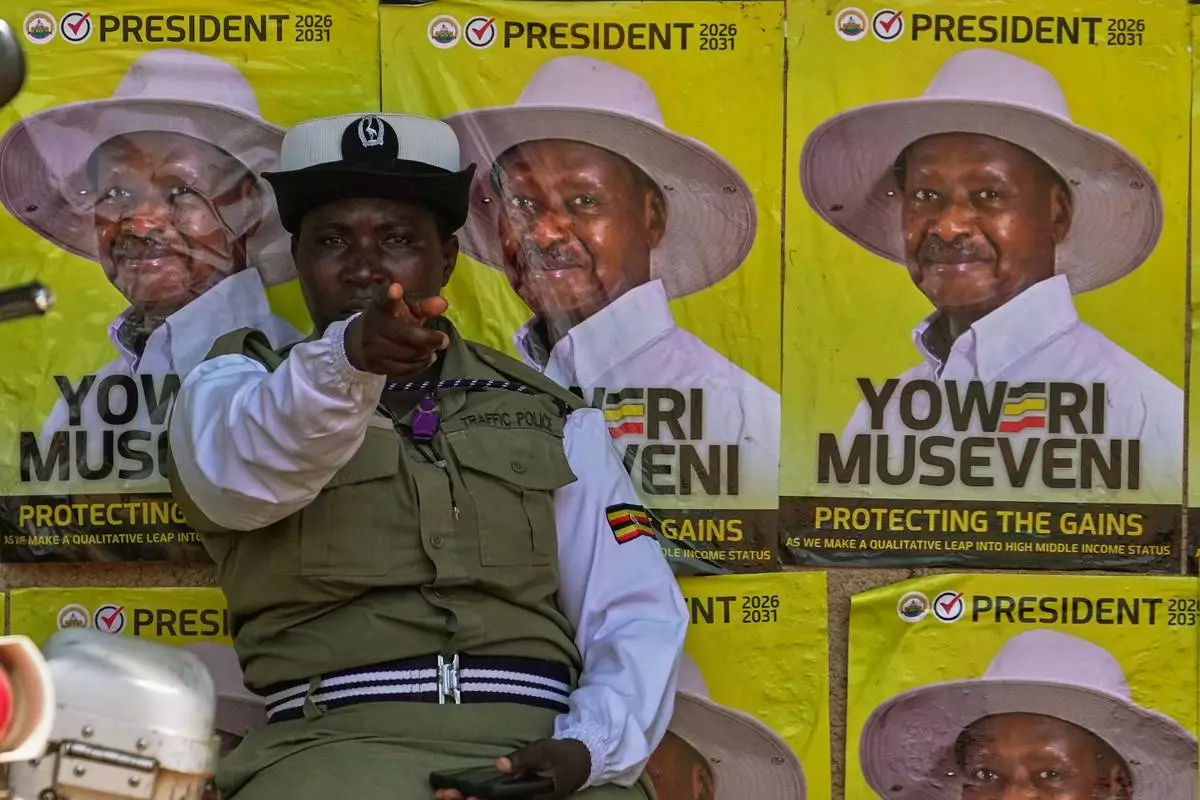
A traffic police officer sits in front of campaign posters of President Yoweri Museveni, the National Resistance Movement (NRM) presidential candidate, during the general election, in Kampala, Uganda, Thursday, Jan. 15, 2026. (AP Photo/Brian Inganga)
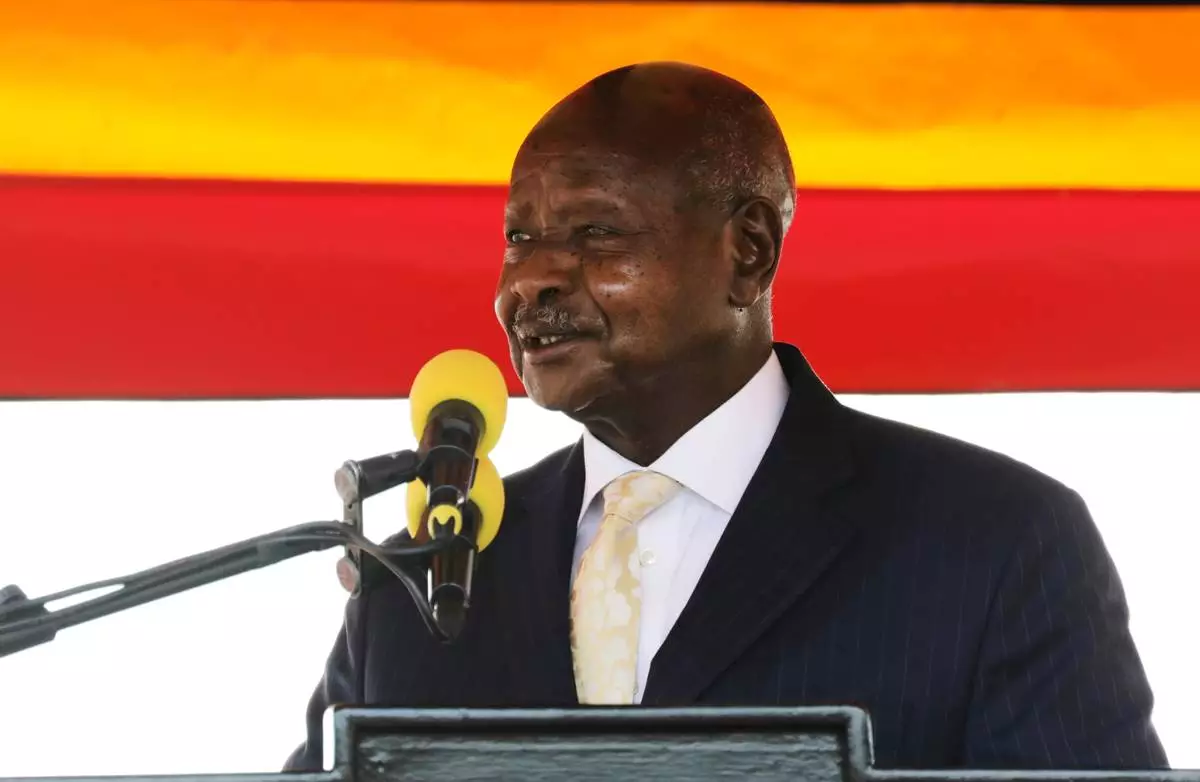
FILE - Ugandan President Yoweri Museveni speaks during the 60th Independence Anniversary Celebrations, in Kololo, Uganda, Sunday Oct. 9, 2022. (AP Photo/Hajarah Nalwadda, file)
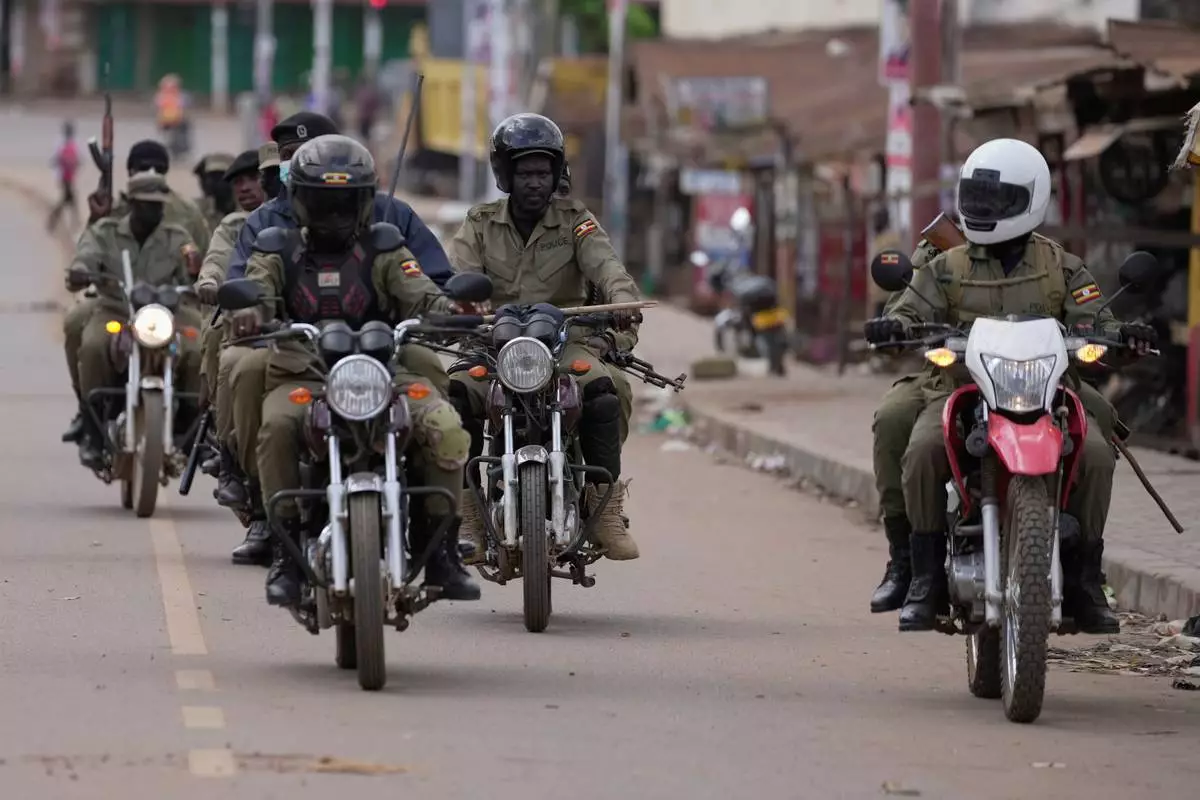
Uganda's security forces patrol a street during protests following the announcement of the preliminary results in Kampala, Uganda, Friday, Jan. 16, 2026. (AP Photo/Brian Inganga)
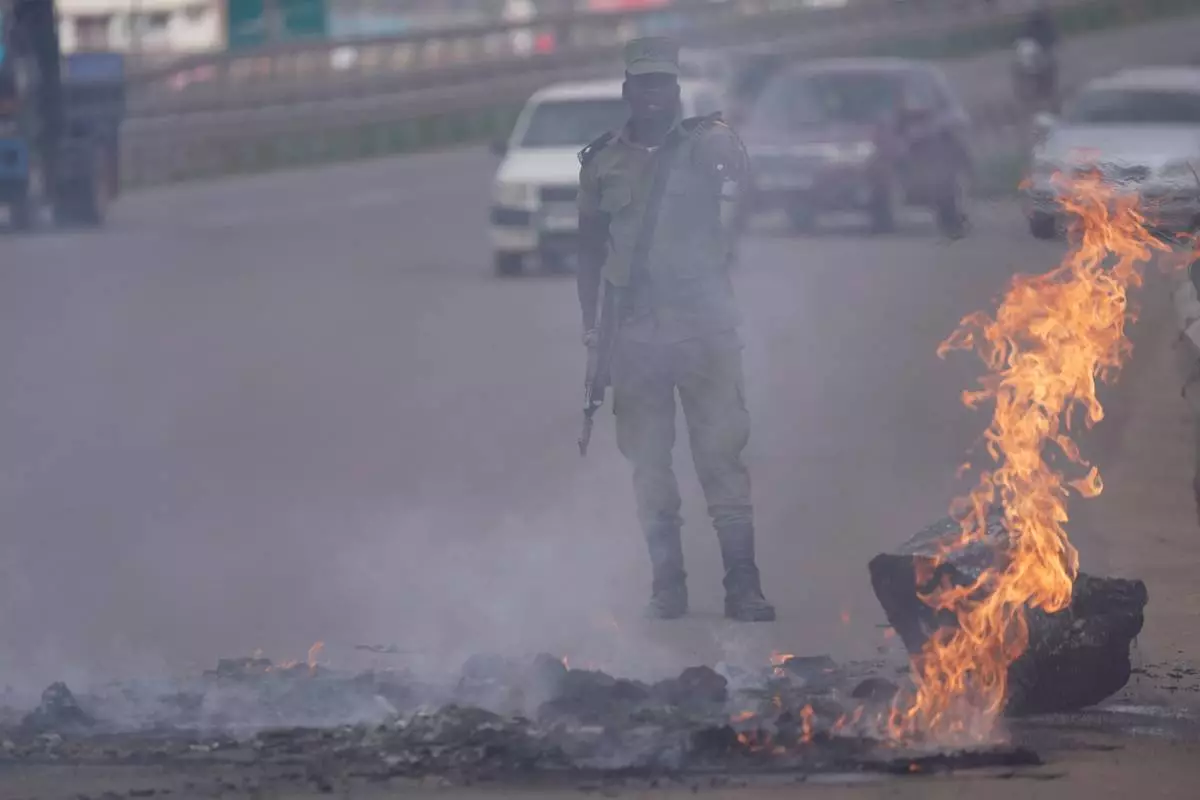
A Ugandan police officer makes a gesture behind a burning fire amid protests following the announcement of the preliminary results in Kampala, Uganda, Friday, Jan. 16, 2026. (AP Photo/Brian Inganga)
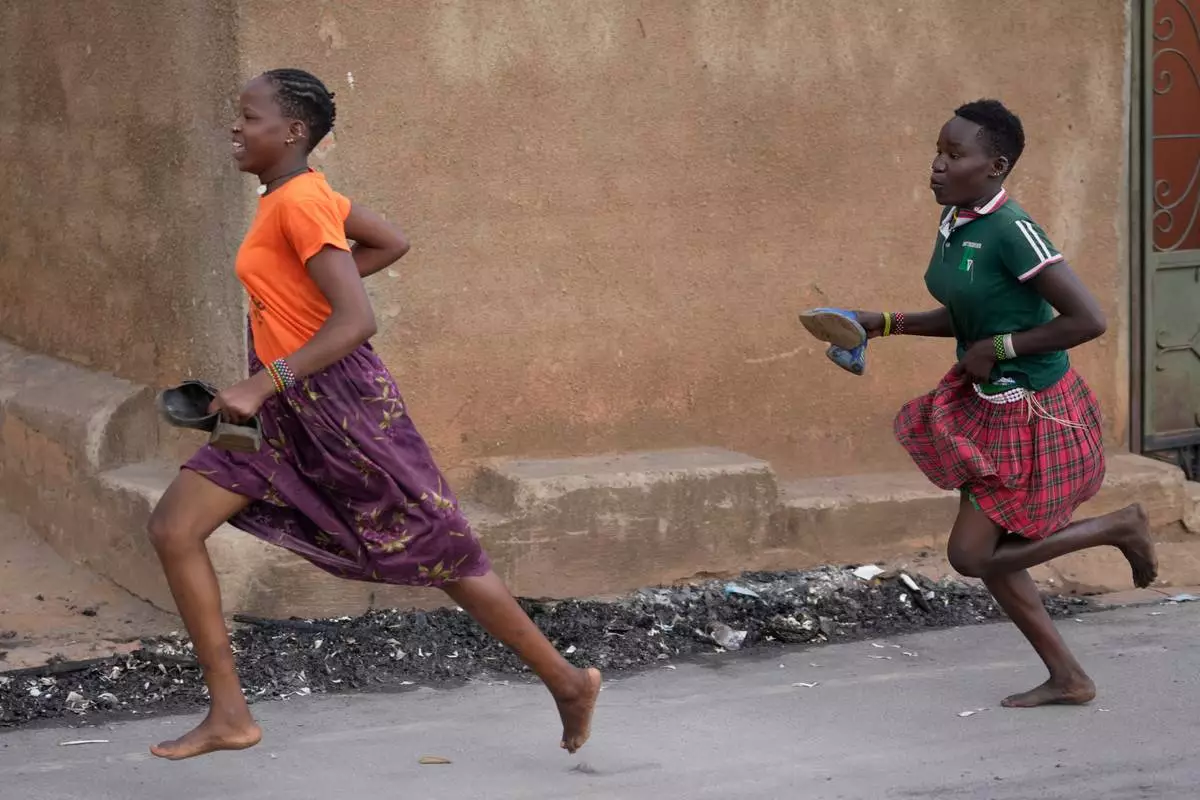
Girls run during protests following the preliminary results in Kampala, Uganda, Friday, Jan. 16, 2026. (AP Photo/Brian Inganga)