Chinese Foreign Minister Wang Yi on Monday highlighted a series of outcomes achieved at the just-concluded Shanghai Cooperation Organization (SCO) Summit 2025 held in the northern Chinese port city of Tianjin.
The largest-ever SCO summit since its establishment in 2001 was attended by leaders of more than 20 countries and heads of 10 international organizations.
Chinese President Xi Jinping proposed the Global Governance Initiative (GGI) when chairing the "SCO Plus" Meeting of the summit, calling on countries to work in concert for a more just and equitable global governance system.
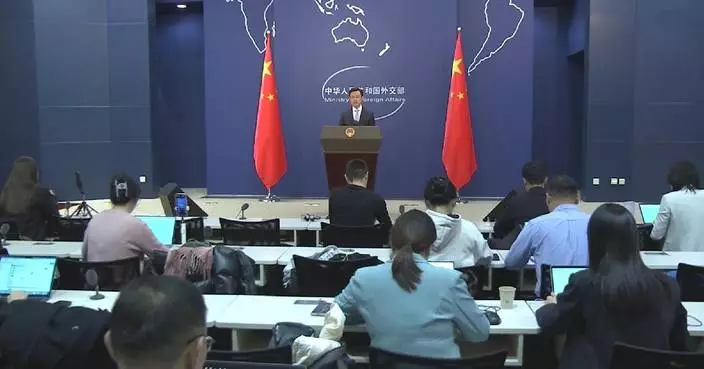
When meeting the press together with SCO Secretary-General Nurlan Yermekbayev on the day, Wang, also a member of the Political Bureau of the Communist Party of China Central Committee, said that the GGI comes at the right time as the world faces challenges on multiple fronts.
He said the five core concepts of the initiative clarify the principles, methods, and paths in reforming and improving global governance, adding that the spirit of the initiative is in line with the purposes and principles of the UN Charter, encouraging countries to participate in global governance reform through multilateral mechanisms such as the United Nations.
The GGI marks the fourth landmark initiative proposed by President Xi in recent years, following the Global Development (GDI), the Global Security Initiative (GSI) and the Global Civilization Initiative (GCI). Wang said that the four initiatives inject stability and certainty into a turbulent world, reflecting China’s active role and sense of responsibility in global affairs.
At the summit held on Sunday and Monday, leaders of the organization's member states adopted 24 documents on strengthening cooperation in sectors such as security, economy, cultural exchanges, and organizational building.
Wang also briefed about the outcomes of the summit at the press meeting.
A development strategy for the SCO in the 2026-2035 period was approved during the summit, setting the tone and direction for the organization’s growth in the next decade, said Wang.
"This overarching strategy clearly states that member states will adhere to the Shanghai Spirit, uphold mutually beneficial cooperation and mutual achievement, and make greater contributions to building a multipolar world. This programmatic document sets the tone and direction for the SCO's development over the next decade," he said.
The summit issued a statement defending the victorious outcomes of World War II, calling on the international community to uphold a correct historical perspective on the war, he said.
In a separate statement, the SCO expressed firm support for the multilateral trading system, he said.
"In the face of a resurgence of unilateral bullying, the summit issued a statement firmly supporting the multilateral trading system with the World Trade Organization (WTO) at its core. It calls for the elimination of unilateral practices that violate WTO rules, sending a clear message of upholding fairness and rejecting hegemony, and voicing a shared commitment to maintaining an open world economy," Wang said.
He also mentioned that four new SCO centers were inaugurated at the event with respective tasks of countering security threats and challenges, tackling transnational organized crimes, improving information security, and strengthening anti-drug cooperation.
The member states also made a decision to establish an SCO development bank, which will greatly boost infrastructure development and economic and social progress among SCO countries, according to Wang.
He noted that China vows to establish new cooperation platforms and centers covering six areas.
"President Xi Jinping announced that China will establish three China-SCO cooperation platforms on energy, green industries, and the digital economy, as well as three cooperation centers on scientific and technological innovation, higher education, and vocational and technical education within the framework of the China-SCO partnership. These platforms and centers aim to provide new opportunities for the SCO by leveraging China's new development, remaining open to all SCO member states, and injecting fresh momentum into regional sustainable development," Wang said.
Action plans were also developed to promote high-quality development, covering fields including energy, green industry, the digital economy, artificial intelligence and technological innovation, he said.
The summit also achieved breakthroughs in the organization's structural reforms, including merging observer states and dialogue partners into SCO partners, and accepting Laos as a partner to make the SCO a 27-nation family, he said.
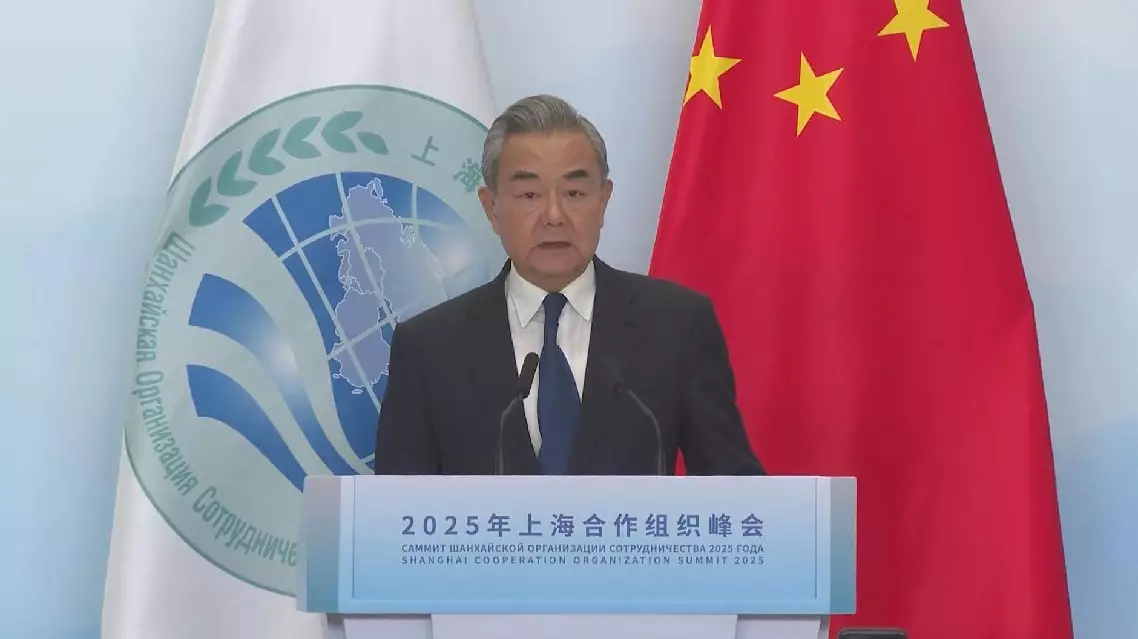
Chinese foreign minister highlights fruitful outcomes of SCO Summit 2025