LA PAZ, Bolivia (AP) — Struck by lightning during a roaring thunderstorm 10 years ago, an ancient pine tree in Bolivia's capital of La Paz is thriving.
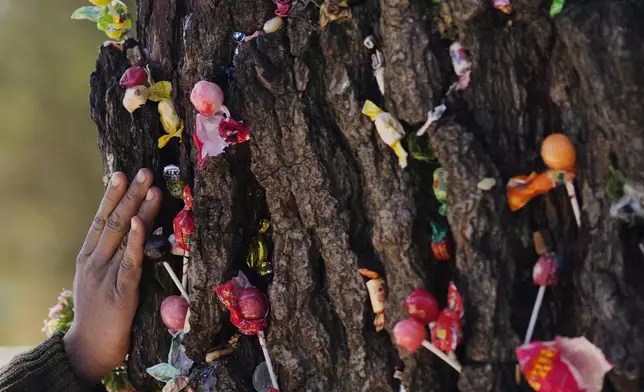
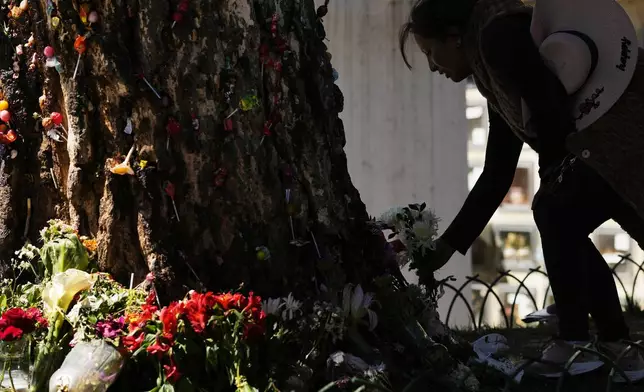
Known as the “miracle tree,” this giant conifer now draws devotees from across the country to La Paz’s largest public cemetery, founded two centuries ago on a pre-Columbian burial plot. Pilgrims stream through the alleys bearing offerings — coins, flowers, sweets, handwritten disclosures of secret wishes — to stuff into bark crevices.
Click to Gallery
A woman prays at a tree that was struck by lightning years ago and has since been considered sacred, at the General Cemetery in La Paz, Bolivia, Sunday, Aug. 31, 2025. (AP Photo/Juan Karita)
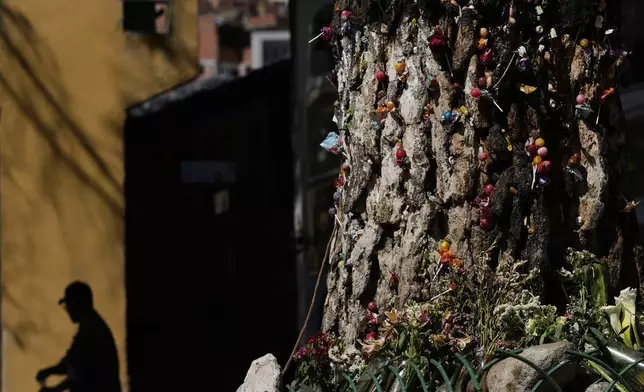
Offerings including candies and flowers left by devotees sit on a tree that was struck by lightning years ago at the General Cemetery and has since been considered sacred in La Paz, Bolivia, Sunday, Aug. 31, 2025. (AP Photo/Juan Karita)
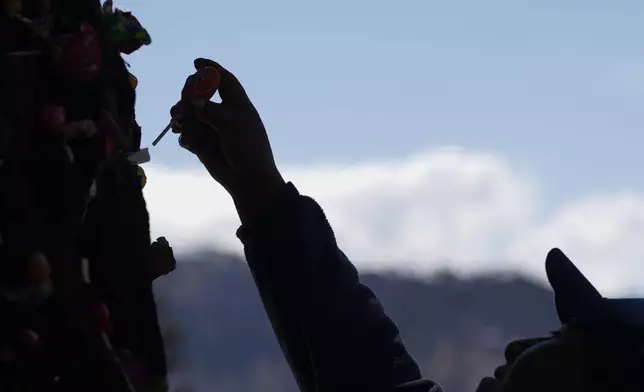
A woman places a lollipop in a tree that was struck by lightning years ago and has since been considered sacred, at the General Cemetery in La Paz, Bolivia, Sunday, Aug. 31, 2025. (AP Photo/Juan Karita)
A woman leaves flowers at a tree that was struck by lightning years ago and has since been considered sacred, at the General Cemetery in La Paz, Bolivia, Sunday, Aug. 31, 2025. (AP Photo/Juan Karita)
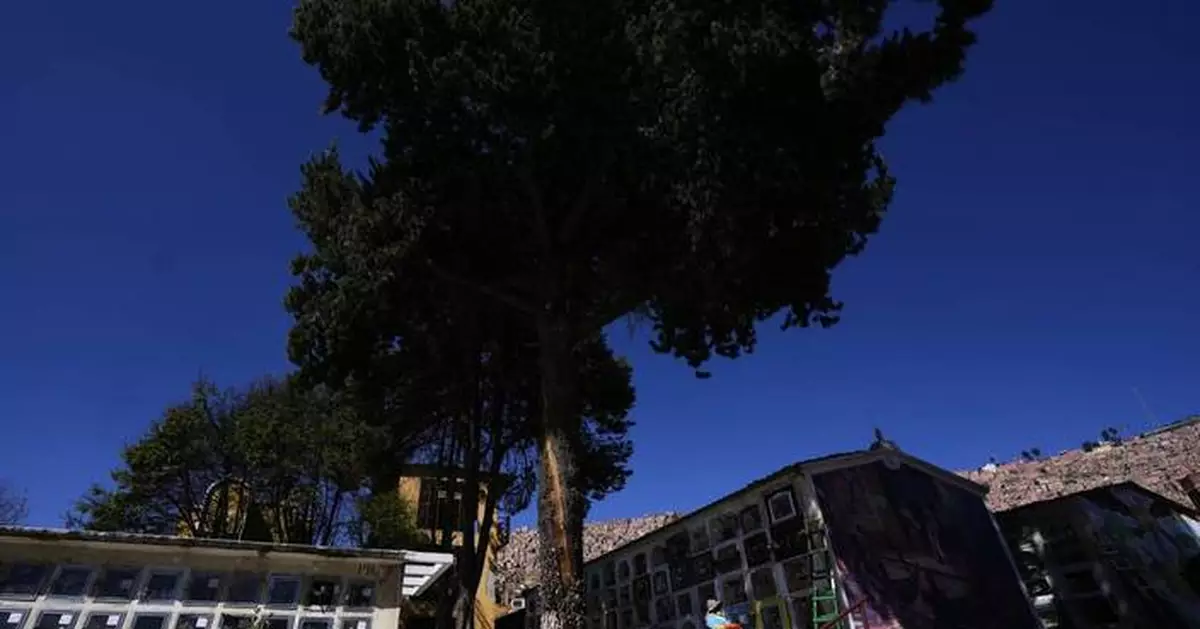
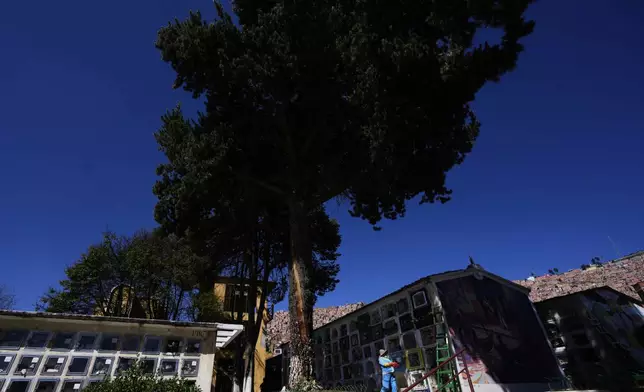
A tree that was struck by lightning years ago, and has since been considered sacred, rises above the General Cemetery in La Paz, Bolivia, Sunday, Aug. 31, 2025. (AP Photo/Juan Karita)
On a chilly afternoon last week during the throes of an election season, pilgrims made their way to the miracle tree through the winding alleys of the cemetery packed with over 200,000 graves, many belonging to decorated soldiers and dignitaries.
As Bolivia is now heralding the end of almost two decades of leftist rule under its first Indigenous president, Evo Morales, and his successor, even electoral drama and economic collapse seemed eclipsed by other concerns for devotees of the miracle tree.
“People ask for love, work, health, children, even to bring back their lost pet,” explained Javier Cordero, who leads funeral prayers at the cemetery. “If the person comes with a lot of faith, the tree will fulfill their wishes.”
Some of the devotees were young, having recently discovered the story of the tree on TikTok.
Others were regulars, older Bolivians long convinced of the tree’s sacred powers, like 79-year-old prayer leader Ricardo Quispe, who was taking refuge beneath the tree’s sheltering limbs when lightning struck on that stormy afternoon a decade ago. He claims the lightning bolt also gave him psychic powers.
Far from pulverizing the tree, the rogue bolt of lightning left a scar on its trunk that now oozes aromatic resin. The towering tree in the La Paz cemetery now appears healthier than ever.
A study probing how certain trees may benefit from lightning strikes — published earlier this year in the journal New Phytologist — offers some scientific basis for this tree’s surprising transformation. But long before such forest ecology studies, Indigenous Aymara shamans in Bolivia believed lightning strikes bestowed divine powers upon their survivors, whether people or trees.
Such rites abound in this Andean nation, where ancient pre-Hispanic beliefs underlay the Catholicism brought by Spanish colonizers.
Yatiris, specialists in divining good luck and performing energy cleansings, fill the streets of La Paz and the neighboring Aymara city of El Alto, selling their services to anyone in need of blessings — from women trying to get pregnant to farmers hoping for healthy crops.
August, a time of transition from winter to spring in the regional agricultural calendar, is an especially busy time for yatiris in Bolivia, Latin America’s only Indigenous-majority country.
Over the course of the month, Bolivians make offerings to Pachamama (Mother Earth), often hiring shamans to perform rituals in their homes and offices and or making pilgrimages to feed the hungry earth and mountain deities at sacred sites and cemeteries like the one in La Paz.
“I know people who have been healed from illnesses, they are the most devout,” Cordero said, touching the trunk of the miracle tree with a copper wire to demonstrate its special energetic charge. Within moments, the wire began to rotate in response.
“The lightning transmits the vital energy of the cosmos,” he said.
The belief in the tree's powers keeps many of its worshippers coming back.
Tania Arce, 60, approached the miracle tree with her arms full of tantalizing chocolates and flowers.
“He likes sweets,” she said, speaking about the tree as if it were her son. “He fulfilled the favor I asked of him, but I haven’t stopped visiting.”
Follow AP’s coverage of Latin America and the Caribbean at https://apnews.com/hub/latin-america
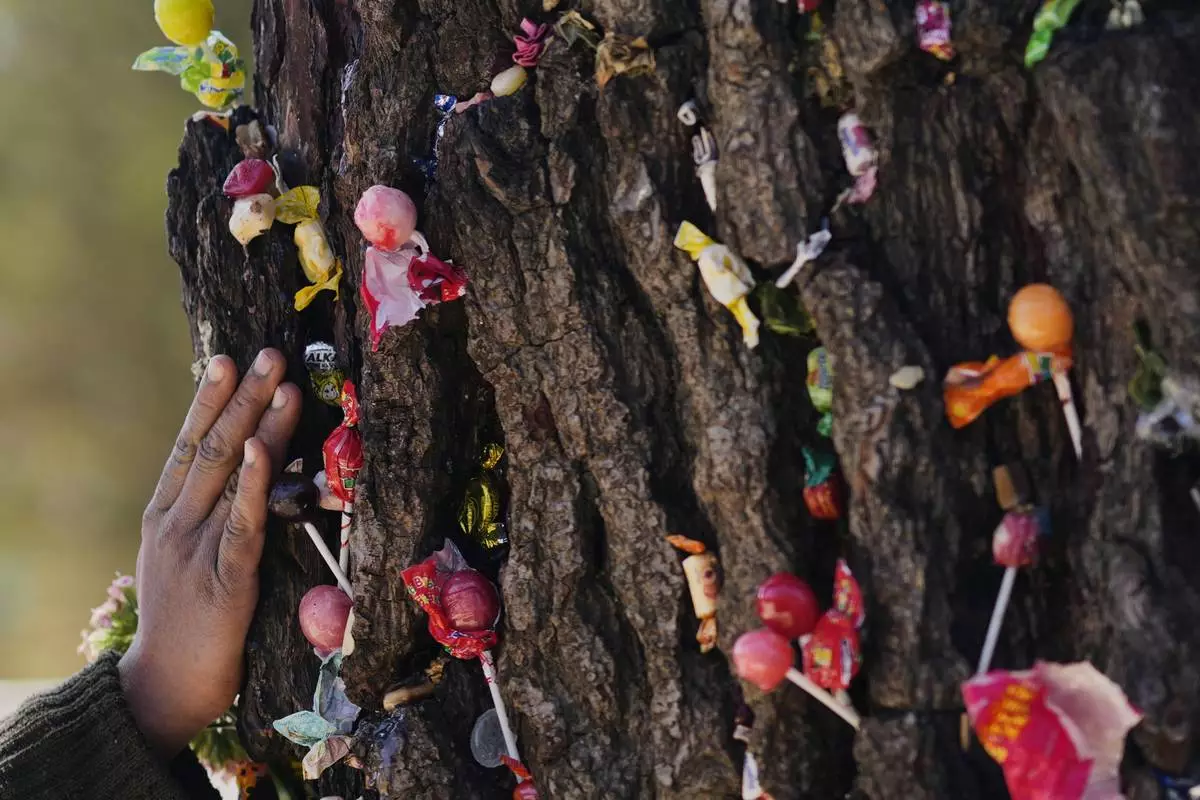
A woman prays at a tree that was struck by lightning years ago and has since been considered sacred, at the General Cemetery in La Paz, Bolivia, Sunday, Aug. 31, 2025. (AP Photo/Juan Karita)
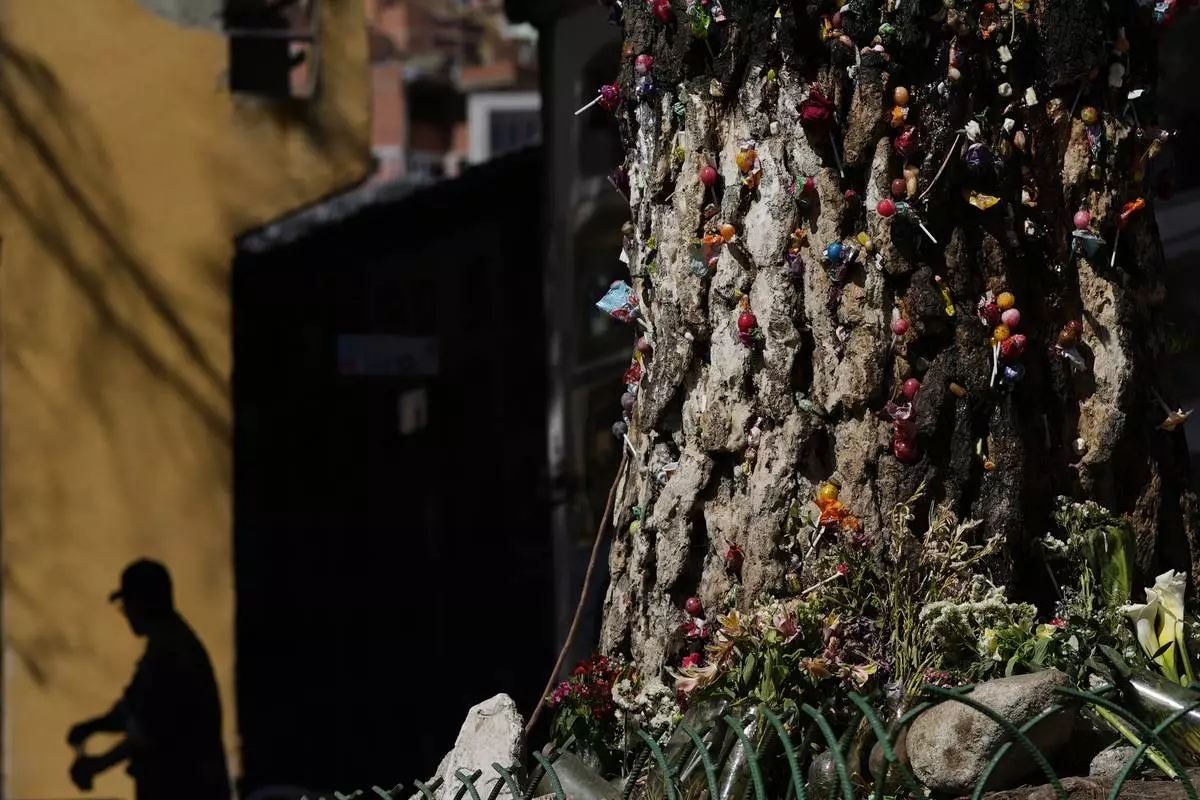
Offerings including candies and flowers left by devotees sit on a tree that was struck by lightning years ago at the General Cemetery and has since been considered sacred in La Paz, Bolivia, Sunday, Aug. 31, 2025. (AP Photo/Juan Karita)
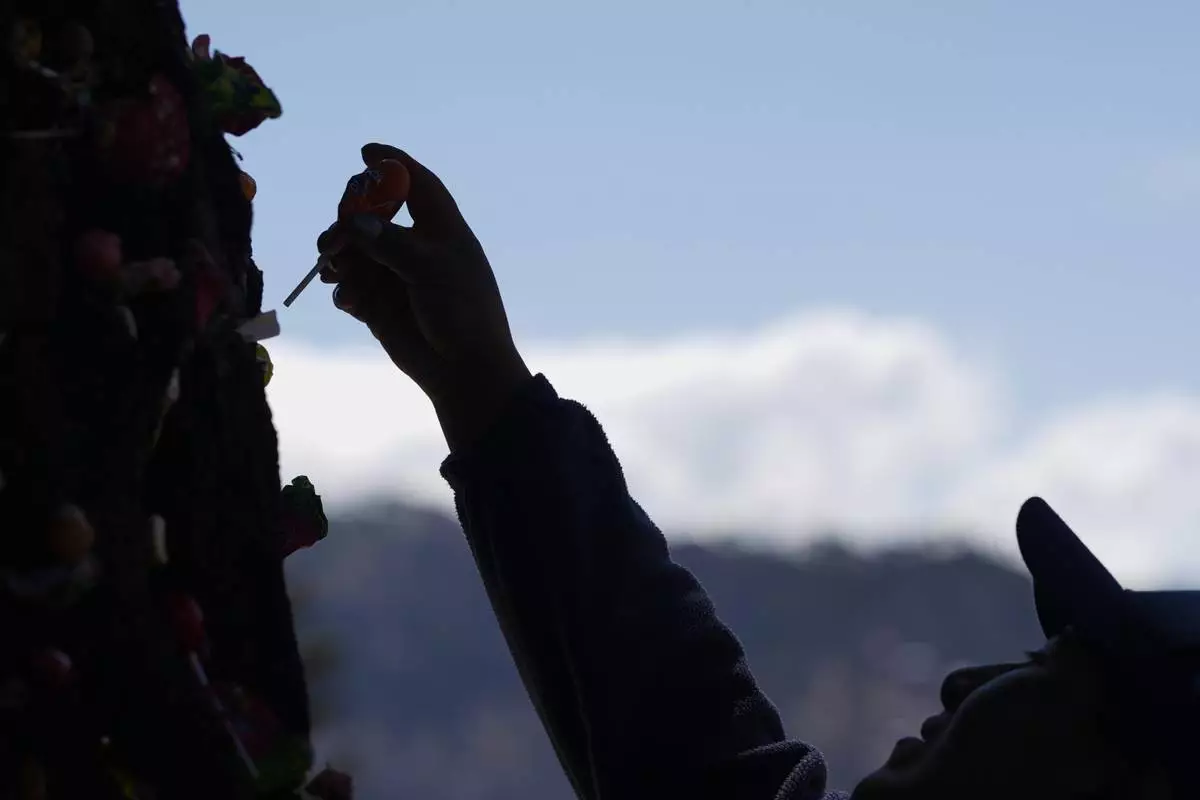
A woman places a lollipop in a tree that was struck by lightning years ago and has since been considered sacred, at the General Cemetery in La Paz, Bolivia, Sunday, Aug. 31, 2025. (AP Photo/Juan Karita)
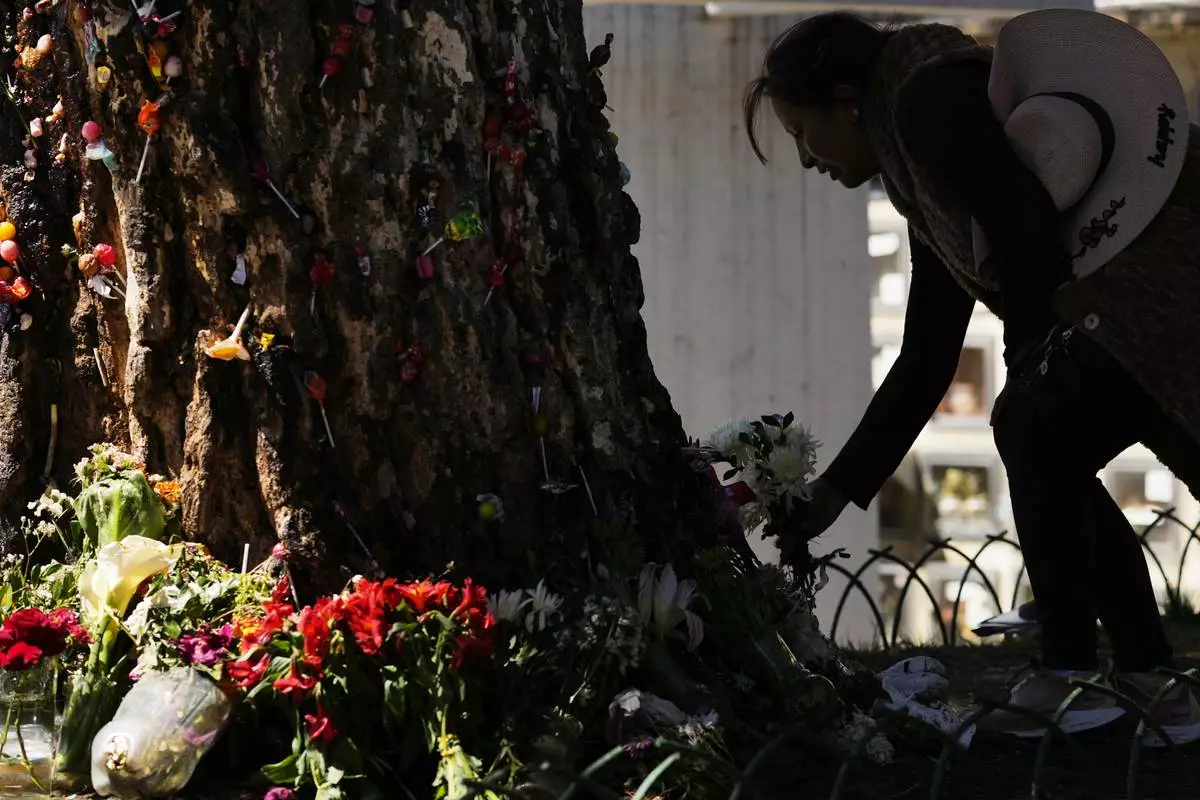
A woman leaves flowers at a tree that was struck by lightning years ago and has since been considered sacred, at the General Cemetery in La Paz, Bolivia, Sunday, Aug. 31, 2025. (AP Photo/Juan Karita)
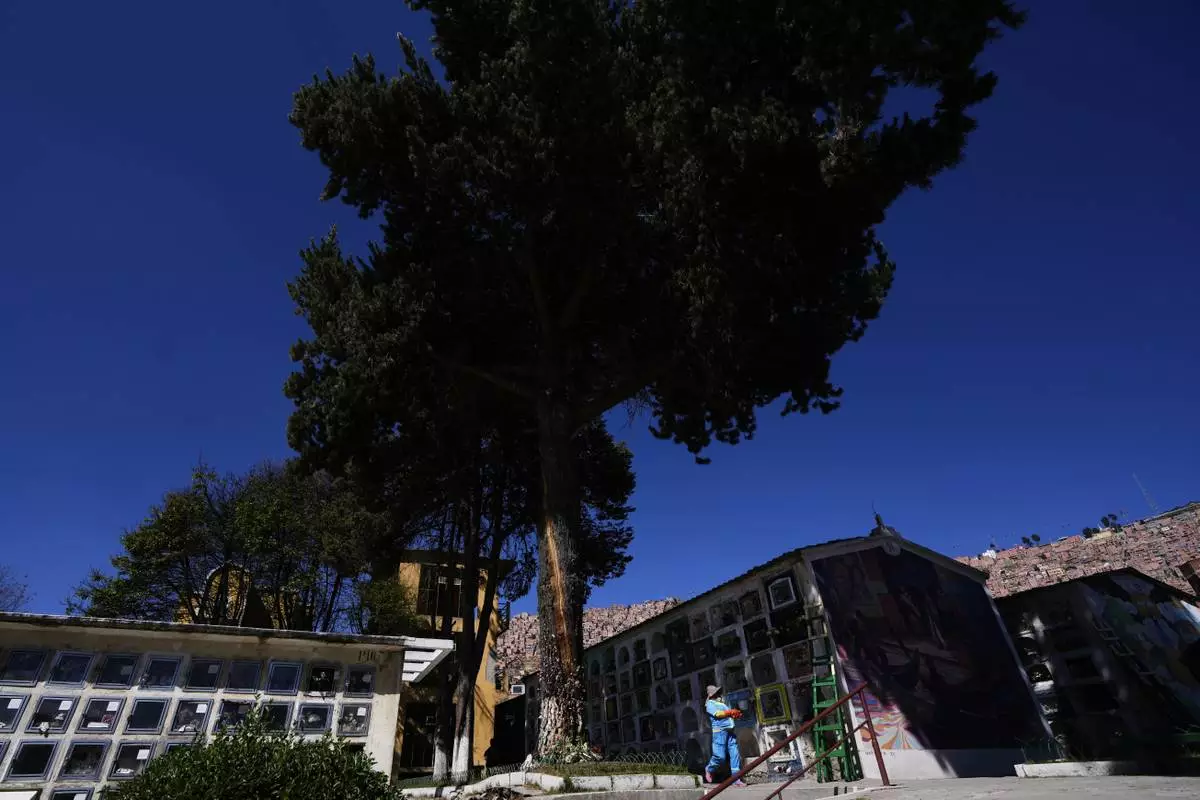
A tree that was struck by lightning years ago, and has since been considered sacred, rises above the General Cemetery in La Paz, Bolivia, Sunday, Aug. 31, 2025. (AP Photo/Juan Karita)
MINNEAPOLIS (AP) — President Donald Trump on Thursday threatened to invoke the Insurrection Act and deploy troops to quell persistent protests against the federal officers sent to Minneapolis to enforce his administration's massive immigration crackdown.
The president's threat comes a day after a federal immigration officer shot and wounded a Minneapolis man who had attacked the officer with a shovel and broom handle. That shooting further heightened the fear and anger radiating across the Minnesota city since an Immigration and Customs Enforcement agent fatally shot a Renee Good in the head.
Trump has repeatedly threatened to invoke the rarely used federal law to deploy the U.S. military or federalize the National Guard for domestic law enforcement, over the objections of state governors.
“If the corrupt politicians of Minnesota don’t obey the law and stop the professional agitators and insurrectionists from attacking the Patriots of I.C.E., who are only trying to do their job, I will institute the INSURRECTION ACT, which many Presidents have done before me, and quickly put an end to the travesty that is taking place in that once great State,” Trump said in social media post.
Presidents have indeed invoked the Insurrection Act more than two dozen times, most recently in 1992 by President George H.W. Bush to end unrest in Los Angeles. In that instance, local authorities had asked for the assistance.
The Associated Press has reached out to the offices of Gov. Tim Walz and Minneapolis Mayor Jacob Frey for comment.
The Department of Homeland Security says it has made more than 2,000 arrests in the state since early December and is vowing to not back down. ICE is a DHS agency.
In Minneapolis, smoke filled the streets Wednesday night near the site of the latest shooting as federal officers wearing gas masks and helmets fired tear gas into a small crowd. Protesters responded by throwing rocks and shooting fireworks.
Police Chief Brian O’Hara said during a news conference that the gathering was an unlawful assembly and “people need to leave.”
Things later quietened down and by early Thursday only a few demonstrators and law enforcement officers remained at the scene.
Demonstrations have become common on the streets of Minneapolis since the ICE agent fatally shot 37-year-old Good on Jan. 7. Agents have yanked people from their cars and homes, and have been confronted by angry bystanders demanding that the officers pack up and leave.
“This is an impossible situation that our city is presently being put in and at the same time we are trying to find a way forward to keep people safe, to protect our neighbors, to maintain order,” Frey, the mayor, said.
Frey said the federal force — five times the size of the city’s 600-officer police force — has “invaded” Minneapolis, scaring and angering residents.
In a statement describing the events that led to Wednesday's shooting, Homeland Security said federal law enforcement officers stopped a driver from Venezuela who is in the U.S. illegally. The person drove away and crashed into a parked car before taking off on foot, DHS said.
After officers reached the person, two other people arrived from a nearby apartment and all three started attacking the officer, according to DHS.
“Fearing for his life and safety as he was being ambushed by three individuals, the officer fired a defensive shot to defend his life,” DHS said.
The two people who came out of the apartment are in custody, it said.
O’Hara said the man shot was in the hospital with a non-life-threatening injury.
The shooting took place about 4.5 miles (7.2 kilometers) north of where Good was killed. O’Hara's account of what happened largely echoed that of Homeland Security.
During a speech before the latest shooting, Walz described Minnesota as being in chaos, saying what's happening in the state “defies belief.”
“Let’s be very, very clear, this long ago stopped being a matter of immigration enforcement,” he said. “Instead, it’s a campaign of organized brutality against the people of Minnesota by our own federal government.”
Jonathan Ross, the Immigration and Customs Enforcement officer who killed Good, suffered internal bleeding to his torso during the encounter, a Homeland Security official told The Associated Press.
The official spoke to AP on condition of anonymity in order to discuss Ross’ medical condition. The official did not provide details about the severity of the injuries, and the agency did not respond to questions about the extent of the bleeding, exactly how he suffered the injury, when it was diagnosed or his medical treatment.
Good was killed after three ICE officers surrounded her SUV on a snowy street a few blocks from her home.
Bystander video shows one officer ordering Good to open the door and grabbing the handle. As the vehicle begins to move forward, Ross, standing in front, raises his weapon and fires at least three shots at close range. He steps back as the SUV advances and turns.
Homeland Security Secretary Kristi Noem has said Ross was struck by the vehicle and that Good was using her SUV as a weapon — a self-defense claim that has been criticized by Minnesota officials.
Chris Madel, an attorney for Ross, declined to comment.
Good’s family has hired the same law firm that represented George Floyd’s family in a $27 million settlement with Minneapolis. Floyd, who was Black, died after a white police officer pinned his neck to the ground in the street in May 2020.
Madhani reported from Washington, D.C. Associated Press reporters Bill Barrow in Atlanta; Julie Watson in San Diego; Rebecca Santana in Washington; Ed White in Detroit and Giovanna Dell’Orto in Minneapolis contributed.
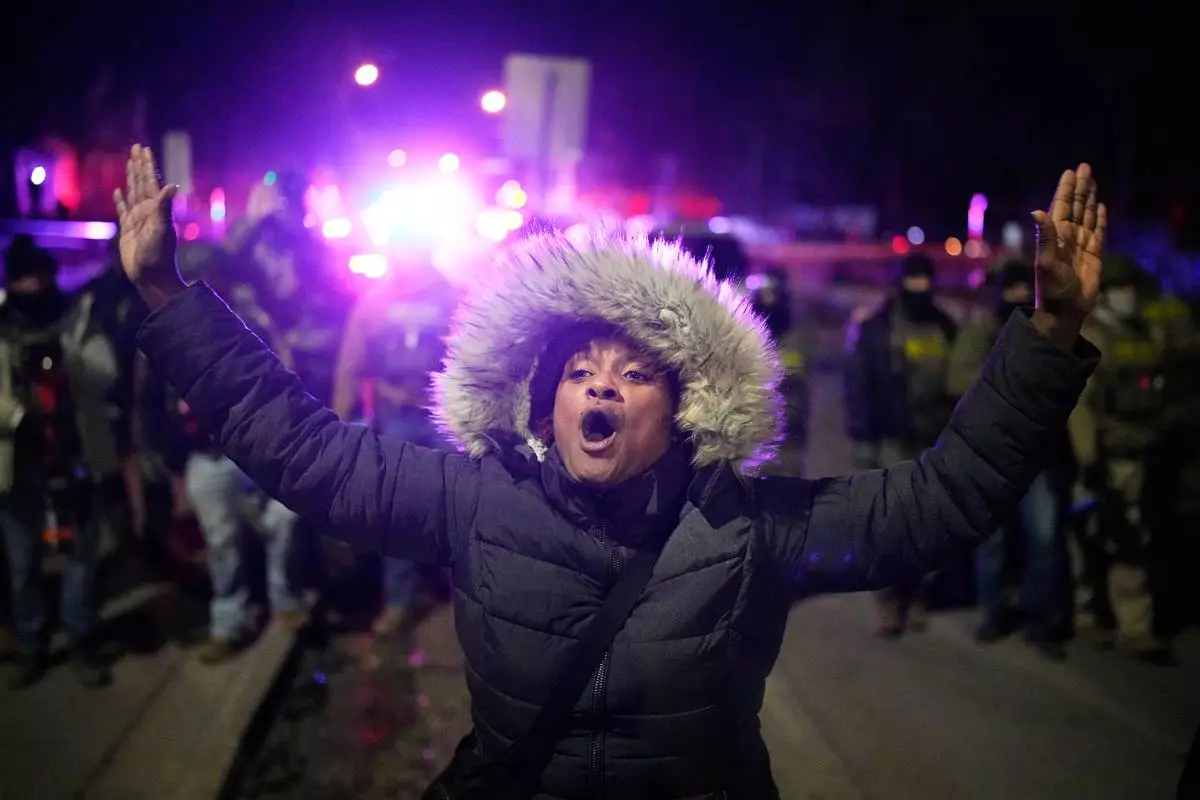
A protester yells in front of law enforcement after a shooting on Wednesday, Jan. 14, 2026, in Minneapolis. (AP Photo/John Locher)
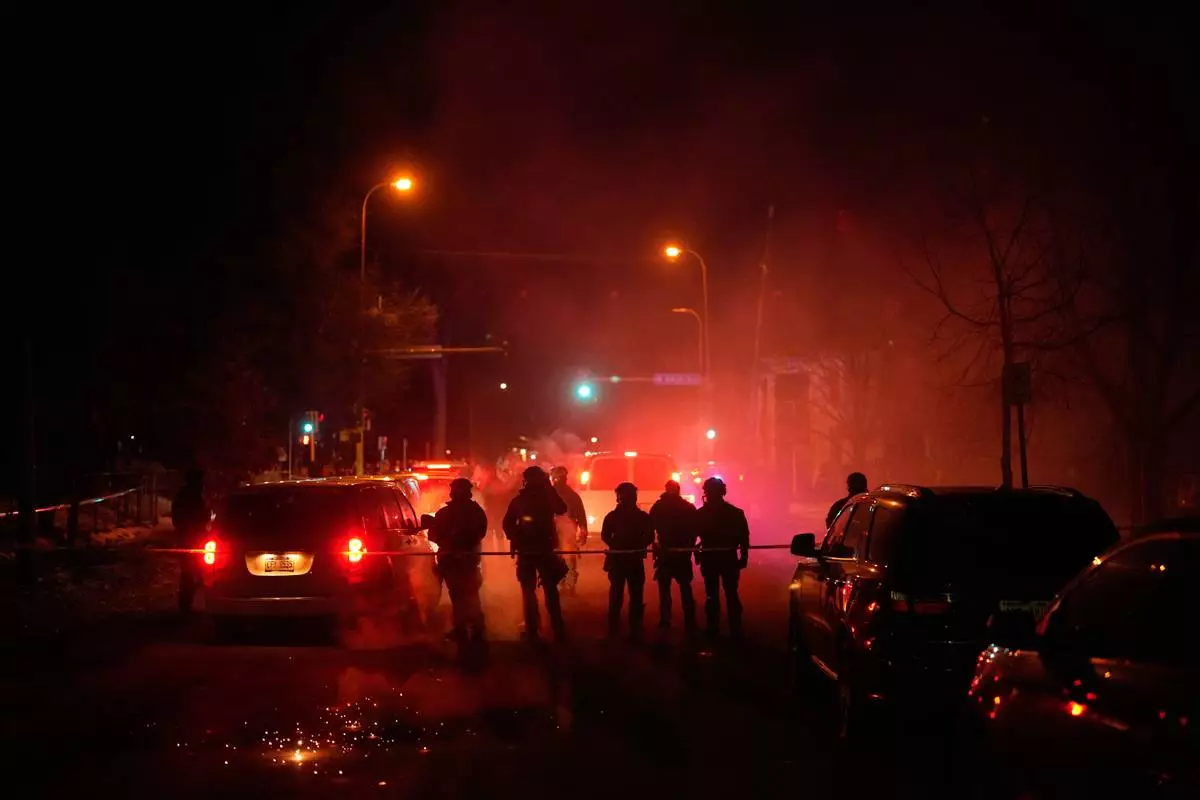
Tear gas surrounds federal law enforcement officers as they leave a scene after a shooting on Wednesday, Jan. 14, 2026, in Minneapolis. (AP Photo/John Locher)
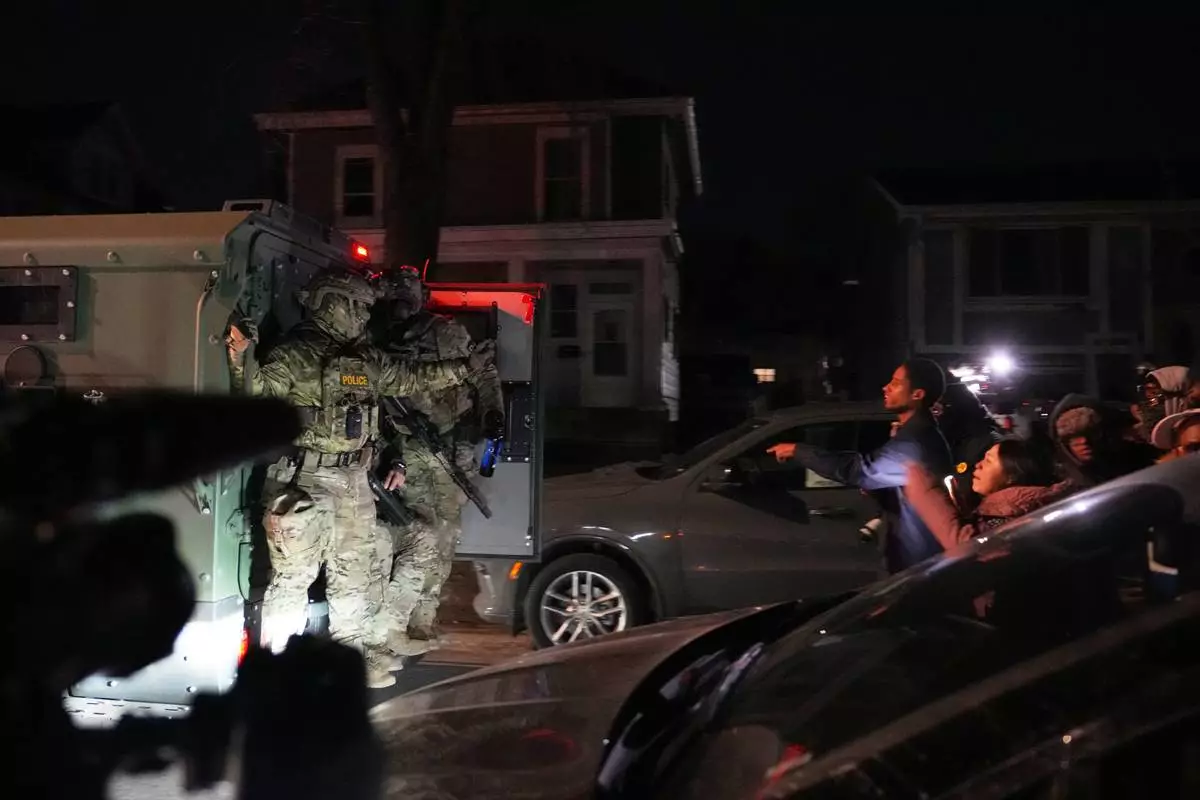
Protesters shout at law enforcement officers after a shooting on Wednesday, Jan. 14, 2026, in Minneapolis. (AP Photo/Abbie Parr)
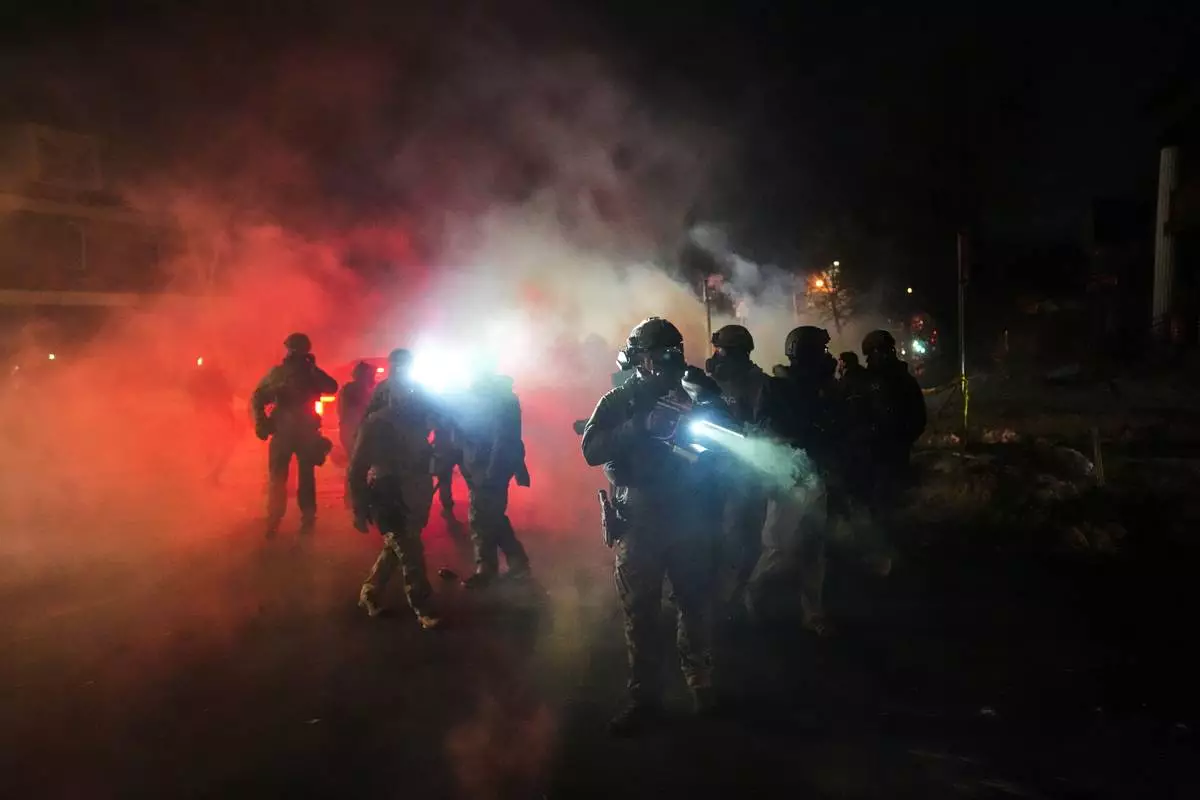
Law enforcement officers stand amid tear gas at the scene of a reported shooting Wednesday, Jan. 14, 2026, in Minneapolis. (AP Photo/Adam Gray)