Skip to Content Facebook Feature Image

Trump says he's set to order federal intervention in Chicago and Baltimore, despite local opposition

News

Trump says he's set to order federal intervention in Chicago and Baltimore, despite local opposition
News

News

Trump says he's set to order federal intervention in Chicago and Baltimore, despite local opposition

2025-09-03 07:34 Last Updated At:07:41

WASHINGTON (AP) — President Donald Trump said Tuesday that he's ready to order federal authorities to mobilize and combat crime in Chicago and Baltimore, despite staunch opposition from elected leaders and many residents in both cities.

Asked by reporters in the Oval Office about sending National Guard troops to the nation's third-largest city, Trump said, “We’re going in,” but added, “I didn’t say when.”

More Images
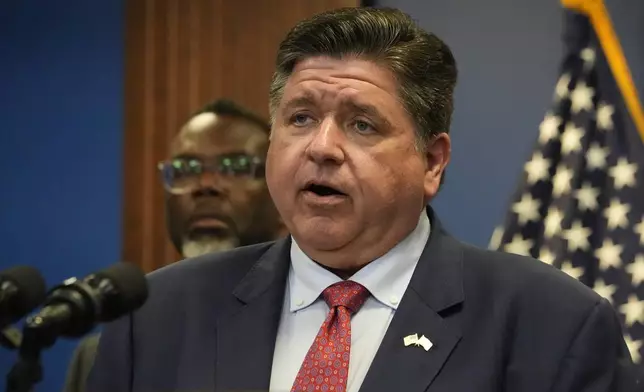
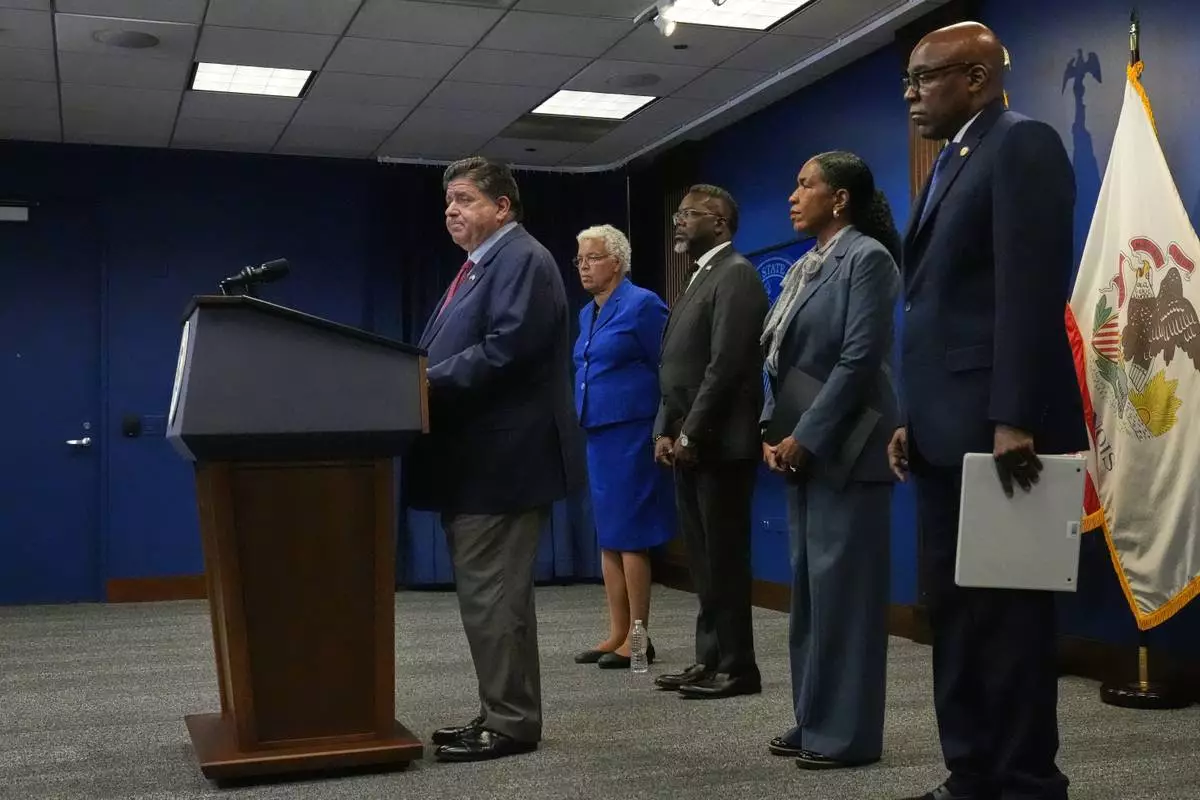
Illinois Gov. JB Pritzker speaks during a press conference Tuesday, Sept. 2, 2025, in Chicago. (AP Photo/Kiichiro Sato)
Illinois Gov. JB Pritzker speaks during a press conference Tuesday, Sept. 2, 2025, in Chicago. (AP Photo/Kiichiro Sato)

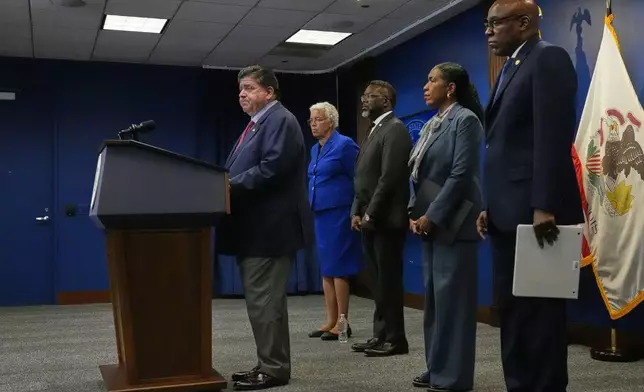
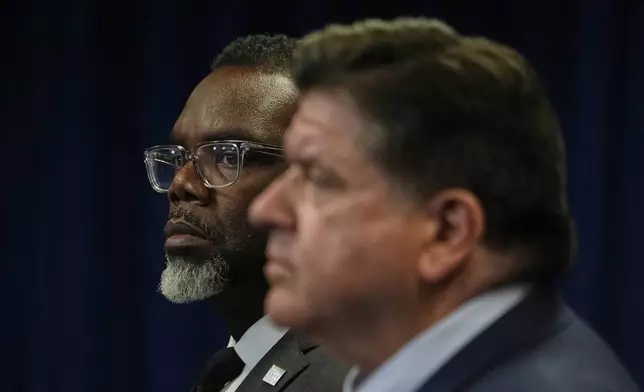
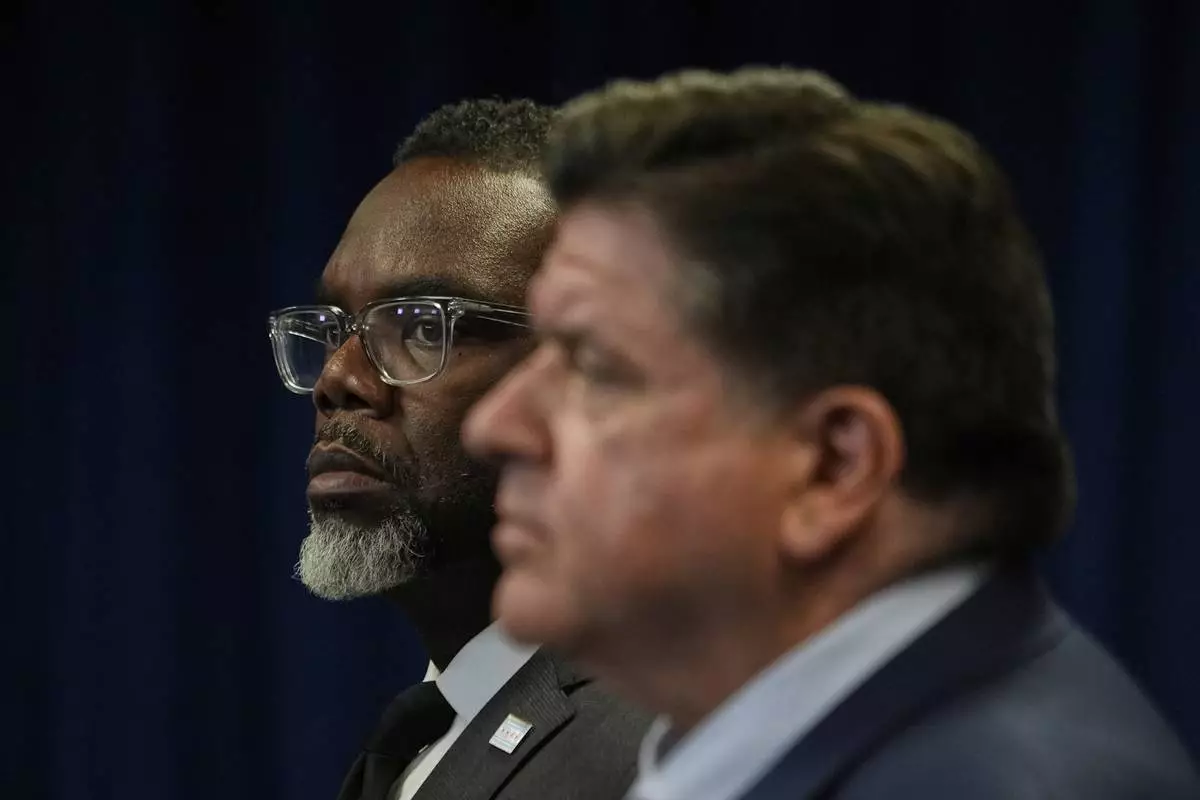
Chicago Mayor Brandon Johnson, background, looks on as Illinois Gov. JB Pritzker, right, speaks during a press conference Tuesday, Sept. 2, 2025, in Chicago. (AP Photo/Kiichiro Sato)
Chicago Mayor Brandon Johnson, background, looks on as Illinois Gov. JB Pritzker, right, speaks during a press conference Tuesday, Sept. 2, 2025, in Chicago. (AP Photo/Kiichiro Sato)

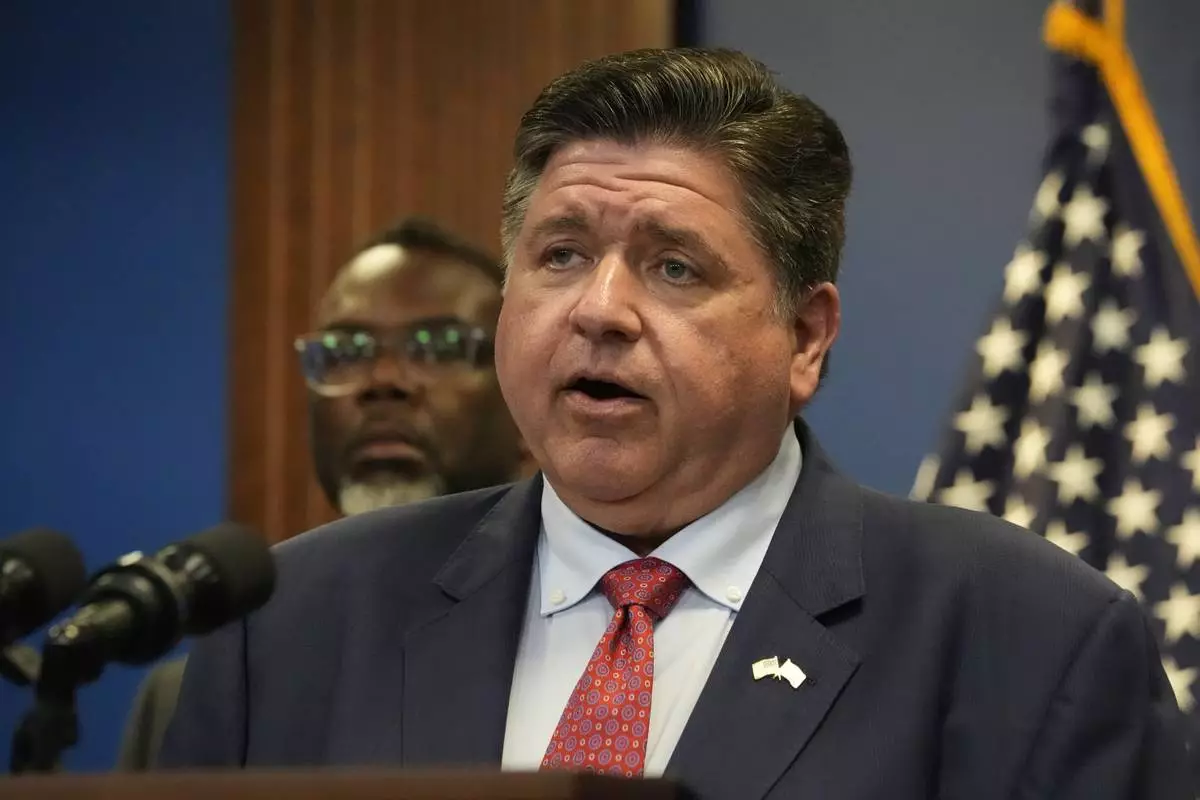
Illinois Gov. JB Pritzker speaks during a press conference Tuesday, Sept. 2, 2025, in Chicago. (AP Photo/Kiichiro Sato)
Illinois Gov. JB Pritzker speaks during a press conference Tuesday, Sept. 2, 2025, in Chicago. (AP Photo/Kiichiro Sato)

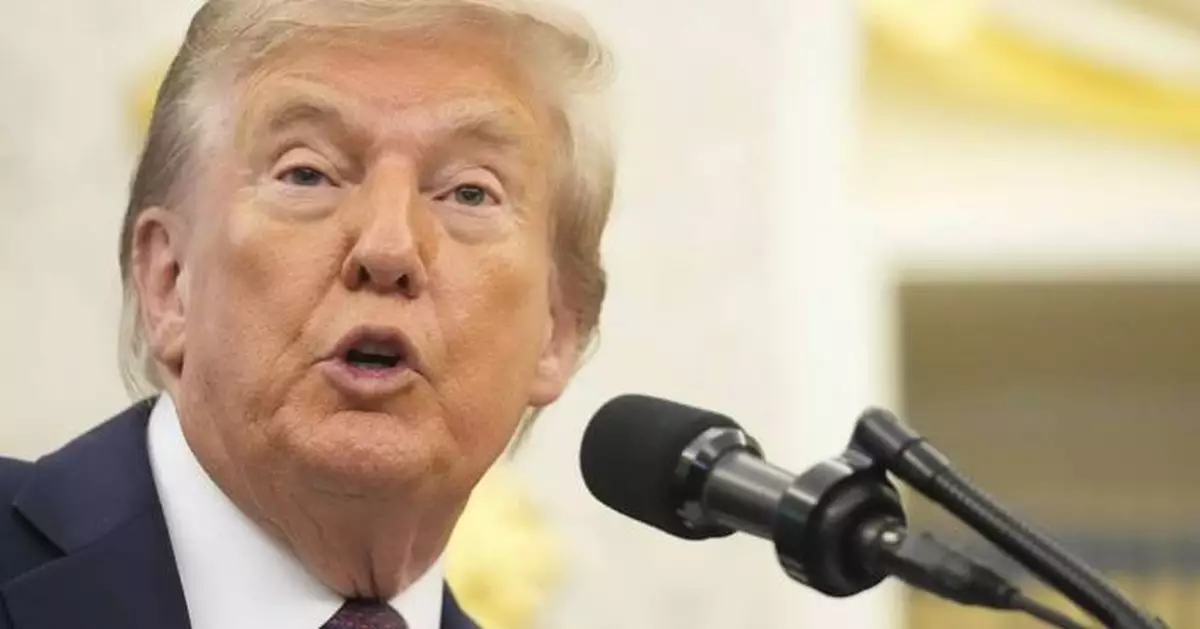
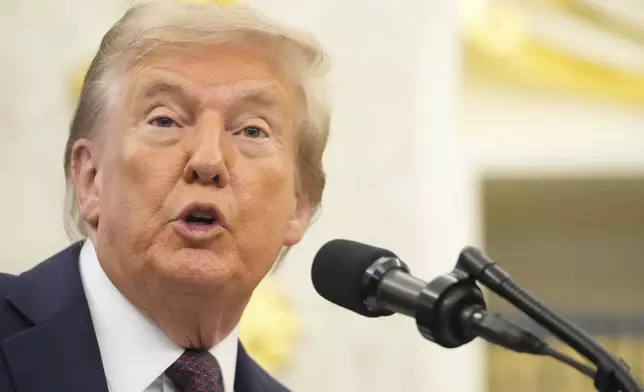
President Donald Trump speaks during an event about the relocation of U.S. Space Command headquarters from Colorado to Alabama in the Oval Office of the White House, Tuesday, Sept. 2, 2025, in Washington. (AP Photo/Mark Schiefelbein)

President Donald Trump speaks during an event about the relocation of U.S. Space Command headquarters from Colorado to Alabama in the Oval Office of the White House, Tuesday, Sept. 2, 2025, in Washington. (AP Photo/Mark Schiefelbein)

“I have an obligation," the president said. ”This isn't a political thing."

Illinois Gov. JB Pritzker, a potential 2028 Democratic presidential contender, scoffed at the notion of sending military troops and federal agents into Chicago, reiterating Tuesday that federal intervention was not required or wanted.

Local officials in Baltimore have joined Democratic Maryland Gov. Wes Moore in similarly opposing federal law enforcement intervention.

Trump has already sent National Guard troops into Los Angeles and Washington, where he's also federalized the police force. He has said he plans similar moves in other Democrat-run cities even as a federal judge on Tuesday deemed the California deployment illegal.

The president praised Washington Mayor Muriel Bowser for working with federal forces, but repeated his criticism of Pritzker and Chicago Mayor Brandon Johnson, a Democrat. Trump said he’d love to have Pritzker call and say, “Send in the troops” — even though the two-term governor has repeatedly said he won’t be doing that.

He said if Pritzker would "call me up, I would love to do it,” Trump said. “Now, we’re going to do it anyway. We have the right to do it. Because I have an obligation to protect this country and that includes Baltimore.”

He added, “Baltimore’s a very unsafe place”

Pritzker deemed Trump’s comments to call him for help as “unhinged.” The two have been locked in an escalating war of words for days as Trump called Chicago “the world's most dangerous city” earlier Tuesday.

“No, I will not call the president asking him to send troops to Chicago,” Pritzker said Tuesday at a news conference with Johnson and other leaders. “I’ve made that clear already.”

The state received its first contact about federal intervention on Saturday when the head of the Illinois State Police got a call from Gregory Bovino, chief of the Border Patrol’s El Centro, California, sector, saying immigration agents would come to Chicago, according to Pritzker. The governor said no further details were offered.

Pritzker urged the public not to let the presence of federal agents spark tensions in the city but asked residents to look out for neighbors, and to film interactions with federal agents and share them publicly.

“Authoritarians thrive on your silence,” he said. “Be loud for America.”

Chicago has been bracing for the expanded federal presence, with activists, pastors and schools prepared for the deluge of national attention.

Even without knowing exactly what is coming, the city’s organized activist network began circulating protest schedules, vowing to demonstrate within hours of troops or federal agents arriving.

The measures are familiar in a city that has long tried to counteract Trump's bid to deport more people, including adding more staff at a hotline to report immigration arrests.

Dozens of pastors write a letter to Trump Tuesday saying the focus should instead be on underfunded schools and unemployment.

“To the faithful of Chicago, I say this: prepare your hearts for resistance,” the letter said.

Johnson said violence in the city stems from guns on the streets that are trafficked to Illinois from neighboring states, including Republican-led Indiana.

“Chicago will continue to have a violence problem as long as red states continue to have a gun problem,” Johnson said.

Echoing a trend in other major U.S. cities, Chicago’s violent crime has dropped significantly overall, though it remains a persistent issue in parts of the city.

Recently, the Trump administration has renewed interest in the city’s daily crime log, including using a spate of shootings during the Labor Day weekend as justification for increased military presence.

Chicago’s homicide rate is 21.7 per 100,000 residents in 2024, according to analysis of federal crime data by the Rochester Institute of Technology. It cites seven other major U.S. cities — St. Louis, New Orleans, Detroit, Washington, D.C., Atlanta, Indianapolis and Richmond, Virginia — with higher rates.

Chicago reported 573 homicides in 2024, the most of any U.S. city that year. But violent crime dropped significantly in the first half of the year, representing the steepest decline in over a decade, according to city data. Shootings and homicides were down more than 30% in the first half of 2025 compared to the same time last year.

Illinois Attorney General Kwame Raoul has said the city and state will sue once the federal intervention begins.

Trump's comments about Baltimore being included in his obligation to protect the country follows local officials in that city and Moore opposing federal law enforcement intervention.

Moore spokesman David Turner said, “While we try to decipher exactly what the President meant today, the Governor has been consistently clear: The use of the National Guard for municipal policing is theatrical and not sustainable."

Baltimore Mayor Brandon Scott listed some of the city’s recent accomplishments in curbing gun violence. Scott has repeatedly accused the president of using racist rhetoric and targeting Black-led cities, like Baltimore and Chicago.

“Here’s the reality in Baltimore,” Scott wrote on X, noting that Baltimore homicides have reached historic lows amid sustained declines including the lowest number of homicides on record for the month of August.

Trump said his efforts in Washington have ensured it “is now a safe zone. We have no crime.”

The White House announced separately Tuesday that more than 1,650 people have been arrested since the Trump administration first mobilized federal officials on Aug. 7.

“This was a beautiful thing that happened in Washington," Trump said "because we showed that it could be done.”

Associated Press writers Lea Skene in Baltimore and Brian Witte in Annapolis, Maryland, contributed to this report. Tareen reported from Chicago.
Illinois Gov. JB Pritzker speaks during a press conference Tuesday, Sept. 2, 2025, in Chicago. (AP Photo/Kiichiro Sato)
Illinois Gov. JB Pritzker speaks during a press conference Tuesday, Sept. 2, 2025, in Chicago. (AP Photo/Kiichiro Sato)

Chicago Mayor Brandon Johnson, background, looks on as Illinois Gov. JB Pritzker, right, speaks during a press conference Tuesday, Sept. 2, 2025, in Chicago. (AP Photo/Kiichiro Sato)
Chicago Mayor Brandon Johnson, background, looks on as Illinois Gov. JB Pritzker, right, speaks during a press conference Tuesday, Sept. 2, 2025, in Chicago. (AP Photo/Kiichiro Sato)

Illinois Gov. JB Pritzker speaks during a press conference Tuesday, Sept. 2, 2025, in Chicago. (AP Photo/Kiichiro Sato)
Illinois Gov. JB Pritzker speaks during a press conference Tuesday, Sept. 2, 2025, in Chicago. (AP Photo/Kiichiro Sato)

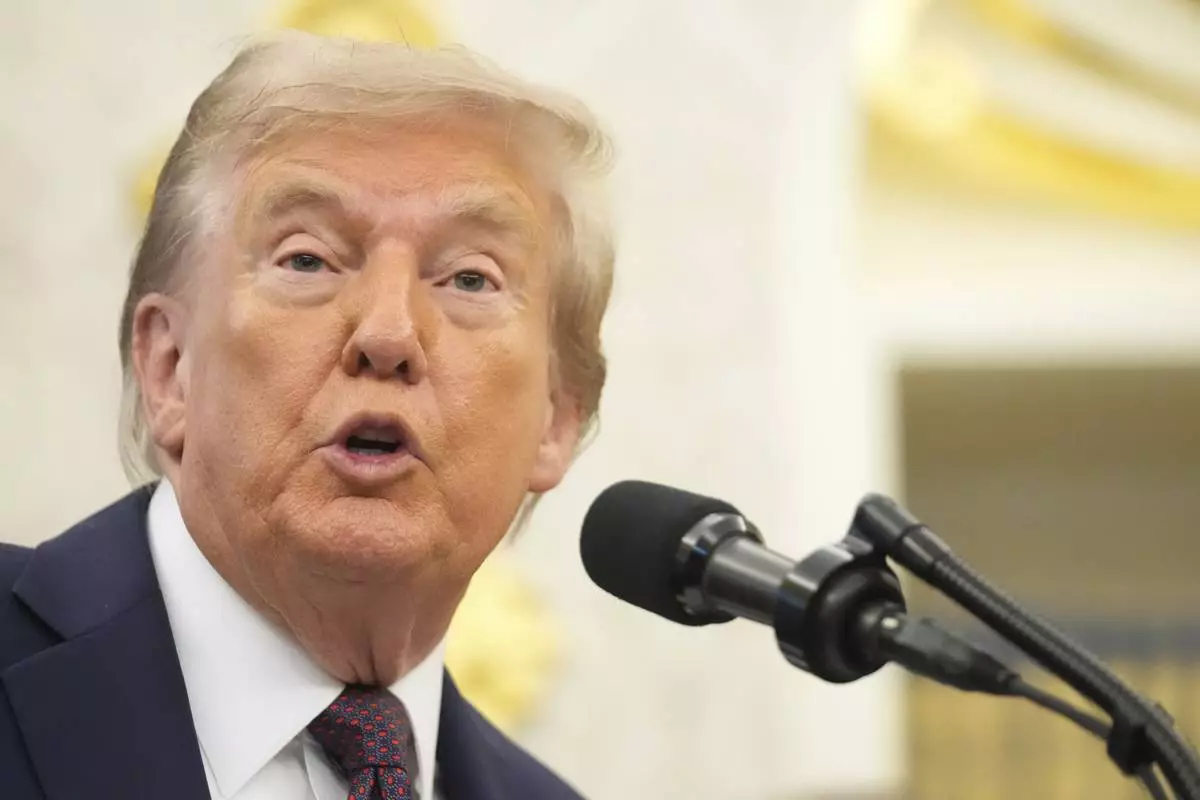
President Donald Trump speaks during an event about the relocation of U.S. Space Command headquarters from Colorado to Alabama in the Oval Office of the White House, Tuesday, Sept. 2, 2025, in Washington. (AP Photo/Mark Schiefelbein)
President Donald Trump speaks during an event about the relocation of U.S. Space Command headquarters from Colorado to Alabama in the Oval Office of the White House, Tuesday, Sept. 2, 2025, in Washington. (AP Photo/Mark Schiefelbein)
ANCHORAGE, Alaska (AP) — A state appeals court will decide whether to dismiss felony voter misconduct charges against an Alaska resident born in American Samoa, one of numerous cases that has put a spotlight on the complex citizenship status of people born in the U.S. territory.

The Alaska Court of Appeals heard arguments Thursday in the case against Tupe Smith, who was arrested after winning election to a regional school board in 2023. Smith has said she relied on erroneous information from local election officials in the community of Whittier when she identified herself as a U.S. citizen on voter registration forms.

American Samoa is the only U.S. territory where residents are not automatically granted citizenship by being born on American soil and instead are considered U.S. nationals. Paths to citizenship exist, such as naturalization, though that process can be expensive and cumbersome.

American Samoans can serve in the military, obtain U.S. passports and vote in elections in American Samoa, but they cannot hold public office in the U.S. or participate in most U.S. elections.

Smith's attorneys have asked the appeals court to reverse a lower court's decision that let stand the indictment brought against her. Smith's supporters say she made an innocent mistake that does not merit charges, but the state has argued that Smith falsely and deliberately claimed citizenship.

State prosecutors separately have brought charges against 10 other people from American Samoa in Whittier, including Smith’s husband, Michael Pese.

Thursday's arguments centered on the meaning of the word intentionally.

Smith “and others like her who get caught up in Alaska’s confusing election administration system and do not have any intent to mislead or deceive should not face felony voter misconduct charges,” one of her attorneys, Whitney Brown, told the court.

But Kayla Doyle, an assistant attorney general, said that as part of ensuring election integrity, it's important that oaths being relied upon are accurate.

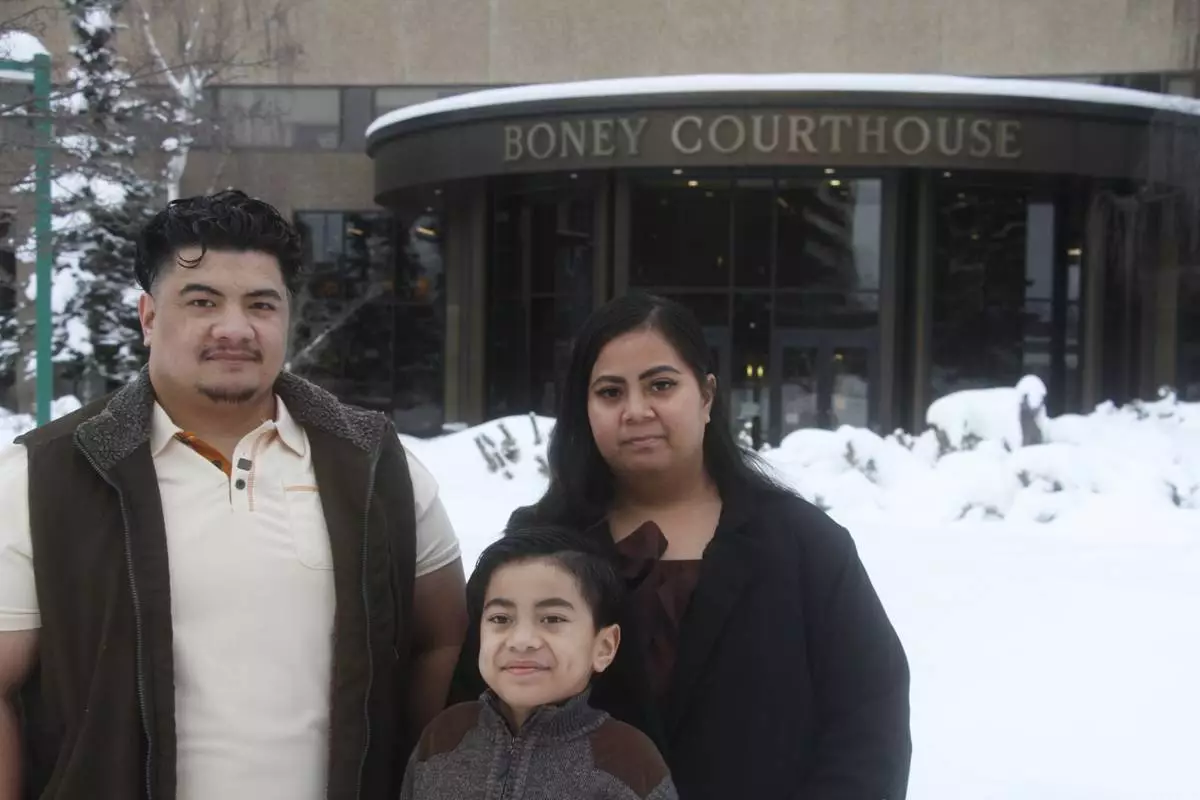
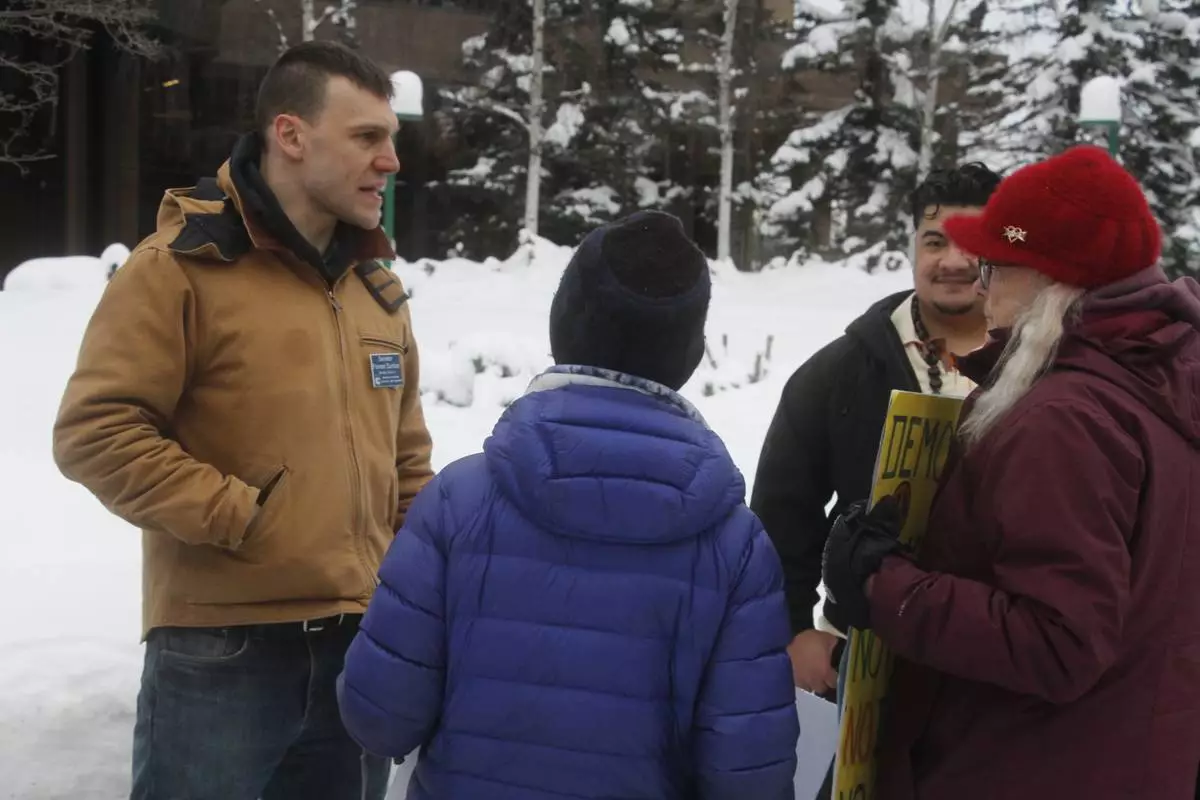
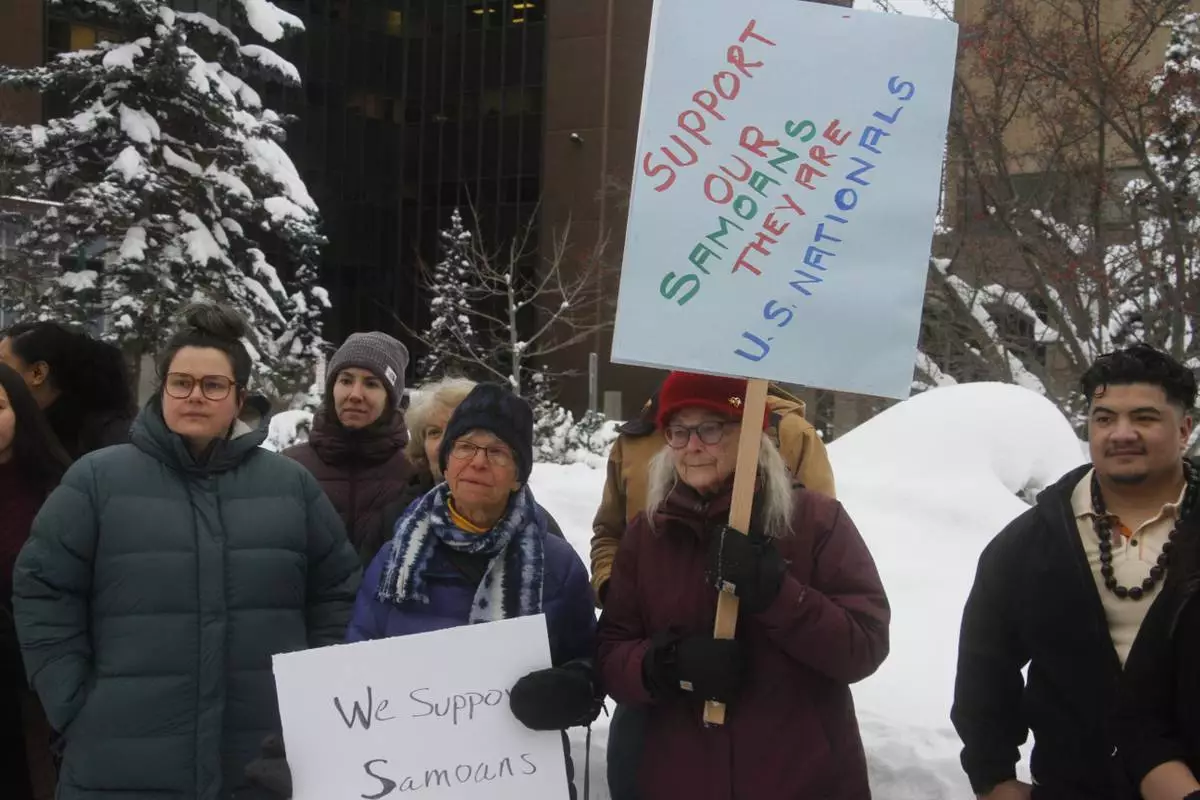
About 25 people gathered on a snowy street outside the Anchorage courthouse before Thursday’s hearing to support Smith. Some carried signs that read, ”We support Samoans.”

State Sen. Forrest Dunbar, a Democrat who attended the rally, said the Alaska Department of Law has limited resources.

“We should be going after people who are genuine criminals, who are violent criminals, or at least have the intent to deceive,” he said.

In a court filing in 2024, one of Smith's previous attorneys said that when Smith answered questions from the Alaska state trooper who arrested her, she said she was aware that she could not vote in presidential elections but was “unaware of any other restrictions on her ability to vote."

Smith said she marks herself as a U.S. national on paperwork. But when there was no such option on voter registration forms, she was told by city representatives that it was appropriate to mark U.S. citizen, according to the filing.

Smith “exercised what she believed was her right to vote in a local election. She did so without any intent to mislead or deceive anyone,” her current attorneys said in a filing in September. “Her belief that U.S. nationals may vote in local elections, which was supported by advice from City of Whittier election officials, was simply mistaken.”

The state has said Smith falsely and deliberately claimed citizenship. Prosecutors pointed to the language on the voter application forms she filled out in 2020 and 2022, which explicitly said that if the applicant was not at least 18 years old and a U.S. citizen, “do not complete this form, as you are not eligible to vote.”

The counts Smith was indicted on “did not have anything to do with her belief in her ability to vote in certain elections; rather they concerned the straightforward question of whether or not Smith intentionally and falsely swore she was a United States citizen,” Doyle said in a court filing last year.

One of Smith's attorneys, Neil Weare, co-founder of the Washington-based Right to Democracy Project, has said the appeals court could dismiss the case or send it back to the lower court “to consider whether the state can meet the standard it has set forth for voter misconduct.” The state also could decide to file other charges if the case is dismissed, he said.

The court did not give a timeline for when it would issue a ruling.

Bohrer reported from Juneau, Alaska.

State Sen. Forrest Dunbar, left, stands with supporters of Tupe Smith gathered Thursday, Jan. 15, 2026, outside the Boney Courthouse in Anchorage, Alaska, ahead of the Alaska Court of Appeals hearing a challenge to the voter misconduct case brought against American Samoa native Tupe Smith by the state. (AP Photo/Mark Thiessen)

State Sen. Forrest Dunbar, left, stands with supporters of Tupe Smith gathered Thursday, Jan. 15, 2026, outside the Boney Courthouse in Anchorage, Alaska, ahead of the Alaska Court of Appeals hearing a challenge to the voter misconduct case brought against American Samoa native Tupe Smith by the state. (AP Photo/Mark Thiessen)

Supporters of Tupe Smith gather outside the Boney Courthouse in Anchorage, Alaska, Thursday, Jan. 15, 2026, ahead of the Alaska Court of Appeals hearing a challenge to the voter misconduct case brought against American Samoa native Tupe Smith by the state. (AP Photo/Mark Thiessen)

Supporters of Tupe Smith gather outside the Boney Courthouse in Anchorage, Alaska, Thursday, Jan. 15, 2026, ahead of the Alaska Court of Appeals hearing a challenge to the voter misconduct case brought against American Samoa native Tupe Smith by the state. (AP Photo/Mark Thiessen)

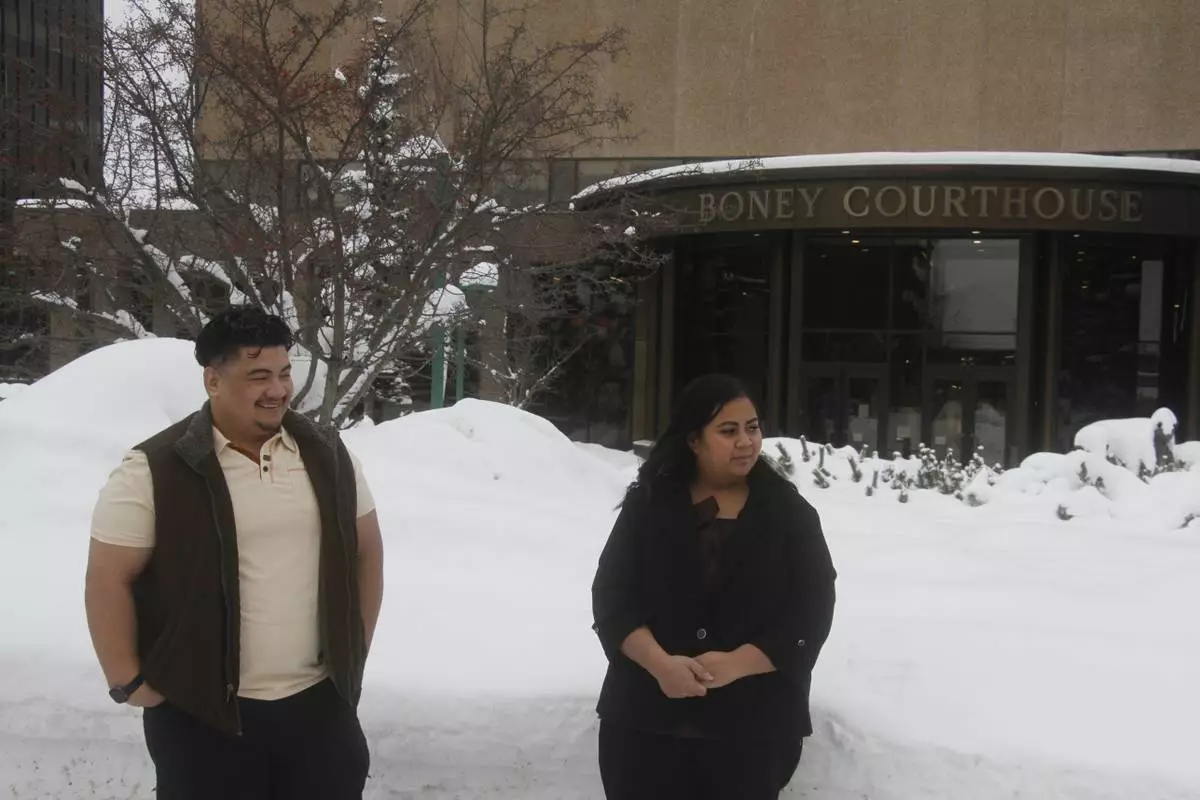
Michael Pese and his wife, Tupe Smith, stand outside the Boney Courthouse in Anchorage, Alaska, Thursday, Jan. 15, 2026, ahead of the Alaska Court of Appeals hearing a challenge to the voter fraud case brought against her by the state. (AP Photo/Mark Thiessen)

Michael Pese and his wife, Tupe Smith, stand outside the Boney Courthouse in Anchorage, Alaska, Thursday, Jan. 15, 2026, ahead of the Alaska Court of Appeals hearing a challenge to the voter fraud case brought against her by the state. (AP Photo/Mark Thiessen)

Michael Pese, left, his wife, Tupe Smith, and their son Maximus pose for a photo outside the Boney Courthouse in Anchorage, Alaska, Thursday, Jan. 15, 2026, ahead of the Alaska Court of Appeals hearing a challenge to the voter fraud case brought against her by the state. (AP Photo/Mark Thiessen)

Michael Pese, left, his wife, Tupe Smith, and their son Maximus pose for a photo outside the Boney Courthouse in Anchorage, Alaska, Thursday, Jan. 15, 2026, ahead of the Alaska Court of Appeals hearing a challenge to the voter fraud case brought against her by the state. (AP Photo/Mark Thiessen)

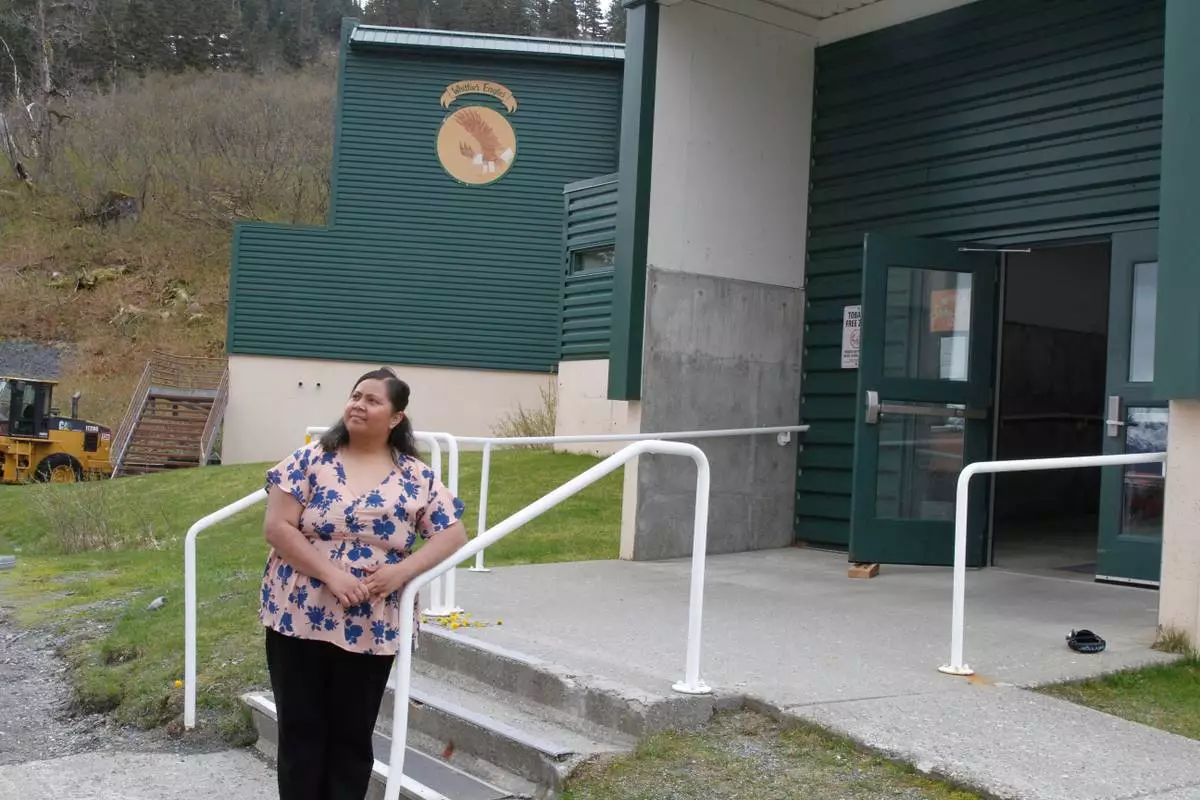
FILE - Tupe Smith poses for a photo outside the school in Whittier, Alaska, May 13, 2025. (AP Photo/Mark Thiessen, File)

FILE - Tupe Smith poses for a photo outside the school in Whittier, Alaska, May 13, 2025. (AP Photo/Mark Thiessen, File)

Recommended Articles