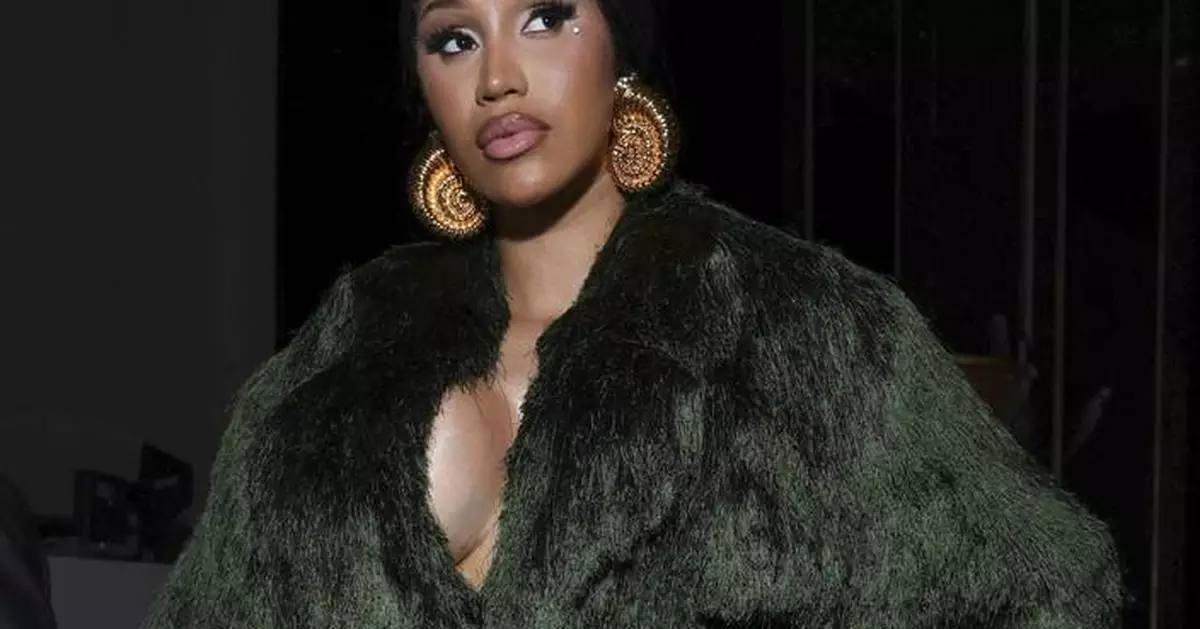
LOS ANGELES (AP) — A jury gave Cardi B a quick and absolute victory Tuesday at a trial in the lawsuit of a security guard who alleged the rap star assaulted her at a doctor's office during her then-secret first pregnancy.
The jury of six men and six women at a small courthouse in Alhambra, California deliberated for only about an hour before finding Cardi not liable in the lawsuit brought by Emani Ellis, who alleged Cardi cut her face with a fingernail and spat on her in the hallway of a Beverly Hills obstetrician in February of 2018.
Only nine of the 12 jurors were required for a verdict in the civil case, but their decision in Cardi's favor was unanimous.
“The next person who tries to do a frivolous lawsuit against me, I’m going to counter-sue, and I’m gonna make you pay, because this is not OK,” she said outside the courthouse, where she posed for pictures with fans. “I am not that celeb that you sue, and you think is going to settle. I’m not gonna settle. Especially when I’m super completely innocent.”
She said she had to miss her kids' first day of school because of the trial, and said her forehead was “raw, raw, raw” after all the elaborate wig changes during the trial that at one point even left her lawyer confused over which was her real hair. (None of them were, she said with a laugh.)
During a lunchbreak before the verdict Tuesday in a moment captured by cameras from several media outlets, she threw a marker she was using for autographs at a man who shouted questions to her about whether she was currently pregnant, and who the father is. She called the questions disrespectful.
In two days of testimony last week that were livestreamed, widely viewed and full of viral moments, the hip-hop star testified she feared that Ellis was going to make her pregnancy public. She acknowledged that the two argued, but said it never got physical.
“I will say it on my deathbed. I did not touch that woman," she said after her win. "I did not touch that girl. I didn’t lay my hands on that girl.”
Ron Rosen Janfaza, the lawyer for the plaintiff Ellis, did not immediately respond to an email seeking comment. He said outside court that they plan to appeal the decision.
After several days off, the trial resumed with closing arguments earlier Tuesday.
Janfaza told jurors that Ellis, who had hoped to work in law enforcement or something similar, “lost her future” along with her job over the incident.
"Whether it’s the FBI, police, attorney, whatever she wanted to do, this incident cut it off,” he said in his closing argument. “No more, because of the trauma she sustained.”
He also called out the profanity Cardi freely used during her testimony, suggesting she had scorn for the proceedings.
“The defendant came here, used all of this foul language," he told the jurors. “This is a court of law, you cannot speak this way in court. I have never seen this before.”
Cardi testified that she had been visiting Los Angeles doing promotional work in February 2018 around that year’s NBA All-Star Game. She was four months into her pregnancy with the first of her three children with rapper Offset. She had told her inner circle she was having a baby, but not the public or her parents.
The obstetrician’s office had been closed to other patients on a Saturday for her privacy.
She said Ellis, a security guard for the building, followed her to her fifth-floor appointment. Cardi told jurors last week that she heard Ellis say her name into a phone and appeared to be filming her.
“I told her, ‘Why are you recording?’” Cardi testified, “and she said, ’Oh my bad.’ She practically apologized.’”
But the argument grew increasingly heated, she said.
“As we were arguing she’s backing me, she’s walking into me,” Cardi said.
Ellis testified that the incident left her humiliated and traumatized, and the scar on her face required cosmetic surgery. Ellis, who lost her job over the incident, sought damages that include medical expenses, compensation for emotional and physical suffering, and lost wages, along with punitive damages. She does not specify a total amount in the lawsuit but Cardi said from the stand that she is “suing me for $24 million.”
A receptionist who broke up the argument between Cardi and Ellis largely backed the rapper's account in testimony.
AP Entertainment Writer Ryan Pearson contributed to this report from Alhambra, California.
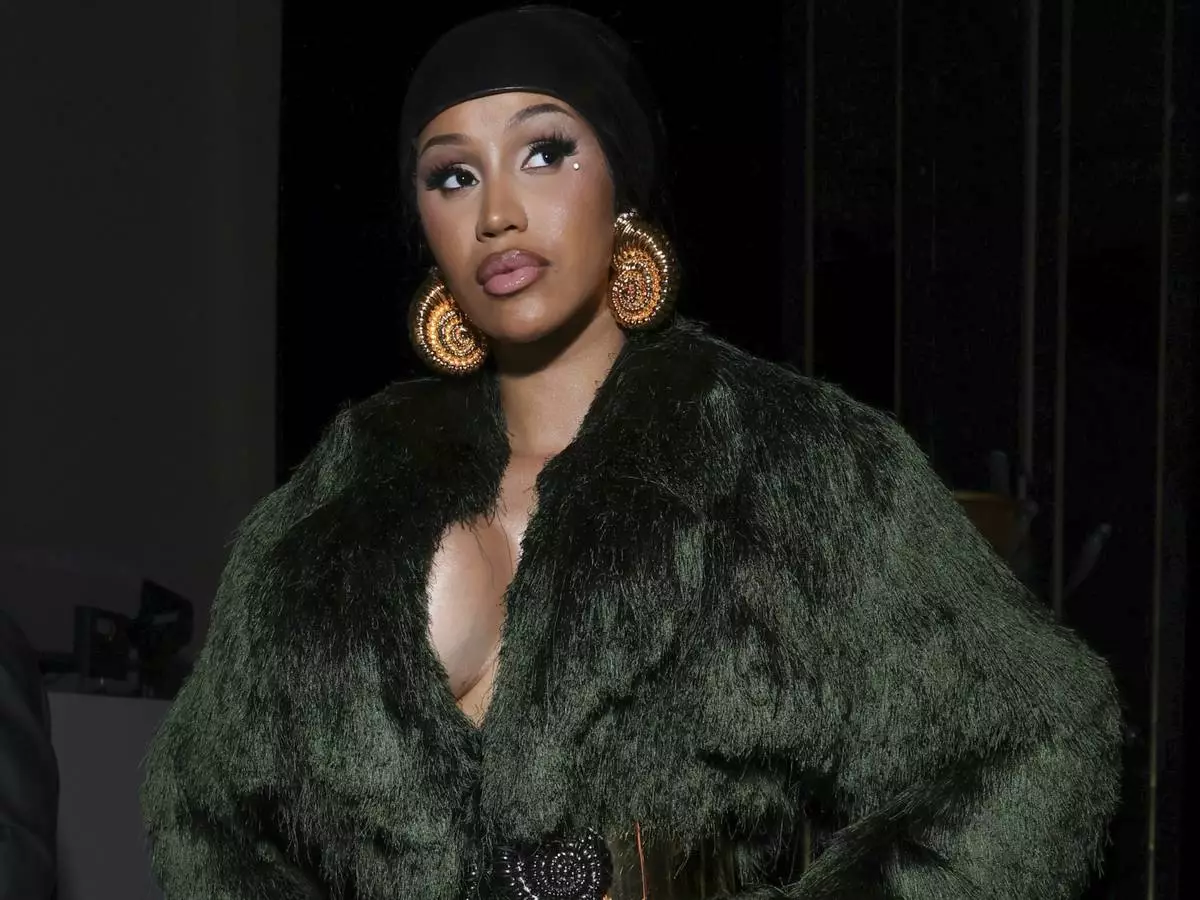
FILE - Cardi B attends the Balmain Spring/Summer 2025 collection presented in Paris on Sept. 25, 2024. (Photo by Vianney Le Caer/Invision/AP, File)
WASHINGTON (AP) — At a time of tightening immigration restrictions, the Department of Homeland Security is attempting to make it easier for visa-holding religious workers to serve their U.S. congregations with less disruption.
DHS announced on Wednesday a regulatory change aimed at reducing visa wait times abroad for the foreign nationals many U.S. religious communities depend on to serve as pastors, priests, nuns, imams and rabbis. These religious workers face a yearslong backlog to obtain legal permanent U.S. residency, but congregations can bring them into the country on temporary visas called R-1.
DHS introduced a fix to one issue affecting clergy that advocates had requested — removing the requirement for R-1 religious workers to leave the U.S. for one year after reaching their five-year visa maximum. That visa time used to be plenty to get a green card, but in 2023 the government made a change in processing that lengthened it so much most had to leave the country. Now, they will still need to depart the U.S. but can apply to re-enter right away.
“We are taking the necessary steps to ensure religious organizations can continue delivering the services that Americans depend on,” the DHS statement said. “Pastors, priests, nuns, and rabbis are essential to the social and moral fabric of this country. We remain committed to finding ways to support and empower these organizations in their critical work.”
The DHS rule loosens an immigration restriction at a time when the Trump administration has tightened many other immigration pathways. The DHS statement emphasized a commitment to protecting religious freedom and minimizing disruptions to faith-based communities.
“It’s a huge deal,” said Lance Conklin, a Maryland immigration attorney who represents evangelical churches with R1 visa holders. “It would potentially allow people not to disrupt the organization by having someone have to leave for a year, because that’s a major imposition now.”
The U.S. Conference of Catholic Bishops called it a “truly significant step to support essential religious services in the United States.”
In a joint statement, Archbishop Paul Coakley, the USCCB president, and Bishop Brendan Cahill, chair of the USCCB committee on migration, expressed their gratitude for the administration's work on the issue. “The value of the Religious Worker Visa Program and our appreciation for the efforts undertaken to support it cannot be overstated."
“Hallelujah!” said Olga Rojas, immigration counsel for the Archdiocese of Chicago. “We’re happy the administration made this change. It is helpful to us so we don’t have to lose valued religious workers that are contributing so much to our parishes and schools.”
The U.S. Catholic Church has long relied on foreign-born clergy amid a priest shortage. Other traditions, ranging from Buddhism to Pentecostal Christianity, also recruit foreign-born clergy to serve growing non-English-speaking congregations or because they have specialized training from international institutions steeped in the religion’s history.
The five-year R1 visa used to provide enough time for congregations to petition for green cards under a special category called EB-4, which would allow the clergy to become permanent residents.
Congress sets a quota of green cards available per year divided into categories, almost all based on types of employment or family relationships to U.S. citizens. In most categories, the demand exceeds the annual quota.
Citizens of countries with especially high demand get put in separate, often longer “lines,” where it can take decades to process applications.
Also in a separate line were migrant children with “Special Immigrant Juvenile Status” — neglected or abused minors — from Guatemala, Honduras and El Salvador. Hundreds of thousands sought humanitarian green cards or asylum after illegally crossing into the U.S. since the mid-2010s, though the Trump administration recently cracked down on the program.
In March 2023, the State Department under President Joe Biden suddenly started adding the minors to the general green card queue with the clergy.
It created new backlogs that threatened the ability of religious workers to remain in the United States. No exact numbers exist, but it is estimated that thousands of religious workers are backlogged in the green card system or haven’t been able to apply yet.
In summer 2024, the Catholic Diocese of Paterson, New Jersey, and five of its affected priests sued DHS, the Department of State and the U.S. Citizenship and Immigration Services. The lawsuit argued that the 2023 change “will cause severe and substantial disruption to the lives and religious freedoms” of the priests and the faithful they serve. The lawsuit was voluntarily dismissed in fall 2025 “to allow for Agency action and/or rulemaking that will render moot the relief Plaintiffs sought from the Court,” according to court documents.
“We’re getting the resolution we wanted, which is ultimately keeping the priests in the United States,” Raymond Lahoud, the diocese’s attorney in the lawsuit, said Wednesday. “But the underlying issue is they still have to wait a decade for a green card. So the uncertainty continues until Congress will work together on comprehensive immigration reform.”
In spring 2025, a bipartisan bill was introduced in the U.S. Senate and House calling for a small fix similar to Wednesday’s DHS rule, allowing for an extension of religious workers’ visas as long as their green card application is pending.
Dell'Orto reported from Minneapolis.
Associated Press religion coverage receives support through the AP’s collaboration with The Conversation US, with funding from Lilly Endowment Inc. The AP is solely responsible for this content.
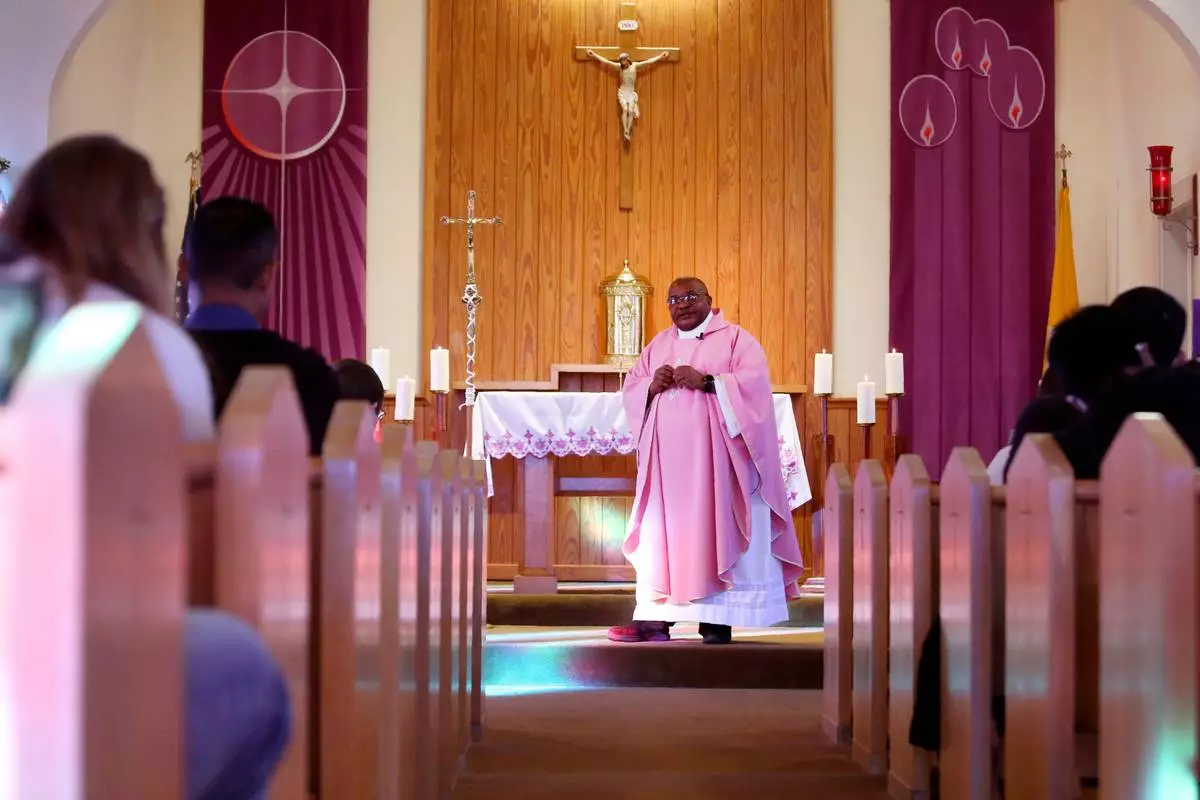
FILE - The Rev. Athanasius Abanulo, from Nigeria, celebrates Mass at Holy Family Catholic Church in Lanett, Ala., on Sunday, Dec. 12, 2021. He is one of numerous international clergy helping ease a U.S. priest shortage by serving in Catholic dioceses across the country. (AP Photo/Jessie Wardarski, File)