WASHINGTON (AP) — A federal appeals court panel has ruled that President Donald Trump cannot use an 18th-century wartime law to speed the deportations of people his administration accuses of being in a Venezuelan gang. The decision blocking an administration priority is destined for a showdown at the U.S. Supreme Court.
Two judges on a three-judge panel of the 5th U.S. Circuit Court of Appeals, in the ruling Tuesday, agreed with immigrant rights lawyers and lower court judges who argued the Alien Enemies Act of 1798 was not intended to be used against gangs such as Tren de Aragua, which the Republican president had targeted in March.
Lee Gelernt, who argued the case for the ACLU, said the administration’s use of "a wartime statute during peacetime to regulate immigration was rightly shut down by the court. This is a critically important decision reining in the administration’s view that it can simply declare an emergency without any oversight by the courts.”
Abigail Jackson, a White House spokeswoman, said the majority erred in second-guessing the president.
“The authority to conduct national security operations in defense of the United States and to remove terrorists from the United States rests solely with the President," Jackson said. "We expect to be vindicated on the merits in this case.”
The administration deported people designated as Tren de Aragua members to a notorious prison in El Salvador and argued that American courts could not order them freed.
In a deal announced in July, more than 250 of the deported migrants returned to Venezuela.
The Alien Enemies Act was only used three times before in U.S. history, all during declared wars — in the War of 1812 and the two world wars.
The administration unsuccessfully argued that courts cannot second-guess the president’s determination that Tren de Aragua was connected to Venezuela’s government and represented a danger to the United States, meriting use of the act.
In a 2-1 ruling, the judges said they granted the preliminary injunction sought by the plaintiffs because they “found no invasion or predatory incursion” in this case.
The decision bars deportations from Texas, Louisiana and Mississippi. In the majority were U.S. Circuit Judges Leslie Southwick, who was nominated by Republican President George W. Bush, and Irma Carrillo Ramirez, who was nominated by Democratic President Joe Biden. Andrew Oldham, a Trump nominee, dissented.
The majority opinion said Trump’s allegations about Tren de Aragua did not meet the historical levels of national conflict that Congress intended for the act.
“A country’s encouraging its residents and citizens to enter this country illegally is not the modern-day equivalent of sending an armed, organized force to occupy, to disrupt, or to otherwise harm the United States,” the judges wrote.
In a lengthy dissent, Oldham complained his two colleagues were second-guessing Trump’s conduct of foreign affairs and national security, realms where courts usually give the president great deference.
“The majority’s approach to this case is not only unprecedented—it is contrary to more than 200 years of precedent,” Oldham wrote.
The panel did grant the Trump administration one legal victory, finding the procedures it uses to advise detainees under the Alien Enemies Act of their legal rights were appropriate.
The ruling can be appealed to the full 5th Circuit or directly to the Supreme Court, which is likely to make the ultimate decision on the issue.
The Supreme Court has already gotten involved twice before in the tangled history of the Trump administration's use of the AEA. In the initial weeks after Trump's March declaration, the court ruled that the administration could deport people under the act, but unanimously found that those targeted needed to be given a reasonable chance to argue their case before judges in the areas where they were held.
Then, as the administration moved to rapidly deport more Venezuelans from Texas, the high court stepped in again with an unusual, post-midnight ruling that they couldn't do so until the 5th Circuit decided whether the administration was providing adequate notice to the immigrants and could weigh in on the broader legal issues of the case. The high court has yet to address whether a gang can be cited as an alien enemy under the AEA.
Associated Press writer Michelle L. Price in Washington contributed to this report
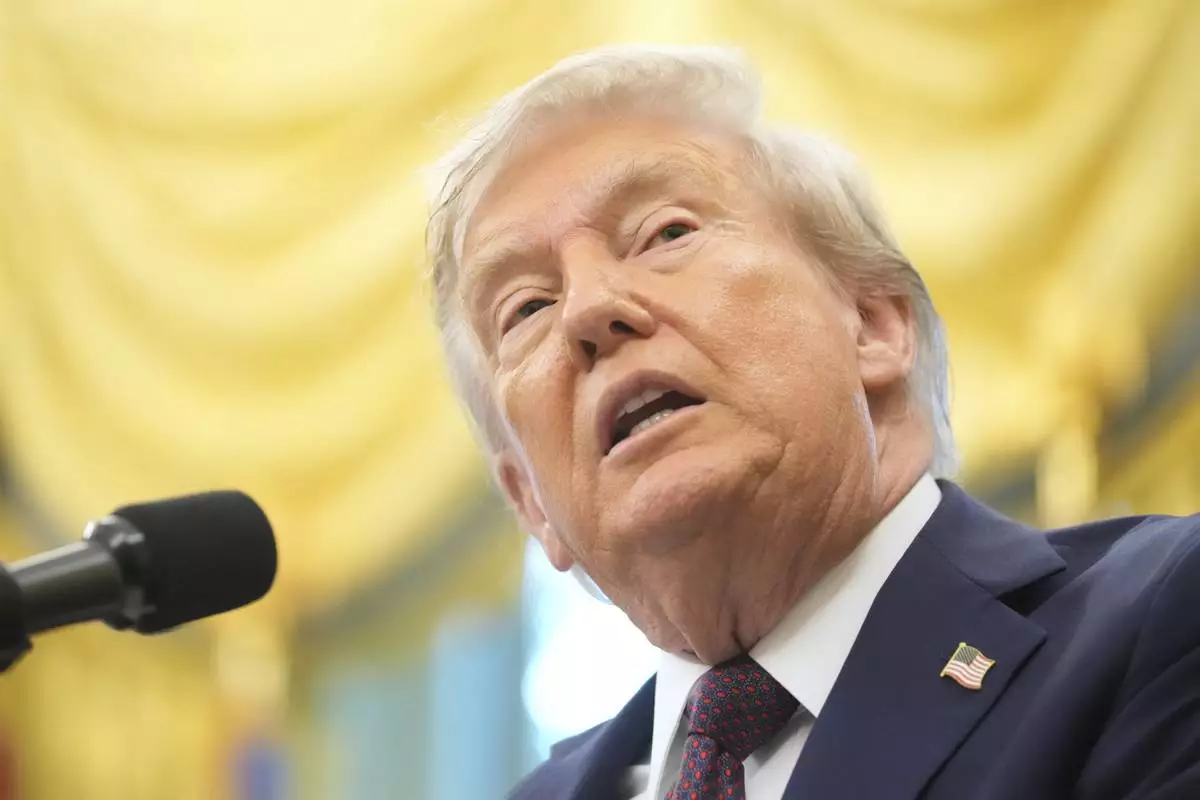
President Donald Trump speaks during an event about the relocation of U.S. Space Command headquarters from Colorado to Alabama in the Oval Office of the White House, Tuesday, Sept. 2, 2025, in Washington. (AP Photo/Mark Schiefelbein)
MINNEAPOLIS (AP) — The Justice Department is investigating whether Minnesota Gov. Tim Walz and Minneapolis Mayor Jacob Frey have impeded federal immigration enforcement through public statements they have made, according to two people familiar with the matter.
The investigation focused on potential violation of a conspiracy statute, the people said.
The people spoke to The Associated Press on condition of anonymity because they were not authorized to discuss a pending investigation by name.
CBS News first reported the investigation.
In response to reports of the investigation, Walz said in a statement: “Two days ago it was Elissa Slotkin. Last week it was Jerome Powell. Before that, Mark Kelly. Weaponizing the justice system and threatening political opponents is a dangerous, authoritarian tactic.”
Walz’s office said it has not received any notice of an investigation.
“This is an obvious attempt to intimidate me for standing up for Minneapolis, our local law enforcement, and our residents against the chaos and danger this Administration has brought to our streets," Frey said in a statement. "I will not be intimidated. My focus will remain where it’s always been: keeping our city safe.
The investigation comes during a weekslong immigration crackdown in Minneapolis and St. Paul that the Department of Homeland Security has called its largest enforcement operation, resulting in more than 2,500 arrests.
The operation has become more confrontational since the fatal shooting of Renee Good on Jan. 7. State and local officials have repeatedly told protesters to remain peaceful.
State authorities, meanwhile, had a message for any weekend protests against the Trump administration’s unprecedented immigration sweep in the Twin Cities: avoid confrontation.
“While peaceful expression is protected, any actions that harm people, destroy property or jeopardize public safety will not be tolerated,” said Commissioner Bob Jacobson of the Minnesota Department of Public Safety.
His comments came after President Donald Trump backed off a bit from his threat a day earlier to invoke an 1807 law, the Insurrection Act, to send troops to suppress demonstrations.
“I don’t think there’s any reason right now to use it, but if I needed it, I’d use it,” Trump told reporters outside the White House.
A Liberian man who has been shuttled in and out of custody since immigration agents broke down his door with a battering ram was released again Friday, hours after a routine check-in with authorities led to his second arrest.
The dramatic initial arrest of Garrison Gibson last weekend was captured on video. U.S. District Judge Jeffrey Bryan ruled the arrest unlawful Thursday and freed him, but Gibson was detained again Friday when he appeared at an immigration office.
A few hours later, Gibson was free again, attorney Marc Prokosch said.
“In the words of my client, he said that somebody at ICE said they bleeped up and so they re-released him this afternoon and so he’s out of custody,” Prokosch said, referring to Immigration and Customs Enforcement.
Gibson, 37, who fled the civil war in his West African home country as a child, had been ordered removed from the U.S., apparently because of a 2008 drug conviction that was later dismissed. He has remained in the country legally under what’s known as an order of supervision, Prokosch said, and complied with the requirement that he meet regularly with immigration authorities.
In his Thursday order, the judge agreed that officials violated regulations by not giving Gibson enough notice that his supervision status had been revoked. Prokosch said he was told by ICE that they are “now going through their proper channels" to revoke the order.
Meanwhile, tribal leaders and Native American rights organizations are advising anyone with a tribal ID to carry it with them when out in public in case they are approached by U.S. Immigration and Customs Enforcement officers.
Native Americans across the U.S. have reported being stopped or detained by ICE, and tribal leaders are asking members to report these contacts.
Ben Barnes, chief of the Shawnee Tribe in Oklahoma and chair of the United Indian Nations of Oklahoma, called the reports “deeply concerning”.
Organizers in Minneapolis have set up application booths in the city to assist people needing a tribal ID.
Democratic members of Congress held a local meeting Friday to hear from people who say they've had aggressive encounters with immigration agents. St. Paul Mayor Kaohly Her, who is Hmong American, said people are walking around with their passports in case they are challenged, and she has received reports of ICE agents going from door to door “asking where the Asian people live.” Thousands of Hmong people, largely from the Southeast Asian nation of Laos, have settled in the United States since the 1970s.
Minneapolis authorities released police and fire dispatch logs and transcripts of 911 calls, all related to the fatal shooting of Good. Firefighters found what appeared to be two gunshot wounds in her right chest, one in her left forearm and a possible gunshot wound on the left side of her head, records show.
“They shot her, like, cause she wouldn’t open her car door,” a caller said. “Point blank range in her car.”
Good, 37, was at the wheel of her Honda Pilot, which was partially blocking a street. Video showed an officer approached the SUV, demanded that she open the door and grabbed the handle.
Good began to pull forward and turned the vehicle's wheel to the right. Another ICE officer, Jonathan Ross, pulled his gun and fired at close range, jumping back as the SUV moved past him. DHS claims the agent shot Good in self-defense.
FBI Director Kash Patel said at least one person has been arrested for stealing property from an FBI vehicle in Minneapolis. The SUV was among government vehicles whose windows were broken Wednesday evening. Attorney General Pam Bondi said body armor and weapons were stolen.
The destruction occurred when agents were responding to a shooting during an immigration arrest. Trump subsequently said on social media that he would invoke the Insurrection Act if Minnesota officials don’t stop the “professional agitators and insurrectionists” there.
Minnesota’s attorney general responded by saying he would sue if the president acts.
Richer and Tucker reported from Washington. Associated Press reporters Steve Karnowski in Minneapolis; Ed White and Corey Williams in Detroit; Graham Lee Brewer in Oklahoma City; Jesse Bedayn in Denver; Audrey McAvoy in Honolulu; Hallie Golden in Seattle; and Ben Finley in Washington contributed.
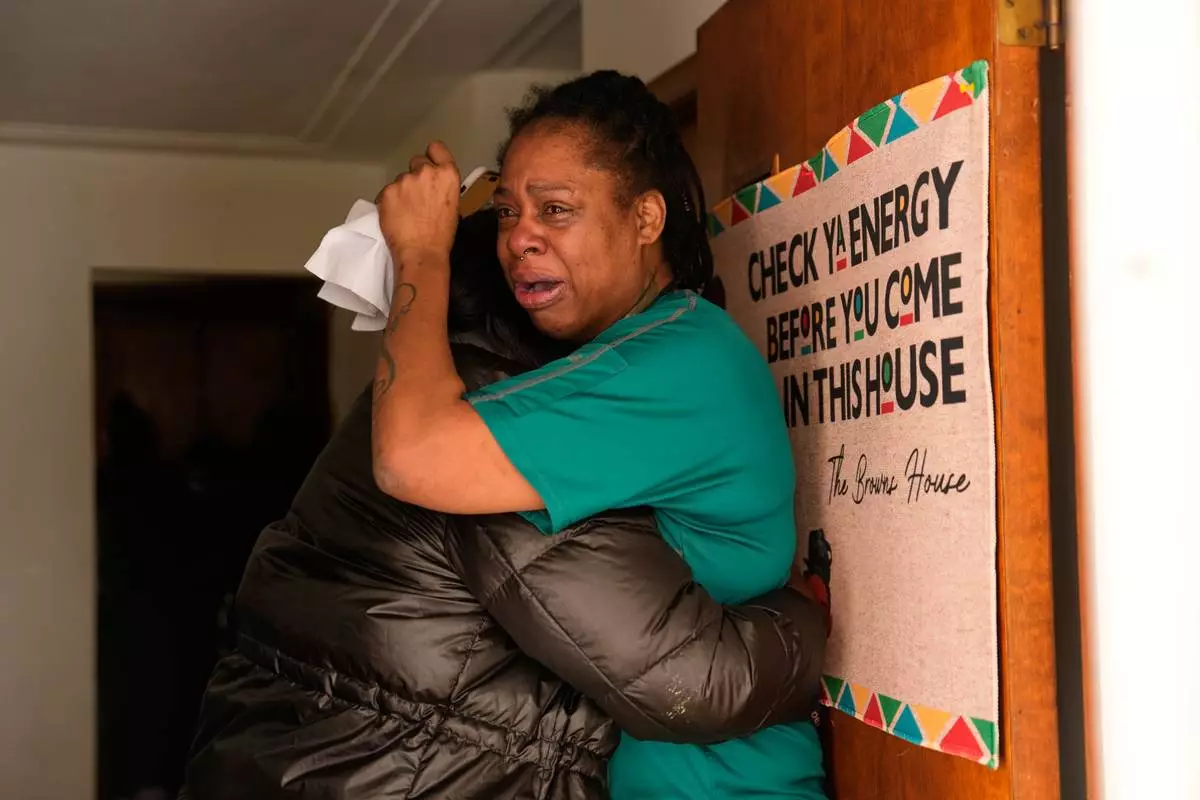
ADDS IDENTIFICATION: Teyana Gibson Brown, right, wife of Garrison Gibson, reacts after federal immigration officers arrested Garrison Gibson, Sunday, Jan. 11, 2026, in Minneapolis. (AP Photo/John Locher)
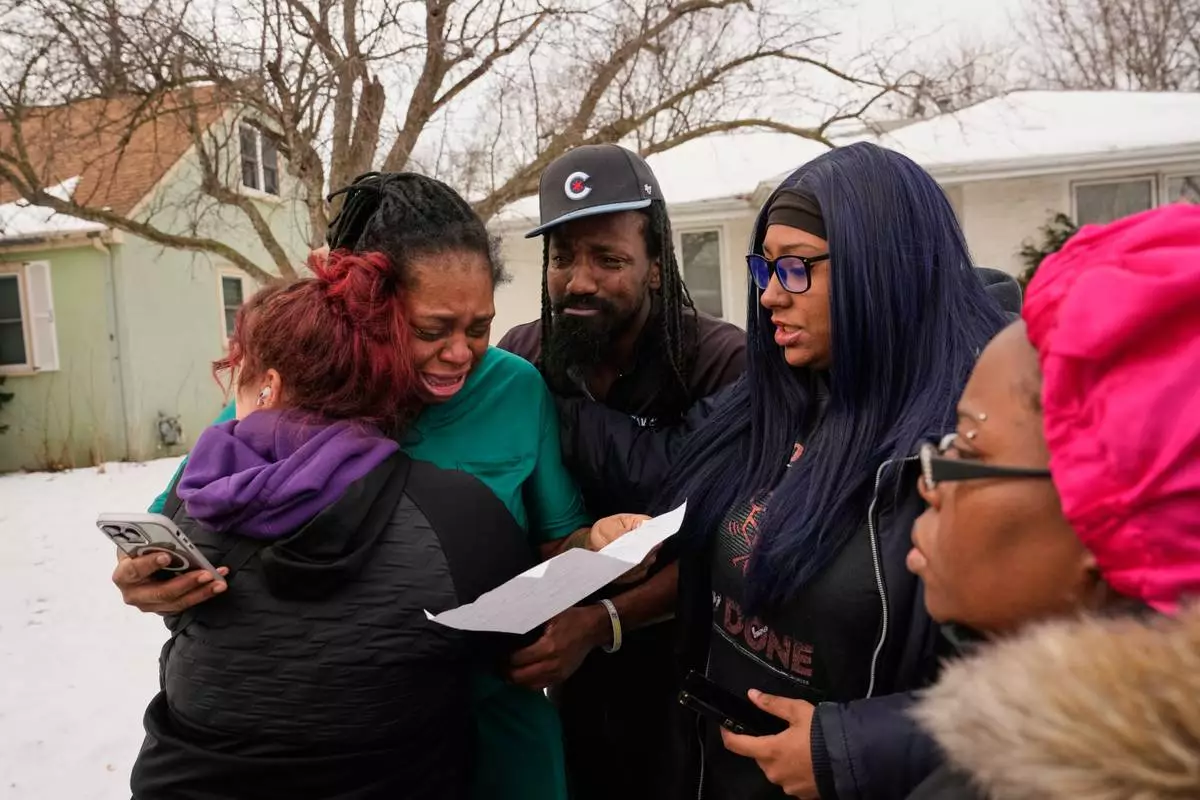
ADDS IDENTIFICATION: Teyana Gibson Brown, second from left, wife of Garrison Gibson, reacts after federal immigration officers arrested Garrison Gibson, Sunday, Jan. 11, 2026, in Minneapolis. (AP Photo/John Locher)
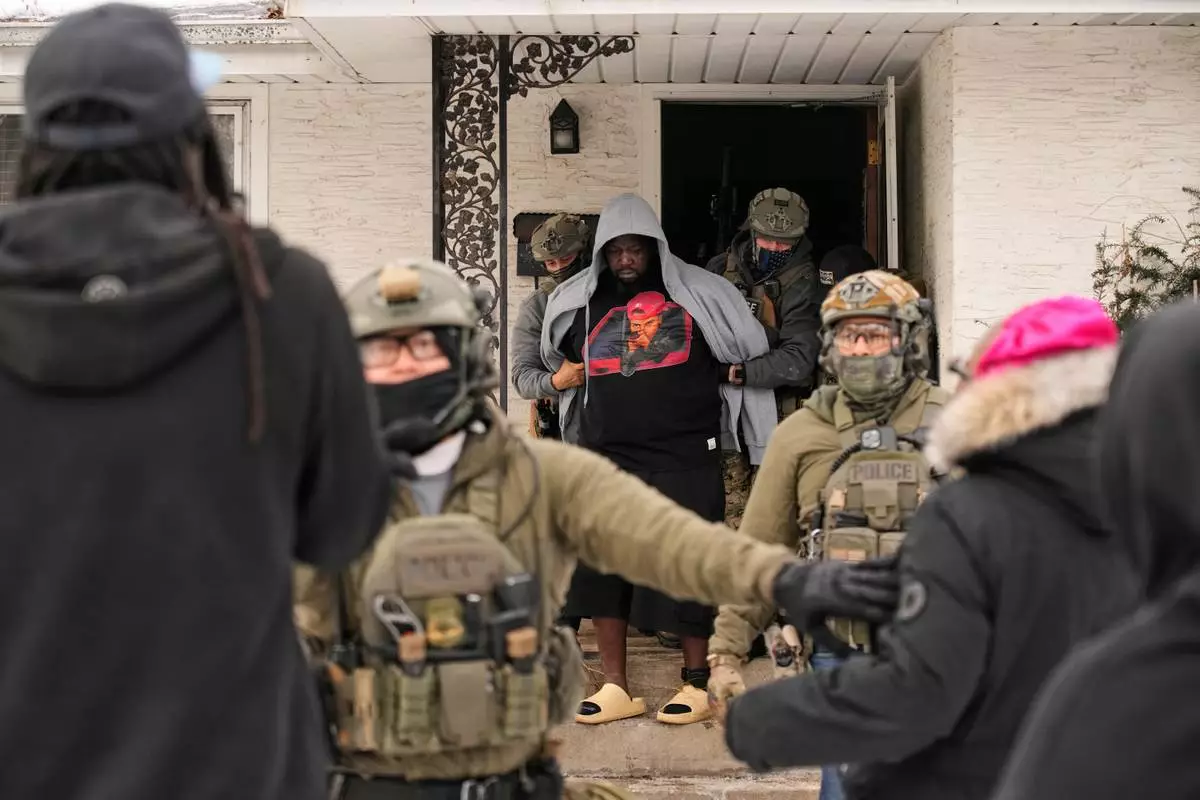
ADDS IDENTIFICATION: Garrison Gibson is arrested by federal immigration officers Sunday, Jan. 11, 2026, in Minneapolis. (AP Photo/John Locher)
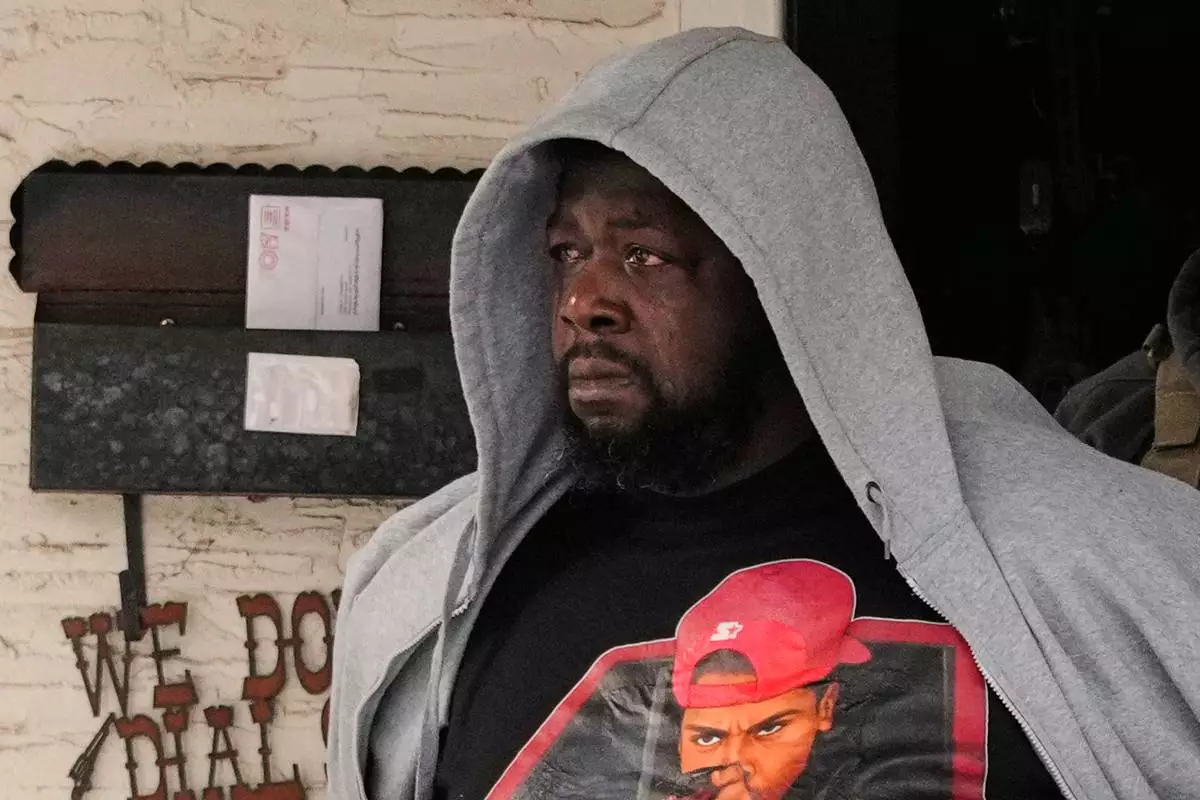
ADDS IDENTIFICATION: Garrison Gibson becomes emotional as he is arrested by federal immigration officers Sunday, Jan. 11, 2026, in Minneapolis. (AP Photo/John Locher)
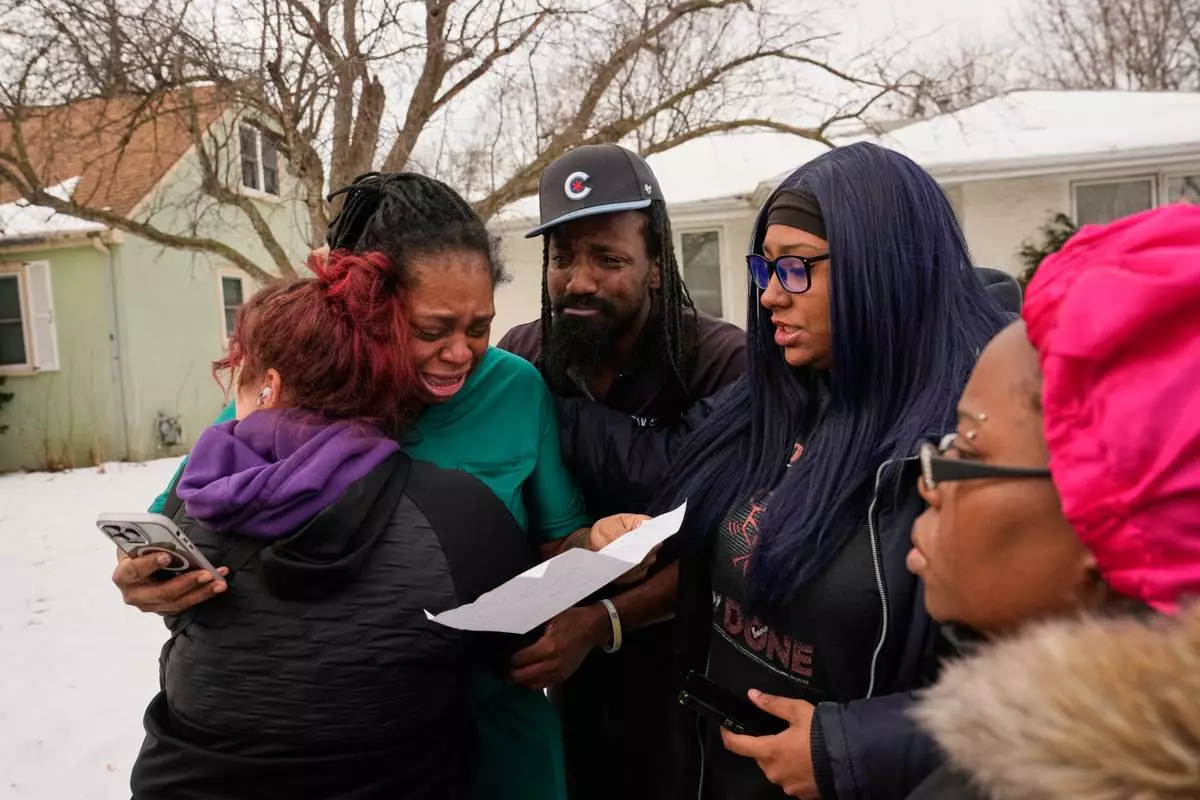
A family member reacts after federal immigration officers make an arrest Sunday, Jan. 11, 2026, in Minneapolis. (AP Photo/John Locher)
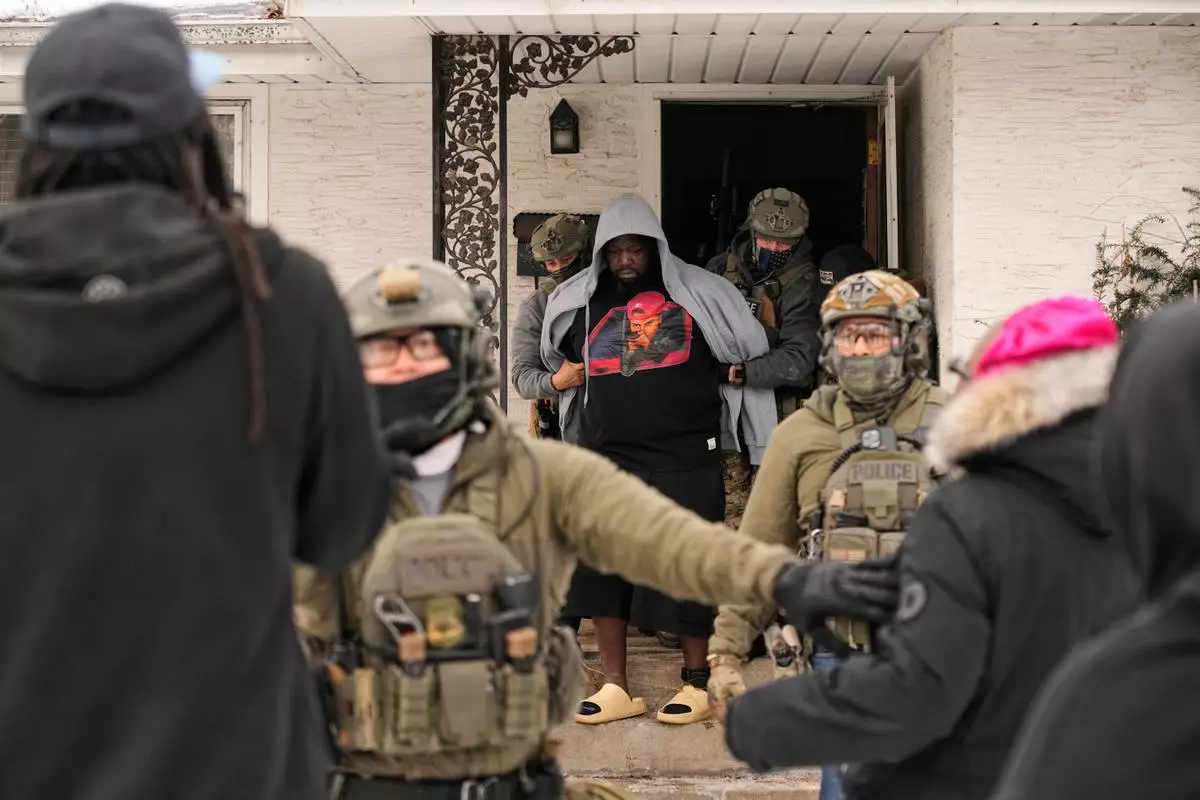
A man is arrested by federal immigration officers Sunday, Jan. 11, 2026, in Minneapolis. (AP Photo/John Locher)
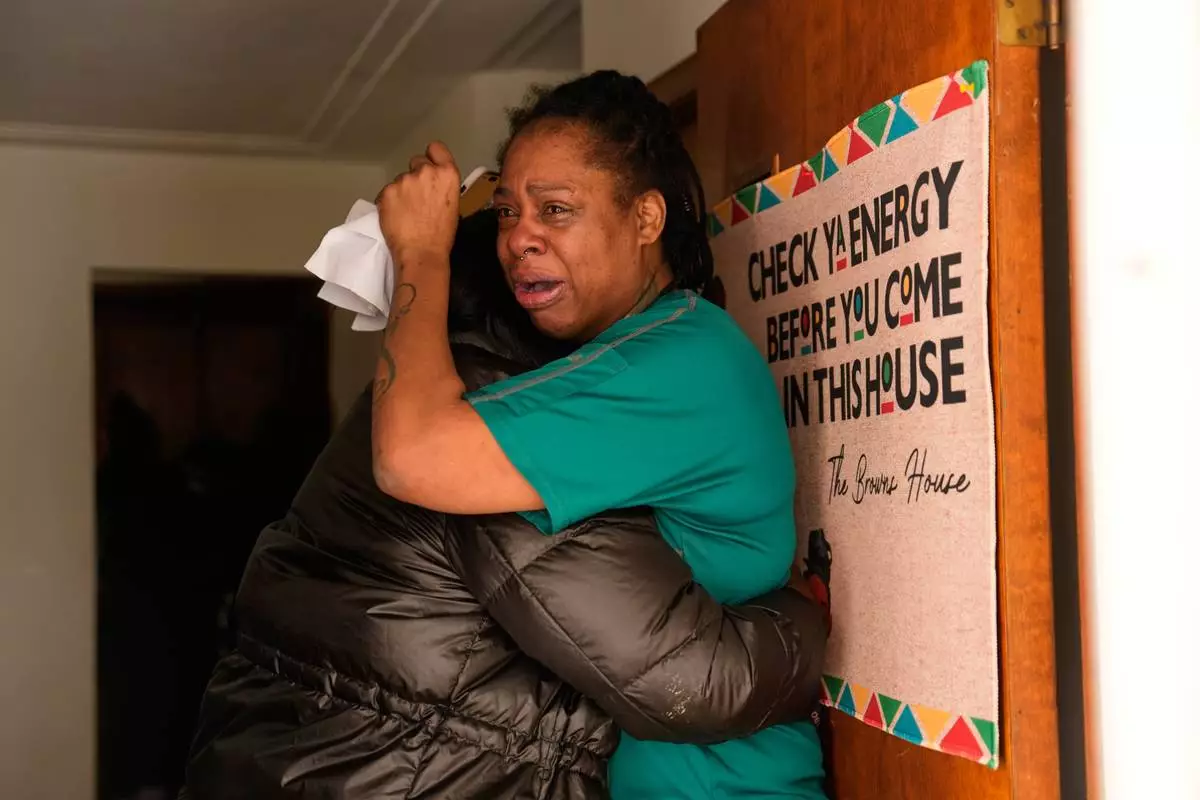
A family member reacts after federal immigration officers make an arrest Sunday, Jan. 11, 2026, in Minneapolis. (AP Photo/John Locher)

A man becomes emotional as he is arrested by federal immigration officers Sunday, Jan. 11, 2026, in Minneapolis. (AP Photo/John Locher)
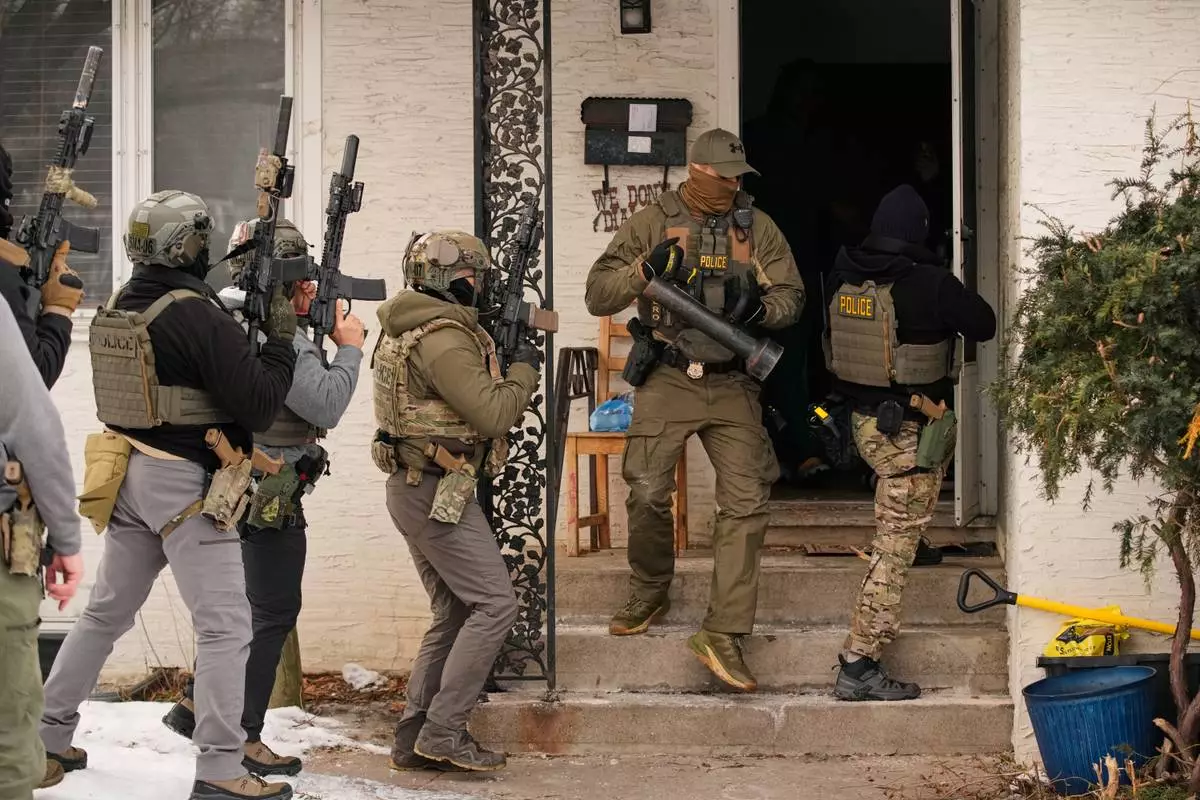
Federal immigration officers prepare to enter a home to make an arrest after an officer used a battering ram to break down a door Sunday, Jan. 11, 2026, in Minneapolis. (AP Photo/John Locher)
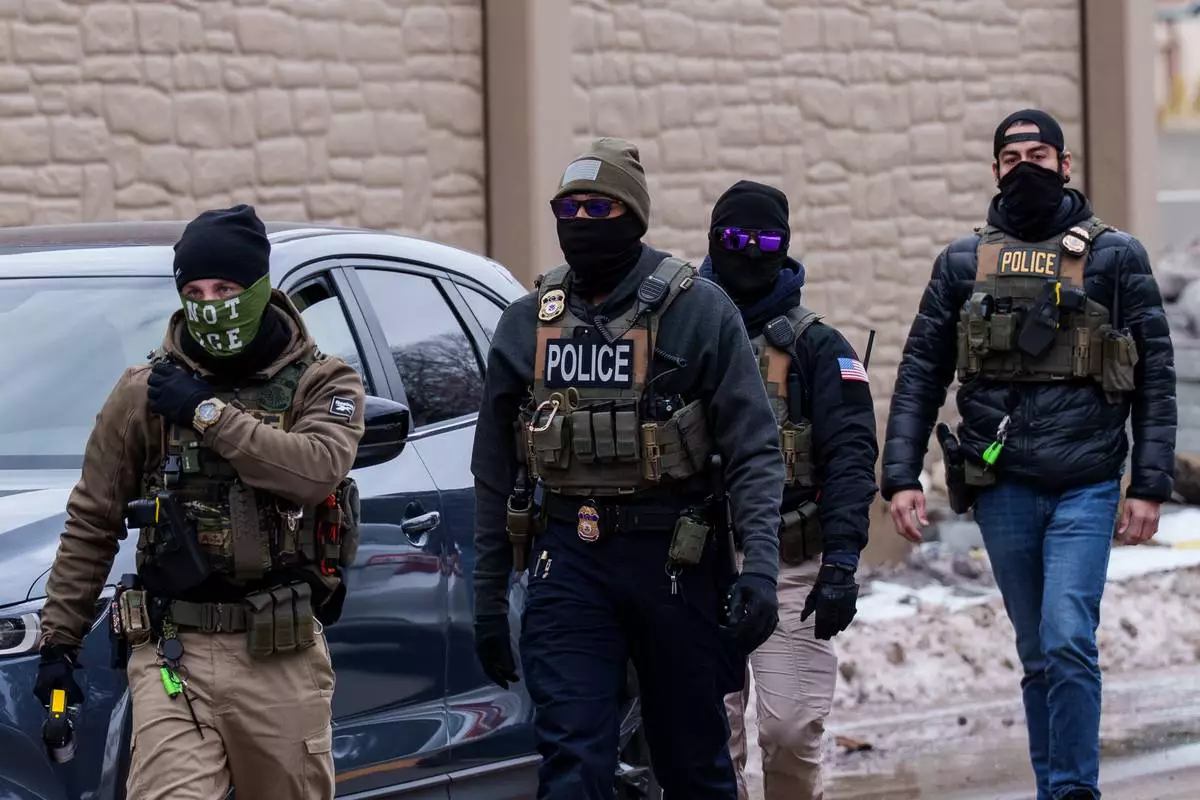
Immigration and Customs Enforcement (ICE) agents, including one wearing a 'NOT ICE' face covering, walk near their vehicles, Thursday, Jan. 15, 2026, in Richfield, Minn. (AP Photo/Adam Gray)
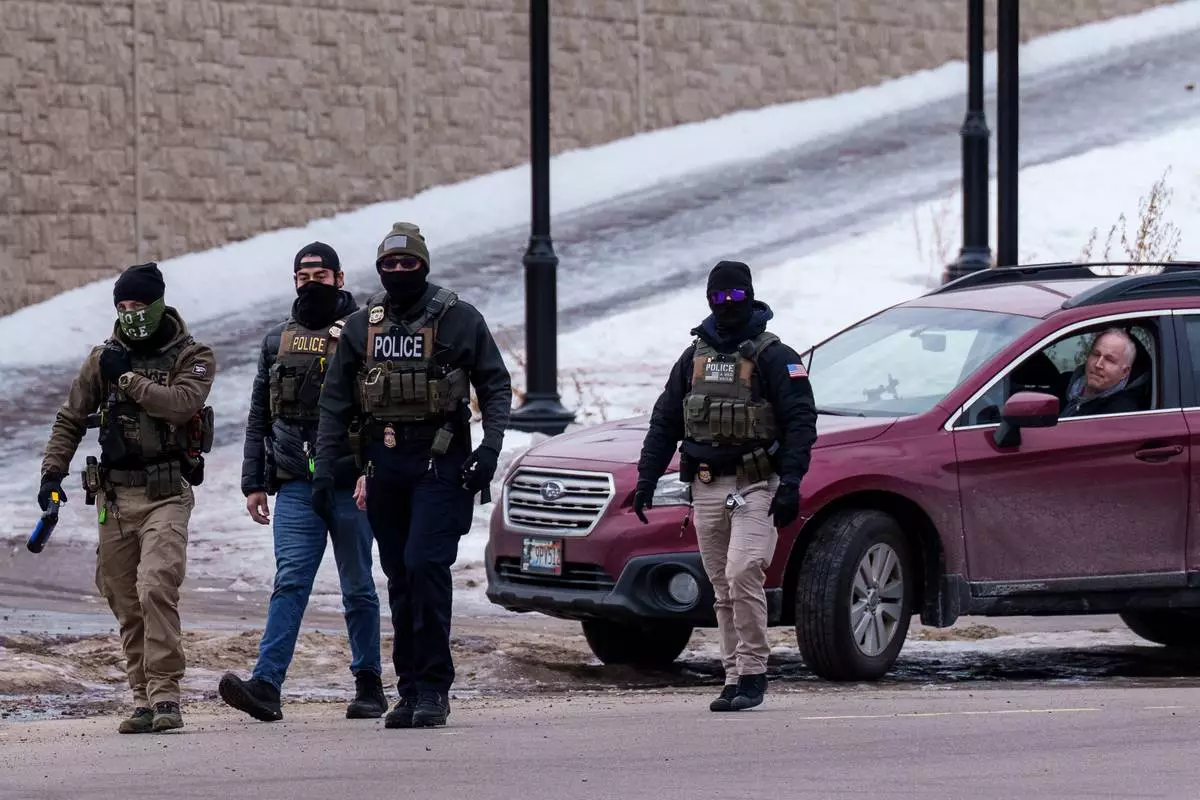
A person looks out of their vehicle as Immigration and Customs Enforcement (ICE) agents walk away, Thursday, Jan. 15, 2026, in Richfield, Minn. (AP Photo/Adam Gray)