BANGKOK (AP) — Thailand's main opposition party agreed on Wednesday to support a rival party's leader to be the next prime minister, in what appears to a move towards resolving the country's political crisis. The Southeast Asian country has been under a caretaker government since last week.
The backing, given by the People’s Party to Anutin Charnvirakul, leader of the Bhumjaithai party, seemed likely to secure him the job, as he claimed to have the backing of a majority of lawmakers.
Click to Gallery
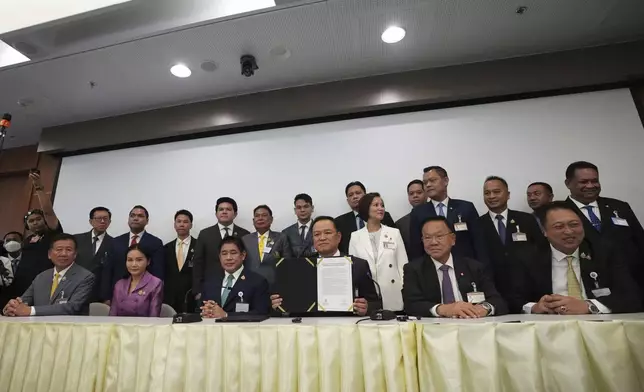
Leader of Bhumjai Thai Party Anutin Charnvirakul, fourth left in front, shows the signed Memorandum of Understanding between his coalition parties and the People's party at Parliament in Bangkok, Thailand, Wednesday, Sept. 3, 2025. (AP Photo/Sakchai Lalit)
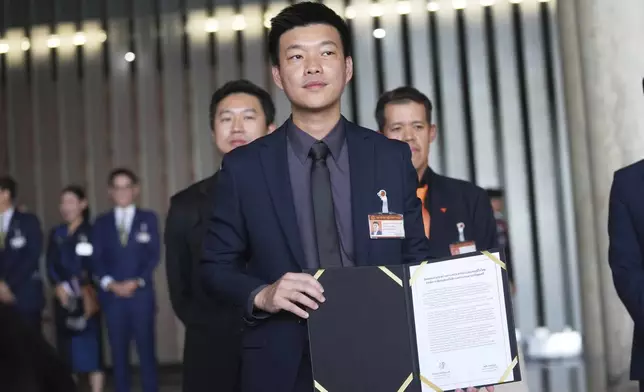
Leader of People's Party, Natthaphong Ruengpanyawut shows the signed Memorandum of Understanding between his party and Bhumjai Thai Party at Parliament in Bangkok, Thailand, Wednesday, Sept. 3, 2025. (AP Photo/Sakchai Lalit)
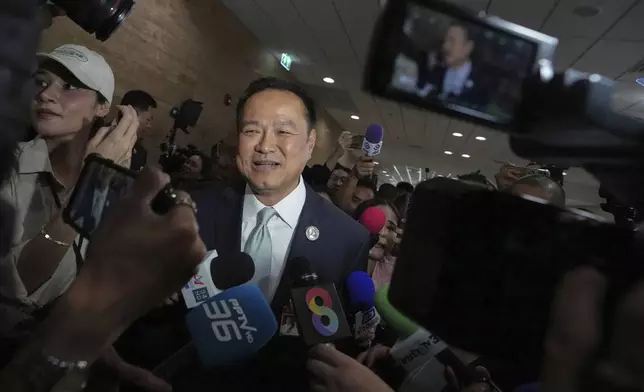
Leader of Bhumjai Thai Party Anutin Charnvirakul leaves after a press conference at Parliament in Bangkok, Thailand, Wednesday, Sept. 3, 2025. (AP Photo/Sakchai Lalit)
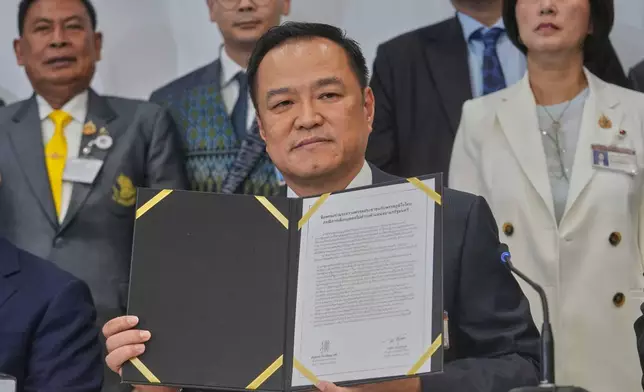
Leader of Bhumjai Thai Party Anutin Charnvirakul shows the signed Memorandum of Understanding between his coalition parties and the People's party at Parliament in Bangkok, Thailand, Wednesday, Sept. 3, 2025. (AP Photo/Sakchai Lalit)
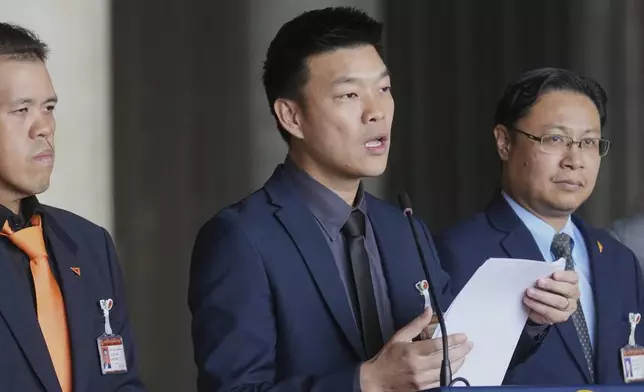
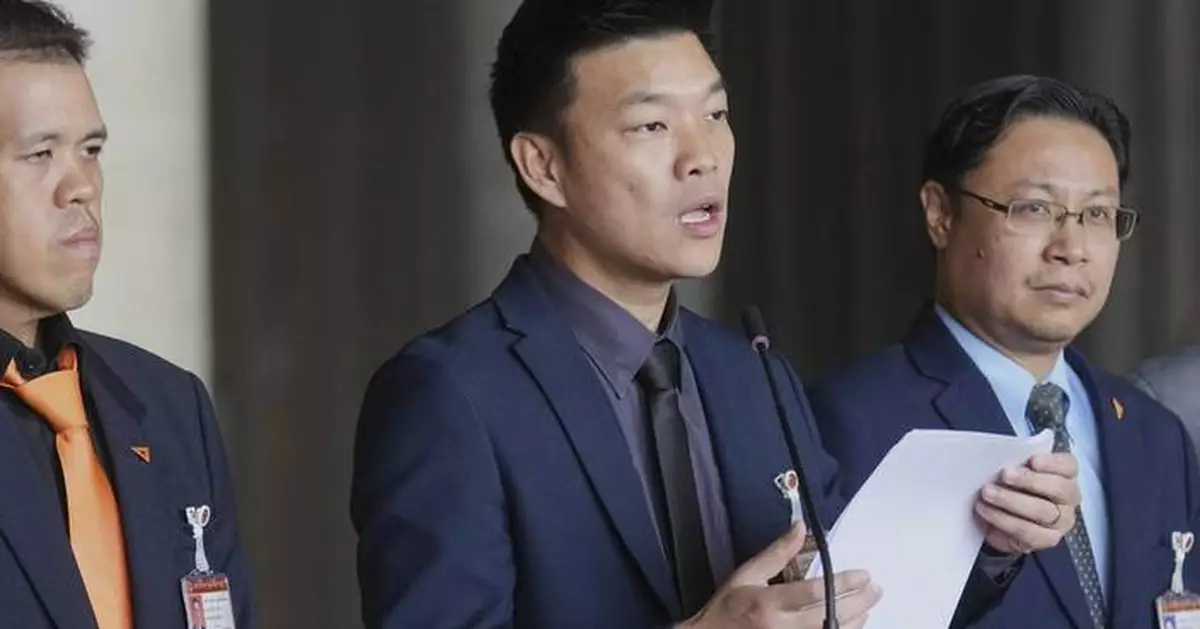
Leader of People's Party, Natthaphong Ruengpanyawut, center, talks to reporters during a press conference at Parliament in Bangkok, Thailand, Wednesday, Sept. 3, 2025. (AP Photo/Sakchai Lalit)
The Parliament's website posted a notice on Wednesday night that the House of Representatives would convene on Friday to vote for a candidate to lead the next government. Five who were nominated during the last general election in 2023 are eligible.
A potential roadblock to the plan appeared to be lifted earlier when the king's Privy Council reportedly rejected a request from the caretaker government, led by the Pheu Thai party, to dissolve Parliament and call new polls, instead of letting the current House of Representatives pick a new prime minister.
Thai media, citing only an unidentified “source,” said the draft royal decree for dissolution submitted by the caretaker government was rejected because it was legally faulty. Parliament would be unlikely to proceed with a vote if it believed King Maha Vajiralongkorn intended to approve dissolution.
The Constitutional Court last week dismissed Pheu Thai's Paetongtarn Shinawatra as prime minister for breaching ethics laws in a phone call with Cambodia’s Senate President Hun Sen about tensions over competing claims along their border, which erupted into a deadly five-day armed conflict in July.
Anutin claims he has secured 146 votes from his own party and its allies, while the 143 People's Party lawmakers will also support him, easily exceeding the 247 majority he needs out of the 492 House members currently serving
The 58-year-old Anutin has served in the Pheu Thai-led coalition government that took power in 2023, and before that in the military-backed but elected government under Prime Minister Prayuth Chan-ocha, a former army commander.
He is best known for successfully lobbying for the decriminalization of cannabis, a policy that is now in the process of being more strictly regulated for medical purposes. He also played a high-profile role as health minister during the COVID-19 pandemic, when he was accused of tardiness in obtaining adequate vaccine supplies to fight the virus.
People's Party leader Natthaphong Ruengpanyawut said his group could not support Pheu Thai because it had had failed to govern effectively in its two years in power.
However, he explained that its support for Anutin was contingent on conditions specified in an agreement signed by the Bhumjaithai party leader, including that the prospective new government must dissolve the House of Representatives within four months and call a general election.
An Anutin-led government would also have to commit to organizing a referendum on constitutional amendments to allow the drafting of a new constitution by an elected constituent assembly. The People's Party has long sought changes in the constitution — which was imposed during a military government — to make it more democratic.
The People’s Party, then operating under the name the Move Forward party, had won the most seats in the 2023 election, but was kept from taking power when a joint vote of the House and the Senate failed to approve its candidate. Senators, who were appointed by a military government and were strong supporters of Thailand's royalist conservative establishment, voted against the progressive party because they opposed its policy of seeking reforms to the monarchy. The Senate no longer holds the right to take part in the vote for prime ministers.
After Move Forward was blocked from taking power, the Pheu Thai party then had one of its candidates, real estate executive Srettha Thavisin, approved as prime minister to lead a coalition government. But he served just a year before the Constitutional Court dismissed him from office for ethical violations.
Srettha’s replacement Paetongtarn, former Prime Minister Thaksin Shinawatra's daughter, also lasted just a year in office. But even before she was forced out, her government was greatly weakened when Anutin's Bhumjaithai party abandoned her coalition right after her controversial call in June with Cambodia’s Hun Sen. Its withdrawal left Pheu Thai’s coalition with just a tiny and unstable majority in Parliament.
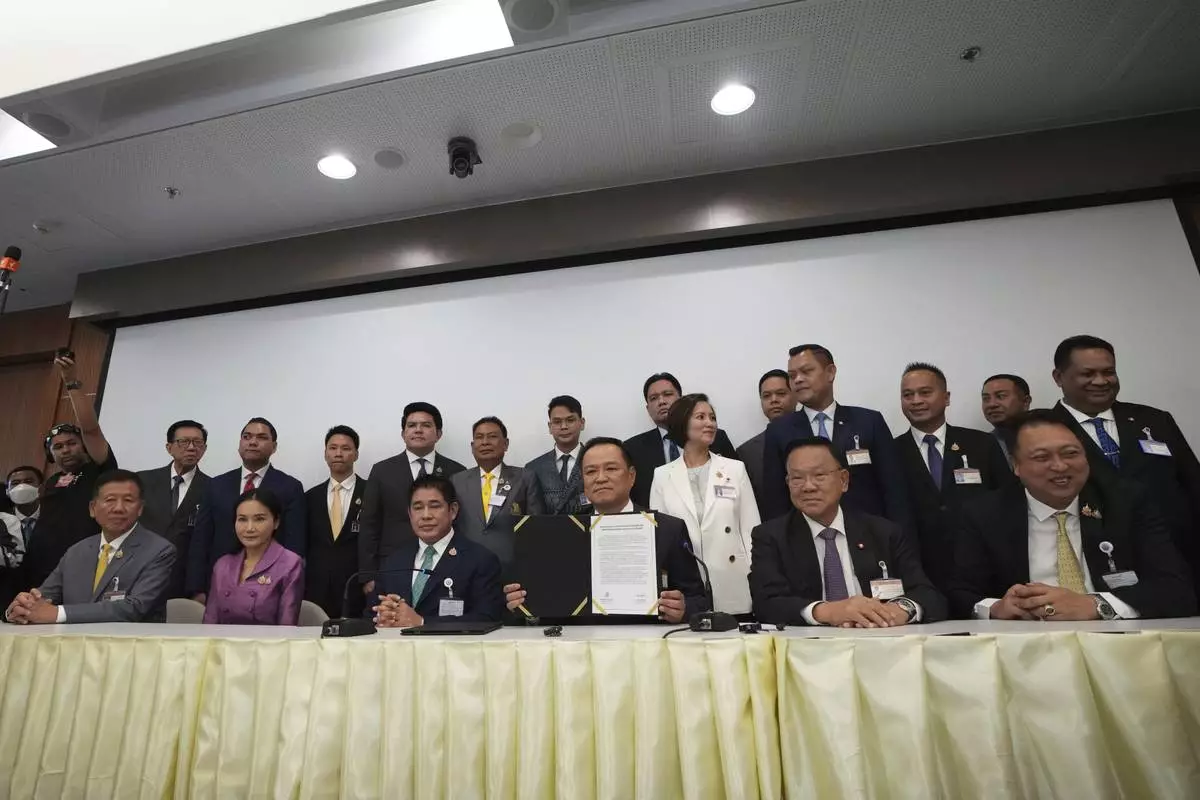
Leader of Bhumjai Thai Party Anutin Charnvirakul, fourth left in front, shows the signed Memorandum of Understanding between his coalition parties and the People's party at Parliament in Bangkok, Thailand, Wednesday, Sept. 3, 2025. (AP Photo/Sakchai Lalit)
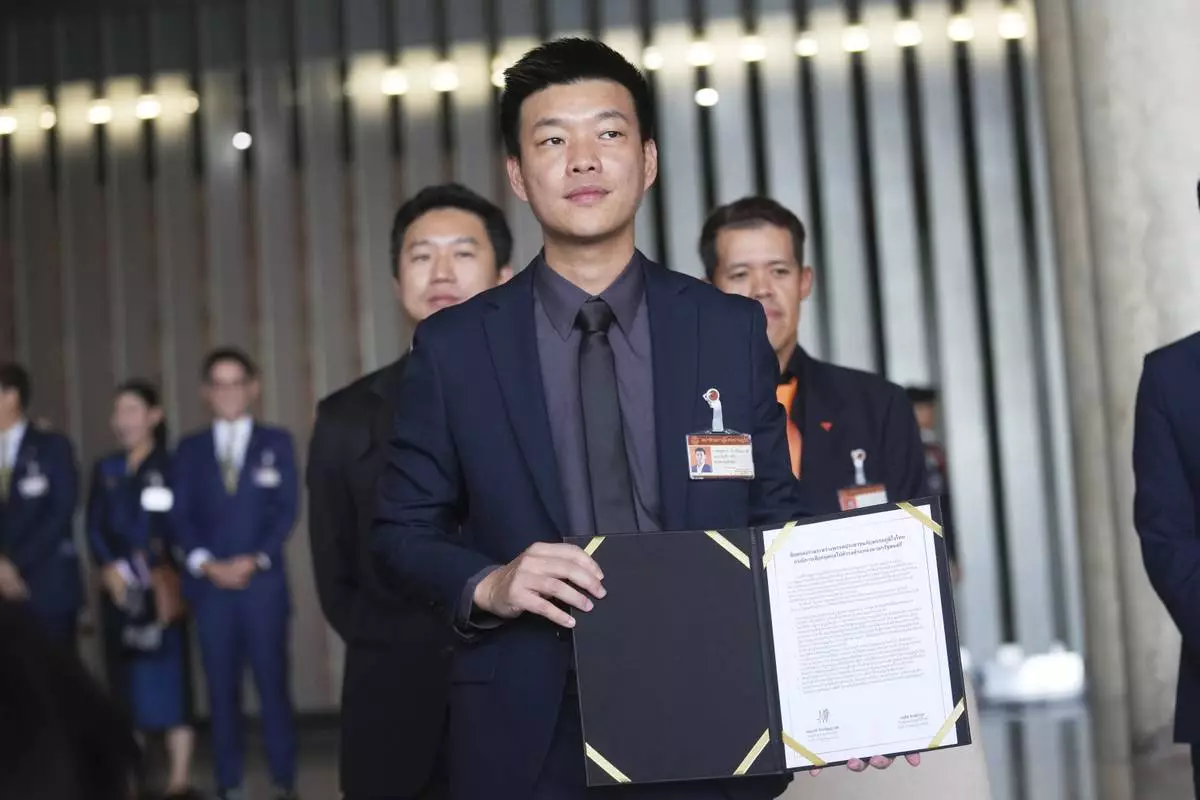
Leader of People's Party, Natthaphong Ruengpanyawut shows the signed Memorandum of Understanding between his party and Bhumjai Thai Party at Parliament in Bangkok, Thailand, Wednesday, Sept. 3, 2025. (AP Photo/Sakchai Lalit)
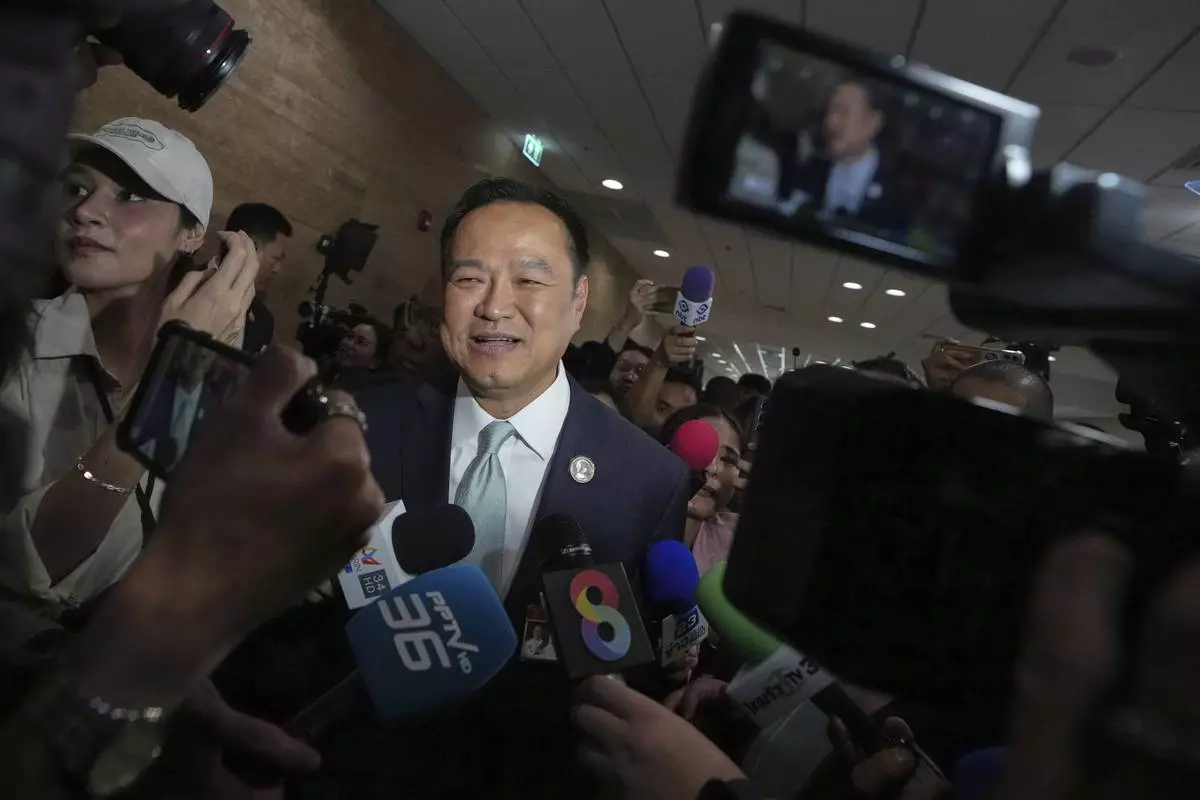
Leader of Bhumjai Thai Party Anutin Charnvirakul leaves after a press conference at Parliament in Bangkok, Thailand, Wednesday, Sept. 3, 2025. (AP Photo/Sakchai Lalit)
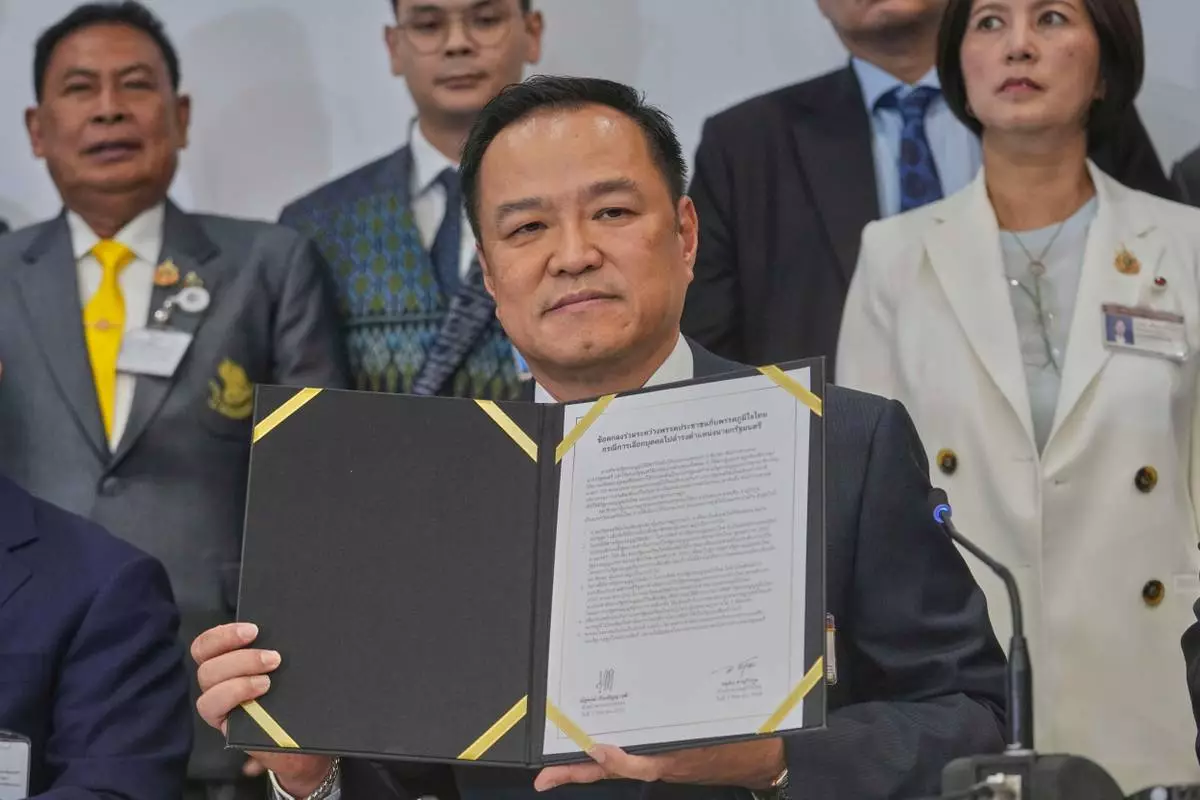
Leader of Bhumjai Thai Party Anutin Charnvirakul shows the signed Memorandum of Understanding between his coalition parties and the People's party at Parliament in Bangkok, Thailand, Wednesday, Sept. 3, 2025. (AP Photo/Sakchai Lalit)
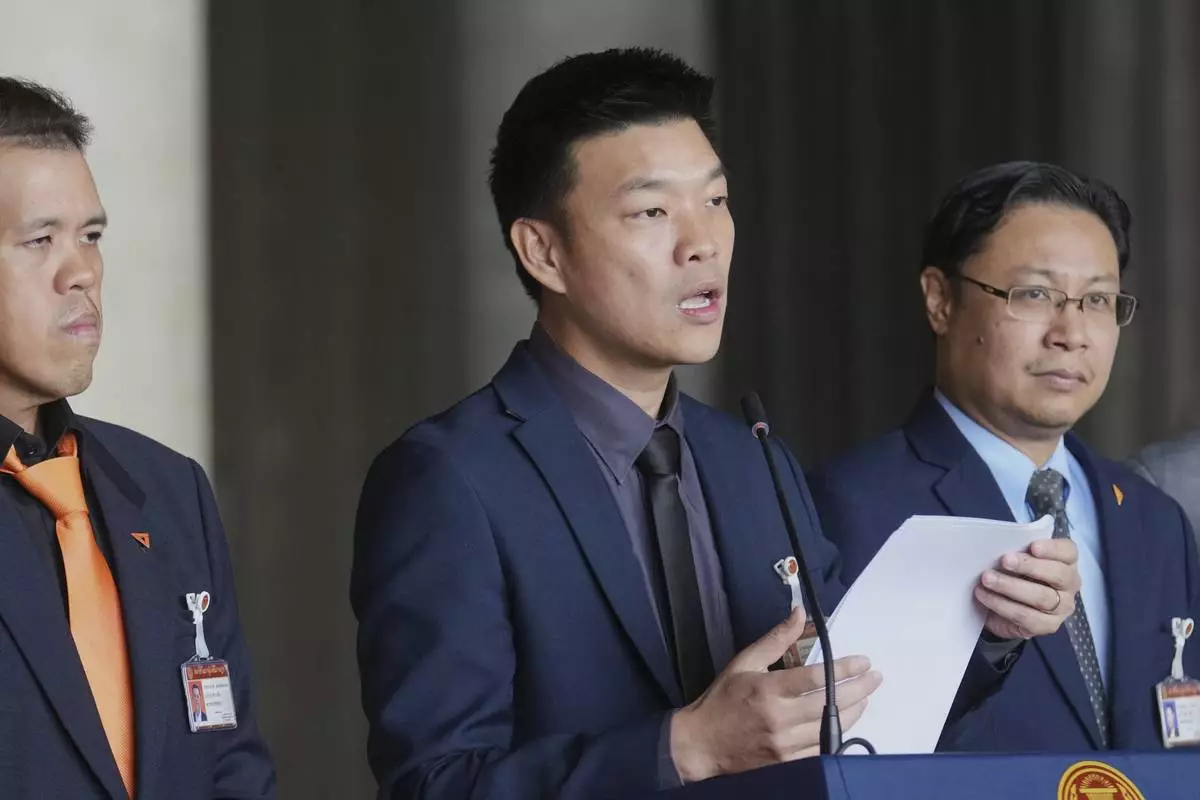
Leader of People's Party, Natthaphong Ruengpanyawut, center, talks to reporters during a press conference at Parliament in Bangkok, Thailand, Wednesday, Sept. 3, 2025. (AP Photo/Sakchai Lalit)