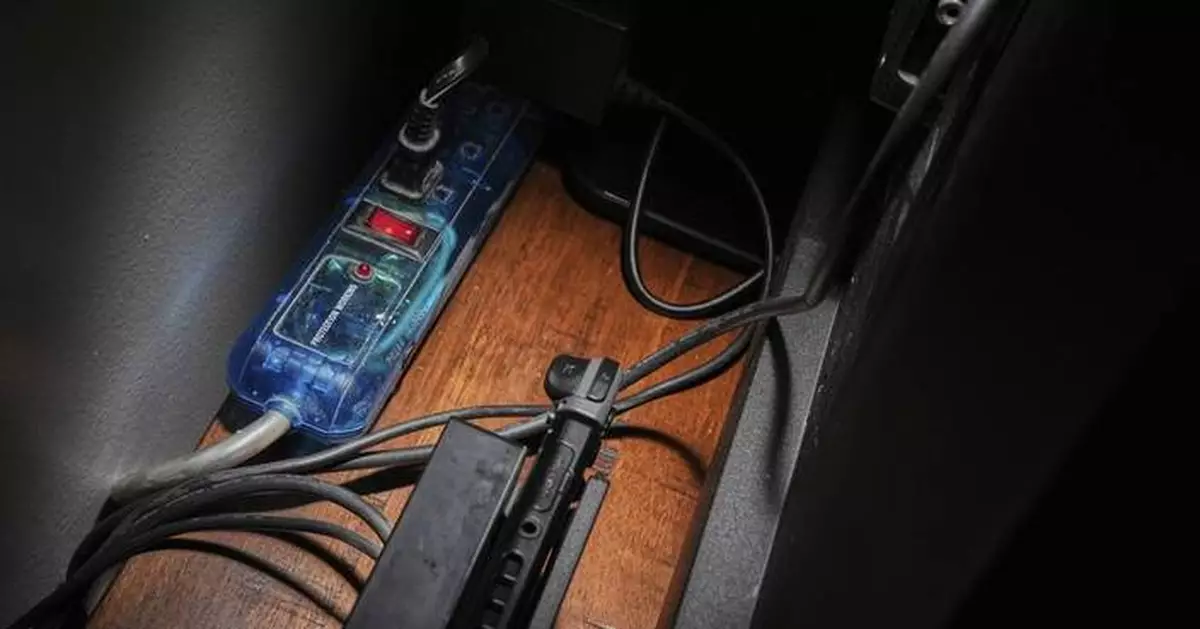
The lights are off, the house is quiet and nothing seems to be running. But electricity is silently flowing through the plugs in your home. This hidden drain is known as phantom energy.
Also called vampire energy, the wasted electricity comes from leaving devices plugged in when they're not in use. That could range from household items such as phone chargers and microwaves to TVs and gaming consoles.
This wasted electricity accounts for about 5% to 10% of home energy use, depending on factors like the age of the equipment, according to Alexis Abramson, dean of the Columbia Climate School.
“Phantom energy depends on ... what kind of systems you have and how much they’ve improved over time,” said Abramson.
For example, televisions that are connected to the internet and have smart wake features that allow them to interact with phones and other devices can consume up to 40 watts of energy during the hours of the day that the TV would normally be off, according to Matt Malinowski, director of the buildings program at the American Council for an Energy-Efficient Economy. That's almost 40 times as much as a regular television.
“The good news is there have been new, renewed efforts to tackle this,” said Malinowski.
He said advocates and manufacturers have come up with a voluntary agreement seeking to reduce the amount of energy smart televisions use when they're in standby mode.
Phantom energy contributes to climate change because power drawn by unused devices can increase demand for electricity from sources that release planet-warming emissions. Aidan Charron, associate director of Global Earth Day, said that while the amount may seem small when a person looks at their individual utility bill, the environmental toll of phantom energy is significant when multiplied over homes across the country.
“Just take a little step of unplugging the things that you’re not using,” said Charron. “It will save you money and it’ll save emissions in the long run.”
Some of the main culprits when it comes to draining energy are appliances that are constantly connected to electricity, such as those with a clock.
“Do you really need your microwave to tell you the time, or can you unplug your microwave when you’re not using it?” said Charron.
While unplugging devices may seem burdensome, it significantly contributes to reducing emissions.
Charron recommends starting with small steps like unplugging chargers for phones and other devices once the battery is fully charged. The next step is moving to other appliances such as unplugging an unused lamp.
If unplugging sounds too hard, regularly checking your settings and disabling any extra feature you’re not using that could be draining energy help, too. For example, smart televisions often have optional features that can be turned off so the television isn't listening for signals from other devices while in standby mode.
“If you’re not using it, then you’re getting no benefit, yet you’re paying the price and increased the energy use,” said Malinowski.
Individuals also tend to take more sustainable actions, such as unplugging devices, once they learn what they can do to decrease their household emissions efficiently. Those actions could contribute to reducing U.S. emissions by about 20% per year, which equals about 450 tons (408 metric tons) of carbon dioxide, according to Jonathan Gilligan, a professor of earth and environmental science at Vanderbilt University.
The choices individuals take in their daily lives all add up, Gilligan said, mainly because of how much the U.S. population contributes to direct greenhouse gas emissions.
“The question becomes, what can we do to try to address this?” said Gilligan. “Phantom power is one part of this.”
The more individuals decrease their footprint, the more likely it is that others will follow, too, and eventually, those actions may turn to societal norms, according to Gilligan, because individuals don’t want to feel like they’re being irresponsible.
“This is a place where psychologists find that this effect is real. If people see that other people are doing actions to reduce their greenhouse gas emissions, they want to do that” said Giligan.
When it comes to daily choices, individuals may think what they’re doing isn’t really making a big difference. But what they tend to overlook is how they influence others around them by choosing to live a more sustainable life.
The impact may be much stronger than a lot of people realize, Gilligan said.
The Associated Press’ climate and environmental coverage receives financial support from multiple private foundations. AP is solely responsible for all content. Find AP’s standards for working with philanthropies, a list of supporters and funded coverage areas at AP.org.
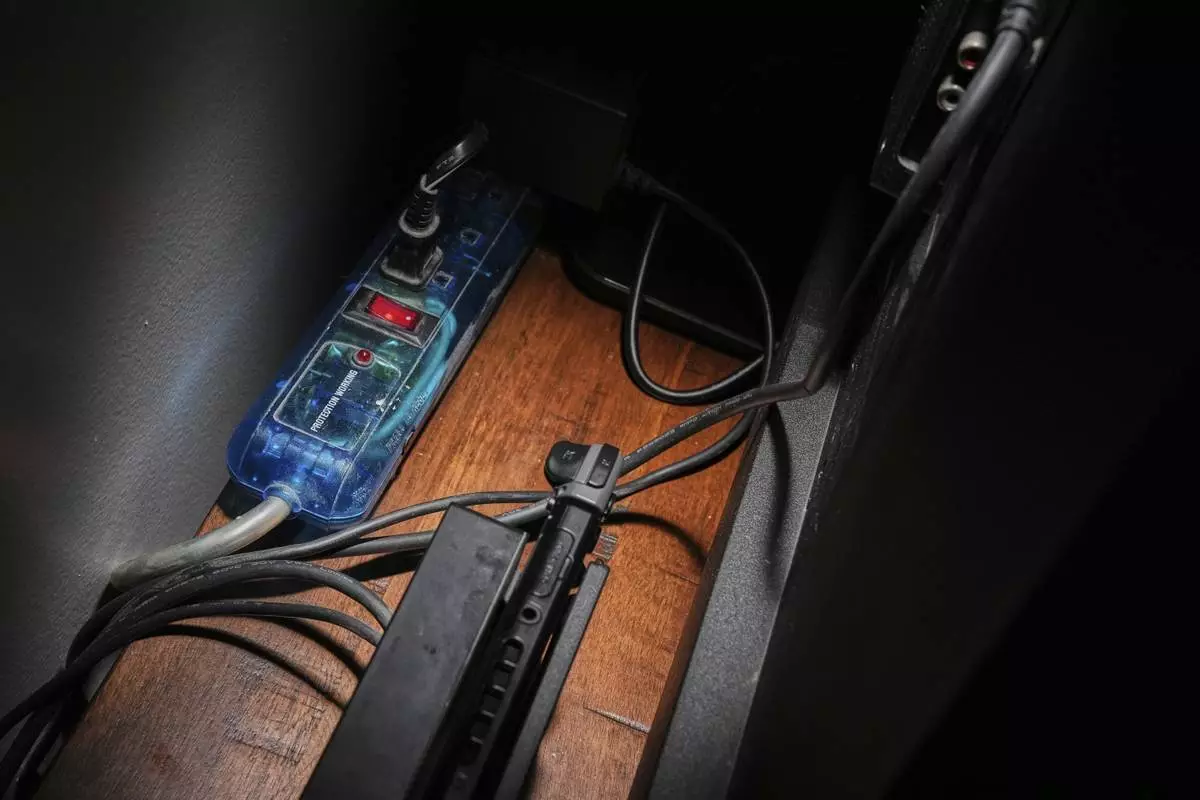
Electronics are plugged in at a home Tuesday, Sept. 2, 2025, in Cincinnati. (AP Photo/Joshua A. Bickel)
WASHINGTON (AP) — The Justice Department is investigating whether Minnesota Gov. Tim Walz and Minneapolis Mayor Jacob Frey have impeded federal immigration enforcement through public statements they have made, according to two people familiar with the matter.
The investigation focused on potential violation of a conspiracy statute, the people said.
The people spoke to The Associated Press on condition of anonymity because they were not authorized to discuss a pending investigation by name.
CBS News first reported the investigation.
In response to reports of the investigation, Walz said in a statement: “Two days ago it was Elissa Slotkin. Last week it was Jerome Powell. Before that, Mark Kelly. Weaponizing the justice system and threatening political opponents is a dangerous, authoritarian tactic.”
Walz’s office said it has not received any notice of an investigation.
Minneapolis Mayor Jacob Frey’s office did not immediately respond to an email and voicemail requesting comment.
The investigation comes during a weekslong immigration crackdown in Minneapolis and St. Paul that the Department of Homeland Security has called its largest enforcement operation, resulting in more than 2,500 arrests.
The operation has become more confrontational since the fatal shooting of Renee Good on Jan. 7. State and local officials have repeatedly told protesters to remain peaceful.
THIS IS A BREAKING NEWS UPDATE. AP’s earlier story follows below.
MINNEAPOLIS (AP) — A Liberian man who has been shuttled in and out of custody since immigration agents in Minnesota broke down his door with a battering ram was released again Friday, hours after a routine check-in with authorities led to his second arrest.
State authorities, meanwhile, had a message for any weekend protests against the Trump administration's unprecedented immigration sweep in the Twin Cities: avoid confrontation.
“While peaceful expression is protected, any actions that harm people, destroy property or jeopardize public safety will not be tolerated,” said Commissioner Bob Jacobson of the Minnesota Department of Public Safety.
His comments came after President Donald Trump backed off a bit from his threat a day earlier to invoke an 1807 law, the Insurrection Act, to send troops to suppress demonstrations.
“I don’t think there’s any reason right now to use it, but if I needed it, I’d use it," Trump told reporters outside the White House.
The dramatic initial arrest of Garrison Gibson last weekend was captured on video. U.S. District Judge Jeffrey Bryan ruled the arrest unlawful Thursday and freed him, but Gibson was detained again Friday when he appeared at an immigration office.
A few hours later, Gibson was free again, attorney Marc Prokosch said.
“In the words of my client, he said that somebody at ICE said they bleeped up and so they re-released him this afternoon and so he’s out of custody,” Prokosch said, referring to Immigration and Customs Enforcement.
Gibson’s arrest is one of more than 2,500 made during a weekslong immigration crackdown in Minneapolis and St. Paul, according to the Department of Homeland Security. The operation has intensified and become more confrontational since the fatal shooting of Renee Good on Jan. 7.
Gibson, 37, who fled the civil war in his West African home country as a child, had been ordered removed from the U.S., apparently because of a 2008 drug conviction that was later dismissed. He has remained in the country legally under what’s known as an order of supervision, Prokosch said, and complied with the requirement that he meet regularly with immigration authorities.
In his Thursday order, the judge agreed that officials violated regulations by not giving Gibson enough notice that his supervision status had been revoked. Prokosch said he was told by ICE that they are “now going through their proper channels" to revoke the order.
Meanwhile, tribal leaders and Native American rights organizations are advising anyone with a tribal ID to carry it with them when out in public in case they are approached by U.S. Immigration and Customs Enforcement officers.
Native Americans across the U.S. have reported being stopped or detained by ICE, and tribal leaders are asking members to report these contacts.
Ben Barnes, chief of the Shawnee Tribe in Oklahoma and chair of the United Indian Nations of Oklahoma, called the reports “deeply concerning”.
Organizers in Minneapolis have set up application booths in the city to assist people needing a tribal ID.
Democratic members of Congress held a local meeting Friday to hear from people who say they've had aggressive encounters with immigration agents. St. Paul Mayor Kaohly Her, who is Hmong American, said people are walking around with their passports in case they are challenged, and she has received reports of ICE agents going from door to door “asking where the Asian people live.” Thousands of Hmong people, largely from the Southeast Asian nation of Laos, have settled in the United States since the 1970s.
Minneapolis authorities released police and fire dispatch logs and transcripts of 911 calls, all related to the fatal shooting of Good. Firefighters found what appeared to be two gunshot wounds in her right chest, one in her left forearm and a possible gunshot wound on the left side of her head, records show.
“They shot her, like, cause she wouldn’t open her car door,” a caller said. “Point blank range in her car.”
Good, 37, was at the wheel of her Honda Pilot, which was partially blocking a street. Video showed an officer approached the SUV, demanded that she open the door and grabbed the handle.
Good began to pull forward and turned the vehicle's wheel to the right. Another ICE officer, Jonathan Ross, pulled his gun and fired at close range, jumping back as the SUV moved past him. DHS claims the agent shot Good in self-defense.
FBI Director Kash Patel said at least one person has been arrested for stealing property from an FBI vehicle in Minneapolis. The SUV was among government vehicles whose windows were broken Wednesday evening. Attorney General Pam Bondi said body armor and weapons were stolen.
The destruction occurred when agents were responding to a shooting during an immigration arrest. Trump subsequently said on social media that he would invoke the Insurrection Act if Minnesota officials don’t stop the “professional agitators and insurrectionists” there.
Minnesota’s attorney general responded by saying he would sue if the president acts.
Associated Press reporters Ed White and Corey Williams in Detroit; Graham Lee Brewer in Oklahoma City; Jesse Bedayn in Denver; Audrey McAvoy in Honolulu; and Ben Finley in Washington contributed.
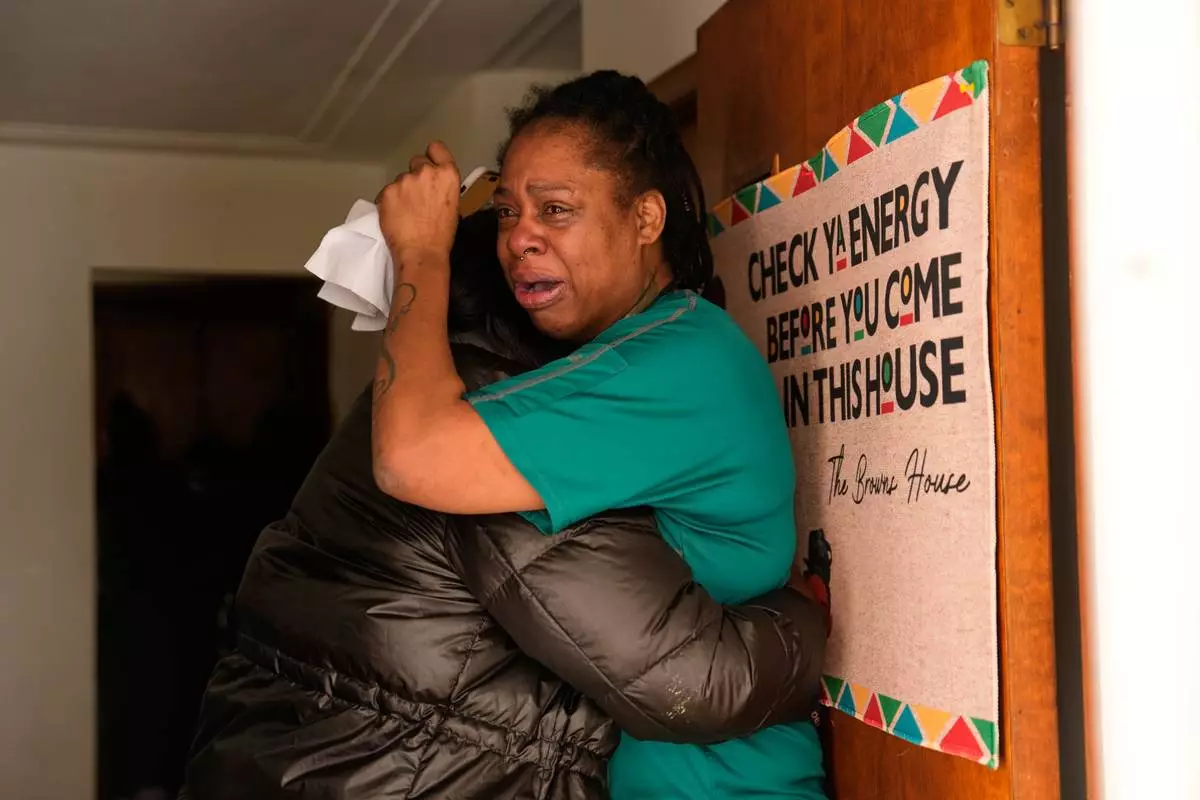
ADDS IDENTIFICATION: Teyana Gibson Brown, right, wife of Garrison Gibson, reacts after federal immigration officers arrested Garrison Gibson, Sunday, Jan. 11, 2026, in Minneapolis. (AP Photo/John Locher)
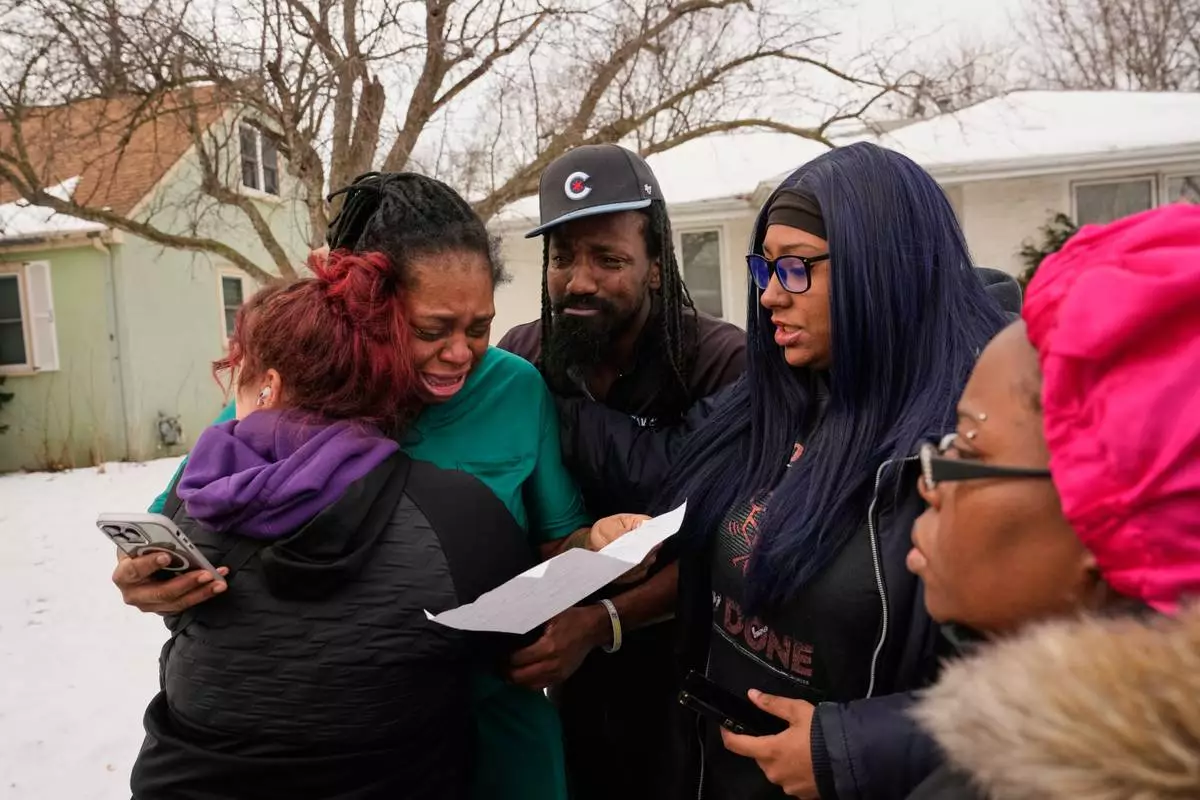
ADDS IDENTIFICATION: Teyana Gibson Brown, second from left, wife of Garrison Gibson, reacts after federal immigration officers arrested Garrison Gibson, Sunday, Jan. 11, 2026, in Minneapolis. (AP Photo/John Locher)
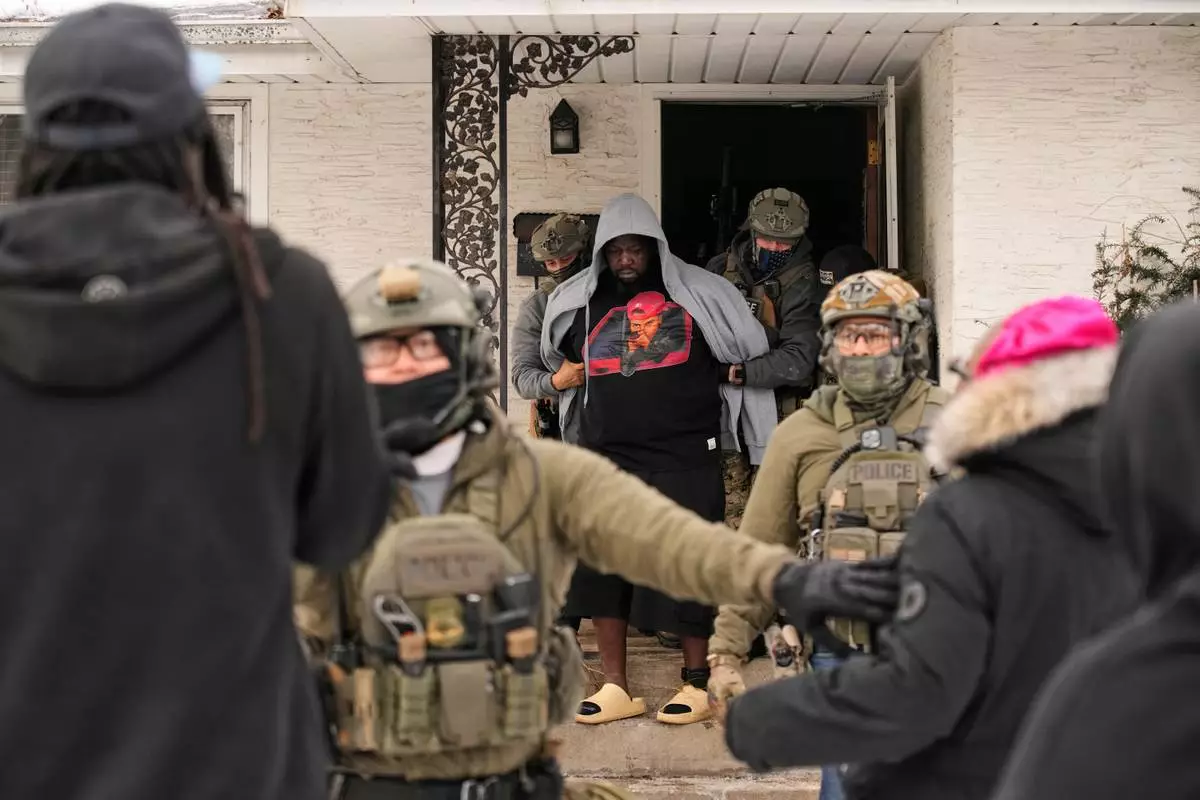
ADDS IDENTIFICATION: Garrison Gibson is arrested by federal immigration officers Sunday, Jan. 11, 2026, in Minneapolis. (AP Photo/John Locher)
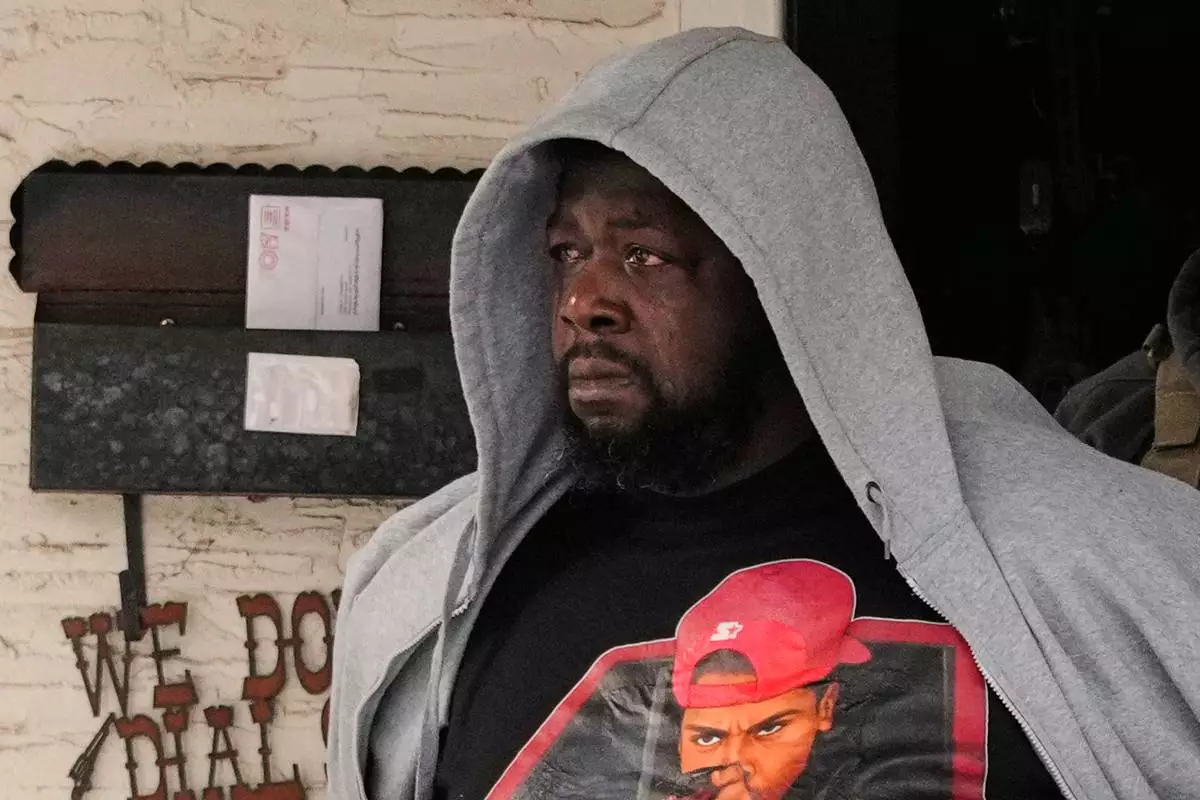
ADDS IDENTIFICATION: Garrison Gibson becomes emotional as he is arrested by federal immigration officers Sunday, Jan. 11, 2026, in Minneapolis. (AP Photo/John Locher)
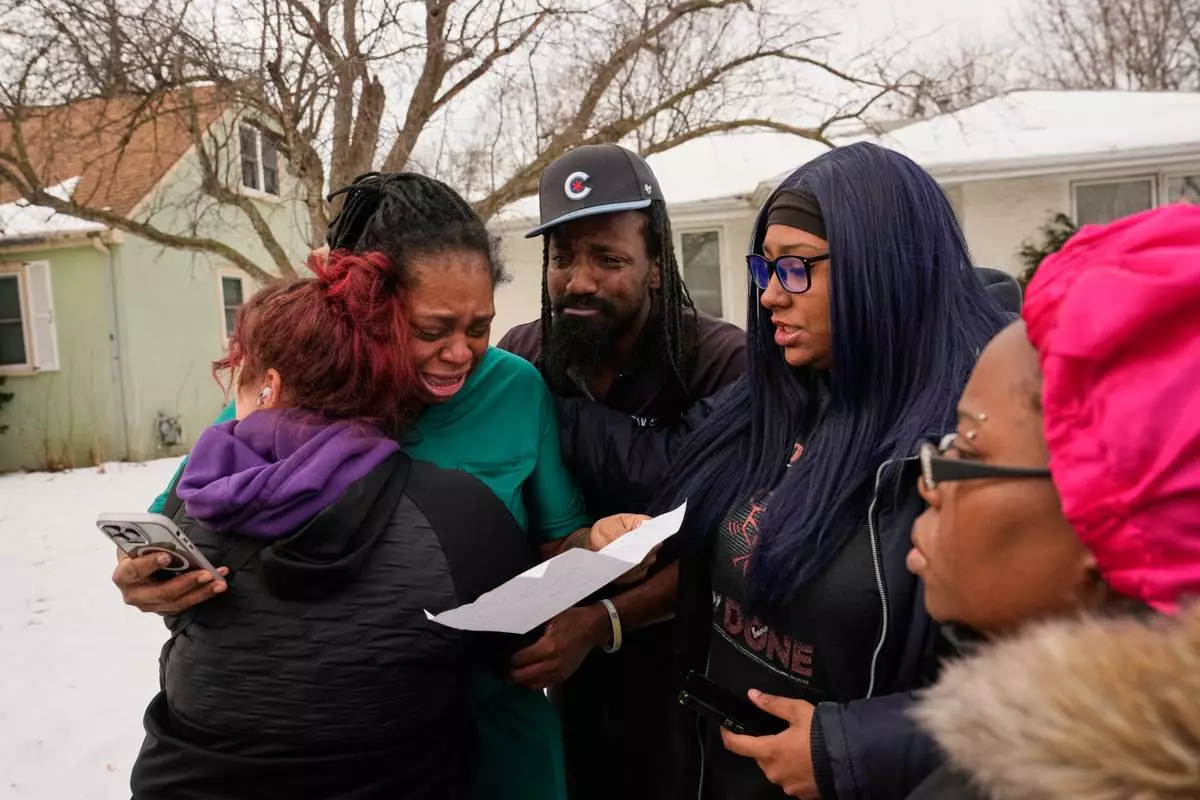
A family member reacts after federal immigration officers make an arrest Sunday, Jan. 11, 2026, in Minneapolis. (AP Photo/John Locher)
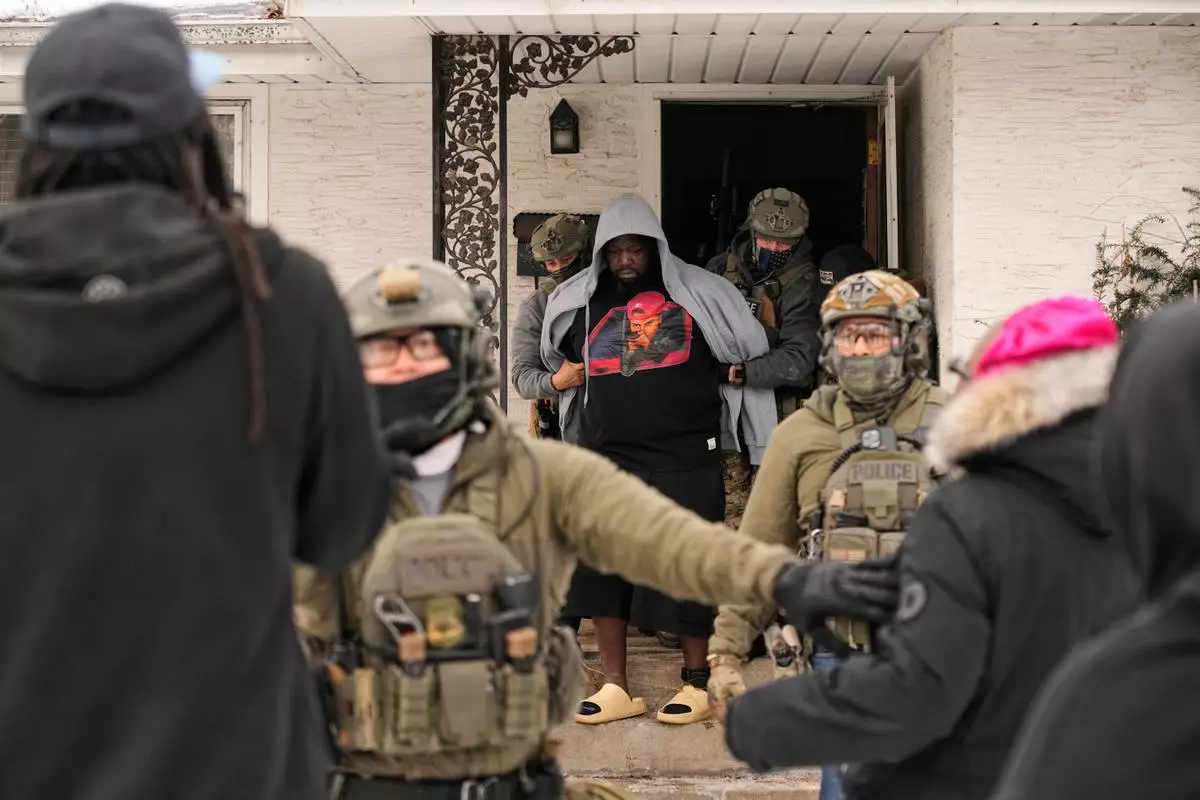
A man is arrested by federal immigration officers Sunday, Jan. 11, 2026, in Minneapolis. (AP Photo/John Locher)
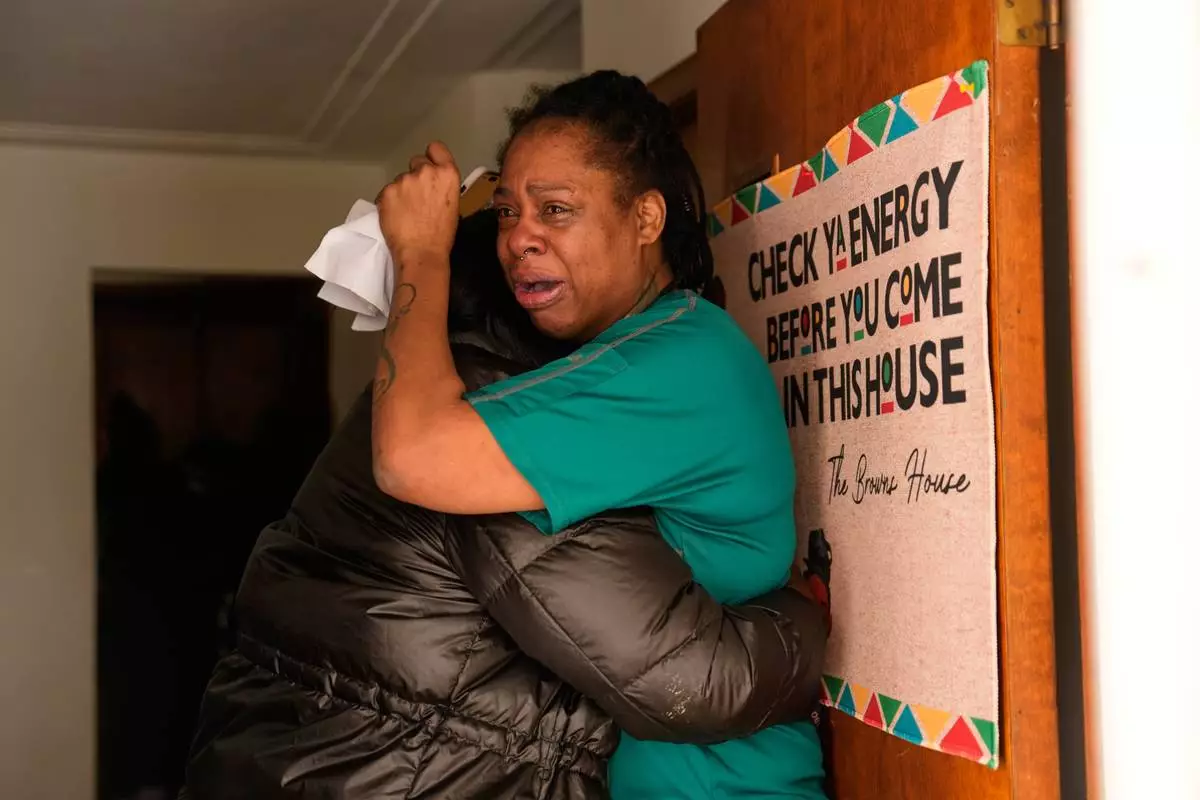
A family member reacts after federal immigration officers make an arrest Sunday, Jan. 11, 2026, in Minneapolis. (AP Photo/John Locher)

A man becomes emotional as he is arrested by federal immigration officers Sunday, Jan. 11, 2026, in Minneapolis. (AP Photo/John Locher)
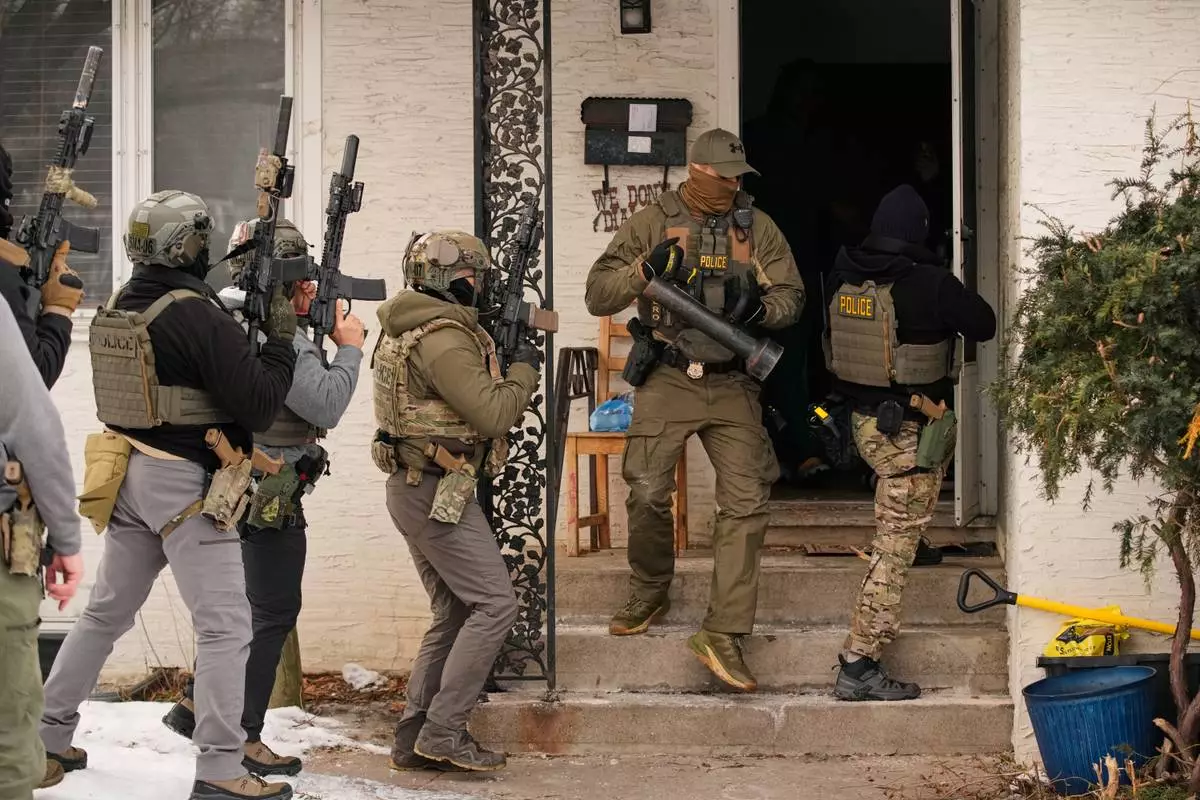
Federal immigration officers prepare to enter a home to make an arrest after an officer used a battering ram to break down a door Sunday, Jan. 11, 2026, in Minneapolis. (AP Photo/John Locher)
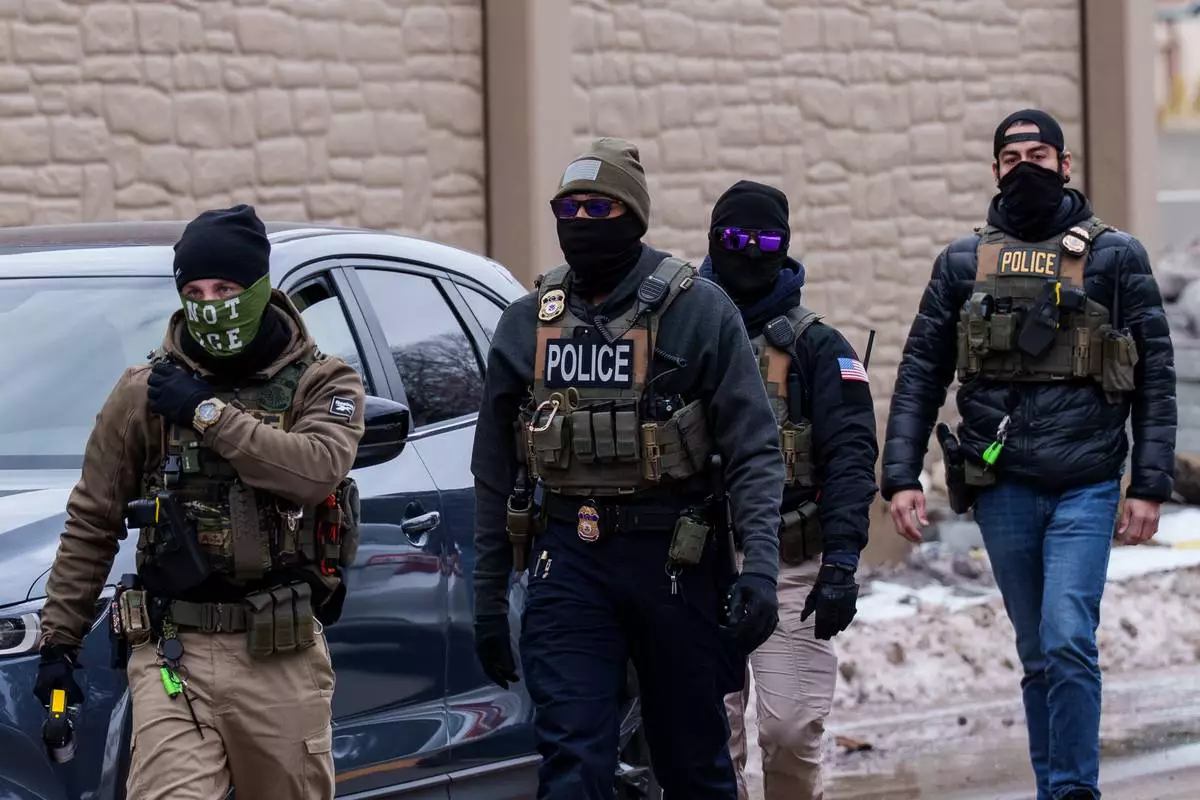
Immigration and Customs Enforcement (ICE) agents, including one wearing a 'NOT ICE' face covering, walk near their vehicles, Thursday, Jan. 15, 2026, in Richfield, Minn. (AP Photo/Adam Gray)
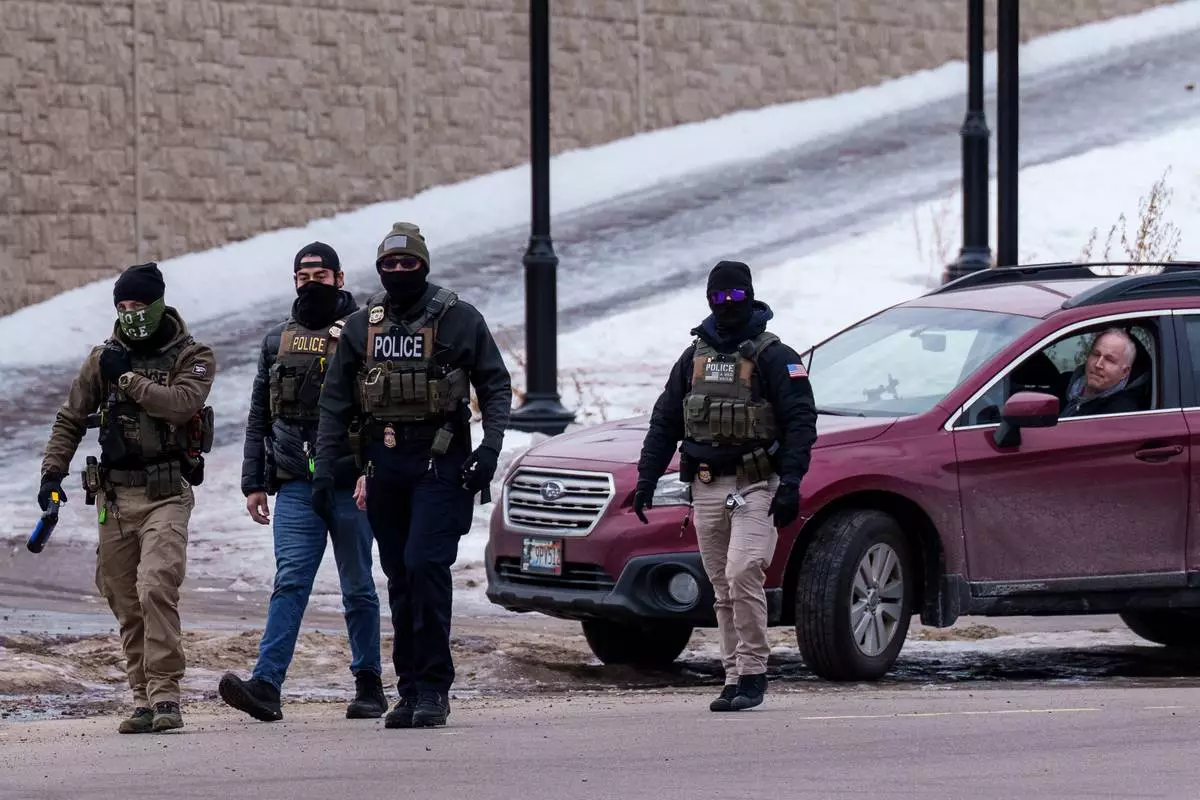
A person looks out of their vehicle as Immigration and Customs Enforcement (ICE) agents walk away, Thursday, Jan. 15, 2026, in Richfield, Minn. (AP Photo/Adam Gray)