JUNEAU, Alaska (AP) — A researcher from Italy is missing after falling into a stream on Alaska's Mendenhall Glacier — after the body of another man, a hiker from Arizona, was found earlier this week off a trail near the glacier, authorities said.
According to the state Department of Public Safety, Alaska Wildlife Troopers received a report Tuesday that a man had gone missing after falling into a stream on the glacier and being pushed by the water into a small, vertical shaft in the ice known as a moulin. The man, whose name was not immediately released, was with two other people when he fell. He was conducting research on the glacier at the time, department spokesperson Tess Williams said by email Wednesday.
A local ice rescue team responded but found the roughly 2-foot (0.6-meter) wide hole was filled with rushing water and determined that efforts to find the man would be too dangerous, the Department of Public Safety said.
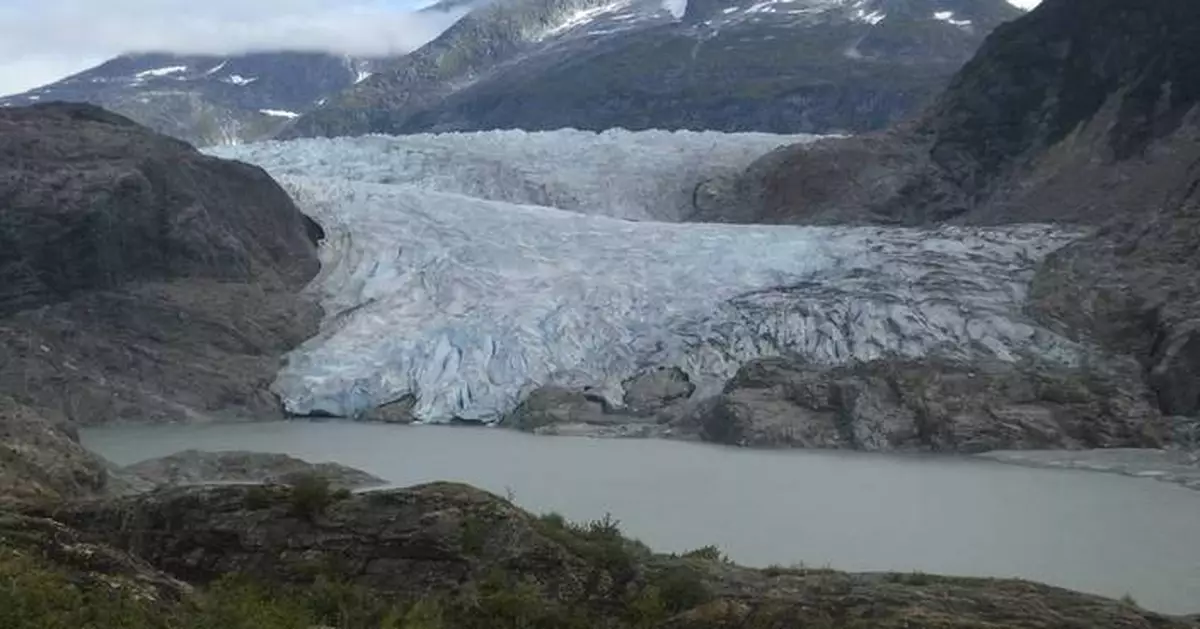
The glacier — part of the vast Juneau Icefield — is a popular destination for residents and cruise ship passengers, though many tourists view it from across Mendenhall Lake, within a more developed area of the Mendenhall Glacier recreation area that includes a visitor center. The glacier is about 13 miles (20.9 kilometers) from downtown Juneau.
Also this week, on Monday, searchers using cellphone location data found the body of Thomas Casey, 69, off a trail near the glacier, according to the department. Casey had last been seen on Saturday morning and was believed to have died from injuries from a fall. Juneau police had said that Casey was in the city for the summer.
In July, a Kentucky woman visiting Juneau on a cruise ship was found dead on the mountains near downtown after she didn't return from a hike.
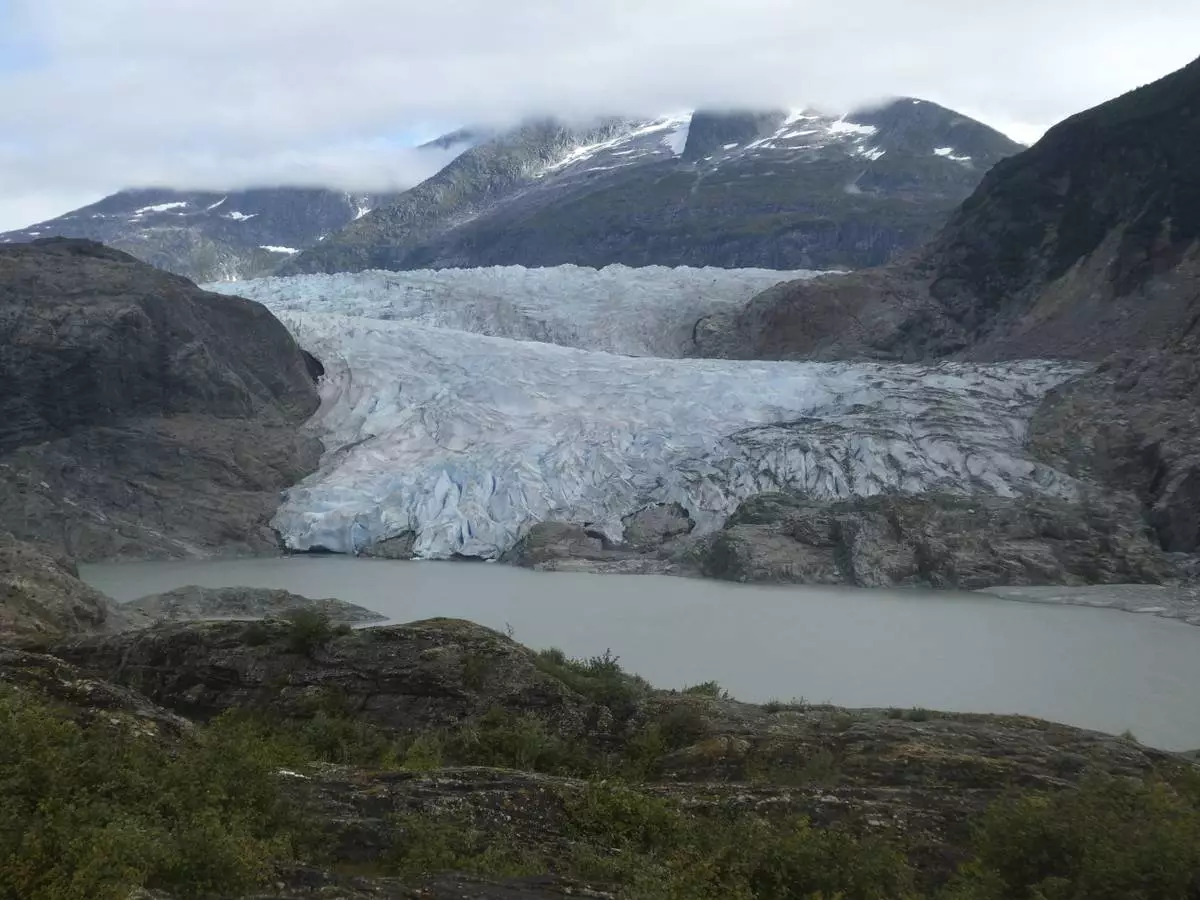
Mendenhall Glacier and Mendenhall Lake, shown here on Aug. 30, 2025, in Juneau, Alaska, are part of a recreation area that is popular with tourists and residents. (AP Photo/Becky Bohrer)
JEFFERSON CITY, Mo. (AP) — The U.S. Supreme Court again rejected Missouri congressional maps backed by President Donald Trump on Thursday, a loss for Republicans trying to maintain control of the House in the pivotal midterm elections.
The decision appears to clear the way for the state to use the old map, as the state's highest court ordered.
It's part of a pitched legal battle that has created confusion for voters and others shortly before ballots begin going out for the November elections.
No Supreme Court justices publicly dissented from the brief order. It did not detail the court’s legal reasoning, as is typical in emergency appeals.
The Trump administration had urged the court to keep the president's preferred maps, which are aimed at gaining one additional GOP House seat.
Meanwhile, the court fight featuring dueling orders from different courts continued to unfold in Missouri with a contempt hearing for Republican Secretary of State Denny Hoskins.
The state's highest court ordered him to answer for sticking with the Trump-backed map rather than following its orders to use districts passed after the last census.
But until the Supreme Court weighed in, Hoskins was also facing a competing order from a federal judge requiring the use of the new map.
Missouri’s battle over its congressional districts has spanned more than a year and spawned confusion over which districts will be in place for voters.
Missouri was the second Republican-led state, after Texas, to enact new districts after Trump urged Republicans last year to redraw House districts to their advantage ahead of the midterm elections.
The White House did not immediately respond to a request for comment on the U.S. Supreme Court decision.
The revised Missouri districts target a Kansas City-based seat held by Democratic Rep. Emanuel Cleaver by shedding parts into neighboring districts and stretching the remainder into rural Republican areas. The goal is to help Republicans win seven of the state’s eight House seats in the midterm elections — a gain of one seat.
Redistricting opponents collected hundreds of thousands of petition signatures seeking to force a statewide vote on the new districts. They submitted the signatures in December. But Hoskins waited until August — on the same day as Missouri’s primary — to reject the petition. Hoskins asserted that a referendum petition could not be used for congressional redistricting.
The delay allowed Missouri to use the new districts in its August primary. Republican state officials have argued it would violate voters' federal rights to switch districts before the general election.
But the Missouri Supreme Court last week ordered Hoskins to put the redistricting referendum on the November ballot, which he did. It also ruled that the new districts never became law and instead were suspended retroactively to the December petition submission.
The state then appealed to the U.S. Supreme Court to block the state court's findings. Justice Brett Kavanaugh rejected their request.
The court barred Hoskins from using the new map and said the old map — passed by Republican lawmakers in 2022 after the last census — must be used in the November election. The U.S. Supreme Court on Tuesday declined to hear an appeal of that decision. But Clark issued his conflicting order moments later.
Whitehurst reported from Washington.
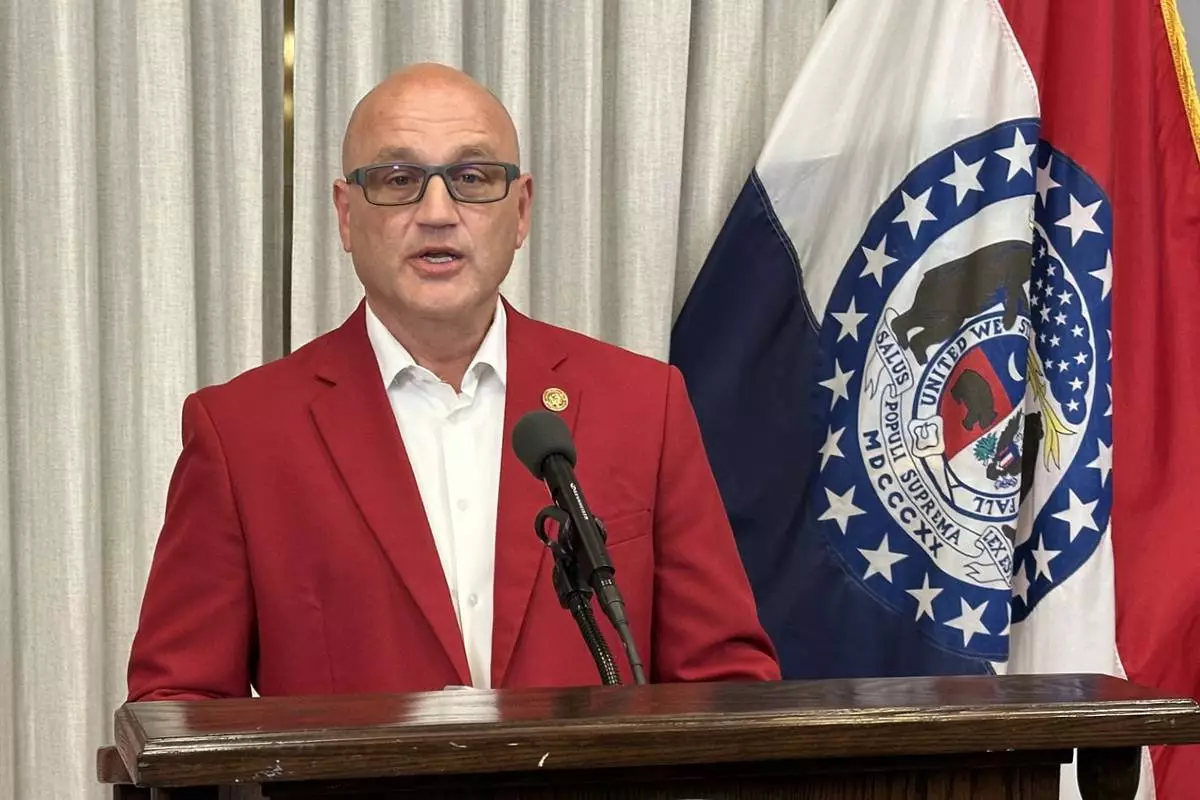
FILE - Missouri Secretary of State Denny Hoskins talks to reporters Tuesday, Aug. 4, 2026, at his office in the state Capitol in Jefferson City, Mo. (AP Photo/David A. Lieb, File)
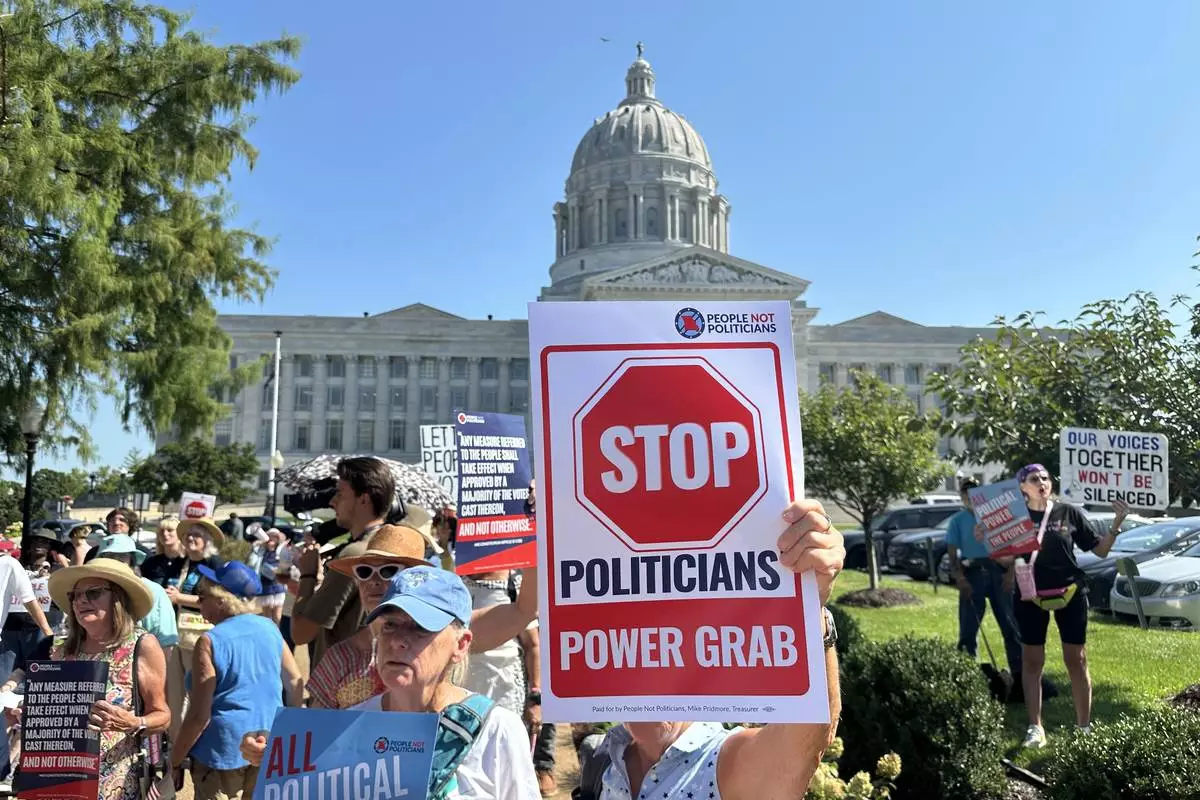
In this photo taken with a smartphone, people opposed to a congressional redistricting plan rally outside the Missouri Capitol in Jefferson City, Mo., Wednesday, Sept. 2, 2026. (AP Photo/David A. Lieb)