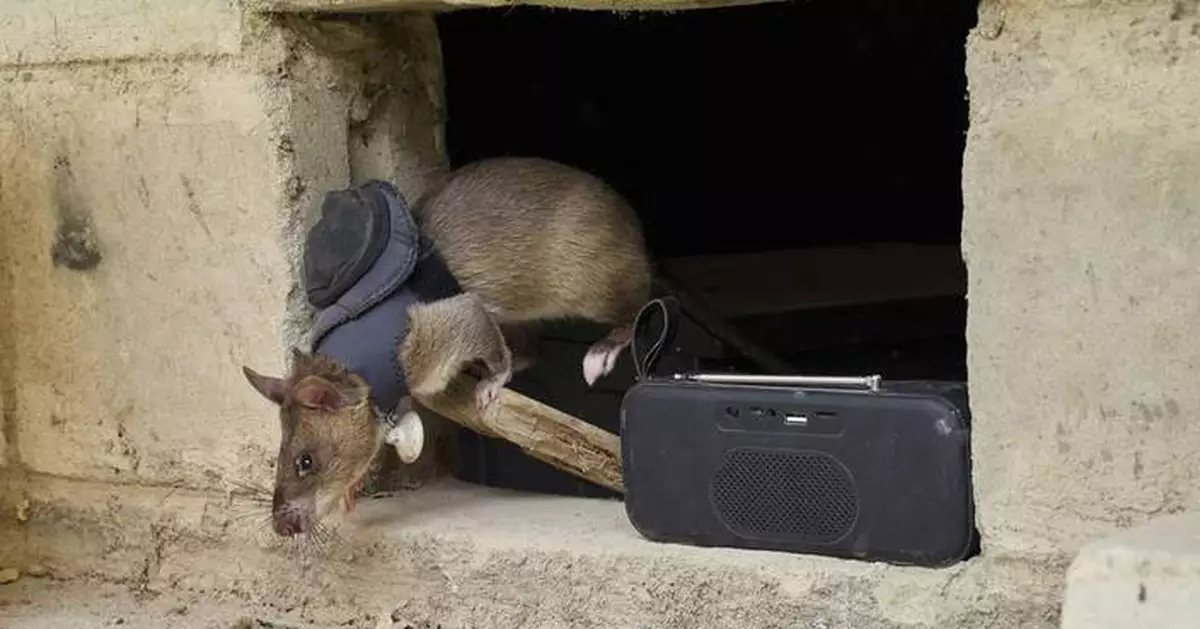
MOROGORO, Tanzania (AP) — A man lies unmoving, slumped in the rubble of a simulated earthquake, as an unlikely rescuer approaches: a rat with a backpack. Whiskers waving, the rat breezes past garbage, toppled furniture and scattered clothes to find him and pull a trigger on its pack, alerting searchers above.
Then a resounding click. A survivor has been found. The search in Morogoro in Tanzania’s Uluguru Mountains is over and the rat scurries out of the abandoned building to be rewarded with a banana. A successful mission is complete for this African giant pouched rat being trained for search and rescue operations.
Click to Gallery
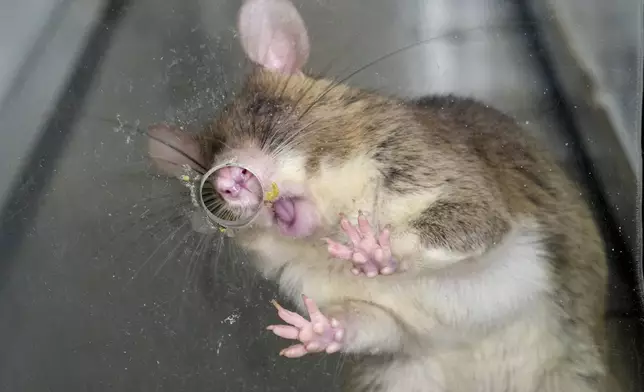
An African giant pouched rat being trained to detect tuberculosis licks a treat off glass in APOPO's laboratory in Morogoro, Tanzania, Tuesday, July 29, 2025. (AP Photo/Jack Denton)
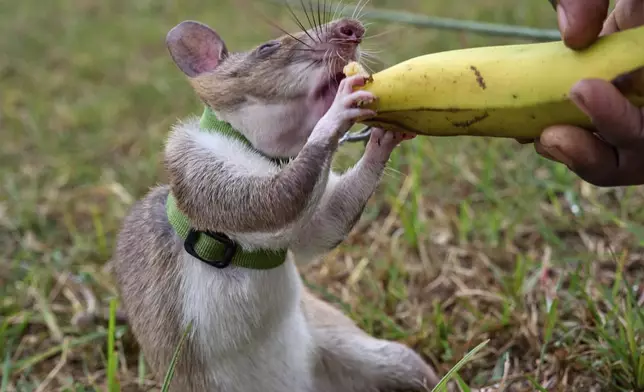
A rat is rewarded after a successful search and rescue training mission in simulated earthquake rubble at APOPO's facility in Morogoro, Tanzania, Tuesday, July 29, 2025. (AP Photo/Jack Denton)
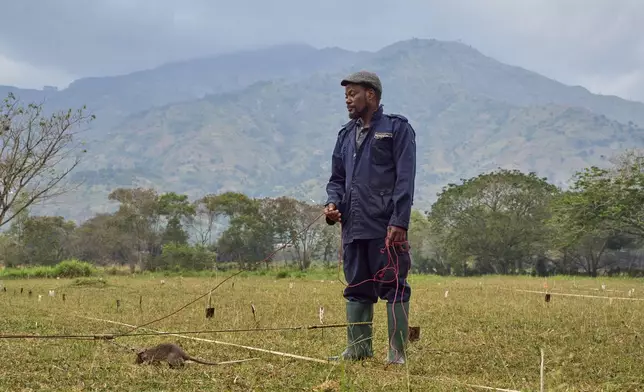
A landmine-detection rat scurries across a training grid under the watchful eye of a handler at the APOPO humanitarian demining organization facility in Morogoro, Tanzania, Tuesday, July 29, 2025. (AP Photo/Jack Denton)
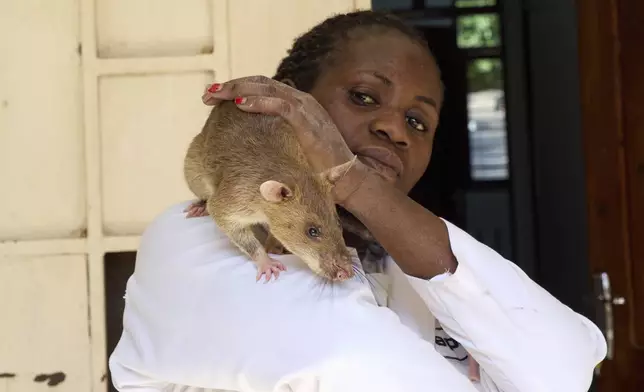
Felista Staneslouas, Head of Department at Morogoro Hospital, plays with one of the rats in Morogoro, Tanzania, Tuesday, July 29, 2025. (AP Photo/Jack Denton)
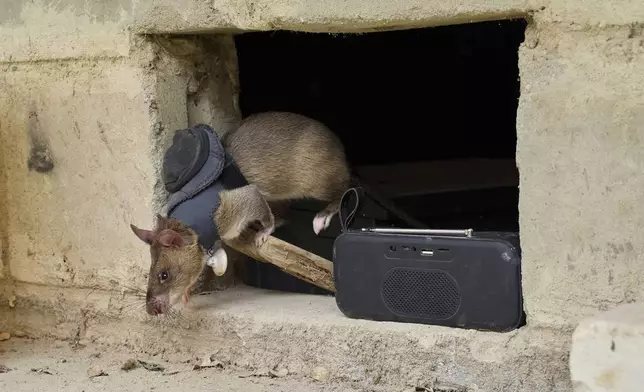
A rat trained in search and rescue operations exits simulated earthquake rubble at APOPO's facility in Morogoro, Tanzania, Tuesday, July 29, 2025. (AP Photo/Jack Denton)
“Their sense of smell is incredible,” said Fabrizio Dell’Anna, an animal behaviorist at APOPO, a Tanzania-based nongovernmental organization that trains the rats for lifesaving applications. “These rats are able to detect explosives, tuberculosis — even tiny amounts of the bacteria — and in this project, they are able to correctly identify and indicate humans.”
In a field nearby, more rats walk on leashes held between handlers, pacing a grid filled with land mines as part of an initiative by APOPO, which works alongside Sokoine University of Agriculture. When they pause, it indicates that explosives are beneath. These rats are readying for their next deployment, perhaps Angola or Cambodia, where APOPO has helped clear more than 50,000 land mines since 2014.
From detecting land mines to sniffing out tuberculosis, these “hero rats” have become unlikely, and sometimes unrecognized, front-line responders in Tanzania and beyond.
For decades APOPO has trained these “hero rats,” which have one of the most sensitive noses in the animal kingdom. Since 2003, the rats have been finding land mines and, more recently, have been turned on to trafficked wildlife and earthquake survivors.
The rats begin training shortly after birth for specific missions and, with a longer-than-average rodent life span of almost a decade, can spend years carrying out their work. The cost of training each rat runs around 6,000 euros ($6,990).
It is all done with classical conditioning and positive reinforcement, explained Dell’Anna, who oversees the search and rescue program. The first cohort of this group of specialized rats are already in Turkey with a partner search and rescue organization.
While the rats focused on explosives or survivors buried in rubble get all the glory, it is a group of rats inside a lab that are arguably the most impactful lifesavers. These are not typical lab rats, but rather, as their proponents would argue, one of the world’s most effective detectors of tuberculosis.
“Every day as many people die from TB as from land mines in a whole year,” said Christophe Cox, the CEO of APOPO. “It’s more spectacular to be on the minefield … but for TB … in terms of social impact, it’s tremendous.”
Tuberculosis is an ancient respiratory disease that continues to run rampant despite centuries of research and treatment. The World Health Organization said last October in its most recent TB report that the disease had resurged as the top infectious disease killer, with 1.25 million deaths and a record 8.2 million infections in 2023.
In sub-Saharan Africa, only about half of TB patients receive a diagnosis, according to a study by researchers in the UK and Gambia published in the National Library of Medicine, and this leaves them liable to spread the disease. Tanzania struggles with one of the highest global TB burdens, according to the WHO.
APOPO expanded into TB detection in 2007 and its rats have been deployed in Tanzania, Ethiopia and Mozambique. The group works with 80 hospitals in Tanzania, collecting samples daily and bringing them to the lab rats.
With their sensitive noses, the rats sniff out samples of sputum from patients, looking for positive TB cases that had been marked as negative. Research suggests the rats are picking up on six unique volatile organic compounds in positive TB samples, said Cox.
False negatives remain a persistent issue in TB detection and suppression because each infected person can spread the disease to 10 to 15 more people each year.
“The benefits of using rats are significant,” said Felista Stanesloaus, a doctor at a TB clinic in Morogoro. “They help us detect cases that might otherwise be missed, which prevents people from unknowingly spreading infections.”
TB detection has made significant advances in recent years, including using artificial intelligence tools in conjunction with lung scans. However, many areas that are burdened most by TB, such as rural villages or low-income urban communities, do not have access to these tools.
While the use of molecular detection devices, such as one called GeneXpert, have become more widespread, a clinic may only have one of these devices and it can take two hours to process a sample. Overburdened clinics turn to the centuries-old technique of microscopy, or investigation of sputum under a microscope, which is both fallible and time-consuming.
“Human error may result in a person being told they are disease-free when they are not,” said Stanesloaus. “Using rats is a very effective initiative.”
APOPO’s rats can scan 100 samples in 20 minutes, and since the program's inception, the rats have been able to identify more than 30,000 patients who had been sent home with a clean bill of health but were actually carrying TB, said Cox. The NGO is able to do with one lab what 55 hospitals do in a day, he adds.
Yet using live animals in the place of medical devices poses challenges, especially when it comes to scale. Samples have to be brought directly to a lab with enough trained rats to conduct the detection, with some samples brought to Morogoro by motorbike each day. Operations are most effective in dense urban centers, like Dar es Salaam, Cox said.
The more existential challenge for these “hero rats” comes from regulators and a wider health community who doubt this unconventional method of disease detection.
APOPO’s rats are not classified as primary diagnostic tools by the WHO. Instead, they are a second line of defense. Any positive samples detected by the rats must be confirmed with human microscopy in APOPO’s labs before treatment can be administered.
“It’s a big challenge,” said Cox. “Not being recognized by the WHO means that the mainstream funding for TB … never reaches us.”
Cox has given up on the prospect of getting approval from the WHO, though APOPO has faced pressure from donors to go through this process, which would be extensive and rigorous with no guarantee of success.
Regulators may also challenge APOPO’s method of focusing on finding every single positive case possible at the cost of more potential false positives.
APOPO relies on the indication of just one rat to proceed with further investigation into a possible positive case, while higher specificity standards may need multiple rats to flag a sample.
Cox defends this approach.
“Our choice was to go for that last patient out there — to go for the social impact,” said Cox.
For more on Africa and development: https://apnews.com/hub/africa-pulse
The Associated Press receives financial support for global health and development coverage in Africa from the Gates Foundation. The AP is solely responsible for all content. Find AP’s standards for working with philanthropies, a list of supporters and funded coverage areas at AP.org.

An African giant pouched rat being trained to detect tuberculosis licks a treat off glass in APOPO's laboratory in Morogoro, Tanzania, Tuesday, July 29, 2025. (AP Photo/Jack Denton)
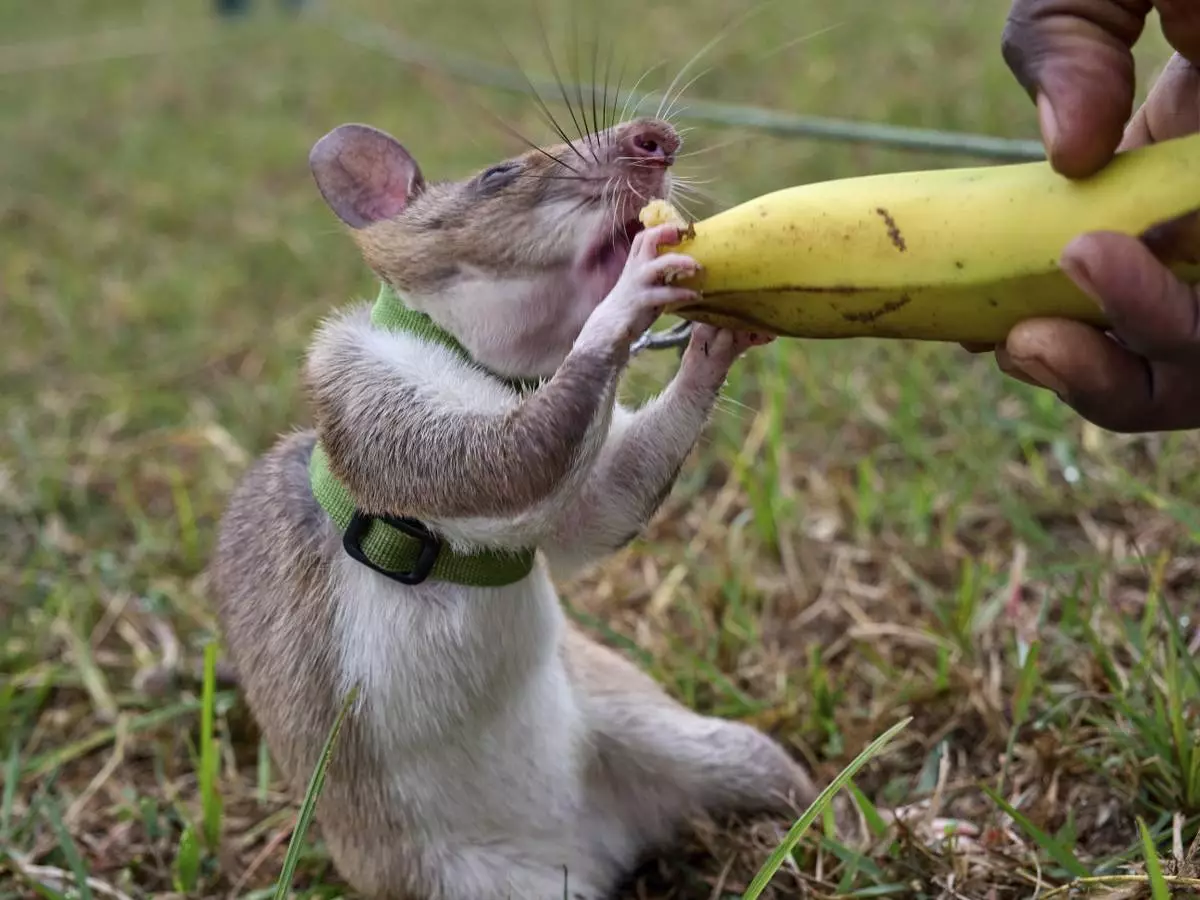
A rat is rewarded after a successful search and rescue training mission in simulated earthquake rubble at APOPO's facility in Morogoro, Tanzania, Tuesday, July 29, 2025. (AP Photo/Jack Denton)
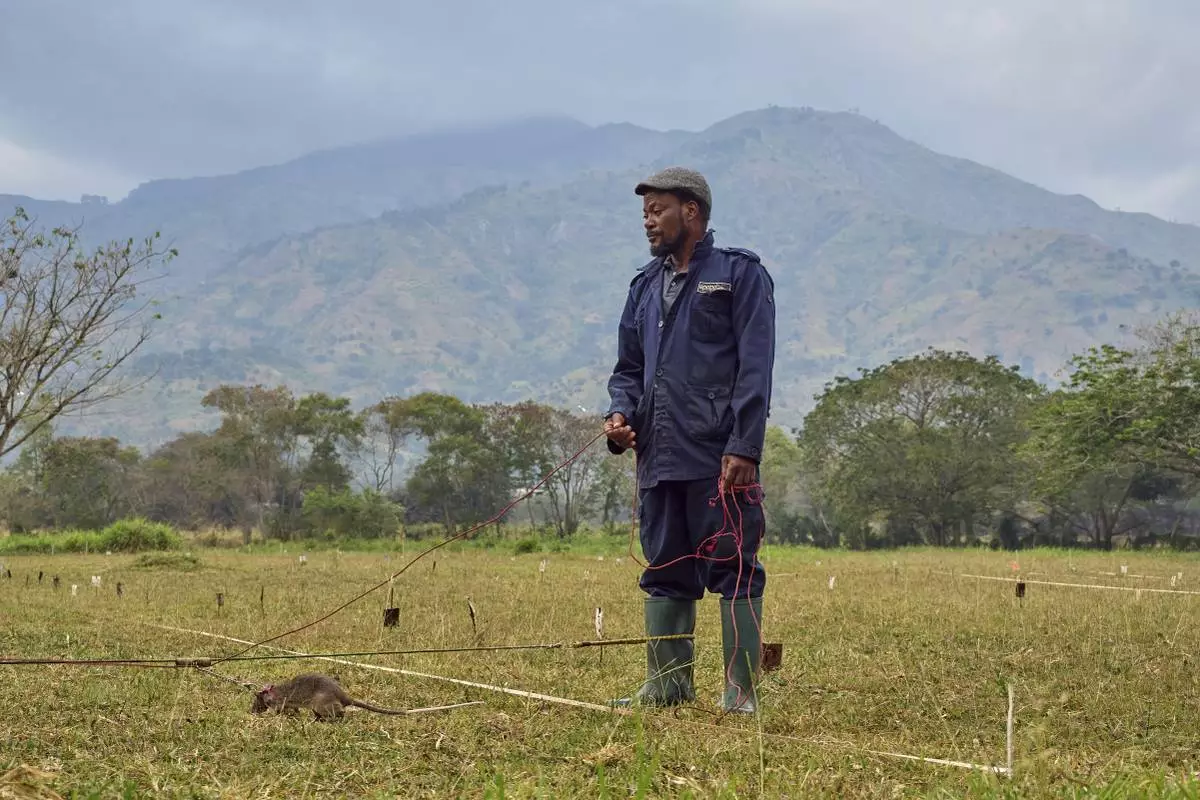
A landmine-detection rat scurries across a training grid under the watchful eye of a handler at the APOPO humanitarian demining organization facility in Morogoro, Tanzania, Tuesday, July 29, 2025. (AP Photo/Jack Denton)
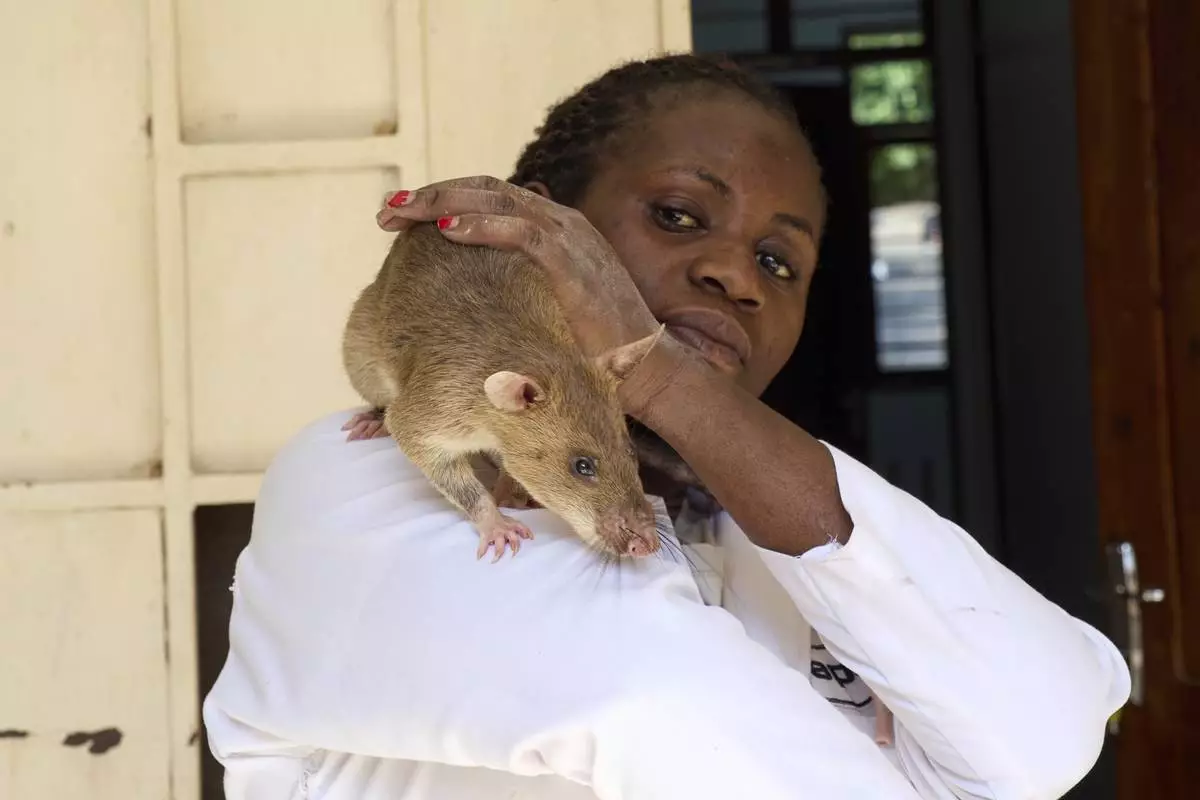
Felista Staneslouas, Head of Department at Morogoro Hospital, plays with one of the rats in Morogoro, Tanzania, Tuesday, July 29, 2025. (AP Photo/Jack Denton)
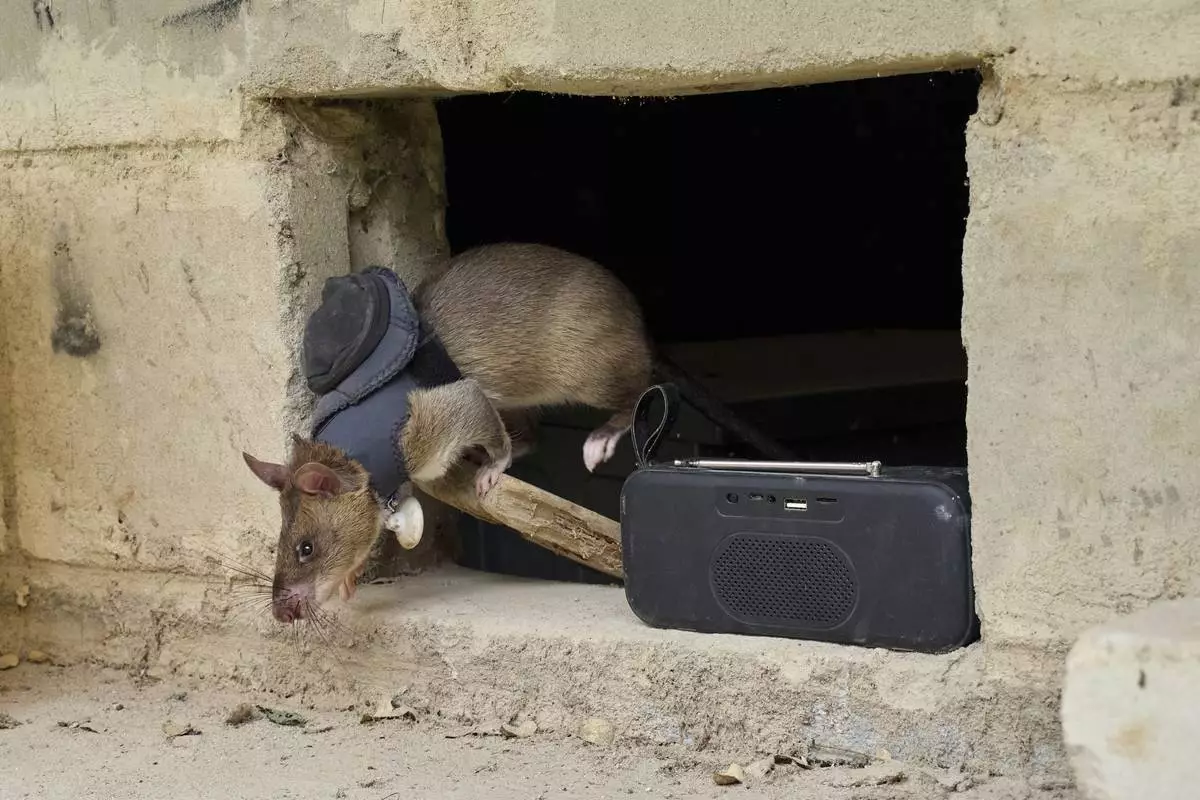
A rat trained in search and rescue operations exits simulated earthquake rubble at APOPO's facility in Morogoro, Tanzania, Tuesday, July 29, 2025. (AP Photo/Jack Denton)