Skip to Content Facebook Feature Image

Chinese Air Force showcases latest self-made fighter jets at V-Day military parade

China

China

China

Chinese Air Force showcases latest self-made fighter jets at V-Day military parade

2025-09-04 17:18 Last Updated At:17:57

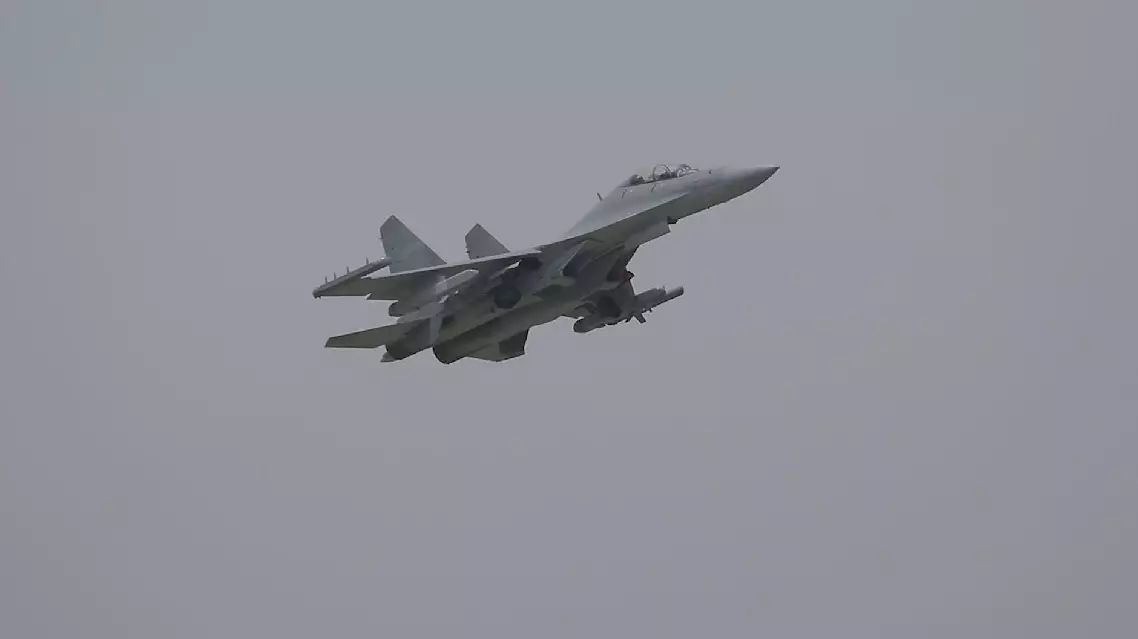
The Chinese-made fighter jets that flew over Tiananmen Square during the grand V-Day military parade in Beijing on Wednesday are all self-researched and developed new models, highlighting the Chinese Air Force's new formidable combat capabilities.

The formation of the Chinese People's Liberation Army (PLA) Air Force for the parade consisted of front-line combat models.

The fighter jet echelon marked the largest display of new aircraft types at the parade, with the presence of J-16D, J-20, J-20A, J-20S and J-35A serving as evidence of the continuous improvement of the Chinese Air Force's comprehensive combat capabilities.

"The key feature and distinction [of the echelon] is that it operates as a system rather than as individual aircraft. Its ability is not just '1 plus 1 equals 2', but rather '2 multiplied by 2 yields more than 4', leading to potential exponential growth," said Wang Xu, a soldier from the fighter jet echelon of the V-Day parade.

As the coordination of the whole echelon is more crucial than the precision of any single aircraft, the strength of the team as a whole is essential for effective operations, according to Wang Xu.

"As for our fighter jets echelon, we operated in a mixed formation during flight, indicating that our current training emphasizes system integration rather than focusing on single-aircraft combat or training. We must enhance the capabilities of all elements, so that we can better achieve our combat goals," he said.

The pilots participating in the mission came from four different air forces. To address their varying flying styles, they held brainstorming sessions to refine their training models, promoting collaborative training within the echelon.

"During the mission, I piloted the lead aircraft in the fighter jet echelon. As the leader, maintaining stability is crucial, but agility is also essential. Leading the echelon over Tian'anmen Square filled me with immense pride and excitement," said Wang Lizhuang, another soldier from the fighter jet echelon of the V-Day parade.

The grand military parade was staged as part of the commemorations marking the 80th anniversary of the victory in the Chinese People's War of Resistance against Japanese Aggression and the World Anti-Fascist War.

The Chinese People's War of Resistance Against Japanese Aggression (1931-1945) was the first to break out and lasted the longest in the World Anti-Fascist War. In the 14 years, 35 million Chinese were killed or wounded. Japan officially surrendered on Sept 2, 1945, by signing the Instrument of Surrender.

In 2014, China's national legislature designated Sept 3 as Victory Day of its War of Resistance. A year later, the country held its first-ever large-scale parade in Tian'anmen Square to mark the occasion.
Chinese Air Force showcases latest self-made fighter jets at V-Day military parade

Chinese Air Force showcases latest self-made fighter jets at V-Day military parade

A former television host from Taiwan, Zhai Xuan, has made a pivotal decision to leave mainstream broadcasting in order to create content that provides a better understanding of the Chinese mainland and cross-strait relations.

Zhai, a seasoned television host with over a decade of experience in Taiwan's media landscape, recently addressed an audience at an event in Beijing, where she revealed her complete transition into independent online media.

In her remarks, she articulated her aspiration to bridge what she perceives as a significant information gap between audiences on both sides of the Strait, highlighting her commitment to fostering a deeper understanding and connection through her new endeavors.

"I was really surprised by all the fake news. There were stories saying people on the mainland can't afford tea eggs or that they live in mud houses and in Taiwan, this was the main information many people received," said Zhai.

Zhai said she initially began producing online videos to challenge such perceptions while continuing her work as a television host.

In April 2025, she travelled to the mainland with her father to fulfill her late grandfather's wish to return to his hometown. The trip, which reunited family members separated since 1949, was recorded in a video series titled "Journey to Find Our Roots", drawing attention from viewers in both Taiwan and the mainland.

"Many people in Taiwan told me that after watching, they wanted to apply for a mainland travel permit immediately and go looking for their relatives. Some had long forgotten these things, but after seeing my story, they began thinking about their hometowns and family members they had never met and decided to search for their roots," Zhai shared her story at the event.

By mid-2025, Zhai said she began to feel increasing pressure amid rising political tensions and a tightening atmosphere around cross-Strait exchanges in Taiwan.

After more than 12 years in the industry, Zhai resigned from her position, believing it was the right thing to do.

"At that moment, I felt this was a major issue,not just for me, but for Chinese people on both sides of the Strait. If I backed down then, I wouldn’t be standing on the right side," said Zhai.

Since leaving television, Zhai has broadened her online programming to encompass a range of daily-life topics, including practical guidance on applying for a mainland travel permit and using commonly employed mobile applications, in addition to content that delves into historical memory and cultural connections across the Strait.

As the debate over cross-Strait relations continues in Taiwan, Zhai said she remains committed to her current path.

Former Taiwan TV host bridges cross-Strait divide via online media

Former Taiwan TV host bridges cross-Strait divide via online media

Recommended Articles