South Korea has suspended parcel deliveries to the U.S. as Trump's order to end a global tariff exemption for low-cost goods weighs on the country's cross border e-commerce sector.
Effective on Aug. 29, the order rules that imported goods sent through means other than the international postal network that are valued at or under 800 U.S. dollars and that would otherwise qualify for the de minimis exemption will be subject to all applicable duties.
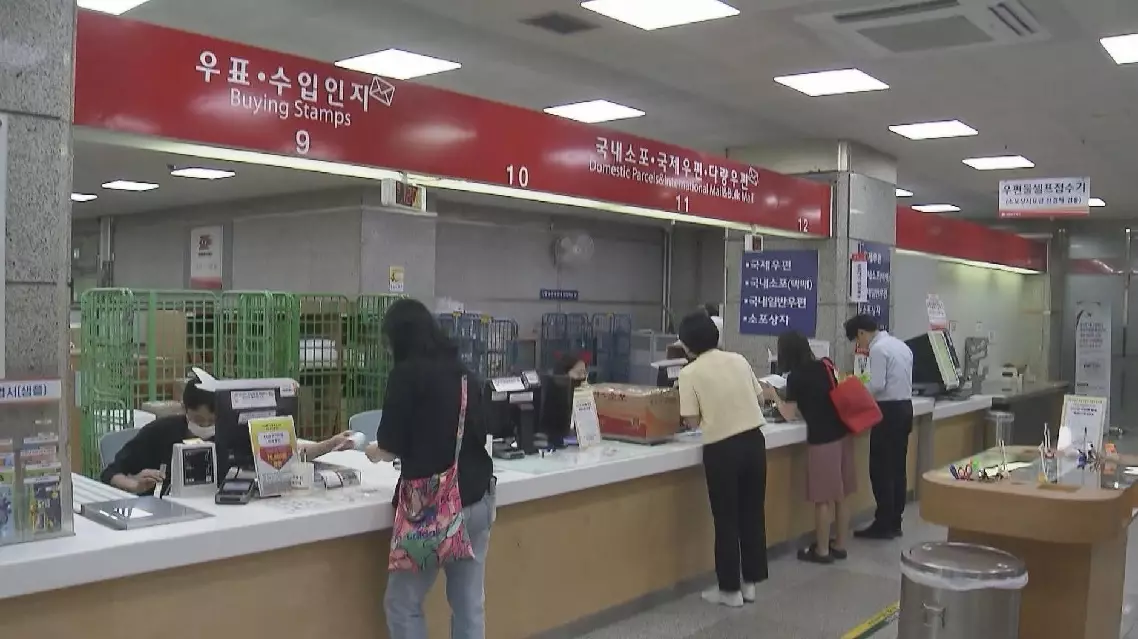
Under the new rule, all incoming postal items — except letters and documents — must be declared and face a 15 percent tariff. At Gwanghwamun Post Office, one of Seoul's busiest postal service counters, a notice is prominently displayed, informing customers of the suspension of all normal parcel deliveries and non-document international express services to the U.S. due to U.S. tariff policy changes.
South Korean residents can still use EMS (Express Mail Service) or private courier companies to send deliveries, which are able to handle customs clearance. However, for parcels each weighing less than 4.5 kg, EMS charges are up to 20 percent higher than regular international express services. Coupled with the 15-percent tariff on small-value parcels, many households are facing higher costs.
"My cousin studies in the U.S. and I send him daily essentials via EMS once a month. This month, the cost is much higher than last month. It's a heavy burden." said a resident in Seoul.
Korea Post said it is working with U.S.-approved customs duty firms and aims to restore services close to previous levels within two months. However, for South Korea's cross-border e-commerce sector targeting the U.S. market, the impact may be long-lasting.
Two major Korean beauty e-commerce platforms and a large fashion retailer have announced that a 15 percent tariff would be applied to purchases from U.S. consumers.
With their products typically priced at between 15 and 20 U.S. dollars apiece, some small and medium-sized cosmetics brands are hard to maintain competitiveness in the U.S. market. Moreover, small and medium-sized companies in South Korea are expected to be hit hard by the tariff policy as they have limited risk resilience and market resources compared with large companies.
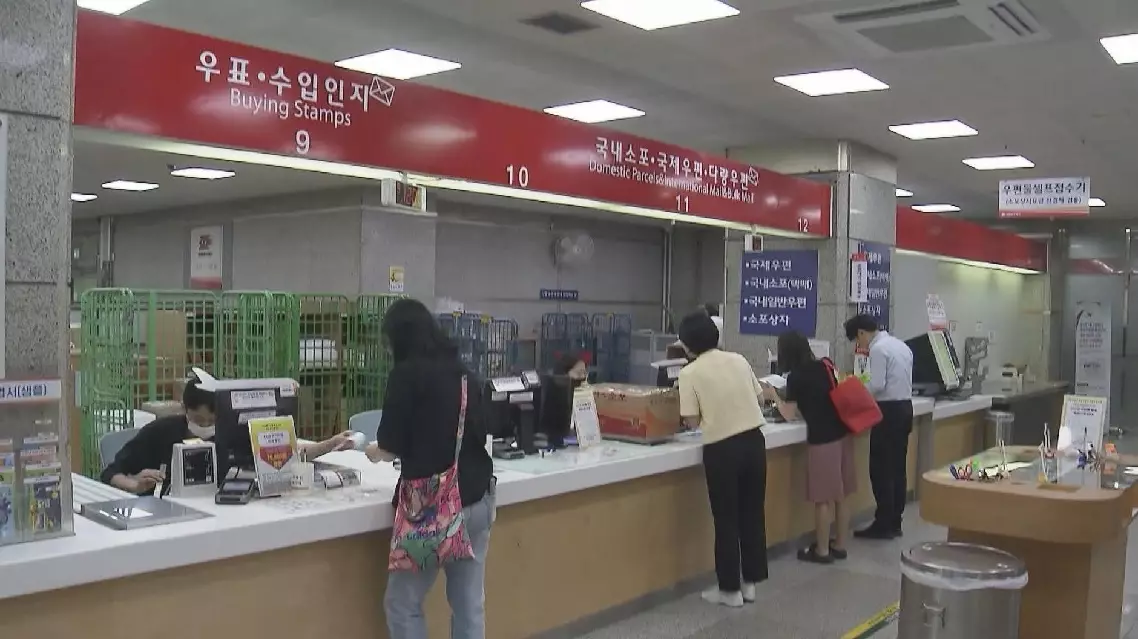
South Korea suspends parcel deliveries to U.S. amid end of duty-free rule
South Korea suspends parcel deliveries to U.S. amid end of duty-free rule