Guangdong-Hong Kong-Macao Greater Bay Area Anti-drug Summit successfully concludes in Hong Kong
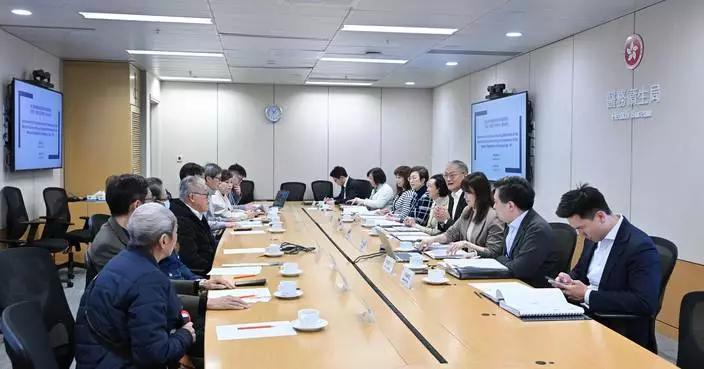
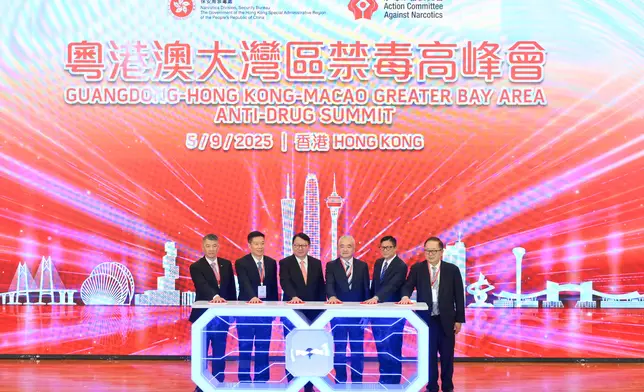
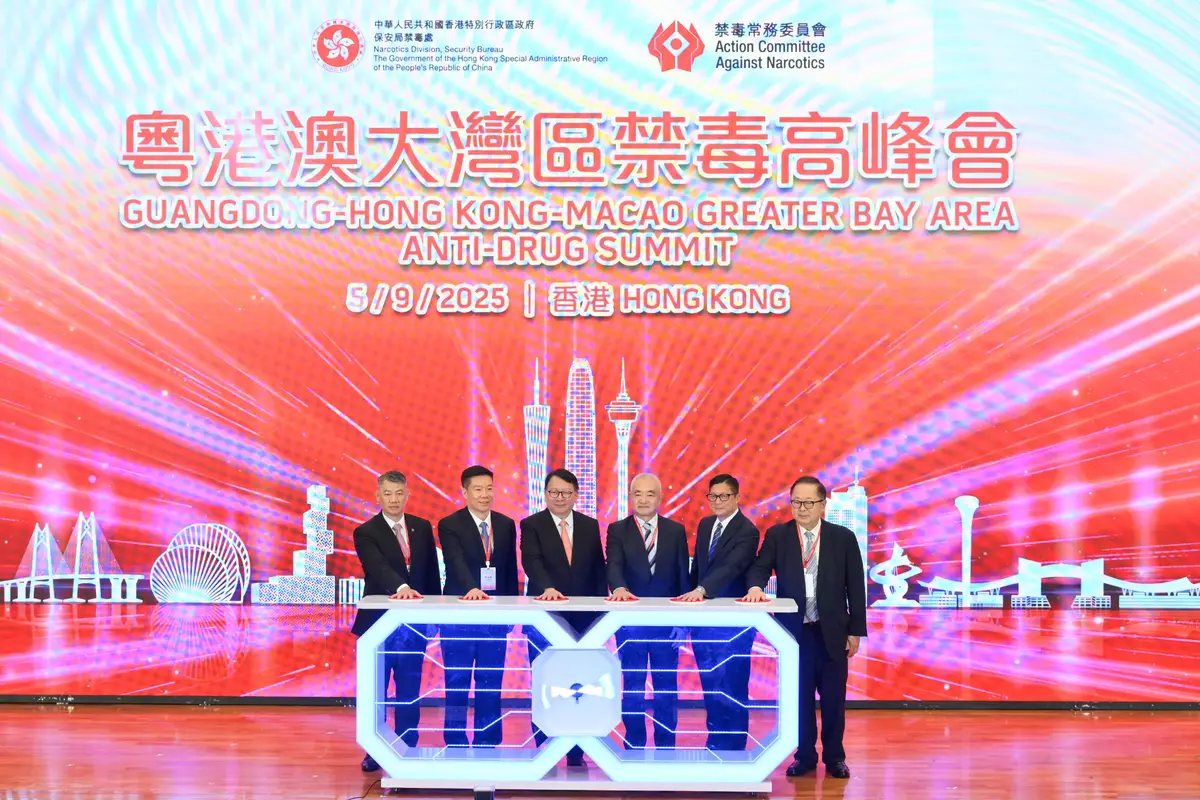
The Guangdong-Hong Kong-Macao Greater Bay Area Anti-drug Summit, jointly organised by the Narcotics Division of the Security Bureau and the Action Committee Against Narcotics (ACAN), was held in Hong Kong today (September 5). This marks the first anti-drug summit hosted by Hong Kong with Greater Bay Area as the focus.
Click to Gallery
Guangdong-Hong Kong-Macao Greater Bay Area Anti-drug Summit successfully concludes in Hong Kong Source: HKSAR Government Press Releases
Guangdong-Hong Kong-Macao Greater Bay Area Anti-drug Summit successfully concludes in Hong Kong Source: HKSAR Government Press Releases
Guangdong-Hong Kong-Macao Greater Bay Area Anti-drug Summit successfully concludes in Hong Kong Source: HKSAR Government Press Releases
Guangdong-Hong Kong-Macao Greater Bay Area Anti-drug Summit successfully concludes in Hong Kong Source: HKSAR Government Press Releases
Guangdong-Hong Kong-Macao Greater Bay Area Anti-drug Summit successfully concludes in Hong Kong Source: HKSAR Government Press Releases
Guangdong-Hong Kong-Macao Greater Bay Area Anti-drug Summit successfully concludes in Hong Kong Source: HKSAR Government Press Releases
Guangdong-Hong Kong-Macao Greater Bay Area Anti-drug Summit successfully concludes in Hong Kong Source: HKSAR Government Press Releases
Guangdong-Hong Kong-Macao Greater Bay Area Anti-drug Summit successfully concludes in Hong Kong Source: HKSAR Government Press Releases
The Summit brought together representatives from about 40 government agencies and community anti-drug organisations in the Guangdong-Hong Kong-Macao Greater Bay Area (GBA) to share insights on three major anti-drug topics. Representatives from the Central Narcotics Bureau of Singapore also joined the Summit upon invitation and shared their anti-drug experiences with attendees. Around 300 participants from the GBA and overseas attended today's Summit.
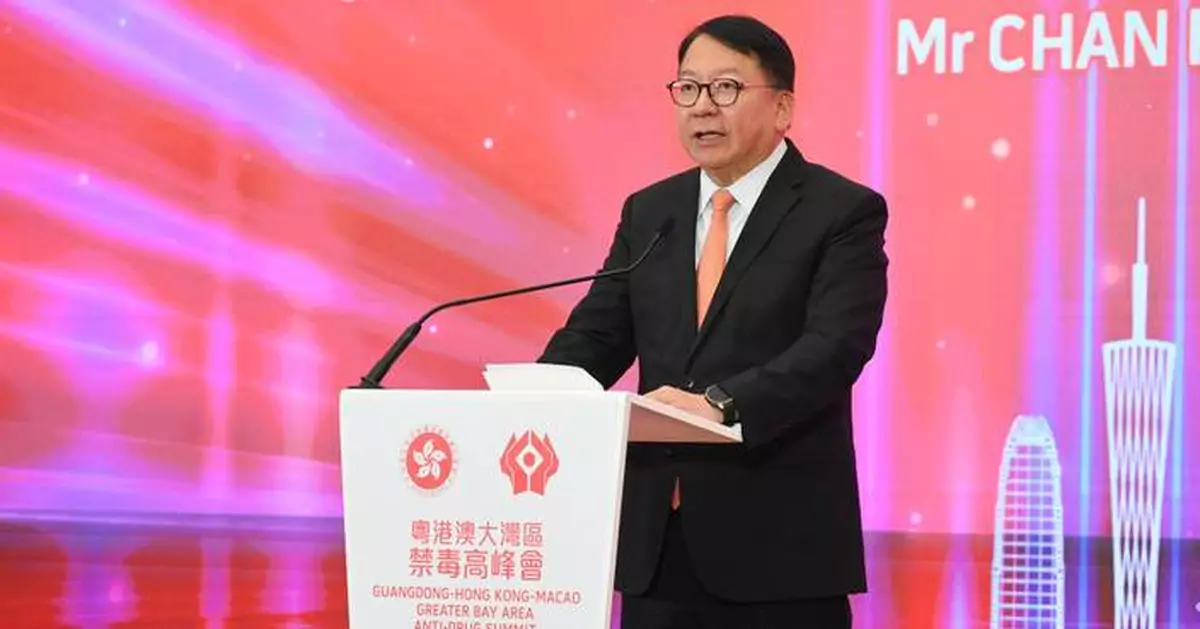
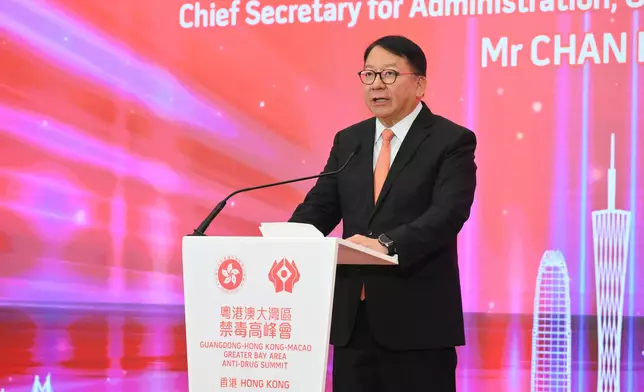
Delivering his opening remarks, the Chief Secretary for Administration, Mr Chan Kwok-ki, said that the Summit today marks a significant milestone in Hong Kong's anti-drug history. It holds particular significance as it is the first anti-drug summit connecting Guangdong, Hong Kong and Macao since the release of the Outline Development Plan for the GBA.
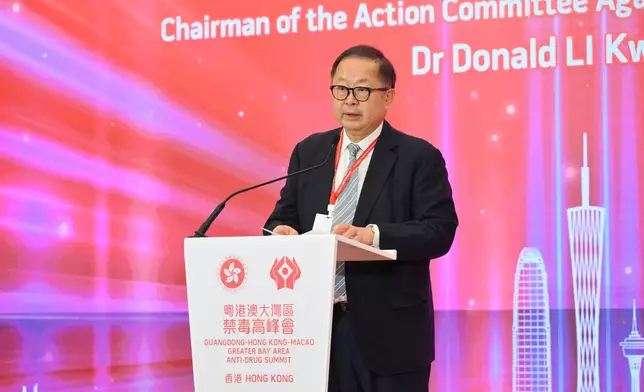
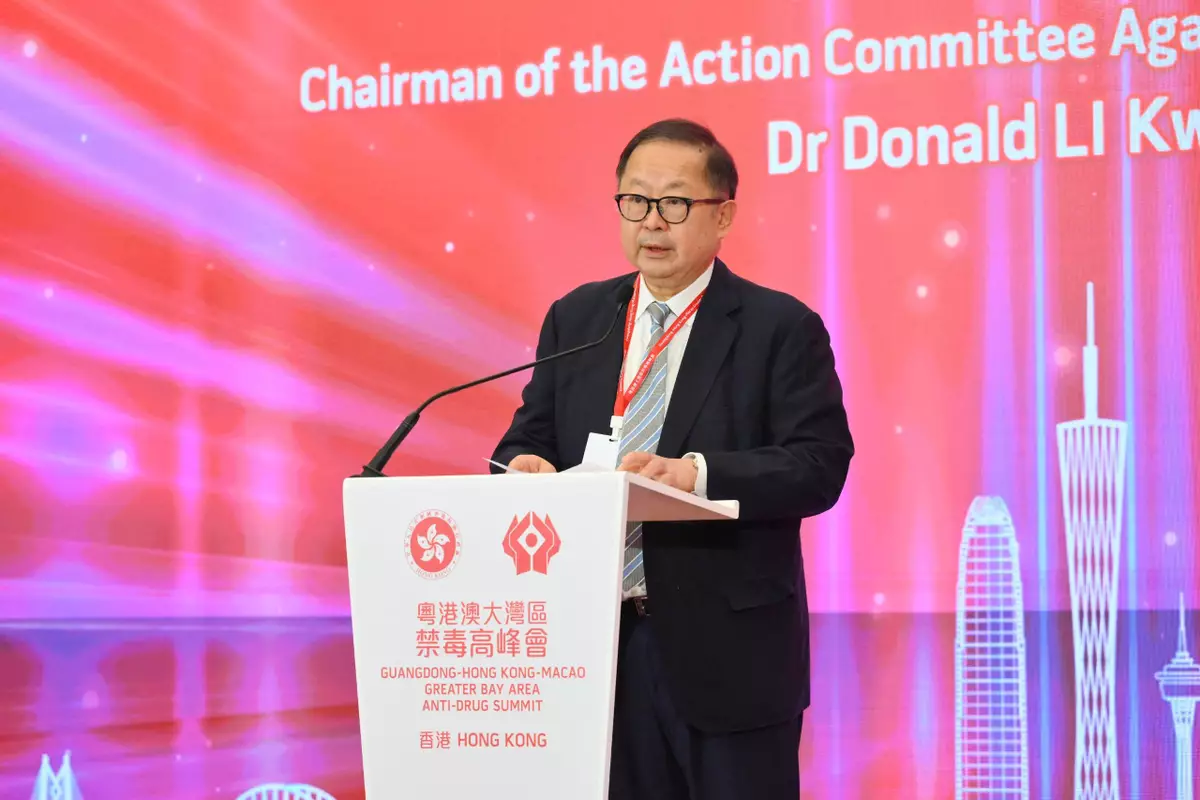
Delivering his welcoming remarks, the Chairman of ACAN, Dr Donald Li, said that this year marks the 60th anniversary of the establishment of ACAN. Looking back, while Hong Kong has made progress in anti-drug efforts, it must not become complacent. Guangdong, Hong Kong and Macao are inseparably linked, and they all bear the responsibility to safeguard their shared home, the GBA, from the harmful effects of drugs.
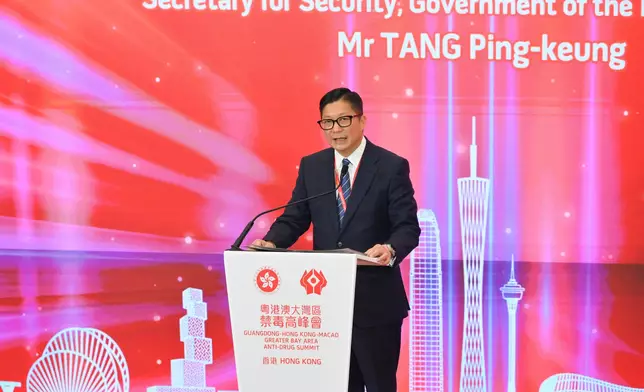
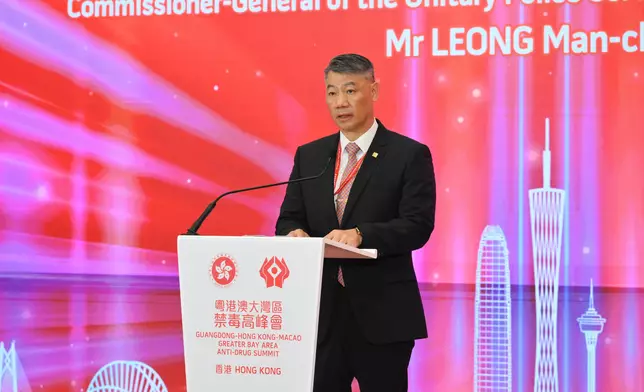
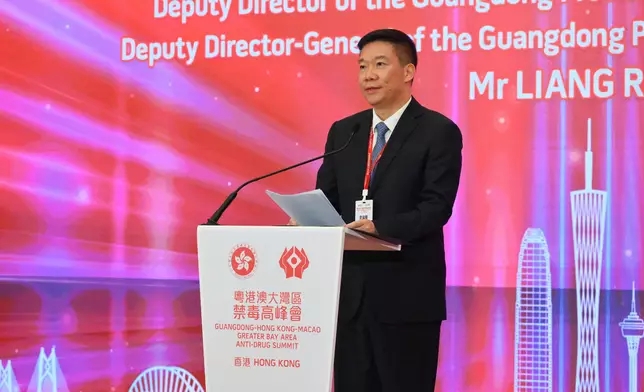
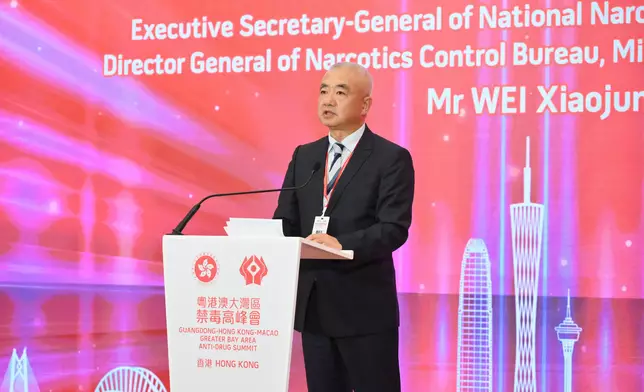
Executive Secretary-General of National Narcotics Control Commission & Director General of Narcotics Control Bureau, Ministry of Public Security, Mr Wei Xiaojun; Deputy Director of the Guangdong Provincial Narcotics Control Commission & Deputy Director-General of the Guangdong Provincial Public Security Department, Mr Liang Ruiguo; the Secretary for Security, Mr Tang Ping-keung; and the Commissioner-General of the Unitary Police Service, Government of the Macao Special Administrative Region, Mr Leong Man-cheong, delivered their keynote speeches during the morning session of the Summit.
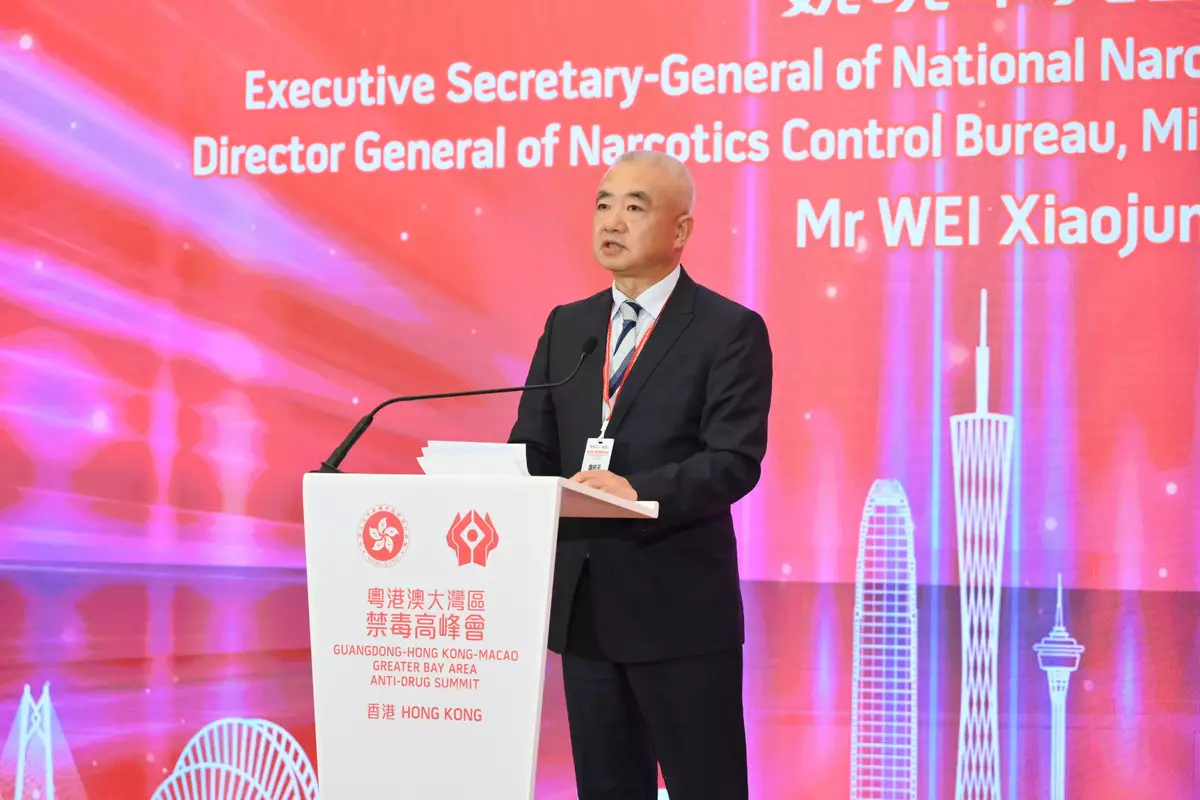
Mr Wei said that currently, the global drug trend has undergone complex and significant changes. As regards the GBA, it is where drug imports are destined and where drugs are transshipped. It is where transnational cross-boundary drug trafficking activities are plotted and where they are organised and carried out. Drug crimes have been escalating in different forms. The National Narcotics Control Commission attaches great importance to the situation of anti-drug work in Hong Kong and Macao. It will also fully support the deepening of anti-drug co-operation between the Mainland, Hong Kong and Macao.
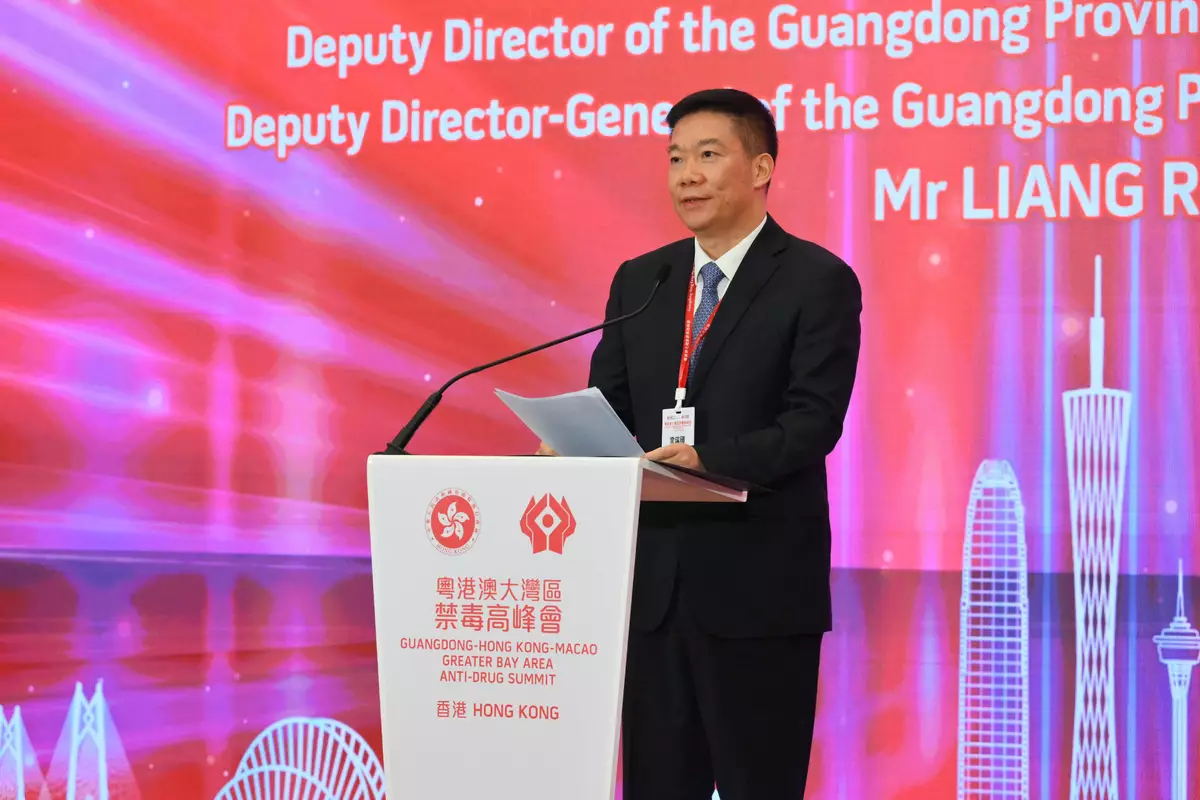
Mr Liang said that the Guangdong-Hong Kong-Macao regions enjoy close geographical ties, share the same cultural roots and are interdependent. Building a drug-free GBA together is a shared responsibility and a mission that must be shouldered. He has made proposals in three aspects: firstly, to continuously deepen co-operation in law enforcement against drug crimes; secondly, to continuously enhance joint handling of drug problems; and thirdly, to continuously deepen anti-drug exchanges.
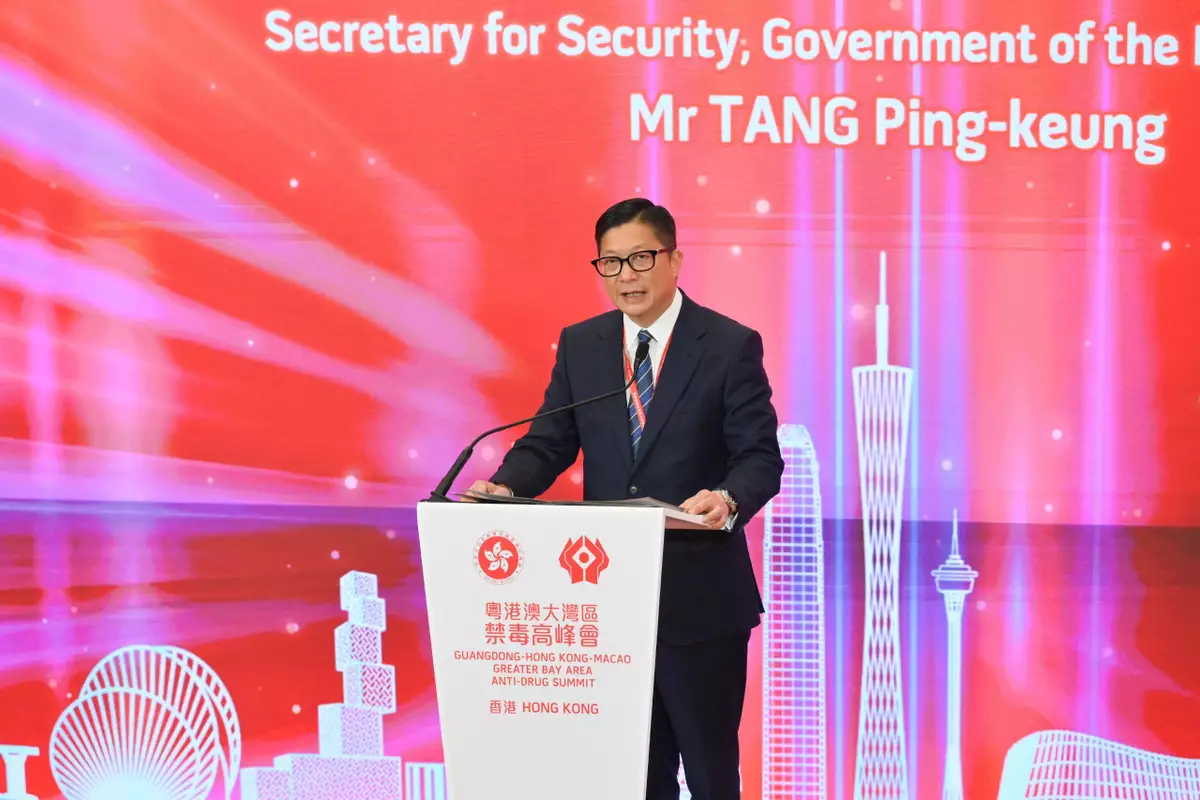
Mr Tang said that it has been 10 years since the GBA was formally incorporated into national policies. At this significant juncture, it is timely to review past anti-drug efforts and look ahead to the future. Over six decades of combating drugs, Hong Kong has progressively established a "comprehensive anti-drug protection net" comprising legislation and law enforcement, prevention and education, treatment and rehabilitation, and international co-operation. Looking forward, it must remain highly vigilant in the face of the complex and evolving drug situation and advance future anti-drug co-operation within the GBA.
Mr Leong said Macao, as the smallest city by geographical area in the GBA, has a relatively small drug consumption market. However, Macao maintains fully open customs policies and an external transportation network. Therefore, Macao has long prioritised preventing international drug trafficking syndicates from exploiting the region as a transit point for drugs. He is fully confident that, with the strong support of the Ministry of Public Security, anti-drug authorities across Guangdong, Hong Kong and Macao will forge greater synergy to jointly build a safer, drug-free GBA.
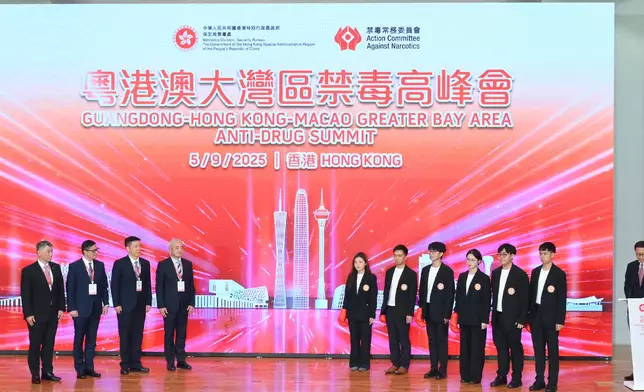
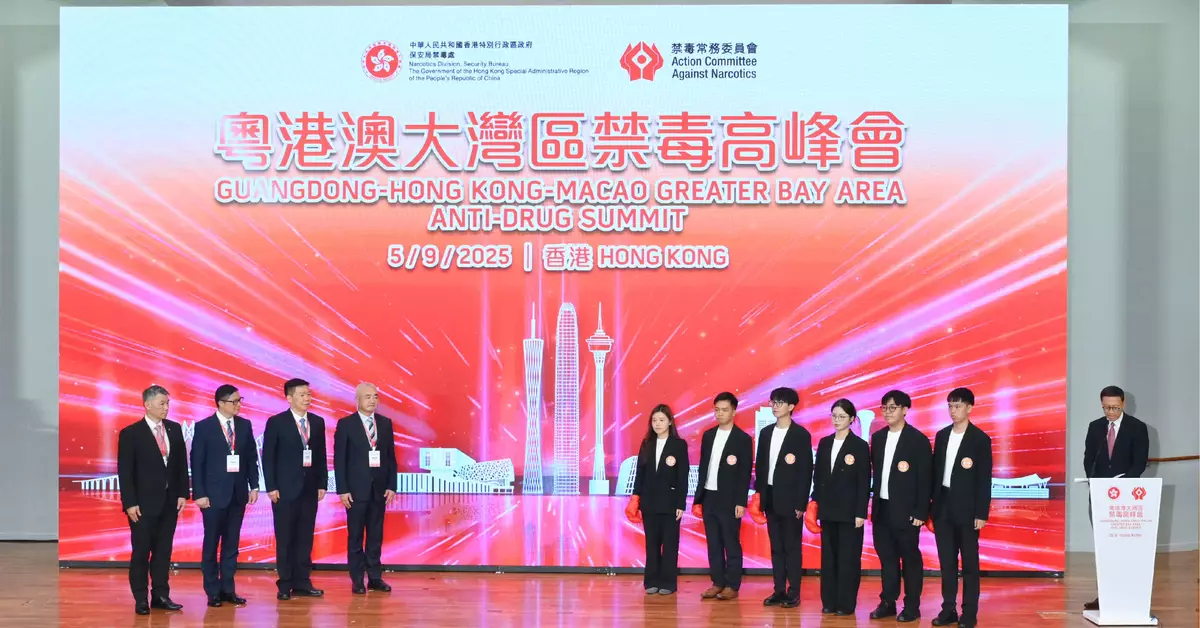
The Summit featured three panel forums titled "Strategies for Anti-drug Communication in the New Era", "Collaborative Efforts to Combat Cross-boundary Crime", and "Youth Collaboration for a Drug-free Greater Bay Area". During "Youth Collaboration for a Drug-free Greater Bay Area", youth representatives from Guangdong, Hong Kong and Macao shared their experiences in anti-drug work and their perspectives on drug problems. The Summit ended after young people from the three regions declared, "Guangdong, Hong Kong and Macao stand united - I lead the fight against drugs! Say no to drugs!" as a pledge to build a drug-free GBA together.
Guangdong-Hong Kong-Macao Greater Bay Area Anti-drug Summit successfully concludes in Hong Kong Source: HKSAR Government Press Releases
Guangdong-Hong Kong-Macao Greater Bay Area Anti-drug Summit successfully concludes in Hong Kong Source: HKSAR Government Press Releases
Guangdong-Hong Kong-Macao Greater Bay Area Anti-drug Summit successfully concludes in Hong Kong Source: HKSAR Government Press Releases

Guangdong-Hong Kong-Macao Greater Bay Area Anti-drug Summit successfully concludes in Hong Kong Source: HKSAR Government Press Releases
Guangdong-Hong Kong-Macao Greater Bay Area Anti-drug Summit successfully concludes in Hong Kong Source: HKSAR Government Press Releases
Guangdong-Hong Kong-Macao Greater Bay Area Anti-drug Summit successfully concludes in Hong Kong Source: HKSAR Government Press Releases
Guangdong-Hong Kong-Macao Greater Bay Area Anti-drug Summit successfully concludes in Hong Kong Source: HKSAR Government Press Releases
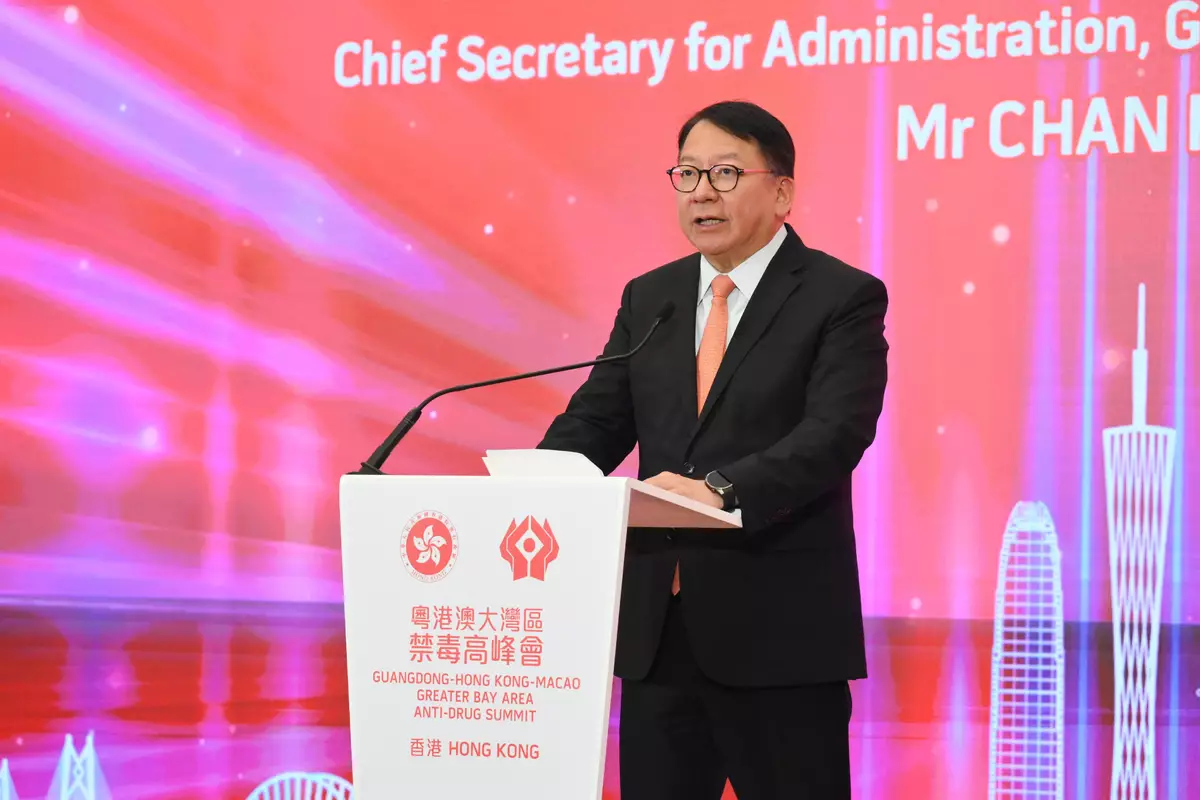
Guangdong-Hong Kong-Macao Greater Bay Area Anti-drug Summit successfully concludes in Hong Kong Source: HKSAR Government Press Releases