Skip to Content Facebook Feature Image

Japan's Prince Hisahito is the first male royal to reach adulthood in 40 years. He may be the last

ENT

Japan's Prince Hisahito is the first male royal to reach adulthood in 40 years. He may be the last
ENT

ENT

Japan's Prince Hisahito is the first male royal to reach adulthood in 40 years. He may be the last

2025-09-06 16:09 Last Updated At:16:10

TOKYO (AP) — Japan’s Prince Hisahito is the first male royal to reach adulthood in 40 years. Many people in Japan worry he could be the last.

The elaborate palace rituals to formally recognize Hisahito as an adult on Saturday are a reminder of the bleak outlook for the world's oldest monarchy. Much of this comes down to its male-only succession policy and dwindling numbers.

More Images
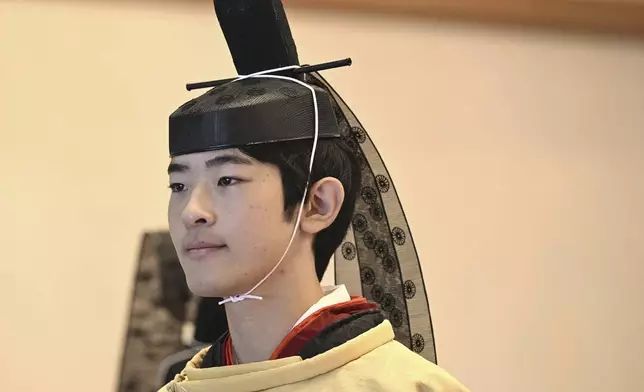
Japanese Prince Hisahito is seen in ceremonial attire during his coming-of-age rites in the Imperial Palace on his 19th birthday in Tokyo on Saturday, Sept. 6, 2025. (Kyodo News via AP)
Japanese Prince Hisahito is seen in ceremonial attire during his coming-of-age rites in the Imperial Palace on his 19th birthday in Tokyo on Saturday, Sept. 6, 2025. (Kyodo News via AP)

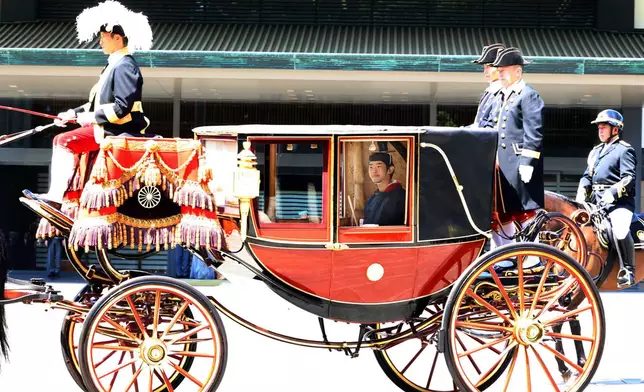
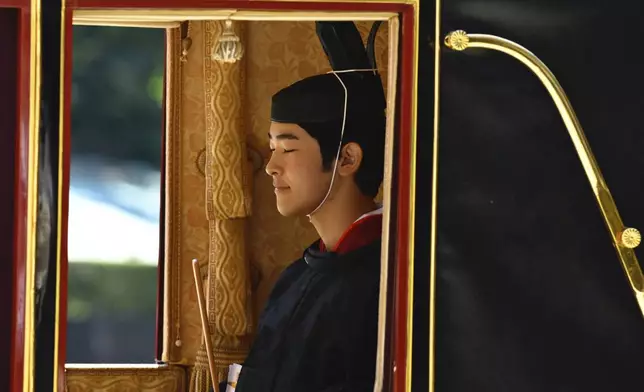
Japanese Prince Hisahito, son of Crown Prince Akishino, wearing ancient ceremonial costume, leaves for a ceremony by a carriage at the Imperial Palace in Tokyo Saturday, Sept. 6, 2025 as he celebrated his 19th birthday and attended the coming-of-age ceremony at the palace. (Yoshikazu Tsuno/Pool Photo via AP)
Japanese Prince Hisahito, son of Crown Prince Akishino, wearing ancient ceremonial costume, leaves for a ceremony by a carriage at the Imperial Palace in Tokyo Saturday, Sept. 6, 2025 as he celebrated his 19th birthday and attended the coming-of-age ceremony at the palace. (Yoshikazu Tsuno/Pool Photo via AP)

Japanese Prince Hisahito is seen in ceremonial attire during his coming-of-age rites in the Imperial Palace on his 19th birthday in Tokyo on Saturday, Sept. 6, 2025. (Kyodo News via AP)
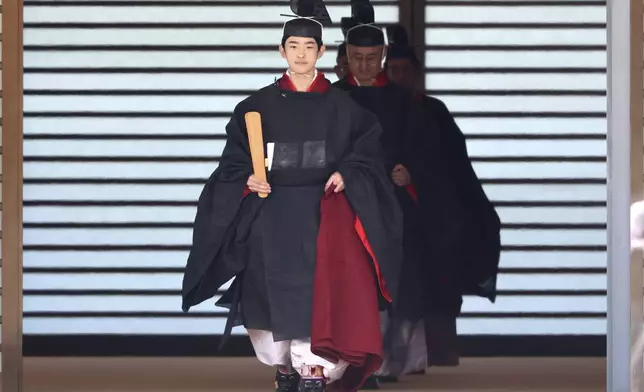
Japanese Prince Hisahito is seen in ceremonial attire during his coming-of-age rites in the Imperial Palace on his 19th birthday in Tokyo on Saturday, Sept. 6, 2025. (Kyodo News via AP)

Japanese Prince Hisahito, son of Crown Prince Akishino, wearing ancient ceremonial costume, leaves for a ceremony by a carriage at the Imperial Palace in Tokyo Saturday, Sept. 6, 2025 as he celebrated his 19th birthday and attended the coming-of-age ceremony at the palace. (Yoshikazu Tsuno/Pool Photo via AP)
Japanese Prince Hisahito, son of Crown Prince Akishino, wearing ancient ceremonial costume, leaves for a ceremony by a carriage at the Imperial Palace in Tokyo Saturday, Sept. 6, 2025 as he celebrated his 19th birthday and attended the coming-of-age ceremony at the palace. (Yoshikazu Tsuno/Pool Photo via AP)

Japan's Prince Hisahito is seen in traditional attire inside a horse-drawn carriage as he leaves the Imperial Palace after attending his coming-of-age ceremony to be recognized as an adult, on his 19th birthday in Tokyo, Saturday, Sept. 6, 2025. (David Mareuil/Pool Photo via AP)
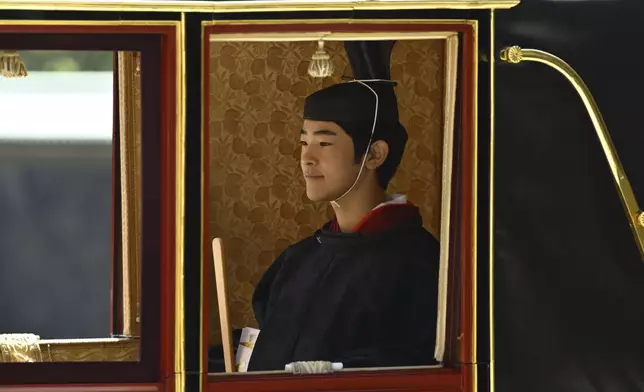
Japan's Prince Hisahito is seen in traditional attire inside a horse-drawn carriage as he leaves the Imperial Palace after attending his coming-of-age ceremony to be recognized as an adult, on his 19th birthday in Tokyo, Saturday, Sept. 6, 2025. (David Mareuil/Pool Photo via AP)
Japan's Prince Hisahito, in traditional attire, is seen inside a horse-drawn carriage as he leaves the Imperial Palace after attending his coming-of-age ceremony to be recognized as an adult, on his 19th birthday in Tokyo, Saturday, Sept. 6, 2025. (David Mareuil/Pool Photo via AP)

Japan's Prince Hisahito, in traditional attire, is seen inside a horse-drawn carriage as he leaves the Imperial Palace after attending his coming-of-age ceremony to be recognized as an adult, on his 19th birthday in Tokyo, Saturday, Sept. 6, 2025. (David Mareuil/Pool Photo via AP)

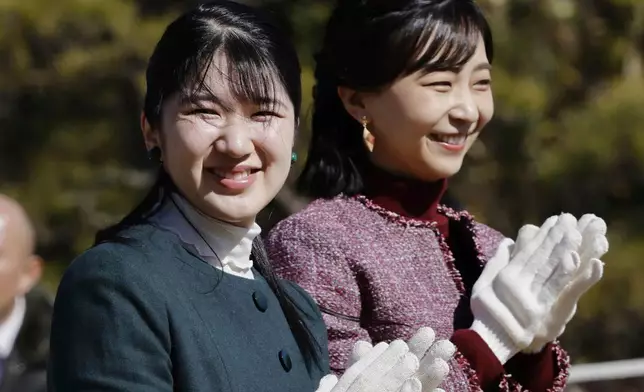
Japan's Princess Aiko, left, and Princess Kako attend an event at an imperial wild duck preserve in Ichikawa, Chiba prefecture, Japan on Feb. 14, 2025. (Daiki Katagiri/Kyodo News via AP)
Japan's Princess Aiko, left, and Princess Kako attend an event at an imperial wild duck preserve in Ichikawa, Chiba prefecture, Japan on Feb. 14, 2025. (Daiki Katagiri/Kyodo News via AP)

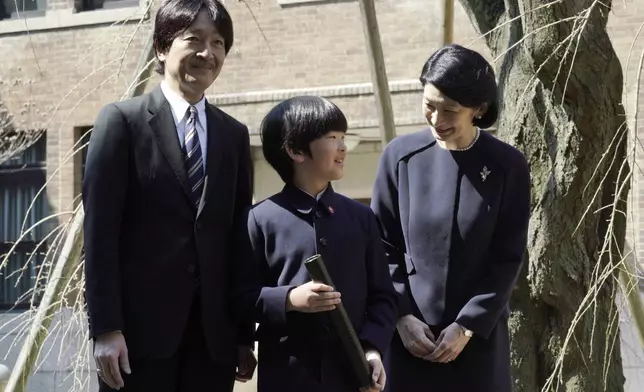
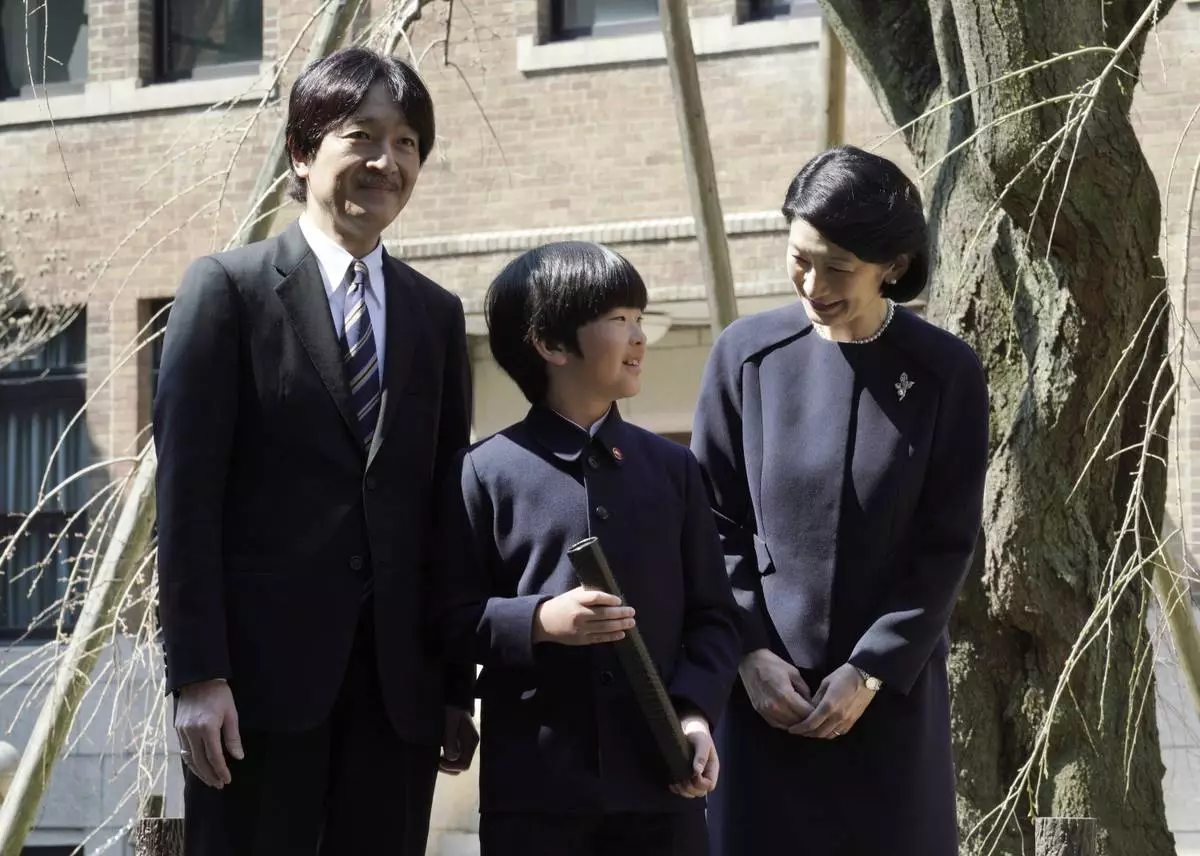
FILE - Japan's Prince Hisahito, center, accompanied by his parents Prince Akishino and Princess Kiko pose for media after his graduation ceremony of a primary school affiliated with Ochanomizu University in Tokyo on March 15, 2019. (AP Photo/Eugene Hoshiko, Pool, File)
FILE - Japan's Prince Hisahito, center, accompanied by his parents Prince Akishino and Princess Kiko pose for media after his graduation ceremony of a primary school affiliated with Ochanomizu University in Tokyo on March 15, 2019. (AP Photo/Eugene Hoshiko, Pool, File)

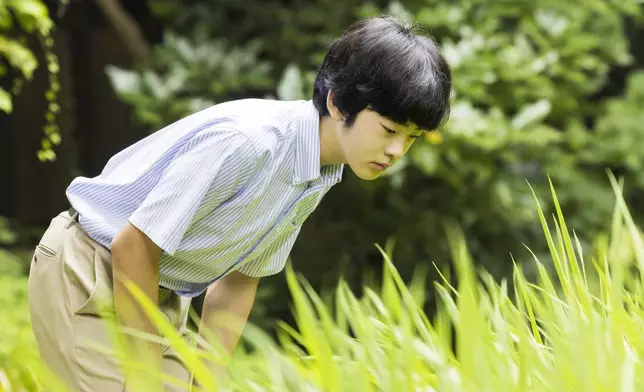
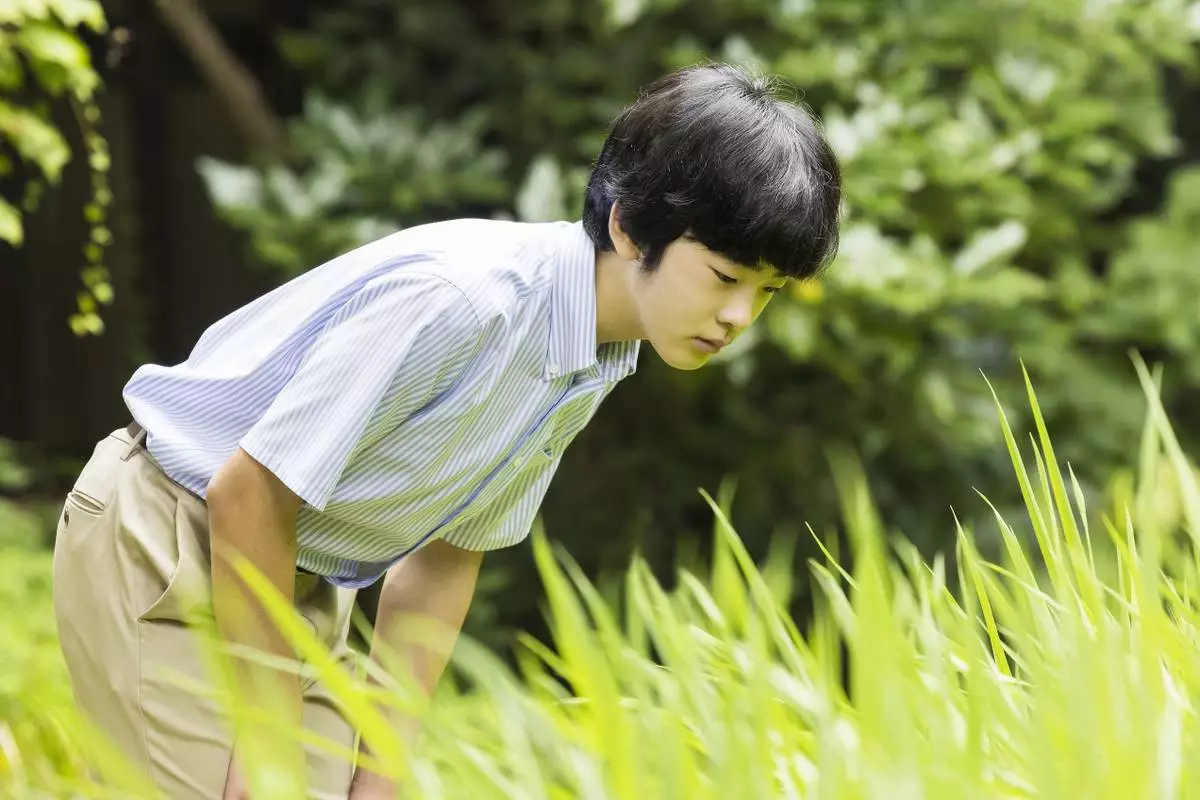
FILE - This photo provided by the Imperial Household Agency of Japan shows Prince Hisahito, Emperor Naruhito's nephew, posing for a photograph in the garden of the Akasaka imperial property residence in Tokyo on Aug. 7, 2022. (The Imperial Household Agency of Japan via AP, File)
FILE - This photo provided by the Imperial Household Agency of Japan shows Prince Hisahito, Emperor Naruhito's nephew, posing for a photograph in the garden of the Akasaka imperial property residence in Tokyo on Aug. 7, 2022. (The Imperial Household Agency of Japan via AP, File)

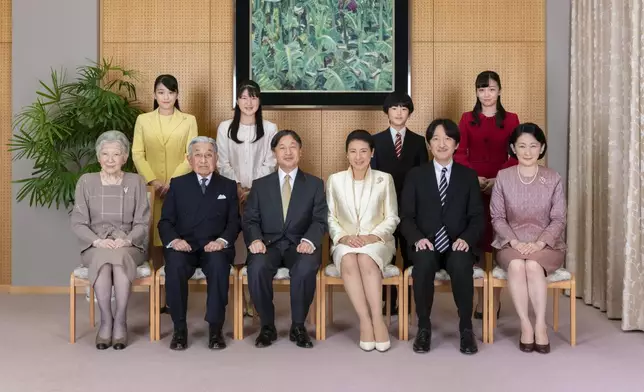
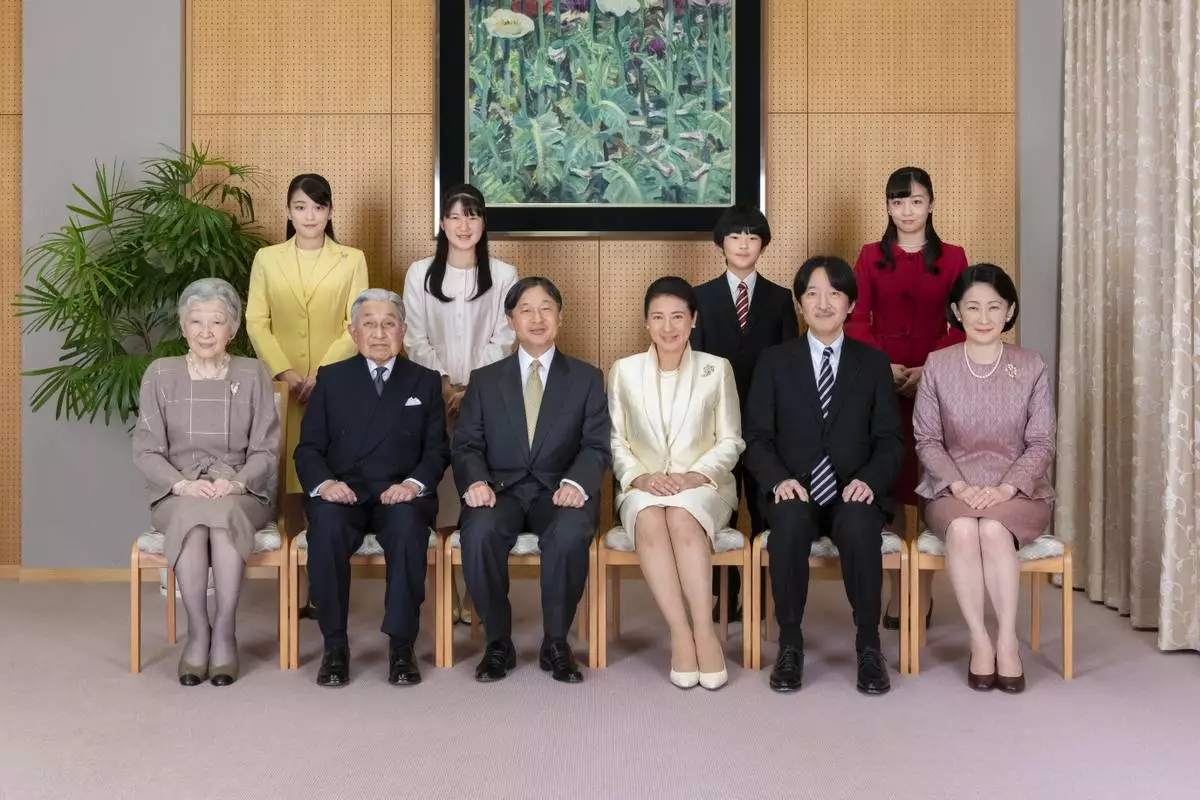
FILE - In this photo released by Imperial Household Agency of Japan, Japan's Emperor Naruhito, seated third from left, and Empress Masako, seated third from right, pose with their family members for a family photo session for the New Year, at their residence in Tokyo on Dec. 12, 2019. Imperial family members are, front left to right, Empress Emerita Michiko, Emperor Emeritus Akihito, Naruhito, Masako, Crown Prince Akishino, and Crown Princess Kiko, and, back from left to right, Princess Mako, Princess Aiko, Prince Hisahito, and Princess Kako. (Imperial Household Agency of Japan via AP, File)
FILE - In this photo released by Imperial Household Agency of Japan, Japan's Emperor Naruhito, seated third from left, and Empress Masako, seated third from right, pose with their family members for a family photo session for the New Year, at their residence in Tokyo on Dec. 12, 2019. Imperial family members are, front left to right, Empress Emerita Michiko, Emperor Emeritus Akihito, Naruhito, Masako, Crown Prince Akishino, and Crown Princess Kiko, and, back from left to right, Princess Mako, Princess Aiko, Prince Hisahito, and Princess Kako. (Imperial Household Agency of Japan via AP, File)

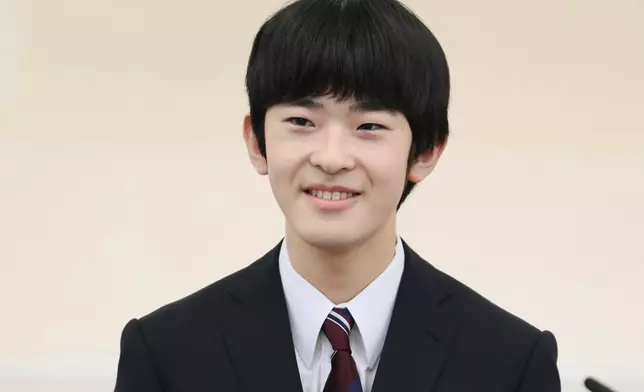
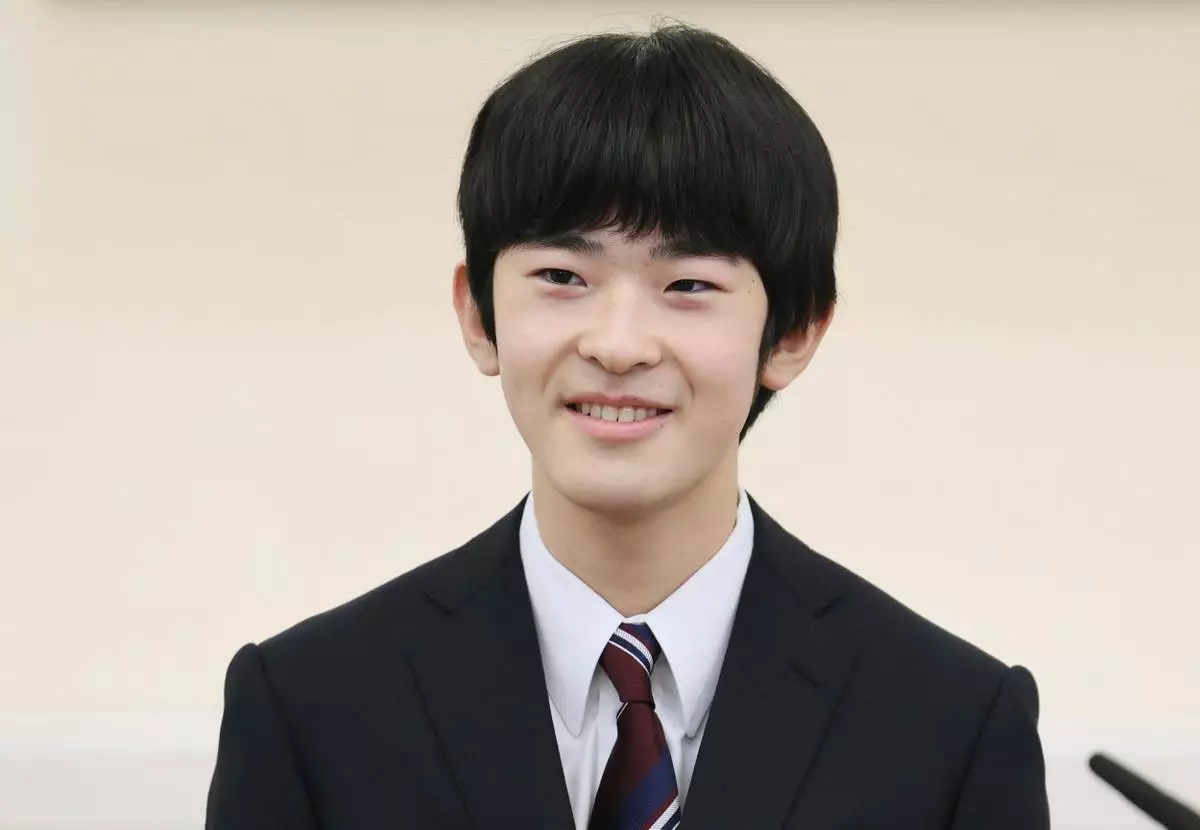
Japan's Prince Hisahito, nephew of Emperor Naruhito, attends his first press conference to commemorate his coming-of-age at the Akasaka Estate residence in Tokyo on March 3, 2025. (Japan Pool/Kyodo News via AP)

Japan's Prince Hisahito, nephew of Emperor Naruhito, attends his first press conference to commemorate his coming-of-age at the Akasaka Estate residence in Tokyo on March 3, 2025. (Japan Pool/Kyodo News via AP)

Hisahito is second in line to the Chrysanthemum Throne and is likely to become emperor one day. After him, however, there is nobody left, leaving the Imperial family with a dilemma over whether they should reverse a 19th century ruling that abolished female succession.

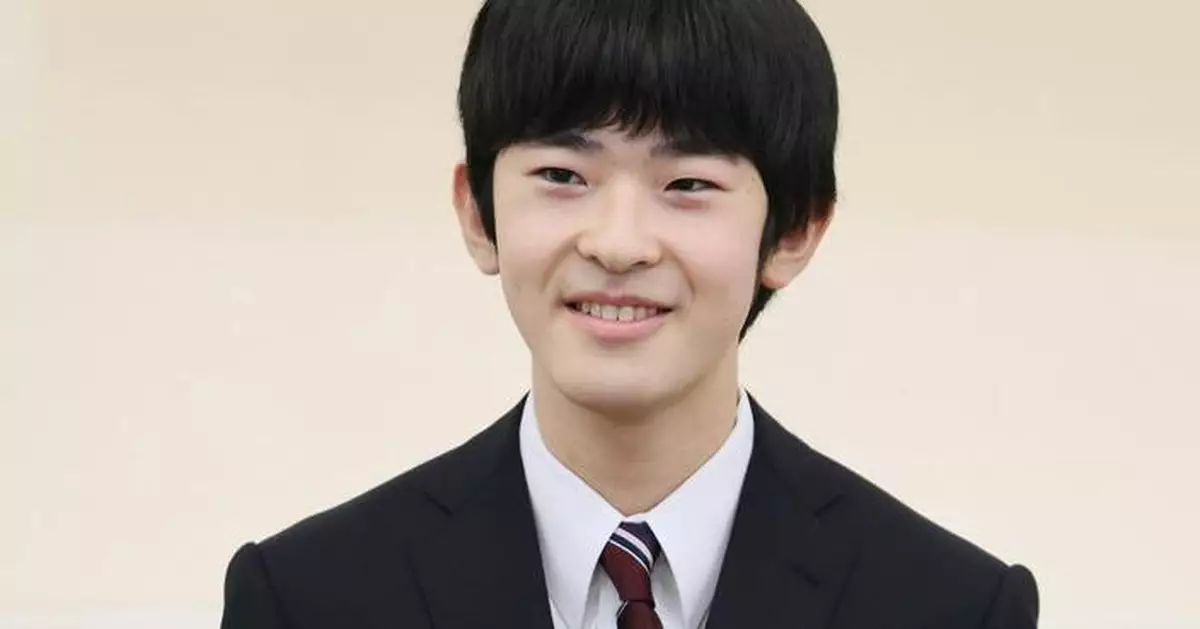
A freshman at Tsukuba University near Tokyo, Hisahito studies biology and enjoys playing badminton. He is especially devoted to dragonflies and has co-authored an academic paper on a survey of the insects on the grounds of his Akasaka estate in Tokyo.

In his debut news conference in March, the prince said he hopes to focus his studies on dragonflies and other insects, including ways to protect bug populations in urban areas.

Hisahito was born on Sept. 6, 2006, and is the only son of Crown Prince Akishino, the heir to the throne, and his wife, Crown Princess Kiko. He has two older sisters, the popular Princess Kako and former Princess Mako, whose marriage to a nonroyal required her to abandon her royal status.

Hisahito’s coming-of-age rituals fell a year after he turned 18, reaching legal adulthood, because he wanted to concentrate on college entrance exams.

Hisahito is the nephew of Emperor Naruhito, who has one child, a daughter, Princess Aiko. Hisahito's father, Akishino, the Emperor's younger brother, was the last male to reach adulthood in the family, in 1985.

Hisahito is the youngest of the 16-member all-adult Imperial Family. He and his father are the only two male heirs who are younger than Naruhito. Prince Hitachi, former Emperor Akihito's younger brother, is third in line to the throne but is already 89.

The shortage of male successors is a serious concern for the monarchy, which historians say has lasted for 1,500 years. The issue reflects Japan’s rapidly aging and shrinking population.

Japan traditionally had male emperors, but female succession was permitted. There have been eight female emperors, including the most recent Gosakuramachi who ruled from 1762 to 1770. None of them, however, produced an heir during their reign.

Succession was legally limited to males by law for the first time in 1889 under the prewar Constitution. The postwar 1947 Imperial House Law, which largely preserves conservative prewar family values, also only allows male succession.

But experts say the male-only succession system is structurally flawed and only worked previously thanks to the help of concubines who, until about 100 years ago, produced imperial children.

Hugely popular Princess Aiko, the only daughter of Emperor Naruhito and Empress Masako, cannot be her father’s successor, even though she is supported by much of the public as a future monarch.

To address succession concerns, the government compiled a proposal to allow a female emperor in 2005. But Hisahito's birth quickly changed the tide and nationalists turned against the proposal.

A separate, largely conservative panel of experts in January 2022 recommended calling on the government to maintain its male-line succession while allowing female members to keep their royal status after marriage and continue their official duties. The conservatives also proposed adopting male descendants from now-defunct distant royal families to continue the male lineage.

But the debate has stalled over the question of whether to give royal status to nonroyals who marry princesses and their children.

The stalled debate has forced Hisahito to carry the burden of the Imperial Family's fate by himself, former Imperial Household Agency chief Shingo Haketa said in a Yomiuri newspaper article earlier this year. “The fundamental question is not whether to allow male or female succession line but how to save the monarchy.”

The conservative Yomiuri issued its own proposal in May, calling for an urgent revision to the Imperial House Law to give royal status to husbands and children of princesses and allow women to succeed the throne. It called on the parliament to “responsibly reach a conclusion on the crisis surrounding the state and the symbol of the unity of the people.”

Saturday's ritual for Hisahito started at his family residence, with him appearing in a tuxedo to receive a crown to be delivered by a messenger from Naruhito.

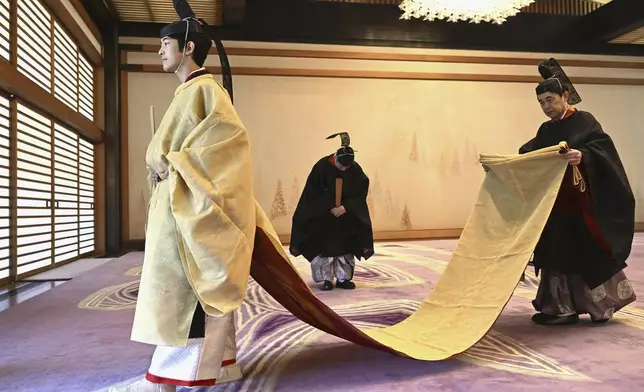
In a main ritual at the Imperial Palace, attended by other royal members and top government officials, he wore traditional attire with a beige-colored robe that symbolized his pre-adulthood status. His headcover was replaced with the crown, a black adult “kanmuri” headpiece, formalizing his coming-of-age. Hisahito bowed deeply and thanked the Emperor for the crown and his parents for hosting the ceremony and pledged to fulfil his responsibility as a royal member.

The crowned prince then changed into adult attire with black top and rode in a royal horse carriage to pray at the three shrines within the palace compound.

In the afternoon, Hisahito was to put his tuxedo back on to visit the Imperial Palace to greet Naruhito and Empress Masako, his uncle and aunt, in the prestigious Matsu-no-Ma, or pine room. In another ritual he is to receive a medal, the Grand Cordon of the Supreme Order of the Chrysanthemum, in a postwar tradition. He also was to greet his grandparents, Akihito and his wife, former Empress Michiko, at their palace.

In the evening, Akishino and Kiko were to host a private celebration for their son at a Tokyo hotel for their relatives.

The rituals also include his visits early next week to Ise, Japan's top Shinto shrine, the mausoleum of the mythical first emperor Jinmu in Nara, as well as that of his late great-grandfather, wartime emperor Hirohito, in the Tokyo suburbs. He will also have lunch with Prime Minister Shigeru Ishiba and other dignitaries Wednesday.
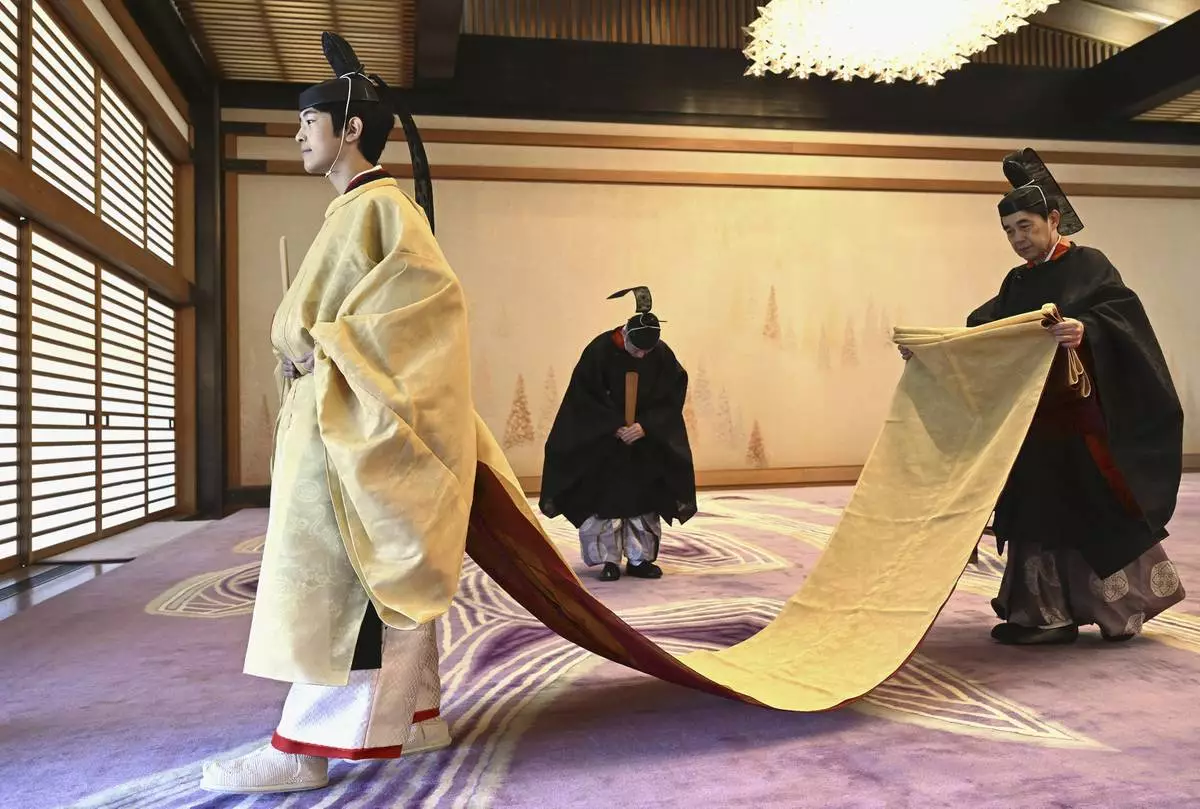
Japanese Prince Hisahito is seen in ceremonial attire during his coming-of-age rites in the Imperial Palace on his 19th birthday in Tokyo on Saturday, Sept. 6, 2025. (Kyodo News via AP)
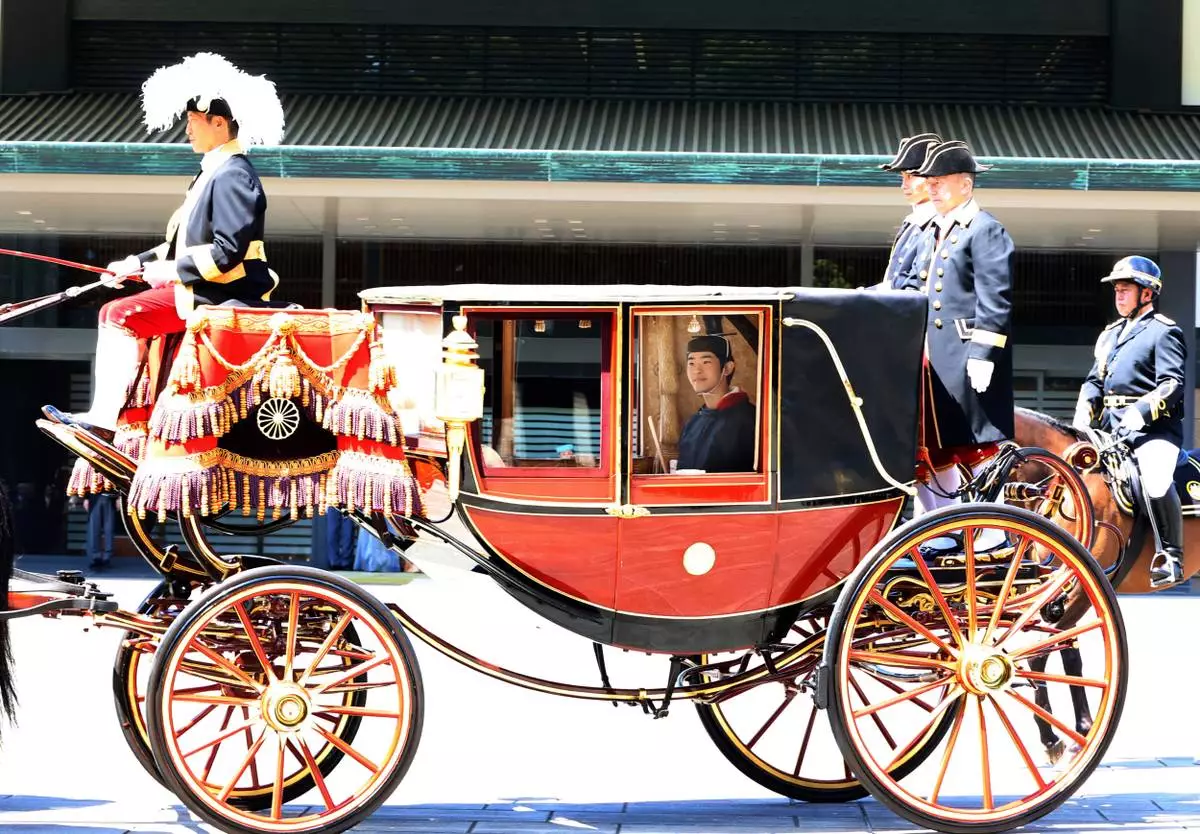
Japanese Prince Hisahito is seen in ceremonial attire during his coming-of-age rites in the Imperial Palace on his 19th birthday in Tokyo on Saturday, Sept. 6, 2025. (Kyodo News via AP)

Japanese Prince Hisahito, son of Crown Prince Akishino, wearing ancient ceremonial costume, leaves for a ceremony by a carriage at the Imperial Palace in Tokyo Saturday, Sept. 6, 2025 as he celebrated his 19th birthday and attended the coming-of-age ceremony at the palace. (Yoshikazu Tsuno/Pool Photo via AP)
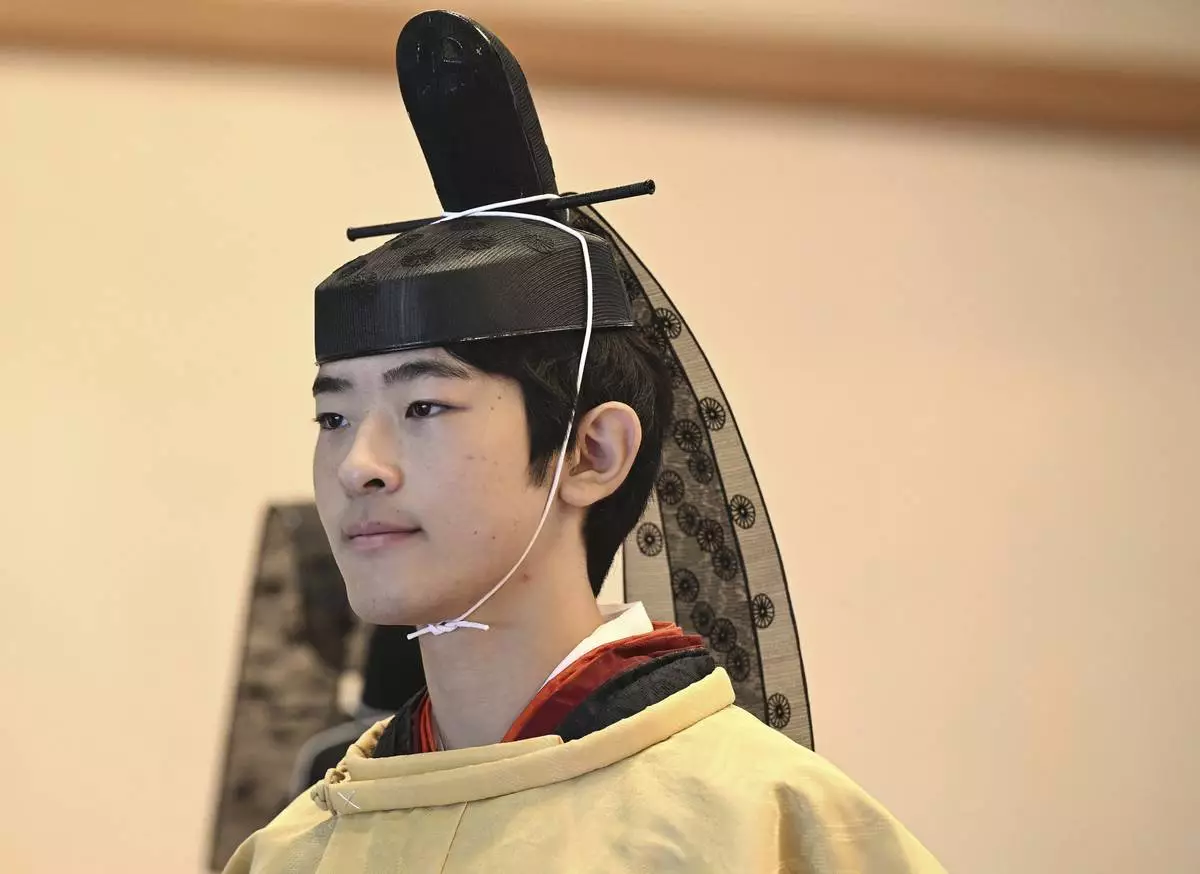
Japanese Prince Hisahito, son of Crown Prince Akishino, wearing ancient ceremonial costume, leaves for a ceremony by a carriage at the Imperial Palace in Tokyo Saturday, Sept. 6, 2025 as he celebrated his 19th birthday and attended the coming-of-age ceremony at the palace. (Yoshikazu Tsuno/Pool Photo via AP)

Japanese Prince Hisahito is seen in ceremonial attire during his coming-of-age rites in the Imperial Palace on his 19th birthday in Tokyo on Saturday, Sept. 6, 2025. (Kyodo News via AP)
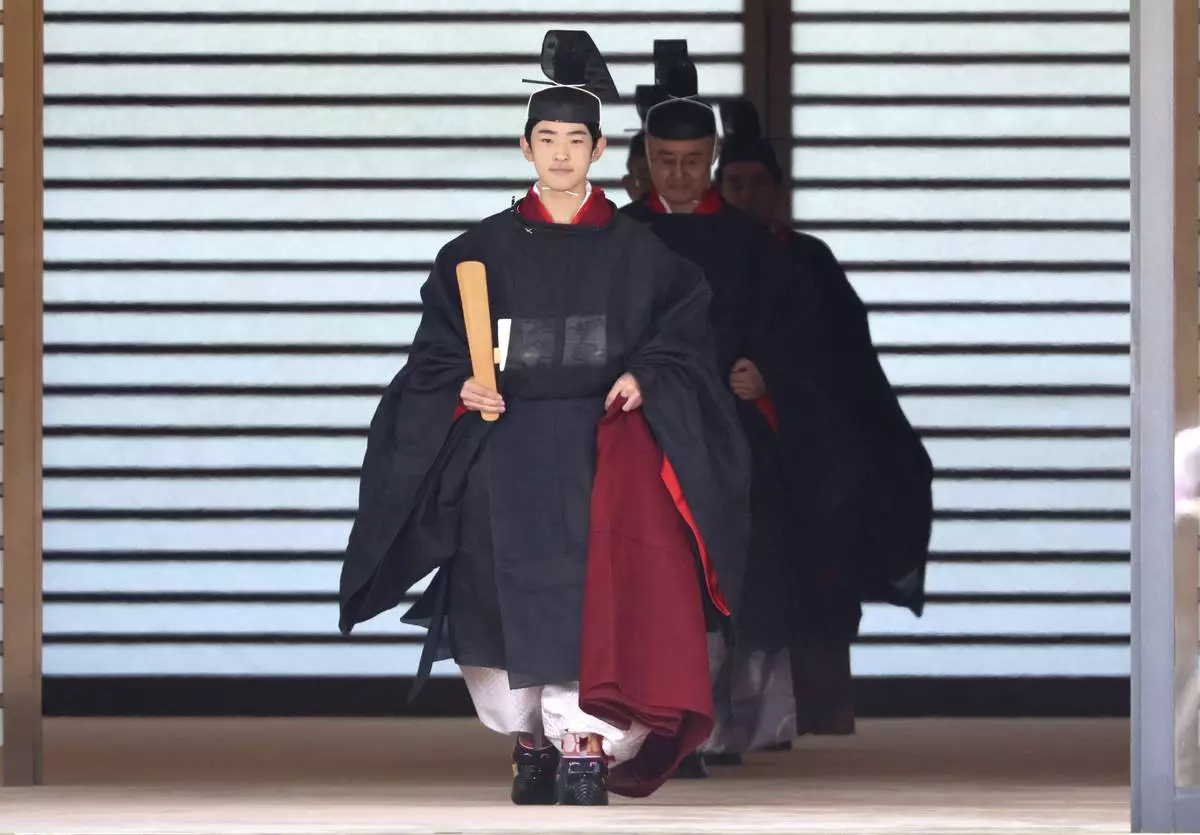
Japanese Prince Hisahito is seen in ceremonial attire during his coming-of-age rites in the Imperial Palace on his 19th birthday in Tokyo on Saturday, Sept. 6, 2025. (Kyodo News via AP)

Japanese Prince Hisahito, son of Crown Prince Akishino, wearing ancient ceremonial costume, leaves for a ceremony by a carriage at the Imperial Palace in Tokyo Saturday, Sept. 6, 2025 as he celebrated his 19th birthday and attended the coming-of-age ceremony at the palace. (Yoshikazu Tsuno/Pool Photo via AP)
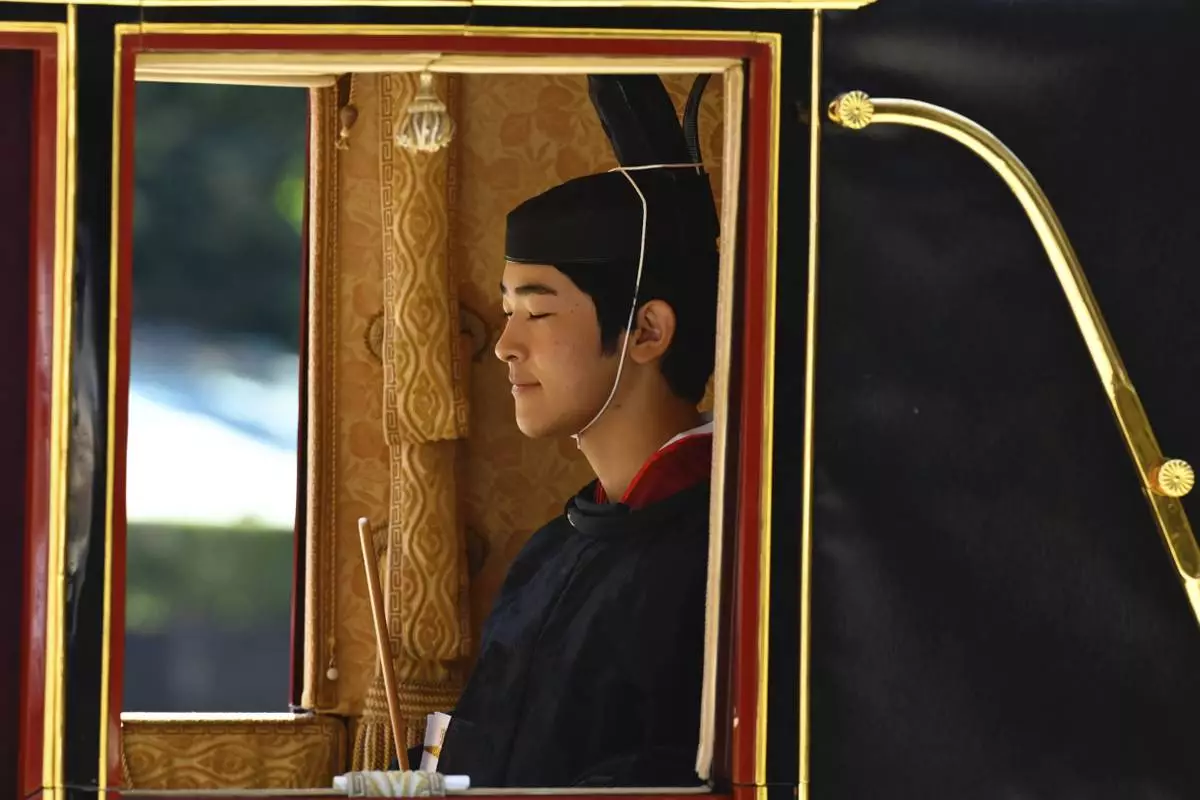
Japanese Prince Hisahito, son of Crown Prince Akishino, wearing ancient ceremonial costume, leaves for a ceremony by a carriage at the Imperial Palace in Tokyo Saturday, Sept. 6, 2025 as he celebrated his 19th birthday and attended the coming-of-age ceremony at the palace. (Yoshikazu Tsuno/Pool Photo via AP)

Japan's Prince Hisahito is seen in traditional attire inside a horse-drawn carriage as he leaves the Imperial Palace after attending his coming-of-age ceremony to be recognized as an adult, on his 19th birthday in Tokyo, Saturday, Sept. 6, 2025. (David Mareuil/Pool Photo via AP)
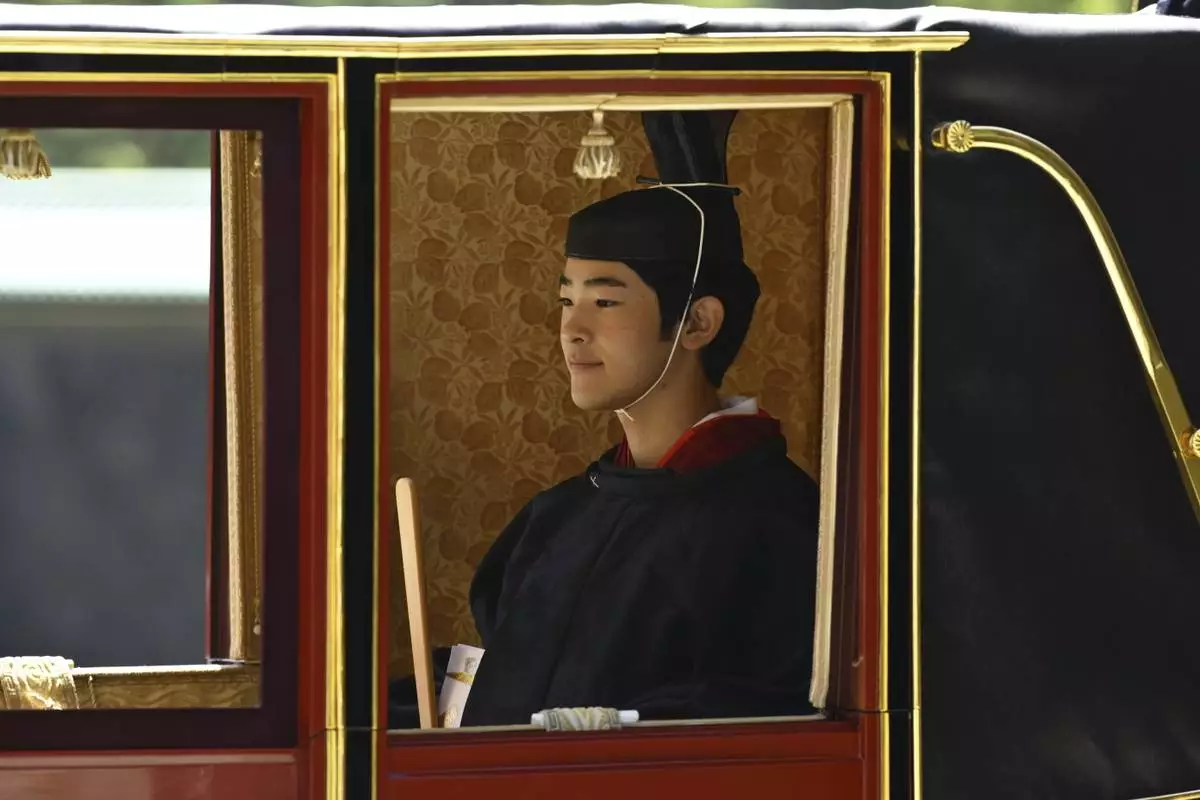
Japan's Prince Hisahito is seen in traditional attire inside a horse-drawn carriage as he leaves the Imperial Palace after attending his coming-of-age ceremony to be recognized as an adult, on his 19th birthday in Tokyo, Saturday, Sept. 6, 2025. (David Mareuil/Pool Photo via AP)
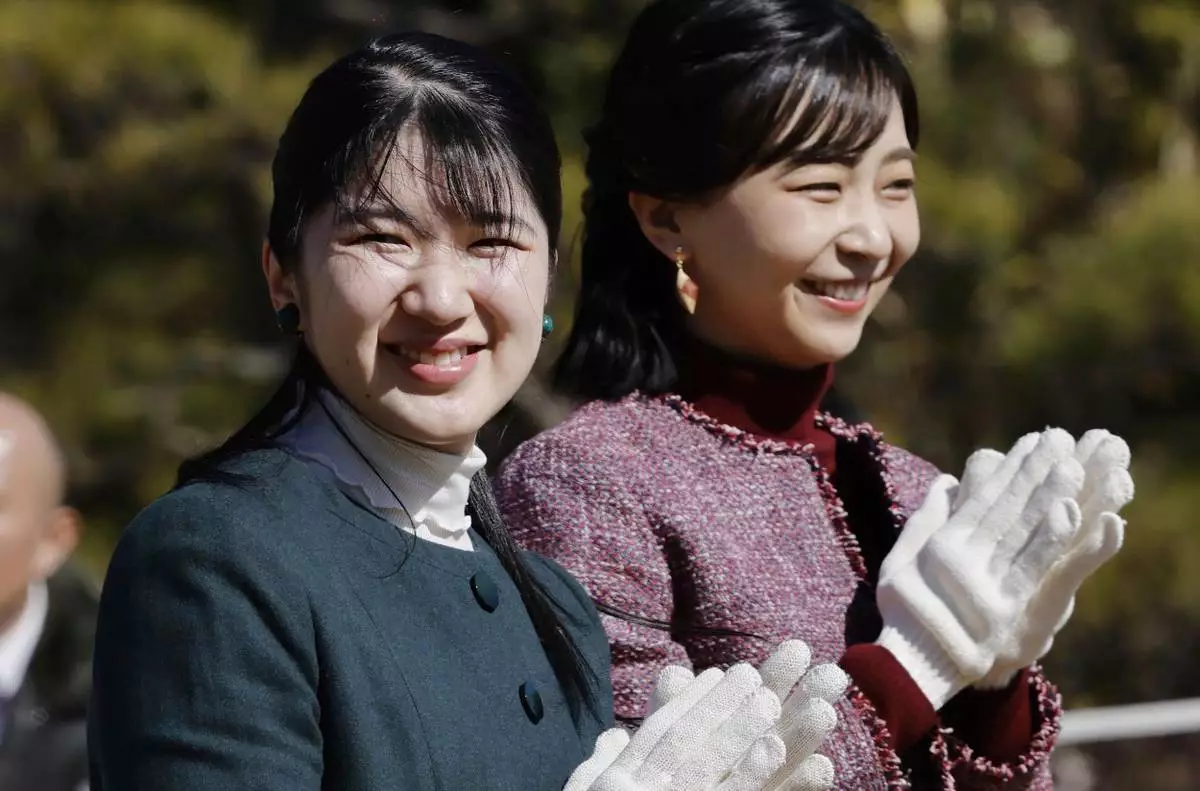
Japan's Prince Hisahito, in traditional attire, is seen inside a horse-drawn carriage as he leaves the Imperial Palace after attending his coming-of-age ceremony to be recognized as an adult, on his 19th birthday in Tokyo, Saturday, Sept. 6, 2025. (David Mareuil/Pool Photo via AP)

Japan's Prince Hisahito, in traditional attire, is seen inside a horse-drawn carriage as he leaves the Imperial Palace after attending his coming-of-age ceremony to be recognized as an adult, on his 19th birthday in Tokyo, Saturday, Sept. 6, 2025. (David Mareuil/Pool Photo via AP)

Japan's Princess Aiko, left, and Princess Kako attend an event at an imperial wild duck preserve in Ichikawa, Chiba prefecture, Japan on Feb. 14, 2025. (Daiki Katagiri/Kyodo News via AP)
Japan's Princess Aiko, left, and Princess Kako attend an event at an imperial wild duck preserve in Ichikawa, Chiba prefecture, Japan on Feb. 14, 2025. (Daiki Katagiri/Kyodo News via AP)

FILE - Japan's Prince Hisahito, center, accompanied by his parents Prince Akishino and Princess Kiko pose for media after his graduation ceremony of a primary school affiliated with Ochanomizu University in Tokyo on March 15, 2019. (AP Photo/Eugene Hoshiko, Pool, File)
FILE - Japan's Prince Hisahito, center, accompanied by his parents Prince Akishino and Princess Kiko pose for media after his graduation ceremony of a primary school affiliated with Ochanomizu University in Tokyo on March 15, 2019. (AP Photo/Eugene Hoshiko, Pool, File)

FILE - This photo provided by the Imperial Household Agency of Japan shows Prince Hisahito, Emperor Naruhito's nephew, posing for a photograph in the garden of the Akasaka imperial property residence in Tokyo on Aug. 7, 2022. (The Imperial Household Agency of Japan via AP, File)
FILE - This photo provided by the Imperial Household Agency of Japan shows Prince Hisahito, Emperor Naruhito's nephew, posing for a photograph in the garden of the Akasaka imperial property residence in Tokyo on Aug. 7, 2022. (The Imperial Household Agency of Japan via AP, File)

FILE - In this photo released by Imperial Household Agency of Japan, Japan's Emperor Naruhito, seated third from left, and Empress Masako, seated third from right, pose with their family members for a family photo session for the New Year, at their residence in Tokyo on Dec. 12, 2019. Imperial family members are, front left to right, Empress Emerita Michiko, Emperor Emeritus Akihito, Naruhito, Masako, Crown Prince Akishino, and Crown Princess Kiko, and, back from left to right, Princess Mako, Princess Aiko, Prince Hisahito, and Princess Kako. (Imperial Household Agency of Japan via AP, File)
FILE - In this photo released by Imperial Household Agency of Japan, Japan's Emperor Naruhito, seated third from left, and Empress Masako, seated third from right, pose with their family members for a family photo session for the New Year, at their residence in Tokyo on Dec. 12, 2019. Imperial family members are, front left to right, Empress Emerita Michiko, Emperor Emeritus Akihito, Naruhito, Masako, Crown Prince Akishino, and Crown Princess Kiko, and, back from left to right, Princess Mako, Princess Aiko, Prince Hisahito, and Princess Kako. (Imperial Household Agency of Japan via AP, File)

Japan's Prince Hisahito, nephew of Emperor Naruhito, attends his first press conference to commemorate his coming-of-age at the Akasaka Estate residence in Tokyo on March 3, 2025. (Japan Pool/Kyodo News via AP)


Japan's Prince Hisahito, nephew of Emperor Naruhito, attends his first press conference to commemorate his coming-of-age at the Akasaka Estate residence in Tokyo on March 3, 2025. (Japan Pool/Kyodo News via AP)

VATICAN CITY (AP) — Pope Leo XIV made a historic apology on Monday for the Holy See's role in legitimizing slavery and for having failed to condemn it for centuries, calling the Vatican’s record a “wound in Christian memory.”

Past popes have apologized for Christians’ involvement in the trans-Atlantic slave trade. But no pope had ever publicly acknowledged, much less apologized for, the role that past popes played in giving European sovereigns explicit authority to subjugate and enslave “infidels.”

History’s first U.S.-born pope, whose family history includes both enslaved people and slave owners, delivered the apology in his first encyclical, “Magnifica Humanitas,” (Magnificent Humanity), which was released Monday.

The sweeping manifesto is about safeguarding humanity in an era of increasing reliance on artificial intelligence. Leo raised the slave trade in relation to what he called the new forms of slavery and colonialism that the digital revolution is fueling.

Black American Catholics, activists and scholars have long called for the Holy See to atone for its role in the colonial-era trade in human beings, beyond generic apologies for the involvement of individual Christians.

“It is impossible not to feel deep sorrow when contemplating the immense suffering and humiliation endured by so many in stark contrast to their immeasurable dignity as persons infinitely loved by the Lord,” Leo wrote. “For this, in the name of the church, I sincerely ask for pardon.”

Shannen Dee Williams, historian at the University of Dayton and author of the 2022 history of American Black Catholic nuns, “Subversive Habits,” welcomed the apology as a "monumental step toward the kind of essential truth-telling and reparation that many Catholics have prayed and worked to witness.”

“The Catholic Church has never been an innocent bystander in the history of white supremacy," said Williams. “Black Catholics have waited a long time to hear the Vatican speak honestly about the church’s leading roles in the trans-Atlantic slave trade and chattel slavery--and thus by extension the enduring systems of anti-Black racism in the world today.”

The Vatican has insisted that it always upheld the dignity of all human beings as children of God. But a series of 15th-century directives from the Vatican authorized Portuguese sovereigns to conquer Africa and the Americas and enslave non-Christians.

In 1452, for example, Pope Nicholas V issued the papal bull Dum Diversas, which gave the Portuguese king and his successors the right “to invade, conquer, fight and subjugate” and take all possessions — including land — of “Saracens, and pagans, and other infidels, and enemies of the name of Christ” anywhere.

The bull also gave the Portuguese permission “to reduce their persons to perpetual slavery.”

That bull and another issued three years later, Romanus Pontifex, formed the basis of the Doctrine of Discovery, the theory that legitimized the colonial-era seizure of land in Africa and the Americas.

Nicholas V’s permissions to the Portuguese were confirmed or renewed by Pope Callixtus III in 1456, Pope Sixtus IV in 1481 and Pope Leo X in 1514, according to the Rev. Christopher J. Kellerman, a Jesuit priest and author of “All Oppression Shall Cease: A History of Slavery, Abolitionism, and the Catholic Church.”

Spanish kings received the rights for the Americas.

In 2023, the Vatican formally repudiated the Doctrine of Discovery, but it never formally rescinded, abrogated or rejected the bulls themselves. The Vatican insists that a later bull, Sublimis Deus in 1537, reaffirmed that Indigenous peoples shouldn’t be deprived of their liberty or the possession of their property, and weren't to be enslaved.

In his encyclical, Leo recalled that his namesake, Pope Leo XIII, was the first pope to explicitly condemn slavery in 1888, long after many countries had abolished it. Before that, in antiquity and the Middle Ages, church institutions and even popes — Gregory the Great — had slaves, Kellerman said.

In acknowledging the 15th century papal bulls, Leo wrote in his encyclical: “Already in the early modern period, the Apostolic See of Rome, responding to the requests of sovereigns, intervened several times in order to regulate and legitimize forms of subjugation, and, in certain cases, including the enslavement of ‘infidels.’”

Leo said it wasn't possible to judge the morality of the decisions with today’s standards.

“Yet neither can we deny or diminish the delay with which both society and the church came to denounce the scourge of slavery,” he said.

The pope said that the church has long affirmed the dignity of every human being as the basis of its doctrine, “even if it took eighteen centuries for its full incompatibility with slavery to be explicitly recognized.”

“This constitutes a wound in Christian memory, one from which we cannot consider ourselves detached,” he said.

Leo said that the church must firmly condemn all forms of trafficking related to the digital technological revolution “if we want to avoid the need to ask for pardon again in the future for having failed to respect the treasure of human dignity that is required by our faith.”

Anthea Butler, senior fellow at the Koch History Center, Oxford University, said Leo needed to acknowledge and atone for the church's complicity in historic slavery if he wanted to credibly “speak to the current issues of technological enslavement.”

“For descendants of enslaved persons, this is once again a much needed apology from the pope,” said Butler, who is Black.

Kellerman, the scholar, welcomed Leo’s apology but said more needs to be done to further acknowledge how the Catholic Church legitimized and expanded slavery.

“Pope Leo has strengthened the moral credibility of the church with this admission and apology today,” he told The Associated Press. “Hopefully a future document will explain in more detail the church’s involvement with slaveholding. As a scholar I have some quibbles with the wording, but this is a truly remarkable moment.”

During a 1985 visit to Cameroon, St. John Paul II asked forgiveness of Africans for the slave trade on behalf of Christians who participated in it, but not the popes. In a 1992 visit to Goree Island, Senegal, which was the largest slave-trading center in West Africa, he denounced the injustice of slavery and called it a “tragedy of a civilization that called itself Christian.”

According to genealogical research published by Henry Louis Gates Jr., 17 of Leo’s American ancestors were Black, listed in census records as mulatto, Black, Creole or a free person of color. His family tree includes slaveholders and enslaved people, Gates wrote in The New York Times.

During a visit to Angola last month, Leo prayed at a Catholic shrine at the site of an important hub of the African slave trade during Portugal’s colonial rule. While at the Sanctuary of Mama Muxima, Leo recalled the “sorrow and great suffering” Angolans endured for centuries, but he didn’t refer specifically to slavery.

Winfield reported from Middletown, Connecticut.

Associated Press religion coverage receives support through the AP’s collaboration with The Conversation US, with funding from Lilly Endowment Inc. The AP is solely responsible for this content.

Pope Leo XIV speaks during the presentation of his first encyclical, "Magnifica humanitas: On Safeguarding the Human Person in the Time of Artificial Intelligence," at the Vatican, Monday, May 25, 2026. (AP Photo/Alessandra Tarantino)

Pope Leo XIV speaks during the presentation of his first encyclical, "Magnifica humanitas: On Safeguarding the Human Person in the Time of Artificial Intelligence," at the Vatican, Monday, May 25, 2026. (AP Photo/Alessandra Tarantino)

Pope Leo XIV listens to Cardinal Víctor Manuel Fernández, prefect of the Dicastery for the Doctrine of the Faith, right, during the presentation of Pope Leo XIV's first encyclical, "Magnifica humanitas: On Safeguarding the Human Person in the Time of Artificial Intelligence," at the Vatican, Monday, May 25, 2026. (AP Photo/Alessandra Tarantino)

Pope Leo XIV listens to Cardinal Víctor Manuel Fernández, prefect of the Dicastery for the Doctrine of the Faith, right, during the presentation of Pope Leo XIV's first encyclical, "Magnifica humanitas: On Safeguarding the Human Person in the Time of Artificial Intelligence," at the Vatican, Monday, May 25, 2026. (AP Photo/Alessandra Tarantino)

Pope Leo XIV, left, attends the presentation of his first encyclical, "Magnifica humanitas: On Safeguarding the Human Person in the Time of Artificial Intelligence," at the Vatican, Monday, May 25, 2026. (AP Photo/Alessandra Tarantino)

Pope Leo XIV, left, attends the presentation of his first encyclical, "Magnifica humanitas: On Safeguarding the Human Person in the Time of Artificial Intelligence," at the Vatican, Monday, May 25, 2026. (AP Photo/Alessandra Tarantino)

Pope Leo XIV, left, arrives with Vatican Secretary of State Cardinal Pietro Parolin for the presentation of his first encyclical, "Magnifica humanitas: On Safeguarding the Human Person in the Time of Artificial Intelligence," at the Vatican, Monday, May 25, 2026. (AP Photo/Alessandra Tarantino)

Pope Leo XIV, left, arrives with Vatican Secretary of State Cardinal Pietro Parolin for the presentation of his first encyclical, "Magnifica humanitas: On Safeguarding the Human Person in the Time of Artificial Intelligence," at the Vatican, Monday, May 25, 2026. (AP Photo/Alessandra Tarantino)

Vatican Secretary of State Cardinal Pietro Parolin, right, talks to theologian Leocadie Lushombo during the presentation of his first encyclical, "Magnifica humanitas: On Safeguarding the Human Person in the Time of Artificial Intelligence," at the Vatican, Monday, May 25, 2026. (AP Photo/Alessandra Tarantino)

Vatican Secretary of State Cardinal Pietro Parolin, right, talks to theologian Leocadie Lushombo during the presentation of his first encyclical, "Magnifica humanitas: On Safeguarding the Human Person in the Time of Artificial Intelligence," at the Vatican, Monday, May 25, 2026. (AP Photo/Alessandra Tarantino)

Pope Leo XIV holds the pastoral staff as he celebrates the Pentecost Mass in St. Peter's Basilica, at the Vatican, Sunday, May 24, 2026. (AP Photo/Gregorio Borgia)

Pope Leo XIV holds the pastoral staff as he celebrates the Pentecost Mass in St. Peter's Basilica, at the Vatican, Sunday, May 24, 2026. (AP Photo/Gregorio Borgia)

Recommended Articles