The United Nations (UN) remains the most representative forum for international dialogue amid global tensions, said British scholar Martin Jacques in an interview with China Radio International. (CRI).
As the UN commemorates its 80th anniversary this year, marking eight decades since the end of World War II, questions over its authority and relevance are intensifying, driven in part by its increasingly strained relationship with the United States.
Additionally, the postwar international order faces unprecedented strain as persistent conflicts and shifting power dynamics cast doubt on the UN's role and relevance.
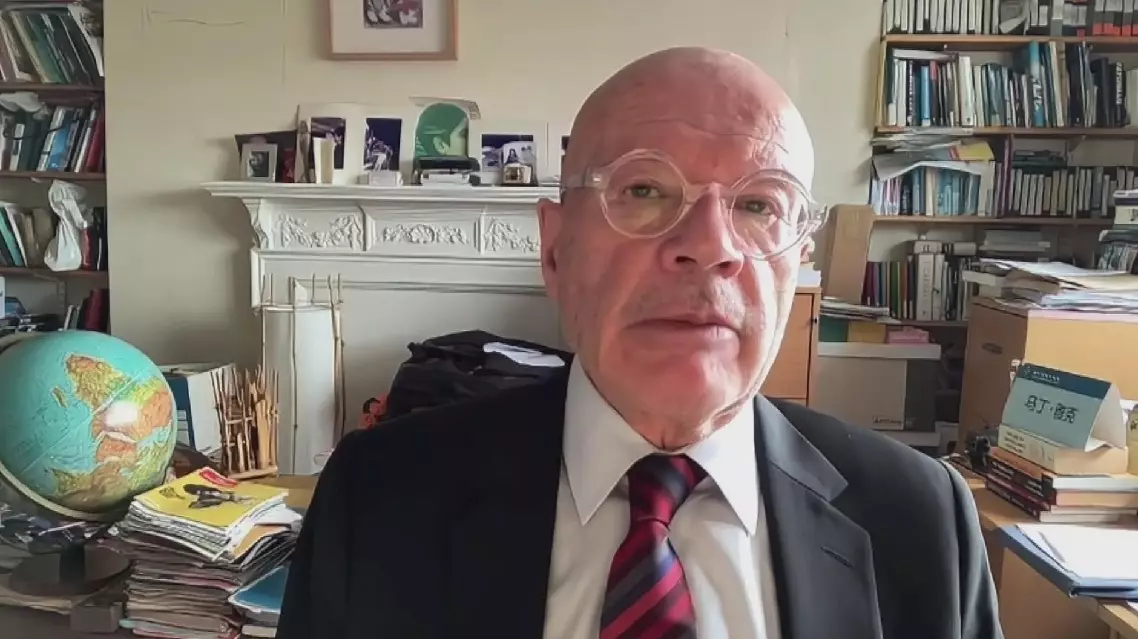
Against this backdrop, CRI spoke with Jacques, former senior fellow of the Department of Politics and International Studies at Cambridge University, to explore how the UN can preserve its legitimacy eight decades after its founding and confront the challenges ahead.
Jacques emphasized that the most acute danger to the UN's standing stems from its increasingly fragile relationship with the United States.
"I think that the United Nations has always had a special place ever since its foundation, because it is the sole representative, of virtually all the nations of the world. And the General Assembly is the place where the nations of the world could talk, express their views, and pass resolutions. Now we know, there is a danger in this situation for the United Nations. And there is a deeper ideological base to this. The body that could be threatened by this is America's relationship with the United Nations. We will have to see what happens. I think that it would be very unfortunate and a negative development if America decides that it doesn't want to be part of the United Nations. This would be a very big, big question indeed. But hopefully it won't come to this," said Jacques.
Jacques also welcomed China's call to strengthen the United Nations through reform, describing its approach as clear, consistent, and vital to the UN's continued relevance.
"I think that China's position on the United Nations is very good, which is basically it is extremely supportive of it. So those agencies which is part of it's very active, it has become increasingly active. So I think that China's mission is very clear on the UN, which it regards to be, despite everything, the best thing we've got in terms of an expression of global views, a way of participating in global discussions and so on. And I think that China would like to see that extended and developed. Certainly China [has] a strong view that the United Nations is a very important institution. I very much agree with that," he said.
First adopted on June 26, 1945, in San Francisco, the UN Charter laid the foundation for a global system built on shared principles and multilateral cooperation. Eight decades later, that vision faces renewed scrutiny, making the UN's founding ideals more vital than ever.
UN remains best platform for global representation: expert