Young South Koreans under 30 are facing grave challenges in the job market, with the employment rate declining for 15 consecutive months.
According to the country's statistics authorities, the employment rate for South Koreans under 30 dropped to 45.8 percent in July due to decreased labor demand in manufacturing, hospitality and other sectors, marking a decline for the 15th consecutive month.
And an increasing number of companies in the country prefer to hire people with both technical skills and practical experience, prompting many undergraduate graduates to pursue further studies at vocational colleges.
Kim Dae-young, 26 years old, originally majored in electrical control for nuclear power plants and worked in film production after graduation. After about a year, amid the rising wave of artificial intelligence, he noticed that many vocational colleges in the country were offering related programs. Then he decided to return to school to study a program that combines artificial intelligence and game.
"I believe it is a right choice to take a program that combines artificial intelligence and game. In reality, there are not many places that specialize in training such people. I hope to gain extensive hands-on experience here so that I can apply what I've learned professionally when I work in a company in the future," said Kim, a student at Seoul University.
In recent years, the rapid development of artificial intelligence technology has garnered significant attention, particularly in related fields and interdisciplinary programs. According to preliminary statistics, nearly 20 vocational colleges in the country have launched similar programs.
As the population ages and people become more conscious of health and wellness, the demand for specialized talent in senior care, healthcare, biotechnology, and food production has been quickly on the rise, prompting more vocational colleges to introduce relevant courses. Many colleges also have added programs in renewable energy, semiconductors, and information technology to attract more undergraduate students to return for further study.
"I chose to return to vocational college because the specialized knowledge and practical experience I gain there is very helpful for me to acquire professional qualification certificates and for my future employment," said Moon Joon-hyuk, a student majored in sports rehabilitation at Yuhan University.
According to data from the South Korean Council for University College Education, there were over 88,000 students aged 25 and older enrolled in vocational colleges nationwide last year, doubling the figure of 2018. The number of new returnees to vocational colleges who have graduated from university has been increasing year by year. In some vocational colleges, half of the new students for the 2025 academic year are individuals returning from other vocational colleges or those who have graduated from undergraduate programs.
"It is precisely because of the recognition of the value of professional experience in the workplace that many students choose to return to vocational colleges," said Kim Min-chul, a professor at Seoul University.
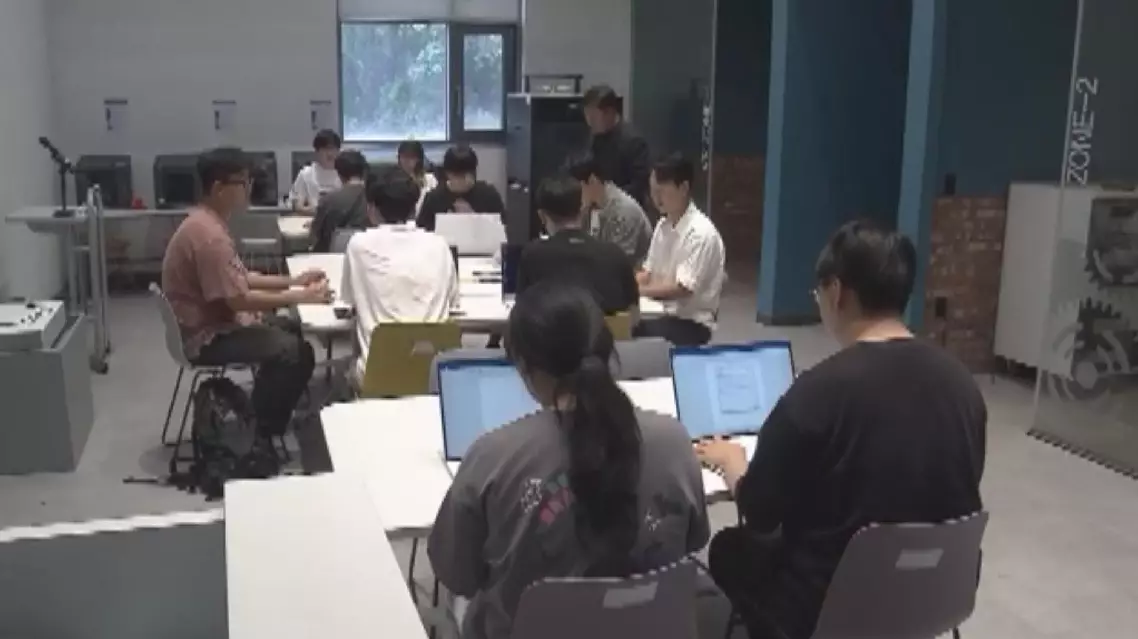
South Koreans under 30 face employment challenges